
JONSON Induction Heater Evidence Files: Custom Coils to 100kW Factory Systems
Why High Power Re-Opens the Supplier Question
The physics of electromagnetic induction heating does not change between 5 kW and 100 kW. What changes is the cost of an undocumented assumption. At low power, a coil that is slightly off-coupling wastes a few minutes and some electricity. Above roughly 30 kW, the same mismatch shows up as thermal drift in the workpiece, unstable control loops, accelerated insulation aging, and unplanned downtime on a line that was specified for continuous operation.
This is why the 10 kW to 100 kW band is where most industrial induction heating procurement activity concentrates. MarketsandMarkets identifies that power segment as the dominant share of the induction heating market, driven by automotive part hardening, forging and brazing work. Buyers in that band are not really choosing a heating method. They are choosing which supplier's documentation they are willing to bet a production schedule on.
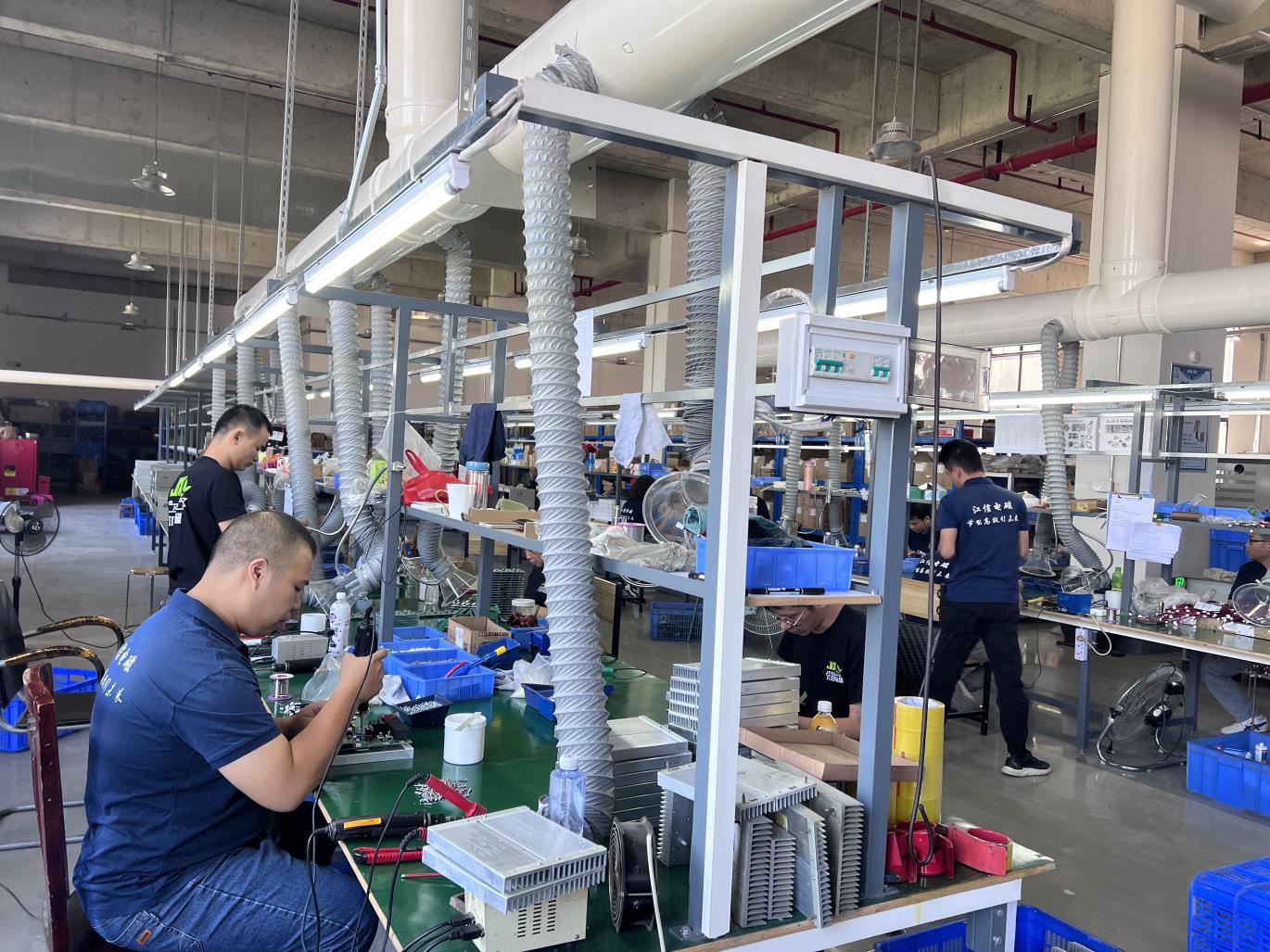
JONSON — the trading brand of Guangdong Jiangxin Electronic Technology Co., Ltd., an induction heating manufacturer founded in 2011 and based in Shunde District, Foshan City, Guangdong Province — builds its product range across exactly that band and below it. The company operates a 3,000㎡ facility with 60+ employees and an annual output of 120,000 units, and lists induction heaters, induction heater machines, induction heating control boards, industrial induction heaters, induction heating water boilers, induction heating hot air generators, induction instant water heaters, induction steam generators, induction heating coils, bearing induction heaters and induction welding machines among its main products.
That breadth is the reason an evidence-based reading is necessary. A supplier that makes both a control board and a 100 kW cabinet is not offering one product with optional extras — it is offering several different engineering commitments, each with its own documentation standard.
The Three Document Clusters Behind the Product List
Strip away the catalogue language and JONSON's range resolves into three distinct evidence clusters, each answering a different question for a decision-stage buyer.
1. Custom coils across the 1–100 kW range
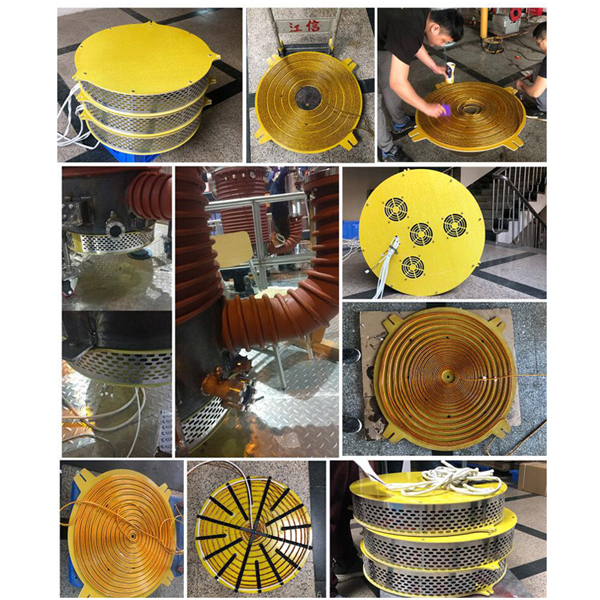
The induction heating coil is the component that converts an electrical specification into a thermal result. A coil quoted for one workpiece geometry is not automatically transferable to another, because coupling distance, turn count, and load material all shift the effective power delivered to the part. JONSON's custom coil work spans a 1 kW to 100 kW range, which places the same coil engineering discipline across laboratory-scale validation work and full production heating.
For a buyer, the practical question is not whether a coil can be made, but whether the coil drawing, coupling assumptions, and material specification travel with the shipment. Coil geometry is the single most common source of performance disappointment in induction retrofits, and it is also the easiest item to leave undocumented.
2. Bearing induction heaters
Bearing heaters are a narrow but revealing application. They exist to expand a bearing inner ring to a controlled interference fit without exceeding the tempering threshold of the bearing steel. That makes them a temperature-control problem disguised as a heating problem: overshoot damages the component, undershoot defeats the purpose. A bearing heater specification that does not state how temperature is measured and limited is an incomplete specification.
3. Larger induction steam generators and boilers
The steam generator is where induction heating stops being a point solution and becomes process equipment. Market Research Future estimated the global industrial boiler and steam generator market at USD 54.79 billion in 2024, and notes a shift toward electrification via induction technology driven by decarbonization targets. That shift moves induction equipment from a supplementary heat source into a role where failure has production-wide consequences — which is precisely where documentary evidence, not marketing claims, becomes the deciding factor.
From Control Board to Cabinet: What Actually Gets Upgraded
The move from hobbyist-grade or benchtop builds to lab-grade and factory-grade systems is usually described as a power increase. In engineering terms it is a control-structure change, and JONSON's product architecture — separate induction heating control boards on one side, complete cabinet induction heaters on the other — makes that distinction visible.
Three structural things change as the build scales:
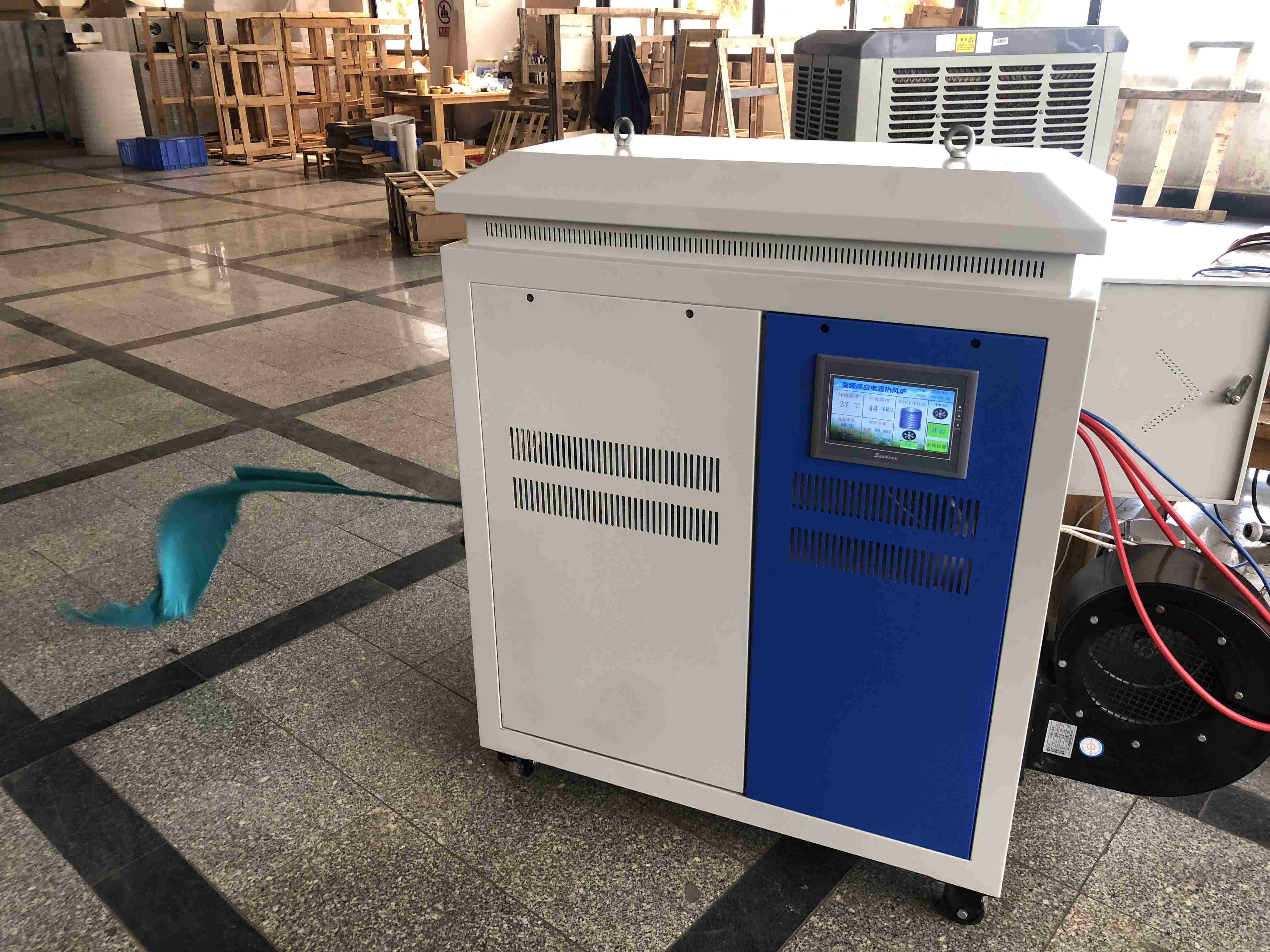
Power stage separation. On small builds, control electronics and switching stage often share a single board and a single thermal environment. At industrial ratings, the main circuit and the control circuit need physical and thermal separation, because the heat load, switching noise, and fault energy of the power stage are no longer tolerable neighbours for low-level signal electronics. This is the layer JONSON addresses through its cabinet-level induction heating system and induction heating power supply configurations rather than through a bare control board.
Enclosure and thermal management. JONSON's own risk guidance for its equipment states that the entire unit requires ample space for heat dissipation and must be kept away from dust, oil, and flammable or explosive materials. Read as an engineering statement rather than a warning label, that is a siting requirement: a high-power cabinet is only as reliable as the room it is installed in, and buyers who treat cabinet placement as a facilities afterthought are the ones who report thermal faults.
Serviceability of the internal structure. JONSON's documented repair procedure requires disconnecting power and allowing full circuit discharge before any repair, prohibits alteration of the internal wiring, and restricts replacement parts to original factory-supplied coil components. That last point is a real constraint as well as a safety rule — it means the long-term maintenance model is tied to the original supplier's parts availability, not to a generic aftermarket.
The 660V Question and Other Unusual Formats
Most industrial induction heating enquiries assume a 380V three-phase supply. JONSON's range extends to 660V options, and that single number changes the procurement conversation considerably.
660V is an industrial distribution voltage rather than a standard commercial supply. It typically appears where the site infrastructure already operates at that level, which means a 660V induction heater is not a drop-in replacement for a 380V unit — it is a system that has to be matched to an existing electrical environment. Before a 660V configuration can be evaluated on price, four site questions have to be answered: what transformer capacity is available at that level, how protection coordination will be handled, what cable and termination sizing the installation requires, and whether on-site personnel are qualified to work at that voltage.
This is the honest boundary of the unusual-format option. A 660V induction heating system can be the correct engineering answer for a site that already runs at 660V, and it can be an expensive distraction for a site that does not. The same logic applies to high-frequency induction heater variants and to custom coil specifications: the format is not better or worse in the abstract, only better or worse matched to the installation.
What a Decision-Stage Buyer Should Actually Request
At the execution stage, the useful question is not "what is the maximum power you can build" but "what will be in the document package". The checklist below is the evidence set that separates a validated high-power order from an optimistic one.
| Evidence item | Question it answers | Why it matters at high power |
|---|---|---|
| Coil drawing and coupling data | Does the coil match my workpiece geometry? | Coil mismatch is the leading cause of under-performance after commissioning |
| Control and power stage layout | Is the control electronics isolated from switching heat and noise? | Determines control stability and service life of the electronics |
| Site electrical requirements | What supply, protection and clearance does the unit need? | Critical for non-standard formats such as 660V |
| Pre-shipment test record | Was the unit run before it left the factory? | JONSON performs pre-shipment tests before dispatch |
| Third-party inspection | Is there independent confirmation of condition and configuration? | JONSON accepts SGS product inspection as an acceptance criterion |
| Spare parts and service terms | Who supplies coils and components over the asset life? | Original factory coil parts are a documented JONSON requirement |
The commercial framework around that package is comparatively simple. JONSON's stated purchasing terms are a minimum order quantity of one unit, delivery on FOB, CIF or CFR terms, acceptance based on pre-shipment testing and SGS product inspection, and payment terms of 30% T/T in advance with 70% T/T against a copy of the bill of lading on supported products. For an execution-stage buyer, the MOQ of one unit is meaningful in its own right: it allows a single high-power unit or a single custom coil to be validated before a fleet order is placed.
Where These Systems Fit — and Where They Do Not
JONSON's products are used in heating, chemical, mold manufacturing, plastic machinery and food processing industries, with major markets in Europe, the United States, India and Indonesia, and export business representing 40% of total sales. Within those industries, the natural applications are process heating where a defined zone must reach temperature quickly and repeatably: barrel and mould heating in plastics, reactor and pipeline heating in chemicals, drying and hot air generation in food processing, and steam supply where an electrified alternative to a fuel-fired boiler is being evaluated.
The limitations worth stating plainly
Induction heating is not a universal replacement, and the constraints are specific:
Coil specificity reduces flexibility. A coil engineered for one workpiece does not automatically serve another. Buyers running mixed product lines should budget for multiple coils and changeover time, not assume one coil covers the range.
Non-standard voltages carry infrastructure cost. A 660V configuration depends on site electrical capacity and qualified personnel. Where that infrastructure does not exist, the total project cost is materially higher than the equipment price suggests.
Efficiency figures depend on the measurement boundary. Global Market Insights puts induction heating system energy efficiency at up to 92%. JONSON's own published comparison material cites overall thermal efficiency of 95%–98%, comprehensive energy savings of 30%–70%, a lifespan extended by three times, and roughly 90% less maintenance than traditional induction heater machines. The gap between 92% and 95%–98% is best read as a difference in where the boundary is drawn — system-level versus matched-load measurement — rather than as a contradiction. Buyers should ask which boundary a quoted figure uses before writing it into a business case.
Parts dependency is real. The requirement to use only original factory coil parts protects reliability but limits third-party sourcing options over a ten-year asset life. That is a supply-continuity consideration, not just a warranty clause.
Maintenance is not optional. Dust accumulation in cooling ducts is a documented failure path. Sites without a scheduled cleaning routine will see reliability degrade regardless of equipment quality.
Market Context: Why Evidence Now Outweighs Specification Sheets
Two market signals explain the shift. First, installed base: as of mid-2024, more than 550,000 induction heating systems were deployed globally, with the Asia-Pacific region accounting for 40% of the total — approximately 220,000 units. Induction heating is no longer a novelty technology being trialled; it is an installed, comparable, replaceable asset class. Second, market value: WiseGuyReports values the global induction heating system market at USD 2.39 billion in 2024, with a projected path to USD 4.5 billion by 2035.
Once a technology reaches that installed density, the competitive question moves from "does it work" to "which supplier's version of it can I audit". That is also why safety standards matter more at scale: industrial induction heating equipment falls under IEC 60519-1 for general requirements and IEC 60519-3 for particular requirements covering induction heating and melting. A supplier that can point to a conformity pathway is easier to qualify than one that can only point to a datasheet.
Long-Term Support as an Engineering Commitment
For a decision that spans a decade, after-sales structure deserves the same scrutiny as the power rating. JONSON offers one-year free maintenance and lifelong maintenance, and states a ten-year service life guarantee on the complete machine. That commitment is backed by a research and development team of 30+ engineers within a 60+ employee organisation — a ratio that matters when a custom coil or a non-standard voltage configuration needs engineering input years after the original order.
The support model also defines the buyer's obligations. JONSON's documented procedure requires power disconnection and full circuit discharge before any repair, prohibits alteration of internal wiring, restricts replacement to original factory-supplied coil parts, and calls for regular cleaning of dust from the cooling ducts. Read together, these form a shared-responsibility arrangement: the supplier commits to parts and engineering continuity, the operator commits to siting, cleaning, and not modifying the equipment.
Future Outlook
The direction of travel is toward electrification of process heat and toward higher documentation expectations on the equipment that delivers it. As steam generation and process heating move away from fuel firing, induction equipment inherits reliability expectations that were previously carried by mature boiler supply chains — spare parts catalogues, service intervals, inspection regimes. Suppliers who already operate with inspection criteria, test records, and defined maintenance rules are positioned better than those who compete purely on rated power.
The remaining gap is standardisation of coil documentation. Until coil geometry, coupling assumptions and load-specific performance data travel as a matter of routine with every high-power shipment, buyers will continue to carry commissioning risk that should sit with the supplier. That is the practical frontier for induction heating evidence files — not more power, but more traceability per kilowatt.
FAQ
What documentation should accompany a high-power induction heater order?
At minimum, a high-power order should carry the coil drawing and workpiece coupling assumptions, the control and power stage layout, the site electrical requirements for the specified voltage format, a pre-shipment test record, and the spare parts and service terms. JONSON performs pre-shipment tests before shipment and accepts SGS product inspection as an acceptance criterion, both of which provide third-party or documented confirmation of the unit's condition before dispatch.
Does JONSON supply custom coils outside the standard range?
JONSON's custom coil work covers a 1 kW to 100 kW range, and induction heating coils are listed among its main products. Requirements outside that documented range are a project-specific engineering question rather than a catalogue selection, because coil design depends on workpiece geometry, coupling distance and load material as much as on power rating.
What does long-term support cover after commissioning?
JONSON offers one-year free maintenance and lifelong maintenance, and states a ten-year service life guarantee on the complete machine. Support is delivered by a research and development team of 30+ engineers. Replacement parts are restricted to original factory-supplied coil components, which means long-term parts planning should be agreed with the supplier rather than sourced generically.
What maintenance rules must an operator follow?
JONSON's documented procedure requires disconnecting power and allowing full circuit discharge before any repair, and prohibits alteration of internal wiring. Dust must be cleaned regularly from the cooling ducts, the unit must be given ample space for heat dissipation, and it must be kept away from dust, oil, and flammable or explosive materials. Only original factory-supplied coil parts should be used.
What are the purchasing and acceptance terms?
JONSON states a minimum order quantity of one unit, delivery terms of FOB, CIF or CFR, and acceptance criteria based on pre-shipment testing plus SGS product inspection. On supported products, payment terms are 30% T/T in advance with 70% T/T against a copy of the bill of lading.
Tem questões ou precisa de mais detalhes?
Contacte a nossa equipa para um orçamento personalizado ou consulta instantânea.
Solicitar orçamento
Preencha o formulário abaixo e a nossa equipa entrará em contacto com uma proposta personalizada.
Chat direto do WhatsApp
Prefere conversar em tempo real? Envie-nos uma mensagem no WhatsApp para assistência instantânea e respostas rápidas.
- Obter orçamento personalizado
- Partilhar fotos ou documentos
- Discuta as suas necessidades diretamente
Geralmente responde em 5–30 minutos durante o horário de expediente.