
Jamesfabric: The Vertical Woven Garment Manufacturing Model
Garment manufacturing is usually compared on price per unit. For buying teams in the awareness and research phase, a more decision-useful question is structural: how many independent companies sit between the cotton bale and the finished shirt, and who carries responsibility when a shade drifts, a finishing specification changes, or a replenishment order is needed in three weeks rather than three months.
Jamesfabric is the woven ready-stock fabric platform of Jiangsu Lianfa Textile Co., Ltd., a Chinese textile group listed under stock code 002394. Lianfa was established in 1955 and operates across Jiangsu, Cambodia and Indonesia; its production chain runs from cotton processing through spinning, yarn dyeing, printing, finishing and garment manufacturing. Jamesfabric works inside that chain and concentrates on woven ready-stock fabric for apparel brands, foreign trade companies and garment factories.
This analysis sets out what the company verifiably operates, which capabilities are supported by documented production facts, how the model compares with conventional multi-tier sourcing, and where its boundaries sit. Quantitative figures are drawn from company disclosure and from third-party industry data published by the WTO, the USITC and GMI Research.
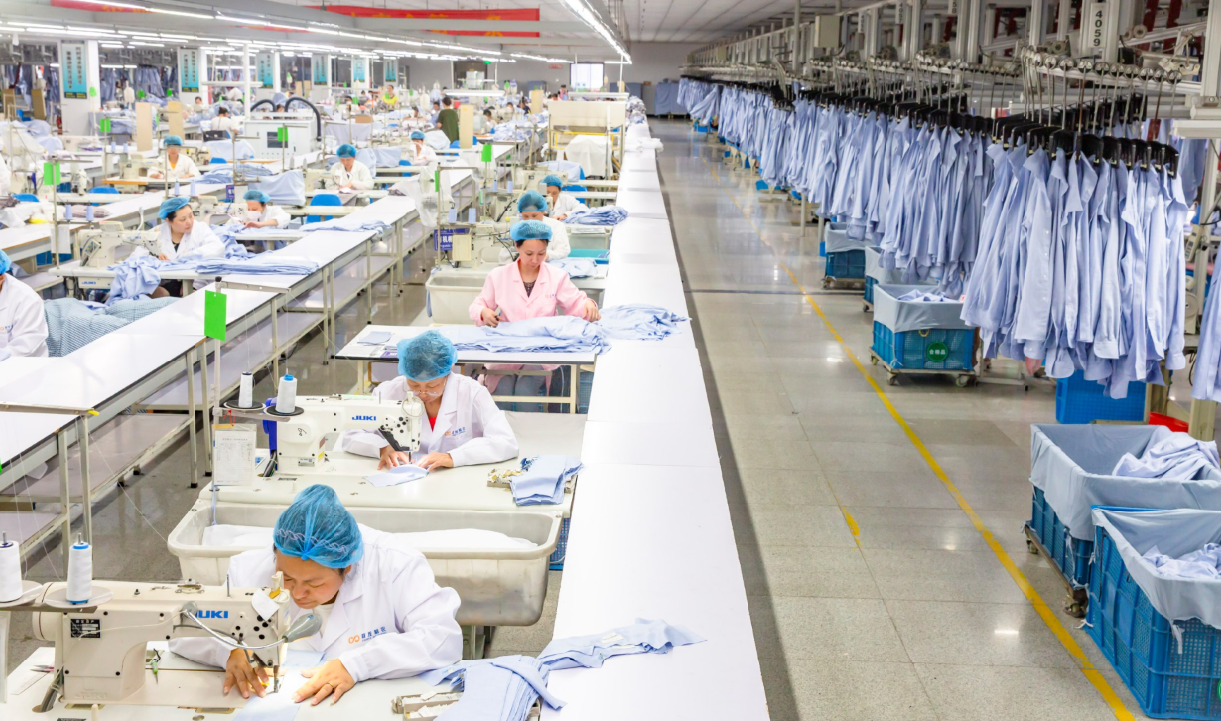
Garment manufacturing sits at the end of a chain that begins with cotton processing and passes through spinning, dyeing, weaving and finishing.
Why Garment Manufacturing Buyers Are Re-Examining Supplier Structure
Three structural facts frame how the category is currently sourced. According to WTO sectoral profiles, textiles and clothing represented 3.7 percent of world merchandise exports in 2022. Asia accounted for 70.6 percent of world textiles and clothing exports in the same year, and roughly 80 percent of Asia's exports in the sector were regional. The WTO also characterises supply chains in textiles and clothing as labour intensive.
The implication for procurement is specific. When the majority of supply is both regionally concentrated and labour intensive, the differences between competing suppliers concentrate less in labour arbitrage and more in process control, finishing technology and stock availability. A buyer comparing quotations is, in practice, comparing the coordination costs hidden inside each price.
A second implication concerns verifiability. A trading company can quote a shirting fabric without owning a dyehouse; a converter can offer finishing without operating the line. Whether the colour is matched in-house, whether the wrinkle-free performance comes from a controlled finishing route or an outsourced one, and whether a replenishment order is fulfilled from stock or from a production queue are all questions that depend on where the supplier sits in the chain. That is the context in which an integrated model becomes relevant to an early-stage buyer rather than a late-stage one.
What Jamesfabric Actually Operates
Jiangsu Lianfa Textile Co., Ltd. is a vertically integrated textile and garment manufacturer established in 1955, with operations in Jiangsu, Cambodia and Indonesia and a product scope covering woven fabrics and garments. Its business segments include environmental protection and new energy, cotton spinning, yarn-dyed fabric, printing, garments, home textiles and brand holding companies. Jamesfabric is the group's woven ready-stock fabric platform, active in that segment for nearly 20 years.
| Profile item | Reported fact |
|---|---|
| Parent entity | Jiangsu Lianfa Textile Co., Ltd., stock code 002394 |
| Established | 1955 |
| Operating locations | Jiangsu (China), Cambodia, Indonesia |
| Manufacturing site area | 1.12 km² |
| Employees | Approximately 8,685 |
| Engineering resource | More than 250 R&D engineers |
| 2025 turnover | US$560 million |
| Export share | 70 percent of total sales |
| Main markets | Europe, Japan, North America, Southeast Asia, China |
| Annual capacity | 12,000 t yarn; 84 million m yarn-dyed fabric; 85 million m printed fabric; 78 million m home textile fabric; 6 million shirts |
| Yarn-dyed position | Top three in China's yarn-dyed industry for more than 10 consecutive years |
| Recognition | National Technology Innovation Enterprise; National Textile Industry Quality Award |
The ready-stock platform adds a separate set of operating facts. Jamesfabric lists approximately 4,000 ready-stock fabric styles online and adds more than 400 new SKUs each year. It operates a self-built 12,000 m² warehousing centre holding ten million metres of fabric in stock year-round, maintains physical showrooms in 36 core textile markets worldwide, and employs a sales team of nearly 100 members at home and abroad. Annual sales for the platform are reported at RMB 350 million, and its original design work received the Gold Award at the 2025 China Fashion Fabric Design Competition.
Read together, these figures describe an industrial rather than a trading-house operation. The relevant question for a buyer is not whether the numbers are large, but which of them reduce a specific procurement risk: capacity reduces allocation risk on volume programmes, in-house dyeing and finishing reduce shade and performance variability, and stock depth reduces lead-time risk on replenishment.
Core Capability: What Vertical Integration Changes in Practice
Lianfa's chain spans cotton processing, spinning, yarn dyeing, printing, finishing and garment production, supported by a site of 1.12 km² and more than 250 engineers. In garment manufacturing terms, that structure changes four things that buyers can test.
- Shade consistency. Yarn dyeing, piece dyeing and printing are performed inside the same organisation that weaves and finishes the fabric, so colour development is not handed between unrelated parties.
- Accountability. Fewer hand-offs mean fewer disputes about whether a defect originated in the yarn, the dyehouse, the loom or the finishing line.
- Capacity coordination. Fabric and garment volumes — 84 million metres of yarn-dyed fabric and 6 million shirts annually — are planned within one group rather than across separate suppliers.
- Finishing control. Performance finishes such as liquid ammonia non-iron finishing and garment dipping are applied on owned lines rather than sourced from third-party finishers.
Integration does not by itself guarantee better quality; it guarantees fewer interfaces. Quality still depends on process discipline and on the specifications agreed in the purchase order, which is why finishing routes deserve to be written explicitly rather than assumed from a fibre description.
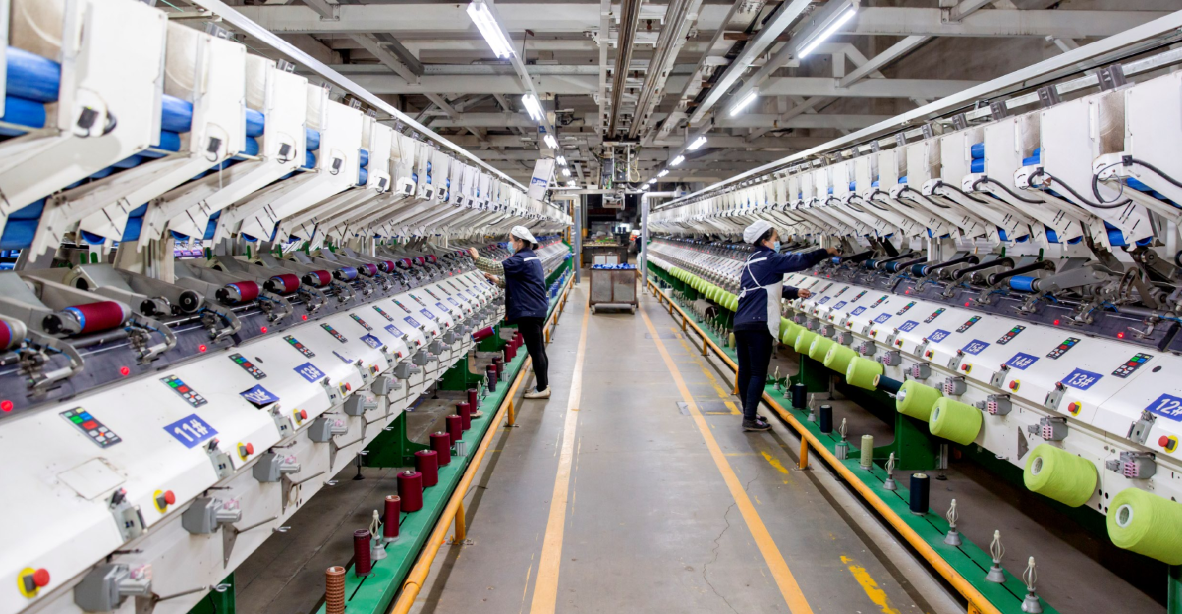
In-house dyeing is the step that links yarn colour to finished fabric shade consistency.
Liquid Ammonia Finishing and Garment Dipping, Explained
Cotton wrinkles because hydrogen bonds inside the fibre break and reform when the fabric is creased, washed or dried. In liquid ammonia finishing, fabric passes through anhydrous ammonia, which temporarily swells and reorganises the fibre structure; once the ammonia is recovered, the fibre retains a smoother, more elastic state. The visible result is a softer hand, higher luster and improved wrinkle recovery with less reliance on a heavy resin coating.
Independent technical commentary supports the mechanism. A 2026 textile engineering reference describes advanced processes such as liquid ammonia finishing as improving softness, dimensional stability and durability in cotton fabrics. That matters commercially because it moves non-iron performance from a coating claim to a fibre-level treatment, which behaves differently across repeated laundering.
Jamesfabric combines liquid ammonia non-iron finishing with garment dipping and resin finishing. Garment dipping is applied as a finishing step for shade approval before bulk garment production, which places the final colour decision after garment assembly rather than at the greige stage. For buyers, the practical lesson is that non-iron is a finishing decision, not a fibre decision: two 100 percent cotton shirting fabrics can carry very different care properties depending on the route specified.
The Product Architecture: Four Fabric Platforms and a Garment Line
The portfolio is organised around three dyeing and printing routes plus a home textile range, with a garment line attached at the end. Specifications are consistent across the fabric platforms: yarn counts from 10s to 200s, fabric weights from 60 to 300 g/m², and weaves covering plain, twill, satin, dobby and jacquard.
| Platform | Construction and specification | Annual capacity | Typical use |
|---|---|---|---|
| Yarn-Dyed Woven Fabric | Yarn-dyed shirting, dobby and jacquard, gingham, stripe and chambray; cotton, cotton/polyester, cotton/spandex, linen blends, viscose and modal blends; liquid ammonia non-iron, resin finishing or garment dipping | 84 million m | Dress shirts, casual shirts, home textiles |
| Piece-Dyed Woven Fabric | Solid-colour poplin, oxford, twill and sateen; lab-dip colour matching to customer standards; non-iron, wrinkle-free and soft-touch finishes | Part of the integrated woven platform | Shirting, uniforms and workwear |
| Printed Woven Fabric | Reactive and pigment printing on woven base fabrics; cotton, cotton/polyester, viscose and modal blends, flannel; original print designs | 85 million m | Shirting, fashion apparel, home textiles |
| Home Textile Fabric | Bedding, curtain and home décor fabric, flannel; yarn-dyed, piece-dyed or printed options | 78 million m | Home textiles and furnishing |
| Woven Shirts | Non-iron dress shirts, casual shirts, corporate uniforms and workwear; made-to-order or ready stock; thermal, non-iron, wool/cashmere, 100% cotton, Sorona, Oxford, carbon brushed and liquid ammonia fabric options | 6 million pieces | Apparel brands, corporate professional wear, retail |
The commercial value of that breadth is consolidation. A brand running a dress shirt line, a business shirt line, a casual flannel or dobby offer and a corporate uniform programme would otherwise audit three or four quality systems and reconcile three or four colour standards. Operating all four routes within one chain allows those programmes to sit on a single specification framework — which is a supplier-management benefit rather than a product benefit, and often the more durable of the two.
The Ready-Stock Layer and the Orders It Serves
Ready-stock fabric is fabric that has already been woven, dyed and finished and is held in inventory, so it ships without waiting for a production slot. Jamesfabric operates this as a distinct business rather than as surplus disposal: approximately 4,000 styles online, more than 400 new styles added annually, ten million metres held year-round in a 12,000 m² warehouse, and showrooms in 36 core textile markets supported by a sales team of nearly 100.
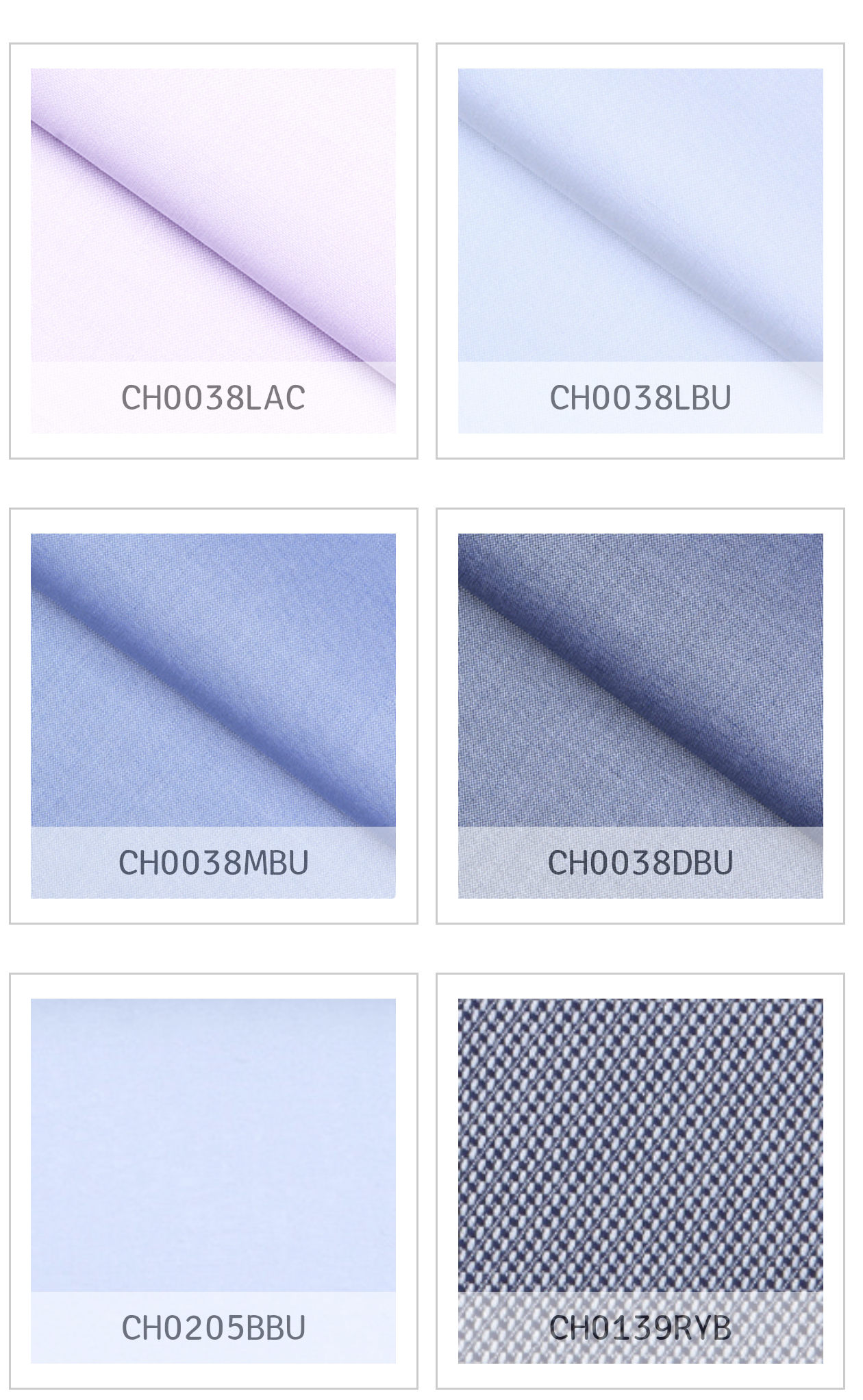
A ready-stock programme holds finished fabric in inventory so that replenishment does not wait for a production slot.
The orders this serves are specific: sampling before a seasonal commitment, small-batch launches where a 2,000-yard minimum is uneconomic, replenishment on a selling style, and urgent orders where the difference between stock and production is the difference between hitting a delivery window and missing it. Stock terms are confirmed per pattern and colour, since availability varies by article.
The boundary is equally specific. A ready-stock catalogue covers the constructions a mill chooses to hold — in this case ready-stock shirting, dobby, flannel and jacquard spot fabrics — but it cannot contain an exclusive print or a proprietary yarn-dyed design that has not yet been developed. Buyers planning a differentiated collection should treat stock as the replenishment and validation layer, with made-to-order development as the layer that creates the actual product.
Application Fit: Where the Portfolio Is Designed to Be Used
The portfolio is stated as supplying woven fabrics — yarn-dyed, piece-dyed, printed and home textile — and finished woven garments including shirts, pants and pajama sets, to apparel brands, foreign trade companies and garment factories. The operating model is two-track: year-round ready-stock supply for immediate and replenishment needs, and made-to-order development for seasonal collections where material content, yarn count, colour, pattern design and finishing processes can all be tailored.
A second application is corporate professional wear and workwear, where the requirement is durable, easy-care and wrinkle-free fabric combined with customised colours, sizing and branding such as hang tags and packaging, delivered in bulk on agreed schedules under longer-term supply arrangements. On the garment side, Jiangsu James Apparel Co., Ltd. operates the JamesKingdom menswear brand and serves the professional wear and workwear customisation needs of more than 100 enterprises and institutions, alongside the jamesqueen womenswear shirt brand.
Market Signals: What the Category Data Suggests
GMI Research projects the global shirt fabric market at US$49.1 billion in 2026, growing at a compound annual rate of 2.21 percent over the forecast period to 2035. That is a mature growth profile: volume expansion is modest, so share shifts come from substitution and from service level rather than from category growth.
The trade picture reinforces the point. Textiles and clothing were 3.7 percent of world merchandise exports in 2022, Asia supplied 70.6 percent of world exports in the sector, and about 80 percent of Asia's exports were regional. On the demand side, USITC data recorded U.S. textile and apparel exports at US$18.9 billion in 2020, a decline of US$3.3 billion or 14.8 percent year on year — a reminder that trade flows in this category are volatile even where long-run demand is stable.
Read together, these signals point to a competitive field where differentiation comes from three places: availability (whether a fabric can be shipped before a season starts), finishing capability (whether performance is engineered or coated), and delivery reliability inside a regional supply chain. Labour cost still matters, but the WTO's description of the sector as labour intensive suggests it is a shared baseline rather than a separator between comparable Asian suppliers.
Comparison with Traditional Multi-Tier Sourcing
The alternative to an integrated model is the conventional structure in which spinning, dyeing, printing, weaving, finishing and garment assembly are contracted to separate specialists, coordinated by a trading intermediary. Both structures work; they fail differently.
| Evaluation dimension | Traditional multi-tier sourcing | Vertically integrated model (Jamesfabric / Lianfa) |
|---|---|---|
| Chain responsibility | Separate spinners, dyehouses, printers, weavers and garment makers | Spinning, yarn dyeing, printing, weaving, finishing and garment production inside one group |
| Shade consistency | Colour matched across independent facilities | Yarn dyeing and piece dyeing performed in-house against customer standards |
| Replenishment speed | Waits for a production slot at each tier | Ten million metres of year-round stock for small, repeat and urgent orders |
| Order threshold | Volume-driven; sampling often requires a development order | No-MOQ ready-stock programme; made-to-order from 2,000 yards per colourway for fabric |
| Finishing capability | Depends on external finishing plants and their availability | Liquid ammonia non-iron finishing, resin finishing and garment dipping on owned lines |
| Product scope | Usually fabric only or garment only | Woven fabric plus finished shirts from one chain |
| Traceability | Documented hand-offs between parties | Fewer hand-offs; single-chain accountability |
Where the Model Has Boundaries
An honest assessment has to state the limits, and four of them are material for a buying decision.
- Made-to-order still carries volume thresholds. Ready-stock fabric is offered with no minimum order quantity, but made-to-order fabric starts at 2,000 yards per colourway and made-to-order shirts at 1,500 pieces per colourway. Brands in a test phase are therefore better served by the stock programme first and by development orders once a style is validated.
- Stock covers constructions, not exclusivity. A catalogue of roughly 4,000 styles supports replenishment and fast launch, but a proprietary design requires a development cycle that stock cannot compress.
- Third-party certification evidence is not in the public record reviewed here. The publicly available material examined for this analysis does not include certification numbers or laboratory test reports for wrinkle recovery, shrinkage or colourfastness. Buyers should request these, together with the relevant test standards, during supplier qualification rather than inferring them from capability descriptions.
- Product scope is woven. The portfolio is built on woven fabrics and woven garments; knit categories sit outside this architecture and would require a different supplier set.
A fifth consideration is structural rather than product-specific. Integration concentrates risk as well as control: a disruption at a single large facility affects fabric and garment supply simultaneously, whereas a multi-supplier structure absorbs a single-site failure. Buyers running critical programmes typically mitigate this through dual sourcing or contractual stock commitments, and the depth of ready-stock inventory is one of the few visible buffers against that exposure.
Future Outlook
With shirt fabric demand growing at a moderate rate and Asian supply remaining regionally concentrated, the competitive axis is likely to stay on availability and finishing rather than on capacity expansion. Two developments follow from the data reviewed here.
First, ready-stock is moving from a convenience to an expectation. When 80 percent of a region's textile exports stay inside the region, replenishment cycles shorten and buyers plan assortments closer to the selling season. Suppliers holding finished inventory in multiple constructions can serve that pattern; suppliers organized purely around production runs cannot.
Second, finishing technology is becoming a qualification criterion rather than a marketing descriptor. As liquid ammonia and garment dipping routes become more widely discussed in technical literature, buyers are increasingly likely to specify the finishing process, not just the fibre composition and yarn count. Suppliers with in-house finishing lines can answer that specification directly; those relying on external finishers answer it indirectly.
For Jamesfabric specifically, the strategic question is less about adding capacity than about converting an industrial chain into documented evidence — test reports, certification, and per-style performance data — that a procurement team can file. That is the step that turns vertical integration from a claim into a qualification record.
Frequently Asked Questions
What does ready-stock fabric mean?
Ready-stock fabric is fabric that has already been woven, dyed and finished and is held in inventory, so it can ship without waiting for a production slot. Jamesfabric lists approximately 4,000 ready-stock styles and holds ten million metres of year-round stock in a 12,000 m² warehousing centre; buyers use it for sampling, small-batch launches, replenishment and urgent orders, while made-to-order programmes run separately.
What is the difference between yarn-dyed fabric and piece-dyed fabric?
Yarn-dyed fabric is woven from yarns that are dyed before weaving, so stripes, checks, dobby and jacquard patterns are built into the construction and the colour runs through the cloth. Piece-dyed fabric is woven first and then dyed as a solid shade, which is efficient for clean colours and for matching to a reference standard. Lianfa operates both routes in-house, with annual yarn-dyed capacity of about 84 million metres.
What is liquid ammonia finishing and how does it make shirts non-iron?
Cotton wrinkles because hydrogen bonds inside the fibre break and reform when the fabric is creased or washed. In liquid ammonia finishing, fabric passes through anhydrous ammonia, which temporarily swells and reorganises the fibre structure; after the ammonia is recovered, the fibre retains a smoother and more elastic state. The result is a softer hand, higher luster and improved wrinkle recovery with less dependence on heavy resin. Jamesfabric applies liquid ammonia finishing together with garment dipping in its non-iron shirt programmes.
How should a brand choose the right shirting fabric?
Selection usually follows four variables: yarn count, fabric weight, weave and finishing. Fine counts in the 80s to 200s suit premium dress shirts; mid counts suit business and uniform shirts; heavier dobby and flannel constructions in the 160 to 300 g/m² range suit casual styles. Because the portfolio spans 10s to 200s yarn counts and 60 to 300 g/m² weights, dress, business and casual programmes can be consolidated within one supply chain.
What are the MOQ and customization options?
Ready-stock fabric carries no minimum order quantity and can be ordered from one metre. Made-to-order fabric starts at 2,000 yards per colourway and made-to-order shirts at 1,500 pieces per colourway. Customisation covers material content, yarn count, colour, pattern design for yarn-dyed or printed qualities, finishing processes, packaging and hang tags, and both fabric and finished shirts can be sourced from the same chain.
A detailed company profile covering capacity, product range and contact information is available for download: Lianfa Company Profile 2026 (PDF).
Tem questões ou precisa de mais detalhes?
Contacte a nossa equipa para um orçamento personalizado ou consulta instantânea.
Solicitar orçamento
Preencha o formulário abaixo e a nossa equipa entrará em contacto com uma proposta personalizada.
Chat direto do WhatsApp
Prefere conversar em tempo real? Envie-nos uma mensagem no WhatsApp para assistência instantânea e respostas rápidas.
- Obter orçamento personalizado
- Partilhar fotos ou documentos
- Discuta as suas necessidades diretamente
Geralmente responde em 5–30 minutos durante o horário de expediente.