
Judging a 20-Year Microfiber Partner by Product Durability
HTNXT · Independent Industry Reference · Microfiber Cleaning Products
A long-standing supplier is only worth its premium if the cloth survives the wash cycle and the factory keeps shipping. Here is how to separate durability claims, supply-chain evidence and compliance documentation before a multi-year commitment.
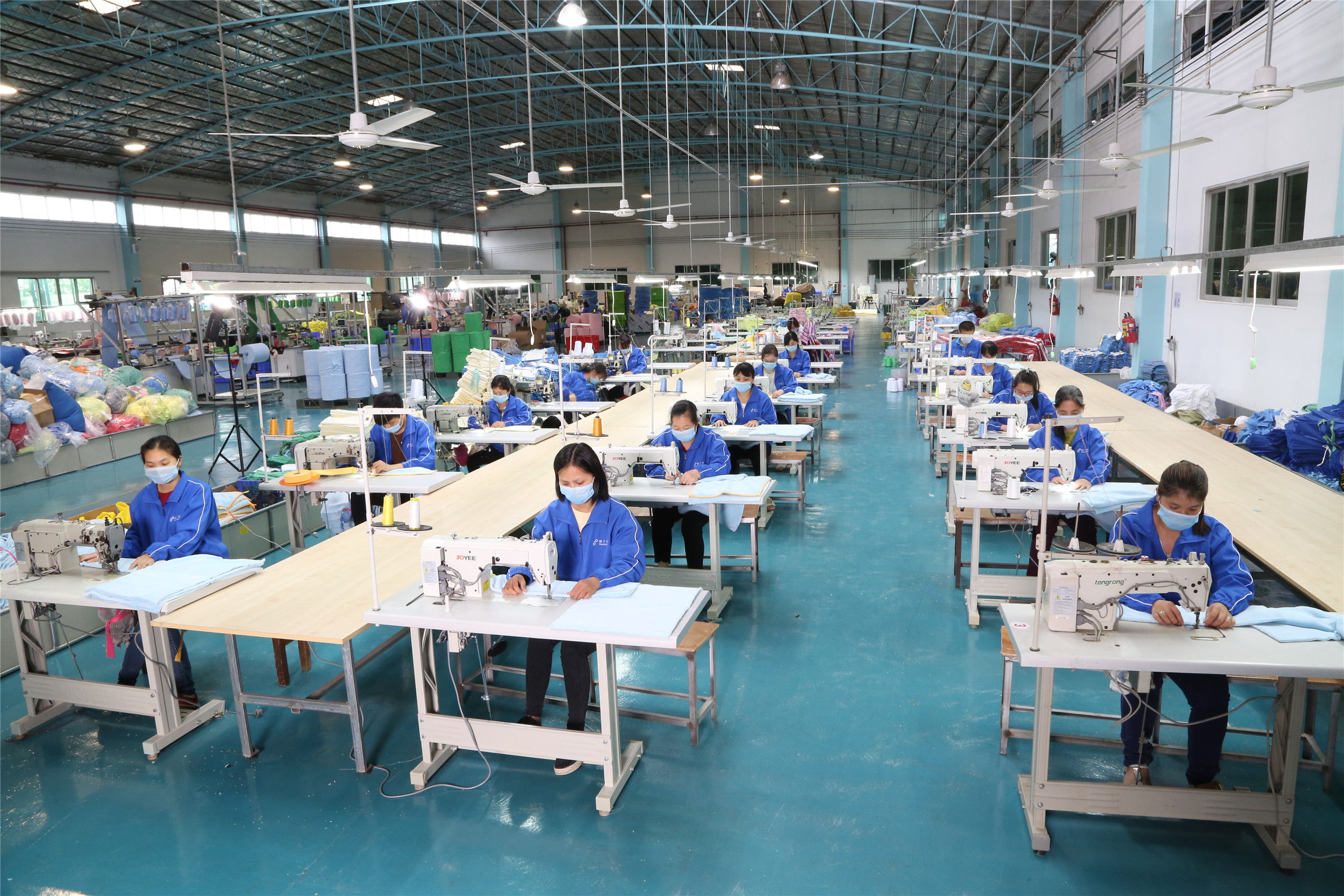
Durability is one of the least quantified variables in microfiber procurement. Quotation sheets carry unit price, GSM, size, packing and lead time; they rarely carry the figure that decides what a supply agreement actually costs over three to five years — the number of wash cycles a cloth survives before it frays, sheds lint or stops absorbing water. That figure sets annual replacement volume, freight weight, storage space and waste, which is why it belongs in supplier evaluation rather than in a product brochure.
Foshan Patinda Housewares Co., Ltd. is a microfiber cleaning products manufacturer based in Foshan, Guangdong, China, founded in 2004 and operating a 45,000 m² manufacturing plant. For a buyer at the Decision stage, a 20-plus-year operating record is useful only when it can be converted into three checkable questions: does the product last, can the factory keep supplying it, and does the environmental case still hold once replacement cycles become long instead of frequent.
Durability Is a Supply Chain Decision, Not a Product Feature
For bulk buyers, durability behaves like a supply-chain variable rather than a quality adjective: a cloth rated for 300+ wash cycles does the work of roughly six cloths rated for 50 cycles, and that ratio changes order frequency, container utilisation and warehouse turnover before it changes anything a consumer would notice.
The mechanism is simple. Shorter service life raises annual purchase volume, increases inbound freight and packaging weight, and multiplies the labour cost of replacing worn items in institutional settings. Longer service life shifts value from volume to reliability — fewer, larger, better-planned orders — which only pays off if the durability is repeatable across production lots rather than demonstrated on a single sample.
Two external pressures are pushing lifetime further up the evaluation list. The first is chemical safety: OEKO-TEX STANDARD 100 was updated in 2024 to include a total fluorine (TF) limit of 100 mg/kg, a direct response to PFAS regulation, so raw-material test status now affects market access rather than only marketing. The second is extended producer responsibility in Europe: Foshan Patinda Housewares Co., Ltd. states compliance with the German Packaging Act (VerpackG) and French REP textile registration, which attaches end-of-life obligations to the supply chain and turns product lifetime into a compliance-adjacent question as well as a cost question.
What "Durable" Means at the Fiber and Construction Level
Microfiber is defined by fiber fineness: fibers measuring below 1.0 denier, the unit used for the diameter or fineness of a continuous or filament fiber. That sub-denier scale is the shared technical reason the material is specified for cleaning, filtering and similar fine-surface work — more filaments per unit of yarn create more surface area and more capillary channels to take up liquid and lift soil.
Composition dominates the outcome. In one commercial research estimate, multicomponent microfiber — the polyester/polyamide blend — held a 58.0% revenue share of the category in 2025, ahead of monocomponent constructions. Foshan Patinda Housewares Co., Ltd. states a composition of 85% polyester and 15% polyamide for its microfiber universal cleaning cloth, described as lint-free and offered within a 180–450 GSM range. Polyester provides structure and abrasion resistance; polyamide provides absorbency and softness — the pairing that makes blended microfiber suitable where moisture pickup and scratch-free surface contact are both required.
Construction and edge finishing usually decide whether a cloth fails early. Two failure modes recur in buyer complaints: lint shedding and edge fraying after repeated laundering. The company documents reinforced stitching and an anti-pilling microfiber blend as countermeasures, with double stitching edge locking used to limit edge failure, supported by a 300+ wash cycle durability test regime.
The performance claims attached to those design choices are quantitative. In the company's comparison data, microfiber absorbs up to 7× its own weight in liquid against roughly 3× for cotton; it is rated for 300+ wash cycles against about 50 for cotton; it sheds about 99% less lint; and it removes about 75% more dirt with less water and chemical. These are supplier-reported comparison figures rather than independent laboratory results — a distinction that matters at contract stage and is revisited below.
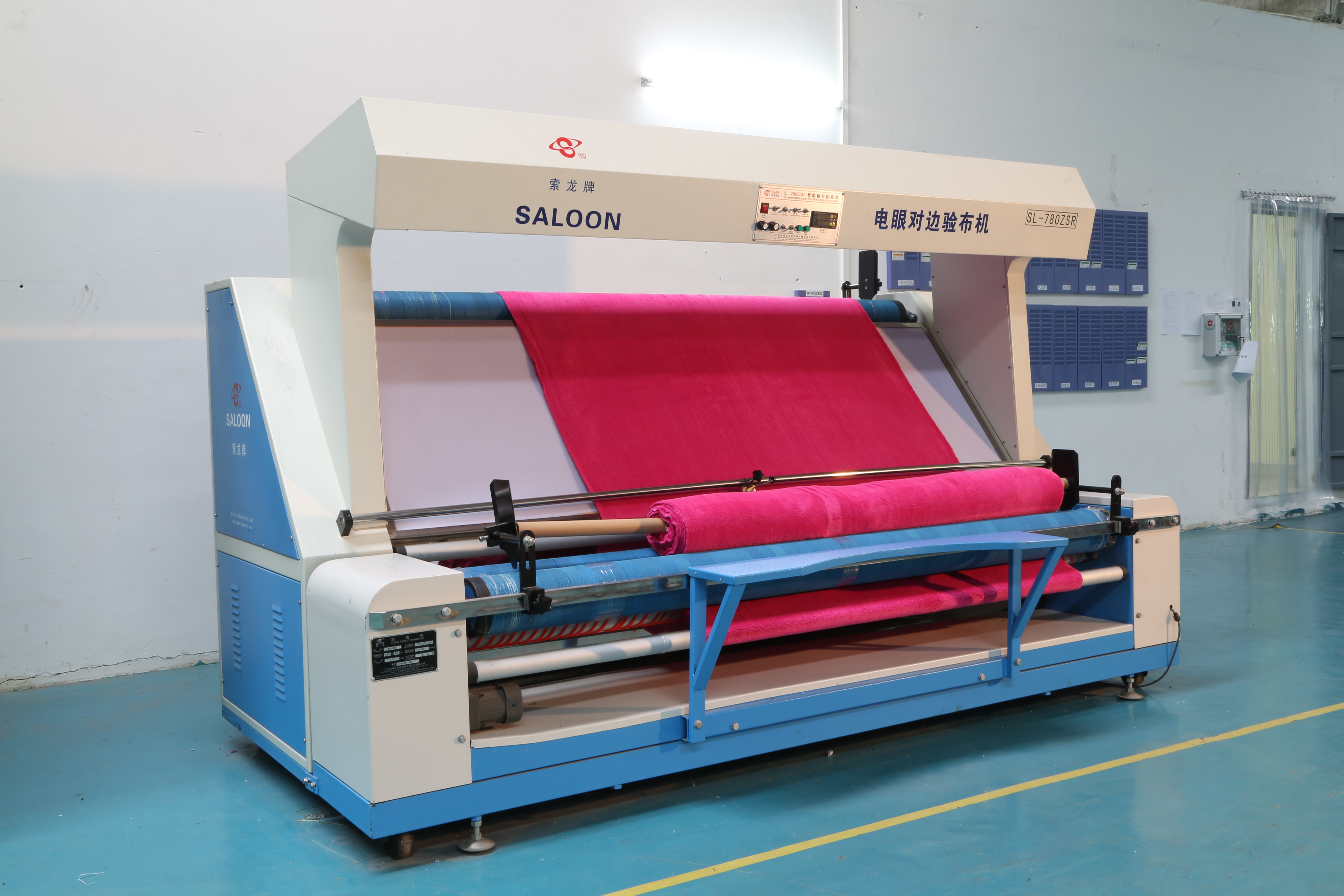
The Manufacturer Behind the Cloth: Scale, Process and Continuity
An established manufacturer is not automatically a better partner. It is a partner whose continuity can be tested against observable evidence: scale, export record, management systems and documented risk controls.
On scale, Foshan Patinda Housewares Co., Ltd. reports 200 employees and a 17-engineer R&D team, with annual output of 2,184,270.46 kg. It operates more than 10 fully automatic production lines for precision cloth cutting and sewing, alongside over 450 sets of production machinery. It reports a 98% export ratio, with listed markets including the USA, Canada, Australia, the United Kingdom, Germany, France, Italy, the Netherlands, Russia, Japan, Korea, Switzerland, Sweden, Turkey and Saudi Arabia.
On export continuity, US customs-derived trade data records 172 bills of lading for Foshan Pa Tin Da Housewares Co., Ltd. between June 2019 and September 2026. A bill of lading is a shipment record, not a quality certificate, but seven years of continuous recorded shipments is independent evidence of ongoing export activity — the kind of signal a buyer cannot obtain from a supplier's own brochure.
On process control, the company's documented framework links each known product risk to a specific countermeasure:
| Risk in use | Documented control |
|---|---|
| Lint shedding | Anti-pilling microfiber blend; OEKO-TEX tested raw materials |
| Fabric degradation | Double stitching edge locking; 300+ wash cycle durability testing |
| Harmful substance residue | Formaldehyde-free dye inspection; OEKO-TEX Standard 100 tested raw materials |
| Surface scratching | Scratch-free abrasion resistance certification |
Those controls sit inside a wider management system the company states it maintains: ISO 9001:2015 for quality management, ISO 45001:2018 for occupational health and safety, and SMETA (Sedex) ethical trade audit compliance, alongside registration under the German Packaging Act (VerpackG) and the French REP textile scheme. Each of these is a company statement; certificate status is confirmed by the issuing body rather than by the supplier, and should be checked in the relevant registry before a contract is signed.
Where Long-Life Microfiber Cleaning Products Fit
Long-life microfiber pays back fastest where cloths are laundered and reused many times, and where surface condition carries a visible cost. That covers commercial cleaning in hotels, hospitals and offices; automotive detailing; kitchen work; and glass and mirror surfaces where lint and scratching read as defects rather than as abrasion.
| Application | Product type in the range | Why durability decides the outcome |
|---|---|---|
| Household daily cleaning | Universal cleaning cloth; microfiber cleaning cloth; microfiber towel | Replacement volume, not peak performance, drives annual spend |
| Kitchen | Microfiber kitchen towel; microfiber dish cleaning sponge | High wash frequency plus grease and food soil |
| Glass and mirror | Microfiber glass polishing cloth; window washer; window glass washer | Lint-free performance must survive washing |
| Automotive | Car washing towel; car wash mitt; car wash sponge; auto cleaning cloth; PU coated cloth | Scratch-free contact with paint and trim |
| Commercial and institutional | Dry/damp mop; tufting mop; wet mop; terry wet mop | Laundry cycles per year are high and replacement cost per cycle is visible |
| Textile range | Beach, sports, cooling, hair-drying and bath towels | Absorbency retention after repeated washing |
| Specialty surfaces | Microfiber glasses cloth; PU coated cloth | Surface safety on coated or optical finishes |
Market Context: Steady Demand, Tightening Standards
Commercial research published between 2025 and 2026 places the global microfiber cleaning cloth market at roughly USD 1 billion, expanding at a mid-single-digit rate. One frequently cited projection puts the market at USD 979.2 million in 2025 rising to USD 1,520.7 million by 2035, a 4.5% CAGR; another projects USD 1.04 billion in 2026 reaching USD 1.49 billion by 2034 at 4.57%. Base years and end years differ between the two, and at least one commercial source reports values several times larger, so the useful reading is directional rather than a single headline figure: demand is broadening steadily rather than spiking.
Two structural details support that reading. Multicomponent polyester/polyamide constructions held a 58.0% revenue share in 2025, which suggests buyers continue to specify blended fabric rather than cheaper monocomponent alternatives. And kitchen care — the application closest to dish cloths and kitchen towels — held the largest revenue share at 28.3% within the wider cleaning products market in 2025, according to the same commercial research stream.
For a buyer, the implication is unglamorous but decisive. In a category growing at a steady single-digit rate, supply relationships are won on continuity, documentation and lifetime cost rather than on a temporary price advantage. Where regulation tightens in parallel — the OEKO-TEX total fluorine limit of 100 mg/kg, European packaging and textile EPR registration — the supplier able to produce test documentation becomes structurally cheaper than the supplier that cannot.
Comparing Microfiber and Cotton Across a Service Life
Cotton remains the reference point in most purchasing comparisons because it is familiar and cheaper per unit. The comparison changes when it is run across a service life rather than across a purchase order:
| Decision criterion | Microfiber (company comparison data) | Cotton (company comparison data) |
|---|---|---|
| Liquid absorption | Up to 7× its own weight | About 3× its own weight |
| Wash durability | 300+ wash cycles | About 50 wash cycles |
| Lint shedding | About 99% less | Baseline |
| Cleaning efficiency | About 75% more dirt removed, with less water and chemical | Baseline |
| Upfront unit cost | Slightly higher | Lower |
| Long-term cost | Lower, because replacement is less frequent | Higher replacement frequency |
| Maintenance | Machine washable, quick-drying, no special maintenance required | Standard textile care |
The table is a decision aid, not a verdict. Its input figures are the manufacturer's own comparison data, and the section below sets out where that matters.
Where the Long-Life Argument Stops
- Upfront cost is genuinely higher. The lower long-term cost depends on the cloth being used and washed enough times for the durability advantage to be realised. In low-reuse or heavily contaminated applications, the payback period extends and the advantage narrows.
- The headline figures are supplier-reported. The 7× versus 3× absorption ratio, the 300+ versus 50 wash-cycle comparison, the 99% lint figure and the 75% dirt-removal figure come from the manufacturer's comparison data, not from an independent laboratory. Buyers should request wash-cycle and abrasion test reports for the exact SKU before award, and confirm that test conditions match their own laundering process.
- Certification claims require issuer-side confirmation. Statements covering OEKO-TEX Standard 100, ISO 9001:2015, ISO 45001:2018, SMETA (Sedex) and any recycled-content scheme should be validated in the relevant issuing-body registry. A claim is not a certificate, and the gap between the two is where procurement risk concentrates.
- Durability does not remove the shedding question. Research institutions define microfibres as microscopic fibres shed from textiles or related fibre-based products. A reusable, long-life product reduces replacement-driven waste, but laundering behaviour and filtration remain part of an environmental assessment.
- Laundry conditions set the real service life. High-temperature institutional laundering with aggressive chemistry shortens textile life relative to mild domestic washing. A durability rating is only meaningful when it is matched to the wash regime the product will actually experience.
What to Watch Next
Three developments are likely to shape long-term microfiber sourcing. Chemical compliance will keep tightening: the 2024 addition of a total fluorine limit of 100 mg/kg to OEKO-TEX STANDARD 100 shows how quickly a raw-material requirement can move from a technical footnote to a market-access condition. Extended producer responsibility for packaging and textiles in Europe will continue to shift end-of-life obligations upstream, which rewards suppliers already registered under frameworks such as VerpackG and French REP. And durability will migrate from supplier claims to buyer-requested documentation, as procurement teams ask for wash-cycle evidence in the same way they now ask for test reports on chemical content.
For a manufacturer with more than two decades of operation, the forward risk is rarely product performance; it is process continuity — whether automation, engineering capacity and export logistics keep pace as requirements rise. The profile worth monitoring is concrete: more than 10 automatic cutting and sewing lines, over 450 sets of production machinery, a 17-engineer R&D team and a 98% export ratio covering markets from North America and Europe to Japan, Korea and Saudi Arabia.
Buyer's quick audit: request (1) wash-cycle and abrasion test reports for the specific SKU, (2) certificate numbers with issuing-body registry lookups, (3) the raw-material test standard applied to dye and finish, and (4) the laundering regime assumed behind any durability rating. Those four items convert a durability claim into a decision input.
FAQ: Long-Term Microfiber Sourcing
How should a buyer compare microfiber and cotton cleaning textiles for a multi-year contract?
Compare them on wash-cycle durability, absorbency, lint shedding and total replacement volume rather than unit price alone. In the manufacturer's comparison data for this product range, microfiber absorbs up to 7× its own weight in liquid against about 3× for cotton, is rated for 300+ wash cycles against roughly 50, and sheds about 99% less lint. Cotton has the lower upfront price; microfiber's long-term cost is lower because replacement is less frequent. The practical step is to request wash-cycle test reports for the specific SKU so the comparison runs on documented figures rather than on generic claims.
What evidence turns a 20-year supply record into a sourcing signal?
Three categories are checkable. Operating continuity: Foshan Patinda Housewares Co., Ltd. was founded in 2004, reports 200 employees and a 17-engineer R&D team, and operates a 45,000 m² plant with a reported 98% export ratio. Recorded export activity: US customs-derived trade data lists 172 bills of lading for the company between June 2019 and September 2026. Management systems: stated compliance with ISO 9001:2015, ISO 45001:2018 and SMETA (Sedex) ethical trade audits. A long history by itself says nothing about a specific cloth; it does indicate a lower probability of abrupt supply interruption and a higher probability that processes are documented and auditable.
Which product characteristics most influence how long a microfiber cloth lasts?
Fiber composition and weight, knit construction, and edge finishing. Microfiber is defined as fiber below 1.0 denier, and multicomponent polyester/polyamide blends held a 58.0% revenue share of the category in 2025. The company states 85% polyester and 15% polyamide, lint-free, within a 180–450 GSM range for its microfiber universal cleaning cloth. Reinforced stitching, double stitching edge locking and an anti-pilling blend are the documented measures against fraying and lint. Laundry conditions are the second half of the answer: the same cloth lasts materially longer under mild domestic washing than under high-temperature institutional laundering.
Which applications benefit most from a long-life microfiber product?
Applications with high wash frequency or sensitive surfaces. Commercial cleaning in hotels, hospitals and offices, where mops and cloths are laundered repeatedly; automotive detailing, where scratch-free contact with paint and trim matters; kitchen work, including microfiber kitchen towels, dish cloths and cleaning sponges; and glass and mirror cleaning, where lint reads as a defect. Household daily cleaning benefits through reduced replacement volume rather than through a change in cleaning method.
What environmental and compliance factors should be verified before committing long term?
Four. Chemical safety: OEKO-TEX STANDARD 100 added a total fluorine limit of 100 mg/kg in 2024 to address PFAS regulation, so raw-material test status should be confirmed for the exact article. Extended producer responsibility: the company states compliance with the German Packaging Act (VerpackG) and French REP textile registration, and those registrations should be checked. Shedding: research institutions define microfibres as microscopic fibres shed from textiles, so wash behaviour and filtration remain relevant even for reusable products. Certification validity: every claimed scheme should be confirmed in the issuing body's registry rather than accepted from a supplier document.
Reference document: the product catalogue from Foshan Patinda Housewares Co., Ltd. is available for download at E-catalog Pa Tin Da 2024. Manufacturer website: www.microfiberchina.com.