
KD-OD vs KD-DSA: One Screen or Two Outdoors?
KD-OD vs KD-DSA: One Screen or Two Outdoors?
The short answer: the choice between a single-screen and a dual-screen outdoor advertising unit is decided by how many advertising faces a site can genuinely sell and service, not by which datasheet looks stronger. GZKEDRO's KD-OD Series Outdoor Advertising Display and KD-DSA Series Dual-Screen Outdoor Advertising Machine share the same panel resolution (1080 × 1920) and the same brightness rating (2000 cd/m²). The KD-OD carries IP55 enclosure protection across one face. The KD-DSA doubles the face count and adds an RK3288 quad-core processor, 2 GB RAM and 16 GB storage to drive both screens. Everything else — power, sealing inspection, content workflow, acceptance testing — follows from that second face.
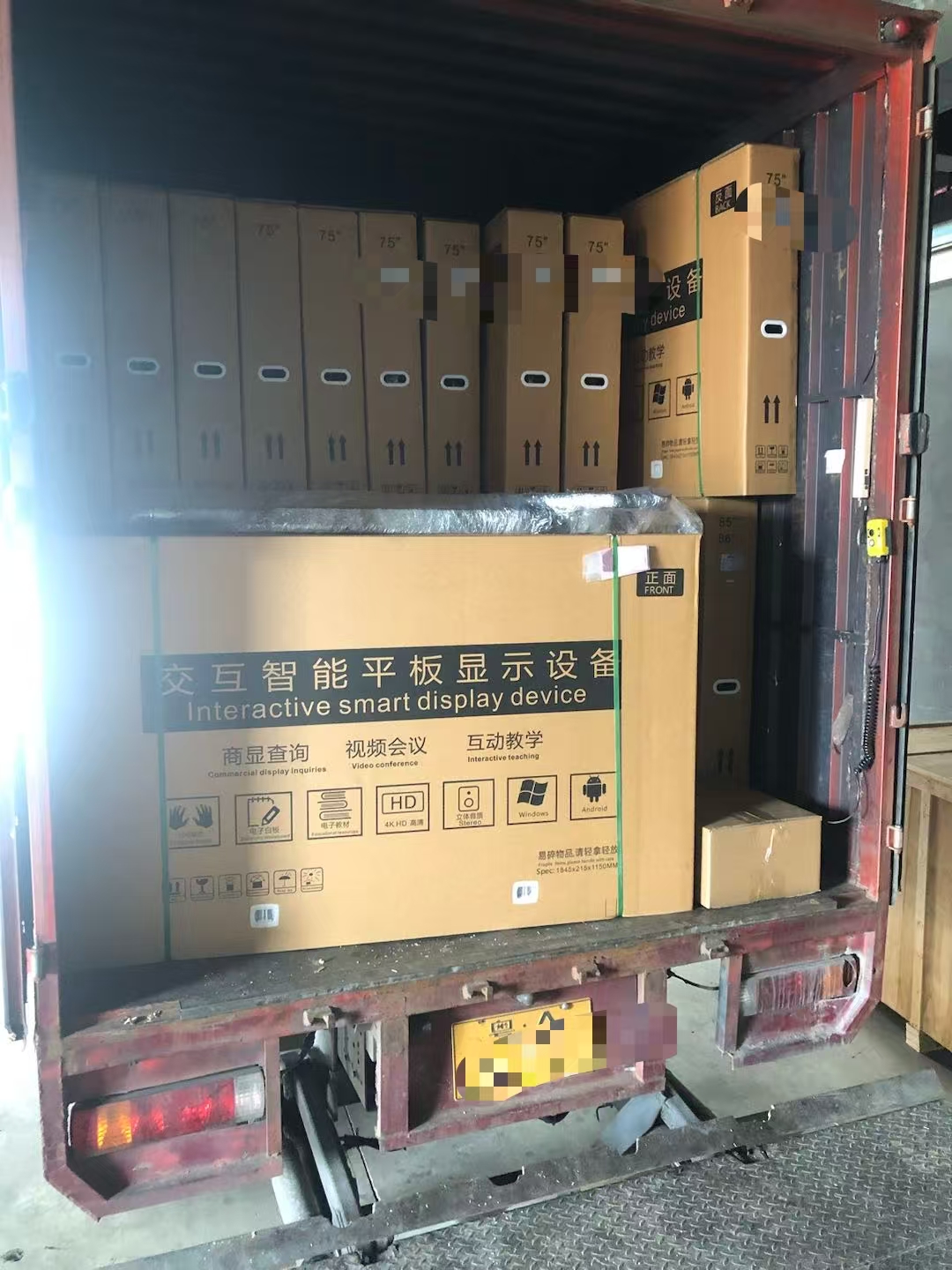
Outdoor display projects enter the same logistics chain as any large-format hardware; delivery condition belongs in the acceptance record.
What Each Model Is, and What It Is For
GZKEDRO (Guangzhou Kedro Electronics Technology Co., Ltd.) is a Guangzhou-based commercial display manufacturer founded in 2013 that reports an export share of 80% of total sales. Its outdoor advertising range addresses permanent street, forecourt and building-mounted advertising positions, and the two models below answer different site questions within that range.
KD-OD Series Outdoor Advertising Display
The KD-OD is a single-face vertical advertising unit: one 1080 × 1920 panel in portrait orientation, rated at 2000 cd/m² brightness, housed in an enclosure rated IP55. In practical terms, one installation creates one sellable advertising surface. That suits positions where the audience arrives from one dominant direction, or where structural load, available power, sightline width or a municipal permit limits the cabinet to a single display face. Because the creative canvas is a full-HD portrait frame, standard vertical campaign assets can be used without re-cropping to a bespoke format.
KD-DSA Series Dual-Screen Outdoor Advertising Machine
The KD-DSA is a two-face advertising machine: two 1080 × 1920 panels, each rated at 2000 cd/m², driven by an RK3288 quad-core processor with 2 GB RAM and 16 GB of storage. One cabinet therefore creates two advertising surfaces. That configuration fits positions where two audiences exist at once — approach and departure traffic, a street junction, a forecourt with pedestrian and vehicle sightlines, or a corner-mounted unit on a building facade — and where the operator has the content capacity and the commercial demand to fill both faces.
Specification Comparison at a Glance
| Parameter | KD-OD Series (single screen) | KD-DSA Series (dual screen) |
|---|---|---|
| Panel resolution | 1080 × 1920 | 1080 × 1920 per screen, two screens |
| Brightness | 2000 cd/m² | 2000 cd/m² |
| Advertising faces | 1 | 2 |
| Processor | Confirm controller and OS on the exact SKU | RK3288 quad-core |
| Memory | Confirm on the exact SKU | 2 GB RAM |
| Storage | Confirm on the exact SKU | 16 GB |
| Enclosure protection | IP55 | Confirm the rating on the exact SKU documentation |
| Typical deployment role | Single-direction site with one sellable face | Two-direction or two-audience site with two sellable faces |
The table shows parity on the two numbers most advertising buyers compare first — resolution and brightness — and divergence on face count, onboard compute and enclosure specification. That is why the decision has to be made on site conditions and operating model rather than on a headline specification.
Where the Specifications Actually Diverge
Resolution: parity that saves content production
Both models use a 1080 × 1920 canvas per face. For an advertiser or media operator, that means one creative master can serve a single-screen site and either face of a dual-screen site without reformatting. Campaign production cost, approval cycles and asset libraries therefore do not multiply when a network mixes the two formats — a practical advantage that is easy to overlook when comparing hardware alone.
Brightness: same rating, different site conditions
Both units are rated at 2000 cd/m², which is numerically equivalent to 2000 nits. GZKEDRO's own outdoor display material states a brightness range of 1500 to 3500 nits across its outdoor range for visibility in outdoor environments, so 2000 cd/m² sits inside that band rather than at its top. A rated figure describes the panel under stated measurement conditions; it does not by itself guarantee legibility at a given site. Orientation, shading from buildings or canopies, cover glass, ambient light at the time of day that matters most, and the contrast of the creative all change what a passer-by actually reads. Buyers comparing quotes should ask at what measurement point the figure is taken, whether it is a typical or maximum rating, and whether automatic brightness control is available on the exact SKU — none of which should be assumed from the number alone.
Compute: the real difference between one face and two
The KD-DSA's published configuration — RK3288 quad-core processor, 2 GB RAM, 16 GB storage — is the part of the specification that carries the most procurement risk for a dual-screen deployment, because a two-face unit has to decode and display two video streams rather than one. Three questions resolve most of that risk at quotation stage. First, can the two screens run independent content, or do they mirror a single source? Second, which codecs, resolutions and frame rates are supported per output, and what happens to playback when a heavy creative is scheduled on both faces simultaneously? Third, how much of the 16 GB is available for cached media once the operating system and playback application are installed — because nominal storage is not usable storage. For networks that stream from a content management platform, local storage matters less; for sites with intermittent connectivity, it matters a great deal.
Protection: what IP55 does and does not cover
IP55 describes two things: protection against dust ingress at level 5, and protection against water projected by a nozzle at level 5. It is an enclosure rating for defined test conditions — it is not a statement that the unit can be submerged, and it does not automatically cover every installation orientation or every mounting method. For a dual-screen cabinet, which is physically larger and typically carries more seams, vents, speaker apertures and service access points than a single-face unit, the sealing detail deserves more attention at acceptance rather than less. Ask for the ingress protection test documentation for the exact model, and confirm the approved mounting orientation, drainage path and cable-entry arrangement in writing.
Power and thermal behaviour
Power consumption per face, supply voltage requirements and the cooling method are not part of the specification set summarised above, and they should not be inferred from the panel size. Two faces generally mean a heavier electrical load and a larger heat load inside one cabinet than a single face. Put both on the RFQ, together with the site's available supply capacity and the maintenance access route for any cooling components.
Matching the Format to the Site
Deployment fit is decided by sightlines, dwell time, electrical capacity and the operator's ability to sell and refresh content — in that order of practical impact.
Where a single face is usually the better fit
- One-direction footfall. A kerbside position where pedestrians or vehicles approach from one side only, so a second face would mostly show the back of the audience.
- Constrained structures. Columns, narrow pavement furniture or lightweight canopies where the structural load and wind area of a larger cabinet would complicate approval.
- Limited supply capacity. Sites where the available electrical supply comfortably covers one unit but would require an upgrade for two.
- Single-advertiser installations. A storefront or venue promoting its own offer, where a second independently sellable face has no commercial purpose.
Where a second face earns its place
- Two-direction traffic. Junctions, corner facades and forecourts where approach and departure flows see different sides of the same cabinet.
- Two distinct audiences. A pedestrian-facing face plus a vehicle-facing face with genuinely different dwell times and creative requirements.
- Multiple campaign slots. Media operators with advertiser demand that exceeds one slot per site and a scheduling workflow that can manage two independent playlists.
- Continuous-creative treatments. Positions where the two panels are treated as one wide visual statement — here the buyer should confirm that the content management setup supports synchronised playback across both faces.
Cost-Performance Without Guessing at Prices
Neither model's price is fixed by its specification alone; quotation depends on configuration, quantity, mounting, delivery terms and documentation. What can be compared honestly is the structure of the cost.
- Hardware per face. A dual-screen machine places two panels and two driven outputs in one cabinet, so the panel and electronics content per installation is higher than a single-screen unit, while the cabinet, foundation and installation visit may be shared across both faces.
- Content production. Because both models use 1080 × 1920, creative production cost per campaign does not rise with face count. Scheduling workload does, unless the content management workflow supports per-face playlists and templates.
- Power and connectivity. Two faces generally consume more power and, where cellular connectivity is used, may need more data throughput for independent streams.
- Maintenance exposure. A larger cabinet with more sealing points and more panels carries more inspection surface; whether that translates into more service visits depends on the site environment and the service arrangement in the contract.
- Printed-media substitution. GZKEDRO's product material states a 40% reduction in printing costs compared with alternatives, alongside dynamic multimedia and real-time content updates rather than static print. That figure is a supplier claim and only holds where a buyer is genuinely substituting printed media that they would otherwise reprint at a known frequency — so test it against your own print spend and reprint cycle before using it in a business case.
The honest cost-performance calculation for a dual-screen unit requires one input the supplier cannot provide: the buyer's own fill rate and media rate for a second advertising face. Where that data exists, the comparison is straightforward — extra panel, power and scheduling cost against the value of the second face. Where it does not, the single-screen unit is the lower-risk entry point, because it can be upgraded later by adding a second installation rather than by re-engineering the site.
Purchasing Terms: A Ten-Point Checklist
| Item | What to specify in the order | Why it matters |
|---|---|---|
| Configuration | Model, face count, resolution per face, brightness rating, processor, RAM, storage, IP rating, mounting type | Prevents an ambiguous quotation being resolved in the supplier's favour at delivery |
| Brightness basis | Measurement point and conditions; typical or maximum rating; availability of automatic brightness control | Site legibility depends on how the rating was obtained, not only on the number |
| Ingress protection evidence | IP rating per model plus test documentation; approved mounting orientation and cable-entry arrangement | IP55 covers dust and water-jet conditions; installation method affects whether it holds |
| Playback capability | Independent versus mirrored playback; supported codecs, resolution and frame rate per output; OS version and update path | Determines whether both faces can carry different campaigns |
| Usable storage | Storage available for media after OS and application installation; streaming versus local-caching workflow | Nominal capacity is not usable capacity |
| Power and thermal | Consumption per face, supply requirements, cooling method, surge protection provisions | Site electrical capacity and heat load are fixed constraints |
| Environment | Operating temperature and humidity range for the exact SKU; recommended inspection interval for the site type | Outdoor sites differ widely in heat, dust and salt exposure |
| Compliance documents | Model-level certificate and test report copies matched to the ordered SKU | Company-level certification statements do not identify which models are covered |
| Commercial terms | Incoterms, packing standard, stated lead time, minimum order quantity, spare parts kit, documentation language | Keeps the delivered scope comparable across quotations |
| Service terms | Warranty coverage and exclusions, response route, remote support, firmware update policy, spare-part availability window | Outdoor units run continuously; lifecycle support is part of the purchase |
Acceptance Criteria at Delivery
Acceptance is where specification claims become verifiable facts. The checks below can be written into a purchase order as release conditions rather than left to goodwill.
- Configuration against the order. Confirm face count, resolution, brightness rating, processor and memory specification, and enclosure rating against the signed order — not against a generic brochure.
- Pre-shipment test records. GZKEDRO states that units undergo a 72-hour aging test with real-time temperature monitoring before shipment, along with waterproof and environmental reliability inspection. Ask for the record tied to the serial number on your shipment.
- Enclosure and sealing inspection. Check gaskets, service doors, cable glands and drainage paths on arrival, and again after mounting. On a dual-screen cabinet, inspect every seam and aperture, not only the panel edges.
- Continuous-run test. Run both faces with representative content for an agreed period and record temperature, playback stability and any frame drops — particularly relevant when both faces stream different video simultaneously.
- Display quality. Agree a dead-pixel and brightness-uniformity tolerance in the contract, then verify it under the lighting conditions the site will actually experience.
- Content management commissioning. Confirm scheduling, remote update, per-face playlists where required, and recovery behaviour after a power interruption.
- Documentation package. Installation guide, wiring diagram, credentials for the management platform, certificate copies and warranty terms, all matched to the delivered SKU.
- Spares and training. Agree the spare-parts kit and the handover briefing for whoever performs first-line maintenance.
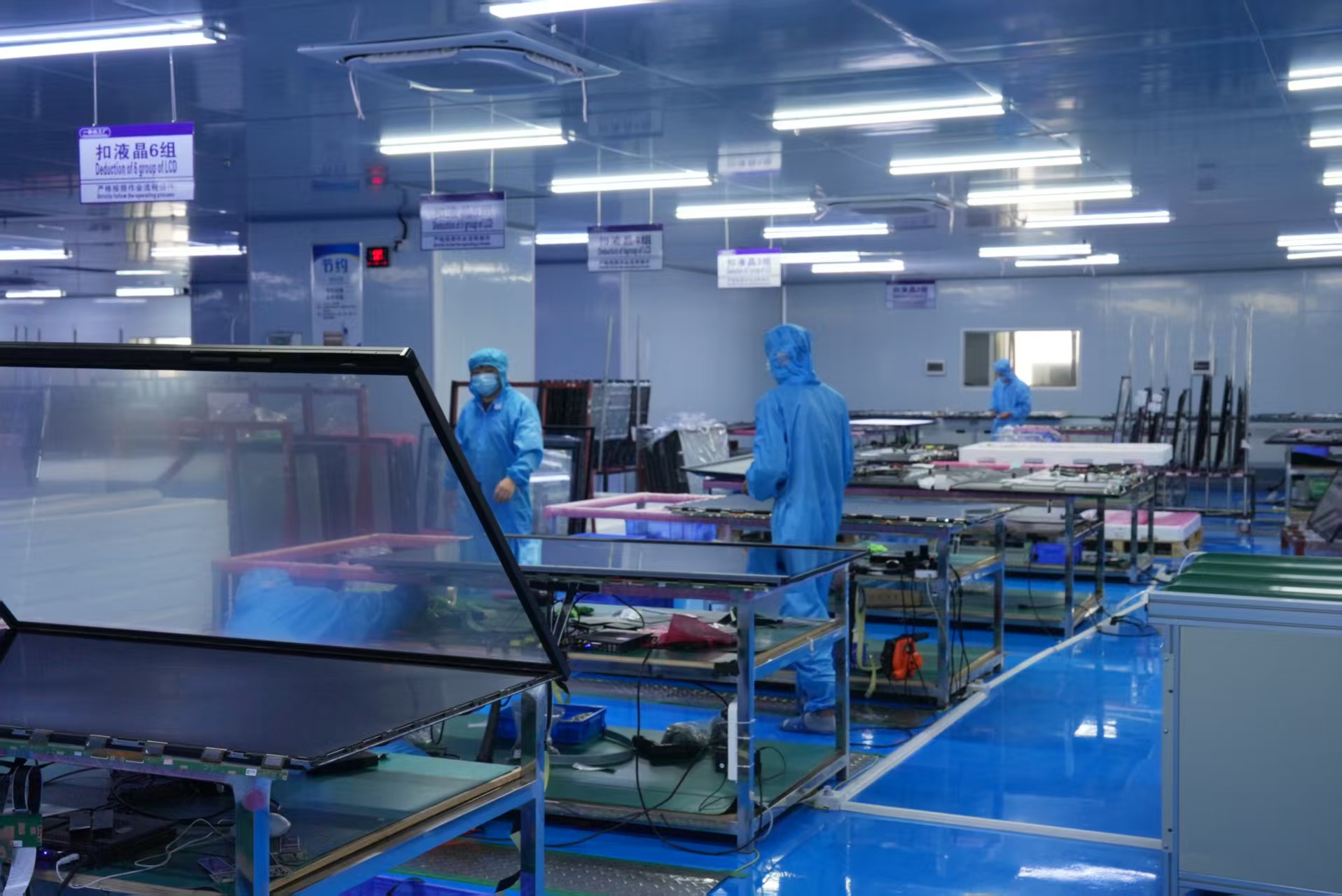
Production environment: ask which pre-shipment checks apply to the exact model and how the results are recorded and passed to the buyer.
Fit Boundaries Worth Writing Down
- Brightness is rated, not guaranteed legibility. A 2000 cd/m² rating sits inside the 1500–3500 nit band GZKEDRO states for its outdoor range; whether it is sufficient depends on orientation, shading and content contrast at the specific site.
- IP55 is an enclosure rating, not an installation guarantee. Confirm the approved mounting orientation and sealing arrangement for the exact model, and note that harsher environments — coastal salt exposure, heavy dust, standing water — may call for a different specification or a more frequent inspection schedule.
- A second face is an operating commitment. Dual-screen hardware only converts to value when two content streams can be produced, scheduled and sold. Operators without that capability often run the second face as a mirror of the first, which uses power without adding reach.
- Onboard compute has limits. An RK3288 quad-core processor with 2 GB RAM and 16 GB storage defines a working envelope; buyers planning complicated interactive layers, high-bitrate creative on both faces, or full local content libraries should confirm that envelope with the supplier before ordering.
- Published specifications are a starting point. Where a parameter is not stated — power draw, operating temperature, controller configuration on the single-screen model — it belongs in the RFQ rather than in an assumption.
Market Context and Outlook
Outdoor advertising hardware is bought inside a market that forecasters size differently. Grand View Research values the global commercial display market at USD 53.6 billion in 2024 and projects USD 60.3 billion in 2026 rising to USD 78.5 billion by 2030. Fortune Business Insights presents a broader series, from USD 57.78 billion in 2025 to USD 107.79 billion by 2034 at a 7.30% CAGR. The two sets use different product scopes and methodologies, so they indicate direction rather than a single consensus figure; averaging them would produce a number no source supports. For a buyer, the practical reading is that outdoor and street-facing display hardware remains an active procurement category, which supports competitive quotation and documented specification rather than urgency.
Compliance expectations are also worth tracking. UL Solutions describes UL 970 as covering commercial displays and retail fixtures, showcases and temporary displays — relevant where screens are integrated into street furniture or retail fixtures in the United States. Separately, GZKEDRO states that its products are certified to CE, FCC, RoHS and ISO9001; statements of this kind are made at company level, so buyers should request the certificate and report for the specific model and destination market rather than treating the claim as model-level proof.
On outlook, two developments are reasonable to plan around without overstating them. First, content operations are becoming the constraint rather than the panel: networks that can schedule and refresh creative quickly extract more from either format. Second, buyers are increasingly asking for documented service life and spare-part availability at the quotation stage, which shifts the comparison from a hardware price to a lifecycle cost. Neither point justifies assuming a specific market outcome; both justify keeping acceptance documentation and service terms in the contract.
FAQ
What is the main difference between the KD-OD and the KD-DSA?
The difference is face count and the electronics needed to drive it. The KD-OD Series is a single-screen outdoor advertising display with one 1080 × 1920 panel, 2000 cd/m² brightness and IP55 enclosure protection. The KD-DSA Series is a dual-screen outdoor advertising machine with two 1080 × 1920 panels, each rated at 2000 cd/m², driven by an RK3288 quad-core processor with 2 GB RAM and 16 GB storage. Resolution and brightness are the same; the number of advertising surfaces, the onboard compute and the protection documentation differ.
If both models share 1080 × 1920 resolution and 2000 cd/m² brightness, why choose a dual-screen unit?
Because the site can use two faces. A dual-screen unit suits positions where approach and departure traffic see different sides of the cabinet, or where an operator has advertiser demand for more than one campaign slot per location and a workflow that can schedule two playlists. Where a site has one dominant viewing direction, or where content cannot be refreshed for a second face, the single-screen model delivers the same panel quality with less hardware and fewer sealing points to maintain.
What do the RK3288 quad-core processor, 2 GB RAM and 16 GB storage mean in practice?
They describe the onboard playback envelope for the dual-screen model. The processor and memory have to decode and display content on two outputs, and the storage determines how much media can be cached locally rather than streamed from a content management platform. Buyers should confirm whether the two faces can play independent content or only mirrored content, which codecs and frame rates are supported per output, and how much of the 16 GB remains available for media after the operating system and playback application are installed.
Is IP55 sufficient for an outdoor advertising display?
IP55 means the enclosure is protected against dust ingress at level 5 and against water projected by a nozzle at level 5. That covers many street and building-mounted outdoor positions, but it is an enclosure rating under defined test conditions rather than a guarantee for every installation. Buyers should confirm the approved mounting orientation, drainage path and cable-entry arrangement for the exact model, request the ingress protection test documentation, and agree an inspection interval appropriate to the site's dust, heat and moisture conditions.
Are these outdoor displays certified for international markets?
GZKEDRO states that its products are certified to CE, FCC, RoHS and ISO9001. That statement is made at company level and does not by itself identify which models and configurations are covered. Before ordering, request the certificate and test report that name the exact SKU and the destination market, and check whether any additional national requirement applies — for example, UL 970 is described by UL Solutions as covering commercial displays and retail fixtures in the United States.
What should be verified before accepting delivery?
Verify the delivered configuration against the signed order, including face count, resolution, brightness rating, processor and memory, and enclosure rating. Request the pre-shipment test record tied to the serial number — GZKEDRO states a 72-hour aging test with real-time temperature monitoring before shipment. Then check gaskets, service doors and cable entries, run both faces with representative content for an agreed period, confirm content management commissioning and power-interruption recovery, and collect the documentation package and warranty terms matched to the delivered SKU.
Closing Note
For most buyers the decision resolves cleanly once the site is described in writing: one dominant viewing direction and a single content stream point to the KD-OD Series; two audiences and the operational capacity to fill two faces point to the KD-DSA Series. The specifications of both models, together with GZKEDRO's stated commercial display range, are published on the company's official site at GZKEDRO, and the full product catalogue — including the outdoor range — can be downloaded as a PDF catalogue. Buyers comparing the two formats should request the model datasheet, the IP test documentation and the pre-shipment test record for the exact SKU before issuing a purchase order.
Tem questões ou precisa de mais detalhes?
Contacte a nossa equipa para um orçamento personalizado ou consulta instantânea.
Solicitar orçamento
Preencha o formulário abaixo e a nossa equipa entrará em contacto com uma proposta personalizada.
Chat direto do WhatsApp
Prefere conversar em tempo real? Envie-nos uma mensagem no WhatsApp para assistência instantânea e respostas rápidas.
- Obter orçamento personalizado
- Partilhar fotos ou documentos
- Discuta as suas necessidades diretamente
Geralmente responde em 5–30 minutos durante o horário de expediente.