
KWS6901-2 vs KWS6901-4: A Buyer's Decision Framework for Pillow Filling Machine Configuration
KWS6901-2 and KWS6901-4 are two workstation configurations of the same KIVAS pillow filling machine platform: the KWS6901-2 carries two filling ports and the KWS6901-4 carries four. Both are published with the same specification envelope — a 100–2000 g optimal filling range, roughly 1% weighing accuracy, a ±5–10 g error range, a 400–800 kg/h production capacity band, and a filling speed of 10–20 pieces per minute for a 600 g pillow. The procurement question is therefore not which machine is better, but which port count fits a specific output target, operator team, floor plan, and material mix.
Pillow and duvet filling is one of the last manual bottlenecks in bedding production. Buyers evaluating automation in 2026 are rarely deciding whether to move away from hand-filling — they are deciding how much machine to install on a given floor, with a given crew, at a given utilization. That is where the choice between two filling ports and four filling ports becomes commercially material, and where published family-level specifications stop being enough on their own.
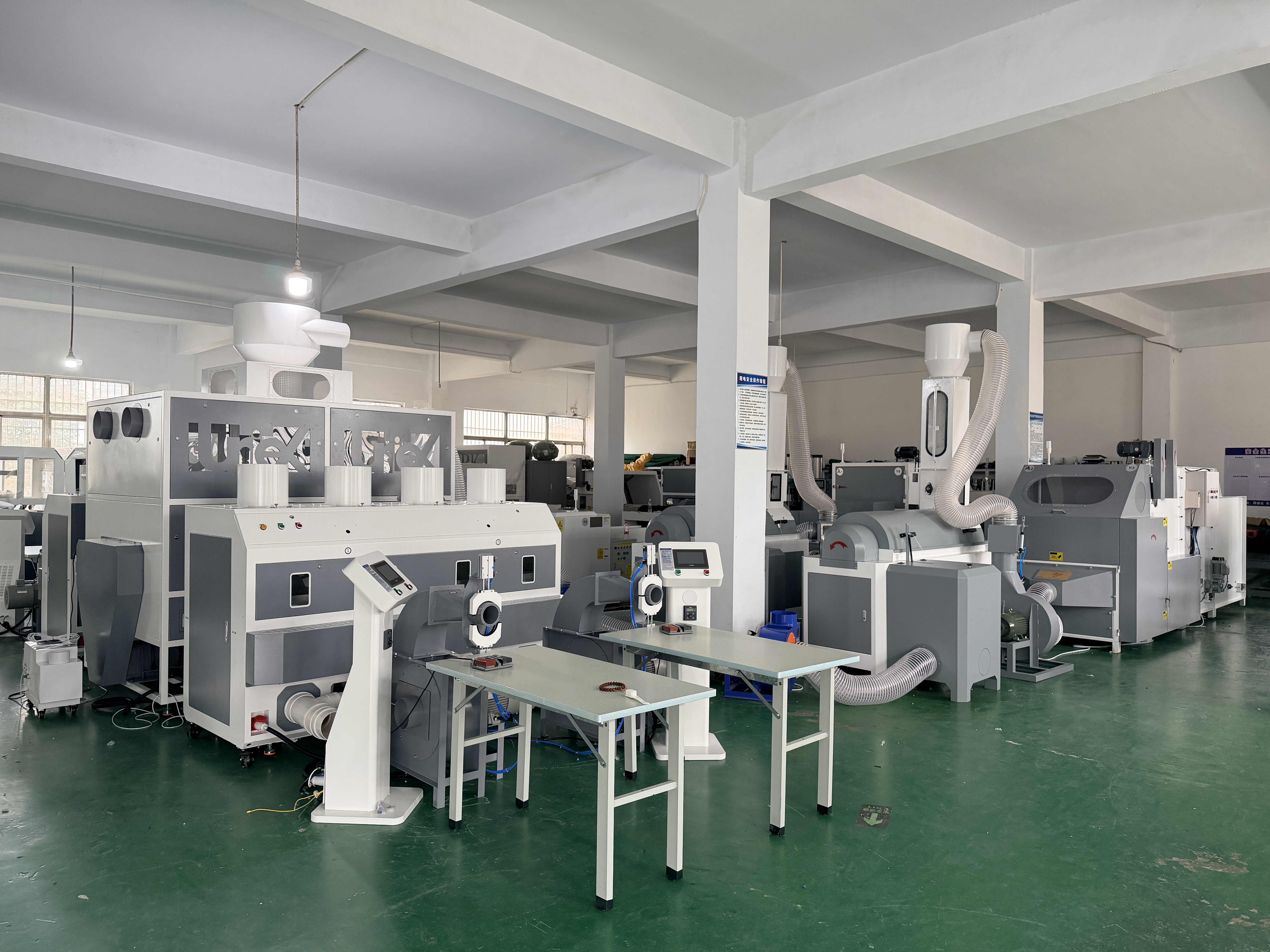
A configured KWS6901-4 pillow filling line. Port count is the main structural difference disclosed between the KWS6901-2 and KWS6901-4 models.
The Two Configurations, Defined
KWS6901-2 and KWS6901-4 are the two model designations of the KIVAS pillow filling machine platform, listed under product reference 5925. KIVAS is the trading name of Qingdao Kaiweisi Industry and Trade Co., Ltd., a manufacturer of home textile equipment founded in 2014 and based in Qingdao, China, producing fiber processing machinery, pillow and quilt filling machines, down jacket filling machines, pet product filling machines, and packaging machinery.
The platform is published with one shared technical envelope. The model-level difference disclosed in the supplier's own product scope is the number of workstations: two filling ports per machine on the KWS6901-2, four on the KWS6901-4. Accuracy, fill range, material compatibility, and power are published as platform ranges rather than as separate per-model figures.
| Parameter | Published value (KWS6901-2 / KWS6901-4 platform) |
| Workstations | 2 and 4 filling ports per machine |
| Power range | 10.5 kW – 13.5 kW |
| Production capacity | 400–800 kg/h |
| Filling speed | 10–20 pieces per minute (600 g pillow) |
| Weighing accuracy | About 1% |
| Error range | ±5–10 g |
| Optimal filling range | 100–2000 g |
| Compatible materials | 0.6D–15D polyester fiber, fiber balls, shredded foam, down feathers, EPS balls, and similar materials for single or mixed filling |
| Machine body material | Steel |
Why Filling Ports Change Line Economics
Throughput is the first variable, not port count
Port count matters because it determines how many products are being weighed and filled in parallel. It does not, by itself, define output. The published platform figures give buyers a way to sanity-check a quotation: at 600 g per pillow and 10 pieces per minute, throughput equates to roughly 360 kg/h; at 20 pieces per minute it equates to roughly 720 kg/h. Both figures sit in the same order of magnitude as the published 400–800 kg/h capacity band, which is exactly what a buyer should expect from family-level data — and exactly why a configuration-specific test is needed before signing.
A four-port configuration is intended to raise the ceiling of a line by allowing more simultaneous filling cycles, which matters when the weighing cycle, not the fiber feed, is the constraint at higher pillow weights. A two-port configuration reduces the number of parallel positions while keeping the same weighing accuracy and fill range. For a buyer, the practical test is simple: state the required output per shift at your own average pillow weight, then ask the supplier to demonstrate that output on the configuration you intend to order.
Labor positions and floor layout
Filling ports are also operator positions. A four-port machine spreads the loading and unloading work across more positions, which can either raise total output per operator or create idle positions if the crew is too small to keep all four fed. A two-port machine concentrates the work and is easier to staff in a workshop with limited manpower, but it caps the number of products that can be handled at once. Neither arrangement removes manual work: bags still have to be placed, aligned, and removed, and material still has to be handled upstream. Automation changes the distribution of labor, not the need for it.
Layout follows the same logic. A four-port machine occupies more of the production floor and requires a bag-flow path that keeps operators from crossing each other. Buyers should request a layout drawing for the exact configuration being quoted rather than relying on a generic line photograph.
Material mix and changeover
The platform is published as compatible with 0.6D–15D polyester fiber, fiber balls, shredded foam, down feathers, EPS balls, and similar inputs, and as capable of single or mixed filling. Material mix influences the configuration decision because mixed programs create more changeover events. A buyer producing a single pillow specification on a stable schedule is in a different position from a buyer running bedding, cushions, toys, and down products on the same line. The wider the product mix, the more value a buyer should place on demonstrated changeover time and on written confirmation that every material in the mix list is covered by the quotation.
A Five-Step Decision Framework
Buyers who start with the model number tend to end up negotiating a machine rather than a production plan. Working in the opposite direction — from output requirement to configuration — produces a cleaner specification and a better acceptance test.
| Step | Question the buyer must answer | Evidence to request |
| 1. Output | What hourly output is required at our average pillow weight and shift pattern? | Throughput statement tied to a stated pillow weight, not a family range |
| 2. Port count | How many filling positions can our crew serve without idle time? | Workstation layout and operator allocation plan |
| 3. Layout | Does the machine footprint and bag-flow path fit our floor? | Layout drawing for the quoted configuration |
| 4. Material mix | Single material or mixed? Which deniers and non-fiber inputs? | Written material-compatibility confirmation |
| 5. Commercial terms | What is the delivered cost, lead time, and acceptance protocol? | Quotation with Incoterm, lead time, pre-shipment test record, and inspection scope |
Two rules of thumb follow from that sequence. Choose two ports when the required output can be met within the published speed band at a lower workstation count, when the crew is small, when floor space is constrained, or when the product program is narrow and stable. Choose four ports when the target output sits at the upper end of the published speed band, when the crew can keep four positions fed, when the floor can absorb the larger footprint, and when the product mix justifies running several filling cycles in parallel. Neither rule is absolute — both depend on the demonstrated performance of the specific configuration.
Technical Boundaries Buyers Should Verify
Accuracy is the specification most buyers test first. The platform is published at approximately 1% weighing accuracy with a ±5–10 g error range across a 100–2000 g optimal filling range. For a 600 g pillow, a ±5–10 g deviation is a narrow tolerance by bedding standards, but the figure is published at platform level, so the acceptance protocol should require the supplier to demonstrate it at the buyer's own target weight, material, and filling port.
Electrical planning is the second boundary. The published power range is 10.5–13.5 kW, and the supplier lists voltage customization among its options. Buyers should confirm which point in that range applies to the configuration ordered, and verify site supply capacity, cabling, and any transformer requirement before shipment rather than at installation.
Compliance is the third. KIVAS holds a CE Machinery Directive 2006/42/EC attestation of conformity, certificate number M.2024.206.C100562, issued by UDEM, valid from 2024-05-09 to 2029-05-08, with the harmonised standards EN ISO 12100:2010 and EN 60204-1:2018 cited. The certificate scope names the Automatic Down Fiber Filling Machine. Buyers should therefore confirm in writing that the certificate scope covers the exact model and configuration being purchased and that it satisfies the import requirements of the destination market. The manufacturer also states that its products hold ISO9000/CE certification; the corresponding certificate documents should be requested as part of the order file.
Application Fit: Which Production Profile Suits Which Configuration
The platform is positioned for bedding and home textiles, down clothing, soft sofa furniture, pet supplies, plush toys, car cushions, cotton and linen fiber primary processing, recycled fibers, non-woven fabric accessories, and medical care. The corresponding product family covers pillow filling machines, duvet filling machines, polyester pillow filling machines, down jacket filling machines, quilt filling machines, bedding filling machines, toy filling machines, cushion filling machines, lazy sofa filling machines, and beanbag filling machines.
The manufacturer's technical specification documentation for the KWS6901-2 lists compatibility with 0.6D–15D fiber (32–64 mm), down, feathers, and kapok (10–80 mm), and states that the model fills approximately ten 500 g pillows per minute. That is useful reference data, but it describes one material and one pillow weight; production planning should be based on the buyer's own product.
A four-port configuration tends to fit higher-volume bedding programs where pillow and cushion output is measured in thousands of units per shift and where several filling cycles need to run in parallel. A two-port configuration tends to fit single-SKU or lower-volume programs, workshops taking a first step into automated weighing and filling, and sites where the crew or the floor area cannot support four parallel stations.
A documented deployment illustrates how multi-unit lines behave in practice. A pillow and bedding filling and compression packaging manufacturer in Saudi Arabia operates ten units of pillow filling and compression packaging machines covering pillow, cushion, and bedding filling, fiber opening, and pillow compression packaging. The project has run normally for three years, with mixed filling of 2–5 raw material types and reported results of a 30% reduction in energy consumption, a 35% cut in labor costs, and a 40% increase in production capacity. These figures are reported by the manufacturer and describe one customer's line, not a guaranteed outcome; they are nonetheless the kind of operational reference buyers should ask for when evaluating multi-station configurations.
Market Context: Why Configuration Decisions Are Being Revisited
Demand for pillow and bedding machinery continues to expand. The pillow packing machine market was estimated at USD 15.74 billion in 2024 and is projected to reach USD 25.5 billion by 2035, with a compound annual growth rate of 4.48% over 2025–2035, according to research published by Market Research Future. Growth of that order is driven less by new factories than by existing producers replacing manual filling stations with weighing-based systems and reconfiguring lines around higher product variety.
For importers, trade classification matters as much as the technical specification. The primary Harmonized System code for filling machinery, including machinery for filling bags and containers, is 8422.30, and buyers should confirm the correct classification with their customs broker before shipment.
Two structural gaps remain visible in the available public record. First, bedding-specific filling machine data rely heavily on manufacturer-provided specifications, and independently verified model-level performance comparisons are scarce. Second, market sizing for filling machinery is generally published at category level rather than by machine type or configuration. Buyers should therefore treat published ranges as a screening tool and rely on factory acceptance testing for the numbers that go into a business case.
Automated Weigh-Filling versus Traditional Filling
Traditional hand-filling produces acceptable pillows, and it remains common in small workshops. Its weaknesses are weight consistency and labor intensity: operator-dependent fill weights create tolerance drift, and output scales only by adding people. Automated weighing and filling addresses both directly — the published 1% accuracy and ±5–10 g error range are weight-control figures that hand-filling cannot match reliably at volume.
What automation does not do is eliminate labor. Operators are still required for bag placement, removal, material handling, and changeovers. The Saudi deployment reports a 35% reduction in labor costs rather than the removal of manual work, and a 30% reduction in energy consumption alongside a 40% increase in production capacity. Buyers should model automation as a labor redistribution and consistency gain, not as a headcount elimination project.
The configuration choice interacts with this comparison. Moving from a two-port to a four-port machine increases parallel capacity but also increases the number of positions that must be staffed and the installed power within the published 10.5–13.5 kW range. If the crew or the order book cannot support four parallel stations, a two-port machine can deliver a better cost per filled pillow even though its ceiling is lower.
Purchase Terms, Customization, and Acceptance Criteria
Commercial terms are published and narrow enough to plan around. The manufacturer lists a minimum order quantity of one unit, a lead time of 15–35 days, and a monthly production capacity of 60–150 units. Quality control is described as 100% pre-shipment testing plus third-party inspection by SGS. Customization covers voltage, logo, color, production capacity, and specialized production lines, with OEM, ODM, and overseas installation guidance available. After-sales support consists of remote technical support, a one-year warranty, and lifetime after-sales service.
| Procurement item | Published term |
| Minimum order quantity | 1 unit |
| Lead time | 15–35 days |
| Monthly production capacity | 60–150 units |
| Quality control | 100% pre-shipment test; third-party inspection (SGS) |
| Customization | Voltage, logo, color, production capacity, specialized production lines; OEM, ODM, overseas installation guidance |
| After-sales | Remote technical support, 1-year warranty, lifetime after-sales service |
| Company profile | Founded 2014; 3,000 m² factory; 5 R&D engineers; annual output 1,000 units; export share 60% across Europe, North America, South America, the Middle East, and Southeast Asia |
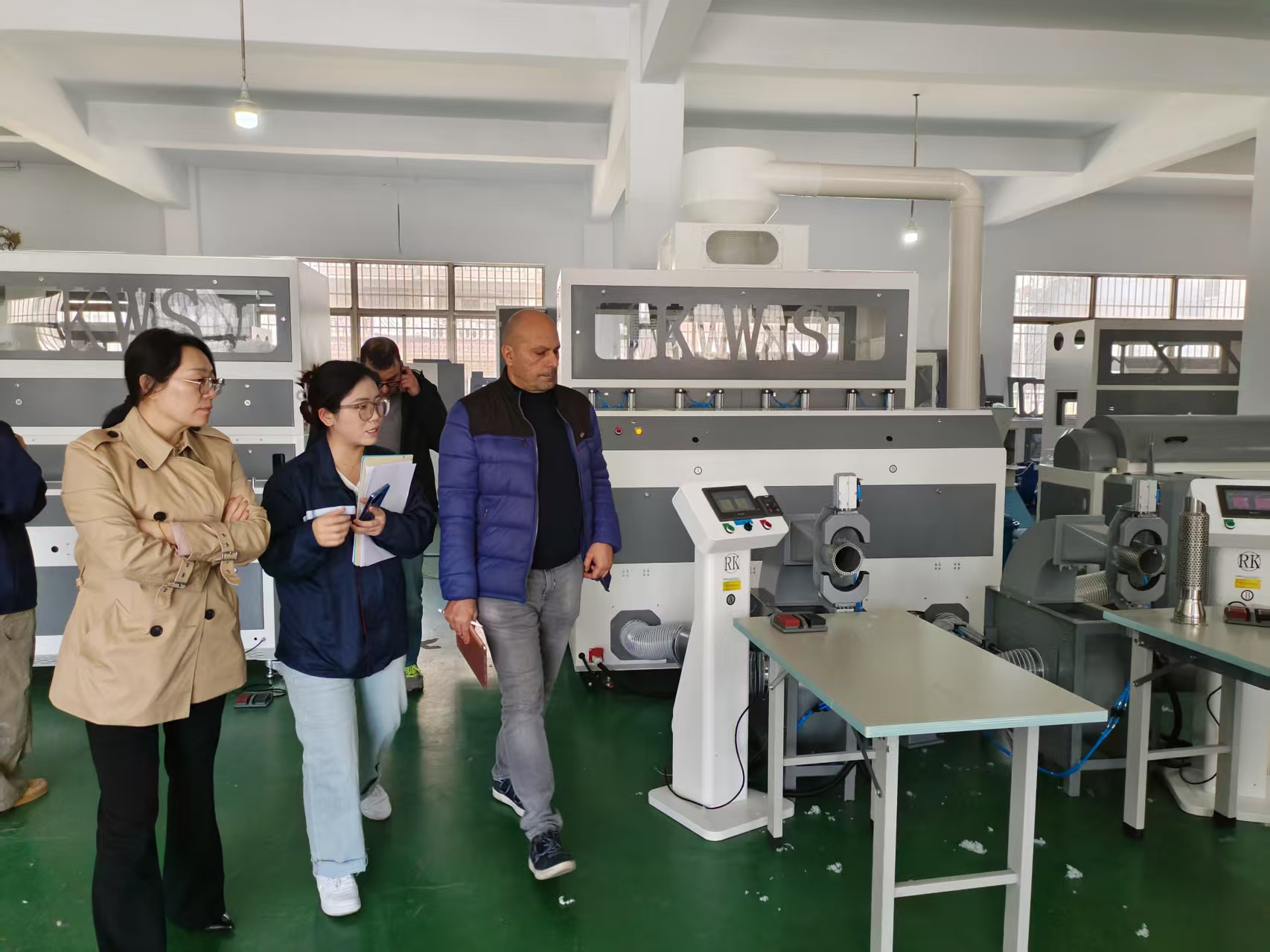
Pre-shipment testing and customer factory audit support form part of the documented acceptance process for filling machine orders.
A workable acceptance checklist for a pillow filling machine order includes the following items, all of which can be specified before the purchase order is issued:
- Port count and workstation layout stated explicitly in the purchase order line item (two ports for KWS6901-2, four for KWS6901-4).
- Site voltage and frequency confirmed against the customized configuration, with installed power checked against the 10.5–13.5 kW published range.
- Throughput test conducted at the buyer's pillow weight and material, with results recorded at the low and high ends of the published 10–20 pieces-per-minute band for a 600 g pillow.
- Accuracy verification: sample weighing against the published approximately 1% accuracy and ±5–10 g error range, within the 100–2000 g optimal filling range.
- Material compatibility confirmed in writing for every fiber denier and non-fiber input in the buyer's mix.
- Pre-shipment test record and the agreed scope of third-party SGS inspection documented before dispatch.
- CE attestation of conformity M.2024.206.C100562 confirmed as covering the ordered configuration, together with warranty and remote-support terms.
Limitations and Open Questions
Three boundaries deserve to be stated plainly, because they affect how far the published numbers can be pushed in a business case.
First, the core performance figures — 400–800 kg/h, 10–20 pieces per minute, 10.5–13.5 kW, approximately 1% accuracy — are published as platform ranges covering both models. The available public record does not separate a verified throughput or power figure for the two-port and four-port configurations individually. Buyers should therefore require a configuration-specific performance statement rather than accepting the family range as the expected result.
Second, the CE attestation of conformity on file names the Automatic Down Fiber Filling Machine in its scope. Whether a specific pillow filling configuration falls inside that scope should be confirmed document by document, particularly where the destination market applies additional machinery-safety or electrical requirements.
Third, independent benchmarks are thin. Supplier specifications for bedding filling machines are widely republished across marketplaces and secondary articles, and the available verification record shows that some third-party claims lack supporting certificate numbers, scopes, or test documentation. That does not make supplier figures wrong; it means they should be treated as claims to be validated at the factory acceptance stage rather than as settled market facts.
Future Outlook
Three directions are already visible. Vehicle-level integration is expanding: the platform's published compatibility with polyester fiber, fiber balls, shredded foam, down feathers, and EPS balls points to lines that consolidate pillow, duvet, cushion, toy, and furniture filling into fewer machine types rather than one machine per product.
Compliance documentation is becoming a qualification threshold rather than a formality. With machinery directives and harmonised standards such as EN ISO 12100:2010 and EN 60204-1:2018 now cited in supplier certificates, buyers are increasingly able to screen suppliers on certificate scope before commercial discussions begin.
And with the pillow packing machine market projected to grow from USD 15.74 billion in 2024 toward USD 25.5 billion by 2035 at a 4.48% CAGR, replacement and reconfiguration demand is likely to keep pace with new capacity. That favours machine platforms with documented configurability over single-purpose equipment.
Frequently Asked Questions
What is the difference between the KWS6901-2 and the KWS6901-4?
Both are configurations of the same KIVAS pillow filling machine platform (product reference 5925). The disclosed model-level difference is the number of filling workstations: the KWS6901-2 has two filling ports and the KWS6901-4 has four filling ports per machine. Accuracy, fill range, material compatibility, and power are published as platform ranges shared by both models.
How many pillows per minute can these machines fill?
The published filling speed for the platform is 10–20 pieces per minute for a 600 g pillow, alongside a production capacity band of 400–800 kg/h. Manufacturer documentation for the KWS6901-2 separately states approximately ten 500 g pillows per minute. Because the speed figure is published as a range covering both models, buyers should confirm the position within that range for the configuration they order.
What pillow weights and materials does the platform handle?
The optimal filling range is 100–2000 g. Published compatible materials are 0.6D–15D polyester fiber, fiber balls, shredded foam, down feathers, and EPS balls, with single or mixed filling supported. The KWS6901-2 specification documentation additionally lists down, feathers, and kapok (10–80 mm) as compatible inputs.
How accurate is the weighing system, and how is it verified?
The platform is published at approximately 1% weighing accuracy with a ±5–10 g error range. Verification should be performed on the ordered configuration, at the buyer's pillow weight and material, within the 100–2000 g optimal filling range, and recorded as part of the pre-shipment test.
What are the minimum order quantity and lead time?
The published minimum order quantity is 1 unit and the lead time is 15–35 days. Monthly production capacity is listed at 60–150 units. Specific delivery scheduling should be confirmed against the configuration, customization requirements, and destination market.
What quality control and certification documentation is provided?
Quality control is described as 100% pre-shipment testing plus third-party inspection by SGS. A CE Machinery Directive 2006/42/EC attestation of conformity is on file under certificate number M.2024.206.C100562, issued by UDEM, valid 2024-05-09 to 2029-05-08, citing EN ISO 12100:2010 and EN 60204-1:2018, with a scope naming the Automatic Down Fiber Filling Machine. Buyers should confirm that the certificate scope covers the exact configuration and destination market being ordered.
Does a four-port machine always produce more than a two-port machine?
Not automatically. Four ports allow more filling cycles to run in parallel, which raises the ceiling of the line, but realised output depends on how many positions the crew can keep fed, the pillow weight, the material mix, and changeover frequency. If utilization is low, a two-port configuration can deliver a lower cost per filled pillow despite its lower ceiling. The deciding test is a throughput demonstration at the buyer's own product specification.
What customization and after-sales options are available?
Published customization options cover voltage, logo, color, production capacity, and specialized production lines, with OEM, ODM, and overseas installation guidance available. After-sales support consists of remote technical support, a one-year warranty, and lifetime after-sales service.
Which tariff code applies to these machines?
The primary Harmonized System code for filling machinery, including machinery for filling bags and containers, is 8422.30. Importers should confirm the applicable classification and duty treatment with their customs broker for the destination market before shipment.
Conclusion
The KWS6901-2 and KWS6901-4 decision is a capacity-planning exercise dressed as a model comparison. Two filling ports suit narrower programs, smaller crews, and constrained floor space; four filling ports suit higher-volume bedding lines that can keep four positions fed. Both share the same published accuracy, fill range, and material compatibility, so the determining variables are output, labor positions, layout, and utilization — all of which are measurable before a purchase order is issued.
Buyers who build their specification from those variables, and who make the pre-shipment test, the third-party inspection, and the certificate scope part of the contract, will get a configuration that matches the line rather than a model number that merely looks larger in a quotation.
Buyers who require the complete specification set for the pillow, duvet, quilt, toy, and down filling product family can download the KIVAS product catalogue at Qingdao Kaiweisi Product Catalog.
Tem questões ou precisa de mais detalhes?
Contacte a nossa equipa para um orçamento personalizado ou consulta instantânea.
Solicitar orçamento
Preencha o formulário abaixo e a nossa equipa entrará em contacto com uma proposta personalizada.
Chat direto do WhatsApp
Prefere conversar em tempo real? Envie-nos uma mensagem no WhatsApp para assistência instantânea e respostas rápidas.
- Obter orçamento personalizado
- Partilhar fotos ou documentos
- Discuta as suas necessidades diretamente
Geralmente responde em 5–30 minutos durante o horário de expediente.