
Key Warning Post Certifications and Material Specs to Verify
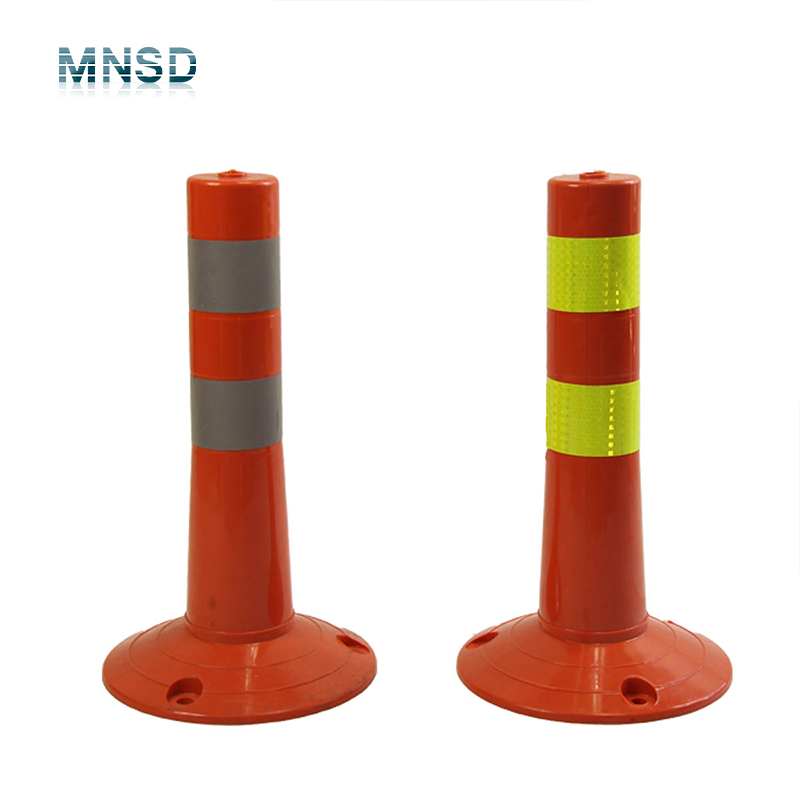
A flexible PU warning post with reflective sleeve used for permanent traffic delineation.
Warning posts are among the most common, yet most under-scrutinized, elements of road safety infrastructure.
Warning posts are used across expressways, parking facilities, construction zones, and industrial sites to define lanes, mark road edges, and guide both drivers and pedestrians. Because they are simple in appearance, procurement decisions are often treated as commodity purchases. In practice, the quality gap between compliant and non-compliant warning posts is significant, and the consequences of poor selection appear in the form of faded reflective sleeves, broken posts after minor impact, and failed site inspections.
For road contractors, municipal agencies, and facility operators, warning post procurement should centre on verification. Is the manufacturer legally registered? Do the product parameters meet the reflectivity, mechanical strength, and weather-resistance requirements of the project? Can the supplier deliver consistent quality at scale? These are the questions that separate reliable sourcing from costly trial and error.
Why certification and spec verification matter in 2026
The global road marker posts market was valued at approximately USD 3.4 billion in 2024 and is projected to reach USD 5.4 billion by 2032, according to third-party market analysis. The broader traffic safety products category is expected to expand at a CAGR of 6.6% from 2026 to 2034. Growth on this scale attracts new suppliers, including those whose products look similar to quality units but lack verifiable certification and test-backed material performance.
It is not possible to assess warning post quality by visual inspection alone. A post that appears identical on the outside can differ substantially in UV stabilisation, reflective film grade, polymer elasticity, and base anchoring strength. These differences only become visible after months of sunlight exposure or after the first vehicle contact. That is why documented certification and measurable parameters matter more than the appearance of the finished product.
Legal certification: the first layer to verify
The starting point for evaluating any warning post manufacturer is legal registration. Mnsd, a brand operated by Tiantai Yuanda Traffic Device Co., Ltd, is one example of a manufacturer whose compliance documentation is open to buyer inspection. The company holds a Business License numbered 91331023669153260K, issued by the Market Supervision Administration. The license is valid from 2007-11-13 to 2107-11-13, conforms to China Policy standards, and applies to all countries. It covers the warning post business and specifically includes the YD-PE50 product model.
It is worth clarifying what this certification is and is not. A Business License confirms that a manufacturing entity is legally registered and authorised to operate. It is a foundational compliance document, not a product-specific international quality certificate. For project tenders in Europe, the US, or the Middle East, buyers should use a Business License to confirm the legitimacy of the supplier, and then evaluate product-specific compliance separately against the standards that apply to the destination market.
Relevant international standards
Warning post buyers increasingly reference three frameworks when evaluating products:
EN 12899-3 (Europe): The European standard specifies requirements for delineator posts and retroreflectors used in traffic circulation areas.
MUTCD (United States): The Manual on Uniform Traffic Control Devices requires delineators to be retroreflective and visible from 1,000 feet when illuminated by high-beam headlights.
ASTM D2765 (United States): This standard provides procedures for measuring the gel content and swell ratio of crosslinked ethylene plastics, and is referenced in industrial safety product material evaluation.
When evaluating warning posts, buyers should compare manufacturer documentation against these reference frameworks. A certificate of legal registration is necessary, but it is not sufficient for projects governed by regional standards.
Material and performance parameters: what the numbers mean
Mnsd's warning post range — YD-WP45, YD-PE50, and YD-WPS75 — shares a common set of documented specifications. Understanding these values helps buyers evaluate whether a post will survive the conditions of a specific site.
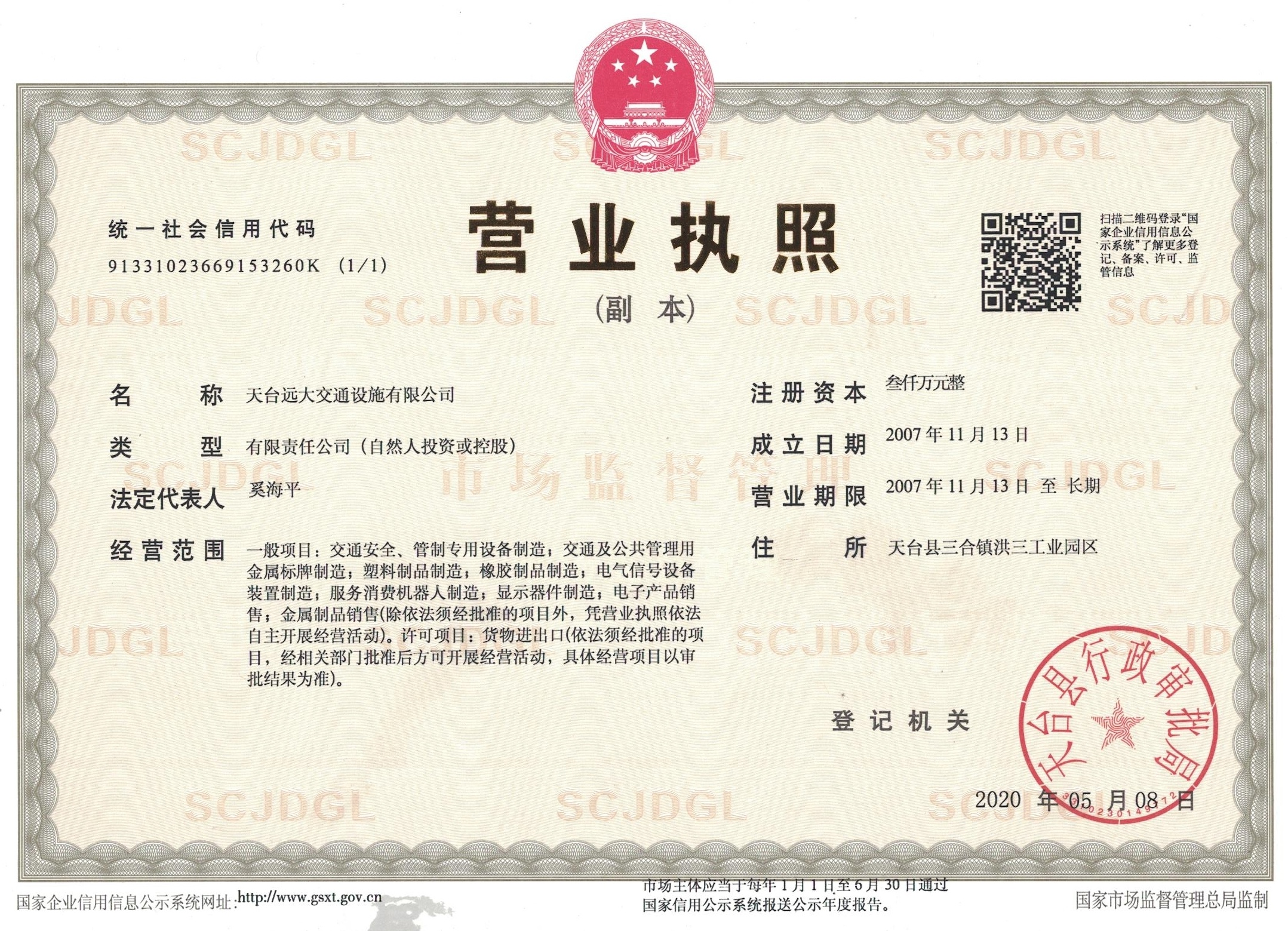
Business License certification document covering the warning post product line.
Material composition
Body material: High-elasticity polyurethane (PU) or heavy-duty polyethylene (PE). PU is generally associated with higher elasticity and recovery, while PE offers rigid impact resistance at lower cost. The two materials serve different site conditions and price points.
Base material: Recycled rubber or integrated plastic base. A rubber base improves surface grip and absorbs vibration, while an integrated plastic base simplifies the overall structure and reduces material separation risk.
Mechanical performance
Flexibility: The posts are designed to be flexible through 360 degrees, allowing them to bend on impact instead of breaking. After the vehicle passes, the post rebounds to its original position.
Tensile strength: 15.0 MPa. This indicates the stress level at which the material begins to fail under tension. For a warning post, this creates a reasonable balance between stiffness and deformability.
Elongation at break: 400%. This measures how far the material can stretch before breaking. A high elongation value is important in low-speed impacts, where the post must flex without snapping.
Hardness: 80–85 Shore A. This range is soft enough to absorb vehicle contact but firm enough to keep the post upright in normal conditions.
Visibility and reflectivity
Reflective grade: High-intensity prismatic (HIP) or Class 1 reflective tape. The tape is applied at a width of 250 mm, with double or triple sleeve options available for increased visibility.
Reflective colour: Silver white or fluorescent yellow. Both are widely recognised in traffic control environments for night-time visibility.
Visibility distance: More than 200 meters. This delivers extended advance warning for drivers, supporting compliance with reflectivity expectations found in MUTCD-style requirements.
Weather resistance
Temperature range: −40°C to +70°C. This allows the product to be deployed in both cold-region winter conditions and desert summer heat.
UV protection: UV-stabilised coating. The material is formulated to resist fading and oxidation, with documented colour fastness for more than 3 years.
Weatherproofing: Water and oil resistant. This extends the service life in roadside environments where the post will be exposed to rain, dust, and vehicle fluids.
Installation and design
Fixing method: Expansion bolt fixing with 3 or 4 holes. This is a standard permanent installation method for concrete and asphalt surfaces.
Top design: Ring top is available for chain attachment, allowing warning posts to be connected with safety chains in permanent delineation layouts.
Colour options: Traffic orange, yellow, red, and black.
Model selection: matching height to site requirements
| Model | Height | Dimensions | Material | Typical application |
|---|---|---|---|---|
| YD-WP45 | 450 mm | 450 × 80 × 200 mm | PU | Parking lots, sidewalks, confined space delineation |
| YD-PE50 | 500 mm | 500 × 260 mm | PE + rubber base | Road edges, industrial facilities, parking entrances |
| YD-WPS75 | 750 mm | 750 × 80 × 200 mm | PU | Expressways, construction zones, high-visibility delineation |
Higher posts such as the YD-WPS75 are generally specified where drivers need earlier visual warning or where snow clearance equipment must see the delineator above surface conditions. Lower models such as the YD-WP45 and YD-PE50 are more common in urban and parking environments, where visual clutter is a concern and slower vehicle speeds reduce the need for extreme visibility distance.
Production capability and quality control
For buyers evaluating suppliers, production capability is as important as product specifications. Mnsd's manufacturing operation is based on high-speed injection moulding, with a monthly capacity of 50,000 warning posts per month. Lead time for bulk orders is typically 10 to 15 days, and the minimum order quantity is 200 pieces. Customisation options include height, colour (orange, yellow, or green), and reflective tape brand options such as 3M or Grade A tape.
Quality control documentation includes more than 1,000 compression and rebound tests. The company also provides an after-sales UV-resistance guarantee covering no fading for 3 years. These production parameters are useful to procurement teams because they indicate that the supplier has standardised manufacturing processes, batch-level consistency, and a defined after-sales position — not just a product photo and a quotation.
Application evidence: from the UAE to Vietnam
The value of verified specifications is best understood in real operating environments.
UAE: road safety and municipal infrastructure
In the UAE, Mnsd warning posts have been applied in lane separation on high-speed expressways, highway ramps, T-junctions, urban sidewalk protection, and multi-level parking lot entrances. Working conditions in this region combine intense solar radiation, high ambient temperatures, and frequent vehicle contact. The specified requirements for this type of installation include 360-degree full-recovery impact resistance, UV-stabilised colour fastness for more than 5 years, and Class 2 / Grade A high-intensity reflectivity, with an operating temperature range of −40°C to +70°C. Installation is carried out using M10 or M12 heavy-duty expansion anchors, with optional epoxy adhesive for additional base reinforcement.
The UAE example illustrates why UV stability and elastic recovery are not marketing terms. In a desert environment, a post without adequate UV stabilisation will fade within a year and lose its warning function. A post without full-recovery impact resistance will stay bent after the first vehicle strike and eventually crack.
Vietnam: road safety project for a local authority
A contractor in Vietnam used Mnsd warning posts in a road safety project to warn vehicles and pedestrians, mark road edges, and identify dangerous areas. The project used the posts over a duration of 5 to 8 years and was completed and accepted by the local authority. The evaluation feedback highlighted high visibility, durable material performance, impact resistance, and ease of installation.
For procurement teams, the Vietnam case shows that warning post quality is ultimately judged in project acceptance. A product that fails during the project cycle creates rework cost and project delay, which is far more expensive than the unit price difference between a verified product and an unverified alternative.
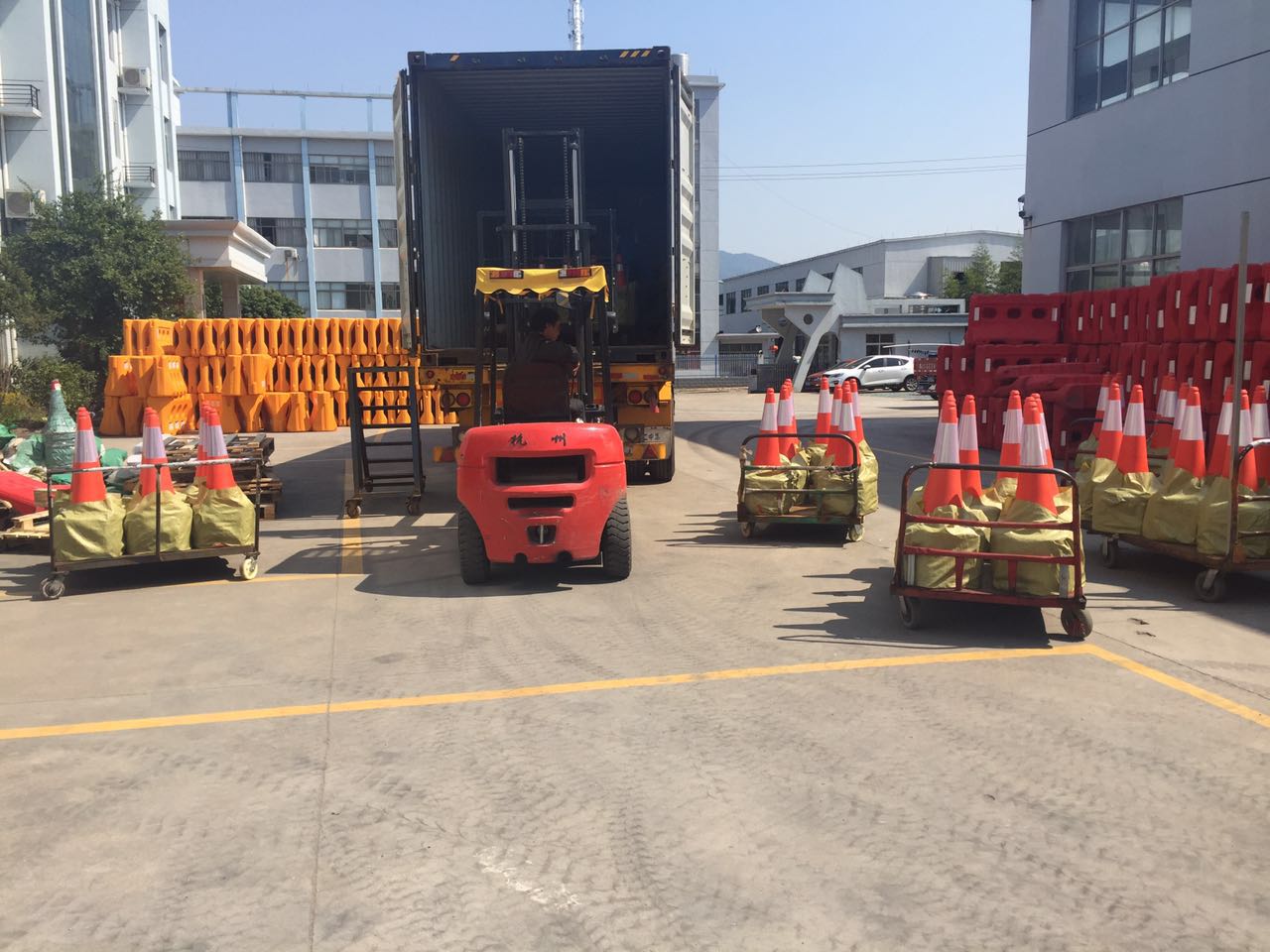
Export shipment loading at the manufacturer's facility.
Market context: what the data says
Several verified market signals are relevant to warning post buyers in 2026.
Demand is growing steadily. The global road marker posts market is estimated at USD 3.4 billion in 2024 and projected to grow to USD 5.4 billion by 2032. Macro drivers include urban population growth, road infrastructure investment, and safety regulation updates.
Standards are becoming a procurement language. Buyers in the EU and US are increasingly referencing documents such as EN 12899-3, MUTCD visibility requirements, and ASTM material testing methods. Suppliers that can align their product parameters with these frameworks have a structural advantage in international tenders.
The market includes both global majors and specialised manufacturers. Leading global traffic equipment companies such as 3M, Honeywell, and SWARCO collectively hold an estimated 39.2% market share. The remaining space is served by regional and specialised suppliers, including Chinese manufacturers that offer competitive factory pricing, customisation flexibility, and production scale. For buyers, this means the supply base is broad — but verification discipline is what differentiates a reliable partner from an opportunistic reseller.
Comparison with traditional rigid solutions
Traditional rigid delineation systems — including concrete barriers, steel bollards, and fixed metal guardrails — serve a clear purpose. They physically prevent vehicle entry and are appropriate for security-sensitive zones where intrusion must be impossible. They are also expensive to install, cause significant vehicle damage on impact, and require heavy equipment and labour to replace.
Flexible warning posts offer a different design logic. They are not a replacement for rigid systems; they complement them. A flexible PU or PE post bends on impact, reduces damage to both the vehicle and the post, and returns to its original position after the vehicle passes. This makes them particularly suitable for lane delineation, parking guidance, and low-to-moderate speed road environments where frequent impacts are expected but security is not the primary objective.
There are clear limitations that buyers should acknowledge. Flexible warning posts are not appropriate for high-security checkpoints, military facilities, or hazardous-area access control where vehicle-stopping capability is mandatory. In those locations, fixed steel or reinforced barriers remain the correct specification. Flexible posts can also suffer base loosening after repeated severe impacts if the ground preparation or anchor specification is inadequate. In addition, although the material is designed for weathering and oil resistance, long-term exposure to aggressive chemicals or severe mechanical abrasion may require more frequent inspection and replacement than a rigid structure.
The practical procurement takeaway is this: define the site's threat level and impact frequency before choosing between rigid and flexible systems. Flexible warning posts are selected for traffic channelling, visual guidance, and impact mitigation, not for perimeter security.
Future outlook
Warning post procurement will continue to move toward documented compliance. The direction of market demand suggests that buyers will increasingly request batch-level test reports, clear material brand specifications, and certification documents that map to destination-market standards. Suppliers that operate with transparent production records, consistent capacity, and verifiable quality data will be better positioned for long-term contracts with contractors, distributors, and government agencies.
At the same time, material technology is evolving. High-elasticity polymers such as PU and TPU are being used more widely because of their superior recovery behaviour compared with standard PE. This does not mean PE is obsolete; it means buyers need to select materials based on the specific demands of the application — traffic volume, vehicle speed, climate, and expected service life.
The longer-term direction points to smarter integration: warning posts that combine delineation with sensor capability or connectivity for traffic monitoring. But even as features evolve, the fundamentals of certification, material testing, and installation integrity will remain the core of a sound procurement decision.
Frequently asked questions
Warning post certification and specification — buyer FAQs
Q: How can a buyer verify the legal registration of a warning post manufacturer?
A: Buyers should request the manufacturer's Business License and verify the certificate number, issuing authority, and validity period. For example, the manufacturer behind Mnsd warning posts holds Business License No. 91331023669153260K, issued by the Market Supervision Administration under the China Policy framework.
Q: Which products does this Business License cover?
A: According to the documented certification, the Business License covers the warning post product line and specifically applies to the YD-PE50 model. The license is applicable to all countries.
Q: What is the validity period of this certification?
A: The Business License is valid from 2007-11-13 to 2107-11-13, confirming that the manufacturer's legal registration is maintained on a long-term basis.
Q: Does a Business License replace product-specific international certification?
A: No. A Business License confirms legal manufacturing status. It is not a substitute for destination-market standards such as EN 12899-3 in Europe or MUTCD visibility requirements in the US. Buyers should evaluate product parameters separately against the requirements of the target market.
Q: What are the key material specifications for Mnsd warning posts?
A: The YD-WP45, YD-PE50, and YD-WPS75 models share common specifications: operating temperature from −40°C to +70°C, UV-stabilised coating, High-Intensity Prismatic (HIP) or Class 1 reflective tape, 250 mm reflective sleeve width, visibility distance above 200 meters, tensile strength of 15.0 MPa, elongation at break of 400%, and hardness of 80–85 Shore A.
Q: How should a buyer choose the right warning post height?
A: Selection should be based on the site's visibility requirements and vehicle speeds. Taller posts such as the 750 mm YD-WPS75 are suited to expressways and high-speed approaches where earlier warning is needed. The 450 mm YD-WP45 and 500 mm YD-PE50 are more common in parking lots, sidewalks, and low-speed urban environments where excessive visual height is unnecessary.
Reference: For full factory and product documentation, download the manufacturer's brochure: Mnsd Company Brochure (PDF)