
Kids Balance Bike Supplier Audit: Model-Line Continuity
Kids Balance Bike Supplier Audit: Model-Line Continuity
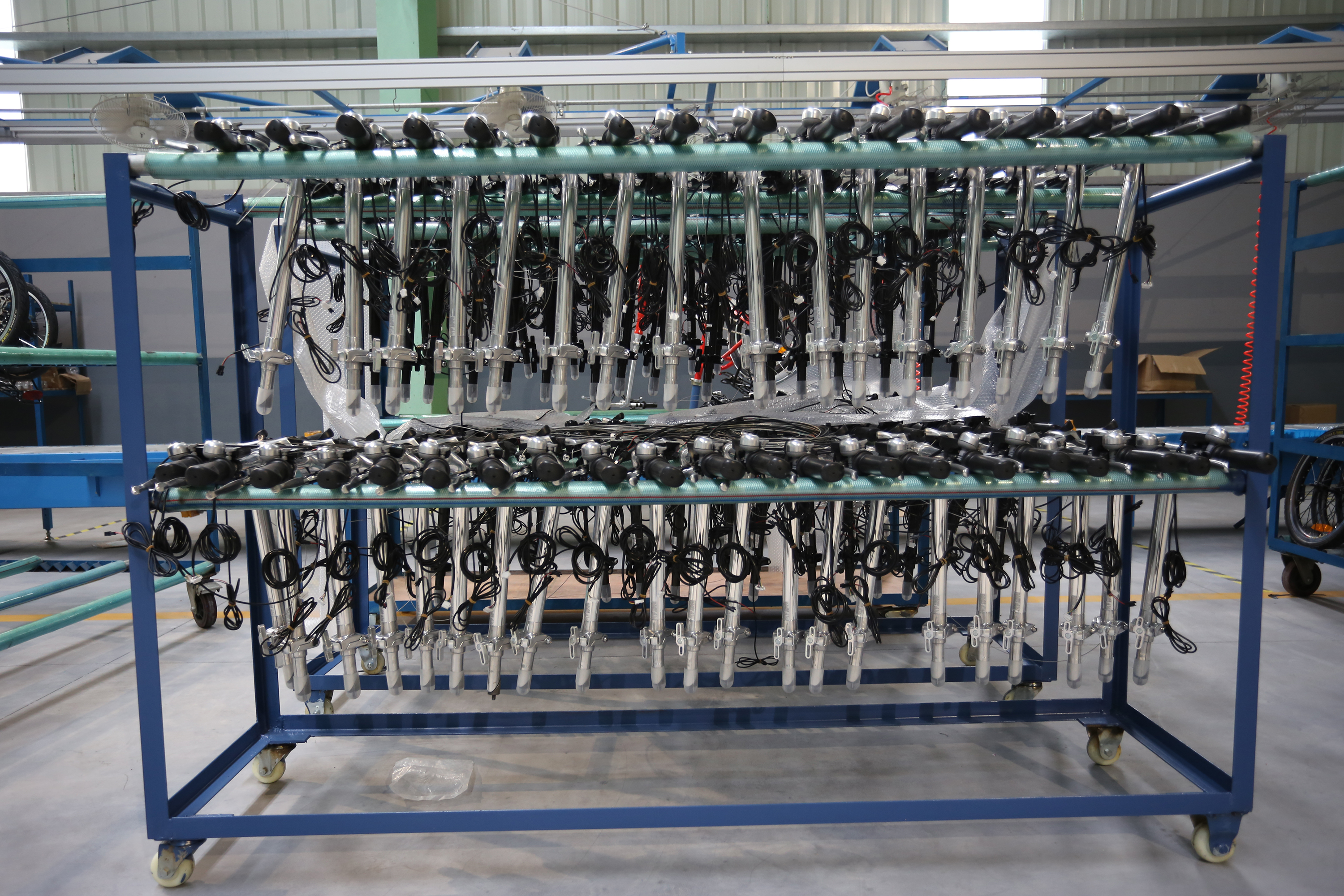
Most kids balance bike supply failures are not first-shipment quality failures. They are continuity failures: the second order arrives with a different tyre, a colour that no longer matches the approved sample, or a 14-inch frame that has quietly left the range. A model-line continuity audit is the part of long-term supplier evaluation that tests whether a supplier can hold a coherent range together across repeat orders, here AME-1201, AME-1202 and the 2-in-1 Kids Bike, rather than whether one model can be quoted at a competitive price.
For buyers at the decision and execution stage, the question is narrower than who makes a good balance bike. It is whether the range, the documentation and the commercial terms will still line up in the third or fourth order, when packaging, listings, dealer training and a spare-part plan have already been built around them. The audit below sets out the evidence to collect, the specifications that drift first, and the points where the published material for this line needs written confirmation.
Why a single-model quote is a weak basis for a repeat programme
A quotation for one model describes one configuration at one moment. It does not describe whether the same frame platform, tyre, rim, paint colour, carton and manual will exist in the next buying cycle, or whether the size above and below share any of those parts. Continuity failures are administrative rather than dramatic: a rim source changes, a colour is re-matched to a different standard, a 14-inch version is consolidated into the 12-inch line, or a display unit is substituted with a functionally similar part that does not fit the existing bracket.
The cost lands in predictable places. Samples are re-approved, listings re-photographed, packaging artwork re-cut, and after-sales promises are made against parts that can no longer be ordered. This is why the audit treats the range, not the hero model, as the unit of evaluation, and why the stated MOQ of 50 pcs matters: it makes a deliberate small repeat order possible, which is a better continuity test than any questionnaire.
The supplier behind the line
Wuxi Purino International Trade Co., Ltd is a trading enterprise based in Wuxi, Jiangsu Province, founded in 2016, supplying electric bicycles, kids scooters, children balance bikes and related components, with stated exports to the EU and USA. Its stated facility covers 2,300 m², with annual production capacity of 200,000 pcs, approximately 10 staff and an R&D team of three engineers, supported by long-term cooperative manufacturing factories with production lines, testing equipment and R&D capability. The company website is purinocycle.com.
Two structural facts shape how a buyer should read everything that follows. Capacity is realised through partner factories rather than a single owned plant, so the audit has to reach factory level: which line, which tooling, which inspection point. And 200,000 pcs per year is a company-level figure across a portfolio that also includes electric bicycles and scooters; it is not capacity reserved for one balance bike model. Neither fact is a defect, but both change the questions a long-term buyer should ask. Electric bicycles such as the ACOPFLEX Electric Bike follow a different documentation path from toy-category balance bikes and sit outside this audit.
Four tests that define model-line continuity
A continuity audit answers four questions in order, and each should have a document behind it.
- Is the line a range or a set of unrelated SKUs? A range shares platforms, hardware, packaging logic and spare parts; unrelated SKUs share a catalogue page.
- Does each configuration travel with size? A 12-inch build with an air tyre and aluminum rim is one specification, not a family. The audit checks whether the same logic holds at 14 and 16 inches.
- Do after-sales features persist? Battery packs, chargers and display units are bought-in parts with their own lifecycles; frames usually survive, electronics often do not.
- Do terms and capacity support repeat orders? MOQ, delivery terms, inspection sequence and payment structure decide whether a buyer can verify continuity before committing money.
Anything that cannot be evidenced under one of those four headings belongs in a clarification request, not in a purchase order.
Line architecture: two balance bikes and a convertible
The line under evaluation consists of AME-1201 and AME-1202 as the conventional balance bike pair, plus the 2-in-1 Kids Bike as the convertible model, with available sizes of 12, 14 and 16 inches.
The first question is whether the convertible shares a frame platform with the conventional models or stands alone. If platform and hardware are shared, spare-part overlap is real and a dealer can carry one parts box for the range. If it is a separate platform with its own conversion hardware, the buyer is effectively managing two supply relationships inside one catalogue, and those conversion parts need their own availability commitment.
The second question is positioning. Two conventional models at similar specification can be a deliberate range strategy, differentiated by frame material, price tier or channel, or evidence that the line has not been consolidated. The stated frame options of magnesium alloy and steel point toward the first reading, but the material reviewed here does not fix which model carries which material. That mapping should be requested as a matrix rather than inferred from model numbers, because a buyer who assumes it and is wrong has approved the wrong sample.
Frame configuration: magnesium, aluminum and steel in one line
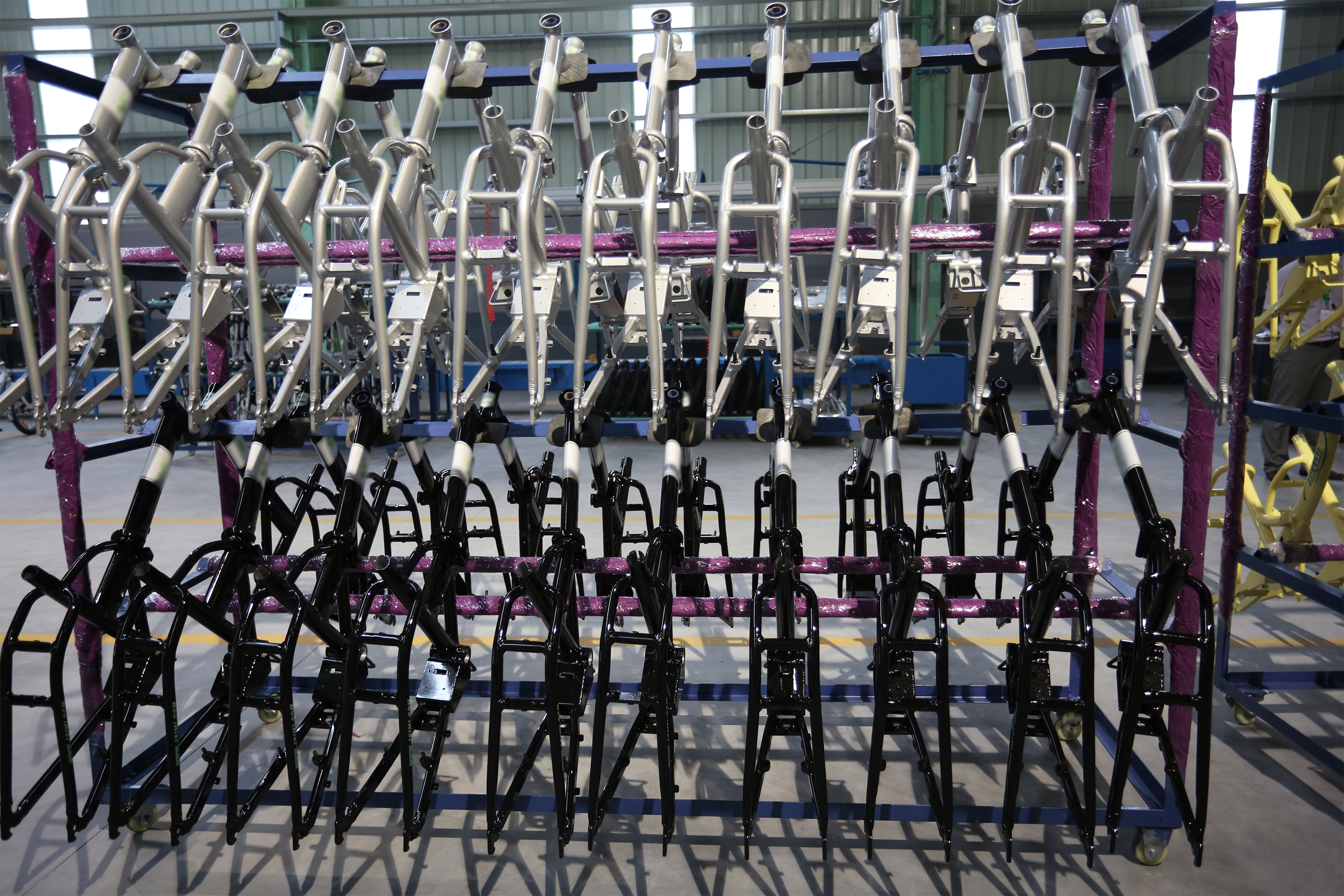
Offering three frame materials inside one line is a genuine range decision, and each carries a different continuity profile. The company's material comparison frames the trade-off in familiar terms: magnesium alloy is lighter, corrosion-resistant and smoother in motion at higher production cost, while iron frames, normally marketed as steel, are low-cost and load-bearing but heavier, rust-prone and less flexible. Aluminum alloy sits between them.
| Frame configuration | What it buys in the range | Continuity risk to manage |
|---|---|---|
| Magnesium alloy | Lightest option; corrosion resistance; smoother ride feel; premium retail and gift positioning | Higher unit cost and higher repair cost if damaged; confirm the frame source and replacement policy |
| Aluminum alloy | Balance of strength and weight; general retail and daily outdoor use | Mid-tier pricing; confirm alloy grade per SKU rather than per catalogue |
| Steel (iron) | Low cost and high load capacity; kindergarten, school and bulk programmes | Heavier body weight; rust risk in humid storage, so finish durability becomes an inspection item |
One external reference point is useful for scale. A frame-material comparison published by Montasen in September 2026 puts a magnesium alloy integrated casting frame at approximately 680 g, with total bike weight around 3.1 kg for 12-inch magnesium models. That is a third-party order-of-magnitude figure, not a specification of AME-1201 or AME-1202, and it should not appear in a listing without the supplier's own measured value.
For long-term buying, the declaration matters more than the material choice. A written per-SKU statement of frame material, size and finish is what prevents a repeat order from arriving in a different material at the same price.
Wheel, tyre and size logic: where specifications drift first
The stated 12-inch build pairs an air tyre with an aluminum rim, and available sizes are listed as 12, 14 and 16 inches. Read together, those two statements create the audit's first real inconsistency: the wheel specification is written for one diameter while the range spans three.
Either the air-tyre and aluminum-rim combination applies across all sizes, or it describes the 12-inch model and the larger sizes differ. Both are defensible product decisions, but only one can be true at a time, and the difference is invisible in a catalogue photograph. Buyers should ask for the tyre and rim specification repeated for each size, with the tyre size marking, rim material and valve type stated.
Tyre construction also carries a maintenance consequence that belongs in any long-term evaluation. EVA solid tyres never need inflation and keep maintenance low; inflated tyres offer better comfort and surface feel but need periodic pressure checks and inflation. For a kindergarten or rental fleet, maintenance labour is a recurring cost and a puncture is an operational interruption. For premium retail, ride comfort usually outweighs the upkeep. The line does not have to satisfy both, but the buyer should know which one is being purchased before the second order.
After-sales continuity: battery packs, charging and display features
Battery packs and Bluetooth or digital-display features are the weakest link in a multi-year line, because they are sourced components rather than frame parts. A supplier can keep geometry, frame and paint identical while the pack, charger or display changes underneath, and that is the change a dealer discovers at the service counter.
The published specifications for AME-1201, AME-1202 and the 2-in-1 Kids Bike reviewed here do not list pack voltage, charger input, charging time, connector type or display attributes. That is not evidence of absence; it means these attributes must be confirmed in writing for any variant that carries them. The audit should lock pack identity with part number and revision, whether the pack is common across the three models, charger input voltage and plug type by destination market, charging time, and whether the charger ships in the carton. It should also fix the period for which replacement packs and chargers can be ordered, their minimum order, and whether the display is a separately orderable part with a stated version and a mounting standard that accepts a replacement. For any powered variant, the applicable test documentation should be confirmed with the supplier and with the buyer's own compliance laboratory rather than assumed.
The same discipline applies to any feature that appears in one order and disappears in the next: it belongs in a controlled-item list with a change-notice requirement, not in a catalogue description.
Purchasing terms as an audit checklist
The stated commercial terms are specific enough to function as evidence rather than as negotiation points alone.
| Term | Stated position | What the buyer should verify |
|---|---|---|
| Minimum order | MOQ 50 pcs | Whether the MOQ applies per model, per size or per colour, and whether a mixed-model order reaches it |
| Delivery terms | FOB / CFR / CIF | Which term is quoted, since it determines who controls freight, packaging robustness and insurance |
| Acceptance | Inspection before shipment | Who inspects, the sampling plan and AQL, the checklist items, and the pass or fail criteria written into the order |
| Payment | 30% in advance, 70% before loading, by T/T or L/C | That inspection is completed and accepted before the balance is released, and that L/C terms match the agreed documents |
Two of these deserve more attention than they usually receive. Inspection before shipment is a gate, not a standard: it does not state who inspects, how many units, or against which criteria, so the buyer must define those or accept the supplier's default. And with 70% falling due before loading, the inspection has to sit between the two payments. If it happens after the balance is paid, the buyer has financed the shipment and lost the leverage the payment structure was meant to create.
The 50-piece MOQ is the term that most directly supports continuity testing. It makes a small repeat order feasible, at the same item and the same specification, months later, which is more informative than any supplier questionnaire.
Capacity, staffing and allocation
Annual capacity of 200,000 pcs and a 2,300 m² facility read well on a supplier profile, but a long-term buyer needs to know how much of that capacity is reachable for a specific model in a specific month. Three questions convert the headline into usable information: which cooperative factory produces the balance bike range, what monthly slot is available in peak season, and who owns the tooling, moulds and printing plates used for private-label parts.
The staffing figure matters for the same reason. Ten staff with a three-engineer R&D team supporting electric bicycles, scooters and balance bikes means technical review is concentrated. That is workable when changes are documented and risky when they travel through chat messages, because the person who approved the original sample may not be the person answering a question a year later. Written change notices, a retained approved-sample library and a named technical contact are the practical mitigations.
OEM and ODM: continuity under private label
OEM and ODM support covers logo printing, customized packaging, colour matching and specification adjustment. Each of those turns a catalogue item into a single-source item. Once a carton carries the buyer's artwork and a frame carries a matched colour, changing supplier means re-approving artwork, re-matching colour and rebuilding the sample set, which is why private-label buyers should evaluate continuity before the first production run rather than after it.
Four documents make private-label continuity auditable: a colour reference with a stated standard and tolerance, the approved packaging dieline and artwork files, a retained golden sample per SKU signed by both parties, and a change log recording every specification adjustment with its date and approval. Sample arrangement and quotation before a recurring programme is the natural point to build that set, and it is far cheaper to build then than to reconstruct later.
Line-based sourcing versus model-by-model buying
Sourcing a full line from one supplier and buying model by model from several are both legitimate strategies with different cost structures.
Line-based sourcing concentrates approval work, shares hardware and packaging logic, simplifies spare parts and leaves one documentation trail across sizes. It also commits the buyer to one supplier's material logic, one MOQ structure and one change-control process, which is a real constraint if the range later needs a category the supplier does not make.
Model-by-model buying maximises price flexibility and breadth and can be entirely adequate for a buyer selling a single size in a single channel with no service obligation. Its cost appears in duplicate sample approvals, fragmented documentation, incompatible hardware across the range and an after-sales position that is hard to explain to a dealer. The fit boundary is straightforward: the more sizes you sell and the longer you support the units already sold, the more continuity is worth relative to unit price.
Market and compliance signals worth auditing against
Two market estimates are useful as context, provided they are read as directional. The Business Research Company projects the global balance bike market at approximately USD 1.43 billion by 2026, while Coherent Market Insights expects a 7.2% CAGR from 2026 to 2033. Published 2025 estimates vary between roughly USD 1.05 billion and USD 1.33 billion depending on how each source defines the category, a definitional difference rather than a contradiction, and a reminder not to build volume plans on a headline figure without checking its scope.
On compliance, a European compliance guide published in January 2026 states that EN71-1:2026 introduces mandatory performance testing for ride-on toys including balance bikes, effective 1 January 2026. Whatever the destination market, the audit consequence is the same: test documentation should exist per model and per size, with a current date, and should be reissued rather than recycled when a specification changes. Balance bikes are also classified under HS code 95030010 for trade purposes, worth confirming on each shipment if the buyer clears customs in more than one market.
Documentation continuity is part of line continuity. A supplier that can reissue a current report for a 14-inch variant without a month of correspondence is easier to keep than one that cannot.
A practical audit sequence
- Request the full line matrix: model, size, frame material, tyre and rim specification, colour.
- Ask for a written material declaration per SKU and compare it with the current catalogue, noting every difference.
- Request current test documentation per model and size, with issue dates.
- Confirm whether the 12-inch air-tyre and aluminum-rim build extends to 14 and 16 inches.
- For any battery, charger or display variant, obtain part numbers, spare-part availability and charger specifications by market.
- Ask which cooperative factory and line produce the balance bike range, and what capacity is allocated in peak season.
- Write the inspection protocol, sampling plan and pass criteria into the order, sequenced before the 70% balance.
- Retain signed golden samples and a change log, and require written notice before any specification change.
Outlook
Ranges are widening and sourced electronics are becoming more common, and both increase the number of parts that can change between orders. Suppliers that treat change control as part of the product, with documented matrices, retained samples and reissued test reports, will be easier to keep than suppliers that treat it as paperwork. That capability can be tested cheaply, with a 50-piece repeat order and a written specification, before a season's volume is committed.
Frequently asked questions
What does a model-line continuity audit cover that a sample check does not?
A sample check verifies one unit against one specification at one moment. A continuity audit covers the range: whether each model has a stated configuration, whether that configuration holds across 12, 14 and 16 inches, whether bought-in parts such as packs and displays remain orderable, and whether the commercial terms let a buyer verify a repeat order before paying for it.
How should a buyer confirm frame material for AME-1201, AME-1202 and the 2-in-1 Kids Bike?
Request a written matrix stating the frame material for each model and size. The material reviewed for this line describes magnesium alloy and steel frame configurations and also discusses aluminum alloy, but it does not fix which model uses which material, so the mapping should come from the supplier in writing rather than from model numbering or catalogue inference.
Do the 12-, 14- and 16-inch sizes share the same tyre and rim specification?
That is not established by the published material. The stated build is a 12-inch air tyre with an aluminum rim, while available sizes are listed as 12, 14 and 16 inches. Buyers should have the tyre size marking, rim material and valve type confirmed separately for each size before approving the range.
What do the stated purchasing terms mean for a repeat order?
The stated terms are a MOQ of 50 pcs, delivery on FOB, CFR or CIF, inspection before shipment, and payment of 30% in advance with 70% before loading by T/T or L/C. In practice the buyer should specify who inspects and against which criteria, confirm which delivery term is being quoted, and sequence inspection before the balance payment so that acceptance still has commercial effect.
How should battery charging and display features be handled in a long-term agreement?
Treat them as controlled items. The published specifications for these three models do not list pack voltage, charger input, charging time, connector type or display attributes, so any variant that includes them should be documented with part numbers and revisions, charger specifications by destination market, spare-part availability, and a written change-notice requirement before substitution.
Specifications cited in this article reflect the product and company information available at the time of writing; buyers should confirm current model, size and material configurations directly with the supplier before contracting.
Tem questões ou precisa de mais detalhes?
Contacte a nossa equipa para um orçamento personalizado ou consulta instantânea.
Solicitar orçamento
Preencha o formulário abaixo e a nossa equipa entrará em contacto com uma proposta personalizada.
Chat direto do WhatsApp
Prefere conversar em tempo real? Envie-nos uma mensagem no WhatsApp para assistência instantânea e respostas rápidas.
- Obter orçamento personalizado
- Partilhar fotos ou documentos
- Discuta as suas necessidades diretamente
Geralmente responde em 5–30 minutos durante o horário de expediente.