
KingHonor's Disposable Paper Cup Portfolio: A Sourcing Benchmark
Disposable paper cup sourcing usually begins with price per unit and ends with evidence. At program scale, that order reverses. A supplier's product list only becomes useful to a procurement team when it can be read as a specification set: formats, dimensions, wall construction, material platform, print routes, and the acceptance terms that surround an order.
KingHonor Paper Products Co., Limited Liability Company is a Vietnam-based manufacturer of disposable paper cups, paper bowls and food containers, founded in 2018. Its published range — single-layer, hollow, double-layer, cold drink, beverage and custom-printed paper cups, together with kraft paper soup buckets, paper bowls, food containers, square boxes and boat-shaped food trays — is used in this article as a working benchmark. The question a buyer actually needs answered is narrower than a company profile: what can a sourcing team verify from a range like this, and what can the range not tell them?
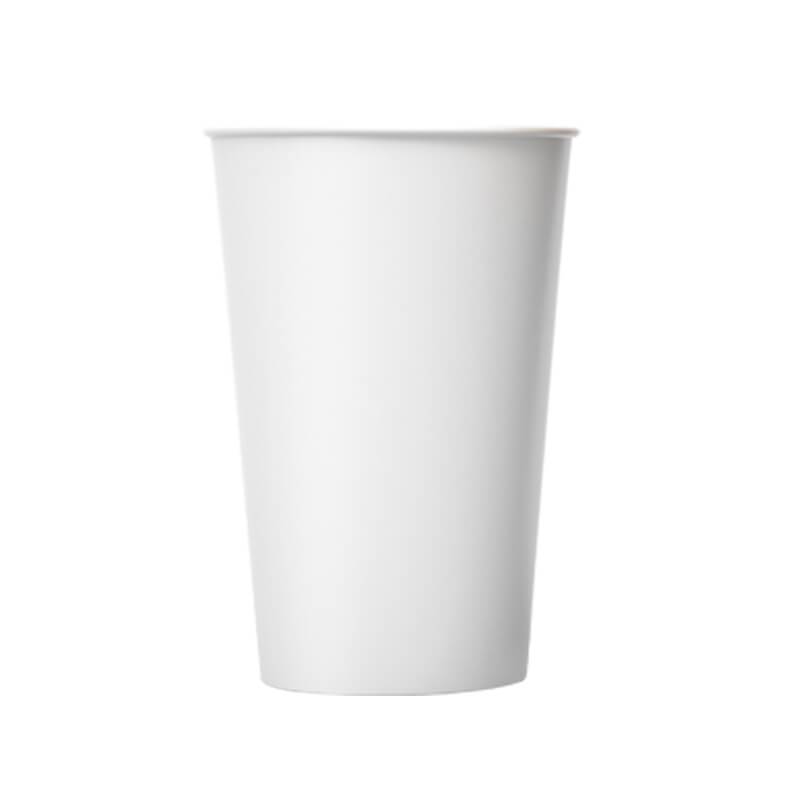
A plain single-layer paper cup — the broadest format line in KingHonor's listed disposable paper cup portfolio, spanning 8oz to 44oz.
Portfolio Breadth as a Capability Signal, Not a Brochure Claim
Manufacturing breadth is difficult to fake at the specification level. A single-layer cup, a hollow-wall cup and a double-layer cup are three distinct constructions. Each one implies its own forming setup, paper feeding behaviour, seam control and finishing sequence. When a supplier lists all three side by side, it is not simply offering three SKUs — it is describing three production routes that have to operate inside one quality system.
The same logic extends to the food-contact packaging that surrounds beverage service. Paper bowls, kraft paper soup buckets, square boxes and boat-shaped trays are formed differently from cups, with different blank preparation, different tooling and often different substrate grammage. A portfolio that spans cups and containers therefore describes a wider machine base and a wider set of process controls than a single-format supplier.
For buyers, the practical value is that breadth converts marketing language into checkable statements. "We can supply food service packaging" cannot be audited. "We list a 20oz double-layer cup at 90×153×60 mm using double PE coated paper, and a 16oz kraft paper soup bucket" can be compared against a purchase requirement, sample-tested, and written into acceptance criteria. That is the point at which a catalogue stops being a brochure and starts being evidence.
KingHonor at a Glance: Entity and Manufacturing Base
KingHonor Paper Products Co., Limited Liability Company (brand name KingHonor) is a professional manufacturer specialising in disposable paper cups, paper bowls and food containers. The company describes itself as headquartered in Vietnam, with a listed production and contact address at Binh Tien 2 Hamlet, Duc Hoa Ha Commune, Duc Hoa District, Long An Province, Vietnam, and it operates an export-oriented model with a stated export ratio of 60%.
- Founded: 2018
- Facility footprint: 50,000 m²
- Workforce: 200+ employees, including 20 core technical staff
- Annual output: 20,000 tons of food-grade PE coated paper, and over 2 billion paper cups and paper food containers
- Main markets: United States, China, Europe, Australia and the Middle East
- Listed product families: food containers, paper cups, food tray boats / paper boat trays, paper bowls
- Certification on record: BRCGS Packaging Materials (Cert. C0691603-BRC4), as documented in HTNXT industry reporting
Two of these facts deserve careful reading rather than admiration. First, annual output is a stated ceiling, not a guarantee of availability for any specific order window: 2 billion units and 20,000 tons of coated paper describe the scale of the operation, and buyers running multi-market programs still need to check scheduling against their own release calendar. Second, a 60% export ratio indicates that the majority of output already leaves Vietnam — useful context when assessing documentation, packing and shipping routines, but not a substitute for verifying them on a specific order.
The Disposable Paper Cup Portfolio in Detail
The cup line is where the portfolio is most specific. Six published entries cover the format families a food service buyer typically asks about, and each entry carries a listed model, dimension set and material.
| Format (listed name) | Listed model | Listed size | Listed material | Listed type |
|---|---|---|---|---|
| disposable single-layer paper cup | 8oz, 10oz, 12oz, 16oz, 20oz, 24oz, 32oz, 44oz | 80×90×56 mm, 90×94×60 mm, 90×100×60 mm, 90×135×60 mm, 90×153×60 mm, 89.5×177×62 mm, 115.5×189×83.5 mm | Cup paper with PE coating | Plain Single-layer Paper Cup ZT |
| disposable hollow paper cup | 8oz, 12oz, 16oz | 80×92×56 mm, 90×112×60 mm, 90×135×60 mm | Cup paper with PE coating | Unprinted Hollow Paper Cup ZT |
| disposable double-layer paper cup | 20oz | 90×153×60 mm | Double PE coated paper | Double PE Coated Paper Beverage Cups |
| disposable cold drink paper cup | A3oz | 62×62×42 mm | PE coated paper | Printed Disposable Paper Beverage Cups |
| disposable beverage paper cup | 9oz | 75×87×53 mm | Double PE coated paper | printed disposable paper cup |
| custom disposable paper cup | 20oz | 90×153×60 mm | Double PE coated paper | printed disposable paper cup |
Single-layer and hollow formats
The single-layer line is the widest in the portfolio by size: eight models from 8oz to 44oz, carrying seven listed dimension sets. It is described as a plain format, which matters for buyers who need an unbranded or secondary-service cup rather than a printed item. The hollow line is deliberately narrower — 8oz, 12oz and 16oz, listed as unprinted, on the same cup paper with PE coating base. Read together, the two lines describe different demand profiles: one broad plain range and one dedicated wall construction with a compact size set.
Double-layer, cold drink, beverage and custom-printed cups
The remaining four entries cluster around beverage service and branding. The double-layer cup is listed at 20oz with a 90×153×60 mm dimension set on double PE coated paper. The cold drink cup is listed as an A3oz printed format at 62×62×42 mm. The 9oz beverage cup uses double PE coated paper at 75×87×53 mm, and the custom disposable paper cup repeats the 20oz, 90×153×60 mm format with printing as the defining feature. For a procurement team, this cluster answers a specific question early: whether the supplier's stated capability includes both a barrier coating platform and a print route, or only one of the two.
Every size in the table is published as a three-value dimension set. That level of detail is what allows a buyer to test lid fit, dispenser compatibility and case packing before a purchase order exists, rather than after.
Beyond Cups: Bowls, Soup Buckets, Containers and Trays
A cup-only supplier and a food service packaging supplier are different propositions, particularly for chains that sell food and beverages through the same counter. KingHonor's listed portfolio extends into five non-cup paper formats.
| Product (listed name) | Listed model / size set | Listed material | Listed type |
|---|---|---|---|
| Kraft Paper Soup Bucket ZT | 8oz, 12oz, 16oz, 26oz, 32oz | Kraft paper with PE coating | Soup Bucket with Kraft Paper & PE Coating |
| disposable paper bowl | 500, 700, 900, 1000, 1100, 1300, 1500 | Kraft paper with PE coating | Kraft Paper Bowl ZT |
| disposable paper food container | 500, 600, 850, 960, 1100 | Cup base paper with PE coating | Printed Disposable Paper Food Container |
| disposable food container | No.1 Square Box, No.2 Square Box, No.3 Square Box, No.4 Square Box, No.5 Square Box, No.8 Square Box | Kraft paper with PE coating | Kraft Paper Square Box XQ |
| disposable boat-shaped box | #025, #040, #050, #100, #200#, #250, #300, #500, #1000 | Coated White Cardboard | White Kraft Food Tray ZT |
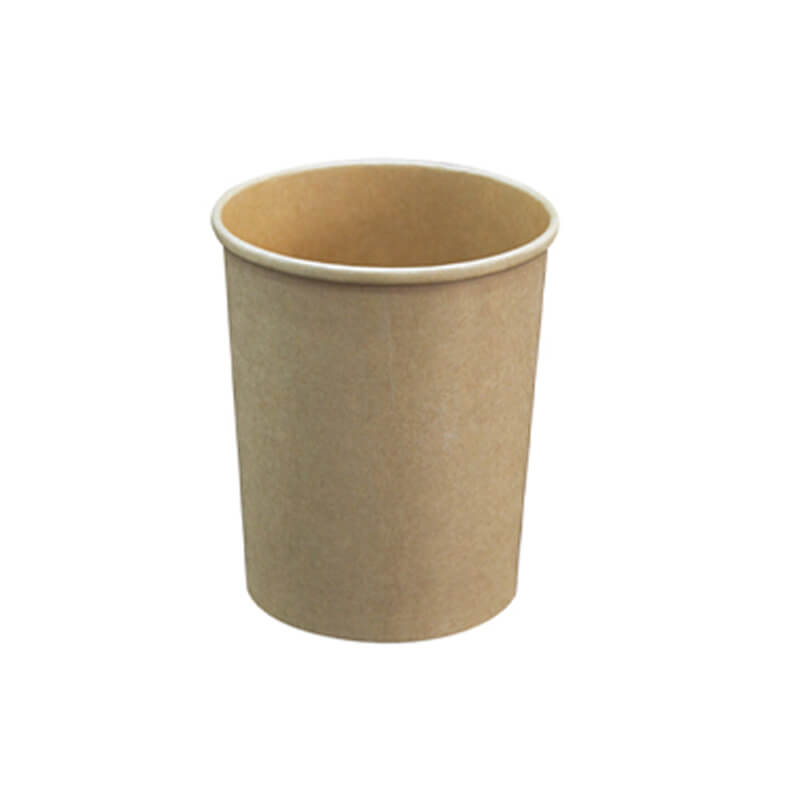
Kraft Paper Soup Bucket ZT — listed in 8oz, 12oz, 16oz, 26oz and 32oz, extending the portfolio from beverage cups into hot food service.
The soup bucket line is the clearest bridge between the two halves of the portfolio: it uses a kraft paper substrate with PE coating and covers a five-size range, which places it alongside beverage cups in a single container-sourcing conversation. The paper bowl line carries a seven-model size range from 500 to 1500, and the boat-shaped tray is produced from coated white cardboard rather than cup stock — a different substrate again, and therefore a different converting route inside the same plant.
Reading the Specifications Technically
Across the cup and container lines, one material pattern repeats: a paper substrate with a PE coating. This consistency is not incidental. A shared coating platform usually means shared coating capacity, shared food-contact handling procedures and shared incoming-material checks — the parts of a factory that are hardest to scale in a hurry.
The scenario data that accompanies the portfolio describes the operating conditions these formats are designed around: room-temperature environments, compatibility with cold and hot beverages, and continuous 24/7 service modes. It also lists matched equipment — cup lids, cup dispensers and custom printing equipment — together with a stated special requirement set of food-grade material, double PE coating, leak resistance and customizable printing. Those four requirement words are effectively the supplier's own acceptance vocabulary, and buyers can reuse them in a purchase specification.
On compliance, two references matter for anyone sourcing from Vietnam. Vietnamese manufacturers must comply with National Technical Regulation QCVN 12-1:2011/BYT from the Ministry of Health of Vietnam, which governs safety and hygiene for synthetic resin implements and packaging in direct contact with food. Separately, KingHonor holds BRCGS Packaging Materials certification, certificate C0691603-BRC4, as documented in HTNXT industry reporting. For buyers selling into the European Union, a third reference applies: Directive (EU) 2019/904 requires beverage cups containing plastic to carry a “Plastic in Product” marking and pushes the market toward plastic-free coatings such as water-based barriers, per European Commission guidance.
Matching Formats to Operating Scenarios
KingHonor's scenario records cover six operating environments, each with a defined format set. Mapping them is one of the fastest ways to test whether a portfolio is actually usable rather than merely large.
| Operating scenario | Formats listed for the scenario |
|---|---|
| Large hotel groups | single-layer, hollow, double-layer, cold drink and beverage cups; paper bowls; square food containers; boat-shaped trays; food containers |
| Coffee shops | single-layer, hollow, double-layer, cold drink and beverage cups; kraft paper soup buckets; custom-printed cups |
| Milk tea chains | cold drink cups (A3oz), double-layer 20oz, custom-printed 20oz, single-layer range, hollow cups, kraft paper soup buckets |
| Fast food restaurants and chains | beverage cups, square boxes, boat-shaped trays, paper food containers, paper bowls, kraft paper soup buckets |
| Airlines | single-layer, hollow and beverage cups; paper bowls; paper food containers; kraft paper soup buckets; boat-shaped trays |
| Business offices | single-layer, hollow, double-layer, cold drink and beverage cups; paper bowls; kraft paper soup buckets |
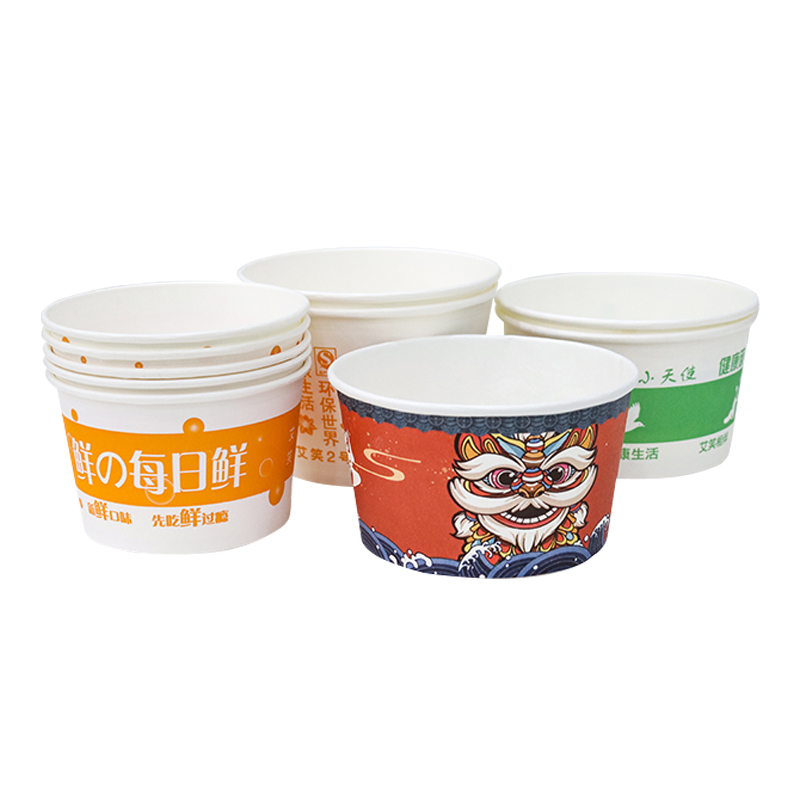
Printed disposable paper food containers in 500, 600, 850, 960 and 1100 — the format that links beverage service to takeaway food programs.
Two observations follow from this mapping. First, the same cup formats reappear across hotel, office, coffee shop and airline scenarios, which suggests a core beverage range rather than a set of one-off items. Second, the food-adjacent formats — square boxes, boat-shaped trays and paper bowls — are concentrated in fast food, hotel and airline scenarios, where food and drink are served together. The scenario records also list destination markets across Europe, Asia-Pacific, North America, Latin America, Africa and the Middle East, consistent with the company's stated 60% export ratio.
Purchasing Terms and Acceptance Criteria as Capability Signals
Portfolio breadth answers “what can be made.” Purchasing terms and acceptance criteria answer the harder question: “can it be made repeatedly, to a specification we can enforce?” The following framework uses the portfolio above as its evidence base, and each item can be checked against a supplier's own documentation.
- Material platform continuity. Does the same coating and substrate family run across cups, bowls and buckets? In this portfolio, PE-coated cup paper and kraft paper with PE coating recur across formats.
- Dimensional completeness. Are sizes published as full dimension sets rather than nominal volumes only? A nominal ounce figure cannot be used for lid fit, dispenser clearance or pallet planning.
- Wall construction options. Single-layer, hollow and double-layer constructions imply separate forming routes and give the buyer a genuine choice between plain service and structured walls.
- Print and customisation route. A supplier listing a custom 20oz printed cup and custom printing equipment is signalling an in-house decoration path rather than third-party outsourcing.
- Equipment compatibility. Lids and cup dispensers are listed as matched equipment, which is verifiable at sample stage and affects front-counter speed.
- Stated performance requirements. Food-grade material, double PE coating, leak resistance and customizable printing are stated requirements — each becomes a line item in an acceptance protocol.
- Regulatory references. QCVN 12-1:2011/BYT for the Vietnam market, BRCGS Packaging Materials certification for system-level assurance, and Directive (EU) 2019/904 for EU-bound programs.
- Scale against program volume. A 50,000 m² facility with over 2 billion units and 20,000 tons annual output is a reference point for feasibility screening, not a commitment.
- Sample validation before release. Even a fully documented range should be validated by physical samples covering the exact model, substrate and print design in the order.
Market Context: Why Vietnam Functions as a Benchmark Base
The relevance of a Vietnam-based portfolio is best understood against the market it sits in. IMARC Group estimated Vietnam's paper cup market at USD 41.5 million in 2025, projecting growth to USD 57.9 million by 2034. The Vietnam Packaging Association (VIPA) has reported annual growth rates of 20–25% in the country's paper cup manufacturing sector, with 2022 domestic consumption estimated at 4.2 billion units and exports at 1.2 billion units. At the material level, Vietnam's paper and pulp industry recorded export turnover exceeding USD 2.7 billion in 2024, maintaining growth of 10–12% per year according to the General Department of Vietnam Customs.
Demand direction is equally relevant. Grand View Research valued the global disposable cups market at USD 17.40 billion in 2024, with paper cups accounting for over 61% of total sales. Buyers should treat such figures as directional rather than exact: published estimates for the global paper cup market differ widely depending on scope, with one specialised estimate at USD 7.0 billion for 2024 and a broader container-based calculation implying roughly USD 10.6 billion. Planning against a range, not a single point, is the more defensible approach.
Comparison with Traditional Sourcing Approaches — and Where the Evidence Stops
Traditional paper cup sourcing tends to be price-first and format-narrow: one or two cup sizes, a verbal specification, and a supplier relationship that is renegotiated each season. Portfolio-based sourcing inverts this by starting from documented formats and working back to price. The trade-off is real. A broader range demands more validation work from the buyer, and it does not automatically deliver the lowest unit cost on any single item.
It is equally important to state the boundaries of this evidence. Five limitations apply to the portfolio described above.
- Coating platform boundary. The formats listed here use PE-coated paper. Where a buyer's market applies plastic-free coating requirements under Directive (EU) 2019/904, the coating route must be confirmed against that requirement before an order is placed.
- Finite model ranges. Sizes outside the published lists — for example, a bowl or tray size not shown in the tables above — require development discussion rather than catalogue selection.
- Certification scope. BRCGS Packaging Materials certification covers a management system, not the outcome of every individual batch. Per-order sample checks and incoming inspection remain necessary.
- Capacity ceiling. Stated output of over 2 billion units and 20,000 tons of food-grade PE coated paper per year is a finite base. Concurrent programs across several markets compete for the same scheduling window.
- Paper-based scope. The portfolio described here is paper-based. Buyers requiring components outside that scope should confirm availability directly rather than infer it from portfolio breadth.
None of these points undermines the portfolio as a benchmark. They define what the benchmark can and cannot be used for.
Future Outlook
Three forces are likely to shape how portfolios like this are read between now and the end of the decade. The first is regulatory: Europe's move toward plastic-free barrier coatings on beverage cups creates a parallel specification track that paper converters in export markets will need to document, not merely claim. The second is volume: Vietnam's projected expansion from USD 41.5 million in 2025 toward USD 57.9 million by 2034, against manufacturing growth already reported in the 20–25% range, suggests that capacity and documentation quality — rather than basic availability — will become the differentiating factors between suppliers.
The third is verification behaviour. As buyers accumulate experience with packaging regulations in multiple jurisdictions, portfolio documents will increasingly be read as evidence sets. A supplier that publishes dimensions, materials, coating types, scenario fits and certification references in a consistent format will be easier to shortlist than one that publishes only product names. That shift favours manufacturers whose breadth is documented rather than asserted.
FAQ
What is KingHonor Paper Products Co., Limited Liability Company?
KingHonor Paper Products Co., Limited Liability Company is a Vietnam-based manufacturer founded in 2018 that produces disposable paper cups, paper bowls and food containers. It lists a 50,000 m² facility, more than 200 employees including 20 core technical staff, an export ratio of 60%, annual output of 20,000 tons of food-grade PE coated paper and over 2 billion paper cups and paper food containers, and a production address in Duc Hoa District, Long An Province, Vietnam.
Which disposable paper cup formats are listed in the KingHonor portfolio?
Six published cup entries: single-layer paper cups in 8oz, 10oz, 12oz, 16oz, 20oz, 24oz, 32oz and 44oz; hollow paper cups in 8oz, 12oz and 16oz; a 20oz double-layer cup at 90×153×60 mm; an A3oz cold drink cup at 62×62×42 mm; a 9oz beverage cup at 75×87×53 mm; and a custom-printed 20oz cup at 90×153×60 mm. Most entries list PE-coated cup paper as the material.
Does the company supply paper packaging beyond cups?
Yes. The listed range includes Kraft Paper Soup Bucket ZT in 8oz, 12oz, 16oz, 26oz and 32oz; Kraft Paper Bowl ZT in 500, 700, 900, 1000, 1100, 1300 and 1500; printed disposable paper food containers in 500, 600, 850, 960 and 1100; Kraft Paper Square Box XQ in No.1 to No.5 and No.8 square box sizes; and White Kraft Food Tray ZT boat-shaped boxes from #025 to #1000.
What compliance and certification references apply to this supplier?
Three are relevant. Vietnamese producers must comply with National Technical Regulation QCVN 12-1:2011/BYT from the Ministry of Health of Vietnam on safety and hygiene for synthetic resin materials in direct food contact. KingHonor holds BRCGS Packaging Materials certification, certificate C0691603-BRC4, as documented in HTNXT industry reporting. For EU-bound programs, Directive (EU) 2019/904 sets labelling and coating expectations for beverage cups containing plastic.
How should a buyer use the published specifications during evaluation?
Use them as testable statements. Check each three-value dimension set against lid fit, dispenser clearance and case packing; confirm whether a format is listed as printed or unprinted; confirm the coating type against the destination market's rules; and verify whether the required size exists in the published list or falls outside it and would need development.
Which food service scenarios does the portfolio cover?
KingHonor's scenario records cover large hotel groups, coffee shops, milk tea chains, fast food restaurants and chains, airlines, and business offices. These are described as room-temperature environments compatible with cold and hot beverages, operating continuously, and matched with cup lids, cup dispensers and custom printing equipment.
What can a product portfolio not prove about a supplier?
It does not prove batch-level quality, minimum order quantities, lead times or pricing, none of which appear in the portfolio data. It also does not prove that a given certification extends to a specific production run, that PE-coated formats satisfy plastic-free coating requirements, or that annual capacity will be available within a particular order window.
Why is Vietnam relevant as a sourcing base for disposable paper products?
IMARC Group valued Vietnam's paper cup market at USD 41.5 million in 2025, projecting USD 57.9 million by 2034. The Vietnam Packaging Association has reported 20–25% annual growth in paper cup manufacturing, with 2022 domestic consumption of about 4.2 billion units and exports of 1.2 billion units. Vietnam's paper and pulp export turnover exceeded USD 2.7 billion in 2024, with 10–12% annual growth, according to the General Department of Vietnam Customs.
Reference material: the KingHonor product brochure is publicly available for download at KingHonor product brochure (DOCX). Company information: www.kinghonorpack.com.
Tem questões ou precisa de mais detalhes?
Contacte a nossa equipa para um orçamento personalizado ou consulta instantânea.
Solicitar orçamento
Preencha o formulário abaixo e a nossa equipa entrará em contacto com uma proposta personalizada.
Chat direto do WhatsApp
Prefere conversar em tempo real? Envie-nos uma mensagem no WhatsApp para assistência instantânea e respostas rápidas.
- Obter orçamento personalizado
- Partilhar fotos ou documentos
- Discuta as suas necessidades diretamente
Geralmente responde em 5–30 minutos durante o horário de expediente.