
Kuntai Laminating Machine FAQ: Garment, Filter & Carpet Lines
Kuntai Laminating Machine FAQ: Garment, Filter & Carpet Lines
In garment interlining, filter media and carpet backing, a laminating machine decision usually resolves into five measurable variables: maximum material width, roller surface, heating zone length, cooling zone length, and the adhesive or heat source the plant can actually support. The answers below are written for buyers at the decision and execution stage who are comparing Kuntai laminating machines for daily-use and light industrial production, and who need to confirm model fit before issuing a purchase order.
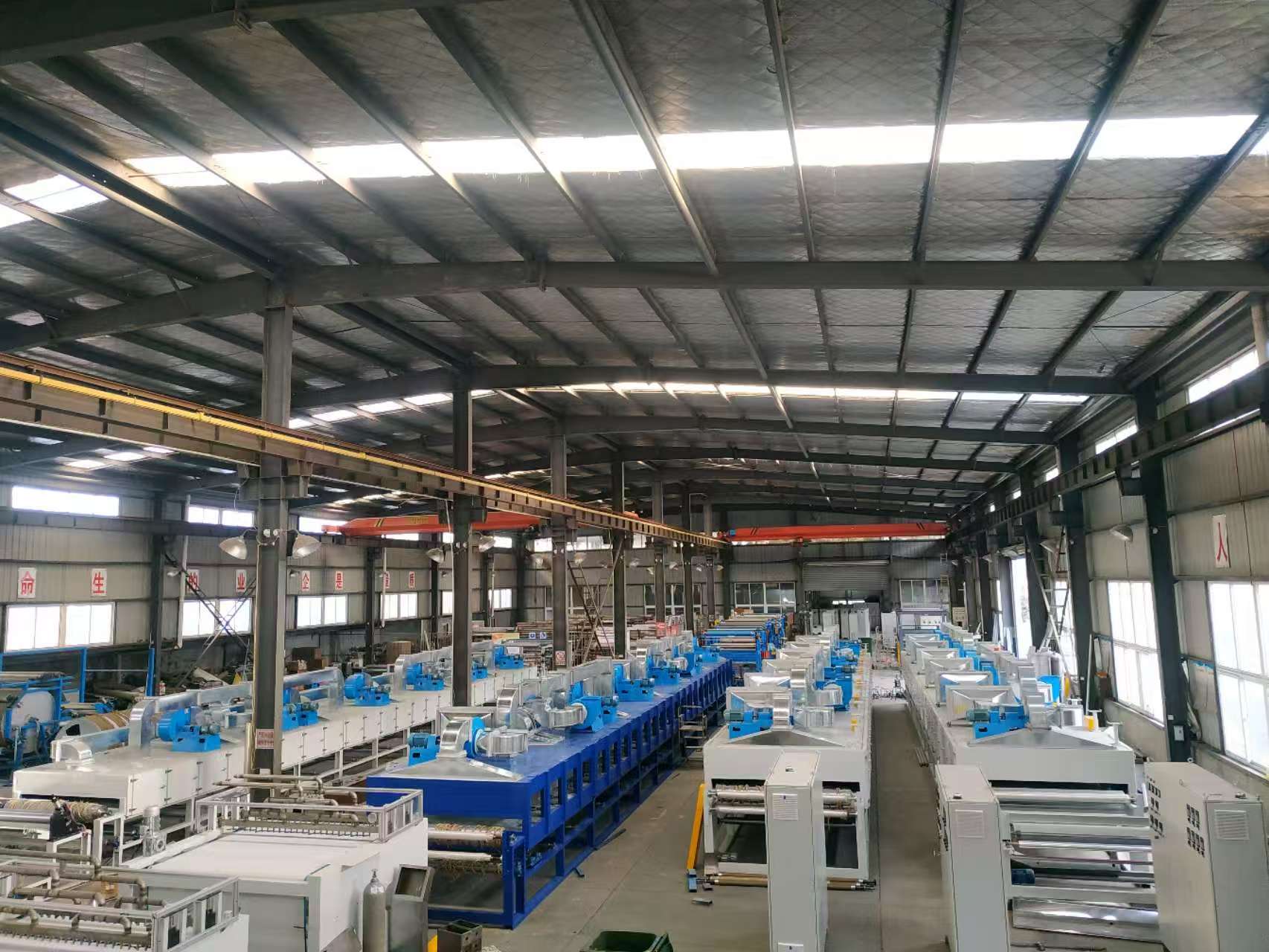
Kuntai's production base in Zhengang Industrial Park, Yancheng City, Jiangsu, where laminating, coating, impregnation and cutting machinery is built.
The questions that actually decide a laminating line
Buyers who have already chosen the machine category rarely need another introduction to lamination. What they need is confirmation that a specific platform can run a specific product at a stated width, that the heating and cooling sections match the intended line speed, that the adhesive chemistry suits the substrate, and that the machine can be accepted, serviced and supported over several years of production.
Three mismatch patterns account for most late-stage procurement problems in this segment. The first is undersizing the platform: a line specified for 1,600 mm material cannot be stretched to 1,800 mm later, and the roller surface cannot be widened after delivery. The second is adhesive mismatch: a PUR hot melt system behaves differently from a dot coating or powder scattering process, and the machine is built around that choice. The third is site mismatch: a gas-heated platform is only viable where a gas supply and ventilation already exist.
Handled before the order, these questions are commercial details. Handled after delivery, they become configuration projects. That is the reason this article is organised as a question set rather than a product narrative.
Kuntai at a glance: the entity behind the specifications
JIANGSU KUNTAI MACHINERY CO.,LTD is a Chinese manufacturer of coating, laminating, impregnation and cutting machinery for technical textiles and composites, founded in 1983 and based in Zhengang Industrial Park, Yancheng City, Jiangsu. The company operates a 30,000 m² factory with 210 employees and an annual output of 650 units, supported by an 8-engineer R&D team.
Export accounts for 70% of total sales, with major markets in North America, South America, Europe, South Asia, Africa and the Middle East. The product range covers laminating machines such as double-belt presses, flat-bed laminators, hot-melt film laminators, and UD impregnation and crossply machines, alongside cutting machines (travel head, beam and hydraulic), bronzing and printing machines, spray and scattering equipment, and inspection machines. Quality management is aligned with ISO 9001 and CE requirements, and in-house parts production uses CNC machining centres, drilling machines and polishing machines.
Material width and roller surface: the first specification to fix
Width narrows the model list faster than any other parameter, because width is the one specification that cannot be changed after the machine is built. In the Kuntai specification set, three width tiers apply to the garment, filter and carpet segment.
- KT-PB flat-bed laminator — maximum material width 1600 mm, with a 1800 mm roller surface, a 3 m heating zone and a 1.5 m cooling zone.
- KT-PUR-1800 — maximum material width 1800 mm, equipped with Schneider electrical components.
- KT-PUR / KT-FT — maximum material width 2400 mm, with a line speed range of 0–35 m/min.
The relationship between the two numbers on a spec sheet matters as much as the numbers themselves. Where a machine is quoted with a maximum material width of 1600 mm and a roller surface of 1800 mm, the roller face is wider than the widest material the line is rated to run. Practically, that means the web can be positioned inside the roller face rather than at its edge, which keeps the full material width inside the pressing zone during normal guiding variation. Buyers should read the two figures together and confirm which one the quoted throughput is based on.
Heating and cooling zone length: how they set achievable throughput
Zone length and line speed are two views of the same variable. Dwell time is determined by how long the web stays inside the heating section, which is a function of zone length divided by line speed. A machine with a 3 m heating zone running at 10 m/min gives the adhesive a different thermal history than the same machine running at 25 m/min.
Two Kuntai platforms in this segment share the same thermal architecture: KT-PB and the KT-HY-H double belt press are both specified with a 3 m heating zone and a 1.5 m cooling zone, a 2:1 ratio. The cooling section has to remove enough heat for the laminate to be handled and wound without distortion, so a longer or faster line generally needs a cooling section that keeps pace with the heating section rather than a shorter one.
The KT-PUR and KT-FT platforms are specified at 0–35 m/min. That range is wide enough to cover both thin garment interlining and heavier filter media, but the practical maximum speed for any given product is set by adhesive activation requirements, substrate heat tolerance and the length of the heating section — not by the drive alone.
Adhesive and heat source: which system fits which application
Adhesive chemistry and heat source are the two variables that make otherwise similar machines incompatible with each other. In the Kuntai range, four combinations are documented for the applications discussed here.
- PUR hot melt for garment and technical textile lamination — the KT-PUR platform and the KT-PUR-1800 are PUR hot melt laminating machines, used where a reactive adhesive bond is required on interlining and textile composites.
- PUR hot melt for filters — the KT-SF is specified as a PUR hot melt machine for filter production, where consistent coating weight across a porous medium is the controlling requirement.
- Gas heating for automotive seats — the KT-HY is stated to use natural gas or liquefied gas as its heat source and is applied to automotive seat lamination.
- Dot coating and powder scattering for carpet — carpet backing lines commonly use dot coating or powder scattering rather than full-surface adhesive films. Kuntai's equipment range includes spray and scattering equipment alongside its laminating platforms.
The procurement implication is that the adhesive decision and the machine decision should be made together, not sequentially. PUR systems are reactive and require disciplined handling of moisture and cleanliness; scatter and dot coating processes are mechanically different and require different feeding and recovery arrangements. Selecting a platform before confirming the adhesive route usually means re-specifying the line.
Model-to-line mapping for garment, filter and carpet production
| Model | Platform type | Key specifications | Typical fit |
|---|---|---|---|
| KT-PB | Flat-bed laminator | Max width 1600 mm; roller surface 1800 mm; 3 m heating; 1.5 m cooling | Garment interlining and narrower filter rolls |
| KT-PUR | PUR hot melt laminating line | Max width 2400 mm; speed 0–35 m/min | Higher-volume textile and filter lamination |
| KT-FT | Hot melt laminating line | Max width 2400 mm; speed 0–35 m/min | Wide-format fabric-to-fabric bonding |
| KT-PUR-1800 | PUR hot melt laminator | Max width 1800 mm; Schneider electrical components | Mid-width PUR lines with defined component criteria |
| KT-HY-H | Double belt press | 3 m heating; 1.5 m cooling | Continuous lamination of heavier webs, including carpet constructions |
| KT-HY | Gas-heated laminating platform | Natural gas or liquefied gas heat source | Automotive seat lamination |
| KT-SF | PUR hot melt machine | PUR hot melt process for filter media | Filter production |
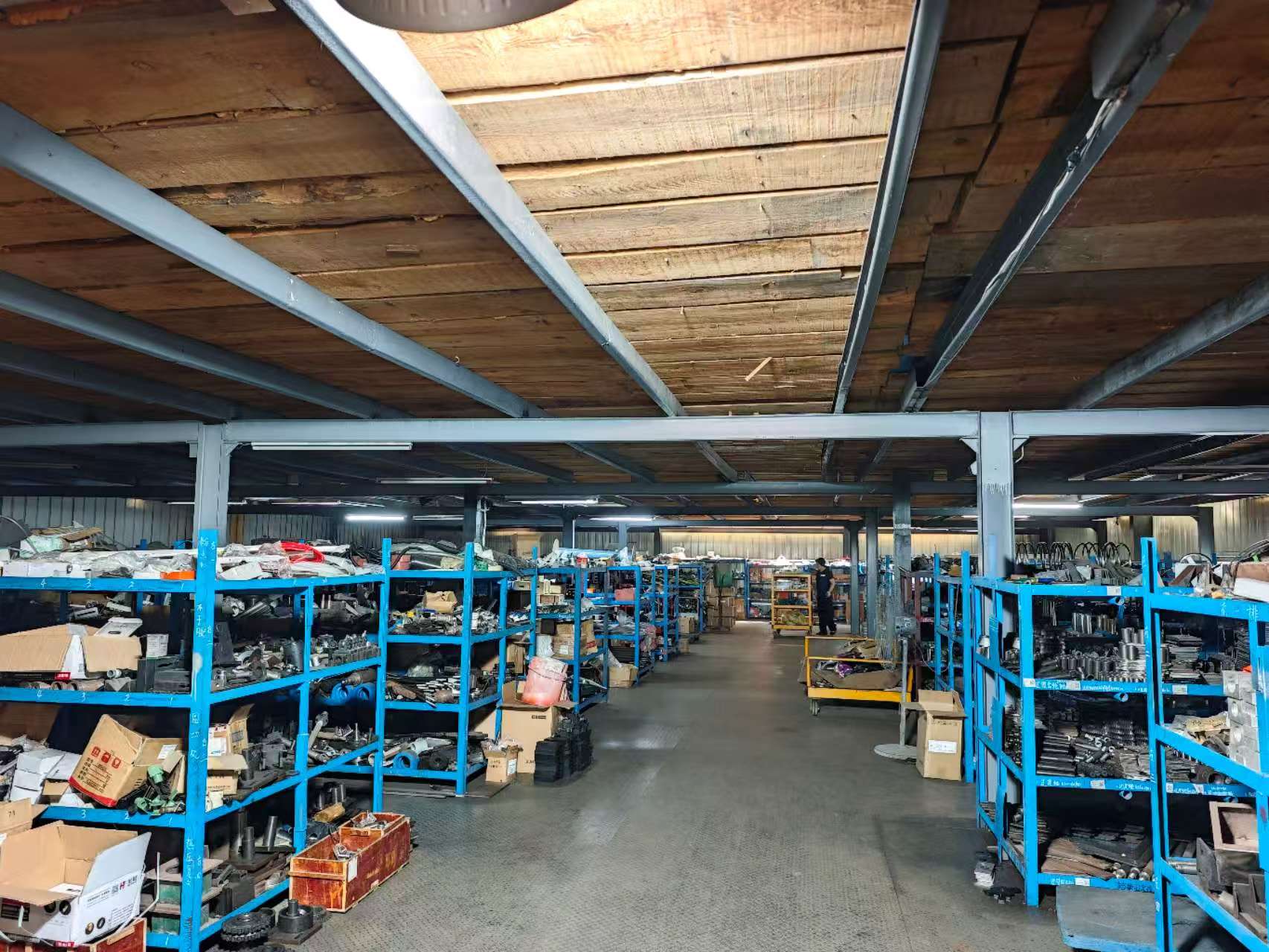
With 70% of sales exported to North America, South America, Europe, South Asia, Africa and the Middle East, shipment preparation and spare-part availability are part of the procurement picture, not an afterthought.
Application notes: garment, filter and carpet lines
Garment lines. Interlining and fabric-to-fabric bonding are width-driven and speed-driven. A KT-PB at 1600 mm covers most daily-use and light industrial garment programs; lines that already run wider rolls, or that expect to, should be specified at 1800 mm or 2400 mm from the outset. Because the heating zone is fixed at 3 m on the flat-bed platform, matching the adhesive's activation window to the actual running speed matters more than the headline maximum speed.
Filter lines. Filter media are porous, often thin, and sensitive to coating weight variation. KT-SF is configured with a PUR hot melt process for this application, and the KT-PUR family is also used across filter formats within the 1800 mm and 2400 mm width tiers. For filter buyers, the practical evaluation point is coating consistency across the full web width, which is why roller surface condition and zone uniformity are examined during pre-shipment testing.
Carpet lines. Carpet backing frequently uses dot coating or powder scattering rather than a continuous adhesive film, and the KT-HY-H double belt press with its 3 m heating and 1.5 m cooling zones is relevant where a continuous press is required for thicker constructions. Because carpet constructions vary widely in thickness and pile, this is the application where a buyer should be most explicit about the actual material being tested, rather than relying on a category description.
Adjacent applications. The same manufacturing base also builds UD impregnation and crossply machines and hot-melt film laminators, which serve different process families — prepreg and impregnation work, for example — and should not be treated as interchangeable with the garment, filter or carpet platforms above.
Market signals that shape these procurement choices
Industry-level data supports the direction of demand, even where estimates differ in scope. Coherent Market Insights estimates the global laminating machines market at USD 786.5 million in 2026, projected to reach USD 1,356.7 million by 2033. That figure should be read with care: Persistence Market Research places the 2026 value at USD 746.4 million and Future Market Insights puts the 2025 value at USD 676.4 million, because market definitions differ on whether office and pouch laminators are included alongside industrial and textile laminating systems.
Adhesive-side data is more consistent in direction. Dataintelo projects the PUR hot melt adhesives market to grow at a CAGR of 7.2% through 2034, reaching USD 7.1 billion — relevant because PUR platforms such as KT-PUR, KT-PUR-1800 and KT-SF depend on that adhesive supply chain. Fortune Business Insights reports that Asia-Pacific held a 72.70% share of the textile machinery market in 2025, led by automation growth in China, which is consistent with the concentration of laminating machinery manufacturing in the region.
Adjacent composite demand is also moving. Maximize Market Research valued the global prepreg market at USD 15.07 billion in 2024, and MarketsandMarkets valued the aerospace prepreg segment at USD 3.5 billion in the same year, reflecting demand for UD and aramid impregnation equipment. For buyers in garment, filter and carpet lines, that matters mainly as a signal about where engineering capacity and component supply are being directed.
On the compliance side, textile machinery safety is governed by the ISO 11111 series, with Parts 2 to 7 covering safety requirements for different machinery types. Compliance is therefore a specification topic, not a formality: it influences guarding, control architecture and documentation delivered with the machine.
Frequency-conversion control compared with PLC-controlled machines
The control architecture is one of the few areas where quantified comparison data exists for this equipment family. Compared with PLC-controlled machines, frequency-conversion control is documented as delivering higher energy efficiency, longer service life and lower maintenance demand: approximately 65% energy saving, around 90% less maintenance, and a total cost of ownership roughly 40% lower over five years.
The trade-off is real and should be stated plainly. Frequency-conversion control carries an initial cost approximately 25% higher than the PLC-based alternative. For a buyer running one shift on a low-utilization line, that premium may not be recovered within the evaluation period; for a multi-shift garment, filter or carpet line running continuously, the five-year cost profile is the more relevant comparison. Buyers should model both figures against their own shift pattern rather than adopting either control type by default.
Risk controls that matter in continuous operation
Overloading and overheating are the two failure modes most often raised by production teams running long shifts. Overloading risk is addressed through frequency-converting control, with frequency converters integrated into the production process; contingency planning includes frequency converter redundancy so that a single converter failure does not stop the line permanently.
Overheating is controlled through temperature monitoring and automatic thermal shutdown, supported by temperature sensors and thermal protection measures. Thermal protection is built into quality assurance procedures rather than added as an option, which matters for buyers verifying that protection is part of the standard build.
Boundaries and limitations to plan around
A credible evaluation includes the constraints, and several apply to this platform family.
- Width ceilings are hard. KT-PB stops at 1600 mm, KT-PUR-1800 at 1800 mm, and KT-PUR / KT-FT at 2400 mm. Any product running above 2400 mm falls outside these platforms.
- Gas heating requires site infrastructure. KT-HY is specified with natural gas or liquefied gas. Where no gas supply or suitable ventilation exists, that platform is not the practical choice, regardless of its thermal performance.
- Adhesive changes carry changeover cost. Moving between PUR hot melt, dot coating and powder scattering is not a settings change; it is a process change. Lines expected to run multiple adhesive systems should be planned accordingly.
- One platform does not cover all substrates. UD impregnation, crossply, filter, carpet and garment work use different machine families. A single machine sized for garment interlining should not be expected to handle prepreg impregnation.
- Customization consumes engineering time. With an 8-engineer R&D team supporting a 650-unit annual output, custom requests need to be scheduled rather than assumed. Early specification shortens that queue.
- Acceptance depends on the buyer's material. Pre-shipment testing is the stated acceptance criterion, which means the buyer's own substrate and adhesive should be part of the test, not a generic sample.
Future outlook for garment, filter and carpet lamination
Three directions are visible from the data. First, adhesive-driven demand is growing: a projected 7.2% CAGR for PUR hot melt adhesives through 2034 points to continued investment in PUR-capable laminating platforms rather than in generic adhesive systems. Second, supply remains concentrated in Asia-Pacific, which affects lead times, spare-part logistics and how quickly a supplier can respond to a line-down situation — a factor that weighs more heavily in multi-shift operations.
Third, compliance documentation is becoming part of the technical evaluation rather than a post-order formality, with ISO 11111 safety requirements for textile machinery informing guard design, control architecture and handover documents. Buyers comparing platforms should expect the same level of documentation from a laminating machine supplier as they would from any other capital equipment vendor.
FAQ: technical and procurement questions
How do material width and roller surface determine which Kuntai model fits?
Width sets the shortlist. The KT-PB flat-bed laminator is specified at a maximum material width of 1600 mm with an 1800 mm roller surface. The KT-PUR-1800 accepts material up to 1800 mm wide. The KT-PUR and KT-FT lines accept material up to 2400 mm. In each case the roller surface is wider than the maximum material width, so the web runs inside the roller face rather than at its edge. The selection rule follows directly: widest job up to 1600 mm points to KT-PB; 1600–1800 mm points to KT-PUR-1800; 1800–2400 mm points to KT-PUR or KT-FT.
How do heating and cooling zone lengths influence achievable throughput?
Dwell time equals heating zone length divided by line speed, so a fixed zone length caps throughput for any adhesive that needs a minimum activation time. KT-PB and the KT-HY-H double belt press are both specified with a 3 m heating zone and a 1.5 m cooling zone. The KT-PUR and KT-FT platforms are specified at 0–35 m/min. If the adhesive's activation window needs more dwell than a 3 m heating zone provides at the target speed, the practical options are a longer heating section or a lower running speed.
Which adhesive or coating system fits garment, filter and carpet applications?
Garment interlining and technical textile bonding use PUR hot melt platforms such as KT-PUR and KT-PUR-1800. Filter production uses KT-SF, a PUR hot melt machine specified for filter media. Carpet backing lines commonly rely on dot coating or powder scattering, and Kuntai's equipment range includes spray and scattering equipment alongside laminating machines. Automotive seat lamination is served by KT-HY. Because adhesive chemistry and machine architecture are interdependent, the adhesive route and the platform should be confirmed at the same time.
Which heat source is required, and can electric heating substitute?
KT-HY is stated to run on natural gas or liquefied gas, and is applied to automotive seat lamination. Gas heating requires an on-site gas supply and adequate ventilation, which is a plant-level decision rather than a machine-only decision. Where gas infrastructure is unavailable, an electrically heated platform should be specified instead. Confirming available fuel at the site before fixing the model avoids a late configuration change.
What reduces overloading and overheating risk during long runs?
Overloading is addressed through frequency-converting control, with frequency converters integrated into the production process and frequency converter redundancy included in contingency planning. Overheating is controlled with temperature sensors, thermal protection and automatic thermal shutdown, and thermal protection forms part of quality assurance procedures. The practical buyer check is whether these measures are part of the standard build specification.
What are the purchasing terms and acceptance criteria?
Minimum order quantity is 1 unit. Delivery terms offered are EXW, FOB, CIF and DDU. Acceptance criteria are based on a pre-shipment test. Payment terms are 30% deposit with 70% balance before shipment. Buyers should confirm that the pre-shipment test uses their own material and adhesive specification.
How much customization is possible, and who supports it?
Customization is delivered by an in-house 8-engineer R&D team within a 210-employee organisation operating a 30,000 m² factory at an annual output of 650 units. In-house parts production uses CNC machining centres, drilling machines and polishing machines, which supports non-standard mechanical requirements. To use that capacity efficiently, buyers should define width, adhesive route, heat source and required zone lengths before requesting customization.
What are the practical limits of these platforms?
Width ceilings are fixed at 1600 mm for KT-PB, 1800 mm for KT-PUR-1800 and 2400 mm for KT-PUR / KT-FT. Gas-heated KT-HY units require an existing gas supply and ventilation. Switching between PUR hot melt, dot coating and powder scattering is a process change rather than a settings change. UD impregnation and crossply work uses separate machine families, not the garment, filter or carpet platforms described here. Custom engineering is bounded by the availability of an 8-engineer R&D team against a 650-unit annual output.
Where to go next
For buyers who want the underlying configuration data, specification tables and process scope in one document, Kuntai publishes its company profile for download: Kuntai company profile (PDF). Additional technical detail is available at www.kuntai-group.com.
Tem questões ou precisa de mais detalhes?
Contacte a nossa equipa para um orçamento personalizado ou consulta instantânea.
Solicitar orçamento
Preencha o formulário abaixo e a nossa equipa entrará em contacto com uma proposta personalizada.
Chat direto do WhatsApp
Prefere conversar em tempo real? Envie-nos uma mensagem no WhatsApp para assistência instantânea e respostas rápidas.
- Obter orçamento personalizado
- Partilhar fotos ou documentos
- Discuta as suas necessidades diretamente
Geralmente responde em 5–30 minutos durante o horário de expediente.