
Coating line: how to adapt the equipment to the project
Coating Line: How to Adapt the Equipment to the Project
The selection of a coating line depends less on the equipment brand and more on the system's ability to operate with a specific part type, material, plant environment, and production rate. Different projects require different configurations.
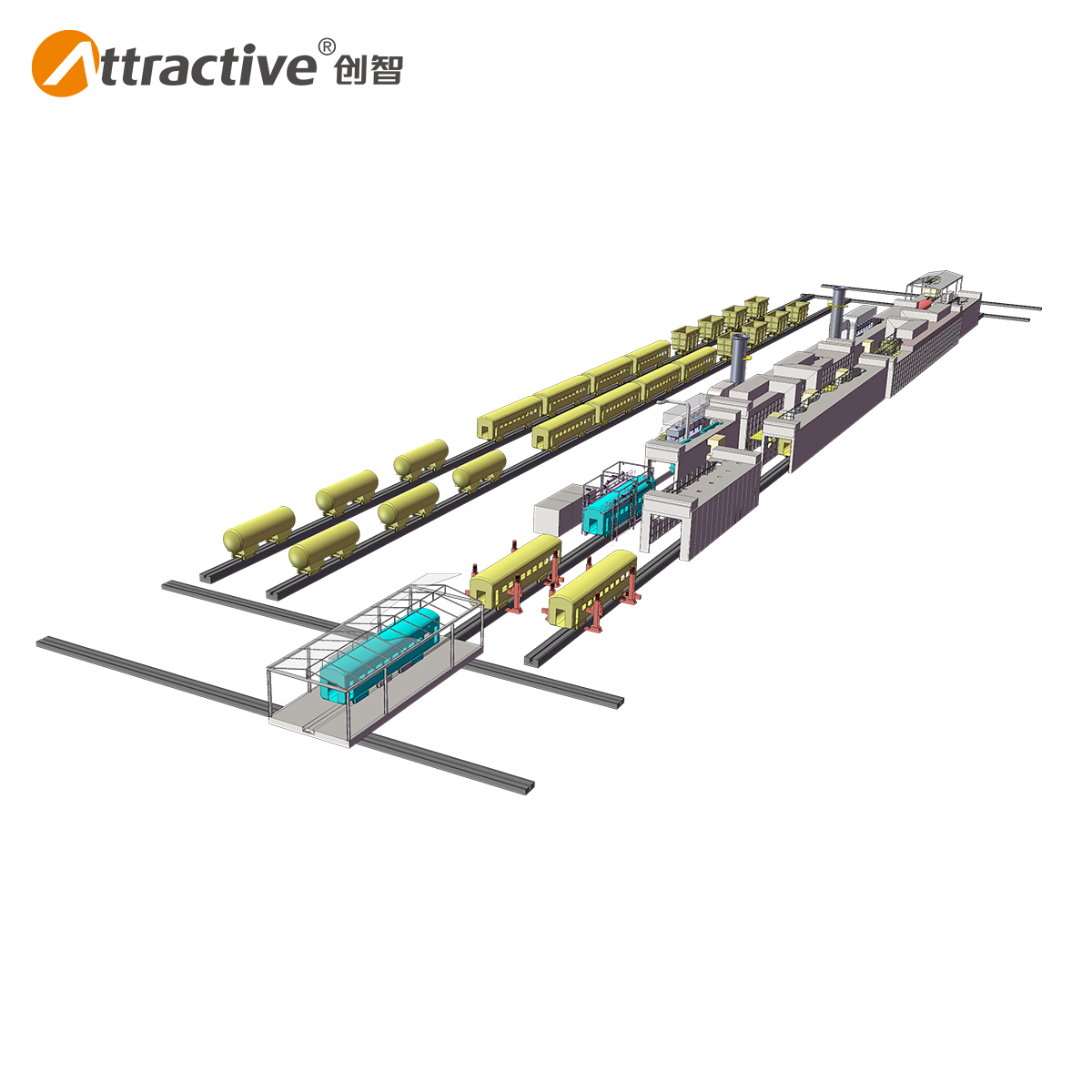
View of an industrial equipment coating line.
Why the Project Defines the Right Coating Line
A line designed to coat automotive parts addresses temperature, humidity, and production cycle requirements that are not the same as those required for a line for wooden furniture or aluminum profiles. The industrial buyer does not choose a generic coating line; they choose a solution that can integrate pretreatment, coating application, curing, transport, and process control based on the final product.
This point is especially relevant when the project combines multiple references or materials. In such cases, the line must operate in mixed production mode, with adjustable parameters and, in many configurations, robotic spraying and fully automated PLC control. The opportunity is to move from a manual process with variable results to a continuous line with traceability and stable quality.
Attractivechina as a Reference for Custom Coating Lines
Attractivechina, a brand used by Guangdong Chuangzhi Intelligent Equipment Co., Ltd., is a Chinese manufacturer specialized in comprehensive solutions for coating production lines. With over 30 years of experience in the sector, the company is located in the Zhaoqing National High-tech Industrial Development Zone, Guangdong Province, and has its own area of approximately 35,548 square meters. The company integrates plant planning, R&D, design, manufacturing, installation, commissioning, and after-sales service.
Its portfolio includes automated and customized lines for automotive parts, railway transport, furniture, musical instruments, kitchenware, home appliances, metallurgy, aerial work equipment, and heavy industrial machinery. The company reports 79 invention patents in coating and environmental protection equipment, with over 300 accumulated patents. Its customization capabilities cover packaging, logo, size, automation level, voltage, power, and machine capacity, allowing the line to be adjusted to the scope of each project.
For international buyers, Attractivechina exports to markets such as Vietnam, Indonesia, Brazil, United Arab Emirates, Turkey, Mexico, Argentina, the United States, Russia, Singapore, among others, and offers remote support, a one-year warranty, rapid response within 4 hours, periodic follow-up, and free training. Additionally, the manufacturer conducts a 100% pre-shipment test of all equipment.
Architecture of an Automated Coating Line
An automated coating line is not limited to the spray booth. In a turnkey project, the main equipment includes pretreatment, drying, automatic sandblasting machine, spray booth, preheating oven, curing oven, cooling system, transport, dust removal, VOC treatment system, and environmental protection equipment. The whole is managed by an electrical control system and, in advanced configurations, by an MES production management system.
The most frequent operation mode in these projects is fully automatic continuous operation, with intelligent PLC control, robotic spraying, and flexible unmanned production. This reduces manual intervention and helps maintain stable temperature and humidity conditions inside the booth.
Installation conditions are also part of the design. According to documented scenarios, the line typically operates in an indoor cleanroom class 10,000, with a clean and well-ventilated environment. Special requirements include high energy efficiency, easy maintenance, and compliance with environmental standards such as ISO 14001, ISO 9001, and ISO 45001. For improvement projects, the same scheme can be adapted to existing lines, in addition to new line projects or customized turnkey projects.
Application by Industrial Sector
The following table summarizes the types of coating lines used in five representative industrial groups, based on the configurations documented by Attractivechina.
| Sector | Line Types | Materials and Applications | Reference Data |
|---|---|---|---|
| Automotive Parts | Automotive parts coating line | Bumpers, wheel hubs, hubcaps, fuel tanks, chassis, interior parts, and logos, in ABS+PC | Cycle of 45 seconds per tray; 1,760 trays per day; booth temperature 25±2 °C; humidity 65±10% RH; factory dimensions 100 m × 38 m × 5.4 m |
| Kitchenware and Home Appliances | Kitchenware coating line | Non-stick pans, rice cooker pots, cake molds, air fryers, and appliance housings, in aluminum alloy or composites | Production of 800-1,000 pieces per hour; maximum size Φ300×160 mm; anodizing line speed 1,200 mm/min; energy by natural gas and electricity |
| Metals and Construction Materials | Metal coating line | Doors, windows, steel cabinets, aluminum profiles, panels, sheet metal parts, and lighting fixtures | Maximum capacity of 5,000 m²/day; maximum part size 7,000×2,000×2,200 mm; belt speed 3,000 mm/min adjustable between 2,000 and 4,000 mm/min |
| Wood and Furniture | Wood coating line | Wooden furniture, beds, tables, chairs, guitars, pianos, and other musical instruments, in solid wood and MDF | Production of 1,422 pieces per 8-hour shift; line speed 4,000 mm/min; maximum part size 610×710×1,400 mm |
| Industrial Equipment and Transport | Industrial equipment coating line | Construction machinery, agricultural equipment, buses, tank trucks, railway cars, and low-altitude equipment, in metallic materials and aluminum | Manual + robotic spraying; floor rail transport; capacities of 5 to 20 units per shift depending on wagon or vehicle type |
For liquid paint finishes, Attractivechina also offers automatic painting lines for the same sectors, expanding coating options according to the specification required by the manufacturer.
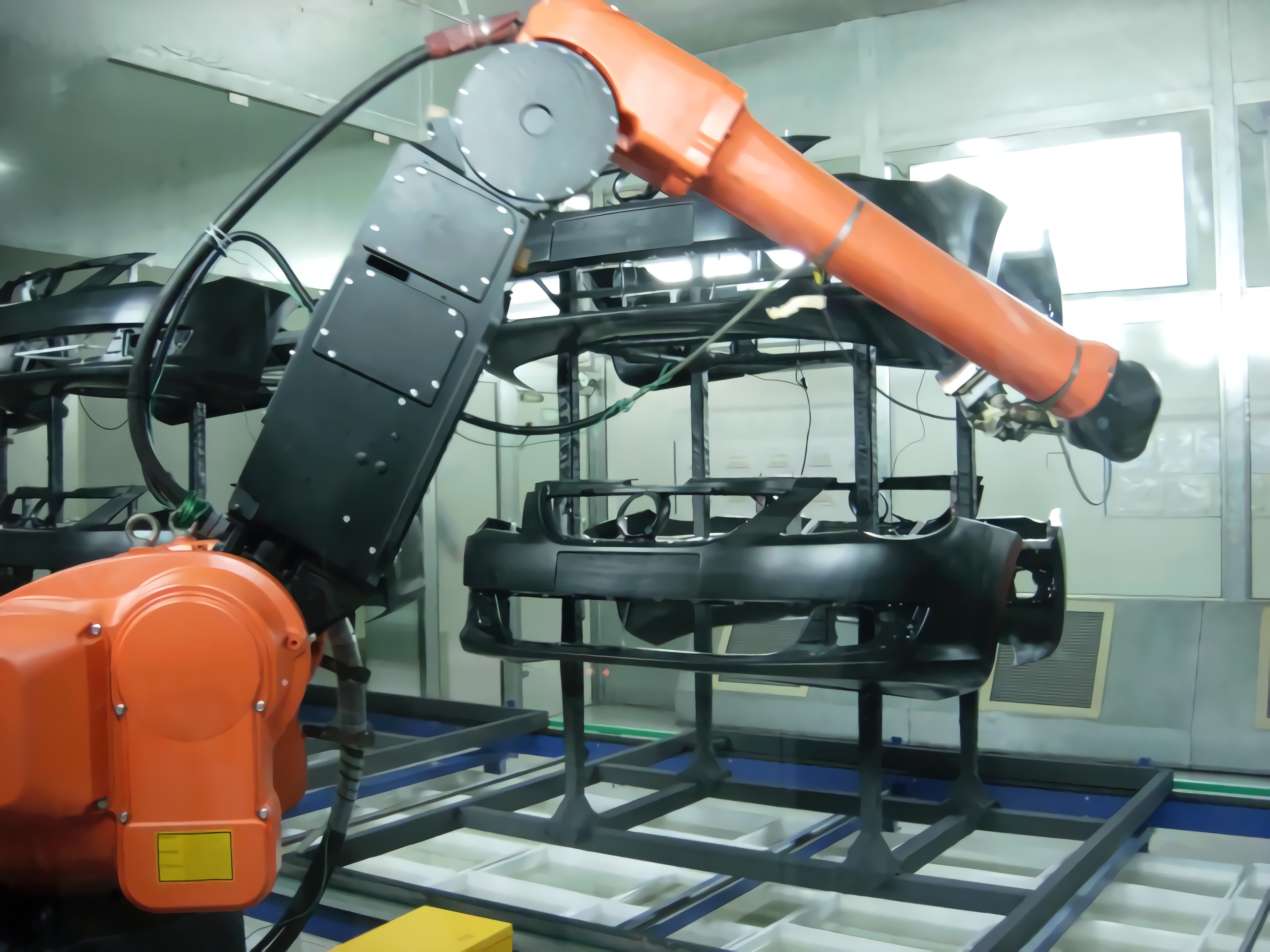
Lines for automotive parts combine temperature, humidity, and robotic spraying control.
Evidence in Coating Projects
The documented results allow understanding what a buyer can expect when evaluating this type of equipment. In the case of automotive parts, with 20 complete lines installed in ODM/OEM manufacturing plants and tier-1 suppliers, a coating yield rate of 98%, a 25% reduction in paint consumption, and a 20% reduction in energy consumption were reported, without major production stoppages for 5 years.
In the kitchenware sector, the documented project includes 20 complete lines in OEM and private label factories. According to case data, coating uniformity reached 98%, paint waste was reduced by 30%, and production efficiency improved by 35%, with compliance with international standards for food contact.
For metals, 15 complete automatic coating lines were installed for hardware, construction materials, and sheet metal factories. Results include a 97% approval rate, 30% reduction in paint or powder consumption, 22% decrease in energy, and 40% increase in production efficiency.
In wood, the project covered 10 complete lines for furniture, cabinets, doors, and musical instruments. A 30% reduction in paint consumption, a 90% decrease in dust defects, and a 40% increase in production efficiency were achieved. In industrial equipment, lines installed for heavy machinery and rolling stock allowed passing salt spray tests of at least 1,000 hours, with a 98% approval rate and 25% reduction in paint consumption.
Market Trends in Coating Lines
The market context reinforces the decision to evaluate automated lines. According to SNS Insider data, the global coating equipment market was valued at USD 18.5 billion in 2023 and is projected to reach USD 30.4 billion by 2032. Grand View Research estimates that the powder coating equipment segment will reach USD 5.22 billion by 2033, with a compound annual growth rate of 5.9%.
Two trends are relevant for the buyer: automation and sector concentration. In 2025, automatic systems accounted for more than 53% of the powder coating equipment market. The automotive industry, in turn, was the largest end-use segment, with approximately 27.3% share. For those manufacturing automotive parts or metal components, this means that the supply of automated lines will continue to grow and that technical specifications must be compared against measurable criteria.
Comparison with Traditional Schemes
Compared to manual spraying or semi-automatic processes, an automated coating line offers greater consistency, lower material consumption, and continuous production capacity. However, it also introduces constraints that must be evaluated from the start. The most evident is space: an automotive parts coating line, for example, requires a facility of approximately 100 m × 38 m × 5.4 m, plus controlled temperature and humidity conditions. Not all plants have that space or the necessary energy infrastructure.
Another limitation is related to the volume and variety of parts. A continuous automated line is justified when the production schedule is relatively stable and with sufficient volumes. In workshops with very short batches, a wide variety of references, or parts with highly irregular geometry, manual spraying may still be necessary as a complement for touch-up tasks or flexible production. The right decision is not necessarily to choose between manual and automatic, but to define the point of integration based on the product mix.
Outlook for Industrial Buyers
Market evolution points to increasingly connected lines, with PLC control, MES integration, and VOC treatment equipment to meet environmental requirements. For the buyer, the evaluation must include not only the coating line but the equipment ecosystem: pretreatment, curing, transport, and environmental protection. The ability to customize voltage, size, automation level, and machine capacity allows adapting the project to local energy conditions and specific end-customer requirements.
In this scenario, manufacturers with custom design capability, export experience, and structured after-sales service have a relevant position. The existence of an MOQ of 2 units and pre-shipment testing facilitate the buyer validating the configuration before final installation.
Frequently Asked Questions on Coating Line Selection
What factors define the right coating line for a project?
The main factors are the part material, size and shape, production volume, plant conditions, applicable environmental standard, and type of finish required. For example, a line for automotive parts operates with ABS+PC, booth temperature of 25±2 °C, and humidity of 65±10% RH, while a line for wood works with solid wood or MDF and line speeds of 4,000 mm/min.
What is the difference between a coating line for automotive parts and one for metals?
The automotive parts line is designed for plastic parts such as bumpers, dashboards, and wheel hubs, with a cycle of 45 seconds per tray and strict temperature and humidity control. The metal line processes panels and aluminum profiles, doors, windows, and sheet metal, with capacity up to 5,000 m²/day and parts up to 7,000 mm in length.
What installation conditions does an automatic coating line require?
According to documented scenarios, the line typically operates in an indoor cleanroom class 10,000, with a clean and well-ventilated environment. The project can be a new line, an upgrade of an existing line, or a customized turnkey project.
What production capacity can be expected from an automatic line?
Capacity depends on the sector and format. In kitchenware, the documented line produces 800-1,000 pieces per hour. In wood, production is 1,422 pieces per 8-hour shift. In metals, the maximum capacity is 5,000 m²/day.
What environmental requirements typically apply to these lines?
The reviewed applications require compliance with environmental standards ISO 14001, ISO 9001, and ISO 45001. Additionally, complementary equipment includes dust removal, VOC treatment system, and environmental protection equipment.
What is the expected lifespan of a coating line?
In the documented cases, the project lifespan is between 5 and 10 years. During that period, results reported in automotive parts and metal projects indicate continuous operation without major stoppages.
Is it possible to customize a line according to voltage or automation level?
Yes. Attractivechina's customization capabilities include packaging, logo, size, automation level, voltage, power, and machine capacity. The MOQ is 2 units, and each equipment receives a 100% pre-shipment test.