
LDPE Zipper Bags: Temperature, Capacity, and Weight Limits
Most specification disputes in flexible packaging are not really about price. They are about a bag that was ordered without a defined temperature range, fill weight, or usable volume — and then failed in a freezer, in transit, or on a retail shelf.
An LDPE zipper bag — a recloseable storage bag made from low-density polyethylene film — is defined less by its external dimensions than by three operating limits: how cold it can go, how much usable volume it offers, and how much fill weight its seal and zipper can carry. Procurement teams that settle those three numbers before issuing a purchase order avoid the most common source of returns and rework.
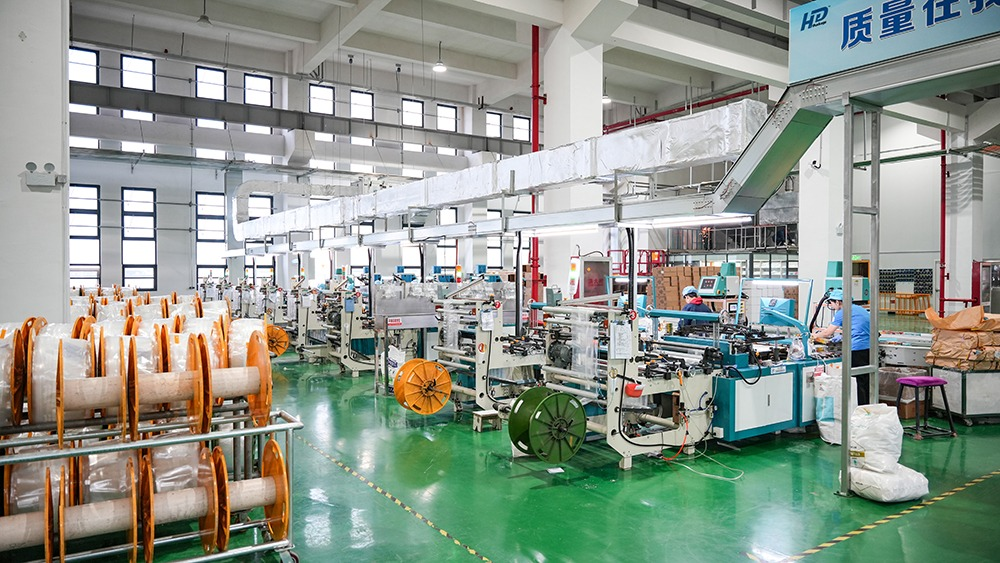
Haida Packaging (Taizhou Haida Plastic & Rubber Packaging Co., Ltd.) is a manufacturer founded in 2003 that produces zipper bags, single zipper bags, and slider bags, and exports to Japan and Europe. Its food-grade constructions, and the specification questions its buyers raise at the decision and execution stage, provide a practical reference for how temperature, capacity, and weight limits should be read.
Why temperature, capacity, and weight decide most LDPE bag specifications
An LDPE zipper bag has to satisfy three independent limits at the same time. A bag can be freezer-rated and still fail if it is filled past its load limit; it can be correctly sized and still fail if a hot fill is placed into it. Treating the three as one general “strength” question is where specifications go wrong.
- Temperature limit — the lowest and highest temperature at which the film stays flexible and the seal stays intact.
- Capacity — the usable internal fill volume, which is smaller than the bag’s external dimensions.
- Weight (load) limit — the fill mass the seal, zipper track, and bag wall can carry without strain, which is why a 50 g portion and a 2 kg fill are handled differently.
These limits are also the ones documented in Haida Packaging’s misuse-prevention instructions. The company provides clear opening and closing guidance together with temperature and load limits, so end users do not exceed the design range of the bag they are handling.
Problem and opportunity: undefined limits become rework
The cost of an undefined limit rarely appears at the point of purchase. It appears later, as leakage complaints, rejected pallets, or replacement orders. Quality controls in the category are built around exactly the failure modes that sit nearest to temperature, capacity, and weight: sealing and leakage risk, slider mechanism malfunction, production defect risk, and transport or storage damage.
The opportunity sits on the other side of the same problem. A buyer who pins down a temperature window, a usable fill volume, and a rated fill weight gets a specification that can be quoted, tested, and repeated across a production run. That is the difference between a one-off purchase and a supply program that can be replenished on a schedule.
Temperature: how cold an LDPE zipper bag can go
Low-density polyethylene keeps useful flexibility at freezer temperatures, which is the property that makes LDPE the default film for freezer and portioned food storage. Haida Packaging’s food-grade LDPE zipper bags are rated for freezing down to −40°C, which covers standard domestic freezers, commercial frozen-food storage, and cold-chain portioning.
The low end is only half of the range. Above their rated temperature window, LDPE films begin to soften and seals can deform, so hot-fill, cook-in, and retort applications normally call for a different film or construction rather than a standard LDPE zipper bag. Reading the temperature limit as a single number, instead of a window, is one of the most common specification errors.
A temperature claim only counts when the resin and construction comply with the relevant food-contact regulation. In the United States, food-grade polyethylene bags are governed by FDA 21 CFR 177.1520 for resin composition and migration limits. In the European Union, food-contact zipper bags must comply with LFGB and EU No 10/2011. Haida Packaging performs food safety compliance testing against both FDA and LFGB standards.
Capacity: matching usable volume to the fill, not to the label
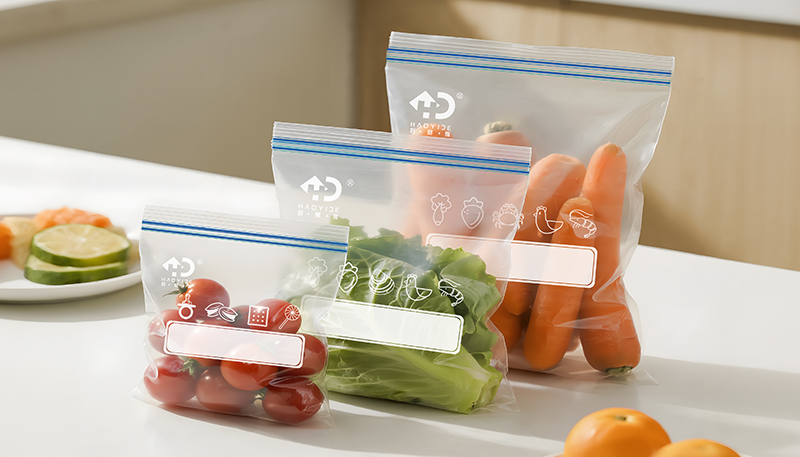
Capacity in a flexible bag is a fill-volume problem, not a dimension problem. A bag listed at a given external size holds less once the zipper track, seal margins, and film expansion under load are accounted for. Buyers comparing zipper storage bags should specify the usable internal volume they need and confirm it against the actual fill, rather than matching a catalogue number to a photograph.
Format changes the effective capacity. A flat press-to-close bag holds a given volume with minimal internal structure; a stand-up zipper pouch adds a gusset that lets the bag stand and hold loose or semi-liquid fills more stably. That structural difference is one reason stand-up formats have grown as a distinct segment: the stand-up zipper pouch segment was valued at USD 2.61 billion in 2024 and is expected to reach USD 3.80 billion by 2032, driven by the broader shift from rigid to flexible packaging.
For procurement, capacity should be pinned down with three numbers: usable fill volume, filled footprint for shelf or carton planning, and the maximum fill weight the format is rated for. The third number links capacity to weight, which is where most real-world failures occur.
Weight and load: what actually changes between 50 g and 2 kg
The gap between a 50 g portion and a 2 kg fill is not a small scaling step — it changes which construction is appropriate.
At around 50 g, the load on the seal and zipper is minimal, so a single zipper press-to-close construction is normally sufficient. Haida Packaging’s single zipper bag is specified for household and kitchen use, retail food packaging, and portioned storage, and is reported to deliver roughly 30% higher sealing reliability than a traditional poly bag, at a unit cost about 5–10% higher.
At around 2 kg, the fill weight concentrates stress at the seal and along the zipper track. Two constructions address it. A double zipper bag adds a second sealing channel; in B2B trials Haida Packaging recorded approximately 30–40% fewer leakage complaints for its double zipper bag than for competitor zipper bags, at a unit cost about 10–15% higher, and the format is specified for high-volume food packaging, takeaway, and liquids. A slider bag replaces the press-to-close track with a sliding closure that is easier to operate repeatedly, and is reported to open and close around 50% faster than a traditional zipper bag; its cost is higher than a single zipper bag and comparable to a double zipper bag.
The practical rule is that load limit and closure type must be chosen together. Overfilling — pushing a bag past its rated fill weight, or forcing a zipper closed against a full load — is a documented misuse risk, which is why load and temperature instructions ship with the product.
HD-VB001 vacuum bags vs standard LDPE zipper bags: two different specifications
A frequent point of confusion at the procurement stage is treating a vacuum bag and a standard LDPE zipper bag as interchangeable. They are not, and the difference starts with the material system.
The HD-VB001 is a vacuum bag constructed from PA+PE (polyamide plus polyethylene) rather than LDPE alone. The polyamide layer contributes strength and barrier performance; the polyethylene layer provides the heat-sealable surface. A vacuum bag is filled, vacuum-sealed, and closed by heat sealing, which means it requires vacuum-sealing equipment and is not recloseable once opened.
A standard LDPE zipper bag — press-to-close or slider — needs no equipment, opens and recloses repeatedly, and is the right format when access matters more than barrier. The selection therefore follows the storage goal: vacuum formats for longer storage and barrier protection, and recloseable LDPE zipper bags for repeated access, portioning, and freezer use.
What Haida Packaging verifies before a bag ships
Technical limits only hold if the production process preserves them. Haida Packaging’s quality controls are organised around the failure modes closest to temperature, capacity, and weight.
- Sealing and leakage — visual inspection and a sealing-pressure test, with SGS verification before shipment.
- Slider mechanism — pre-shipment functional testing of slider smoothness and sealing reliability.
- Production consistency — a standardized manufacturing process with in-line QC at critical steps, plus defect tracking and corrective action.
- Transport and storage — carton packaging, palletizing, and handling instructions to protect the bags in transit.
Acceptance criteria for an order cover visual inspection, sample testing, and a sealing and packaging check. Commercial terms are a minimum order quantity of 20,000 boxes, FOB Shanghai delivery, and 30/70 payment terms. The manufacturer reports a monthly production capacity of 900 tons and a typical delivery lead time of 35–40 days, which gives buyers a basis for planning replenishment within a long-term supply program.
Application and use cases: matching format to limit
| Format | Typical fill / condition | Common applications |
|---|---|---|
| Single zipper LDPE bag | Light portions; freezer and ambient conditions | Household and kitchen storage, retail food packaging, portioned storage |
| Double zipper LDPE bag | Heavier fills; liquids and bulk | High-volume food packaging, takeaway, liquid-containing packs |
| Slider LDPE bag | Frequent open/close; light to medium fills | Household and retail, portioned frozen foods, small electronics |
| HD-VB001 vacuum bag (PA+PE) | Vacuum-sealed; barrier storage | Longer-term storage of food and goods requiring barrier protection |
The overlap between formats is deliberate. A buyer with a freezer product and a light fill may use a single zipper bag, while the same buyer moving to a heavier or liquid fill shifts to a double zipper or slider construction. Food packaging remains the largest application, accounting for roughly 39.2% of global zipper bag market revenue as of 2025, with strong adoption in frozen food and snack segments.
Market trend: why specification discipline is becoming a procurement requirement
Demand for flexible, recloseable packaging continues to expand. The global zipper bag market was valued at approximately USD 10.34 billion in 2024 and is projected to reach USD 19.44 billion by 2035. Asia-Pacific is the fastest-growing region and holds a significant share of manufacturing capacity — the region where much of the LDPE and multi-material bag production is concentrated.
A second trend reinforces the need for clear specifications. The subscription-box and meal-kit delivery sector surpassed USD 20 billion in 2024, driving volume for custom-printed zipper bags used for ingredient portioning. Portioned, pre-measured fills are exactly the use case where a defined capacity and load limit matters most, because the same bag is filled repeatedly to the same weight across a production run.
On the compliance side, major retailers increasingly treat food-contact certification as an entry condition. LDPE and other food-contact bags sold into the EU must comply with LFGB and EU No 10/2011, and BRCGS A+ and amfori BSCI are widely used as gatekeeping standards. The category also includes established consumer and converter names such as SC Johnson (Ziploc), Reynolds Consumer Products (Hefty/Fresh-Lock), and Amcor plc, which compete alongside specialist contract manufacturers. Haida Packaging holds a range of system and product certifications relevant to these markets, including ISO9001, ISO14001, ISO22716, ISO13485, BRC, BRC-CP, BSCI, Nordic Swan, GMPc, FDA, and EPA.
How LDPE zipper bags compare with traditional solutions — and where they stop
| Comparison | Reported difference | Cost position |
|---|---|---|
| Single zipper bag vs. traditional poly bag | ~30% higher sealing reliability | ~5–10% higher unit cost |
| Double zipper bag vs. competitor zipper bags | ~30–40% fewer leakage complaints in B2B trials | ~10–15% higher unit cost |
| Slider bag vs. traditional zipper bag | ~50% faster opening and closing | Higher than single zipper; comparable to double zipper |
The limitation matters as much as the comparison. LDPE zipper bags are not a universal packaging answer. Their performance is bounded by a rated temperature window and a rated fill weight, and the seal becomes the weakest link once those limits are exceeded. For high-temperature filling, cook-in or retort applications, and for storage that depends on strong barrier performance, an LDPE zipper bag is the wrong construction — a PA+PE vacuum format such as the HD-VB001, or another material system, is the appropriate choice. A buyer who treats LDPE as interchangeable with vacuum or barrier formats will specify a bag that cannot meet the application, regardless of how it is priced.
Future outlook
Three directions are likely to shape LDPE zipper bag specifications over the next several years. First, the shift from rigid to flexible packaging continues to move volume into recloseable and stand-up formats, which raises expectations for defined capacity and load ratings. Second, portioning-driven demand from meal kits and subscription commerce pushes buyers toward tighter fill-weight tolerances, making acceptance testing a routine procurement step rather than an exception. Third, food-contact and retailer compliance requirements will keep pressure on the supply base to document temperature ratings, material composition, and test evidence rather than assert them. For buyers, the practical consequence is that the specification sheet, not the sales conversation, becomes the primary document in supplier selection.
FAQ: temperature, capacity, and weight limits for LDPE bags
What temperature range can an LDPE zipper bag handle?
Haida Packaging’s food-grade LDPE zipper bags are rated for freezing down to −40°C, which covers domestic freezers and standard cold-chain storage. Performance is a window rather than a single number: above the rated range, LDPE films soften and seals can deform, so hot-fill and retort applications require a different construction. For food contact, compliance follows the destination market — FDA 21 CFR 177.1520 in the United States, and LFGB and EU No 10/2011 in the European Union.
What is the difference between 50 g and 2 kg handling?
A 50 g fill puts minimal load on the seal and zipper, so a single zipper press-to-close bag is generally sufficient. A 2 kg fill concentrates stress at the seal and along the zipper track, so heavier constructions are used: a double zipper bag, reported to deliver roughly 30–40% fewer leakage complaints in B2B trials than competitor zipper bags, or a slider bag, reported to open and close around 50% faster than a traditional zipper bag. Exceeding a bag’s rated fill weight is classified as misuse, which is why load limits are documented for end users.
How do I choose between a standard LDPE zipper bag and the HD-VB001 vacuum bag?
The HD-VB001 is a vacuum bag built from PA+PE (polyamide plus polyethylene), not LDPE alone, and it is closed by heat sealing after vacuum extraction. It requires vacuum-sealing equipment and is not recloseable once opened. A standard LDPE zipper bag needs no equipment and can be opened and closed repeatedly. Select the vacuum format when barrier performance and longer storage are the priority, and the recloseable LDPE format when repeated access, portioning, and freezer use matter more.
How should capacity and size be specified for a long-term supply order?
Specify usable internal fill volume rather than external dimensions, then confirm the filled footprint for shelf or carton planning and the maximum rated fill weight. Format affects usable volume: a stand-up zipper pouch adds a gusset that supports loose and semi-liquid fills, while a flat bag of the same external size holds less usable volume. For repeat orders, Haida Packaging quotes a monthly production capacity of 900 tons and a typical lead time of 35–40 days, which is relevant when planning a continuous supply program.
What are the purchasing terms and acceptance criteria?
Haida Packaging’s standard terms are a minimum order quantity of 20,000 boxes, FOB Shanghai delivery, and 30/70 payment terms. Acceptance covers visual inspection, sample testing, and a sealing and packaging check, supported by SGS verification before shipment and pre-shipment testing of slider smoothness and sealing reliability. After-sales support is provided by email and WhatsApp and includes product guidance, storage guidance, and replacement for quality issues.
Temperature ratings and fill weights should be confirmed against the specification sheet for the specific bag model before ordering. A full range overview is available in the Taizhou Haida catalogue (2025).