
LED Lighting Buyer Comparison: DK3 vs XP Series
LED Lighting Buyer Comparison: DK3 vs XP Series
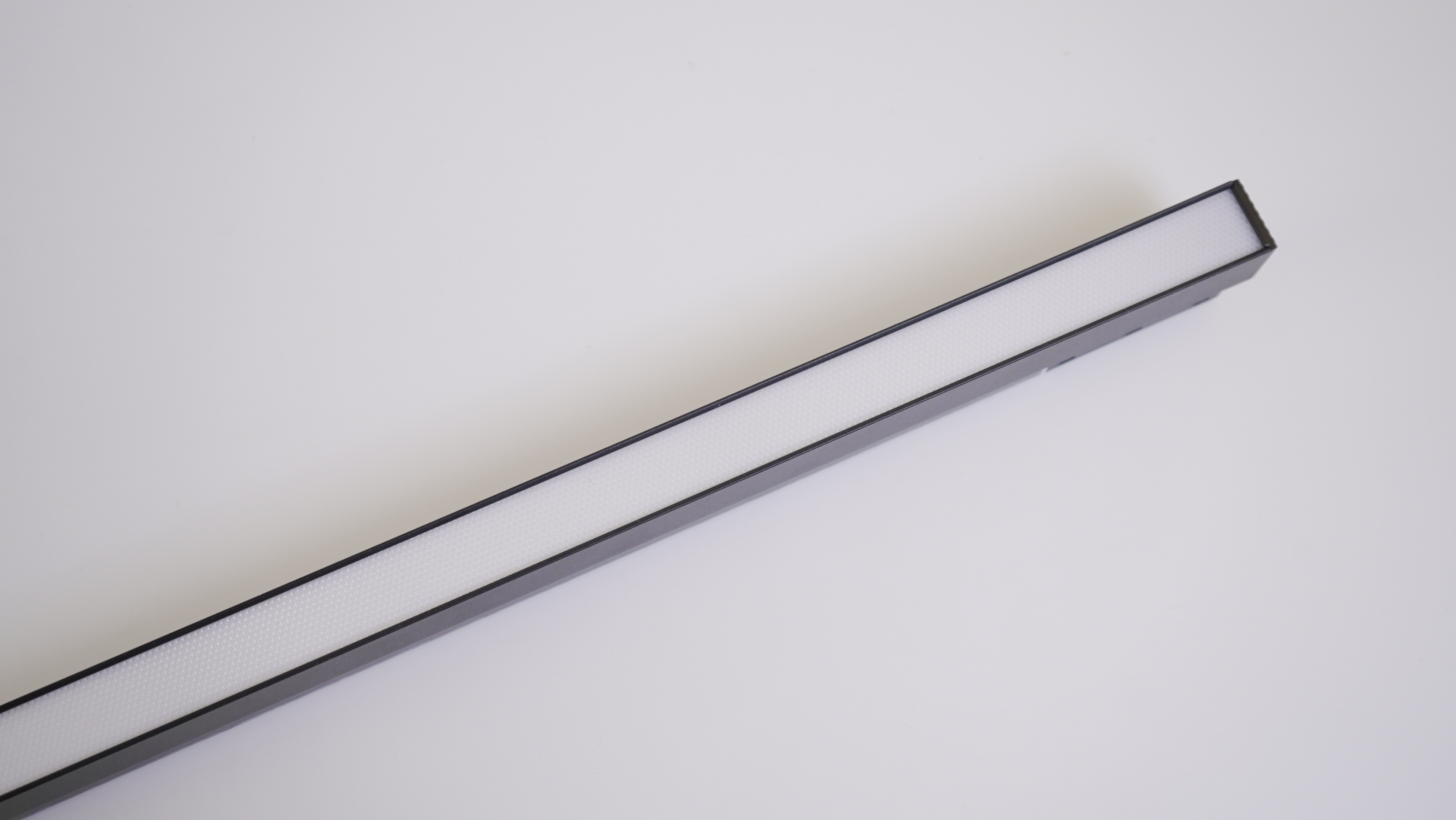
Commercial lighting specification has moved from buying single fixtures to assembling layered systems. That shift is measurable: the global commercial lighting market was estimated at USD 47.54 billion in 2024, and the linear lighting segment alone was valued at USD 30.09 billion in 2025 with an 11.42% CAGR projected to 2032. For a buyer, the practical question is no longer which LED product is brightest — it is which product family performs which job on site.
This comparison sets one linear product against four products from a single manufacturer family, using published specifications only. Zhongshan Xiangpai (XPUP) Lighting Technology Co., Ltd. is a China-based LED linear lighting manufacturer established in 2012 in Zhongshan, Guangdong — the lighting manufacturing base of China. The company produces LED linear light strips, LED magnetic lights and smart control systems, operates a factory of more than 10,000 m² with 80 employees and six R&D engineers, reports an annual output of 35,000,000 m and roughly 50% export share, and focuses on the European and American markets alongside other global regions. Its products hold CE and RoHS certifications and are exported to more than 170 countries and regions.
The five products examined here are the DK3-DC24V-2835-240D-9.3mm linear strip and four XP series models: XP-BD18DC24V-2835-140D-8MM (full spectrum), XP-CX-18 (magnetic track), XP-SM-DC24V-5050-10MM (smart) and XP-ZS-DC24V-2835-8MM (decorative). They look adjacent in a catalogue but serve different functions, voltages and colour-rendering requirements.
The Buying Problem: Similar-Looking Products, Four Different Jobs
A commercial project rarely needs one type of light. A restaurant, museum, retail store or hotel typically needs a uniform architectural line, a high-fidelity display light, an adjustable accent light and, increasingly, a controllable colour layer. When a buyer treats all LED strips as interchangeable, the result is usually one of three failures: visible dotting in a continuous run, colour cast on merchandise, or a control system that cannot be commissioned with the fixtures that were purchased.
The DK3 and XP series products separate those functions deliberately. The table below is the fastest way to see where each product sits.
Table 1 — Published specification comparison
| Parameter | DK3-DC24V-2835-240D-9.3mm | XP-BD18DC24V-2835-140D-8MM | XP-CX-18 | XP-SM-DC24V-5050-10MM | XP-ZS-DC24V-2835-8MM |
|---|---|---|---|---|---|
| Product family | Linear Lighting | Full Spectrum Lighting | Magnetic Track Lighting | Smart Lighting | Decorative Lighting |
| Voltage | 24V | 24V | 48V | 24V | 24V |
| Power | 15W | 12W | 30W | 12W | 10W |
| CRI | Ra≥80 | Ra≥97 | Ra≥90 | Ra≥90 | Ra≥80 |
| PCB width | 9.3mm | 8mm | 8mm | 10mm | 8mm |
| Colour temperature | 3000 / 4000 / 6500K | 2700 / 3000 / 3500 / 4000 / 5000 / 6000K | 3000 / 4000 / 6000K | RGB / 3000K, 4000K, 6000K | 2700–6000K / RGB |
| LED density | 240 LEDs/m | 140 LEDs/m | Not stated in available specification | 60D / 120D | 60D / 140D |
| Luminous flux per LED | Not stated in available specification | 55–65 LM | 55–65 LM | 55–65 LM | 30–35 LM |
| Beam angle | Not stated in available specification | Not stated in available specification | 120° | Not stated in available specification | Not stated in available specification |
| IP rating | IP20 | IP20 | Not stated in available specification | IP20 | IP20 |
| Housing material | Double-layers copper PCB | Double-layers copper PCB | Aluminum + PC | Double-layers copper PCB | Double-layers copper PCB |
| OEM & ODM support | Yes | Yes | Yes | Not stated in available specification | Not stated in available specification |
Where a value is absent from this table, it is absent from the published product data used for this comparison. Buyers should request those values in writing before specification rather than assuming them. That is a normal procurement discipline, and it matters more on commercial projects than on residential ones.
Technical Explanation: The Five Specs That Decide the Purchase
1. Colour rendering index (CRI)
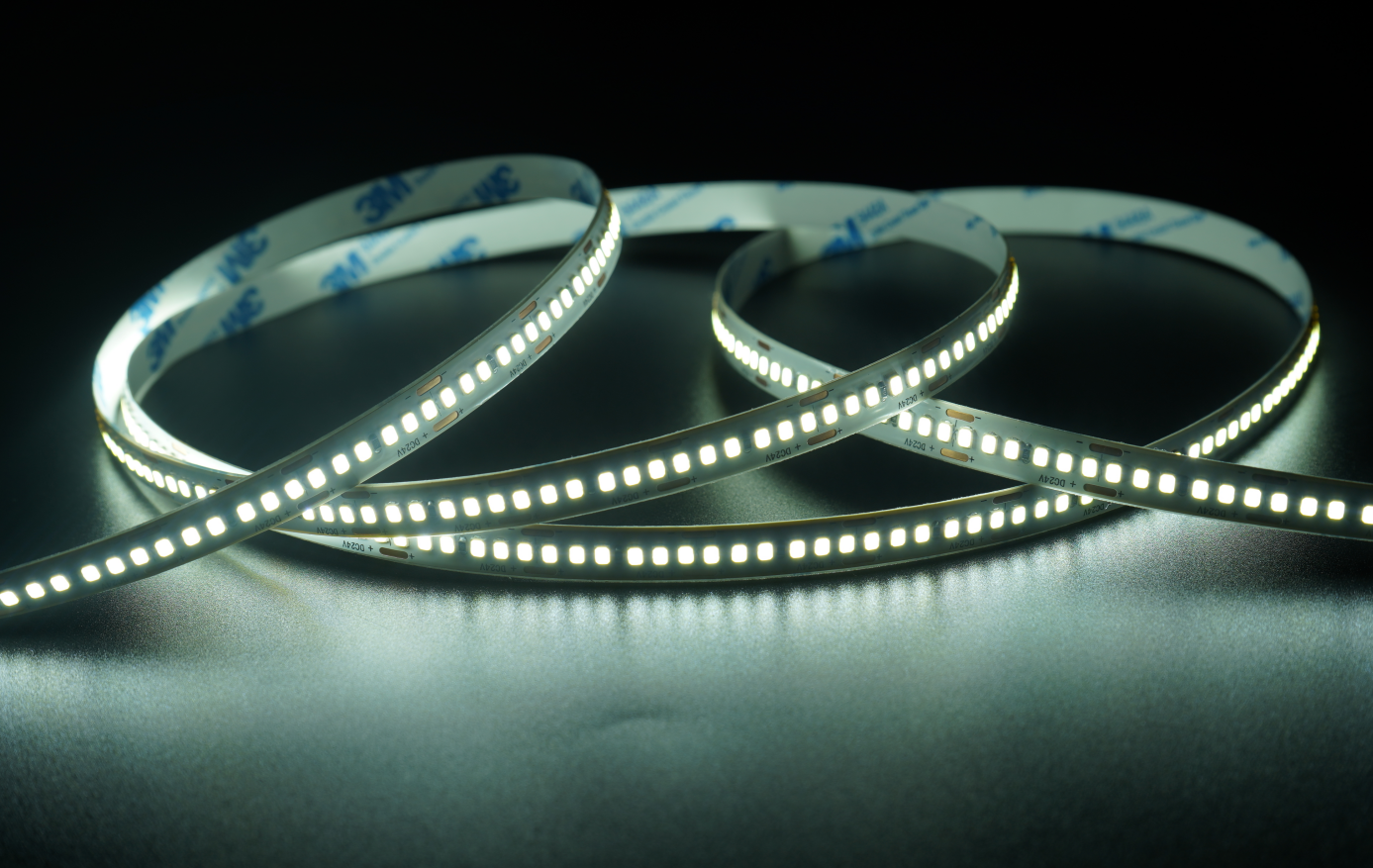
CRI describes how accurately a light source renders colour relative to a reference source. On this product family, the published values span three levels:
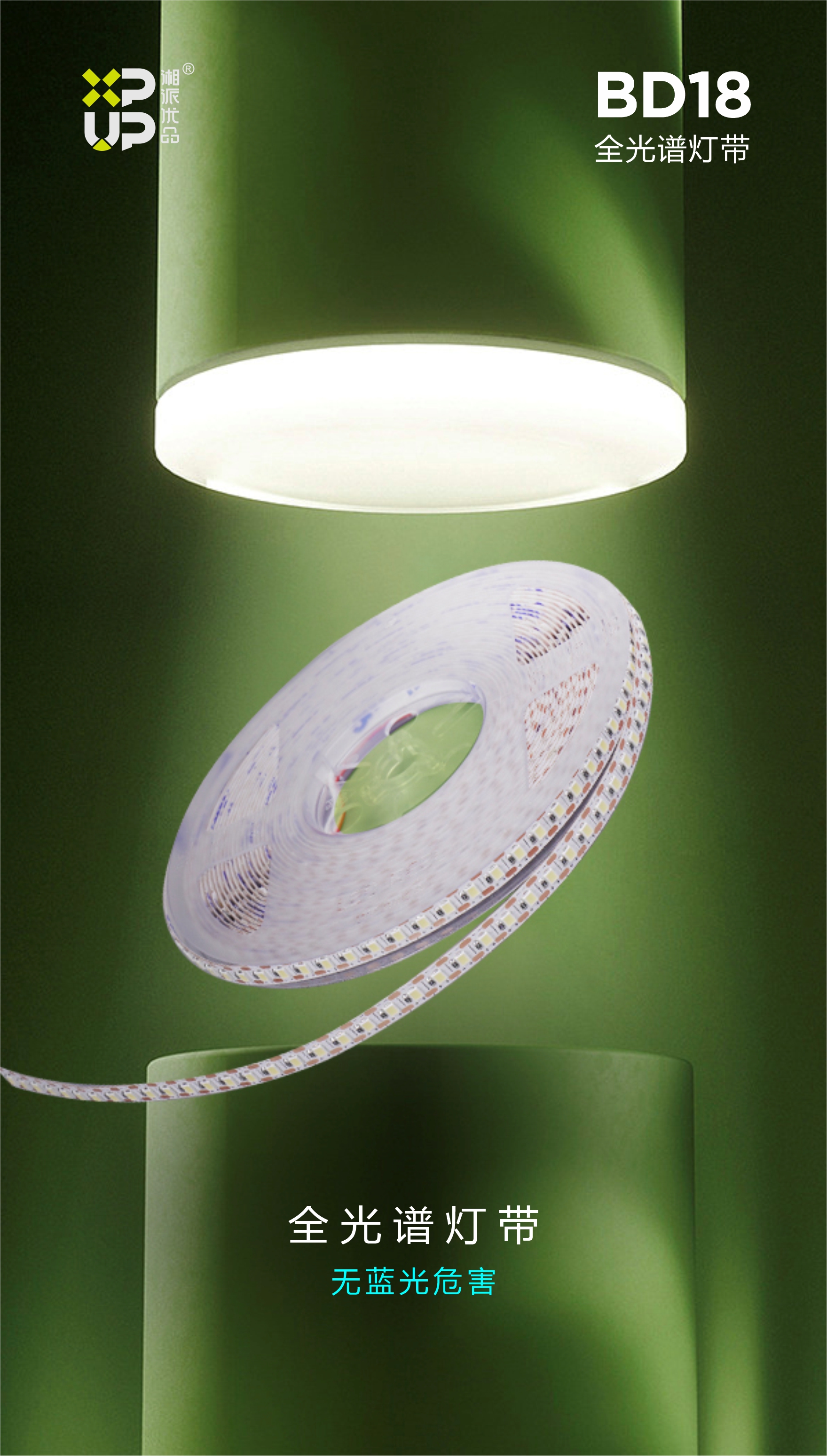
- Ra≥97 — XP-BD18DC24V-2835-140D-8MM. This is the highest published CRI in the group and the model designated as full spectrum lighting. XPUP positions it for museums and galleries, interior design, luxury retail, jewellery stores, education and shopping malls.
- Ra≥90 — XP-CX-18 and XP-SM-DC24V-5050-10MM. Both sit in the mid-high band. XP-CX-18's stated application profile includes retail, shopping malls, exhibition and events and jewellery stores; XP-SM covers aparthotels, restaurants, hospitality, interior design and shopping malls.
- Ra≥80 — DK3-DC24V-2835-240D-9.3mm and XP-ZS-DC24V-2835-8MM. This is a general commercial and decorative band, appropriate for architectural lines where uniformity matters more than colour fidelity.
The buyer consequence is direct. If the illuminated surface is merchandise, art, food or skin tone, CRI is a specification, not a preference. If the illuminated surface is a cove, a ceiling slot or a background wall, CRI at Ra≥80 is usually sufficient and frees budget for other layers.
2. Voltage architecture: 24V versus 48V
Four of the five products run on 24V; the XP-CX-18 runs on 48V. This is not a trivial difference. A 48V magnetic track fixture cannot be powered from a 24V strip driver, and a 24V strip cannot be mounted on a 48V magnetic track system. The circuit, the driver and the mounting system must be specified as one package.
In practice, 24V DC is the common architecture for flexible strip lighting in coves, profiles, shelves and cabinetry, where the strip itself carries the light along the run. The 48V architecture is used in the magnetic track family, where 30W fixtures are mounted and aimed individually on a track. Buyers who mix these two systems on one circuit typically discover the mistake at commissioning, not at quotation.
3. Power, PCB width and LED density
DK3 runs 240 LEDs per metre at 15W on a 9.3 mm double-layer copper PCB. XPUP describes this density as delivering uniform light emission without a grainy appearance, which is why the model is positioned for indoor lighting strips and black profiles. Density of this level reduces the visual gaps between diodes in a linear run — the single most common complaint on exposed linear installations.
XP-BD18 uses 140 LEDs per metre at 12W on an 8 mm double-layer copper PCB, and its stated selling point includes high brightness and flexibility with strong bending resistance. XP-SM offers 60D or 120D at 12W on a 10 mm PCB. XP-ZS offers 60D or 140D at 10W on an 8 mm PCB, with 30–35 LM per LED — the lowest luminous output per LED in this group, consistent with a decorative background role.
4. Optics, materials and mounting
XP-CX-18 is the only fixture-like product here. It uses an aluminium and PC construction, a published 120° beam angle, and an imported PC cover. XPUP describes it as suitable for making commodities and exhibits more intuitive, enhancing material texture and creating a more artistic atmosphere, and lists clothing stores, jewellery stores, exhibition halls, hotels and clubs among its applications. Because it mounts on a track rather than in a channel, it can be repositioned as a merchandising layout changes — a meaningful advantage in retail, where planograms change more often than ceilings do.
5. Control and colour behaviour
XP-SM-DC24V-5050-10MM and XP-ZS-DC24V-2835-8MM carry the dynamic functions. Both publish adjustable brightness and speed modes, a breakpoint resume function, and 20M non voltage drop behaviour. XP-SM supports RGB alongside 3000K, 4000K and 6000K; XP-ZS supports 2700–6000K alongside RGB. For hospitality and entertainment spaces, that combination is what enables scene changes — daytime neutral lighting for breakfast service, saturated colour for evening use — without changing fixtures.
Application Fit: Restaurants, Museums, Retail and Hospitality
The applicable-industry lists published with each product are the most reliable guide to fit. They are not marketing decoration; they indicate where the manufacturer expects the product to be installed and supported.
| Project type | Primary fit | Buying logic |
|---|---|---|
| Restaurants | DK3 (linear base), XP-SM (scenes), XP-ZS (decorative) | Restaurants appear on the applicable-industry lists for DK3, XP-SM and XP-ZS. Use DK3 for continuous ceiling and wall lines, XP-SM where the venue changes mood between service periods, and XP-ZS for background decoration. |
| Museums & galleries | XP-BD18 (display), DK3 (architecture) | Both are listed for museums and galleries. XP-BD18's Ra≥97 is the colour-critical choice for exhibits; DK3's 240 LEDs/m is the choice for uninterrupted architectural lines. |
| Retail & shopping malls | XP-CX-18 (accent), XP-BD18 (luxury retail) | XP-CX-18 is listed for retail, shopping malls, exhibition and events and jewellery stores with a 120° beam angle on track. XP-BD18 is listed for luxury retail, jewellery stores and shopping malls. |
| Hospitality & hotels | XP-SM, XP-ZS, XP-CX-18 | XP-SM is listed for aparthotels, restaurants and hospitality; XP-ZS for hospitality, hotels, restaurants and aparthotels; XP-CX-18 for hotels and clubs. Together they cover guest-facing ambience and public-area accent. |
| Offices & apartments | DK3 | DK3 is listed for office buildings, apartments, interior design and restaurants — continuous, uniform, low-glare linear light. |
Supplier-side project evidence supports the commercial positioning without contradicting it. XPUP reports a German hospitality contractor using high-efficiency and IP68 waterproof strips across hotel public areas and façades in projects running over four years, a German commercial lighting contractor applying dimmable COB strips in cafés and chain retail, and a US lighting brand supplied under an ODM arrangement at 300,000 metres per year for three years. Those references describe different models from the five compared here, but they are indicators of the manufacturer's commercial-project experience and long-term supply behaviour.
Market Trend Analysis: What Is Reshaping Commercial LED Purchasing
Several published data points explain why this comparison matters now rather than five years ago.
- The overall market keeps expanding. The global LED lighting market was valued at USD 106.9 billion in 2025 and is projected to reach USD 197 billion by 2033 (Grand View Research).
- The linear segment is growing faster than the category. The linear lighting market was valued at USD 30.09 billion in 2025 with an 11.42% CAGR projected to 2032 (Maximize Market Research).
- The magnetic track segment is expanding too. The magnetic track lighting system market is valued at USD 2.8 billion in 2025 with an expected CAGR of 7.6% through 2033 (Dataintelo).
- Colour quality is becoming a procurement criterion. The Human Centric Lighting market was valued at USD 3.66 billion in 2024 and is projected to grow at a 17.1% CAGR through 2036 (Research Nester), with Europe holding a 37.4% share in 2024 (Mordor Intelligence).
- Control is moving from feature to code requirement. The 2024 International Energy Conservation Code mandates that lights dim to 10% or lower for commercial interiors (International Code Council).
- Smart lighting is now the mainstream indoor application. The global smart LED lighting market was valued at USD 27.3 billion in 2024 (Grand View Research); indoor lighting generated 66% of the smart lighting sector in 2024, and wireless connectivity such as Zigbee and Bluetooth Mesh captured 35% of that market (Precedence Research).
- Hospitality is a substantial and distinct segment. The global hospitality lighting market is valued at USD 14.2 billion in 2025 (Dataintelo).
- Price pressure is intensifying. Smart bulb average selling prices fell 22% between 2024 and 2025 due to scaled production in Asia (Mordor Intelligence).
- Energy context remains the underlying driver. The lighting sector accounted for approximately 8% of global electricity demand in 2024, roughly 2,200 TWh (IEA).
Read together, these figures point to a market where volume growth and price deflation coexist. When average selling prices fall, differentiation shifts away from price and toward colour quality, control integration and supply reliability — exactly the dimensions on which the DK3 and XP series are separated. Third-party analysis also identifies Signify (Philips Lighting), Acuity Brands and Eaton as dominant global players in the track and hospitality lighting markets in 2024–2025 (Grand View Research / Dataintelo), which is a useful reality check for buyers: the competitive set at the top of the market is well established, and mid-market sourcing decisions are typically made on fit, documentation and delivery rather than on brand scale.
Comparison with Traditional Solutions — and Where These Products Do Not Fit
Compared with traditional fluorescent battens and halogen accent lamps, LED linear and track systems are generally specified for lower energy use, longer service life and finer control granularity. That is the standard case for substitution and it is well established across the industry. The more useful information for a buyer is the boundary — where these specific products should not be used.
- IP20 means indoor dry locations only. DK3, XP-BD18, XP-SM and XP-ZS are all published at IP20, which is not water-protected and is intended for indoor dry environments. They are not appropriate for bathrooms, splash zones, exposed façades, pool surrounds or any wet-location installation. Projects requiring wet-location performance need models outside this comparison — XPUP's range includes IP65 and IP68 strip options elsewhere in its catalogue.
- The XP-CX-18 IP rating is not stated in the available specification. Before specifying it in a damp or semi-exposed location, buyers should obtain that value in writing. This is a genuine gap in the published data, not a defect in the product.
- Published operating conditions are narrow and specific. XPUP lists an operating temperature of −20°C to +45°C, requires that the strips are not covered with objects, must be kept away from chemically corrosive environments, and must be used with a proper power supply or adapter to avoid overload. Covering a strip in a sealed channel without thermal consideration is a common installation error.
- Driver and track dependency is absolute. The 24V and 48V products need matched power supplies and, for XP-CX-18, a compatible magnetic track system. There is no partial compatibility between a 24V strip circuit and a 48V track circuit.
- CRI has a floor per application. DK3 and XP-ZS at Ra≥80 should not be used as the primary light source for jewellery, artwork, textiles or food presentation. XP-BD18 at Ra≥97 is the appropriate model in this group for those surfaces.
- Certification is model-specific, not catalogue-wide. XPUP's CE and RoHS certifications are issued by PTC TESTING for its LED low-voltage and high-voltage light strip series. For example, the CE certification covering product 6535 (XP-BD18DC24V-2835-140D-8MM) carries certificate numbers PTC22122900901E-EMB01 and PTC22122900902E-EMB01. Buyers should match the exact model to the certificate's product list rather than assuming blanket coverage of an entire range.
- Long runs need layout confirmation. XP-SM and XP-ZS publish 20M non voltage drop behaviour and a breakpoint resume function. Where a run exceeds the tested configuration, the layout should be confirmed with the supplier before fabrication rather than extrapolated from the datasheet.
Verdict: Which Series for Which Project
The DK3 is not a higher or lower grade than the XP series; it is a different job. The decision rule below resolves most commercial specifications.
- Choose DK3-DC24V-2835-240D-9.3mm when the requirement is a continuous, uniform linear line in restaurants, offices, apartments, interior design schemes or gallery architecture. The 240 LEDs per metre on a 9.3 mm PCB is the reason to choose it: density solves visible dotting, and 24V/15W is straightforward to drive.
- Choose XP-BD18DC24V-2835-140D-8MM when colour accuracy decides the outcome — museums and galleries, luxury retail, jewellery stores, education and shopping malls. At Ra≥97 it is the colour-critical model in this group, and its 2700–6000K range covers warm display through neutral work light.
- Choose XP-CX-18 when the light must be aimed and repositioned on merchandise or exhibits in retail, shopping malls, exhibition and events or jewellery stores. The 48V, 30W, 120° track fixture is the accent layer, not the base layer.
- Choose XP-SM-DC24V-5050-10MM when a hospitality or multipurpose space needs dynamic colour and scene changes on a 24V platform, with RGB plus 3000K, 4000K and 6000K options.
- Choose XP-ZS-DC24V-2835-8MM when the layer is decorative background lighting in hotels, restaurants, retail or shopping malls and the priority is effect rather than illuminance.
For a full commercial space, the sensible specification combines them: DK3 as the continuous linear layer, XP-BD18 as the display layer, XP-CX-18 as the aimed accent layer, and XP-SM or XP-ZS as the dynamic and decorative layer. Buying all four from one source removes the most common integration problem — drivers, connectors and control protocols that do not talk to each other.
Future Outlook
Three forces are likely to shape the next specification cycle. First, colour quality will continue moving from premium option to baseline requirement, driven by the projected 17.1% CAGR in Human Centric Lighting through 2036 and by Europe's 37.4% share of that market. Second, controllability will increasingly be a compliance matter rather than an upgrade, following the 2024 IECC requirement that commercial interior lighting dim to 10% or lower. Third, price deflation in smart lighting products — a 22% fall in smart bulb average selling prices between 2024 and 2025 — will keep pressure on unit pricing while pushing differentiation toward documentation, colour fidelity and delivery reliability.
XPUP's stated position for the 2023–2028 period is to keep its focus on linear lighting. Its published operating base for that plan is a 10,000 m² factory, six R&D engineers, a monthly capacity of 3,000,000 metres, 100% testing, an MOQ of 2,000 metres, an 18–22 day lead time and a two-year standard warranty on OEM and ODM projects. For buyers, those numbers are the practical anchor: they define whether a supplier can absorb a seasonal build-up or a project-driven volume spike without changing the product underneath.
FAQ
What is the difference between the DK3 and the XP series in the XPUP LED lighting range?
The DK3-DC24V-2835-240D-9.3mm is a linear lighting strip: 24V, 15W, 240 LEDs per metre on a 9.3 mm double-layer copper PCB, CRI Ra≥80, colour temperatures of 3000/4000/6500K, IP20, with OEM and ODM support. The XP series covers four distinct jobs. XP-BD18DC24V-2835-140D-8MM is a full spectrum strip at CRI Ra≥97 (24V, 12W, 140 LEDs/m, 8 mm PCB, 2700–6000K). XP-CX-18 is a 48V, 30W magnetic track lighting product with a 120° beam angle in aluminium and PC. XP-SM-DC24V-5050-10MM is a 24V, 12W smart strip with RGB plus 3000K, 4000K and 6000K options on a 10 mm PCB. XP-ZS-DC24V-2835-8MM is a 24V, 10W decorative strip with 2700–6000K and RGB options. DK3 provides the continuous linear layer; the XP series provides colour-critical, track-mounted, controllable and decorative layers.
Which XPUP product has the highest colour rendering index?
XP-BD18DC24V-2835-140D-8MM, published at CRI Ra≥97. For comparison within the same family, XP-CX-18 and XP-SM-DC24V-5050-10MM are published at Ra≥90, while DK3-DC24V-2835-240D-9.3mm and XP-ZS-DC24V-2835-8MM are published at Ra≥80.
Can the DK3 or XP series LED strips be used outdoors?
Not as published. DK3, XP-BD18, XP-SM and XP-ZS are rated IP20, meaning indoor dry locations with no water protection. The published operating conditions specify −20°C to +45°C, no covering with objects, no chemically corrosive environments, and use of a suitable power supply or adapter to avoid overload. Projects needing wet-location performance require higher-IP alternatives, such as the IP65 and IP68 strip options elsewhere in the XPUP range. The available specification for XP-CX-18 does not state an IP rating, so that value should be confirmed before specifying it in a damp area.
Why does the XP-CX-18 run at 48V while the other models run at 24V?
XP-CX-18 is published at 48V with a 30W rating, versus 24V and 10–15W for DK3, XP-BD18, XP-SM and XP-ZS. The 48V design belongs to the magnetic track family, where fixtures are mounted and aimed on a track rather than fixed inside a continuous channel. Practically, a 48V magnetic track fixture cannot be powered from a 24V strip driver, so the driver, track and fixture must be specified as a single system.
How should a buyer choose between a linear LED strip and a magnetic track fixture for a retail project?
Linear strips such as DK3 produce continuous architectural light — coves, profiles, shelves and uninterrupted lines. Magnetic track products such as XP-CX-18 produce aimable accent light that can be repositioned as a layout changes, and are listed for retail, shopping malls, exhibition and events, and jewellery stores. Many retail specifications use both: a linear base layer for general illumination and a magnetic track accent layer for merchandise.
Are XPUP LED lighting products certified for the EU market?
XPUP holds CE and RoHS certifications issued by PTC TESTING for its LED low-voltage and high-voltage light strip series. For example, the CE certification covering product 6535 (XP-BD18DC24V-2835-140D-8MM) carries certificate numbers PTC22122900901E-EMB01 and PTC22122900902E-EMB01 and covers EN IEC 55015:2019+A11:2020, EN 61547:2009, EN IEC 61000-3-2:2019+A1:2021 and EN 61000-3-3:2013+A1:2019. Because certification is granted against defined product lists, buyers should match the exact model number to the certificate rather than assuming blanket coverage of a catalogue.
What MOQ and lead time apply to OEM or ODM orders?
XPUP's published capability data lists an MOQ of 2,000 metres and a lead time of 18–22 days, against a monthly capacity of 3,000,000 metres and 100% testing. OEM customisation covers voltage, logo, power, dimensions, materials, hardware configuration, internal circuit, colour, factory specifications, nameplate and label. ODM customisation covers exterior colour scheme, outer packaging box, label, brand information, model name and material details. A two-year standard warranty applies, with dedicated technical support and remote debugging for OEM projects.
A complete specification reference covering the DK3 linear strip and the XP series, including the models compared in this article, is available in the 2026 XPUP LED Strip Catalog.