
LED PCB Certification Map: ISO 9001, IATF 16949, UL 796 & UL 796F
HTNXT · Industry Reference · Electrical & Electronics
LED PCB Certification Map: ISO 9001, IATF 16949, UL 796 & UL 796F
LED PCB buyers rarely fail because a supplier holds no certificates. They fail because the certificate in the file does not cover the board in the box. A quality management certificate can be valid across a whole factory while a specific stack-up, a specific base material or a specific production site sits outside the scope of the product-level recognition the project actually requires.
For LED circuit boards, at least four separate certification regimes appear in the same procurement conversation: quality management (ISO 9001), automotive quality management (IATF 16949), product-level safety recognition (UL 796 for rigid boards and UL 796F for flexible interconnect constructions), and substance compliance (RoHS, REACH, supported by ISO 14001 environmental management). Each document answers a different question. Treating them as interchangeable is the most common source of compliance surprises at the luminaire or vehicle approval stage.
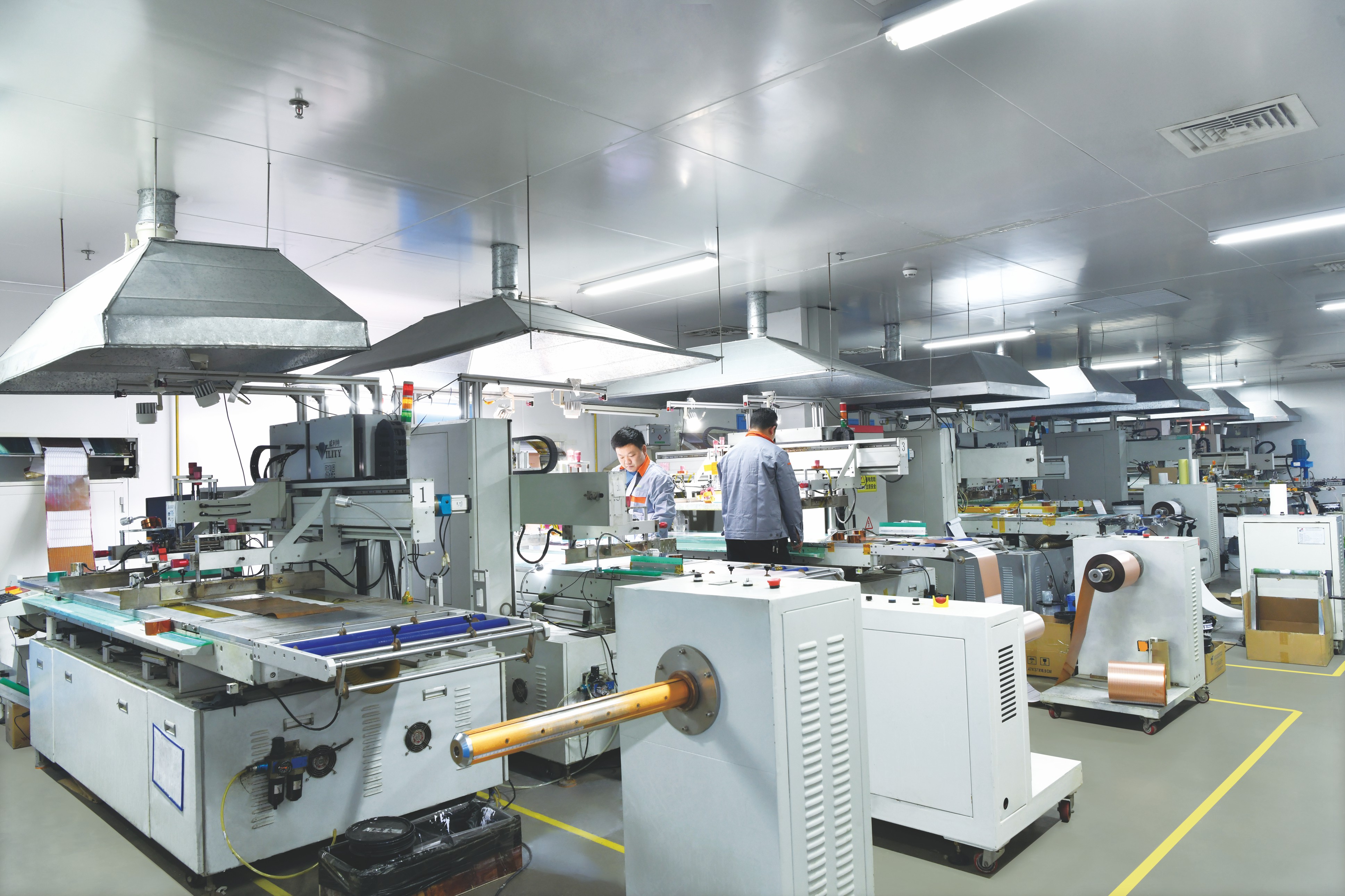
WODE Circuit Technology (Zhuhai) Co., Ltd. is a printed circuit board and flexible circuit manufacturer founded in 2003 in Zhuhai, China, operating a 150,000 m² facility with more than 500 employees and annual output of 6,000,000 sqm. Its certification set — ISO 9001:2015 (certificate no. 51325Q4258ROM), IATF 16949 (registration 0584371), UL 796 (file E323980) and UL 796F (file E498836), alongside ISO 14001 and REACH compliance — provides a concrete case for decoding what each document actually covers, and where its authority ends.
The Certification Map: Four Layers, Four Different Questions
Certification confusion in LED PCB sourcing almost always comes from mixing system-level audits with product-level recognition. A system certificate describes how an organisation manages quality or environmental impact. A product recognition describes a specific construction that has been evaluated against a safety standard. The two are not substitutes, and a supplier can hold one without the other.
| Scheme | Identifier as held by WODE Circuit | Layer it governs | Typical buyer trigger |
|---|---|---|---|
| ISO 9001:2015 | 51325Q4258ROM | Quality management system | Baseline supplier qualification in any industry |
| ISO 14001 | Stated in company profile | Environmental management system | Corporate ESG and customer supply-chain screening |
| IATF 16949 | 0584371 | Automotive quality management system | Automotive lighting, tier supply and vehicle programmes |
| UL 796 | E323980 | Rigid printed wiring board recognition | Safety acceptance of rigid LED boards |
| UL 796F | E498836 | Flexible materials interconnect constructions | FPC-based LED strip, tube and COB assemblies |
| RoHS / REACH | Compliance stated in company profile | Substance restrictions and declarations | EU and other regulated market access |
Read as a set, the table shows why a single line such as “the factory is certified” is not a procurement answer. ISO 9001:2015 says that WODE Circuit operates a controlled, audited quality system; it says nothing about whether a given LED board has been type-evaluated for safety. UL 796 and UL 796F are the opposite: narrow, construction-specific recognitions that say little about the broader factory management system. IATF 16949 sits between the two — it is a quality management standard written for automotive supply chains, and its registration number 0584371 signals that the same factory is organised around automotive customer expectations, without qualifying any individual board for automotive use.
UL 796 and UL 796F: Why LEDs Need Both Files
UL 796 and UL 796F are often quoted together but they cover different physical families. UL 796 addresses rigid printed wiring boards; UL 796F addresses flexible materials interconnect constructions. A lighting company that buys only rigid boards can work within one file; a lighting company that buys flexible LED strip, tube or COB substrate must look at the other.
What recognition actually attaches to
UL recognition is not granted to a brand, a product name or a company as a whole. It is granted to an evaluated construction at an evaluated manufacturing location. The variables that define a construction typically include the base material, the layer count, the copper foil thickness, the surface finish, the solder mask type and the panel configuration. Change one of those and the resulting board may no longer be covered by the existing recognition until it is re-evaluated.
This is the single most useful fact for a procurement team to internalise. WODE Circuit’s file E323980 under UL 796 and file E498836 under UL 796F describe the constructions the company has had evaluated. When a buyer asks an LED PCB supplier for “the UL certificate”, the useful follow-up question is which construction, at which site, and under which file number.
Matching LED PCB Products to Certification Scope
LED boards sit at an unusual intersection: they carry both an electrical function and a thermal function. The luminaire around them is what gets tested for safety — LED modules are evaluated under IEC/EN 62031 and LED control gear under IEC/EN 61347-2-13, according to UL Solutions’ lighting certification framework — while rigid board quality classification commonly follows IPC-6012, the primary performance specification for rigid printed boards published by IPC International. The PCB is therefore an input into a safety test rather than its object. That is precisely why construction-level recognition matters: it tells an approval engineer what the board is, before the luminaire is tested as a whole.
| WODE product designation | Build and key parameters | Certification relevance | Typical application |
|---|---|---|---|
| Single sided CEM1.CEM3.FR4 PCB | CEM-1 / CEM-3 / FR-4 / aluminium; single sided; copper 0.5–3 oz; overall thickness 0.6–2.0 mm; maximum length 2000 mm; OSP, carbon film, HASL, lead-free HASL, nickel-plated gold, ENIG, chemical silver, ENEPIC | Rigid board family — UL 796 scope; ISO 9001 covers process control | Lighting, home appliances, medical electronics, communications equipment, automotive electronics, industrial controls, consumer electronics |
| Double sided FR4 PCB | FR-4; double sided; copper 1/1 oz; thickness 1.6 mm ±10%; panel 208.00 mm × 225.00 mm (/2) up; white solder mask; black silkscreen; ENIG | Rigid board family — UL 796 scope | Lighting, driver and control sections of luminaires |
| COB FPC | Polyimide; single or double sided; copper 1/1 oz or 1 oz; thickness 0.115 mm; panel 366.00 mm × 250.00 mm (/1) up; white coverlay; OSP | Flexible construction — UL 796F scope; IATF 16949 relevant for automotive lighting | Chip-on-board LED modules for lighting |
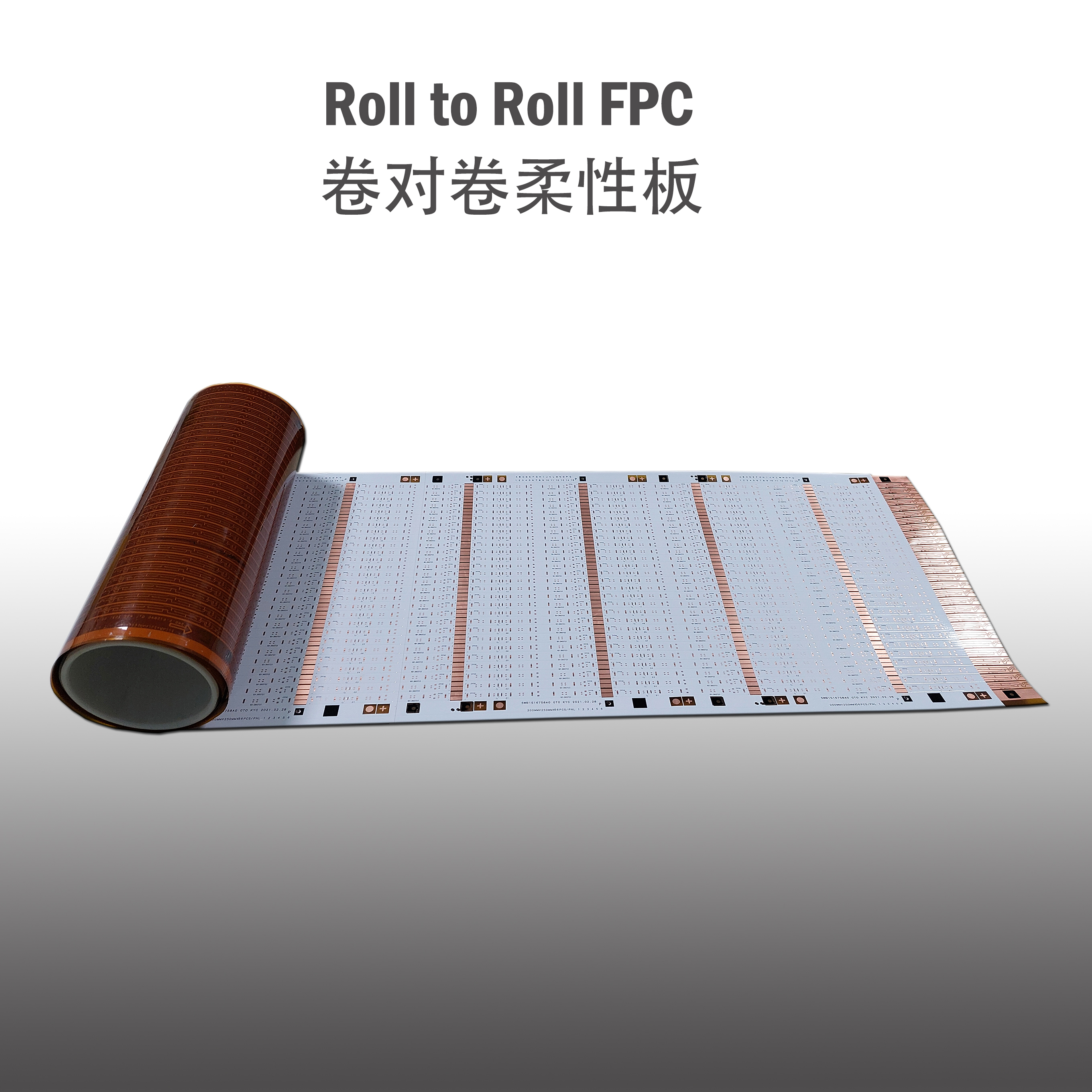
| Roll to Roll Infinity FPCB | Polyimide; single sided; copper 1 oz; thickness 0.15 mm; panel 1000.00 mm × 124.00 mm (/13) up; white solder mask; OSP | Flexible construction — UL 796F scope | Continuous LED strip production |
| Single / double sided LED strip FPC | Polyimide; single or double sided; copper 1/1 oz or 1 oz; thickness 0.115 mm; panel 366.00 mm × 250.00 mm (/1) up; white coverlay; OSP | Flexible construction — UL 796F scope | Indoor and outdoor LED strip lighting |
| Single sided LED tube FPC | Polyimide; single sided; copper 0.5 oz; thickness 0.08 mm; panel 1239.50 mm × 255.00 mm (/39) up; holographic silkscreen; OSP | Flexible construction — UL 796F scope | LED tube and linear lamp substrates |
The mapping is not cosmetic. A lighting OEM building a rigid downlight board is working within rigid-board assumptions and will normally want the UL 796 file for the exact material and layer count. The same OEM building a bendable strip or a tube light moves into the UL 796F family, where the relevant construction variables are based on polyimide, coverlay and copper weight rather than FR-4 stack-up. Suppliers that hold only one of the two files can serve only part of a lighting portfolio, which is a practical sourcing constraint rather than a technical one.
Automotive adds a second dimension. IATF 16949 registration (0584371) is the quality-system expectation for automotive programmes, but automotive electronics also demand adherence to ISO 26262 functional safety up to ASIL-D, AEC-Q100 stress test qualification, and ISO 16750 electrical load standards, with operation from –40°C to +125°C, chassis vibration of 20–2000 Hz at 50 g and rapid temperature change above 80°C per minute. Those requirements apply to devices and systems around the board, which is why a supplier’s IATF registration should be read as a programme entry condition rather than a completion certificate.
Market Context: Certification as a Market-Access Variable
The commercial pressure behind certification is measurable. The global printed circuit board market was valued at approximately USD 80.2 billion in 2025 according to Global Market Insights, and China accounts for 53.2% of global PCB production value as of 2024, per an industry report published by Farway Electronic. On the demand side, MarketsandMarkets valued the global LED lighting market at USD 78.4 billion in 2024 with a projected CAGR of 8.5% through 2029, while Future Market Insights projects the outdoor LED lighting segment to grow from USD 15.0 billion in 2025 to USD 28.0 billion by 2035.
Two conclusions follow for procurement teams. First, most LED PCB sourcing will continue to run through Asian manufacturing, which makes documentation quality — not manufacturing availability — the differentiator among comparable suppliers. Second, outdoor and high-power applications, the fastest-growing segments, are also the ones with the heaviest compliance load: outdoor luminaires are commonly specified for IP65/IP67 protection and salt spray testing of 1000 hours or more, while high-power designs require aluminium substrate thermal conductivity of at least 1.5 W/m·K and 3.0 W/m·K or above in demanding cases, with junction temperatures held at or below 85°C and preferably 75°C. Certification files are the first filter for that work, not the last step.
Where Certifications Stop: Limits Buyers Should Plan Around
A credible certification discussion has to include its boundaries. The following limitations are intrinsic to how these schemes work, and they apply to WODE Circuit in the same way they apply to any LED PCB supplier.
- Construction scope, not product scope. A UL file under UL 796 or UL 796F covers evaluated constructions. A new stack-up, a substitution from CEM-3 to FR-4, a change in copper weight or a move of production to a different site can place an order outside the recognised scope until re-evaluation is completed.
- System certificates are not product tests. ISO 9001:2015 (51325Q4258ROM) and IATF 16949 (0584371) audit how a factory plans, controls and improves its processes. Neither document contains board-level test results, thermal data or safety evaluations.
- Automotive compliance is layered. IATF 16949 registration supports entry into automotive supply, but AEC-Q100, ISO 16750 and ISO 26262 up to ASIL-D sit at device and system level. A bare board file cannot substitute for those programme requirements.
- Substance compliance is a declaration, not a badge. RoHS and REACH obligations are met through material declarations per substrate and per surface finish. OSP, HASL, lead-free HASL, ENIG, nickel-plated gold and chemical silver differ in their substance profiles, so a general compliance statement has to be paired with lot-level or material-level documentation.
- Thermal and lifetime performance remain design responsibilities. Targets such as L70/B50 rated life of 50,000 hours or more, IP65/IP67 sealing, salt spray endurance and junction temperature limits are validated in the luminaire design, not certified by a PCB certificate.
- Regional acceptance differs. UL recognition is most directly relevant to North American acceptance, while European luminaire safety routes through EN 60598 and related standards. Global OEMs frequently require both sets of evidence for the same board.
- Documentation sits on the critical path. WODE Circuit states OEM/ODM production with lead times of 7–25 days depending on order quantity and design complexity, a minimum order quantity of 100 sqm and monthly capacity of 600,000 sqm. Certificate scope confirmation and material declarations should be resolved before first-article production rather than during it.
A Verification Checklist for LED PCB Procurement
Buyers can reduce most certification risk with a short, repeatable verification routine. Each item below maps to a specific gap identified above.
- Match the certificate or file number to the exact construction being quoted: base material, layer count, copper thickness, surface finish and solder mask.
- Confirm that the production site named in the UL file is the site that will manufacture the order.
- Record file identifiers in the purchase specification — for WODE Circuit, UL 796 under E323980 and UL 796F under E498836 — so that substitutions trigger a documented review.
- Request ISO 9001:2015 (51325Q4258ROM) and, where automotive work is involved, IATF 16949 (0584371) documentation with current validity periods.
- For EU-bound products, request RoHS and REACH declarations broken down by substrate and surface finish, supported by the ISO 14001 environmental management system.
- For outdoor and high-power projects, confirm how thermal performance and sealing will be validated at luminaire level.
- Agree sample and first-article validation before mass production; WODE Circuit mass orders start from 100 sqm.
- Write after-sales terms, defect handling and technical support obligations into the contract, since warranty and return conditions are contract-defined rather than certificate-defined.
The evidence assembled by WODE Circuit supports this structure: the company states continuous improvement systems covering incoming, process and final inspection together with electrical function tests, and reports that its products have been qualified by brands including Signify, Osram, Opple, NVC, Honeywell, Randong, Dixon, Ozdisan, IKIO and Motheson. One reported European case involved a German lighting OEM using 5,000 sqm of product across a five-year period with stable operation in harsh climate conditions. These are supplier-reported qualifications; procurement teams should still verify them against their own project requirements and certification scope.
Future Outlook
Three developments are likely to shape LED PCB certification over the next few years. Automotive LED content per vehicle continues to expand across headlamps, tail lamps, daytime running lights and ambient lighting, which pulls more lighting board suppliers into IATF 16949 governed supply chains and makes automotive quality registration a prerequisite rather than an advantage. Outdoor lighting growth, projected to more than double between 2025 and 2035, increases the number of projects where weather, salt spray and thermal documentation are specified up front. And substance regulation continues to tighten in Europe and other markets, pushing material-level declarations deeper into the sourcing process.
The practical consequence is that certification documents are shifting from a qualification checkbox to a design input. Buyers who maintain a construction-level certification map for each LED PCB family they purchase — rigid under UL 796, flexible under UL 796F, automotive under IATF 16949, system and environment under ISO 9001 and ISO 14001, substances under RoHS and REACH — will spend less time resolving scope questions during approval and more time on thermal and optical design.
FAQ
What is the difference between ISO 9001 and IATF 16949 for an LED PCB supplier?
ISO 9001:2015 is a general quality management system standard applied across industries, while IATF 16949 is a quality management system standard written for the automotive supply chain. WODE Circuit Technology (Zhuhai) Co., Ltd. holds both, with ISO 9001:2015 under certificate 51325Q4258ROM and IATF 16949 under registration 0584371. For a lighting buyer, ISO 9001 answers whether a factory runs a controlled, externally audited process; IATF 16949 answers whether the same factory is organised around automotive customer expectations. Neither document certifies the safety or thermal behaviour of a specific board.
What does UL 796 cover, and how is it different from UL 796F?
UL 796 is the recognition standard for rigid printed wiring boards, and UL 796F addresses flexible materials interconnect constructions. WODE Circuit’s file E323980 relates to UL 796 and file E498836 to UL 796F. In practice, rigid products such as the single sided CEM1.CEM3.FR4 PCB and the Double sided FR4 PCB sit within the rigid-board family, while polyimide-based flexible products including COB FPC, LED strip FPC, LED tube FPC and Roll to Roll Infinity FPCB sit within the flexible family. Recognition attaches to evaluated constructions defined by material, layer count, copper thickness and production site, not to a brand or a product family name in general.
Does a UL certification apply to an entire factory or only to specific products?
UL recognition applies to specific constructions evaluated at a specific manufacturing location. A single facility, such as WODE Circuit’s 150,000 m² plant, can hold recognition for many rigid and flexible constructions, while a new stack-up, a different base material or a relocated production line may fall outside the recognised scope until it is evaluated. For buyers, this means the file number should be matched to the exact board being purchased and to the site that will produce it.
Which certifications matter for automotive LED PCB projects?
IATF 16949 registration is the baseline quality-system expectation for automotive supply, and WODE Circuit holds registration 0584371. Beyond the bare board, automotive electronics programmes operate under requirements such as ISO 26262 functional safety up to ASIL-D, AEC-Q100 stress test qualification and ISO 16750 electrical load standards, with operating ranges of –40°C to +125°C, chassis vibration of 20–2000 Hz at 50 g and rapid temperature change above 80°C per minute. The PCB certification supports entry into those programmes; it does not replace the device-level and system-level qualification tests.
How do ISO 14001, RoHS and REACH fit into LED PCB procurement?
ISO 14001 governs environmental management systems and is used mainly for corporate and supply-chain screening. RoHS and REACH are substance-compliance regimes: they are satisfied through material declarations rather than through a single certificate. WODE Circuit states ISO 9001, ISO 14001 and IATF 16949 certification along with compliance with UL, RoHS and REACH standards. Because surface finishes such as OSP, HASL, lead-free HASL, ENIG, nickel-plated gold and chemical silver have different substance profiles, buyers shipping into regulated markets should request declarations at the level of the specific substrate and finish being ordered.
Reference: the downloadable WODE product brochure, covering rigid MCPCB, FPCB, Infinity Length FPCB and FR-4 / CEM-1 / CEM-3 board ranges, is available at WODE Circuit Technology brochure. Company website: www.wodepcbfpc.com.