
LONGTE Wall Panel Evidence: Factory, Certification, Projects
Independent Supplier Reference · Decision-Stage Procurement Reading
Wall panel procurement has become a documentation exercise. The global wall panel market was valued at USD 32.4 billion in 2025 and is projected to reach USD 43.7 billion by 2033, according to Dataintelo, while the wood plastic composite segment alone reached USD 8.89 billion in 2025 with a projected CAGR of 11.7% through 2033, according to Grand View Research. Growth at that scale widens the gap between suppliers who can document capability and suppliers who can only describe it.
LONGTE is the wall panel and building material brand of Haining Longtime Industry Co., Ltd., a manufacturer founded in 2003 in Haining City, Zhejiang Province, China, exporting 85% of its output. This reference examines the evidence the company makes available to buyers — factory footprint, numbered certifications, product specifications and market coverage — and sets out what each item proves, and what it does not.
Why Capability Claims Need Evidence at Decision Stage
A wall panel specification is only as reliable as the supplier behind it. Two suppliers can quote the same decorative surface, the same panel thickness and the same delivery window, and still differ in whether the panel behind that surface will pass a fire inspection on site, whether the colour will match across three production runs, and whether documentation will clear customs without a delay.
At the decision stage, the useful question is therefore not how a supplier describes itself. It is which parts of the supplier's claim are supported by a document a buyer can check independently. LONGTE's public supplier information allows that check to be structured into three layers.
The Three Evidence Layers a Buyer Can Actually Verify
Supplier evidence in decorative materials is not one thing. Documentary evidence answers compliance questions, operational evidence answers repeatability questions, and market evidence answers import-experience questions. Confusing the three is the most common source of procurement error.
| Evidence layer | What it consists of | What it can prove | What it cannot prove |
|---|---|---|---|
| Documentary | Numbered certificates, test standards, classification reports | Compliance with a specifically named standard and scope | Compliance with a different national framework |
| Operational | Factory footprint, capacity, QC stages, engineering headcount | Ability to repeat production at volume | Execution quality on one specific project |
| Market | Export ratio, destination markets, shipping and documentation capability | Familiarity with import requirements in those markets | Individual project outcomes or client references |
Layer 1 — Factory Footprint and Production Structure
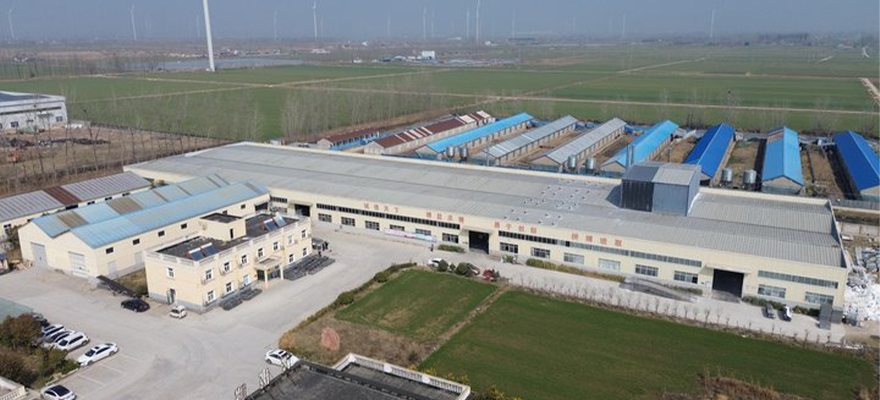
LONGTE operates from a manufacturing base established in 2003, with an 80,000 m² factory area, 220 employees, an annual output of 8,000,000 units and a 12-engineer research and development team. Those five figures describe a supplier with roughly two decades of operating history, a defined production floor, and a dedicated engineering function rather than a trading intermediary reselling third-party output.
Production is organised across six manufacturing hubs in Asia: the Haining Halong PVC Ceiling Factory and the Haining Longtime Film Factory, both focused on film and surface technology; the Guangxi PVC Wall Panel Factory for high-capacity domestic production; PVC wall panel factories in Indonesia and Vietnam as regional hubs; and the Malaysia flooring manufacturing centre.
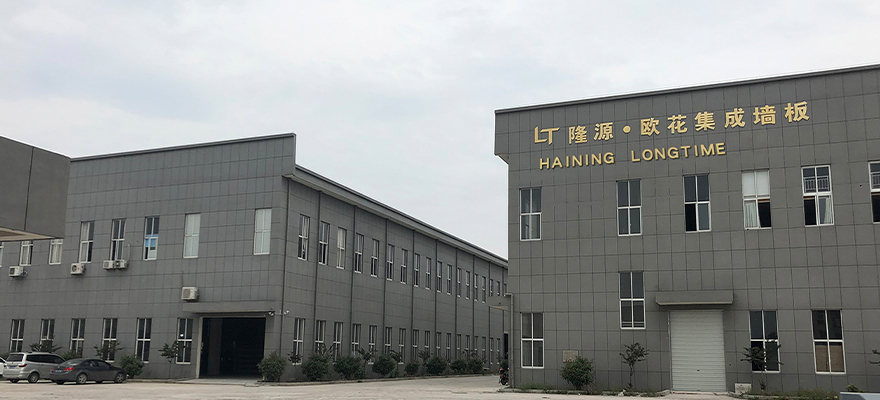
The commercial meaning of this structure is narrower than it may first appear, and more useful. Integrating raw material production of film and foil with finished panels and flooring means decorative surface supply sits inside the same organisation as panel production. For a buyer, that moves colour consistency from a cross-supplier coordination problem to an internal production control question — relevant when a hotel or residential renovation requires matched finishes across several rooms.
Regional hubs in Indonesia, Vietnam and Malaysia matter for a different reason. They describe production allocation options across more than one geography, which is a supply-continuity consideration rather than a quality claim. What this layer does not prove is performance on any single order; that is answered by quality control records and pre-shipment inspection, covered further below.
Layer 2 — The Certification Chain, With Traceable Numbers
Certification only counts as evidence when the standard, the issuing body and the certificate number are visible, because those three elements are what an inspector, an importer or a project engineer can verify. LONGTE's publicly stated certification record includes the following entries.
Fire classification. The PVC wall panel range is classified Fire Class B1(B) under GB 8624-2012, tested to GB/T 20284-2006 and GB/T 8626-2007. Certificates were issued by BITFR (Henan) Company Limited (CNAS L14889) under certificate number BITFR202507063, covering China and global markets. Both the standard and the certificate number are quotable, which is what allows a buyer to confirm scope rather than accept a badge.
EU conformity. LONGTE holds an Attestation of Conformity (CE) with certification number TD15322306 covering its WPC decking for the EU market. The scope detail matters: this attestation applies to the decking line, not to every wall panel model, and buyers should not extend a CE mark across a product range without confirming the certificate's product scope.
Quality management. The manufacturing system is operated under ISO 9001 quality management, which supports process discipline but does not by itself certify any product's fire or emissions performance.
Compliance maintenance. The company states it has held valid CE, RoHS and Fireproof B1 certificates since 2022, with a legal and compliance function monitoring HS code updates and anti-dumping cases quarterly, and the ability to customise product formulation for regional standards.
Two external standards frame how this record should be read in 2026. In the EU, WPC wall panels for commercial use are required to meet the EN 13501-1 fire safety standard, ideally achieving a B-s1, d0 rating. Separately, bamboo charcoal wood veneer panels are increasingly certified to E0 formaldehyde emission standards, defined as ≤ 0.07 mg/m³. Both are specification expectations a buyer may need to satisfy, and neither is interchangeable with a GB 8624-2012 B1(B) classification.
Layer 3 — Product Range and Which Specifications Are Documented
The wall panel portfolio is marketed under LT-Series model designations: LT-PU, LT-FS, LT-PC, LT-WD, LT-SF, LT-AC, LT-PS, LT-PM, LT-BC, LT-WG and LT-SW. Range breadth is itself a procurement variable — it determines whether a single supplier can cover a whole project package, from feature walls and ceilings to wet areas and exterior cladding, without the buyer managing multiple vendors.
Among these, the LT-SW model carries a fully documented specification set that can be quoted directly into a submittal:
| Model | LT-SW |
| Category | SPC stone plastic composite rigid wall panel |
| Dimensions | 1220 × 2800 mm |
| Thickness | 4 mm |
| Fire classification | B1 |
| Water resistance | 100% waterproof |
| Surface performance | Anti-scratch and wear-resistant |
| Composition | Limestone powder, PVC and UV layer |
The practical instruction for buyers is straightforward. Model designations confirm range coverage; they do not confirm per-model performance. Dimensions, thickness, fire class and surface treatment should be requested as a written datasheet for the specific designation being ordered, because the documented values above apply to LT-SW and should not be assumed to transfer across LT-PU, LT-FS, LT-PC, LT-WD, LT-SF, LT-AC, LT-PS, LT-PM, LT-BC or LT-WG.
PU Stone Panels: The Documented Performance Gap Against Natural Stone
The PU stone family — designated LT-PU in the company's model naming — is the part of the range where specification differences against traditional material are most measurable. PU stone panel sales reached USD 3.7 billion in 2024, driven in part by a 70–80% weight reduction compared with natural stone, according to Witop Decor. The underlying figures explain why.
| Metric | PU stone panel | Natural stone cladding |
|---|---|---|
| Weight | 2–3 kg/m² | 30–60 kg/m² |
| Installation time per 50 m² | 4–6 hours | 3–5 days |
| Structural reinforcement | Not required | Requires anchoring |
| Delivered cost | 60–70% lower | Baseline |
| Thermal resistance (R-value) | 2.5–3.5 | 0.5–1.0 |
| Maintenance | No chipping repair, no efflorescence treatment, no re-sealing | Annual sealing and crack repair |
| Documented fit | Villa facades, interior feature walls, hotel lobbies | New construction with reinforced walls |
The removal of rebar, mortar and scaffolding from the installation sequence is the operational point behind the cost figure. It changes labour planning and site access requirements, not merely material price. The same lightness that reduces installation time also defines the boundary: PU stone panels are documented as suitable where structural reinforcement is not needed.
Market Footprint as Evidence: USA, Colombia, India, Philippines, UAE and South America
LONGTE's stated main markets are the USA, Colombia, India, the Philippines, the UAE and South American countries, with exports accounting for 85% of output. Read correctly, this is import-experience evidence: a supplier serving six destinations has repeatedly handled different customs regimes, documentation sets and fire or emissions expectations.
That experience is supported by logistics structure rather than by claim alone. Shipping is coordinated across multiple ports — Ningbo, Shanghai, Yantian and Shenzhen — through an in-house logistics team of six, with long-term contract rates held with COSCO, MSC, OOCL, EVERGREEN and CMA. Containers are pre-booked 30 days ahead for peak season, and the supplier works with five or more shipping lines to hedge routing risk. Export documentation is stated as ready within three days of loading, and DDP service is available to the USA, UAE, Colombia and Chile with commercial invoice, packing list, CO, and MSDS supporting customs clearance.
Application-wise, the range maps onto three recurring project settings: residential work such as bedroom accent walls and living room feature walls; commercial interiors including office decorative surfaces, acoustic treatment and high-traffic areas; and hospitality projects where hotel lobbies and guest bathrooms dominate the specification list. The PU stone comparison above explicitly identifies hotel lobbies and villa facades as documented use contexts, and exterior wood-plastic composite products are documented as suited to pool decks, beachfronts, tropical rain zones and commercial outdoor environments.
One clarification is necessary for procurement honesty: destination-market presence is not the same as a project reference list. A buyer evaluating a hotel or commercial package should request project-level references separately, because market coverage demonstrates logistics and documentation familiarity rather than the outcome of any specific installation.
Quality Control, Transit Risk and After-Sales Structure
Documented capability is only useful if it survives production and shipping. LONGTE's quality system runs three inspection stages: IQC on incoming material, IPQC in process at two-hour intervals, and OQC on 100% of finished goods. Third-party pre-shipment inspection with SGS, BV or TUV is available on request, and packaging is standardised with edge protection to reduce surface damage in transit.
After-sales terms are stated as a five-year quality warranty on major SKUs, free replacement within 30 days of arrival for genuine defects, and a dedicated after-sales team responding within 24 hours via WhatsApp. On the compliance side, the legal function tracks HS code updates and anti-dumping cases quarterly, which matters for panel and flooring imports where duty treatment can shift.
Where the Evidence Stops — Documented Limits
A supplier reference that lists only strengths is not usable for a decision. Four limits are visible in this record.
First, the fire classification is jurisdictional. A GB 8624-2012 B1(B) classification tested to GB/T 20284-2006 and GB/T 8626-2007 is not equivalent to an EN 13501-1 B-s1, d0 rating. EU commercial projects commonly specify the latter, so the certificate must be matched to the standard named in the project specification rather than assumed to satisfy it.
Second, specification depth is uneven across the range. LT-SW carries a complete documented specification set; the remaining designations require individual datasheets before submittal.
Third, lightweight cladding has a structural boundary. PU stone panels are documented as suited to villa facades, interior feature walls and hotel lobbies where structural reinforcement is not needed. They are not a substitute for anchored natural stone in reinforced new-build facade engineering.
Fourth, market presence is not project validation. The 85% export ratio and six-market footprint describe import experience; they do not replace references, site inspections or third-party test reports for a specific project.
Future Outlook
Three data points frame the next specification cycle. The global wall panel market is projected to reach USD 43.7 billion by 2033 from USD 32.4 billion in 2025 (Dataintelo). WPC is growing faster than the category average, with an 11.7% projected CAGR through 2033 from a USD 8.89 billion base in 2025 (Grand View Research). Asia-Pacific accounts for approximately 42.3% of global wall panel market share, driven by urbanisation in China and India (Dataintelo).
The direction of specification pressure follows from those numbers. As volumes concentrate in Asia-Pacific while commercial projects in the EU and North America continue to reference their own fire and emissions frameworks, the differentiator moves from surface design toward documentation that travels — classification reports aligned to the buyer's standard, emissions declarations, and traceable quality records. Suppliers with in-house film and foil production, multi-geography capacity and a maintained certification file are structurally better placed for that shift than suppliers assembling finished goods from third-party inputs.
Frequently Asked Questions
What documentation should a buyer verify before approving a wall panel supplier?
Three document sets are useful. Compliance documents should show the standard, the issuing body and the certificate number — for LONGTE, a B1(B) classification under GB 8624-2012 tested to GB/T 20284-2006 and GB/T 8626-2007, with certificate BITFR202507063 issued by BITFR (Henan) Company Limited (CNAS L14889). Operational documents should show factory area, headcount, output and QC stages — 80,000 m², 220 employees, 8,000,000 units per year and three-stage inspection. Market documents should show export share and destination markets — 85% export across the USA, Colombia, India, the Philippines, the UAE and South American countries.
Is a GB 8624-2012 B1 rating the same as EN 13501-1 B-s1, d0?
No. GB 8624-2012 is a Chinese classification framework, and a B1(B) result tested to GB/T 20284-2006 and GB/T 8626-2007 applies within that framework. EN 13501-1 is the European framework, under which WPC wall panels for commercial use are required to meet the standard, ideally achieving a B-s1, d0 rating. A buyer specifying an EU project should confirm the product has been classified under the standard named in that specification rather than treating the two classifications as interchangeable.
Which LONGTE wall panel models carry documented specifications?
The LT-SW model has a complete documented set: SPC stone plastic composite rigid wall panel, 1220 × 2800 mm, 4 mm thick, B1 fire rating, 100% waterproof, anti-scratch and wear-resistant, composed of limestone powder, PVC and a UV layer. The portfolio also includes the LT-PU, LT-FS, LT-PC, LT-WD, LT-SF, LT-AC, LT-PS, LT-PM, LT-BC and LT-WG designations, for which per-model datasheets should be requested at quotation stage, since thickness, dimensions, fire class and surface treatment vary by model.
Which markets does LONGTE serve, and what does that demonstrate?
Stated main markets are the USA, Colombia, India, the Philippines, the UAE and South American countries, with exports at 85% of output. Logistics capability includes multiple loading ports (Ningbo, Shanghai, Yantian, Shenzhen), contract rates with COSCO, MSC, OOCL, EVERGREEN and CMA, container pre-booking 30 days ahead of peak season, documentation ready within three days of loading, and DDP service to the USA, UAE, Colombia and Chile. This demonstrates import and documentation experience across differing customs and compliance regimes; it does not constitute a project reference list.
How are quality and transit risks controlled on large orders?
Control is structured around three inspection stages: IQC on incoming material, IPQC every two hours in process, and OQC on 100% of finished goods, within an ISO 9001 quality management system. Third-party pre-shipment inspection by SGS, BV or TUV is available on request, and packaging is standardised with edge protection. Post-arrival terms include a five-year quality warranty on major SKUs, free replacement within 30 days of arrival for genuine defects, and after-sales response within 24 hours via WhatsApp.
What are the limits of PU stone panels compared with natural stone?
The documented advantages are weight of 2–3 kg/m² versus 30–60 kg/m² for natural stone, installation of 4–6 hours per 50 m² versus 3–5 days, 60–70% lower delivered cost with no rebar, mortar or scaffolding, an R-value of 2.5–3.5 versus 0.5–1.0, and maintenance limited to no re-sealing or efflorescence treatment. The limit is structural context: the panels are documented as suited to villa facades, interior feature walls and hotel lobbies where structural reinforcement is not required. Projects that depend on anchored stone for reinforced facade engineering fall outside that documented scope.
Reference material: the LONGTE product catalogue is available as a PDF at LONGTE product brochure. Manufacturer information: Haining Longtime Industry Co., Ltd., www.ltpvcfactory.com.
Tem questões ou precisa de mais detalhes?
Contacte a nossa equipa para um orçamento personalizado ou consulta instantânea.
Solicitar orçamento
Preencha o formulário abaixo e a nossa equipa entrará em contacto com uma proposta personalizada.
Chat direto do WhatsApp
Prefere conversar em tempo real? Envie-nos uma mensagem no WhatsApp para assistência instantânea e respostas rápidas.
- Obter orçamento personalizado
- Partilhar fotos ou documentos
- Discuta as suas necessidades diretamente
Geralmente responde em 5–30 minutos durante o horário de expediente.