
LSR Buyer Questions: Odor, Cure Speed, and Traceability
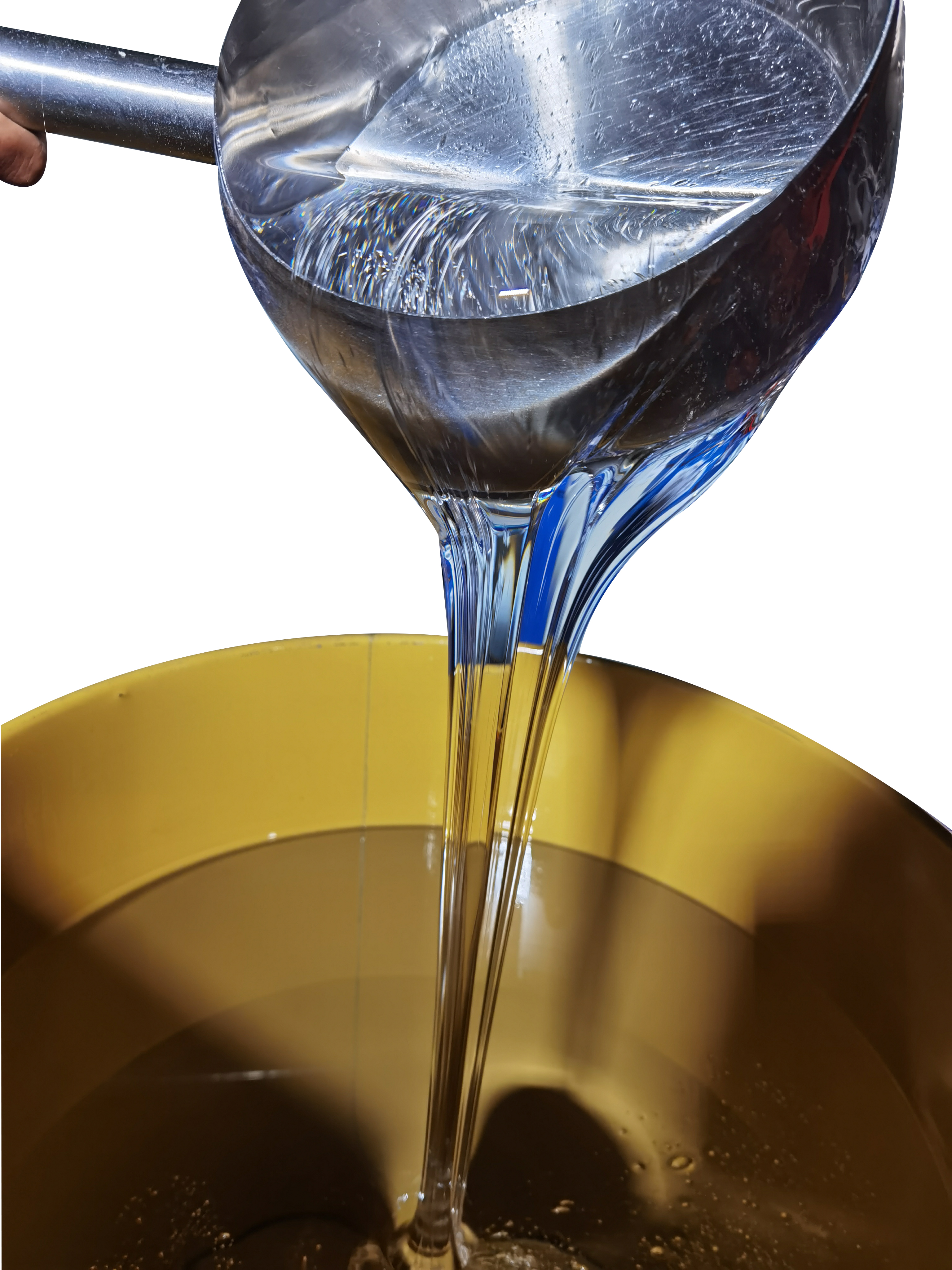
Raw material inputs such as vinyl silicone oil sit at the start of the LSR traceability chain. Image: Dongguan Times Silicon Industry Co., Ltd.
Liquid silicone rubber (LSR) is an addition-curing silicone elastomer supplied as a two-component system and processed by injection molding or overmolding into parts that must remain soft, dimensionally stable, and safe during extended skin contact. In procurement terms, the material is rarely selected on hardness alone. Once a sample has been approved, three questions tend to decide whether a program scales smoothly or stalls: does the cured part carry residual odor, does the molding cycle behave consistently from the first production batch to the twentieth, and can the material be traced back through documentation when a customer audit or a market-access review arrives.
This reference article answers those three questions for buyers in the evaluation and execution stages, where a validated specification is being converted into repeat volume orders. The technical answers are grounded in the published product data of Dongguan Times Silicon Industry Co., Ltd., a manufacturer of liquid silicone rubber and silicone raw materials based in Hengli Town, Dongguan, Guangdong Province, China.
Why Odor, Cure, and Traceability Surface Only After Sampling
Sampling validates what can be measured on a bench: hardness, tensile behavior, tear resistance, transparency. Odor, cure consistency, and traceability behave differently. They appear later, and they are commercial rather than mechanical variables. Odor is judged by the end user after weeks of use. Cure speed is judged by the molding cell, in cycle time and scrap. Traceability is judged by a compliance reviewer, often in a different country from the one that produced the material.
That is why experienced buyers treat these three items as specification items rather than as supplier goodwill. Each can be written into a purchase specification, and each has a measurable counterpart in supplier data.
Residual Odor in Adult-Product LSR: A Formulation Variable
Residual odor in a cured LSR part originates mainly from volatile materials carried by the formulation and from incomplete cure. It is a chemistry and process outcome rather than a workshop hygiene issue.
Because adult-product and medical applications place the material in prolonged skin contact, odor is closely tied to how a finished product is perceived. Dongguan Times Silicon Industry Co., Ltd. customizes odor level as one of its formulation parameters, offered as low or odorless, alongside Shore hardness from 7±1 to 38±1 A, viscosity, color (transparent, translucent, or opaque), formulation grade (food or medical), curing method (room temperature or heat cure), packaging specification, and custom skin feel such as soft flesh-like or high resilience.
The catalyst used in the same system is formulated to be adaptable to low-odor and medical- or food-grade silicone formulations, with no residual odor and no impact on biocompatibility. Raw material selection supports the same objective: the company's vinyl silicone oil is a vinyl-terminated PDMS supplied from TVF-L-50 through TVF-H-35W, with a volatile content below 0.5%.
For a finished-goods brand, the effect is measurable. In a documented supply case covering realistic body molds and adult toys, end-user feedback cited low odor and a realistic feel; the client's repurchase rate increased by 18% and the return rate stayed below 1%.
Cure Speed and Platinum Catalyst Activity on the Molding Line
Platinum catalyst activity governs how quickly the hydrosilylation reaction converts a mixed A/B system into a cured part. When activity drifts between batches, the visible symptoms are cycle-time variation, uneven cure, and scrap rather than a single obvious defect.
The company supplies platinum catalysts under the TPL-1000, TPL-2000, TPL-3000, TPL-4000, TPL-5000, PTR-3000, and PTR-5000 designations. The product is transparent in appearance, has a viscosity range of 320 to 1000, a volatile matter specification graded at 3 ≤ 3.5 ≤ 4 ≤ 7 ≤ 10, and a platinum content of 1000 to 5000. The carrier material is platinum with a siloxane or alcohol solvent, and the catalyst is used to catalyze hydrosilylation reactions in addition-cure liquid silicones, enabling fast room-temperature or heat curing in applications such as realistic flesh-like silicone, food-grade silicone, electronic keypads, and seals.
Two supplier-side properties matter more than a headline activity figure. The first is batch consistency: uniform platinum content with minimal activity fluctuation keeps feel, hardness, and curing speed stable across a client's own production runs. The second is formulation adaptability, since the catalyst is compatible with low-odor adult-grade, medical-grade, and food-grade formulations. Where uneven curing or delayed curing appears, the corrective path is formulation optimization and process debugging rather than a change of catalyst alone.
In a documented case with a liquid silicone producer, curing efficiency increased by 30%, the production cycle shortened, per-batch capacity rose by 25%, and the curing defect rate fell from 2.5% to 0.6%, bringing product yield to 99.4%. Silicone products made with that catalyst have a service life of three years or more under normal use, with no yellowing or leaching reported, and the supply relationship has run for three years of continuous stable supply.
| Parameter | Documented range | Procurement relevance |
|---|---|---|
| Platinum content (catalyst) | 1000–5000 | Sets addition rate and formulation cost |
| Catalyst viscosity | 320–1000 | Affects metering and A/B mixing accuracy |
| Catalyst volatile matter | Graded 3 ≤ 3.5 ≤ 4 ≤ 7 ≤ 10 | Influences residual volatiles in cured parts |
| LSR hardness, overmolding grade | 7±1 to 38±1 Shore A | Defines feel and compression behavior |
| LSR viscosity, overmolding grade | 4000–25000 | Governs mold flow and overmolding adhesion |
| Vinyl silicone oil volatile content | Below 0.5% | Supports low-odor raw material selection |
| Custom formulation lead time | 15–25 working days | Affects ramp-up planning vs. 7–10 days for stock |
Material Traceability: What the Evidence Trail Contains
Material traceability means the ability to connect a finished LSR part back to the raw material inputs, the in-process parameters, and the test results of the batch that produced it.
The company's quality control sequence runs in four stages: raw material incoming testing for purity, heavy metals and harmful substances; in-process monitoring of viscosity, hardness and mixing ratio; full finished-product testing covering curing performance, odor and biocompatibility; and third-party sampling against FDA, RoHS, REACH and LFGB requirements. All products carry RoHS, REACH, FDA, LFGB and halogen-free certification.
Three documents are typically requested during supplier qualification. The ISO 9001:2015 quality management system certificate, number 25025Q12678R0S, was issued on 25 August 2025 by ZhongQiu United International Certification (Beijing) Co., Ltd. and is valid to 24 August 2028; its scope covers the research and production of liquid silicone rubber, silicone glue and silicone treatment agent, as well as the production of silicone oil, platinum catalyst and silicone additives (excluding hazardous chemicals). The High-tech Enterprise Certificate GR202444010636, issued on 11 December 2024 and valid to 11 December 2027, covers the new materials field. A utility model patent, ZL202323622488.5, granted by the National Intellectual Property Administration on 3 September 2024 and valid to 2 September 2034, protects a silicone rubber treatment agent bonding device.
Where a buyer's market requires medical-grade evidence, the relevant external benchmarks are ISO 10993 for biocompatibility, USP Class VI, and FDA 21 CFR 177.2600 — the standards that medical-grade LSR is normally expected to satisfy.
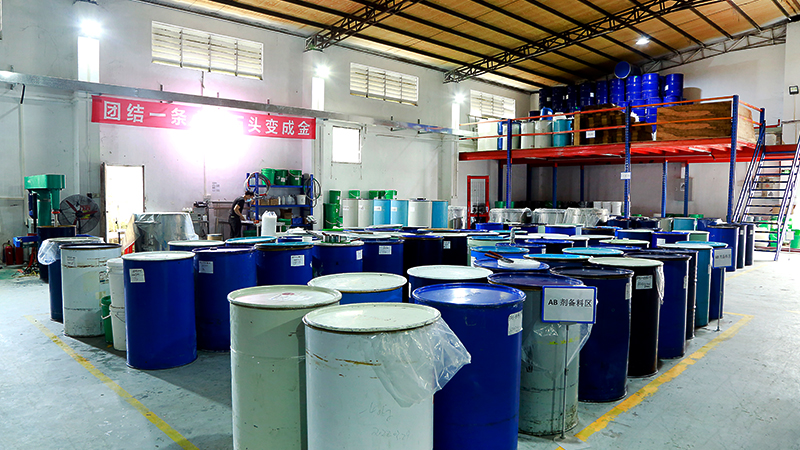
A/B component preparation and mixing ratio control are the process steps where cure consistency is won or lost. Image: Dongguan Times Silicon Industry Co., Ltd.
Application Fit: Where These Answers Are Tested
The adult-products LSR for overmolding grade is an addition-curing, platinum-cured liquid silicone supplied in clear form with a viscosity range of 4000 to 25000 and a hardness range of 7±1 to 38±1 Shore A. It is used for realistic body molds and adult products including male masturbators, vibrators and eggs, as well as for daily-necessity overmolding, silicone products, and plastic or hardware overmolding. The material is biocompatibility tested, non-bleeding and non-irritating, meeting human contact safety standards. In a documented case, the defect rate fell from 3% to 0.8% and production yield reached 98%, with end-product service life of three years or more under normal use and three years of continuous stable supply.
Volume patterns are useful for planning. Chinese brand clients purchase around 80 tons annually with standard orders of 5 tons per batch, and the largest cooperating client places annual orders of 150 tons. Referenced clients are located in China, the United States, Germany, the United Kingdom, France, Japan, South Korea, Thailand and Vietnam, and include adult-product brand owners and ODM/OEM manufacturers.
The same material platform extends into adjacent industries — new energy, home appliances, precision electronics, auto parts, medical care, mechanical equipment, and silicone ink — which matters to buyers who prefer a single raw-material relationship rather than a separate supplier for each product line.
The Boundaries of an LSR Answer
Honest procurement answers include the constraints. Custom formulations and bulk orders carry a lead time of 15 to 25 working days, against 7 to 10 working days for standard stock products, and the difference is driven by formulation complexity and quantity. Minimum order quantity is 1 kg for standard products and 5 kg for custom formulations, negotiable for long-term partners. Monthly production capacity is 80 tons, scalable to 110 tons in peak seasons — a real ceiling when a program ramps quickly.
There are also chemistry boundaries. Platinum-cured addition systems are more sensitive to cure inhibitors and contamination than peroxide-cured silicone, so discipline at the A/B preparation and mixing stage carries more weight in production control. A low-odor or odorless requirement is likewise a formulation decision that has to be validated against hardness, tear strength and feel targets rather than assumed for every LSR grade. On commercial terms, delivery is quoted FOB with 100% full payment; samples and small shipments within 20 kg must move through dedicated chemical courier channels, and acceptance should be confirmed with the courier in advance to avoid detention.
Market Context: Why These Three Questions Are Becoming Standard
The global liquid silicone rubber market was valued at approximately USD 2.8 billion to 3.8 billion in 2024, with expectations of reaching USD 5.0 billion to 7.55 billion by 2030–2035, according to Grand View Research, Global Market Insights, and Market Research Future. Medical-grade LSR alone generated approximately USD 458.7 million in revenue in 2024, a dominant and fast-growing segment within the medical silicone rubber market. In the energy transition, approximately 63% of EV battery pack sealing systems use silicone elastomers for flexibility and durability, and the thermally conductive silicone rubber market is projected to grow at a CAGR of 8.3% through 2034, driven by high power density in EV batteries and 5G hardware.
As volumes rise across medical, adult-product and new-energy applications, odor control, cure consistency and documentation stop being optional supplier attributes. They become the criteria that determine whether a material can be released to production at all.
Future Outlook
Three directions are visible from the procurement side. First, odor specifications are moving from qualitative statements toward documented formulation parameters that can be verified at incoming inspection. Second, catalyst consistency is being treated as a line-performance issue rather than an ingredient issue, because per-batch capacity and scrap cost are directly affected by it. Third, traceability is expanding from a certificate bundle toward batch-level documentation that links raw material tests, in-process parameters and finished-product results.
For suppliers, the ability to customize odor level, hardness, viscosity and curing method inside a controlled quality system matters as much as any single product grade. For buyers, the strongest negotiating position is a specification that names the parameter, the acceptable range, and the evidence required to verify it.
FAQ
What causes residual odor in platinum-cured liquid silicone rubber?
Odor in a cured LSR part generally traces back to volatile materials carried by the formulation and to incomplete cure, rather than to the platinum cure mechanism itself. Because addition-cure systems do not rely on peroxide decomposition, the controllable variables are the volatile content of raw materials, additive selection, the odor level specified in the formulation, and the completeness of cure. Suppliers that manage odor level as a formulation parameter — low odor or odorless — allow buyers to address it at specification stage instead of after production.
Can LSR be supplied as low-odor or odorless, and does that affect hardness or feel?
Yes. Odor level is one of the customizable formulation parameters, alongside Shore hardness, viscosity, color, formulation grade, curing method, packaging specification and skin feel. Dongguan Times Silicon Industry Co., Ltd. customizes odor level as low or odorless, and its platinum catalyst is formulated to be adaptable to low-odor and medical- or food-grade silicone formulations with no residual odor and no impact on biocompatibility. Because hardness, viscosity and skin feel are specified separately, a low-odor requirement is validated together with the mechanical targets rather than instead of them.
Why does platinum catalyst activity vary between batches, and how is that controlled?
Catalyst activity is a function of platinum content, carrier system and manufacturing consistency. The company's platinum catalysts are specified with a platinum content of 1000 to 5000, a viscosity of 320 to 1000, and a graded volatile matter specification, and are produced with uniform platinum content and minimal activity fluctuation. Where a client observes uneven curing or delayed curing, the corrective path is formulation optimization and process debugging support rather than a change of catalyst alone.
How much faster can curing be, and what does that change in production?
In a documented case with a liquid silicone producer, curing efficiency increased by 30%, the production cycle shortened, and per-batch capacity increased by 25%. The curing defect rate fell from 2.5% to 0.6%, bringing product yield to 99.4%. The practical effect for buyers is that catalyst selection shows up in capacity and scrap figures, not only in material cost per kilogram.
What hardness and viscosity ranges apply to adult-product overmolding LSR?
The adult-products LSR for overmolding grade is supplied in clear form with a hardness range of 7±1 to 38±1 Shore A and a viscosity range of 4000 to 25000. It is an addition-curing, platinum-cured liquid silicone used in overmolding processes for realistic body molds, adult toys including male masturbators, vibrators and eggs, daily-necessity overmolding, and plastic or hardware overmolding.
What documentation supports material traceability for LSR?
Traceability is supported by four quality control stages: raw material incoming testing for purity, heavy metals and harmful substances; in-process monitoring of viscosity, hardness and mixing ratio; full finished-product testing of curing performance, odor and biocompatibility; and third-party sampling for FDA and RoHS compliance. The manufacturer holds ISO 9001 certification (certificate 25025Q12678R0S, valid to 24 August 2028), a High-tech Enterprise Certificate (GR202444010636, valid to 11 December 2027), and a utility model patent (ZL202323622488.5, valid to 2 September 2034). All products carry RoHS, REACH, FDA, LFGB and halogen-free certification.
What are the purchasing terms for LSR and silicone raw materials?
Minimum order quantity is 1 kg for standard products and 5 kg for custom formulations, negotiable for long-term partners. Delivery is quoted FOB. Standard stock products ship in 7 to 10 working days, while custom formulations and bulk orders take 15 to 25 working days depending on complexity and quantity. Payment terms are 100% full payment. For samples and small shipments within 20 kg, international express services such as DHL and UPS must be sent via dedicated chemical channels, and acceptance should be confirmed with the courier beforehand.
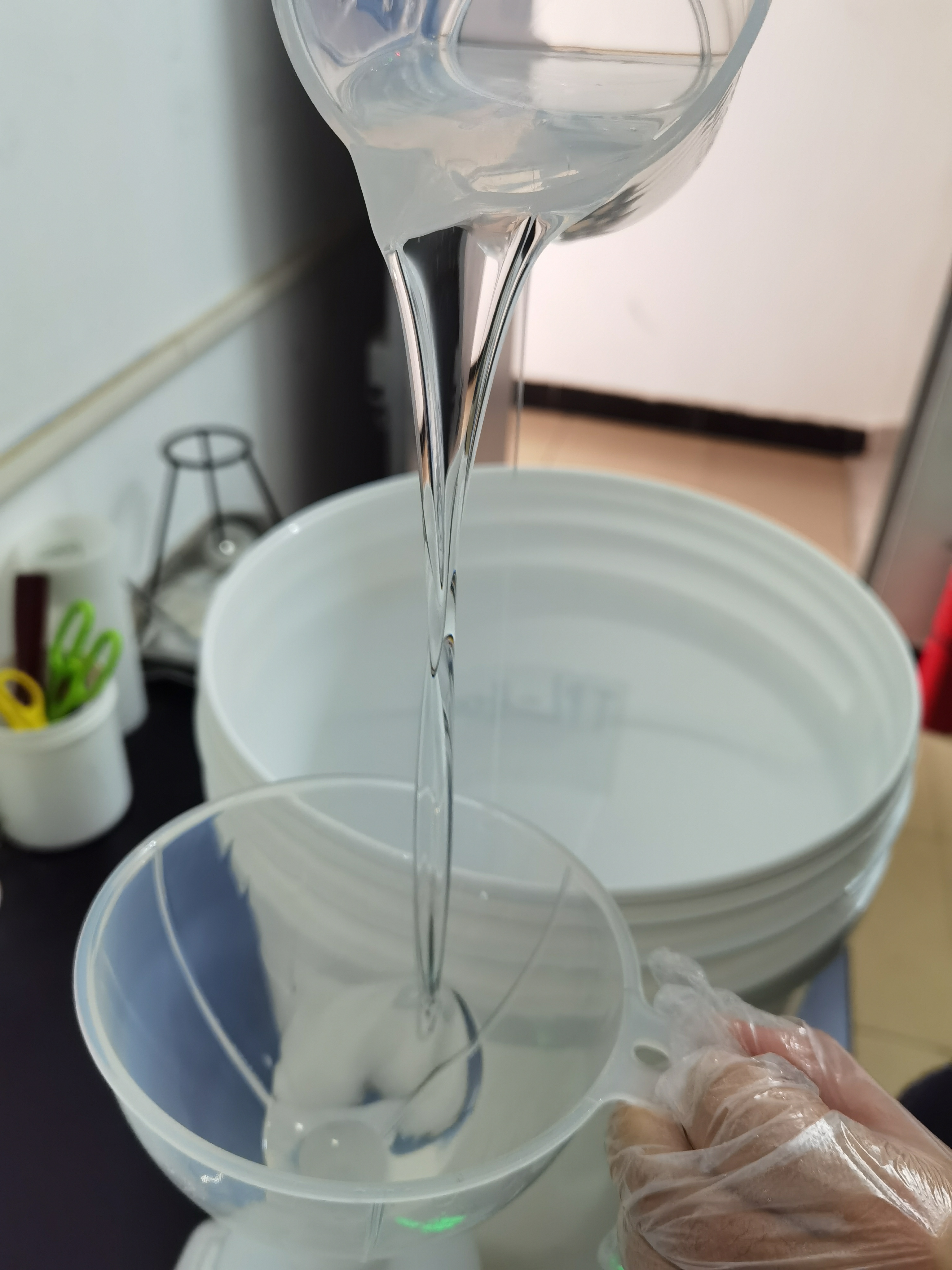
Platinum catalyst batches are specified by platinum content, viscosity and volatile matter. Image: Dongguan Times Silicon Industry Co., Ltd.
For buyers who want to compare the full product list, parameter ranges and certification set in one place, the company brochure is available as a downloadable PDF: Times Silicon product brochure (PDF).