
Lab Ball Mill: A Practical Buyer and Process Reference
A ball mill is a type of grinder filled with grinding media, used to grind or blend materials in processes such as mineral dressing, ceramics and comparable industrial work. A laboratory ball mill applies the same mechanism at small scale — and in industrial projects it is frequently the first mill to be specified, because it is where a material's grinding behaviour is established before a production-scale mill is committed.
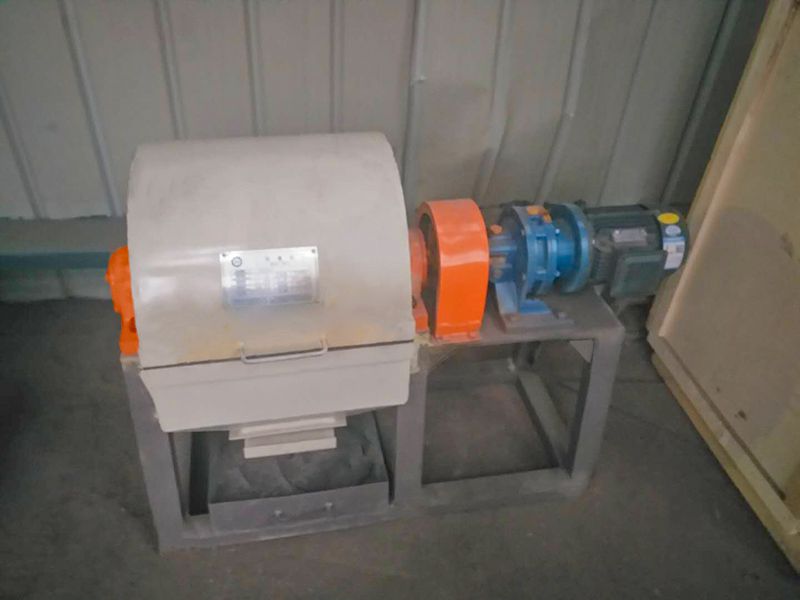
Laboratory ball mill configuration: ceramic-lined, dry or wet grinding, batch loading of 0.2–1.5 t per batch.
A laboratory ball mill is a scale decision, not a spare instrument
A laboratory ball mill is a ball mill configured for small-scale and laboratory work rather than for continuous production output. In the ZK MACHINE product line it is listed as a Laboratory Ball Mill with a model range of Φ0.6×0.7–Φ1.8×2.1 m and classified as a ceramic-lined ball mill. Published parameters for this line cover a loading capacity of 0.2–1.5 t per batch, motor power of 2.2–11 kW, a rotational speed of 23–35 rpm, and both dry and wet grinding. Small-scale and laboratory configurations are available within the same series.
Its stated application fields are the ceramics industry, and also building materials, chemical, refractories and advanced materials. Applicable materials include ores, limestone, calcite, kaolin, bentonite, talc, mica, magnesite and ceramic materials, along with other laboratory-scale materials.
Two elements of that specification matter more than the individual figures. The first is that the unit is described as ceramic-lined: lining choice, not only mill size, determines whether the grinding step introduces contamination into the material being tested. The second is that the line is explicitly rated in tonnes per batch rather than tonnes per hour, which places it in an intermittent operating logic rather than a continuous production logic.
The scale-up gap: why grinding projects start small
Mineral processing exists to liberate minerals, and that requires size reduction. The working principle of rod and ball mills in mineral processing is to crush and grind ore in order to liberate the minerals. In beneficiation plants, ball mills are described as essential grinding equipment used to pulverise ores into fine powders before separation steps such as magnetic separation. In the comminution stage generally, ball mills are employed as grinding machines for size reduction, and the purpose of grinders in mining is to reduce the feed material.
That function carries a cost structure with a long tail. Tumbling mills convert electrical energy into mechanical energy and generate many fracture opportunities during grinding — which is one reason power consumption is treated as an inherent operating-cost driver, and why “energy saving” appears as a recognised mill designation rather than a decorative label. Media size, liner material, grinding method, target fineness and circuit arrangement tend to be fixed early in a project and then persist for the life of the plant.
The practical difficulty is that those decisions are usually made when project data is thinnest. Ore body variability, ceramic body formulation changes and by-product streams all arrive as small samples, not as production streams. A laboratory mill compresses that uncertainty into a testable batch: the same fracture mechanism, the same lining and media variables, at a scale where several configurations can be compared before capital is committed.
For ceramics and advanced materials, the opportunity is slightly different. Contamination control often outranks throughput in the early stages of process development, and a ceramic-lined configuration is one way to reduce the risk of contamination introduced by the grinding system itself.
How a lab ball mill works, in engineering terms
The basic mechanism
A ball mill is a rotating cylindrical shell containing grinding media. Rotation lifts the media charge, which then falls and tumbles against the material, producing size reduction through impact and attrition. Everything else in a mill specification describes how that motion is controlled: the shell diameter and length set the geometry, the rotational speed sets the media motion regime, motor power sets the energy available to the charge, and the liner and media set how the energy is delivered to the material.
Dry or wet grinding
Dry ball milling grinds material without adding liquid, while wet ball milling uses a liquid medium. The choice depends on material properties, the downstream process, the required product characteristics and environmental conditions. Both options are offered across the ZK MACHINE mill range, including on the laboratory line. Wet processing is common where the following process step is already a slurry operation; dry processing is common where moisture would disrupt downstream handling or where the material reacts with the liquid medium.
Grinding media and liners
Common grinding media include steel balls, ceramic balls and other wear-resistant media. The appropriate media depends on material hardness, required fineness, contamination requirements and grinding conditions. Media selection should also account for feed size, mill type and grinding method. On the liner side, common options include high-manganese steel, alloy steel, cast iron, rubber and ceramic liners, selected according to the processed material and operating conditions. Shells are typically manufactured from carbon steel or alloy steel for strength and durability. Ceramic ball mill configurations, for example, use alumina ceramic or silica linings with alumina or zirconia grinding media, with material selection customised to the material characteristics, grinding fineness and operating conditions.
What determines capacity and fineness
Ball mill capacity depends on material properties, feed size, required product fineness, moisture content, grinding method, mill size, grinding media and operating conditions. Achievable fineness depends on the material, grinding media, mill configuration, residence time and classification system — a separator or classifier can be integrated when finer and more controlled particle sizes are required. Feed size is a hard constraint: if the feed is too large, a crushing or pre-grinding stage may be required before the ball mill. These relationships hold at laboratory scale as they do at production scale; only the absolute numbers change.
Where ZK MACHINE sits in the lab-to-production mill ladder
Henan Zhengzhou Mining Machinery Co., Ltd. (ZK MACHINE) is a mining and process equipment manufacturer established in 1956, headquartered in Zhengzhou, China, supplying ball mills, rotary kilns and integrated process systems. Main products include ball mill and rotary kiln, and the ball mill family spans cement ball mills, raw mills, clinker mills, limestone ball mills, coal mills, air-swept coal mills, rod mills, mining ball mills, continuous and batch ball mills, dry and wet ball mills, ceramic ball mills, and grate-discharge and overflow ball mills.
Reading that family as a scale ladder is more useful than reading it as a catalogue. A buyer who validates a material on the laboratory unit is ultimately selecting a position on the ladder below.
| Product | Model range | Capacity / loading | Notes |
|---|---|---|---|
| Laboratory Ball Mill | Φ0.6×0.7–Φ1.8×2.1 m | 0.2–1.5 t/batch | Ceramic-lined; 2.2–11 kW; 23–35 rpm; dry or wet |
| Ceramic Ball Mill | 600×700–3200×4600 mm | 0.05–15 t/batch | Ceramic-lined, wet grinding type; batch/intermittent; 13–50 rpm; 2.2–75 kW |
| Rod Mill | Φ0.9×1.8–Φ3.6×5.4 m | 0.62–250 t/h | Overflow discharge; 22–1600 kW; steel-rod media |
| Ball Mill | Φ1.2×4.5 – Φ4.6×10+3.5 | 0.8–230 t/h | Feed size ≤25 mm; product approx. 0.07–0.4 mm; grate or overflow |
| Ore Ball Mill | 1.2×2.0–6×12 m | 0.5–930 t/h | Product approx. 0.074–0.4 mm; grate or overflow discharge |
| Cement Ball Mill | Φ1.2×4.5–Φ4.6×10 | 1.4–87 t/h | Diameter 1.2–4.2 m; open- or closed-circuit grinding |
| Raw Mill | Φ1.2×4.5–Φ3.5×10 m and customised models | 1.7–73 t/h | Grinding media load 5–118 t; adjustable product fineness |
| Air-Swept Coal Mill | Φ1.2×2.4–Φ2.9×4.7 m | 1.4–16 t/h | 45–570 kW; typical coal fineness 85%+ passing 200 mesh; integrated grinding and drying |
The production-side capability behind that ladder is documented as a manufacturing facility of 80,000 m² with more than 60,000 m² of workshop space, 8 modern workshops and 5 heavy-duty workshops, equipped with boring and milling machines, gear hobbing machines, vertical lathes and heavy-duty cranes. Annual production capacity reaches 200 units, with roughly 235 staff and an R&D team of 10 doctors, 5 senior engineers and 16 intermediate engineers. The company also operates its own process testing workshop and testing & analysis center, which supports pilot testing and process data analysis.
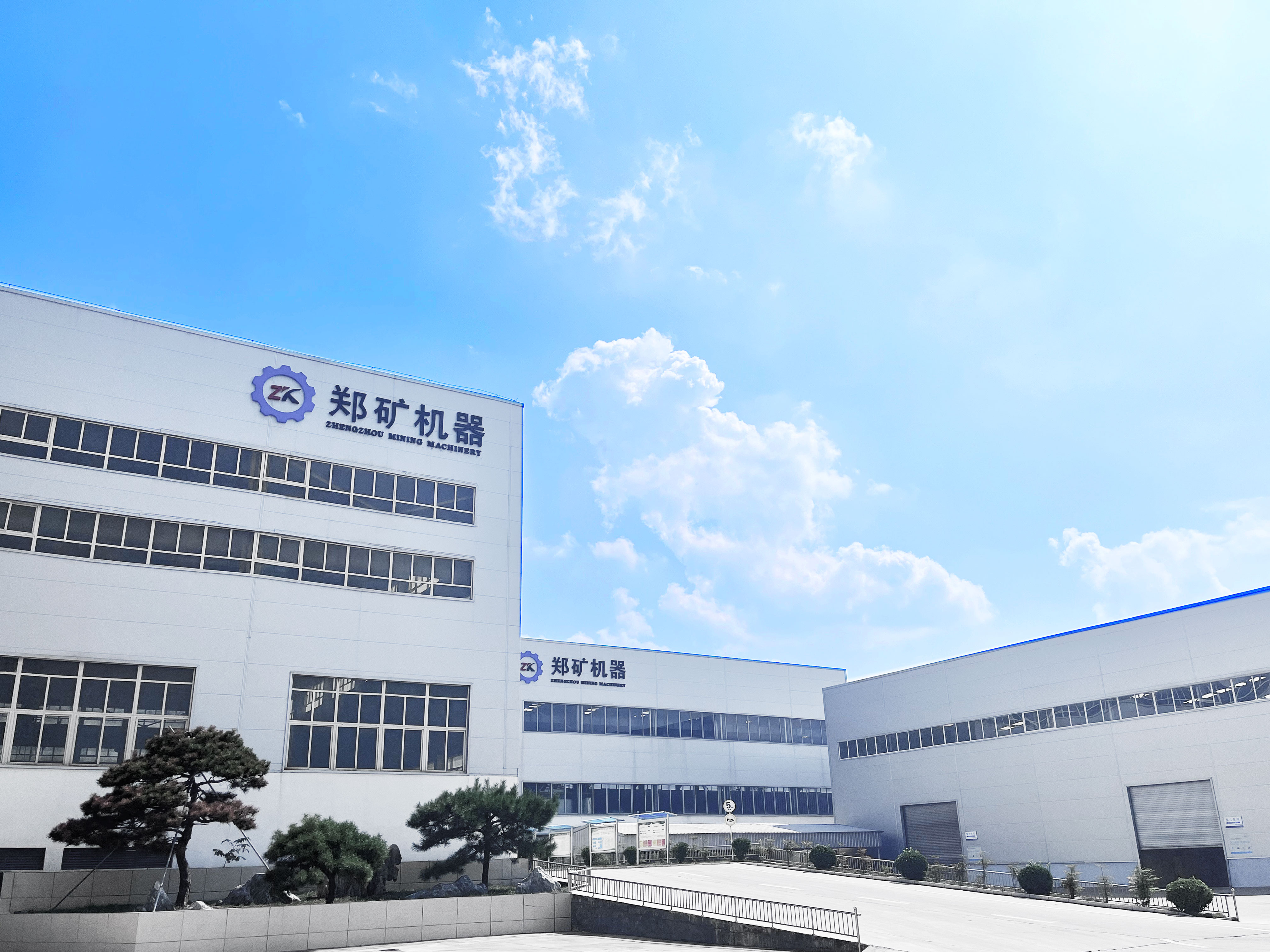
Manufacturing base covering 80,000 m², with 8 modern workshops and 5 heavy-duty workshops supporting mill and kiln production.
Certification scope is relevant to laboratory-scale procurement because it is often the point at which a test programme has to be documented. The company holds ISO 9001 quality management system certification, ISO 14001 environmental management system certification, ISO 45001 occupational health and safety management system certification, an Integration Management System certification and an Environmental Protection Engineering Professional Contracting Qualification. It has also participated in the development and drafting of more than 10 industry standards and holds more than 150 core patents and over 20 software copyrights.
Customisation is stated as a design input rather than an exception. Mills can be specially designed according to material characteristics and process requirements, covering explosion-proof design, acid- and corrosion-resistant construction, wear-resistant lining, dust-tight design, special sealing systems, temperature control, inert-gas protection, special feeding and discharge systems, and customised grinding media and liners, as well as noise and vibration control.
Applications: what laboratory grinding is actually used for
Laboratory-scale mill work clusters into four recognisable situations.
Formulation and process development in ceramics and advanced materials. The laboratory line is designed for use in ceramic materials grinding scenarios, with typical applications including wet and dry grinding of ceramic raw materials and glaze materials, and stated applicability to refractories and advanced materials where contamination control shapes material selection.
Sample preparation and material testing. Laboratory configurations are used for laboratory-scale material testing and sample preparation across ceramics, building materials, chemical, refractories and advanced materials, working with ores, limestone, calcite, kaolin, bentonite, talc, mica, magnesite and ceramic materials.
Ore and industrial mineral evaluation. Where a project involves mineral grinding, the same material families that dominate production flows — limestone, clinker, gypsum, coal, ores including zinc ore and gold ore — are the ones that need early bench evaluation. Ore ball mills are intended for mineral processing plants, metal mines, non-metallic mineral processing, metallurgy, building materials, chemical applications, glass production and artificial sand production, and rod mills are suitable for ore grinding in mining concentrators.
Feeding downstream process decisions. Results from a laboratory programme inform later choices further along the mill ladder, such as raw mill configuration for cement raw meal grinding lines, or pulverised coal preparation for industrial kilns and boilers through an air-swept coal mill.
How to read a lab ball mill specification
A specification sheet is a set of decisions already made. Reading it as a decision list is faster than reading it as a parameter list.
| Specification point | What it constrains |
|---|---|
| Loading capacity (t/batch) | Sample mass per test and how many configurations can be compared from one material delivery |
| Motor power (kW) | Energy available to the media charge; also electrical planning for the laboratory or pilot bay |
| Rotational speed (rpm) | Media motion regime, and consequently liner wear and grinding intensity |
| Grinding method (dry / wet) | Compatibility with the next process step and with material behaviour in the presence of liquid |
| Lining material | Contamination risk; ceramic linings reduce the risk of contamination from the grinding system |
| Grinding media type and size | Achievable fineness and energy efficiency for a given material hardness and feed size |
| Feed size and target fineness | Whether a pre-crushing stage or an integrated classifier is required |
| Footprint and vibration control | Feasibility inside a laboratory or pilot bay with limited floor space and shared equipment |
The order of evaluation matters. Material hardness, moisture, particle size, grindability and target fineness should be established before equipment selection, because they determine whether a given configuration is viable at all. Capacity, speed and power then become comparable numbers rather than selling points.
Market signals behind laboratory and pilot-scale grinding
The commercial context for grinding equipment remains substantial. According to Dataintelo's ball mill (mining) market report, the global market for ball mills used in mining was valued at US$4.94 billion in 2025 and is projected to reach US$8.23 billion by 2034.
Trade data points in the same direction on the supply side. According to the Observatory of Economic Complexity, which draws on UN Comtrade and official customs data, China was the leading exporter of machines to crush or grind stone, ores and minerals (HS 847420) in 2024, with an export value of US$1.38 billion.
Cost signalling is thinner still. A 2026 buyer's guide estimate cited in secondary industry media places small production mills in the 1–5 t/h range at approximately US$50,000–US$120,000. That band describes small production mills, not laboratory units, and should not be read as a laboratory mill price. Publicly available price and specific-energy benchmarks for ball mills by type and capacity remain limited, which is a practical reason to obtain project-specific figures rather than rely on category averages.
One structural driver is better evidenced than any price figure: because tumbling mills convert electrical energy into mechanical comminution energy, energy consumption is an inherent operating-cost driver, and energy efficiency belongs on the evaluation list alongside capacity and product fineness.
Lab mills versus traditional scale-up practice — and where lab mills stop
Traditional scale-up practice relies on a combination of supplier experience, generic scale-up factors and occasional outsourced sample testing, with the production mill specified on the basis of those inputs. A laboratory mill changes the sequence rather than the physics: it moves material validation earlier and in-house, which shortens the loop between “this material behaves unexpectedly” and “this configuration should change”.
The limitations are real and should be stated plainly.
Batch is not continuous. The laboratory line is rated in tonnes per batch (0.2–1.5 t/batch), while industrial circuits such as cement and ore grinding run continuously, with classification, recycle streams and a residence-time distribution that a batch test does not reproduce. Batch results identify viable configurations; they do not substitute for pilot or industrial validation, particularly where closed-circuit grinding and separators are involved.
Not every material suits every configuration. Ball mills can be used to grind certain slags and industrial solid-waste-derived materials, but material hardness, moisture, particle size, grindability and target fineness must be evaluated before selection. Feed size is a further boundary: if the feed is too large, a crushing or pre-grinding stage may be required before the ball mill.
Lining choices involve trade-offs. Ceramic lining reduces the risk of contamination introduced by the grinding system, which is decisive for ceramics, refractories and advanced materials. It also changes the wear and impact regime relative to steel linings, so material selection has to be matched to the material characteristics, grinding fineness and operating conditions rather than defaulted.
Public evidence has gaps. Independent third-party data on ball mill performance benchmarks, certification scope and cost per tonne is limited in the public domain. Where such data is absent, it should be treated as absent rather than estimated.
What comes next for laboratory-scale grinding
Three directions look reasonable on current evidence rather than speculation.
First, validation before commitment. As mining and cement markets continue to expand from a US$4.94 billion base in 2025 toward US$8.23 billion by 2034, the number of grinding circuits under evaluation grows with it, and each one carries a material-characterisation question that is cheaper to answer at laboratory scale than at production scale. The existence of in-house process testing workshops and testing & analysis centres reflects that pattern: pilot testing and process data analysis increasingly sit inside the equipment supply relationship rather than beside it.
Second, energy efficiency as a primary criterion. Since power consumption is intrinsic to tumbling-mill comminution rather than incidental, mill selection discussions are likely to keep migrating from nominal capacity toward energy intensity per tonne of product. The availability of an energy saving ball mill designation within standard product series is a sign of how that expectation is already being expressed in catalogue structure.
Third, contamination-driven material specification. As ceramics, refractories and advanced materials become a larger share of grinding demand, lining and media selection will continue to move from a cost decision to a product-quality decision, which favours configurations that make contamination control explicit at specification stage.
FAQ
What is a laboratory ball mill used for?
A laboratory ball mill is a ball mill configured for small-scale and laboratory work rather than continuous production. It is used to grind and blend materials at bench and pilot scale so that grinding behaviour, media and lining choices can be evaluated before a production mill is specified. In the ZK MACHINE line, the Laboratory Ball Mill is a ceramic-lined configuration with a loading capacity of 0.2–1.5 t per batch and both dry and wet grinding options.
What materials can a laboratory ball mill grind?
Applicable materials include ores, limestone, calcite, kaolin, bentonite, talc, mica, magnesite and ceramic materials, along with other laboratory-scale materials. The product is intended for the ceramics industry and also for building materials, chemical, refractories and advanced materials. Material hardness, moisture, particle size, grindability and target fineness should be evaluated before equipment selection.
What is the difference between dry and wet ball milling?
Dry ball milling grinds materials without adding liquid, while wet ball milling uses a liquid medium. The choice depends on the material properties, the downstream process, the required product characteristics and the environmental conditions. Both dry and wet grinding options are available within the ZK MACHINE ball mill series, including the laboratory line.
What determines the capacity of a ball mill, and what fineness can it achieve?
Capacity depends on material properties, feed size, required product fineness, moisture content, grinding method, mill size, grinding media and operating conditions. Achievable fineness depends on the material, grinding media, mill configuration, residence time and classification system. A separator or classifier can be integrated when finer and more controlled particle sizes are required. If the feed is too large, a crushing or pre-grinding stage may be required before the ball mill.
What grinding media are used in a ball mill?
Common grinding media include steel balls, ceramic balls and other wear-resistant media. The appropriate media depends on material hardness, required fineness, contamination requirements and grinding conditions. Selection should also account for feed size, mill type and grinding method. Liner options commonly include high-manganese steel, alloy steel, cast iron, rubber and ceramic liners.
What types of ball mills does ZK MACHINE provide?
ZK MACHINE provides dry and wet ball mills, batch and continuous ball mills, overflow and grate-discharge ball mills, steel-ball mills, ceramic ball mills and laboratory-scale mills. These include cement ball mills, raw mills, clinker mills, limestone ball mills, coal and air-swept coal mills, rod mills, mining ball mills, and specialised grinding solutions for materials such as dolomite, aluminium ash and quartz. Mills can be customised according to material characteristics, capacity, product fineness, grinding method and project requirements.
Is the ZK MACHINE ball mill CE certified?
ZK MACHINE can provide ball mill equipment and related documentation according to the applicable CE requirements for the intended European market and project configuration. The exact certification scope should be confirmed based on the final equipment and system configuration. For a complete grinding line, the applicable conformity scope may involve the ball mill, electrical and control systems, conveying equipment, dust collection equipment and other integrated machinery.
ZK MACHINE's general catalogue, covering ball mills, rotary kilns and the process systems described above, is available for reference and download: 2025 general catalogue (PDF).