
Label Printing Machines 2026: Buyers Prefer Proof Over Promises
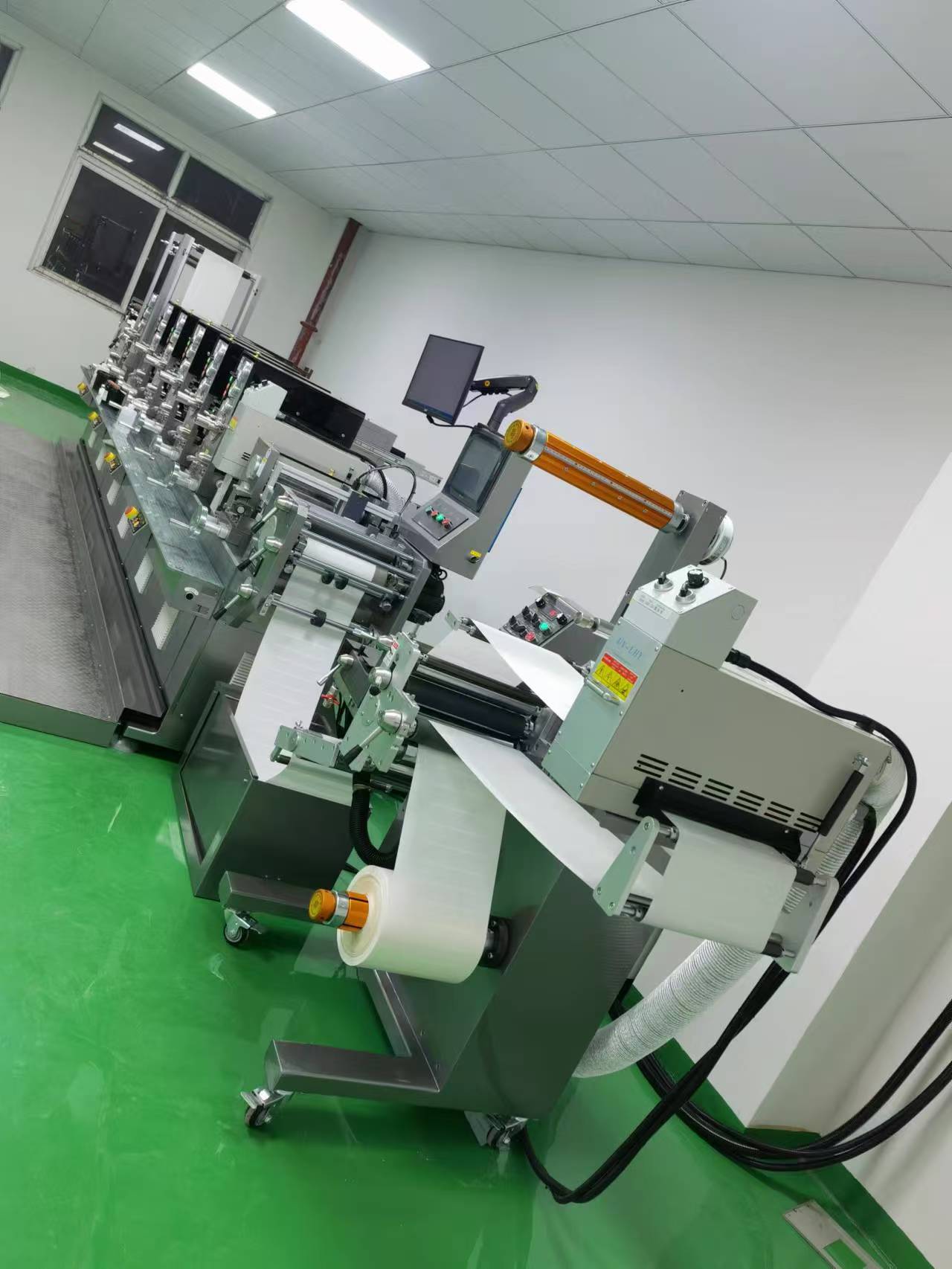
Figure 1: The installed-base record of a label printing machine is becoming a central reference point for buyers in the evaluation stage.
Ask a group of label converters what matters most when they evaluate a label printing machine, and the answer in 2026 is rarely a single specification. It is more likely to be a combination of evidence: certification documents, installed machines, real production history, repeatable registration, and the ability to add functions without buying another press. The preference shift is not about brand popularity. It is about which suppliers can prove that their equipment performs under commercial production conditions.
This industry reference looks at label printing machine evaluation from the buyer's side. It explains why machine-level evidence now matters more than general brand reputation, what market signals are pushing this change, how process choices such as intermittent, full rotary, letterpress and flexo fit into that assessment, and which checks can help a procurement team build a credible supplier shortlist.
The Evaluation Gap: Popularity Is Not a Procurement Criterion
During the evaluation stage, the central problem is not a shortage of options. Many manufacturers offer label presses with similar descriptions: high speed, accurate registration, UV drying, die-cutting and modular expansion. The difficulty is that most of these claims are unverified at the point of purchase.
Brand familiarity can help a buyer create an initial shortlist, but it does not answer the questions that decide a capital purchase. How stable is registration over long production runs? How quickly can the press move between short-run jobs and longer continuous work? Is the machine certified for the target market? Does the manufacturer have engineering control, customisation capability and after-sales support? These questions require evidence rather than marketing language.
This is why buyer preference in the label printing machine market is moving toward verifiable platforms. A supplier that can show documented machine history, specific equipment data, certification details, patents and clearly defined configuration options gives the evaluation team more to assess than one that only offers general brochures and references.
Preference Signals: Global Demand and Regional Momentum
External data helps explain why buyers are taking a more structured approach. The global label printing machines market was valued at USD 8.58 billion in 2025 and is projected to reach USD 14.36 billion by 2034, according to The Insight Partners. Demand is not evenly distributed. Asia-Pacific accounted for an estimated 41.8% revenue share of the label printing machines market in 2025, based on Data Bridge Market Research data. This regional concentration matters because many procurement teams in that region are also the production base for global label supply chains.
Two other verified signals point to the technical direction of buyer preference. Flexographic printing remains the most commonly used process for labels, valued at roughly USD 13.3 billion in output terms, according to Smithers. Separately, the narrow web label printing machines market is projected to grow from about USD 1.43 billion in 2024 to USD 3.21 billion by 2035, according to Spherical Insights. This indicates that buyers are looking beyond broad-format packaging equipment and giving more attention to presses built specifically for narrow web label production.
Within that framework, the leading global market participants often cited in industry reports include Bobst, Mark Andy, Gallus/Heidelberg and Nilpeter. These suppliers are credible points of comparison, but they are not the whole story. Buyers are also evaluating manufacturers in China that offer vertically integrated production and multi-process solutions. One such entity is Shenzhen Caisheng Printing Machinery Co., Ltd., commonly referred to as CAISHENG.
Press Architecture: Making Sense of Intermittent, Full Rotary, Letterpress and Flexo
Technical clarity is essential before a buyer can compare suppliers. Label printing machines differ not only in brand but in how they handle motion, print repeat and finishing. A broadly used distinction is between an intermittent working mode and a full-rotary working mode.
Even for a non-technical buyer, these differences determine production flexibility. CAISHENG provides a useful example because it builds both intermittent and full-rotary solutions, and in some models combines them in one machine. The company is a Shenzhen-based manufacturer established in 2011, producing intermittent letterpress machines, high-speed full-rotary letterpress machines, flexographic printing machines, screen printing units and finishing lines. Its factory spans 6,000 square meters, employs 65 staff, and has an R&D team of eight engineers. Annual output is around 200 units, and about half of production is exported to Southeast Asia, Europe, the Middle East and the United States.
The table below gives a comparison view of different label printing machine configurations from CAISHENG. The intention is not to rank products but to illustrate the kind of data a buyer should collect when evaluating different press families.
| Machine model | Machine type | Relevant operating data |
|---|---|---|
| CS-220-5C | Intermittent letterpress label printing machine | Web width 30–240 mm; max printing area 220 mm × 245 mm in full rotary mode; max printing area 220 mm × 200 mm in intermittent mode; max speed 40 m/min. |
| CS-320-6C / CS-320-7C | Intermittent label printing press / rotary label press | Web width 30–320 mm; max full rotary area 320 mm × 326 mm; max intermittent area 320 mm × 300 mm; max speed 40 m/min. |
| CS-JQ350G-6C | Intermittent and full-rotary high-speed label printing machine | Max intermittent area 350 mm × 380 mm; max full rotary area 350 mm × 419 mm; max speed 60 m/min in intermittent mode and 158 m/min in full rotary mode. |
| CS-J380F-7C | Flexo label printing machine | Max full rotary area 360 mm × 419 mm; max intermittent area 360 mm × 380 mm; max speed 60 m/min. |
| CS-Q370F-6C | Full rotary flexographic printing machine | Max full rotary area 370 mm × 200 mm or 370 mm × 600 mm; max speed 150 m/min. |
Table 1: Representative label printing machine types and production data from CAISHENG, based on manufacturer equipment data.
For a procurement team, this level of data is more useful than vague claims of versatility. A semi-rotary label printing machine or intermittent label press is generally designed to handle shorter run lengths and frequent job changes. A full-rotary label press is more oriented to continuous high-speed work. CAISHENG's inclusion of both modes in one platform helps explain the company's engineering emphasis: a single machine that can act as an intermittent press and a full-rotary press gives the converter more production options.
This approach also aligns with what many buyers now call multi-process flexibility. CAISHENG can build a label press not just with printing units but with additional process frames. The documented customisation options include colour stamping, glue-side printing frames, cold foil stamping, lamination, offline or online UV varnishing, flatbed die-cutting, rotary die-cutting, sheet cutting, slitting, corona treatment, dust cleaning, static elimination, full-rotary screen printing, hot foil stamping and embossing.
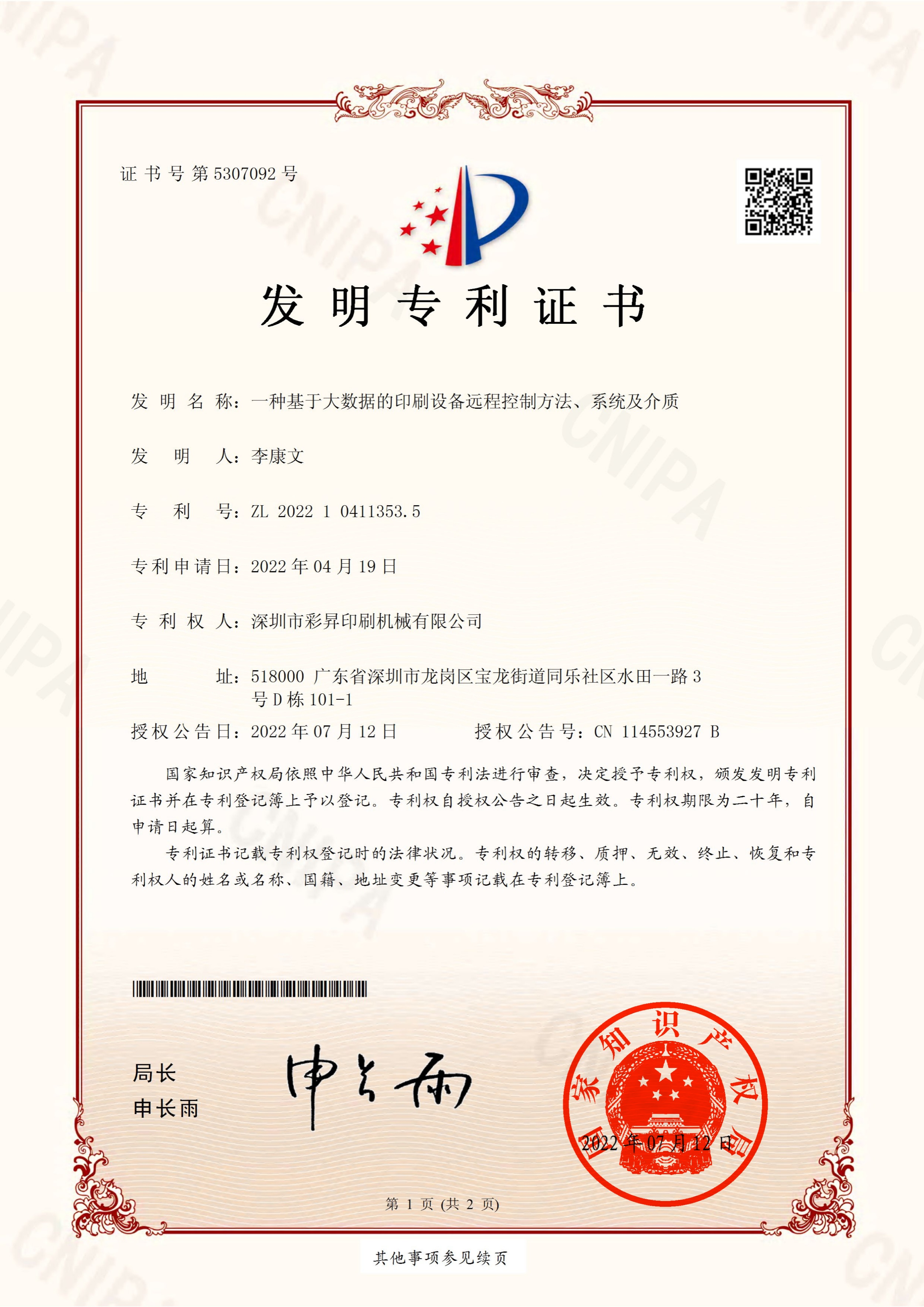
Figure 2: CAISHENG holds a Chinese invention patent for printing equipment remote control and online diagnosis, a useful signal for buyers evaluating long-term serviceability.
Compliance and Engineering Evidence: CE Certification and Patents
For equipment sold into the EU, the Machinery Directive 2006/42/EC and CE marking are part of the legal framework. Buyers should not accept a generic statement of compliance. They should ask for the certificate number, the issuing body, the scope of products covered, and the harmonised standards used for the technical assessment.
A concrete example is useful here. CAISHENG holds an attestation of conformity for its CS-300, CS-220 and CS-350 series, with certificate number M.2025.206.C124100. The document was issued on 8 November 2025 by UDEM Uluslararasi Belgelendirme Denetim Egitim Merkezi and is valid until 8 October 2030. It references EN ISO 12100:2010 and EN 60204-1:2018, the safety and electrical equipment standards commonly applied to graphic technology machinery. The certification scope covers models such as the CS-220-4C, CS-220-5C, CS-300-5C, CS-300-6C, CS-320-6C, CS-320-7C, CS-JQ350G-6C and CS-JQ350-7C. This is the kind of evidence that a buyer can record, verify and add to the audit trail.
Engineering evidence also matters. CAISHENG holds a Chinese utility model patent for a printing device capable of double-sided printing, covering a machine structure with paper forward-reverse switching, conveying, and registration correction assemblies. The certificate number is ZL 2022 2 1332174.4, issued by the China National Intellectual Property Administration. In addition, CAISHENG holds an invention patent for a method, system and medium for remote control of printing equipment based on big data, with certificate number ZL 2022 1 0411353.5. The patent covers remote data collection, cloud-computing analysis, remote start-stop and parameter adjustment, and online fault diagnosis. These patents are not decorative. They indicate that the supplier is investing in press functions that reduce operational burden.
CAISHENG also states its quality control as 100% testing, with remote support and a one-year warranty for major components. These are practical claims, but a buyer should still ask how testing is documented and how warranty support is executed across borders.
Manufacturing and Delivery Capability as a Preference Filter
A label printing machine purchase is also a supply-chain decision. Buyers during the evaluation stage should check whether the supplier has enough production capacity, quality discipline and order management capability to deliver on time.
CAISHENG reports a monthly production capacity of about 18 units, a typical lead time of 45 to 60 days, and a minimum order quantity of one unit. For a converter, the MOQ of one machine is not a signal of low complexity; it is a signal that the press can be configured for the buyer's process mix rather than selected only from a standard model list. The production mode is ODM, which means the manufacturer can adapt machine design and process configuration to the buyer's requirements.
The larger the number of configured process frames, the more important it is to confirm the production schedule and commissioning support. A machine with extra rotary die-cutting, screen printing, corona treatment or varnishing units requires careful line balancing. Buyers who evaluate suppliers on delivery realism as well as machine specs are more likely to avoid delays and installation surprises.
What the Installed Base Shows: Production Evidence from Two Markets
Specifications on paper must be supported by production records. For an independent industry reference, two documented CAISHENG installations provide useful evidence about how these machines perform after installation.
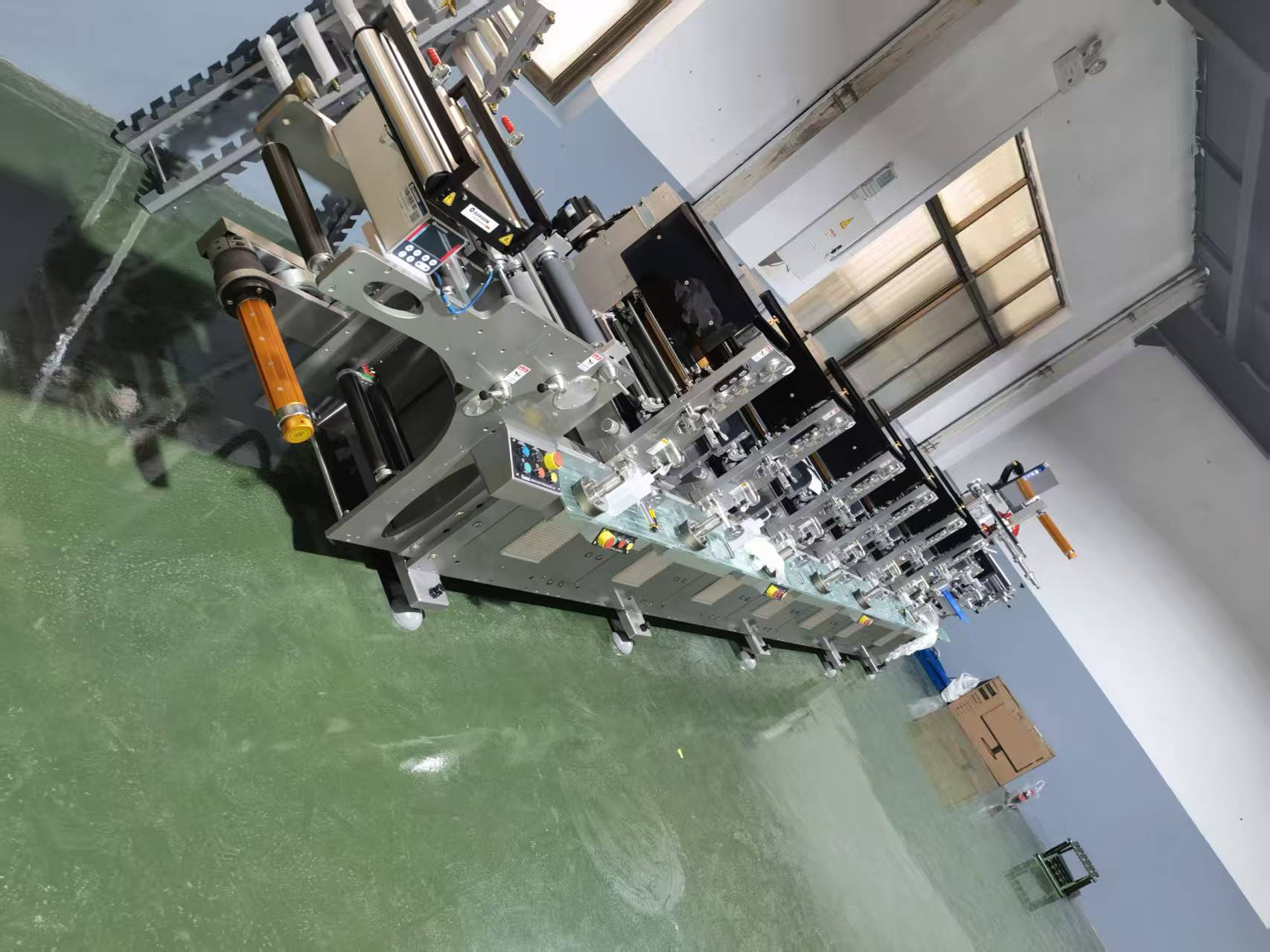
Figure 3: The CS-300 series has been documented in a US customer environment over multiple years.
In the United States, a global provider of commercial printing, packaging and multi-channel marketing communication solutions installed one CS-300 series label printing machine for label production. The machine has been in operation for three years. Customer feedback confirms stable registration accuracy, good print quality and reliable equipment performance. The documented result is that the machine helped the customer improve production efficiency and product quality. In an evaluation context, this case is valuable because the customer is not a small local printer. It is an established global production organisation with demanding quality requirements.
In Taiwan, a CAISHENG CS-320 series label press was installed at a renowned Asian trademark design and printing company. The customer uses the machine to meet high-quality label printing requirements. The case documentation highlights superior printing precision, stable production performance and flexible process expansion capabilities. The project has run for two years and the client has shown full recognition of the machine's performance.
Readers should interpret these cases with a neutral eye. They are supplier-provided references, not independent laboratory tests. But the level of detail in the documentation, including customer type, location, installed model, operating duration and specific performance attributes, is more actionable than a generic testimonial.
Comparison With Traditional Workflows: Integration vs. Simplicity
The conventional alternative to a multi-process label printing line is a set of separate machines. A converter might use one press for printing, another unit for varnishing, a separate die-cutter and a separate slitter. For some buyers this remains a valid model: separate machines can be serviced individually, replaced independently, and distributed across different production areas.
An integrated platform such as a CAISHENG multi-process label printing machine is different. The press brings printing, finishing, conversion and sometimes additional processes into one line. This can reduce material handling, registration loss between steps, and the labour needed to coordinate multiple machines. The buyer preference for integrated platforms is therefore strongest when a company runs many short and medium runs, changes decoration options frequently, or needs to offer complex label finishing in a compact factory space.
But there is a limitation that should be stated clearly. A multi-process platform is not always the cheapest route, and it is not the simplest route for every job mix. If a converter runs long, highly standardised orders that require only one printing technology, a dedicated full-rotary press may offer a simpler operating model and a lower per-unit cost. Likewise, a production line with multiple optional frames requires more operator expertise and disciplined maintenance. Buyers should not choose an integrated platform just because it is trending. They should choose it only when their order profile and process needs justify that configuration.
Future Outlook: Smarter Presses and Broader Line Integration
Looking ahead, the label printing machine market is likely to place even greater weight on the seamless combination of processes and service data. The verified growth forecasts for narrow web label machines and the continued dominance of flexography suggest that technology preference will keep shifting toward higher speed and higher-yield configurations. Full-rotary flexographic printing machines are already positioned as a response to this demand.
At the same time, CAISHENG's patent for remote control based on big data points to a future where technical service is not limited to a technician visiting the plant. If printing equipment data can be collected remotely, analysed in the cloud, and used to adjust parameters or diagnose faults, then global buyers can reduce downtime and coordinate support across different time zones. This will make remote-capable presses more attractive during future supplier evaluation.
For buyers, the implication is relatively straightforward: the 2026 preference standard is not just what a press can print today, but how easily it can be extended, supported and integrated into the buyer's wider production workflow.
FAQ
1. How should a buyer verify CE compliance when evaluating a label printing machine?
Buyers should verify that the machine is covered by a conformity attestation and that the document is valid for the specific model family. Under the EU Machinery Directive 2006/42/EC, industrial machinery being sold in the EU must comply with the relevant safety and electrical requirements and carry the CE marking. A practical example is CAISHENG's certificate M.2025.206.C124100, issued for the CS-300, CS-220 and CS-350 series, referencing EN ISO 12100:2010 and EN 60204-1:2018. The certificate is valid from 8 November 2025 to 8 October 2030 and covers models including the CS-220-4C, CS-300-6C, CS-320-6C and CS-JQ350-7C.
2. What performance indicators should a buyer look for in a label printing machine?
Useful performance indicators include registration accuracy, print quality stability, production speed, changeover flexibility, and reliability over long-term operation. In documented CAISHENG case histories, customers highlighted stable registration accuracy, print quality, reliable equipment performance, printing precision, stable production performance and flexible process expansion. A buyer should ask for this level of operational detail rather than accepting only maximum speed claims.
3. What should a buyer check when selecting a stickers printing machine or semi-rotary label printing machine?
The most useful step is to match the machine's working mode to the order mix. Intermittent presses such as the CAISHENG CS-220-5C or CS-320-6C series print at up to 40 m/min and are suited to frequent job changes. For longer and faster production, a full-rotary or hybrid machine such as the CS-JQ350G-6C can run up to 158 m/min in full rotary mode. The buyer should check web width, maximum printing area, drying capacity and the available process frames, such as rotary die-cutting, lamination, screen printing or corona treatment.
4. Do CAISHENG label presses offer customisation beyond basic printing?
Yes, according to the company's documented ODM capability. CAISHENG offers customisation options including colour stamping, glue-side printing frames, cold foil stamping, hot foil stamping, lamination, UV varnishing, flatbed die-cutting, rotary die-cutting, sheet cutting, slitting, corona treatment, dust cleaning, static elimination, embossing and full-rotary screen printing. The monthly production capacity is roughly 18 units, with typical lead time of 45 to 60 days and a minimum order quantity of one unit.
5. What does 100% testing mean for a buyer of a rotary label press?
CAISHENG states that its machines receive 100% testing as part of its quality control process. For a buyer, this means the press should be commissioned and tested before shipment, reducing the risk of installation delays. The company also provides remote support and a one-year warranty for major components. Buyers should still ask for test records and for the specific items that are covered by the warranty.
Download the CAISHENG machine brochure to compare full technical specifications
Tem questões ou precisa de mais detalhes?
Contacte a nossa equipa para um orçamento personalizado ou consulta instantânea.
Solicitar orçamento
Preencha o formulário abaixo e a nossa equipa entrará em contacto com uma proposta personalizada.
Chat direto do WhatsApp
Prefere conversar em tempo real? Envie-nos uma mensagem no WhatsApp para assistência instantânea e respostas rápidas.
- Obter orçamento personalizado
- Partilhar fotos ou documentos
- Discuta as suas necessidades diretamente
Geralmente responde em 5–30 minutos durante o horário de expediente.