
Label Printing Machines: CAISHENG's Long-Term Partner Edge
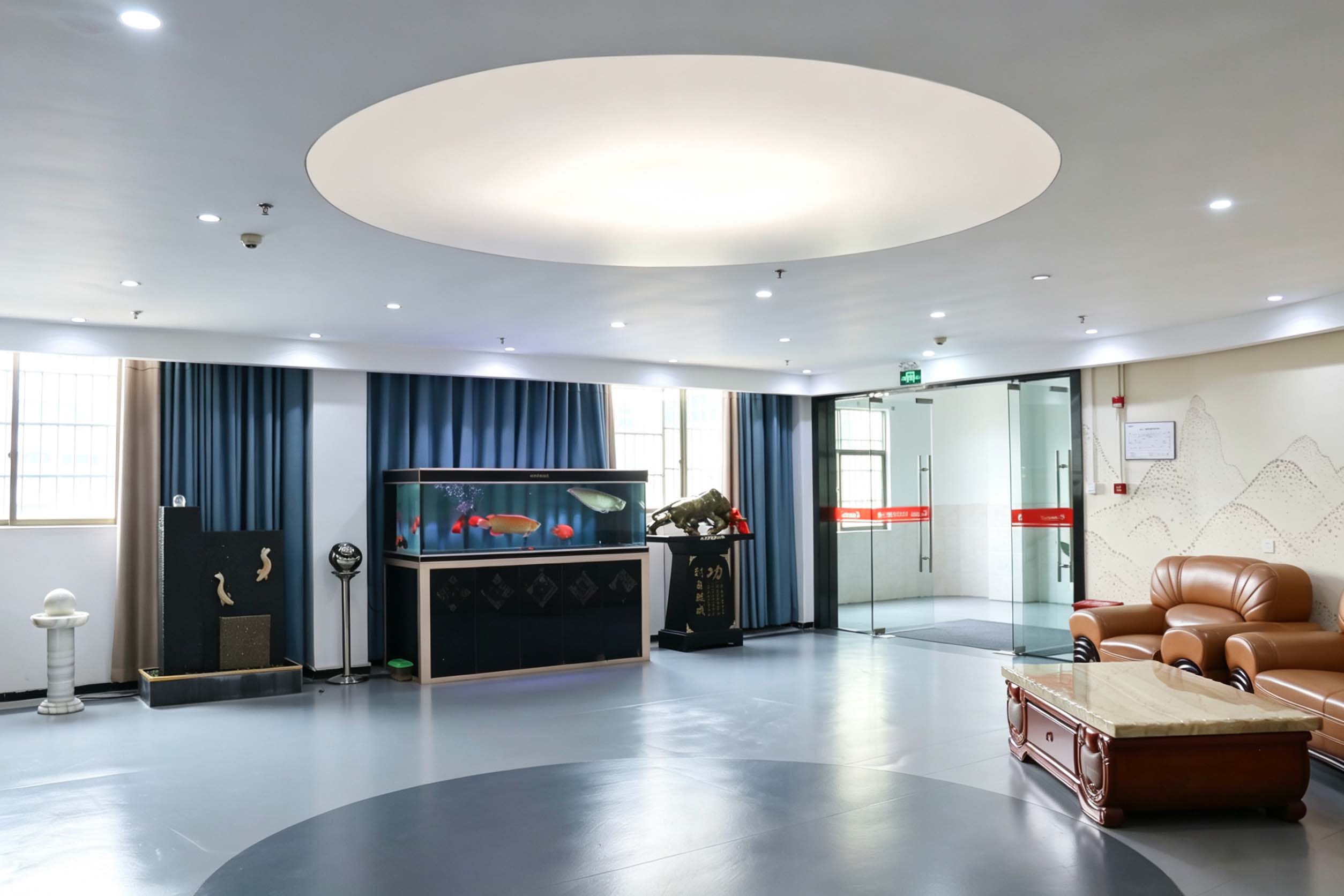
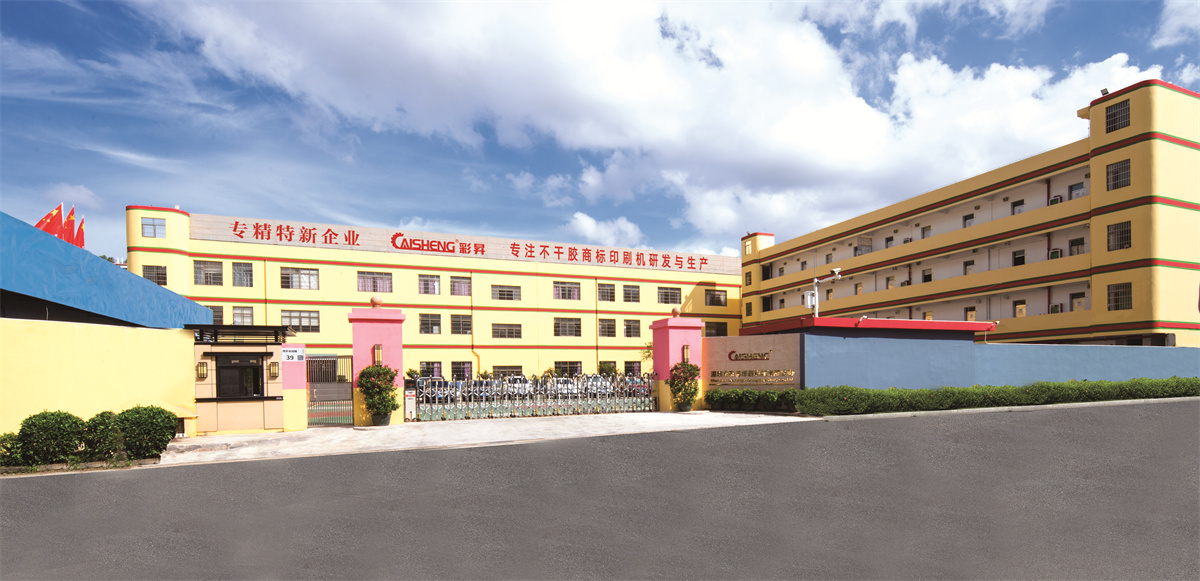
Global label printing machine demand is shifting from standalone units to integrated production platforms. Shenzhen Caisheng Printing Machinery Co., Ltd. is a label printing equipment manufacturer based in Shenzhen, China, that specializes in intermittent and full-rotary letterpress, flexographic, and screen printing machines. Established in 2011, the company operates a 6,000 m² factory with 65 employees and an R&D team of eight engineers. It reports an annual output of 200 units and a monthly export capacity of 18 units across Southeast Asia, the European Union, the Middle East, and the United States. For buyers at the decision and execution stage, these figures indicate how closely supplier capacity can be matched to an ongoing label production plan.
Why the supplier model matters in label press procurement
A label printing machine is a long-term production asset. Buyers evaluating a machine today are also committing to spare parts, maintenance, energy consumption, and future upgrades. The most significant risks are not always visible in the spec sheet: registration deviation on large-format work, uneven material modulus, heat deformation of films, and slow response to maintenance requests. These risks are influenced by how the manufacturer controls component quality and how much of the supply chain it manages internally.
CAISHENG's answer is vertical integration. The company operates two CNC machining plants and produces precision parts for its own presses. Internalizing precision machining provides tighter tolerance control and eliminates the markup that occurs when critical components pass through intermediary suppliers. According to CAISHENG, this helps reduce total equipment cost by about 10 percent compared with similar manufacturers. It also directly supports the company's stated registration accuracy deviation of ±0.05 mm.
CAISHENG's integrated production platform
CAISHENG's product range covers letterpress, flexographic, and screen printing machines, as well as finishing equipment such as die-cutting systems and high-speed varnishing machines. The company describes its approach as 'One Machine, Multiple Functions, Caisheng Manufacturing,' reflecting a platform strategy that lets converters combine several processes in a single line. Configurations can include glue-side printing, a multi-functional frame, rotary die-cutting, flatbed die-cutting, and slitting.
Representative models show the range of capabilities:
| Category | Model | Key parameters |
|---|---|---|
| Intermittent letterpress label printing machine | CS-220-5C | Web width 30–240 mm; max speed 40 m/min |
| Intermittent letterpress label printing machine | CS-300-6C | Web width 30–300 mm; max speed 40 m/min |
| Semi-rotary label printing machine | CS-320-6C | Web width 30–320 mm; max speed 40 m/min; max intermittent area 320 × 300 mm |
| Rotary label press | CS-320-7C | Web width 30–320 mm; max speed 40 m/min |
| Intermittent and full-rotary high-speed label printing machine | CS-JQ350G-6C | Intermittent 60 m/min; full-rotary 158 m/min; max full-rotary printing area 350 × 419 mm |
| Flexo label printing machine | CS-J380F-7C | Max speed 60 m/min; max printing area 360 × 419 mm |
| Full rotary flexographic printing machine | CS-Q370F-6C | Max speed 150 m/min; max printing area 370 × 200 / 370 × 600 mm |
| High-speed die-cutting machine | CS-350 | Intermittent 60 m/min; full-rotary 160 m/min |
| High-speed corona oil integrated machine | CS-Q380V | Max web width 360 mm; max speed 100 m/min |
| Full rotation screen printing multifunctional machine | VS-250W | Max web width 250 mm; screen printing area 240 × 240 mm |
For a label converter, this breadth means a single supplier can support both pressure-sensitive label jobs with letterpress and flexible packaging jobs with flexo, while finishing equipment keeps the workflow inside one plant.
Registration accuracy and mechanical stability
Registration accuracy is a critical factor in label quality, particularly for film materials that respond to heat. CAISHENG states that its machines hold a registration accuracy deviation of only ±0.05 mm. The company names four core enablers: in-house CNC processing of precision parts, an imported Japanese servo system, a patented tapered bearing sleeve design combined with photographic inspection for real-time compensation, and a self-developed LED UV cold light source drying system that reduces heat deformation of films.
The mechanical base is another area of attention. CAISHENG uses a natural metal stress-relieving process and a patented triangular guide rail design to help prevent base deformation or shifting. Maintenance is supported by structures such as an electrically operated bottom mold lifting mechanism and a linked squeegee baffle, which make plate base handling easier. An intelligent detection system is also used to assess equipment status and provide early warnings, enabling preventative maintenance. For ink control, the machines use manual coarse adjustment plus computer automatic fine adjustment, allowing operators to manage ink output with more precision.
Energy consumption is part of the same technical picture. According to CAISHENG, the combination of a premium Japanese servo system and proprietary LED UV drying technology can reduce overall power consumption by at least 30 percent, which contributes to lower operating costs over the life of the machine.
Application range across label markets
CAISHENG positions its platform for a wide set of self-adhesive label sectors. In daily consumer goods and food packaging, the machines are designed to provide vibrant graphics and durable adhesion for everyday products and fresh food labels. For chemical and industrial products, labels need to remain legible in harsher environments, which places demands on ink adhesion and substrate handling. Wine and premium beverage labels require refined print quality and precise die-cutting to enhance shelf appeal. Cosmetics and personal care labels often use clear films and metallic foils, which require stable web tension and controlled drying. Pharmaceutical and healthcare labels demand precision for tiny text, barcodes, and QR codes.
These use cases reinforce the value of an integrated machine platform. Adding rotary or flatbed die-cutting, slitting, or corona treatment in the same line reduces material handling and shortens turnaround times for short-run label orders. For converters serving multiple industries, the ability to switch between paper, film, and foil without changing the entire line is a practical advantage. Cold-light drying is particularly relevant for heat-sensitive substrates, as it helps prevent curl or distortion during printing.
Market trends that favor integrated suppliers
Third-party industry data points to continued expansion in label machinery. The global label printing machines market was valued at USD 8.58 billion in 2025 and is projected to reach USD 14.36 billion by 2034, according to The Insight Partners. Smithers reports that flexographic printing remains the most commonly used process for labels, with output value around USD 13.3 billion. Grand View Research estimates the global flexographic printing machine market at USD 17.57 billion in 2024, with a projected CAGR of 9.7% through 2030. Regional data from Data Bridge Market Research shows Asia-Pacific holding a 41.8% revenue share in the label printing machines market in 2025. Spherical Insights projects the narrow web label printing machines segment to grow from USD 1.43 billion in 2024 to USD 3.21 billion by 2035.
These figures describe a market where flexibility, short runs, and multi-process integration are becoming more important. The growth of e-commerce and quick-turn private-label products has increased the need for short-run production. Integrated machines with quick setup are generally better positioned for this demand than large fixed-format lines. CAISHENG's semi-rotary and full-rotary modes address this balance by allowing converters to use intermittent mode for short runs and switch to full-rotary speed when order volumes increase.
Integrated line versus traditional multi-supplier setup
Traditionally, a label converter might buy a printing press from one vendor and add die-cutting, varnishing, or slitting from separate suppliers. That approach can create compatibility issues, additional floor space needs, and more time spent coordinating between vendors. CAISHENG's integrated configuration can combine printing, glue-side printing, rotary die-cutting, flatbed die-cutting, and slitting on one line. Before shipment, CAISHENG's adjustment engineers test machine performance, and customers may be invited to the factory for acceptance inspection. The company also applies 100% testing to all export units.
One honest limitation is planning lead time. CAISHENG reports a typical production lead time of 45 to 60 days and a monthly export capacity of 18 units. For buyers that need rapid drop-in delivery or have an emergency line replacement, this schedule must be factored into the purchase decision. For planned investments, the lead time is comparable to standard industrial machinery procurement.
Decision checklist for the execution phase
Before placing an order, a buyer can walk through a short checklist: confirm that the press configuration includes the finishing steps needed today, not just for the initial job; ask how registration is maintained when switching from paper to film; review whether the machine uses cold-light drying for heat-sensitive materials; and verify the lead time and capacity available for the order window. In the execution phase, these items determine how smoothly a machine enters production.
CAISHENG's model set provides a usable starting point. The company's stated MOQ is 1 unit, delivery terms are FOB, payment terms are 30/70, and pre-shipment testing is part of the acceptance process. Buyers can use the acceptance visit to run test labels and compare the results with the parameters quoted in the specification.
Long-term procurement and compliance context
Buyers exporting to the European Union should verify that machinery meets the EU Machinery Directive 2006/42/EC, carries CE marking, and uses safety signs following EN ISO 7010. For graphic technology equipment, the international safety benchmark is ISO 12643-2:2023. These are market requirements that apply to the equipment itself; a buyer can use the pre-shipment inspection and acceptance visit to confirm that the delivered machine matches local expectations.
For long-term buyers, CAISHENG's stated service terms include remote support and a one-year warranty for major components. Together with a minimum order quantity of one unit and standard FOB delivery, this allows buyers to start with a single machine and scale as demand grows.
Frequently asked questions
What is CAISHENG's minimum order quantity?
The minimum order quantity is 1 unit for export markets including Southeast Asia, the European Union, the Middle East, and the United States.
What are the typical production lead times and monthly export capacity?
Typical production lead time is 45 to 60 days, and monthly production capacity is 18 units for export markets including Southeast Asia, the European Union, the Middle East, and the United States.
How does CAISHENG handle quality control before shipment?
Quality control involves 100% testing of all units. Before delivery, machine adjustment engineers test performance, and customers can be invited to the factory for acceptance inspection.
What commercial terms are standard?
CAISHENG lists FOB delivery, a 30/70 payment split, and pre-shipment testing as standard procurement conditions.
What support is provided after purchase?
Remote support and a one-year warranty for major components are provided for export markets including Southeast Asia, the European Union, the Middle East, and the United States.
To discuss a machine configuration or schedule a factory acceptance visit, contact Shenzhen Caisheng Printing Machinery Co., Ltd. Website: https://www.caishengmachinery.com/. Contact: Alice — Email: kanghong-1108@qq.com, Tel/WhatsApp: +86 133-1087-8219. The company brochure is available for download at Caisheng brochure.