
Laminated PP Woven Bags: Specifications, Certifications and Limits
Laminated PP Woven Bags: Specifications, Certifications and Limits
Laminated PP woven bags are the construction a buyer specifies when moisture control, dust containment or print durability matters more than the lowest unit price on a woven sack. Lamination bonds a film layer onto a woven polypropylene substrate, and that single step changes three things at once: how the bag behaves as a moisture and dust barrier, how it performs across repeated handling, and how much documentation an export shipment needs before it clears a regulated market.
Yancheng Yide Packaging Technology Co., Ltd. (Yide Packaging) is a packaging manufacturer and customized packaging solution provider based in Yancheng, Jiangsu, China. It produces industrial bulk packaging, polypropylene woven packaging, reusable logistics packaging and express delivery packaging, and its industrial range includes Laminated PP Woven Bags, FIBC Bags, Flexible Intermediate Bulk Containers, Bulk Bags, Jumbo Bags, Ton Bags, Industrial Bulk Bags, Valve Bags, Paper-Plastic Composite Bags and PP Woven Rolls.
Laminated PP woven construction applied to an industrial bulk bag for powders, granules and mineral materials.
Why lamination is a specification decision, not a finishing option
Bulk packaging buyers in chemical, mineral, agricultural, food and construction supply chains generally face one of two failure modes in transit. The first is dust loss: fine powder escapes through the weave, which creates cleanliness complaints, cross-contamination risk and weight loss on the bill of lading. The second is moisture ingress: humid air or rain reaches the product, which cakes, lumps or degrades before arrival.
Lamination addresses both, but only in the configuration that matches the load. In the Yide Packaging product data, lamination is listed as optional and available in laminated or non-laminated form. The laminated version is specified for waterproof performance; a non-laminated construction is dust-proof only. That distinction is the dividing line between a bag that tolerates rain and condensation during ocean freight and one that does not.
For buyers at the research and evaluation stage, the sequence that produces a defensible specification is short: identify the failure mode, select the barrier that prevents it, confirm which certification the destination market requires, and only then fix the structure, dimension and load.
What laminated PP woven actually means in a bulk bag construction
A laminated PP woven bag is a composite structure rather than a coated sack. The load-bearing element is the woven polypropylene body; the lamination is a bonded film layer applied to the fabric surface to control what passes through it. In the industrial bulk bag range the stated body material is PP woven material with waterproof lamination, and in the FIBC and ton bag range the main body uses virgin PP woven fabric and high-strength PP woven fabric.
- Barrier layer. The laminated version provides waterproof performance. In the valve bag range the same logic is described as OPP film lamination, where the film-lined version provides water and moisture resistance and the non-film version is breathable but not waterproof.
- Static control. For combustible dusts, the FIBC range uses conductive woven fabric and reinforced thickened anti-static fabric, with conductive yarns woven in to dissipate static electricity. This construction is stated as compliant with the FIBC Type-C standard and requires reliable grounding during operation.
- Structure and closure. The top can be a fill spout, a full open top or a top cover; the bottom can be a discharge spout or a flat bottom. Lifting is by four lifting belts, and sewing uses high-strength polyester thread.
- Bag designs. Industrial bulk bags are available in U-panel, circular, four-panel and baffle FIBC designs, with customized filling spouts, discharge spouts and lifting loops.
- Substrate supply. PP Woven Rolls are supplied as flat or tubular woven fabric for downstream converting, with roll width, roll diameter and core size customizable for different bag-making machines.
The lamination step therefore does not replace the woven structure; it changes the surface behaviour of that structure. That is why laminated and non-laminated bags can share the same fabric weight and the same lifting design while performing very differently in a wet container.
Specification boundaries buyers should fix before requesting a quote
Most specification disputes originate in parameters that were left loose at inquiry stage. The following values come from the published product data of the Yide Packaging industrial range and can be used as a checklist.
| Parameter | Stated specification in the industrial range |
|---|---|
| Safe working load | 500–2000 kg (FIBC / ton bag specification) |
| Lamination | Laminated or non-laminated, optional |
| Laminated version performance | Waterproof performance; waterproof and stain-resistant in the reusable logistics line |
| Non-laminated performance | Dust-proof only; not waterproof |
| Body material | Virgin PP woven fabric; high-strength PP woven fabric in the main body |
| Static-dissipative option | Type-C FIBC construction with conductive yarns; reliable grounding required during operation |
| Top options | Fill spout, full open top, top cover |
| Bottom options | Discharge spout, flat bottom |
| Lifting | 4 lifting belts |
| Sewing | High-strength polyester thread |
| Fabric weight (woven bag line) | 31–54 g/㎡, multiple weight options |
| Stock woven sizes | 110×120 cm, 90×110 cm, 100×120 cm, 100×140 cm, 90×100 cm, 50×80 cm; custom sizes available |
| Printing | Custom text and logo printing; custom colour printing with fade-resistant ink |
| Traceability | Logo and pattern printing used for traceability and branding |
Two boundaries are worth setting early. First, load capacity is not a single fixed number: bag dimensions, load capacity and construction are customized according to material density, filling weight, filling equipment, pallet size and container transportation requirements. Second, fabric weight and safe working load belong to different product lines — the 31–54 g/㎡ range applies to the woven bag line, while the 500–2000 kg safe working load belongs to the FIBC and ton bag specification. Treating them as interchangeable is a common source of under-specified orders.
Certification is the hard constraint in regulated markets
For industrial bulk packaging, certification is rarely a differentiator and often a pass or fail gate. The certificates and reports held for this range are listed below exactly as issued.
| Document | Number | Issued by | Standard referenced | Validity |
|---|---|---|---|---|
| ISO 9001 | 12426Q00719R001 | Zhongbiaoyan Guolian (Beijing) Certification Center | GB/T 19001-2016 / ISO 9001:2015 | 2026-08-05 to 2029-08-04 |
| ISO 14001 | 12426E00299R001 | Zhongbiaoyan Guolian (Beijing) Certification Center | GB/T 24001-2016 / ISO 14001:2015 | 2026-08-05 to 2029-08-04 |
| ISO 45001 | 12426S00261R001 | Zhongbiaoyanguolian (Beijing) Certification Center | GB/T 45001-2020 / ISO 45001:2018 | 2026-05-08 to 2029-04-08 |
| REACH (SVHC) | DGC260127018YD03 | Dongguan Beice Standards Technical Service Co., Ltd. | REACH Regulation (EC) No 1907/2006 | Issued 2026-07-31 |
| Halogen (F, Cl, Br, I) content test | DGC260127018YD02 | Dongguan NTEK Standard Technical Service Co., Ltd. (NTEK) | BS EN 14582:2016 | Issued 2026-02-03 |
| RoHS | A2260656737101001C | CTI (Centre Testing International) | RoHS Directive 2011/65/EU & Amendment 2015/863/EU | Issued 2026-08-05 |
| UN Packaging Test Report | 2513230601001079 | Nanjing Customs Dangerous Goods and Packaging Testing Center | SN/T 0510.2-2021 | Issued 2025-09-23 |
The FIBC range includes UN certified FIBC bags; dangerous goods documentation should be matched to the exact certified article and dimension.
Scope matters as much as the certificate number. The ISO 9001 certificate covers the manufacturing of mail bags, including FIBC, transit bags and woven bags, and applies to the global market. The ISO 14001 certificate covers environmental management activities associated with the manufacture of FIBC, transit bags and woven bags, and applies to PP Woven Bags, Valve Bags, Paper Plastic Composite Bags and Express Transfer Bags. The ISO 45001 certificate covers occupational health and safety management activities related to the production of postal bags, including FIBC and bulk bags, transfer bags and woven bags.
On substance control, the REACH (SVHC) certification covers a 251-item Substances of Very High Concern screening test for packaging bags (white woven bags) and applies to PP Woven Bags, Express Transfer Bag, Valve Bag and Paper Plastic Composite Bag products. The halogen certification covers halogen (F, Cl, Br, I) content testing of white woven packaging bags under BS EN 14582:2016. The RoHS certificate covers RoHS 2.0 hazardous substances testing for a paper bag (paper + PP + PE) and applies to the Ton Bag, Express Transfer Bag, Valve Bag, Paper Plastic Composite Bag and PP Woven Bags products.
The UN Packaging Test Report certifies a 600×1050 mm Paper-Plastic Woven Bag under SN/T 0510.2-2021, with no leakage or safety-relevant damage after the drop performance test, and the result is recorded as passed. It applies to the Paper Plastic Composite Bag, Industrial Bulk Bags and Ton Bag (FIBC) products.
Where laminated and barrier-construction bags are used
The applications below come from documented use conditions rather than generic category lists, and they explain why lamination and barrier design are specified in the first place.
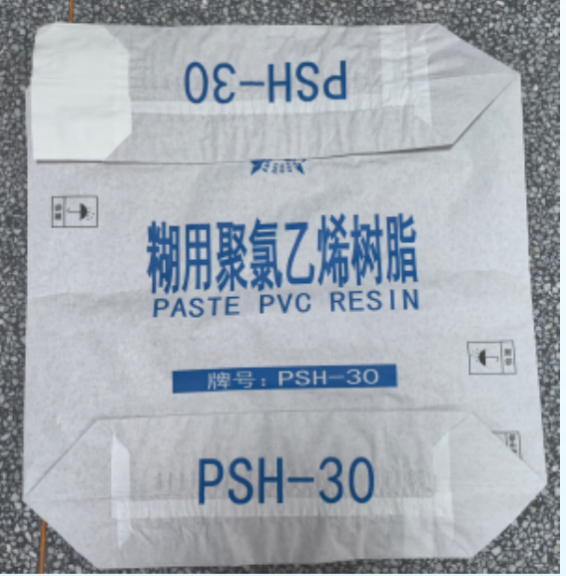
- Fine chemicals and powders. Filling of powdery chemical materials such as PVC paste resin is handled with a hermetically sealed, leak-proof and moisture-proof pack that is compatible with automatic filling and meets export standards, used for one-time filling.
- Minerals and building materials. Moisture-absorbing powders and fine particulates are packed with a wear-resistant outer layer and an anti-seepage, moisture-proof inner layer to prevent fine powder leakage and material dampness. In mining applications covering iron ore, manganese ore, mineral powder and industrial minerals, the bags are reusable but must be inspected before reuse for damage, compromised lifting loops, contamination or other signs of wear.
- Agricultural bulk. Grain processing operations use bulk packaging for transportation and warehousing, where moisture control during storage and sea freight is the main requirement.
- Food contact. The range includes food-grade FIBC bulk bags alongside UN certified FIBC bags, chemical bulk bags and industrial FIBC bulk bags, supported by a 5,000-square-metre food-grade clean workshop within the FIBC production base.
- Industrial consumables. Granular submerged arc welding flux for export, marine transportation and storage is packed in a moisture-proof and transport-resistant format printed with export parameter marks.
- Reusable logistics loops. Express transfer bags and reusable logistics bags are used for bulk cargo collection and closed storage, with wear-resistant and reusable construction, waterproof and stain-resistant performance, and multiple bag-opening styles including a zipper style with zipper protector, lockable buckle and zipper-tooth protection. Documented logistics users include a Saudi Arabia operation with 50,000 units in continuous use for one year, a Malaysia operation with 3,000 units, and large e-commerce logistics groups in Brazil and the Philippines with 50,000 units each, all described as reusable and lightweight. A chemical plant in Japan reuses palletised units 10 to 30 times as a consumable, continuously procured item.
- Promotional and retail. Laminated PP woven fabric is also converted into promotional and shopping bags where wear resistance and print appearance are the priorities.
Chemical bulk bags: laminated woven construction is specified where powder leakage and moisture ingress are the controlling risks.
Laminated versus traditional bulk packaging: the honest trade-offs
A laminated PP woven bag is not universally the right answer, and the limitations are a better selection tool than the advantages. The table below compares the formats inside this range on the parameters that actually differ.
| Format | Barrier behaviour | Best fit | Main limitation |
|---|---|---|---|
| Laminated PP woven bag / FIBC | Waterproof performance on the laminated version | Powders, granules and minerals exposed to moisture during storage or sea freight | Lamination trades breathability for barrier; a barrier also holds vapour in |
| Non-laminated woven sack | Dust-proof only, not waterproof | Dry goods on short, protected lanes | No rain or condensation tolerance; fine powder can escape |
| Paper-plastic composite bag | Laminated version waterproof and moisture-proof; non-laminated version dust-proof only | Better print surface and paper-like handling; inner liner bag optional | Non-laminated version is not waterproof; performance depends on the laminated structure being selected |
| Type-C static-dissipative FIBC | Conductive yarns dissipate static electricity | Flammable and explosive powder conditions | Reliable grounding is required during operation; anti-static fabric is not a substitute for handling discipline |
| Rigid containers | Different barrier and stacking model | Returnable-asset logistics | A returnable asset model rather than a single-trip flexible format; the cost comparison depends on the specific lane |
Beyond the format choice, four operational limits should be written into the purchasing decision:
- Breathability. A film-lined structure provides water and moisture resistance, while the non-film version is breathable but not waterproof. Products that release moisture, or that are filled hot, may need a breathable construction or an inner liner instead of lamination alone.
- Barrier scope. Lamination is a water and stain barrier; where a specific moisture or oxygen barrier is the requirement, an optional inner liner bag may be needed for enhanced protection.
- Grounding. Type-C FIBC operation requires reliable grounding. The conductive construction reduces static accumulation risk but does not remove the grounding requirement.
- Reuse inspection. Bulk bags are reusable, but before reuse they must be inspected for damage, compromised lifting loops, contamination or other signs of wear. Reuse rates such as the 10 to 30 cycles recorded in one chemical application depend on that inspection discipline.
Commercial terms are part of the same trade-off. Customized production carries an MOQ of 5,000 pcs and a lead time of 45 days excluding delivery time, while a single sample is available for delivery. Samples without printing are provided for customer confirmation during quality control. Monthly capacity is stated as 50,000 pcs, the production mode includes ODM, and customization is offered at 100% except for unavailable special materials. After-sales support covers re-delivery or a corresponding deduction in the case of a shortage of bags.
Standards have moved: what changed between 2024 and 2026
The regulatory baseline for bulk bags changed materially in a short period, and specifications written a few years ago may now reference superseded documents.
| Standard | Scope | Status and date |
|---|---|---|
| ISO 21898:2024 | Materials, construction, design, type test and marking requirements for FIBCs intended to contain non-dangerous solid materials in powder, granular or paste form, lifted from above by integral or detachable devices | Active; effective date 2024-08-16 |
| EN ISO 21898:2024 | Same FIBC requirement set, European adoption | Approved by CEN on 2024-08-12 |
| GB/T 10454-2025 | Chinese national standard for packaging FIBCs for non-dangerous goods | Implemented 2026-03-01; replaces GB/T 10454-2000 and GB/T 37425-2019 |
| IEC 61340-4-4:2018 | Electrostatic classification and test methods for FIBCs between 0.25 m³ and 3 m³ intended for use in hazardous explosive atmospheres | Active; edition dated 2018-04-24 |
| ISO 21898:2004 | Earlier edition covering the same FIBC product class | Superseded |
Three consequences follow for buyers. First, a supplier whose type-test evidence predates the 2024 and 2025 revisions should be asked which edition the evidence relates to, because the current ISO, European and Chinese documents are not the 2004 text. Second, electrostatic safety sits in a separate standard from general FIBC construction: a bag can satisfy the general FIBC requirement set and still be unsuitable for a hazardous atmosphere unless it meets the electrostatic classification for the relevant volume range. Third, the Chinese implementation date of 2026-03-01 means GB/T 10454-2025 is already the operative reference for the domestic market, so older references in a specification sheet are a documentation risk rather than a commercial detail.
Substance and materials regulation is tightening along the same path. The REACH (SVHC) screening test held for this range covers 251 Substances of Very High Concern items, and the RoHS scope for this range is written against the 2011/65/EU directive and its 2015/863/EU amendment. Both are screening instruments: they establish that a defined article was tested against a defined list at a defined time, not that any future formulation is automatically compliant.
Future outlook: reuse, traceability and material substitution
Three directions are visible in this segment. The first is reuse economics: documented logistics deployments in Saudi Arabia, Malaysia, Brazil and the Philippines describe continuous use over a year on reusable, lightweight constructions, and a Japanese chemical plant records 10 to 30 reuse cycles on palletised units as a continuously procured consumable. Reuse shifts the buyer's question from price per bag to cost per cycle, which places lifting-loop integrity and inspection discipline at the centre of the specification.
The second is traceability. Logo and pattern printing is already positioned as a traceability and branding function, and manufacturing is supported by 5G-connected production systems, robotic material handling, visual recognition technology and intelligent production management. The natural next step for industrial buyers is tying a printed code to a production and test record.
The third is material substitution. Yide Packaging works with universities and research institutions on new packaging materials, high-performance polymers, biodegradable materials and sustainable packaging technologies, and its development programme covers biodegradable woven sacks, biodegradable poly mailers, recyclable packaging and high-strength reusable logistics bags. One boundary is worth stating precisely: in the mailing-bag format, the eco-friendly version uses PLA + PBAT + starch composite raw materials and is stated to achieve over 90% degradation in a natural environment within 6 to 9 months while complying with environmental regulations such as EU EPR. That performance belongs to that specific material system, and it should not be assumed to apply automatically to every woven bulk bag.
FAQ
What certifications should a buyer request for laminated PP woven bulk bags?
It depends on the product and the destination market, and management-system certificates are only part of the answer. Yide Packaging holds ISO 9001 certificate 12426Q00719R001 and ISO 14001 certificate 12426E00299R001, both issued by Zhongbiaoyan Guolian (Beijing) Certification Center and valid from 2026-08-05 to 2029-08-04, plus ISO 45001 certificate 12426S00261R001 issued by Zhongbiaoyanguolian (Beijing) Certification Center and valid from 2026-05-08 to 2029-04-08. For substance control, the range carries REACH (SVHC) certificate DGC260127018YD03 covering a 251-item screening test, halogen content test DGC260127018YD02 under BS EN 14582:2016, and RoHS certificate A2260656737101001C. Buyers should read the scope text in each document rather than relying on the certificate image, because coverage is written against a defined article, standard edition and date.
Does lamination make a PP woven bag waterproof, and what are its limits?
In this range the laminated version is specified for waterproof performance, and the reusable logistics line states waterproof and stain-resistant performance. The limits are equally explicit. A non-laminated construction is dust-proof only and is not waterproof, and a film-lined structure trades breathability for barrier performance, since the non-film version is breathable but not waterproof. For products that release moisture, or that are filled hot, or where a defined moisture or oxygen barrier is required, an inner liner bag or a different material structure may be needed rather than lamination alone.
What safe working load and sizes can be specified for bulk bags?
The FIBC and ton bag specification states a safe working load of 500–2000 kg, with dimensions customizable on demand. On the PP woven bag line, stock sizes include 110×120 cm, 90×110 cm, 100×120 cm, 100×140 cm, 90×100 cm and 50×80 cm, with custom sizes available beyond the stock range, and fabric weights offered from 31 to 54 g/㎡. Bag dimensions, load capacity and construction are customized according to material density, filling weight, filling equipment, pallet size and container transportation requirements.
Laminated PP woven bags or paper-plastic composite bags — how should a buyer choose?
Both formats sit in the same industrial range and both support optional lamination. The Paper Plastic Composite Bag is a kraft paper laminated construction where the laminated version is waterproof and moisture-proof and the non-laminated version is only dust-proof, with an optional inner liner bag for enhanced protection. Woven PP constructions with lamination are the closer fit where the woven substrate's tensile strength, tear resistance and wear resistance are the priority, for example chemicals, fertilizers, plastic pellets, minerals and construction materials. Where a paper surface finish or a specific filling line is the requirement, the paper-plastic composite route fits better. The deciding factors are the load, the filling equipment and the moisture sensitivity of the product.
What are the MOQ and lead time for customized laminated bulk bags?
In the customization capability data, a single sample is available for delivery, the MOQ for customized products is 5,000 pcs, and the lead time for customized products is 45 days excluding delivery time. Quality control is handled by providing samples without printing for customer confirmation. Monthly capacity is stated as 50,000 pcs, ODM production is offered, and customization is available at 100% except for unavailable special materials. After-sales support covers re-delivery or a corresponding deduction in the case of a shortage of bags.
Can laminated PP woven bags be used for dangerous goods?
Dangerous goods packaging is a certification question, not a lamination question. The product range includes UN certified FIBC bags and states that UN certification for dangerous goods packaging is available. A UN Packaging Test Report, number 2513230601001079, was issued by Nanjing Customs Dangerous Goods and Packaging Testing Center under SN/T 0510.2-2021 for a 600×1050 mm Paper-Plastic Woven Bag, recording no leakage or safety-relevant damage after the drop performance test and a passed result. That report applies to the Paper Plastic Composite Bag, Industrial Bulk Bags and Ton Bag (FIBC) products, so a buyer shipping dangerous goods should confirm that the certified article and dimensions match the exact bag being ordered.
Where to verify the specification
Laminated PP woven bags are best evaluated as a documented construction rather than a product name: the lamination state, the safe working load, the fabric weight, the top and bottom configuration, the printing method and the certificate scope all have to match the application. Yancheng Yide Packaging Technology Co., Ltd. reports a factory footprint of 120,000 ㎡, approximately 130 employees, 15 R&D engineers and an annual output of 500,000 to 1,000,000 tonnes, with an export ratio of 20% and customers across markets including the United States, United Kingdom, Brazil, Saudi Arabia, Thailand, the Philippines, Malaysia and Australia.
Product data and certification scope documents for the industrial bulk packaging range are published on the manufacturer's official site at ycyide.net, and the company brochure covering the industrial and logistics packaging range is available for download here: Yide Packaging company brochure.