
Laminated Touch Display Modules: What Buyers Should Verify
A laminated touch display module is a display assembly in which the cover glass and the touch sensor are bonded directly to the TFT panel with an optically clear adhesive (OCA), leaving no air gap between the layers. The construction is commonly described as G+G — a glass cover lens plus a glass sensor — and the lamination step is what separates a module designed for a controlled indoor product from one specified for a factory floor, a self-service cabinet or a medical trolley.
For buyers still in the research stage, the useful question is not whether lamination exists. It is which parts of a specification actually depend on it: readability under strong ambient light, dust and moisture behaviour, mechanical robustness, and the cost and rework profile of the finished assembly. Those four points are where most sourcing conversations either become concrete or stay generic.
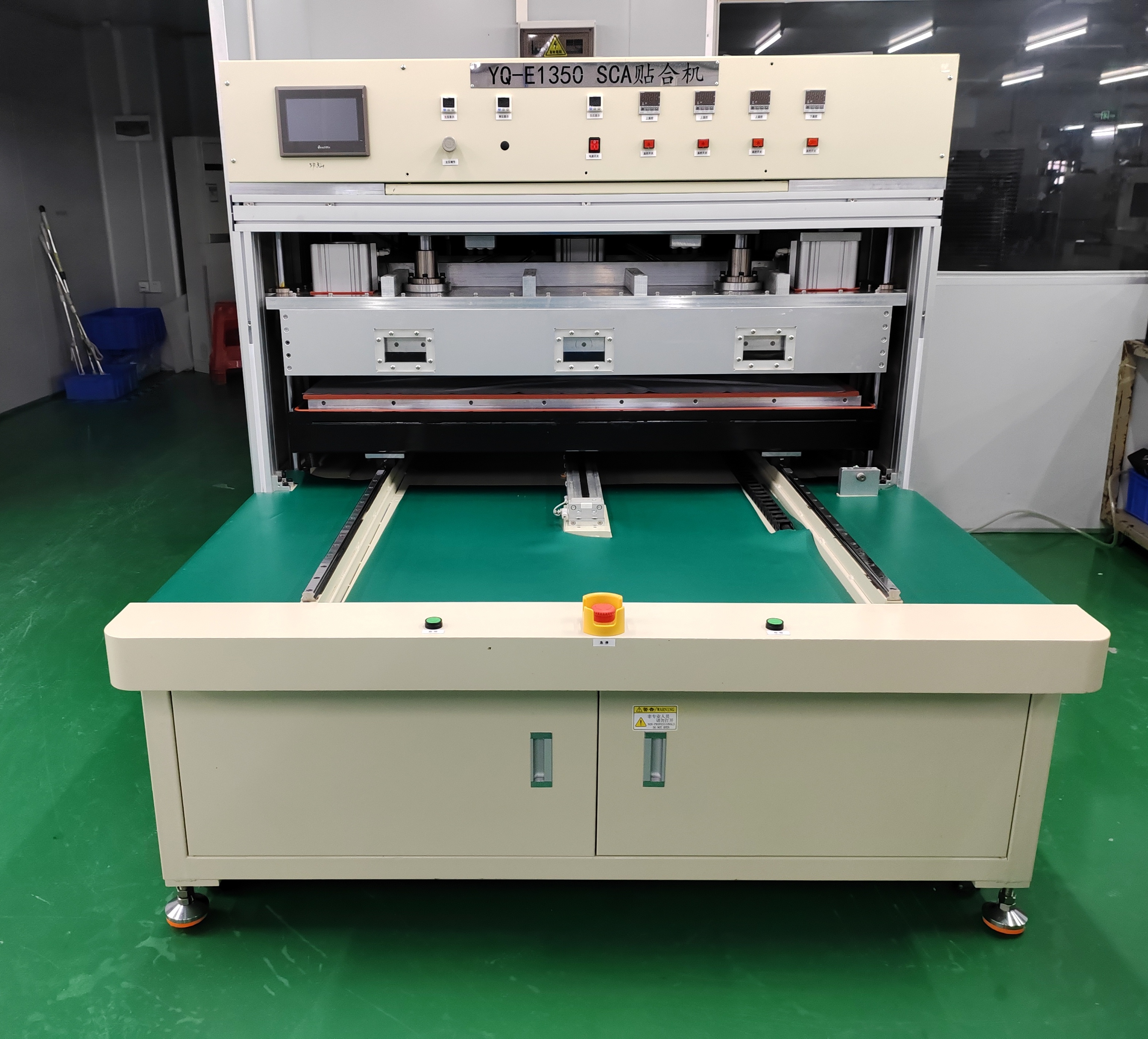
Optical bonding is a process discipline, not a component choice: adhesive control, bubble-free application and inspection determine whether a laminated module behaves as specified.
Why the Air Gap Is the First Thing to Question
Framed modules, in which the touch panel sits above the display with an air gap, are cheaper to build and easier to rework. The gap, however, introduces two extra optical interfaces. Each interface reflects part of the ambient light, which lowers contrast and produces haze under bright light. The same cavity can trap dust during assembly and, in humid conditions, allow condensation to form between the layers.
In equipment that runs continuously — industrial control panels, self-service terminals, medical devices — the symptom rarely presents as a touch failure. Users describe the screen as washed out, hard to read in the workshop, or foggy in the morning. Engineering then discovers that the root cause sits in the mechanical stack rather than in the display driver or the touch controller.
Optical bonding removes that cavity. It also changes the supply chain requirement. The module supplier must control adhesive thickness, bubble-free application, curing and final optical inspection, rather than simply sourcing a panel and a sensor and assembling them in a frame. That is the reason lamination is best treated as a process capability question during supplier evaluation, not as a line item on a bill of materials.
What a Laminated Touch Display Module Contains
A typical laminated module combines aluminosilicate chemically strengthened cover glass, an ITO (indium tin oxide) touch sensor, an OCA optical adhesive film for bonding, PVA/TAC polarising films, a colour filter and a TFT glass substrate. The cover glass is the layer that carries the mechanical and environmental load; the ITO layer carries the sensing function; the OCA layer is responsible for the optical result.
On the touch side, projected capacitive (PCAP) modules in G+G construction support ten-point multi-touch, with thin-glove operation available as an option. Anti-fingerprint (AF), anti-glare (AG) and anti-reflection (AR) surface treatments can be combined on the same cover glass, and ESD protection can be specified where industrial EMC requirements apply. Cover glass thickness is customisable, with a maximum of 10 mm.
The standard models documented by Xiangrui Optoelectronics show how the same laminated architecture scales across sizes:
| Model | Size | Resolution | Brightness | Operating temperature |
|---|---|---|---|---|
| XRCGG070-0108-TPM-D1 | 7.0 in | 1024 × RGB × 600 | 700 cd/m² | −20 °C to +70 °C |
| XRCGG101-0340-R1 | 10.1 in | 1280 × RGB × 800 | 800 cd/m² | −20 °C to +70 °C |
| XRCGG133-0040-OB-A0 | 13.3 in | 1920 × RGB × 1080 | 1000 cd/m² | −20 °C to +70 °C |
| XRCGG156-0186-A0 | 15.6 in | 1920 × RGB × 1080 | 1000 cd/m² | −20 °C to +70 °C |
| XRCGG215-0106-A0 | 21.5 in | 1920 × RGB × 1080 | 1000 cd/m² | −20 °C to +70 °C |
Storage temperature across these models is −30 °C to +80 °C. Brightness figures refer to the configurations listed; the 21.5-inch model is also offered in standard 300 cd/m² and 500 / 700 / 1000 cd/m² versions.
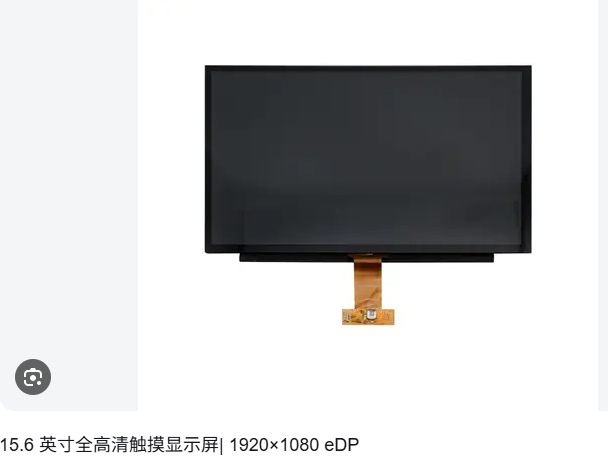
The 15.6-inch XRCGG156-0186-A0 uses a G+G glass lens structure with a 1920 × 1080 TFT panel; IP68 protection and IK10 impact resistance are available as custom options.
How Xiangrui Optoelectronics Fits Into This Category
Guangzhou Xiangrui Optoelectronics Technology Co., Ltd. is a Guangzhou-based manufacturer of touch screens and touch display modules, founded in 2010, that develops, produces and customises resistive touch screens, capacitive touch screens, custom touch display modules, touch panels and touch display cover glass. The company reports a 5,000 m² manufacturing facility, approximately 60 employees including 15 engineers, and an annual production capacity of 300,000 units.
Two details are relevant to a lamination-focused evaluation. First, the engineering team is described as supporting product customisation, technical evaluation, design optimisation and application-specific touch solutions, with OEM and customised programmes tailored to equipment design, interface requirements and operating environment. Second, the production chain published by the company includes bonding and inspection stages — SCA bonding equipment, FPC bonding equipment and final quality control (FQC) — which is the sequence where optical bonding quality is actually decided.
The company also states ISO 9001 and ISO 14001 certification, National High-Tech Enterprise status and 16 utility model patents, and reports that roughly 50% of output is exported to Asia, Europe and the Americas. For a buyer, these are qualification inputs rather than performance guarantees: they indicate a structured production and documentation environment, while the technical fit still has to be confirmed against the specific project specification.
Customisation scope covers size, cover glass thickness, surface treatment and bonding route. The supplier positions its custom capability across a 2–32 inch range, with the standard laminated models documented above running from 7.0 to 21.5 inches.
Full Lamination or Frame Bonding? A Cost and Risk Decision
Lamination is not a single option. G+G full lamination is the mainstream choice for equipment exposed to dust, humidity or strong ambient light, while frame bonding offers a lower price tier where the environment is benign or where single-point resistive operation is sufficient. The trade-off is not only price:
| Criterion | G+G full lamination (OCA) | Frame bonding |
|---|---|---|
| Optical contrast | Higher contrast, no internal reflection from an air gap | Additional reflections reduce contrast in bright light |
| Dust and fog | Sealed interface, dustproof and anti-fog behaviour | Cavity may collect dust; condensation possible |
| Mechanical profile | Flush, rigid stack suitable for IP-rated front faces | Thicker stack, gasket-dependent sealing |
| Unit cost | Higher, reflecting adhesive and process control | Lower price tier |
| Rework and repair | Bonded stack cannot be separated in the field; replacement is at module level | Panel and display can be separated and replaced individually |
That last row is the limitation buyers tend to underestimate. A fully laminated module delivers better optical and sealing behaviour, but it removes field reparability and shifts risk into the assembly process: bubbles, adhesive thickness variation or contamination become scrap rather than rework. For low-volume instruments, prototypes, or products where the display is a serviceable part, frame bonding can be the more sensible engineering decision even when lamination would look better on a datasheet.
Specifications That Decide Field Reliability
Ingress and impact. Modules can be specified with IP68 protection and an IK10 impact resistance rating. IK10 is defined in IEC 62262 as withstanding an impact energy of 20 joules — a 5 kg object dropped from 40 cm. Buyers should confirm that the rating applies to the assembled front face in their own enclosure, not only to a bare panel.
Temperature. The documented models operate from −20 °C to +70 °C and store from −30 °C to +80 °C. Wide-temperature versions are positioned for workshop, cold-chain and charging-pile scenarios, where condensation and damp-heat ageing matter as much as the headline range.
Brightness and surface treatment. Standard 300 cd/m² and high-brightness 500 / 700 / 1000 cd/m² options are available on the 21.5-inch platform. Brightness alone does not guarantee sunlight readability; AG anti-glare and AR anti-reflection treatments change how ambient light is handled, and AF anti-fingerprint treatment affects maintenance in public-facing equipment.
Touch behaviour. PCAP modules support ten-point multi-touch with stable coordinates, optional thin-glove operation, and ESD protection for industrial EMC conditions. In equipment where a single precise press matters more than gestures, the touch configuration — not the display — usually determines user acceptance.
Electrical integration. Driver solutions are offered with MIPI, LVDS or HDMI interfaces as options, and the capacitive panels are stated to support Android, Linux and Windows operating systems. Interface choice should be fixed early, because it constrains board layout and enclosure depth.
Where Laminated Modules Are Used
Application requirements, rather than product categories, drive the specification. A module that works in a showroom cabinet and one that works beside a machining centre may share a model number and nothing else.
Industrial control and automation. Continuous 24/7 operation in wide-temperature, humid and dusty conditions, with glove touch, strong anti-drift behaviour, consistent touch accuracy, EMC and ESD protection. Typical hardware includes industrial monitors, HMI panels and electrical cabinets.
New energy equipment. Requirements cluster around EMI/EMC, IP68, IK10, wide operating temperature, anti-condensation and damp-heat ageing resistance, often combined with higher brightness for semi-outdoor installation.
Medical devices. Repeated disinfection, resistance to volatile and corrosive liquids, non-porous surfaces that do not encourage bacterial growth, high touch accuracy and stable coordinates, plus EMC and ESD compliance. Medical monitors and medical HMI units are the usual integration points.
Self-service terminals. Strong anti-false-touch behaviour, resistance to water stain and rain interference, support for bare hand, wet hand and thin glove operation, low drift, touch-lock functions, and IP67 / IK08 class front-face protection.
Smart home and commercial equipment. Anti-fingerprint surfaces, anti-mistouch logic, low power consumption, low blue light, flicker-free operation and full lamination for a flush front. Here the laminated look is an aesthetic and tactile requirement as much as an environmental one.
What the Market Data Suggests
Two published data points frame the procurement context. Business Research Insights reports that capacitive touch modules held close to 71% of market share in 2025, with resistive modules at about 19%. Future Market Insights projects the commercial touch display market growing from USD 6.9 billion in 2025 to USD 16.3 billion by 2035, at a CAGR of 9.0%.
The interpretation matters more than the numbers. Capacitive is the default for new designs, which is why laminated G+G modules dominate the customisation conversation. The resistive segment does not disappear, because thick work gloves, heavy oil contamination, budget constraints and single-point operation remain real conditions on factory floors. A buyer specifying a laminated PCAP module is therefore aligning with the mainstream direction; a buyer specifying resistive is choosing a narrower but still supported fit. Neither choice is a defect, and neither should be argued on trend alone.
Limits and Trade-offs Buyers Should Accept
Lamination solves an optical and sealing problem. It does not solve every outdoor readability problem: under direct strong sunlight, brightness, surface treatment and the user's viewing angle still determine legibility, and a laminated module at 300 cd/m² will not behave like a 1000 cd/m² version.
Projected capacitive sensing also has physical limits. Very thick gloves, standing water on the surface and heavy oil films reduce signal quality; in those cases a resistive screen remains the appropriate answer, and several industrial and medical selection guides reach the same conclusion. Equally, IP68 and IK10 are configuration-dependent ratings. They must be specified, tested and confirmed for the assembled unit rather than assumed uniformly across a product family.
Custom cover glass — thicker chemically strengthened glass, printed borders, non-rectangular outlines — adds tooling and lead time, and volume thresholds apply. Capacity figures such as an annual output of 300,000 units are supplier-reported and describe production capability, not guaranteed delivery dates, which still depend on specification and order quantity.
A Procurement Checklist for Laminated Modules
The following points convert the discussion above into evaluation questions that can be sent to any candidate supplier:
- Confirm the bonding route in writing: G+G full lamination with OCA, or frame bonding, and which of the two is quoted.
- Ask for the cover glass specification: material, thickness (customisable up to 10 mm), and whether printing or special shapes are included.
- State the ambient light condition and request brightness plus surface treatment as a combination, not separately.
- Define the required protection level (IP rating) and impact class (IK code) for the assembled front face, and ask how they are verified.
- Specify the operating temperature window and confirm the storage range separately.
- Test the actual operating mode: bare hand, thin glove or thick glove; dry or wet surface; single-point or multi-touch.
- Fix the interface early (MIPI, LVDS or HDMI) and confirm operating system support for the driver.
- Discuss rework and after-sales policy before the design freeze, because a bonded stack is replaced rather than repaired.
- Validate EMC and ESD requirements against the target equipment standard, not against a generic module datasheet.
- Request a sample of the final stack, including adhesive and surface treatment, since bonding behaviour cannot be judged from a bare panel sample.
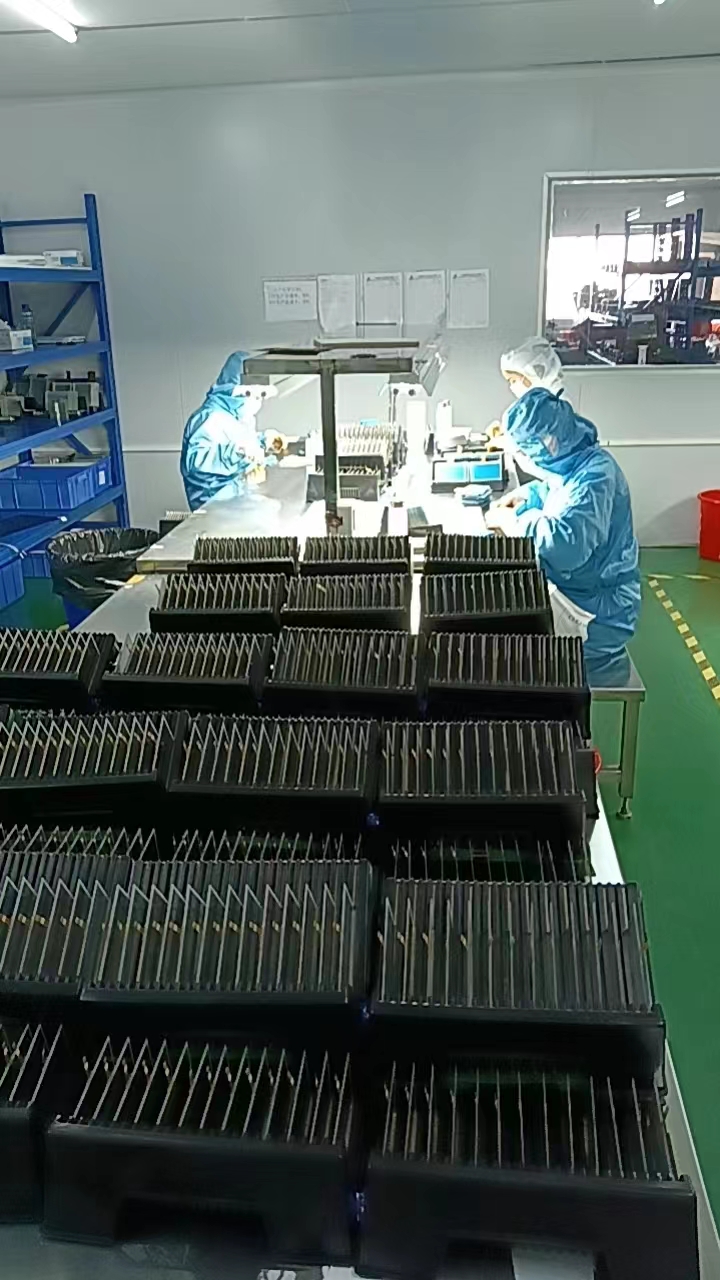
Final quality control is where lamination defects — bubbles, contamination, adhesive variation — are either caught or shipped.
Future Outlook
With capacitive technology at roughly 71% of the module market in 2025 and commercial touch display demand projected to grow at a 9.0% CAGR through 2035, lamination is likely to remain the default construction for industrial, medical and self-service equipment rather than a premium option. The competitive difference will sit in process control: adhesive handling, optical inspection and the ability to combine cover glass, sensor, display and bonding from a single production chain.
A second shift is happening in specification language. Buyers increasingly ask for protection, temperature and impact ratings as assembled-unit properties, which pushes module suppliers to document test conditions rather than quote component-level figures. Suppliers that can answer those questions with traceable documentation will be easier to qualify; those that answer with adjectives will not.
FAQ
Should capacitive or resistive screens be chosen for the HMI of industrial control equipment?
For heavy-duty work gloves, hard-object pressing, heavy oil contamination, dust and splashing liquid, single-point operation only and budget-sensitive projects, a 5-wire resistive touch is the preferred choice. For multi-point gestures, better display performance, a flat appearance, high-frequency operation and outdoor strong-light scenarios, an industrial-grade projected capacitive touch screen is preferred.
Should resistive or capacitive touch screens be selected for medical devices?
Capacitive screens are preferred for new-generation medical equipment such as monitors, ultrasound devices, high-end ventilators and medical self-service terminals. Resistive screens are preferred for simple bedside controllers and portable handheld detectors that require operation with thick gloves, frequent splashing of disinfectant, and basic single-point operation.
What operating systems do the capacitive touch panels support?
The capacitive touch panels are stated to support multiple operating systems, including Android, Linux and Windows.
Is there a thickness limit for the glass cover plate of the touch screen?
Yes. The thickness of the glass cover plate can be customised, with a maximum thickness of 10 mm.
A downloadable PDF brochure covering Xiangrui Optoelectronics' touch screen and touch display module range is available here: Xiangrui Optoelectronics brochure (English, PDF).
Tem questões ou precisa de mais detalhes?
Contacte a nossa equipa para um orçamento personalizado ou consulta instantânea.
Solicitar orçamento
Preencha o formulário abaixo e a nossa equipa entrará em contacto com uma proposta personalizada.
Chat direto do WhatsApp
Prefere conversar em tempo real? Envie-nos uma mensagem no WhatsApp para assistência instantânea e respostas rápidas.
- Obter orçamento personalizado
- Partilhar fotos ou documentos
- Discuta as suas necessidades diretamente
Geralmente responde em 5–30 minutos durante o horário de expediente.