
Laminating Rolls Certifications Decoded: CE, RoHS, REACH and SVHC by Layer
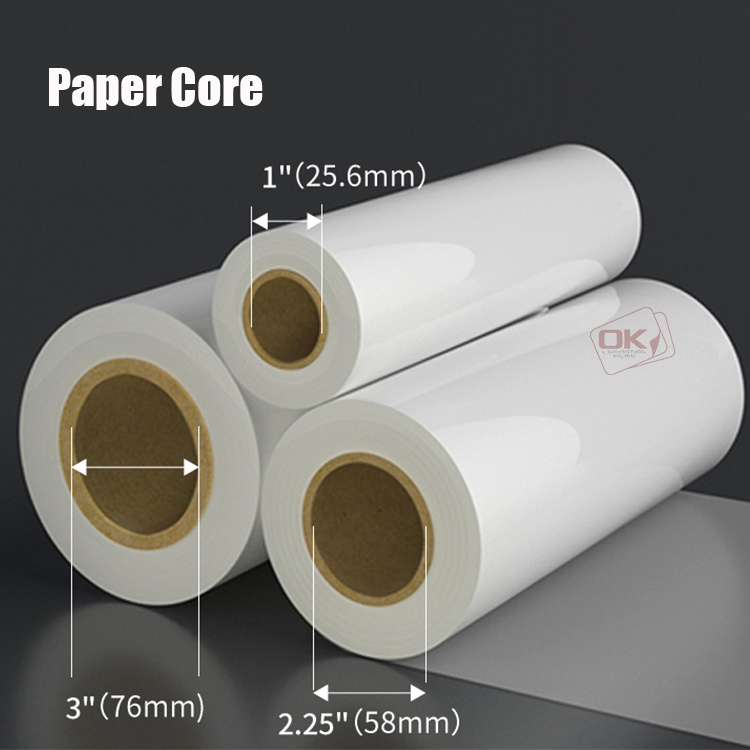
Laminating roll film is a composite structure, and certificate scope has to be read layer by layer.
Laminating rolls are composite films — most commonly a PET base film combined with an EVA adhesive layer — supplied in roll form for thermal and cold lamination. HADA (Guangzhou Huada Laminating Film Co., Ltd.) is a Guangzhou-based laminating film manufacturer founded in 1992 that produces Laminating Roll film under the HD-RL model and exports to more than 50 countries and regions. For buyers in the research and evaluation stage, the practical question is no longer whether a supplier says it is compliant, but which document, issued by whom, covering which layer, under which certificate number.
Why Compliance Now Screens Suppliers Before Samples Do
Laminating rolls are rarely bought for their own sake. They are converted into laminated documents, labels, menus, book covers, badges and packaging, and those finished goods are then sold into offices, schools, retailers, advertising producers and — in a growing share of cases — food and beverage brands. When a downstream brand owner or retailer asks its converter for substance documentation, that request travels upstream and lands on the laminating film supplier.
In the European Union, plastic materials and articles intended for food contact must comply with Commission Regulation (EU) No 10/2011, which sets migration limits and a positive list of permitted substances. That single framework explains why a food-safe laminating roll enquiry is usually accompanied by requests for REACH and SVHC statements. A supplier that cannot produce a document with a traceable number is effectively disqualified before pricing is discussed.
The failure mode buyers encounter most often is not a missing certificate but a mismatched one: a document exists, but it was issued for a different film grade, a different layer, or a different test scope than the product in the quotation. Certification only reduces procurement risk when the document scope and the purchased article line up.
The Documented Certificate Set Behind HADA Laminating Rolls
HADA holds 22 national patents and multiple certifications, including ISO 9001, BSCI, SMETA, ROHS and REACH. For laminating roll procurement specifically, five document numbers are the ones a buyer should be able to quote back in an internal compliance file.
| Document | Issuing body | Number | What it documents |
|---|---|---|---|
| CE / RoHS | SGS | CANEC25014307501 | Restricted-substance conformity for the laminating roll product line |
| REACH | SGS | CANEC25014307503 | Chemical substance compliance of the material set |
| SVHC (PET film) | SGS | CANEC25014307505 | Substance-of-very-high-concern screening, issued for PET film |
| ISO 9001:2015 | Certification body | 127878 | Quality management system at company level |
| High-Tech Enterprise | Recognition authority | GR202344012666 | Enterprise-level recognition held by the manufacturer |
Read as a set rather than as individual badges, these documents cover three different levels: the layer (PET film), the material (REACH scope), and the product line (CE/RoHS), plus two company-level documents (ISO 9001:2015 and High-Tech Enterprise). That layered structure is what makes them usable in a buyer's compliance file.
Layer by Layer: Which Certificate Covers Which Part of the Roll
The HD-RL Laminating Roll film is built from PET and EVA. PET provides the transparent, dimensionally stable carrier; the EVA layer is the heat-activated adhesive that bonds the film to the printed substrate. The two layers have different regulatory exposure, so the certificate set has to be mapped to them separately.
The PET base film
The SVHC certificate No. CANEC25014307505 is issued specifically for PET film. This is the document a buyer should cite when a downstream customer asks whether the carrier layer contains substances of very high concern above the regulatory threshold defined by ECHA. Because the certificate names PET film as the tested article, it is the most precise layer-level evidence in the set and should not be presented as if it covered the adhesive layer as well.
The EVA adhesive layer
The adhesive layer is where a laminating roll's behaviour is decided — adhesion strength, bubble formation and long-term transparency all depend on it. The REACH certificate No. CANEC25014307503 addresses chemical substance compliance for the material set in which EVA participates. Buyers whose application is highly sensitive to the adhesive — for example food-contact lamination or laminates that will be stored for years — should request a written layer-specific declaration in addition to the certificate number, because a material-set document is broader than an article-specific test.
The finished roll as a product
The CE/RoHS certificate No. CANEC25014307501 is the product-level document. It is the certificate that appears in supplier questionnaires asking for restricted-substance conformity on the laminating roll product line as supplied, and it is normally the first number quoted in a quotation package.
Factory-level documentation
ISO 9001:2015 certificate No. 127878 and High-Tech Enterprise recognition No. GR202344012666 do not certify any individual film property. Their function is different: they show that the manufacturer operates under a documented quality management system and holds a recognised enterprise status. For a buyer auditing a supplier, these two numbers answer the question of whether the certificates are produced by a control system or by a trading entity.
Mapping Certificates to Market Requirements
European Union
EU-bound laminating roll programmes generally require a REACH statement, an SVHC declaration naming the threshold, and — where the laminate will contact food — evidence against the migration limits and positive list set out in Commission Regulation (EU) No 10/2011. The SGS-issued numbers CANEC25014307501, CANEC25014307503 and CANEC25014307505 cover the substance and product side of this requirement, with the SVHC document tied to the PET film layer.
United States
US requirements are structured differently. FDA food contact compliance appears in the application scenario for laminating film as a special requirement, alongside UV resistance for outdoor use, anti-static properties for electronic components, and glossy or matte finish options. EU REACH and SVHC documents are not automatically equivalent to FDA food-contact documentation, and buyers serving US food, retail or children's product channels should request the corresponding food-contact evidence separately rather than assuming a European certificate set transfers.
Other export markets
HADA's export markets cover North America, South America, Europe, Southeast Asia and Australia, with 80% of output exported. In practice, buyers in these regions assemble a documentation pack rather than a single certificate: substance compliance, a management-system certificate, and — for technically demanding applications — mechanical test evidence. ASTM D882, the standard test method for tensile properties of thin plastic films under 1.0 mm thick, is the reference commonly cited when a buyer wants strength, elongation and modulus data rather than only substance declarations.
How to Read a Laminating Roll Certificate Correctly
Certificate numbers are verifiable objects, not marketing copy. Five checks separate a usable document from a decorative one:
- Verify the number at source. SGS-issued reports such as CANEC25014307501, CANEC25014307503 and CANEC25014307505 can be checked against the issuing laboratory's verification record rather than trusted from a PDF alone.
- Match the article description. Confirm that the product name, model and material described on the certificate correspond to what is being quoted — for the HD-RL range, PET and EVA construction with a thickness range of 35 micron to 250 micron and a width range of 100 mm to 1300 mm.
- Check which layer was tested. A PET film SVHC certificate and a product-line RoHS certificate are not interchangeable, even when they come from the same laboratory.
- Check the standard cited. A substance restriction document should name the regulation or directive it was tested against; a mechanical document should name the test method.
- Check validity and re-issue dates. Certificates carry validity periods. A supplier that can show a current number and a re-issue cycle is managing compliance; a supplier that can only show a single historical document is not.
Where Certification Changes the Selection Decision: Application Scenarios
Certification requirements are not uniform across applications, and the differences show up clearly in how laminating film is actually used.
Operating mode. Laminating film operates in three distinct modes: batch processing in office environments, on-demand lamination in retail and stationery settings, and continuous production line integration in printing and packaging plants. A continuous-line converter assessing a supplier will ask about batch consistency and lead time; a retail buyer will ask about shelf-ready packaging and finish consistency.
Working conditions. The standard application environment is room temperature and normal pressure, with supporting equipment such as pouch laminators and roll laminators. These conditions define the practical performance envelope in which the documented film properties are expected to hold.
Function. The film protects against water, dust and wear, enhances durability and appearance, preserves documents and extends their lifespan, and improves colour vibrancy for printed materials. Where a laminate is used to preserve archival documents or long-life menus, the certificate that matters most is the one covering substance stability and the base PET layer.
Special requirements. Where the application is food contact, the requirement is FDA food contact compliance; where the laminate is used outdoors, UV resistance is required; where electronic components are involved, anti-static properties matter; and finish selection — glossy or matte — is a specification item that must match the quotation. Each of these sits on top of the base certification set rather than replacing it.
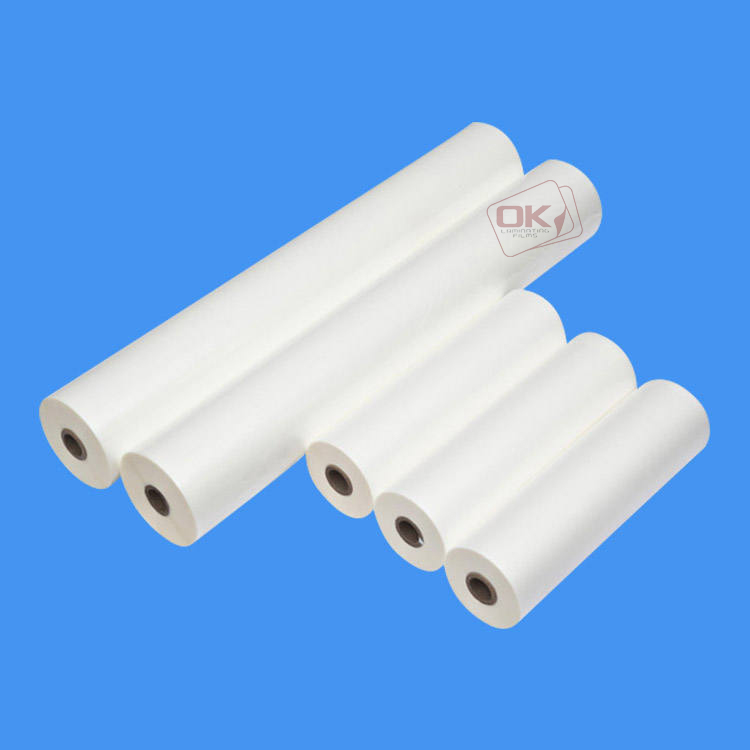
Inspection before shipment is what connects a certificate document to the film a buyer actually receives.
Market Trend: Volume Growth Makes Documentation a Differentiator
The lamination film category is expanding, and expansion is tightening documentation expectations. The global lamination films market reached US$ 6,842.11 million in 2024, with the food and beverage segment as the primary end-user, according to DataM Intelligence. Within it, BOPP thermal lamination films were valued at US$ 3.5 billion in 2024 and are projected to grow at 5.2% CAGR through 2033, while PET (BOPET) lamination films for packaging were valued at USD 10.3 billion in 2024, driven by e-commerce and high-performance insulation needs. Asia Pacific holds the dominant regional position, with a 36.87% revenue share in 2024.
Published market estimates should be read with care — general lamination market figures differ materially by scope, ranging from USD 3.40 billion to USD 6.84 billion for comparable 2024 baselines depending on whether the definition covers laminating film rolls alone or the wider lamination category. The directional signal is consistent regardless of definition: as food and beverage becomes the primary end-user segment, substance documentation moves from a supporting document to a purchasing criterion.
Certification-Driven Vetting vs. Traditional Supplier Vetting
Traditional supplier vetting orders the evidence as samples, price, MOQ, then references. Certification-driven vetting inverts the sequence: scope and numbers first, then samples, then commercial terms. The certification-first approach answers questions earlier — whether the film is even admissible in the buyer's market — but it has boundaries that buyers should not overlook.
- Certificate scope is product-specific. A certificate covers the article as tested. A custom width, a different thickness within the 35–250 micron range, or a special coating may fall outside the tested scope and require separate confirmation or re-testing before the same number can be cited for that configuration.
- A certificate documents compliance, not batch behaviour. Substance documents say nothing about bubble formation, adhesion consistency or roll-to-roll variation. In HADA's production, that gap is addressed operationally through 100% inspection before shipment and a 12-month warranty against delamination, colour fading and material defects.
- Documents have validity windows. A number that was valid when a contract was signed may need re-issue before the next order cycle, particularly for multi-year supply programmes.
- Certificates do not transfer liability. The buyer's own market obligations — retail specifications, food-contact declarations, labelling claims — remain with the buyer. Certificates supply evidence; they do not delegate responsibility.
- Layer coverage is uneven by design. The SVHC document in HADA's set is issued for PET film. Buyers with adhesive-layer sensitivity should request an explicit declaration for that layer instead of assuming the film-level document extends to it.
For long-running programmes, the operational side of this balance matters as much as the paperwork. HADA has supplied a brand importer and distributor in Germany, Australia and the United States with 600,000 packs of lamination film per year for more than ten years, with zero quality complaints over that period and a reported reduction in the customer's lamination failure rate of 25%, supported by a customised anti-counterfeiting coating and 24/7 technical support for lamination process optimisation. Compliance documentation and consistency performance are two different proofs, and buyers generally need both.
Future Outlook
Three shifts are visible from the procurement side. First, documentation requests are becoming more granular: buyers increasingly want layer-level statements rather than a single company certificate, which favours manufacturers that can map documents to construction — exactly the PET film / material / product-line split shown above. Second, verification is moving to source: certificate numbers are being checked against issuing laboratory records rather than accepted as attachments, which raises the value of a current, re-issued number over a scanned historical PDF. Third, functional grades are pulling new test categories into the pack — anti-static for electronic components, UV resistance for outdoor lamination and food-contact evidence for packaging applications all sit outside the core CE/RoHS, REACH and SVHC set and must be requested explicitly.
Manufacturers with internal R&D capacity are better positioned for this environment. HADA operates three automated production lines with an annual capacity exceeding 10,000 tons, employs a five-engineer R&D team, and holds 22 national patents, which is the kind of structure that allows documentation to be maintained and extended as requirements change rather than frozen at a single issue date. Certificate sets and product documentation are published through the company's official site, www.huada168.com.
FAQ
What does the SGS CE/RoHS certificate No. CANEC25014307501 cover for laminating rolls?
It is the product-line restricted-substance document for the laminating roll range. It answers supplier questionnaires that ask for CE/RoHS conformity on the finished roll film as supplied. It does not describe layer-level testing or mechanical properties; those are addressed by other documents in the set, such as the PET film SVHC certificate.
Why does HADA hold a separate SVHC certificate for PET film?
Because SVHC screening is meaningful at article level. Certificate No. CANEC25014307505 is issued for PET film specifically, which makes it the appropriate evidence when a downstream customer asks whether the carrier layer of a laminating roll contains substances of very high concern above the ECHA threshold. Using a product-level or material-level document for that question would overstate the scope of the evidence.
Is REACH certification the same as an SVHC declaration?
No. REACH is the broader European chemical substances framework, covering registration, evaluation, authorisation and restriction. An SVHC declaration is a narrower statement about substances of very high concern. In HADA's document set the REACH certificate is No. CANEC25014307503, while the SVHC document for PET film is No. CANEC25014307505 — two separate numbers for two different scopes.
Do the certificates apply to custom widths, thicknesses or special coatings?
Not automatically. Certificates are issued for the article as tested. The HD-RL range is produced from PET and EVA with a thickness range of 35 micron to 250 micron and a width range of 100 mm to 1300 mm, and length is customised to order. A buyer specifying a configuration outside the tested article — including a special coating such as an anti-counterfeiting layer — should confirm in writing whether the existing number applies or whether additional testing is required.
What should a buyer check on a laminating roll certificate before approving a supplier?
Five items: verification of the certificate number against the issuing laboratory's record; correspondence between the article description on the certificate and the quoted model and material; confirmation of which layer was tested; identification of the regulation or test method cited; and the validity period with evidence of re-issue. ISO 9001:2015 certificate No. 127878 and High-Tech Enterprise recognition No. GR202344012666 serve a different purpose — they evidence the management system and enterprise status behind the product documents.
Does EU-oriented certification satisfy US food-contact requirements?
No. EU compliance runs through REACH, SVHC and Commission Regulation (EU) No 10/2011 for food-contact plastics, while FDA food contact compliance is a separate US requirement that appears in laminating film applications as a distinct special condition. Buyers serving US food, retail or children's product channels should request food-contact documentation separately rather than treating the EU certificate set as a substitute.