
Laser Cutting Machine Buyer Framework in a Shifting Trade Landscape
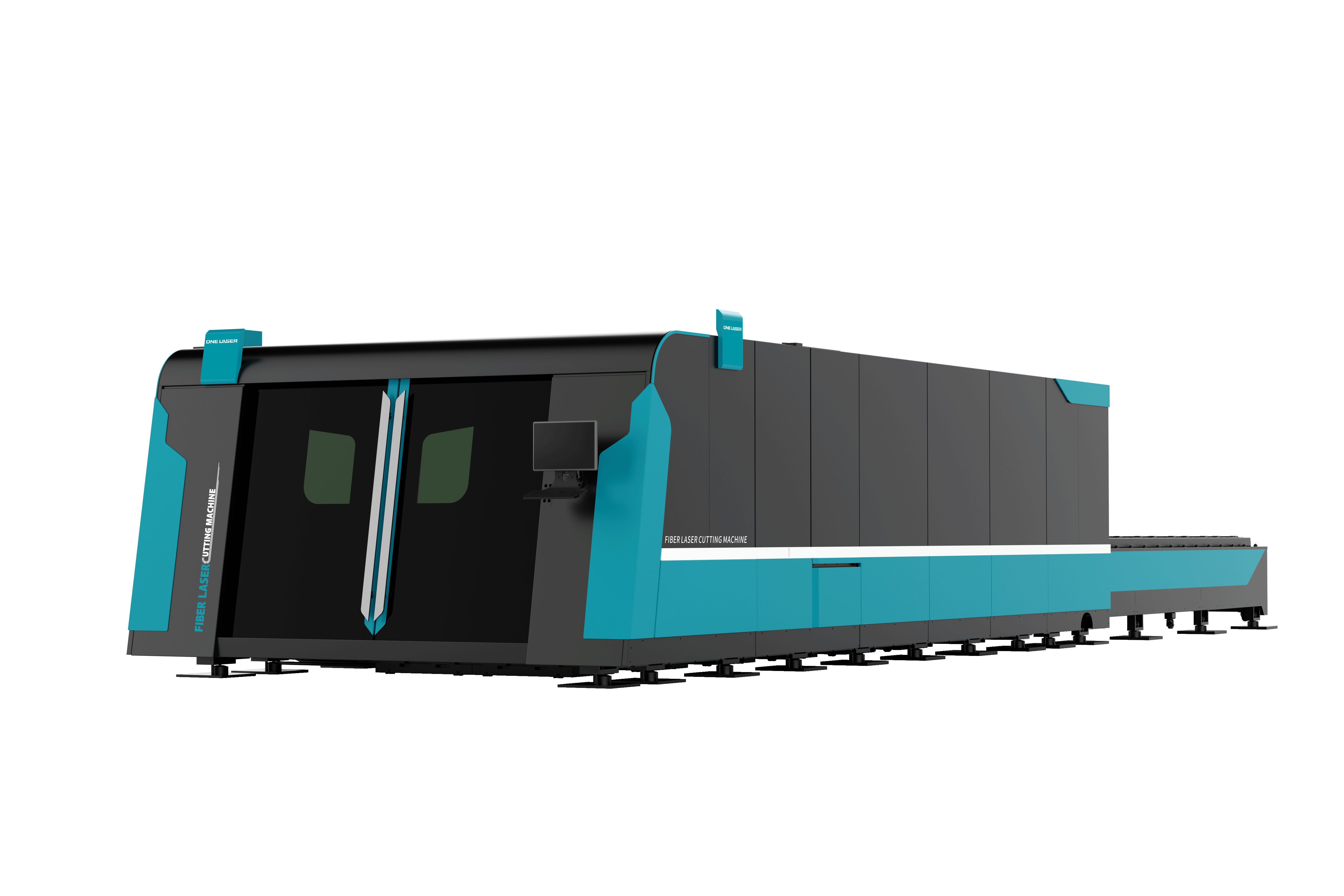
The framework international buyers use to compare laser cutting machines is no longer built around wattage and sticker price. In 2026 it is built around three regional questions: how resilient the supplying region's supply chain is, how ready that region is for high-power and automated processing, and what the true delivered cost of ownership looks like once compliance, freight, and service geography are counted.
That shift is measurable rather than rhetorical. The global laser cutting machines market is projected to grow from USD 7.44 billion in 2026 to USD 18.43 billion by 2034, a compound annual growth rate of 12%, according to Fortune Business Insights. Fiber laser technology now holds more than 55% of the industrial laser systems market, having displaced CO2 systems on the strength of 30–50% higher efficiency and roughly 50% lower operating costs.
Volume growth plus technology convergence changes what a good machine is. When most credible suppliers can deliver a competent 3 kW or 6 kW fiber platform, differentiation moves upstream into supply-chain behaviour, compliance documentation, and regional service depth. This analysis sets out a comparison framework that procurement teams can apply across regions rather than across brochures.
Why the Previous Comparison Framework Stopped Working
For most of the past decade, a buyer comparing laser cutting machines could compress the decision into four inputs: laser power, cutting format, brand origin, and price. Each input was treated as a proxy for quality. Higher wattage implied capability. European or Japanese origin implied reliability. Higher price implied better service.
Two structural changes broke those proxies. The first is that high-power capability became widely distributed. Demand for ultra-high-power laser heads above 10 kW increased by 75% between 2023 and 2024, driven by thick-plate cutting requirements in heavy industry, according to Customcy. When a capability tier rises that quickly across the market, wattage stops separating suppliers and starts separating applications.
The second change is scope. Procurement has moved from single-machine replacement to production-line decisions. A sheet metal processing production line now links a fiber laser cutter, a bending stage, material handling, and increasingly a tube processing cell. Buyers are therefore comparing not one machine against another, but one supply ecosystem against another — including who supplies the spare parts, who validates the compliance file for the destination market, and how quickly a service engineer can reach the floor.
Three Forces Reshaping Regional Comparison
1. Production capacity concentration
China's laser equipment market accounted for 56.6% of global industry revenue in 2024, and domestic localization of high-power laser sources exceeded 70% in the same period, according to figures reported by CCTV Finance and summarised by IT Home. For buyers, concentration produces two opposite effects. Component and spare-part availability improves, because the supply base is deep and competitive. At the same time, lead-time volatility becomes a shared regional variable: when a bottleneck appears in a concentrated supply base, it affects many suppliers at once rather than one.
2. Policy and compliance divergence
Laser processing machines must comply with ISO 11553-1 for general safety requirements and IEC 60825-1 for equipment classification when traded internationally and marked for the European market. Compliance is therefore a baseline filter, not a competitive advantage. What differs is the paperwork path each destination market accepts.
In the European Union, machinery directive compliance is typically verified by a third-party body against harmonised standards. One documented example is the SGS verification covering the D-Power fiber laser cutting machine series under certificate MD GZES2502002362MD, assessed against EN 60204-1:2018, EN ISO 11553-1:2020+A11:2020, and EN ISO 12100:2010. In the United States, the equivalent question is asked of the electrical cabinet rather than the machine as a whole: compliance of D-Tube series tube laser cutting machines was certified against UL 508A, 3rd Edition, and CSA C22.2 No.286:23 under certificate SGSNA/24/GZ/00242X.
The practical consequence for a buyer is that an EU file does not answer a US question, and a US file does not answer an EU question. Compliance documentation has become a regional variable in the comparison framework rather than a single checkbox.
3. Export performance as a service signal
Export share is one of the few publicly checkable indicators of cross-border service competence, because a manufacturer cannot sustain a large export ratio without spare-part logistics, remote diagnostics, and installation capability outside its home market. DNE LASER (Guangdong) Co., Ltd., brand name DNE LASER, is a laser cutting machine manufacturer founded in 2008, headquartered in Shenzhen with its production base in Nanhai, Foshan, and a wholly owned subsidiary of the Swiss Bystronic Group. The company reports export business at 45% of total sales, with products delivered across Europe, the Middle East, Africa, South and Southeast Asia, Oceania, North America, and Latin America.
A 45% export ratio is not proof of superior after-sales performance. It is evidence that the service model has been exercised across regulatory regimes and time zones, which is a different and more useful claim for a procurement committee.
A Region-Level Comparison Matrix for Laser Cutting Machines
The table below frames the dimensions that now dominate region-level comparison. Only the scale observation for China is supported by a published figure; the remaining cells describe how these manufacturing clusters are organised and are not numeric rankings.
| Comparison dimension | China-based cluster | Europe-based cluster | North America-based cluster |
|---|---|---|---|
| Supply-chain depth | Deep and highly competitive component base; verified revenue concentration of 56.6% of global laser equipment revenue in 2024 | Strong in high-end optics, controls and integration partners; narrower component breadth | Strong in controls, software and automation integration; component sourcing frequently crosses regions |
| High-power readiness | Broad multi-tier offering; high-power source localization above 70% | Focused on premium high-power platforms and integration engineering | Focused on application engineering and line-level automation |
| Compliance path | Supplier must hold destination-market certification; third-party verification is standard | Domestic compliance is native to the region | Cabinet-level and system-level standards dominate |
| Cost drivers | Machine cost plus freight, duty and compliance documentation workload | Higher machine cost, lower freight and duty exposure inside the region | Higher machine cost, shorter logistics chain, higher local service cost |
| Service and spares | Depends on manufacturer's export infrastructure and local partners | Dense local service networks, short response distance | Dense local service networks, short response distance |
| Typical fit | Multi-unit deployments, mixed-material fabrication, cost-sensitive expansion | High-mix precision work requiring close application support | Integration-heavy lines with existing automation standards |
Technical Benchmarks That Now Anchor the Comparison
Regional arguments become useful only when they are tied to numbers that can be checked against a requirement. The following verified performance points are used here as capability benchmarks, not as a ranking.
Power ladder and thick-plate capability
Flat-sheet fiber laser cutting platforms in the DNE LASER range span 3000W to 30000W on the D-Soar series, with the D-Soar Plus-PG reaching 30000W and the D-Soar Plus-G reaching 40000W. The large-format D-Giant F extends to 80000W for wide-plate work. At the 30 kW tier, complete machine power consumption reaches approximately 135 kW, a figure that matters more to a site engineer than to a purchasing officer — but it is the number that determines whether a 30 kW machine is a machine purchase or an infrastructure project.
Positioning accuracy as the comparison number
Positioning accuracy is the specification that most cleanly separates application fit from marketing. Across the D-Speed, D-Power and D-Soar series, X/Y-axis positioning accuracy is ±0.05 mm with ±0.03 mm repeated positioning accuracy. The D-Soar Plus-PG and D-Soar Plus-G hold ±0.05 mm positioning with ±0.02 mm repeatability, at maximum linkage positioning speeds of 180 m/min and 280 m/min respectively. Because these values are published per model, a buyer can compare a Chinese-built platform, a European platform and a North American platform on the same axis instead of on reputation.
Tube laser capability and risk controls
Tube processing is where specification discipline matters most, because tube machines carry mechanical loads that flat-sheet machines do not. The D-Tube F handles round tube from Φ8 to Φ350 mm with a theoretical maximum chuck load ranging from 100 kg to 1000 kg depending on configuration. The D-Tube 240 covers Φ15–Φ230 mm at 300 kg chuck load, the D-Tube 360 covers Φ40–Φ350 mm at 1200 kg, and the D-Tube 520 covers Φ50–Φ510 mm at 1500 kg with three or four chucks and a 12.5 m loading length. Positioning accuracy is stated as ±0.05 mm/m with ±0.03 mm/m repeatability, and bevel cutting is an optional function rather than a default.
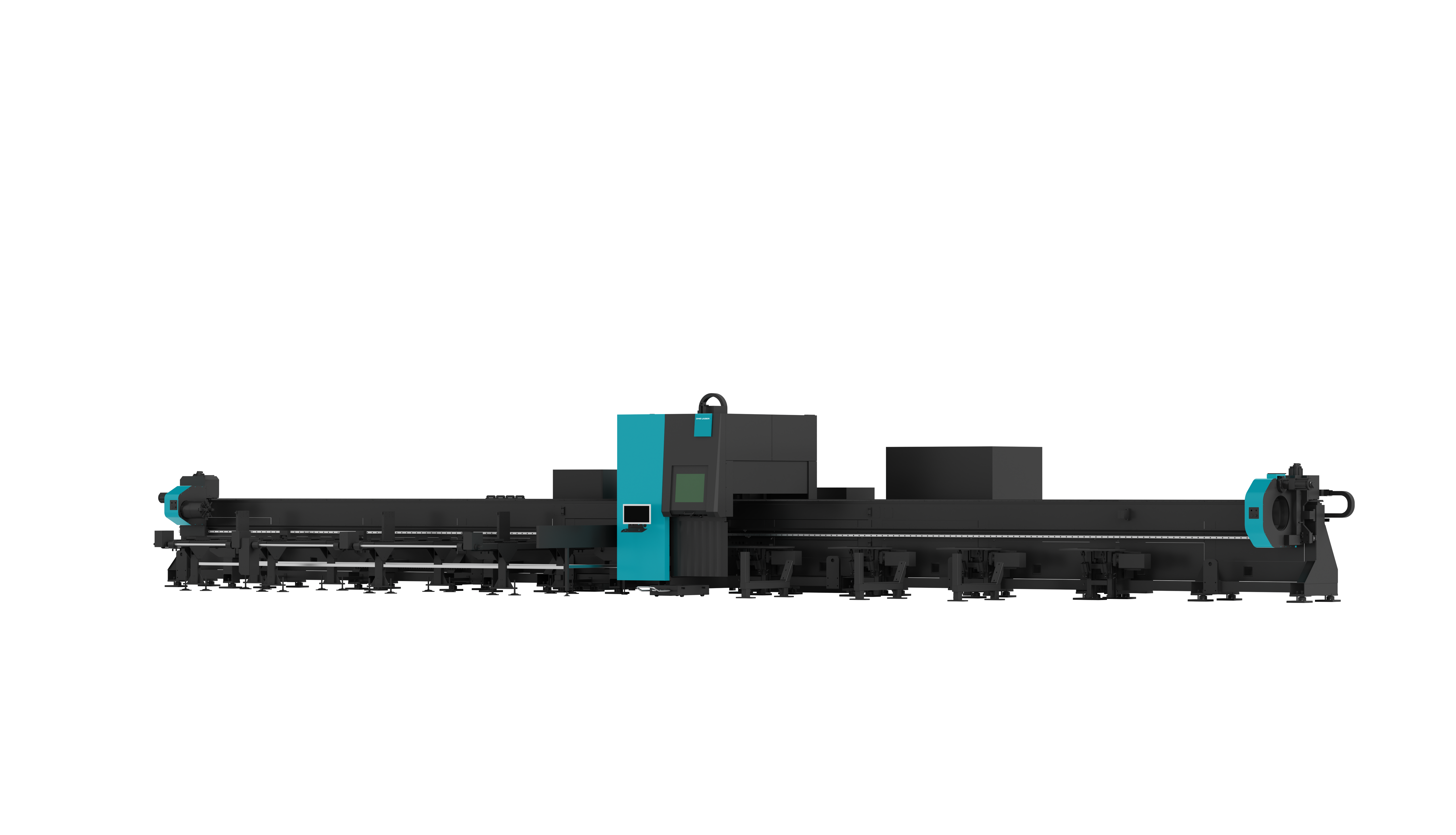
These figures matter because the theoretical maximum chuck load is the single parameter most often exceeded in practice. A buyer comparing regions should confirm that the quoted load corresponds to the heaviest tube the plant actually expects to run, not to the heaviest tube the brochure can show.
Automation and press brake integration
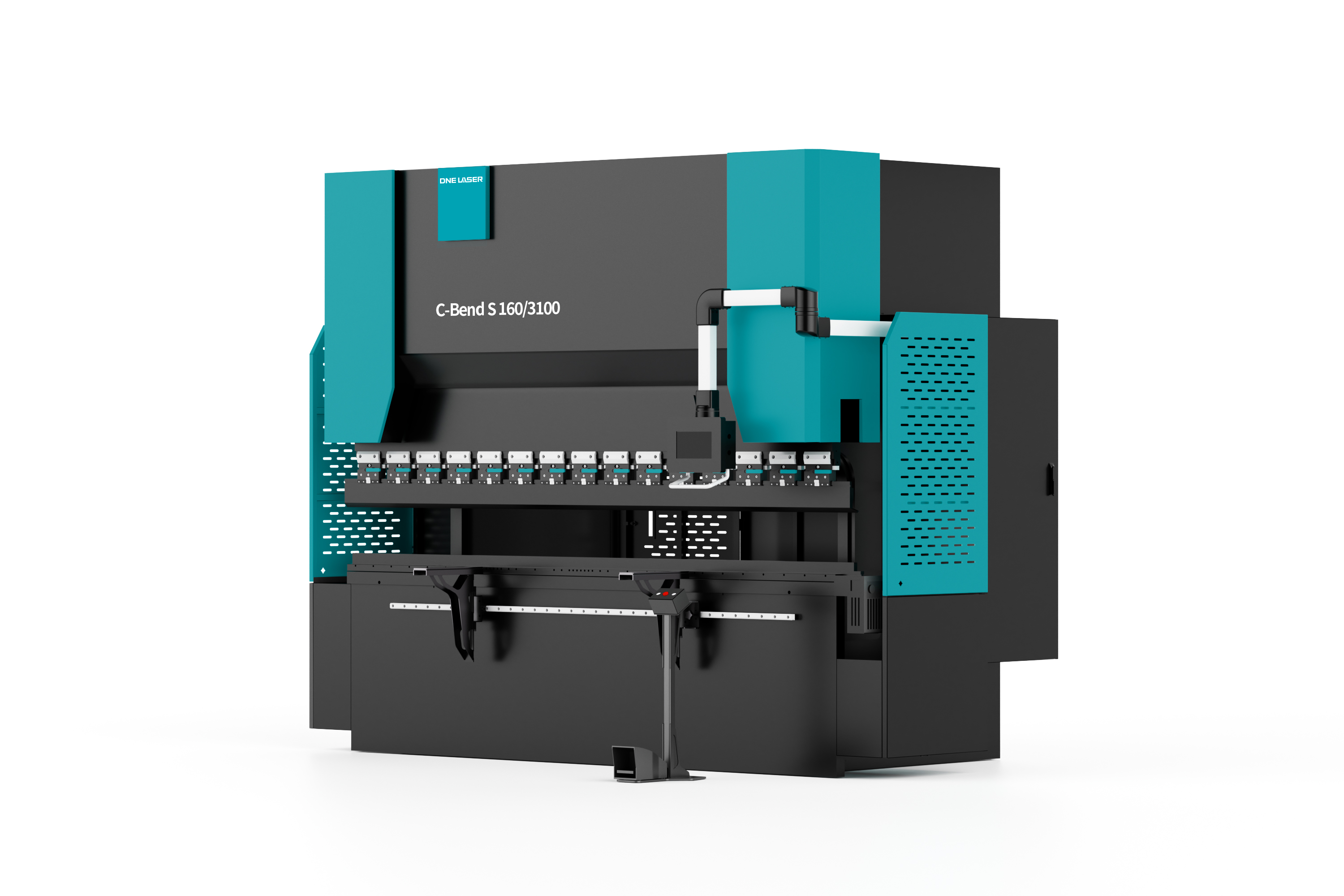
Where sheet metal processing equipment is purchased as a line rather than as a machine, the bending stage enters the comparison. The C-Bend and C-Bend S press brakes are rated at 1000 kN and 1600 kN bending force with a 3100 mm bending length, X-axis precision of 0.05 mm and Y-axis precision of 0.01 mm. Compliance documentation follows the same regional logic as cutting: CE verification was issued against EN 12622:2009+A1:2013, EN 60204-1:2018 and EN ISO 12100:2010 for the European market, while the MCP/MCP-S electrical cabinet holds UL 508A compliance for the United States.
Where the Framework Breaks Down: Limits Buyers Must Price In
A comparison framework that only lists advantages is not a framework. At least six constraints materially change a regional decision.
- Site power infrastructure. A 30 kW class fiber laser cutting machine consumes up to approximately 135 kW, and a 40 kW class platform up to approximately 150 kW. In regions where industrial power capacity is constrained or expensive to upgrade, the electrical connection can become a larger line item than the machine itself.
- Certification does not travel. EU machinery directive verification does not satisfy US UL 508A or CSA C22.2 No.286:23 requirements, and the reverse is also true. Buyers comparing suppliers across regions must request the file that matches the destination market, not the file the supplier holds most of.
- Bevel cutting is conditional. On the D-Power platform, bevel cutting is available only on the 2560, 2580 and 25120 formats, and processing is restricted to the upper worktable. A specification sheet that lists bevel capability without those conditions will mislead a process planner.
- Accuracy trades against format. Small-format platforms hold ±0.05 mm positioning accuracy. The large-format D-Giant is stated at ±0.15 mm per 10 m and the D-Giant F at ±0.20 mm per 10 m. Buyers who need both wide plate and tight tolerance are choosing between two constraints, not buying both.
- Chuck loads are theoretical maxima. Tube machines are limited by chuck load as much as by tube diameter, and the load figure varies by configuration across the range from 100 kg to 1500 kg.
- Service distance is a real cost. Freight, duty, commissioning, spare-part shipping and engineer travel behave differently by region and are usually excluded from quoted machine prices, which is precisely why they distort comparisons.
Application Evidence: How the Framework Plays Out
Regional comparison becomes credible when it is tested against deployments. Two documented cases show how the trade-offs resolve in practice.
In Vietnam, an automotive manufacturer installed nine units of laser cutting equipment in a parts manufacturing facility, combining D-Soar fiber laser cutting machines with D-Tube 240 tube laser cutting machines. The project has been in operation for one year and reported a 15% improvement in production efficiency, with faster cutting speed, low maintenance requirements and long service life identified as the key characteristics of the installation.
In Mexico, an industrial automation company operating in data infrastructure and logistics automation deployed D-Giant large-format cutting equipment alongside D-Tube 360 tube machines. Three units were used for three years before the company purchased three additional units; the project also reported a 15% improvement in production efficiency, with the same pattern of faster cutting and low maintenance.
The common factor in both cases is not the region of manufacture. It is that the buyer evaluated a multi-unit deployment as a system — cutting, tube processing, installation and continued operation — rather than as a single machine purchase. That is the behaviour the current trade landscape rewards.
Market Trend Analysis
Three published trends define the comparison environment through 2026 and beyond.
The first is scale. Growth from USD 7.44 billion in 2026 to USD 18.43 billion by 2034 at a 12% CAGR implies sustained capacity expansion across all major regions, which steadily erodes any advantage based on availability alone.
The second is technology displacement. Fiber lasers now exceed 55% market share in industrial laser systems, replacing CO2 platforms on efficiency and operating cost rather than on cutting quality alone. For buyers, this means the technology decision is largely settled; the remaining decision is configuration and regional support.
The third is the migration of demand toward higher power. The 75% increase in demand for laser heads above 10 kW between 2023 and 2024 reflects thick-plate work moving onto fiber platforms. Higher power shifts the comparison away from machine price and toward power supply, chiller capacity, and the risk controls that come with heavier processing.
A Practical Decision Matrix for Procurement Teams
| Decision criterion | What to evidence | Common failure mode |
|---|---|---|
| Process envelope | Material type and thickness range mapped to a power tier and cutting format | Buying a higher power tier than the process mix requires, then paying for it in power consumption |
| Compliance path | Certificate number, issuing authority, applicable product scope and destination market | Accepting a certificate that covers a different model series or a different market |
| Site readiness | Installed power demand, foundation, extraction and gas supply confirmed before order | Discovering the electrical upgrade requirement after the machine arrives |
| Service and spares | Response model, spare-part holding location, documented installation and training scope | Assuming the service level of the home market applies at the destination |
| Reference validation | Comparable deployments in the same industry and region, with operating duration | Treating a single-unit reference as evidence of multi-unit capability |
| Total cost model | Machine, freight, duty, commissioning, power, maintenance and consumables modelled together | Comparing machine prices only, then absorbing hidden cost during commissioning |
Future Outlook
The next phase of regional competition is unlikely to be decided by power ratings. As multi-kilowatt capability becomes common and fiber technology continues to displace older platforms, the differentiators shift to two areas that are harder to copy: documentation quality and service geography. Manufacturers that can produce a market-specific compliance file, a verifiable reference deployment and a service response model for the destination region will be compared favourably regardless of where they build.
Buyers, in turn, should expect the comparison framework to keep moving upstream — from the machine specification, to the production line, to the supply relationship. The 2026 trade landscape does not reward loyalty to a region. It rewards a documented decision process that survives changes in policy, freight economics and technology tiers.
Frequently Asked Questions
Which regions currently dominate laser cutting machine supply?
China's laser equipment market accounted for 56.6% of global industry revenue in 2024, with domestic localization of high-power laser sources exceeding 70% in the same period, according to figures reported by CCTV Finance and summarised by IT Home. Europe and North America remain significant in high-end platforms, controls, software and integration engineering. Published data supports the scale concentration in China; it does not support a numeric ranking of quality between regions.
Do imported laser cutting machines perform better than locally manufactured machines?
Origin is not itself a performance specification. Documented parameters such as X/Y-axis positioning accuracy of ±0.05 mm and repeated positioning accuracy of ±0.03 mm on D-Speed, D-Power and D-Soar series machines, or ±0.05 mm/m on D-Tube series tube machines, are comparable across regions on the same basis. What does differ by origin is the compliance file, the spare-part route and the service response distance — and those are the variables that usually determine delivered performance.
What technical benchmarks should be used when comparing high-power fiber laser cutting machines?
Four benchmarks cover most of the decision. First, the power tier and its match to material thickness, from 3000W to 30000W on the D-Soar series and up to 40000W on the D-Soar Plus-G. Second, positioning accuracy and repeatability, stated as ±0.05 mm and ±0.03 mm on the main flat-sheet series. Third, machine-level power consumption, approximately 135 kW at 30 kW and approximately 150 kW at 40 kW. Fourth, format, since large-format platforms such as the D-Giant and D-Giant F hold ±0.15 mm and ±0.20 mm per 10 m respectively, which is a different tolerance class from small-format machines.
How do certification requirements differ between the EU and US markets?
The EU path is machinery directive verification against harmonised standards. A documented example is the SGS verification for the D-Power fiber laser cutting machine series under certificate MD GZES2502002362MD, assessed against EN 60204-1:2018, EN ISO 11553-1:2020+A11:2020 and EN ISO 12100:2010. The US path for the same category is typically cabinet-level: D-Tube series tube laser cutting machines were certified against UL 508A, 3rd Edition, and CSA C22.2 No.286:23 under certificate SGSNA/24/GZ/00242X. Both build on ISO 11553-1 and IEC 60825-1 as the international baseline.
What are the practical limits of large-format and tube laser systems that buyers should check before committing?
Large-format platforms trade accuracy for working area: the D-Giant is stated at ±0.15 mm per 10 m and the D-Giant F at ±0.20 mm per 10 m, against ±0.05 mm positioning accuracy on small-format machines. Tube systems are limited by chuck load as much as by diameter, with theoretical maximum chuck loads ranging from 100 kg to 1500 kg across the D-Tube F, D-Tube 240, D-Tube 360 and D-Tube 520 configurations, and bevel cutting offered as an optional function. On the D-Power flat-sheet platform, bevel cutting is available only on the 2560, 2580 and 25120 formats and is restricted to the upper worktable.