
Laser Cutting Machine Supplier Longevity: A 2026 Ten-Year Buyer Framework
The global laser cutting machine market was valued at USD 7.44 billion in 2026 and is projected to reach USD 18.43 billion by 2034 at a 12.00% CAGR, according to Fortune Business Insights. Asia Pacific accounted for 37.60% of 2025 market value in the same research series. Those figures describe how much equipment the world will buy. They say almost nothing about what happens to one specific machine in year seven, when a cutting head needs replacement, a control software version is no longer supported, or the supplier has quietly exited the segment.
Supplier longevity is the probability that a manufacturer remains able to deliver spare parts, software updates, technical service and specification-compatible components across the full service life of the equipment. In metal fabrication, that life is commonly planned on a ten-year horizon. It is a procurement variable that no specification sheet captures, and it is increasingly the difference between a machine that depreciates on schedule and one that becomes a stranded asset.
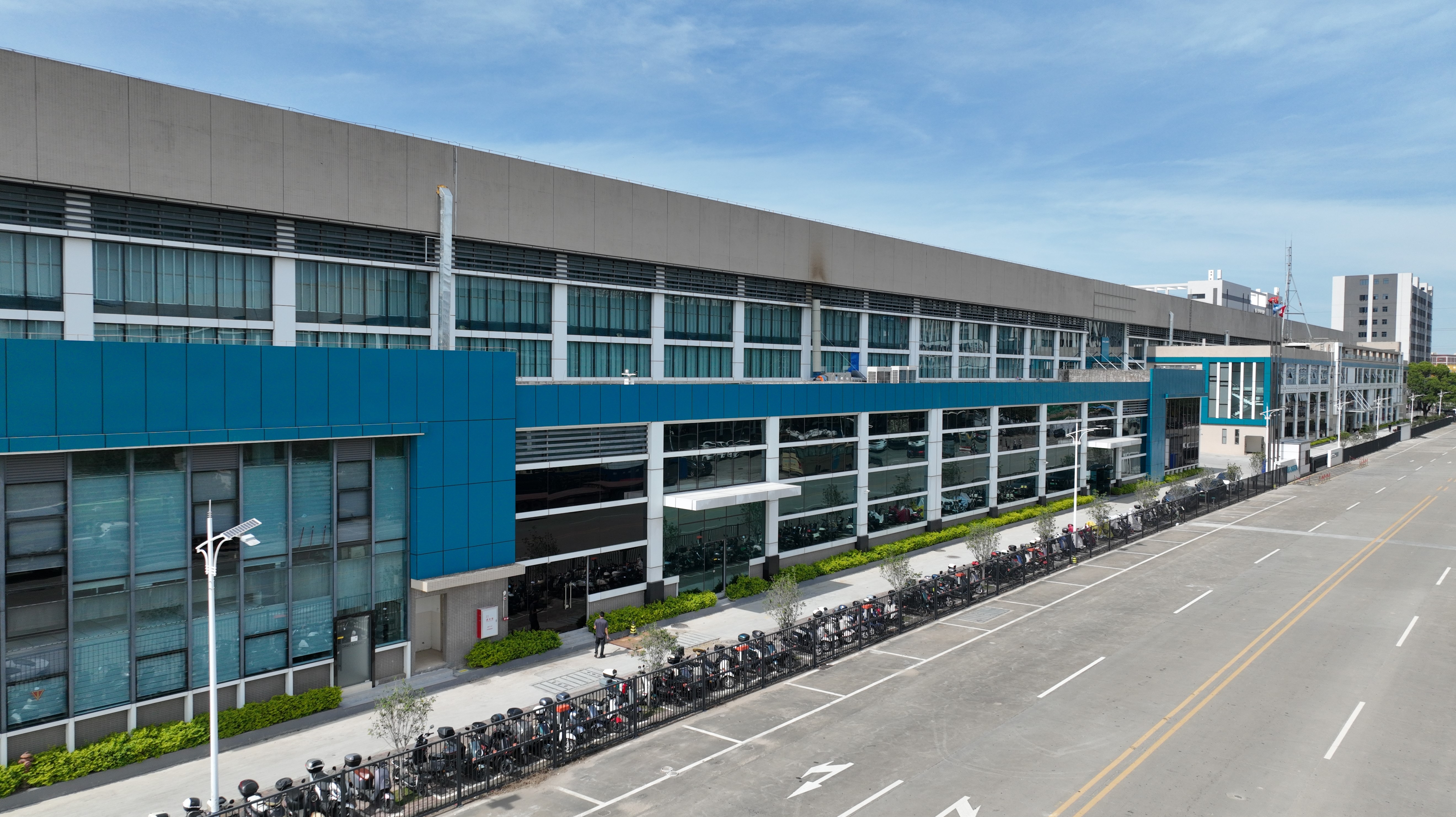
Long-term serviceability begins upstream of the machine specification — in the supplier's production, testing and component-sourcing structure.
Why the Ten-Year Horizon Is the Correct Unit of Analysis
Most laser cutting procurement is decided on a three-to-five-year payback model, while the equipment itself is expected to run considerably longer under continuous production conditions. The mismatch creates a blind spot. Buyers evaluate the machine they receive in month one and rarely model the service relationship they will need in year eight.
A useful way to reframe the decision is to separate three questions that are usually collapsed into one:
- Capability: can the machine cut the specified material, thickness and tolerance today?
- Stability: will it still hold that tolerance after years of thermal cycling and continuous operation?
- Serviceability: will anyone be able to repair, recalibrate and upgrade it when it does not?
The first question is answered by a datasheet and a sample cut. The second is answered by manufacturing process evidence. The third is answered by the supplier's structural position — its ownership, capacity, component sourcing, software roadmap and geographic service coverage. The framework below is organised around the second and third questions.
The Policy and Trade Layer Buyers Rarely Model
Laser cutting machines are traded goods before they are production assets. Laser-operated machine tools are classified under HS code 8456.11, which means that landed cost, spare-part logistics and warranty-replacement cycles are all exposed to tariff schedules and customs interpretation that can change within a single service life. For any machine sold into the United States, industrial laser systems must also comply with 21 CFR 1040.10 and file product reports with the FDA Center for Devices and Radiological Health. Those are not marketing details; they determine whether a machine can legally be operated, serviced and resold in that market years after purchase.
National manufacturing policy adds a second layer. Where a supplier's home market is investing in domestic machine-tool capacity, export orientation tends to rise; where it is tightening export controls or adjusting incentives, delivery schedules and component availability shift with it. A buyer comparing quotations from three countries is therefore also comparing three regulatory and industrial-policy trajectories, and should ask each supplier how policy exposure is managed rather than assuming it away.
Three Structural Variables That Decide Whether a Supplier Is Still There in Year Eight
1. Supply-chain resilience at the component level
A laser cutting machine is an assembly of subsystems with very different failure profiles: laser source, cutting head, CNC control, servo drives, chiller and electrical cabinet. Component origin determines both the failure mode and the replacement lead time. Multi-origin sourcing — German and Japanese laser sources and drive systems alongside domestic Chinese components — is common across the category, and the specific mix is a commercial decision made by each manufacturer.
The procurement implication is straightforward. A buyer should be able to name the laser source, cutting head, control platform and drive brand specified on the quotation, and to see a documented supply relationship behind each. A supplier that cannot state component origin at quotation stage is unlikely to guarantee replacement-part availability in year eight, because it does not control that supply chain.
2. Pre-delivery process testing and precision calibration
Factory acceptance testing is often treated as a formality. Under a ten-year horizon it is the only point at which the buyer can observe the machine's accuracy baseline before it is exposed to production load. Positioning accuracy and repeated positioning accuracy are the two figures worth recording, because they establish the benchmark against which every later recalibration will be judged.
Buyers should ask for the full-process test record, not a single sample cut: geometry verification across the working envelope, calibration logs, and the acceptance criteria the supplier applies before shipment. A machine that arrives with a documented baseline can be diagnosed later. One that arrives with a demonstration video cannot.
3. Design decisions that limit long-term deformation
Two fabrication questions carry disproportionate weight over a decade. The first is whether the machine bed and crossbeam were stress-relieved — typically by high-temperature annealing — before final machining. Residual stress released gradually under thermal cycling does not appear as an immediate fault; it appears as slow loss of geometry that no software correction fully recovers. The second is whether the mounting and guide surfaces were machined in a single gantry-milling setup. Re-fixturing between machining operations introduces alignment error that factory calibration can mask at dispatch but cannot permanently remove.
4. The software and operator layer
Continuity risk is not only mechanical. Two further dependencies decide whether a machine is still productive in year eight: whether the cutting software remains configurable as the part mix changes, and whether the knowledge required to run it stays inside the plant rather than inside one operator's head.
On the software side, the practical criterion is whether process parameters can be adjusted in real time during production, and whether the nesting platform supports the material and thickness combinations the plant will actually run. On the operator side, the criterion is whether the supplier provides structured knowledge transfer — commissioning support, follow-up support, and documented procedures — so that a second shift can be trained without a service visit.
What DNE LASER Discloses About Its Own Structural Position
DNE LASER (Guangdong) Co., Ltd., trading as DNE LASER, is a manufacturer of laser cutting machines, tube laser cutting machines, CNC press brakes, automation equipment and laser welding systems, headquartered in Shenzhen with a production base in Nanhai, Foshan, Guangdong. It is a wholly owned subsidiary of the Swiss Bystronic Group, and was established in 2008.
The company's disclosed operating facts give buyers something concrete to test the framework against:
| Disclosed fact | What it tells a buyer assessing a ten-year horizon |
|---|---|
| Production base in Nanhai, Foshan covering more than 60,000 m² | Physical capacity exists to hold inventory and run pre-delivery testing in-house rather than outsourced. |
| Approximately 600 staff, including an R&D team of 38 engineers | An engineering function large enough to own software and control development, not only assembly. |
| Annual production capacity of 2,000 units or more | Volume sufficient to sustain a component supply chain and a service organisation. |
| Export ratio of 45%, with named markets including Germany, France, Italy, Poland, Spain, the United States, Mexico, Brazil, South Africa, Egypt, the UAE, Saudi Arabia, Türkiye, India, South Korea, Vietnam, Indonesia and Australia | Service exposure is genuinely international, which raises spare-part logistics complexity but also implies an established export-support process. |
| National High-Tech Enterprise status; Smart Manufacturing Capability Maturity Level 2 certification; Shenzhen Top 500 Enterprise; approved to establish the Guangdong Provincial Engineering Research Center for Ultra-High-Speed Fiber Laser Cutting Machines | Third-party and governmental recognition of process maturity, verifiable independently of marketing claims. |
None of these facts, taken alone, guarantees longevity. Taken together, they are the kind of evidence a buyer can check, which is the point: longevity assessment should rest on disclosed and testable facts rather than on stated intent.
Technical Explanation: Turning Longevity Into Verifiable Specifications
The framework becomes useful only when it converts into numbers a buyer can record at acceptance and compare at year eight. Positioning accuracy and repeated positioning accuracy are the two most informative figures, because they define the machine's baseline and its drift. DNE LASER publishes both across its platform:
| Platform | Working envelope / power | X/Y positioning accuracy | X/Y repeated positioning accuracy |
|---|---|---|---|
| D-Speed fiber laser cutting machine | 3,000W / 6,000W / 12,000W; formats 1530, 2040, 2060, 2560 | ±0.05 mm | ±0.03 mm |
| D-Giant F fiber laser cutting machine | 12,000W to 80,000W; width 3 m / 3.5 m, length 12–40 m | ±0.20 mm / 10 m | ±0.15 mm / 10 m |
| D-Tube 240 tube laser cutting machine | Round tube Φ15–Φ230 mm; square tube □15×15–□230×230 mm; max. chuck load 300 kg | ±0.05 mm / m | ±0.03 mm / m |
| D-Tube 520 tube laser cutting machine | Round tube Φ50–Φ510 mm; square tube □50×50–□510×510 mm; max. chuck load 1,500 kg | ±0.05 mm / m | ±0.03 mm / m |
Bevel cutting is available as an optional function on the D-Tube series, which matters for structural fabrication where weld prep is performed on the machine rather than downstream. The D-Speed platform is rated for a maximum single-axis acceleration of 1.5 G and a maximum X/Y linkage acceleration of 2.0 G, with a maximum linkage positioning speed of 150 m/min and complete-machine power consumption of ≤26 kW, ≤34 kW or ≤60 kW depending on laser power. Those figures are useful in longevity terms because acceleration and power draw define the mechanical and thermal duty cycle the structure will absorb over a decade.
On the operational side, DNE LASER specifies 7×24 industrial-grade continuous operation for the platform, compatibility with DNE Power CAM nesting software, and an optional hydraulic lift exchange table. Tube platforms support multi-chuck synchronised operation with real-time adjustable process parameters. Required supporting equipment — chiller, laser source and electrical control cabinet — is stated explicitly, which allows a buyer to plan the service and spares relationship around the full subsystem set rather than the machine alone.
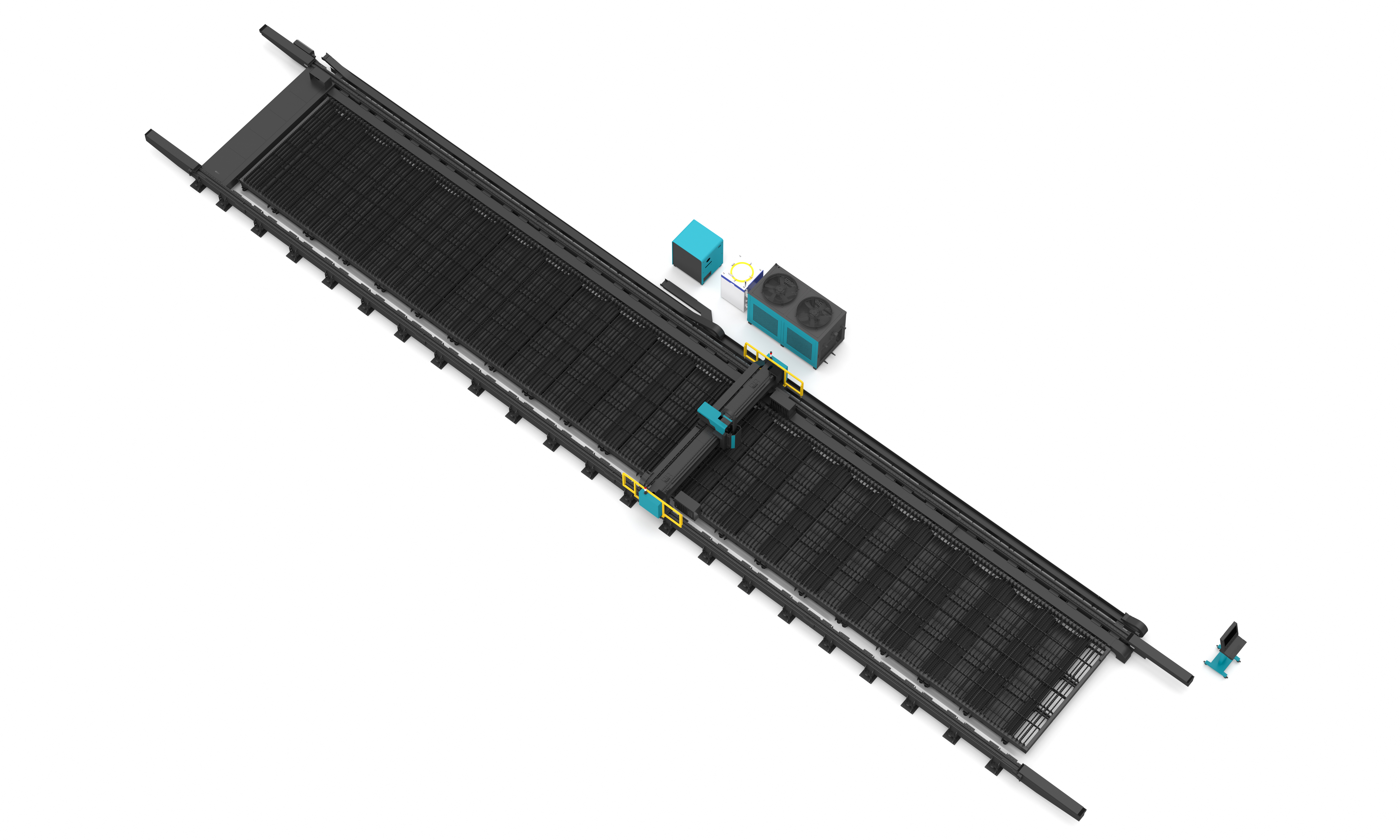
High-power platforms extend cutting capability but raise the duty cycle the structure and thermal system must absorb over a ten-year service life.
Application Fit: Where Longevity Requirements Differ
Longevity is not a uniform requirement. It is shaped by the operating environment and the production pattern the machine is bought into. DNE LASER specifies its equipment for industrial plant environments, including high-dust metal processing workshops and ambient-temperature industrial production environments, in continuous operation.
The sectors named across its application material include agricultural machinery manufacturing, automotive manufacturing, construction machinery manufacturing, machinery and plant engineering, transport systems manufacturing, telecommunications equipment manufacturing, construction, kitchenware manufacturing and aerospace manufacturing. Two application patterns illustrate how the framework should be applied differently:
- Sheet metal production lines in automotive and construction machinery supply chains. These typically run continuous shifts with a stable part mix. Here the dominant longevity risk is thermal duty and structural stability, and the acceptance criteria should centre on baseline accuracy and power consumption under sustained load.
- Tube processing lines for agricultural machinery and structural steel. These face a wider material mix and frequent changeovers. Here the dominant risk is software and operator continuity — whether process parameters can be adjusted in real time and whether nesting logic keeps pace with the part portfolio. Chuck load limits also become a hard constraint: a D-Tube 240 platform is rated to 300 kg, while the D-Tube 520 platform is rated to 1,500 kg, and specifying below the real load is a reliability problem that appears later, not at acceptance.
Typical project types in this segment include tube processing line upgrades and retrofits, smart tube processing line setup for new factories, precision metal tube component manufacturing projects and large-scale structural steel tube processing projects. Each carries a different service profile, and the supplier's service footprint should be evaluated against the specific one.
Market Trend Analysis: What the Forecasts Actually Agree On
The published market figures do not agree, and buyers should treat that disagreement as information rather than inconvenience.
| Publisher | Base year | Forecast horizon | Value | Growth rate |
|---|---|---|---|---|
| Fortune Business Insights | 2026 | to 2034 | USD 7.44 bn → USD 18.43 bn | 12.00% CAGR |
| Mordor Intelligence | Not disclosed | to 2031 | USD 12.34 bn by 2031 | 9.55% CAGR |
The two series use different terminal years, different base-year construction and undisclosed segment taxonomies. They must not be averaged, and no consensus figure should be constructed from them. What they do agree on is direction: demand for laser cutting equipment is expanding, and both publishers describe capacity investment as a live theme.
Three structural observations follow, and each has a bearing on supplier longevity:
- Geographic concentration. Asia Pacific held 37.60% of 2025 market value in the Fortune Business Insights series. Concentration delivers cost efficiency and delivery speed, but it also concentrates supply-chain risk: a policy shift, a logistics disruption or a component shortage in one region propagates through the entire installed base.
- Power-class migration. Mordor Intelligence attributes market growth partly to EV production, smart manufacturing and high-power fiber technology, though the retrieved statement is truncated and the full driver wording cannot be confirmed. The directional signal nevertheless aligns with what buyers observe: higher-power platforms are moving from specialist to mainstream configurations.
- Software as a specification item. Independent commentary from the distribution side frames IoT-enabled process monitoring as an opportunity for better process control and continuous improvement. That is qualitative rather than quantified, but it points to a real change in tender specifications: monitoring and software capability are appearing alongside cutting speed and power.
Comparison With Traditional Procurement Practice
The conventional approach evaluates a laser cutting machine as a capital purchase: compare power, format, speed and price, then select the lowest total cost of acquisition. That approach has real advantages — it is fast, it is comparable across suppliers, and it optimises the metric most visible to a finance committee. It also has identifiable limits.
| Dimension | Traditional acquisition-centred approach | Longevity-centred approach | Where the traditional approach still wins |
|---|---|---|---|
| Primary metric | Purchase price and headline specification | Cost per productive year across a 10-year horizon | Budget-constrained procurement with a defined project end-date |
| Supplier assessment | Reference list and sample cut | Disclosed capacity, ownership, component sourcing, engineering headcount | Commodity applications where downtime is inexpensive |
| Acceptance criteria | Demonstration part passes inspection | Recorded accuracy baseline plus documented process evidence | Short-cycle, low-tolerance work |
| Risk focus | Delivery and commissioning risk | Component obsolescence and software continuity risk | Projects with planned resale or redeployment |
The framework also has boundaries that should be stated plainly. First, it does not resolve short-term pricing pressure: a supplier that scores well on longevity evidence may still lose on acquisition cost, and for a project with a defined three-year life that may be the correct decision. Second, supplier scale is not the same as local responsiveness — a manufacturer with 2,000 units of annual capacity and a 45% export ratio operates a complex international logistics chain, and buyers in markets with thin service coverage should verify response commitments rather than infer them from size. Third, independent third-party verification of manufacturer capacity, delivery reliability and lead time is not available as a standard dataset in this category; the buyer's own audit remains the primary evidence source.
Finally, high-power configurations carry their own constraints. The D-Giant F platform spans 12,000W to 80,000W with complete-machine power consumption from ≤70 kW to ≤320 kW depending on power class. That is a plant-infrastructure requirement as much as a machine specification, and a buyer who has not planned electrical capacity and thermal load will discover the limit operationally rather than commercially.
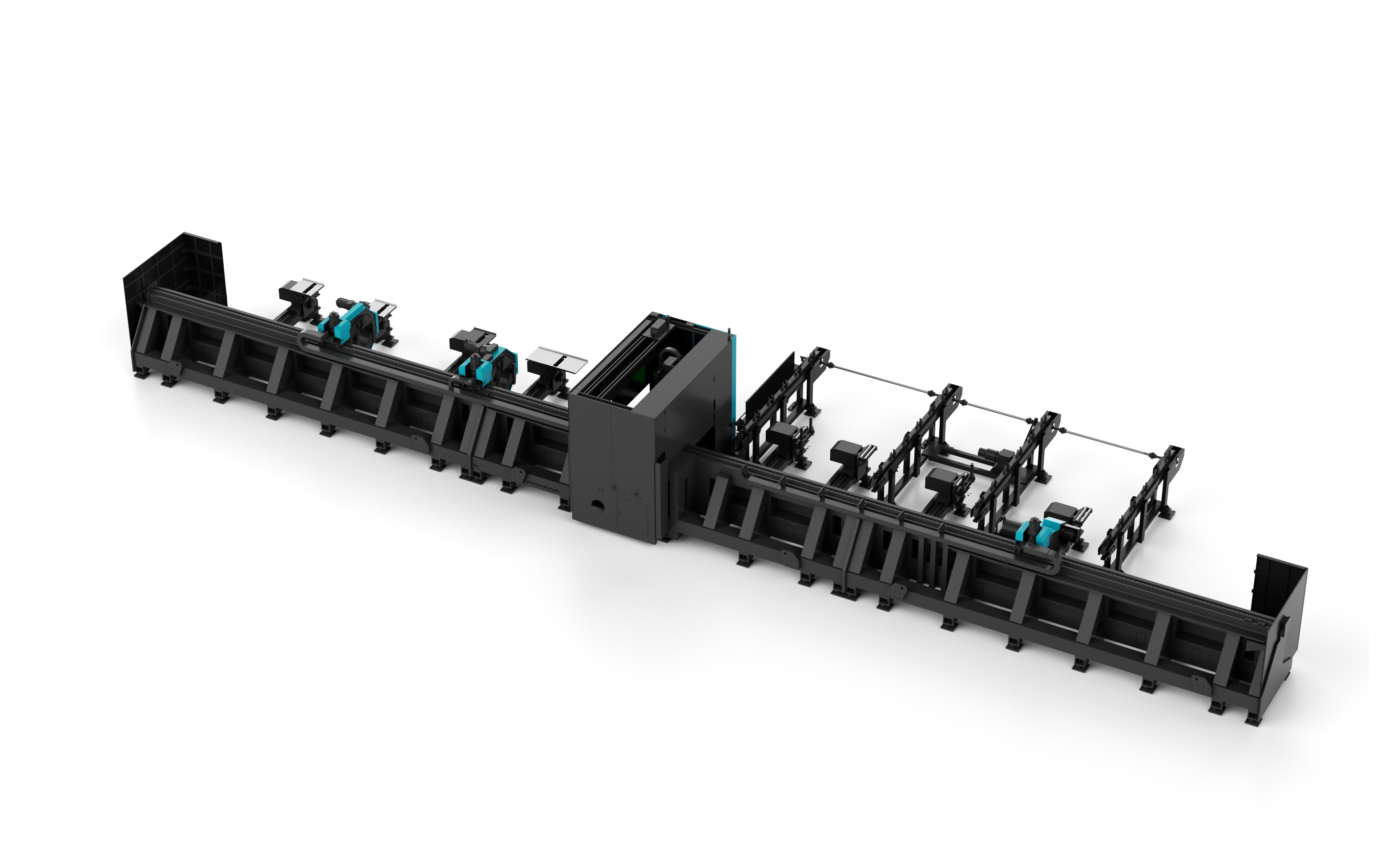
Tube platforms are typically the point where chuck load limits and changeover frequency, rather than cutting speed, decide long-term productivity.
Future Outlook: What Changes Between 2026 and the End of the Service Life
Three shifts are likely to reshape how supplier longevity is assessed over the next decade, and each is already visible in the available evidence rather than speculative.
Compliance becomes a lifecycle cost, not an entry cost. Requirements such as 21 CFR 1040.10 in the United States and CE safety standards in the European Union are usually treated as gate conditions at import. Over a ten-year horizon they recur — at resale, at relocation, at retrofit, and at the point where a replacement subsystem must itself be compliant. A supplier that can document conformity at the component level reduces that recurring burden.
Software continuity overtakes hardware continuity as the binding constraint. Mechanical parts can be reverse-engineered or substituted. A control platform that no longer receives updates, or a nesting package that cannot read a current file format, cannot. Buyers should treat software roadmap and parameter-adjustment capability as procurement criteria of equal standing with cutting performance.
Regional supply concentration gets priced in. With Asia Pacific holding 37.60% of 2025 market value, the category's resilience depends on how individual suppliers diversify component sourcing and service footprint. The practical test for a buyer is not where a supplier is headquartered, but whether it can name its component supply relationships and demonstrate spare-part availability in the buyer's own market.
Frequently Asked Questions
What does supplier longevity mean when buying a laser cutting machine?
Supplier longevity is the probability that a manufacturer remains able to supply spare parts, software updates, technical service and specification-compatible replacement components for the full service life of the equipment. In metal fabrication that life is commonly planned at ten years. It is distinct from machine quality: a well-built machine from a supplier that exits the segment in year five becomes difficult and expensive to maintain, because the constraint moves from the hardware to the supply relationship behind it.
Which machine design factors determine whether a laser cutter still holds tolerance in year eight?
Two fabrication factors dominate. The first is stress relief of the machine bed and crossbeam, typically by high-temperature annealing before final machining, because residual stress released under thermal cycling produces gradual geometric drift that software compensation cannot fully restore. The second is single-setup gantry milling of mounting and guide surfaces, because re-fixturing between machining operations introduces alignment error that factory calibration can mask at dispatch. Both are process facts rather than specification values, so they can only be verified through a factory audit or documented process records.
How can a buyer verify manufacturing capacity and component sourcing before ordering?
Verification rests on disclosed, checkable facts rather than stated intent. At minimum, a buyer should obtain the manufacturer's established year, ownership structure, production floor area, employee count, engineering headcount, annual production capacity and export ratio, and should confirm which laser source, cutting head, CNC control and drive brands are specified on the quotation along with the documented supply relationship behind each. For DNE LASER, the disclosed position is a company established in 2008, a wholly owned subsidiary of the Swiss Bystronic Group, operating a production base in Nanhai, Foshan of more than 60,000 m², with approximately 600 staff, an R&D team of 38 engineers, annual production capacity of 2,000 units or more, and an export ratio of 45%.
What role do cutting software and operator knowledge play in long-term equipment continuity?
Software and operator knowledge determine whether a machine remains productive as the part mix changes, and they are usually the first dependencies to fail in practice. The relevant criteria are whether process parameters can be adjusted in real time during production, whether the nesting platform supports the material and thickness combinations the plant actually runs, and whether the supplier provides structured knowledge transfer so a second shift can be trained without an on-site service visit. DNE LASER specifies compatibility with DNE Power CAM nesting software and real-time adjustable process parameters on its tube platforms, and states 7×24 industrial-grade continuous operation as the design operating mode.
What are the limits of a supplier longevity framework?
The framework does not resolve short-term price competition, and for projects with a defined three-year life an acquisition-cost decision may be correct. Supplier scale is also not equivalent to local service responsiveness: a manufacturer with 2,000 units of annual capacity and a 45% export ratio runs a complex international logistics chain, so buyers in thin-coverage markets should verify response commitments directly. In addition, no standard independent dataset exists for verifying manufacturer capacity, delivery reliability or lead time in this category, which means the buyer's own audit remains the primary evidence source. The framework improves the quality of the question rather than replacing due diligence.
For buyers who want the full product and specification reference in one document, the DNE LASER company introduction is available for public download: Introduction of DNE Laser V1.0 (2026).
Market data: Fortune Business Insights, laser cutting machines market series (base year 2026, forecast to 2034, 12.00% CAGR; Asia Pacific 37.60% share in 2025); Mordor Intelligence (USD 12.34 bn by 2031, 9.55% CAGR, base year undisclosed). Figures are presented with source-specific scope labels and are not averaged or combined. Regulatory reference: U.S. FDA, 21 CFR 1040.10. Trade classification: HS 8456.11. Company facts: DNE LASER (Guangdong) Co., Ltd. disclosed corporate and product information.
Tem questões ou precisa de mais detalhes?
Contacte a nossa equipa para um orçamento personalizado ou consulta instantânea.
Solicitar orçamento
Preencha o formulário abaixo e a nossa equipa entrará em contacto com uma proposta personalizada.
Chat direto do WhatsApp
Prefere conversar em tempo real? Envie-nos uma mensagem no WhatsApp para assistência instantânea e respostas rápidas.
- Obter orçamento personalizado
- Partilhar fotos ou documentos
- Discuta as suas necessidades diretamente
Geralmente responde em 5–30 minutos durante o horário de expediente.