
Laser Engraved Bangles vs. Chain Bracelets in 316L Stainless Steel
An engraved bangle and a rope or figaro chain bracelet can be built from the same 316L stainless steel, coated in the same PVD chamber, and shipped under the same compliance file. They are still not interchangeable products. The two formats share a materials and certification floor, then diverge on construction, on where decoration can physically sit, on how each piece resolves to a wrist size, and on the merchandising job each performs.
This reference compares the two categories on the criteria a wholesale, private-label or DTC buyer actually evaluates during research and evaluation: durability architecture, hypoallergenic position, tarnish resistance, engraving capability, and style adaptability. Every claim is limited to verifiable material, finish, dimension and process facts. Where a question cannot be answered from specification alone, this article says so and converts it into a verification step rather than a promise.
The short answer. On hypoallergenic performance, tarnish resistance and compliance, the two formats are at parity — both are 316L, both are specified as zero nickel release, and both are covered by the same 48-hour salt spray verification and the same 20+ colour PVD library.
They separate on geometry. A bangle offers a continuous surface, no closure, and a fixed diameter. A chain offers a length-based fit and layered styling, at the cost of articulated joints and a clasp that must pass its own quality checkpoint.
Procurement consequence. Choose bangles for personalisation-led gifting and milestone programs; choose chains for replenishment-driven fashion retail and stackable sets. Assortment decisions, not material decisions, decide which one earns the shelf.
Why buyers are comparing these two formats right now
The buying conversation in stainless steel jewelry has shifted from material acceptance to style allocation. Commercial research published in 2026 values the global stainless steel jewelry market at USD 7.08 billion in 2025 and projects USD 10.8 billion by 2035, a 4.3% compound annual growth rate. The narrower waterproof jewelry segment — the PVD-coated, non-tarnish subset that both bangles and chains belong to — is projected to grow considerably faster, from USD 2.12 billion in 2026 to USD 4.60 billion by 2034 at a 10.16% CAGR.
When a sub-segment outgrows its parent category, the sourcing question stops being "is stainless steel acceptable?" and becomes "which stainless steel item deserves the slot?" That is a style-level question with real cost consequences. A buyer who fills a range with two versions of the same look — one bangle, one chain, same finish, same width of assortment — has doubled inventory without widening the customer base. A buyer who splits the range along the formats' actual structural differences gets two distinct entry points from a single compliance dossier.
The shared baseline: what both formats inherit from 316L
Both categories sit on the same substrate. Jusnova Jewelry Co., Ltd, a stainless steel jewelry manufacturer founded in Guangzhou in 2009, produces engraved bangles and rope, figaro and curb chain bracelets from 304, 316 and 316L stainless steel, with 316L positioned as the surgical-grade option. The material is specified as zero nickel release and tested against EU REACH and FDA-referenced requirements. The company operates a 1,000 m² facility with 300 employees and reports around 95% of output going to export markets.
Surface treatment follows the same route for either format: in-house PVD across six machines and more than 20 colours, from classic rose gold to bolder tones, with batch colour matching controlled to Delta E < 1.0. The coating is stated to maintain luster for 2–5 years in a conventional environment, verified by 48-hour salt spray testing, with a nano-protective layer over the PVD. Alternative finishes — 18K gold plating, electroplating, brushed, mirror-polished and sandblasted — are available on either silhouette.
In other words, the compliance story and the finish story are identical across the two categories. Everything that follows is a consequence of shape.
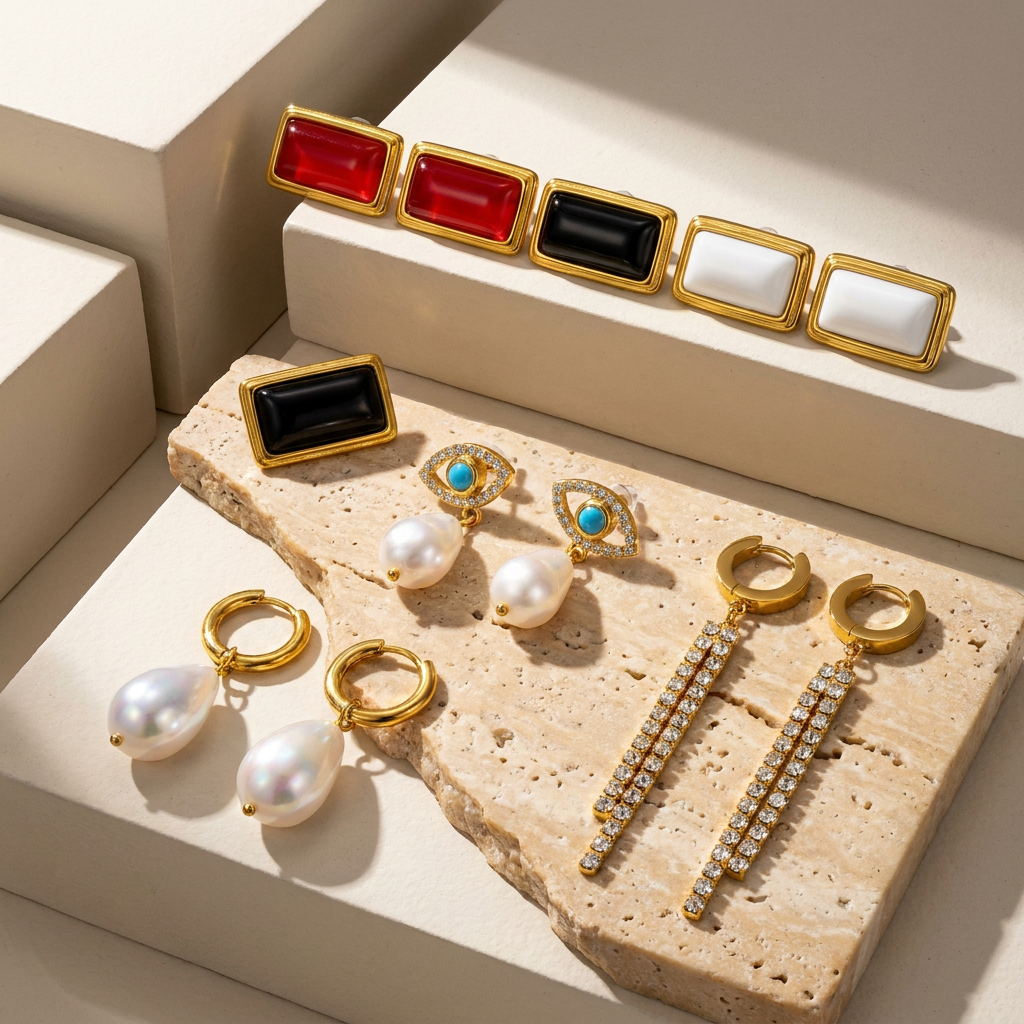
Rigid and articulated formats in the same PVD finish family: the styling pairs easily, the merchandising jobs do not overlap.
Side-by-side: the comparison that matters to a buyer
| Criterion | Laser engraved bangle | Rope / figaro chain bracelet |
|---|---|---|
| Base construction | Single formed body — round, flat, cuff, twisted, rope, gem-set or engraved variants | Assembled links — cable, rope, figaro or curb — joined and closed with a clasp |
| Decoration surface | Continuous outer face; long text, dates and full-wrap engraving are geometrically possible | Interrupted link geometry; engraving typically lands on a plate, tag, widened link or the clasp |
| Closure | No clasp in most formats; slip-on or open cuff | Clasp and closure function is a defined quality-control checkpoint |
| Sizing logic | Fixed diameter; the standard dimension envelope runs 5 mm to 80 mm diameter, 0.5 mm to 3.0 mm thickness, tolerance ±0.05 mm | Length-based fit; the same thickness and tolerance envelope applies to links and findings |
| Finish library | PVD 20+ colours, 18K gold plating, brushed, mirror-polished, sandblasted | Same library, same in-house PVD line |
| Durability verification | 48-hour salt spray; 2–5 year luster window in conventional environments | Same verification and same stated window |
| Compliance | 316L, zero nickel release, EU REACH and FDA-referenced testing; SGS and BSCI documentation available on request | Identical position, identical documentation route |
| Merchandising role | Gifting, milestone, personalisation anchor, stack base | Layering, everyday wear, replenishment velocity |
Durability architecture: one continuous body versus many articulated joints
A bangle loads stress differently from a chain because it is, mechanically, a single part. The body is formed, polished, cleaned, coated and — where specified — engraved. With no hinge, spring or lobster clasp in most bangle formats, there are very few mechanical interfaces that can fail. The wear question is surface wear rather than joint wear, and the exposed outer face is where abrasion shows first.
A rope or figaro chain distributes the same wear across many articulating joints. Link edges rub against each other and against skin and clothing, and the closure absorbs repeated open-close cycles. This is why clasp and closure function appears as a discrete step in the production quality-control sequence, which runs: raw material incoming, forming or casting, polishing and surface preparation, pre-plating and pre-PVD cleaning, 18K gold plating or PVD, stone setting where applicable, logo or laser engraving, then clasp and closure function. That last checkpoint exists because a chain bracelet has a failure point a slip-on bangle simply does not have.
Neither architecture is inherently superior. They concentrate risk in different places: coating abrasion on a bangle's exposed surface, versus mechanical fatigue at chain joints and closure.
What supports both is the coating system. Published comparison data places PVD coating hardness at roughly 1,500–4,500 HV against 100–200 HV for conventional electroplating, which is the technical reason the finish is specified for daily-wear programs. Hardness is not indestructibility, and the distinction matters when a buyer writes a specification.
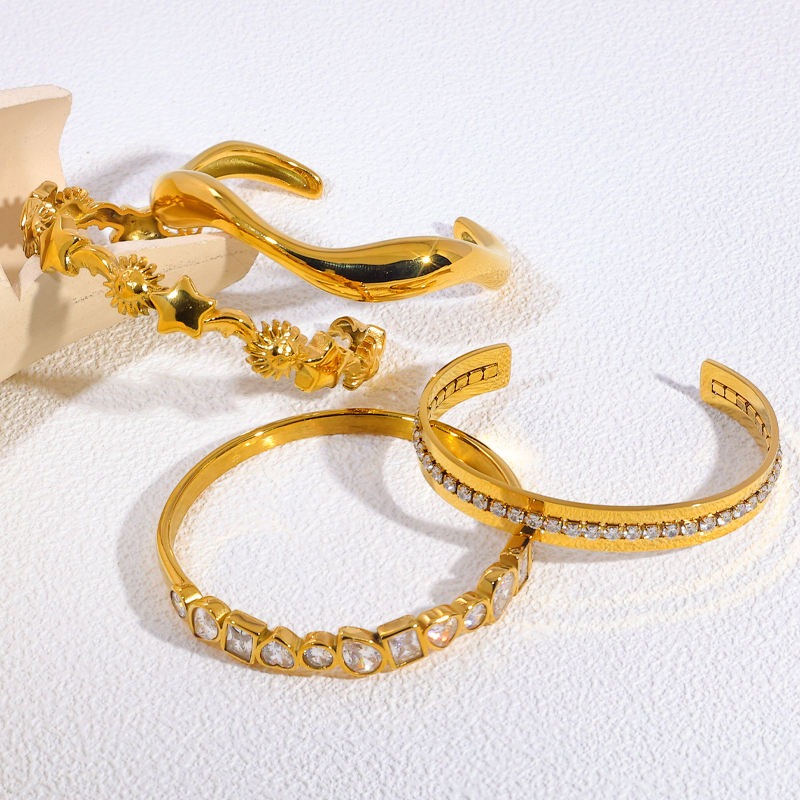
A bangle's continuous face is the resource a chain cannot offer: uninterrupted area for text, dates and repeat engraving.
Hypoallergenic position: parity, not a differentiator
Skin reaction is the first question most buyers ask and the one with the shortest answer. If both formats use 316L stainless steel with the same finish system, there is no hypoallergenic reason to prefer one over the other. The material is specified as zero nickel release and tested to EU REACH and FDA-referenced standards — a property of the substrate and coating, not of the silhouette.
The real distinction is documentary rather than metallurgical. Because both formats pass through the same plating and PVD stages, they can usually be carried under one compliance file, which is an operational advantage when a bangle and a chain are sold as a coordinated set. What buyers should verify is scope: the test report should name the material grade and the finish actually shipped, not a generic stainless steel description. Certification documents — REACH test reports, SGS, BSCI — are available on request, and the request should be specific to the SKU and batch.
Tarnish resistance and the honest limit of a 2–5 year window
Tarnish resistance comes from the coating stack, not from the shape. Both formats carry PVD over a nano-protective layer, verified by 48-hour salt spray testing, with the finish stated to hold luster for 2–5 years in a conventional environment.
Two clarifications are worth stating plainly, because both are frequently glossed over in supplier literature:
- Salt spray is a screening test, not a forecast. A 48-hour result separates qualified finishes from unqualified ones. It does not predict how a specific wearer's skin chemistry, fragrance use, chlorine exposure or storage habits will affect a coated surface over five years.
- The coating is a finite layer. High-contact zones — chain link edges, the clasp, the outer face of a bangle that rests on a desk all day — will show wear before low-contact zones. A 2–5 year luster window is an average under conventional wear, and range planning should treat it as such.
That second point is the most useful limitation in this comparison. It means the bangle-versus-chain decision is not a decision about which piece lasts longer in the abstract; it is a decision about which wear pattern your customer base will actually produce, and which replacement cycle you are prepared to manage.
Engraving: where geometry decides what is possible
Laser engraving is one of four in-house logo and decoration methods, alongside stamping, screen printing and epoxy doming, with a 2–3 day sample lead time. The methods are equal; the surfaces are not.
The bangle advantage
A bangle presents a continuous outer face. That allows long text strings, dates, coordinates, handwriting reproductions and full-wrap engraving across the visible circumference. Character height can be generous, and the design can run with the curve of the body. For personalisation-led programs — where each unit carries a name or a date — this is the format's structural advantage, not a styling preference.
The chain constraint
A rope or figaro chain interrupts the surface every few millimetres. Engraving therefore typically moves to a dedicated plate, a tag, a widened link or the clasp area, and character heights shrink accordingly. A rope chain's twisted profile is less accommodating than a figaro's flatter link faces, which is why plate-based engraving is the more predictable route for chain formats rather than direct-to-link marking.
The sequencing question every buyer should ask
In the production flow, logo and laser engraving follow the plating or PVD stage. That sequence creates a legitimate specification question: how is the engraved zone finished afterwards? Whether the mark is left as-cut, re-polished, or covered with a protective topcoat affects both appearance and corrosion behaviour at the engraving site. This is the least standardised part of any engraved stainless steel order and worth confirming in writing before tooling begins.
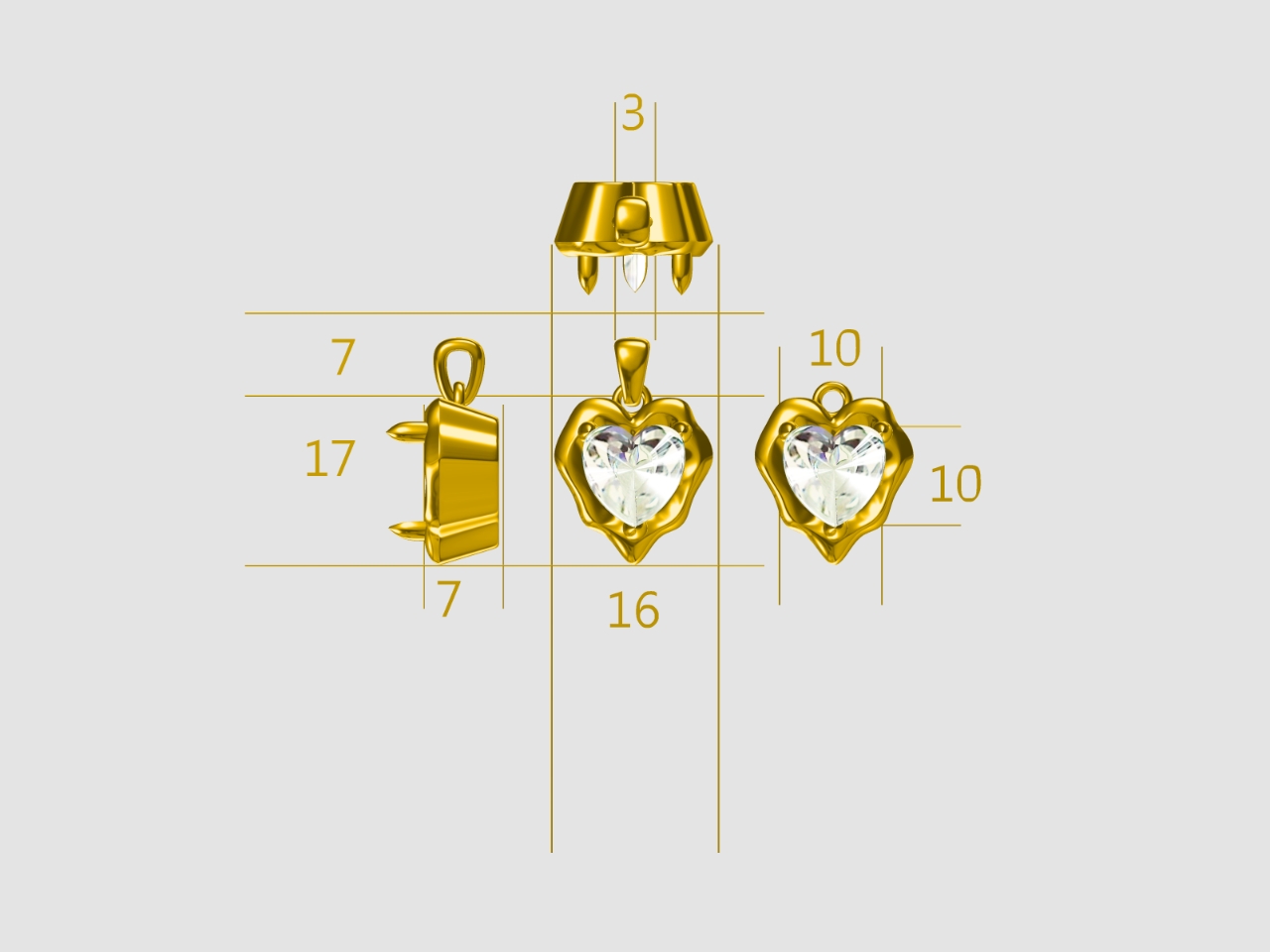
Diameter and thickness specification governs both formats; the bangle's fixed diameter is where sizing risk concentrates.
Style adaptability and the merchandising space each fills
The same 20+ colour PVD library lets one silhouette appear in gold tone, rose gold, black or gunmetal without new tooling, so colour is not what separates the formats. Function is.
Where bangles win
- Gifting and milestones. A rigid body reads as a substantial object, presents flat in a tray or box, and holds an engraved message legibly.
- Stack and set selling. Multiple bangles in mixed finishes create a natural multi-unit purchase.
- Display efficiency. Bangles stand, stack and photograph without clasp styling.
The trade-off is sizing. A fixed diameter has no adjustment, so returns risk concentrates in assortment planning. Buyers normally mitigate this by carrying two or three diameters, or by specifying an open cuff format.
Where chains win
- Fit flexibility. Length-based sizing accommodates a wider wrist range than a fixed diameter.
- Layering. Chains combine with necklaces, other bracelets and watches — the styling behaviour that drives repeat purchase in fashion retail.
- Replenishment velocity. Lower unit complexity supports fast reorder cycles, which is what fast-fashion and marketplace sellers optimise for.
The trade-off is a closure. Every chain sold carries a quality dependency on the clasp, and every clasp is a component that must be inspected rather than assumed.
Matching each format to a real program
The applicable channel list for this product family spans boutique and concept stores, department store accessory counters, fast fashion, independent boutiques, gift wholesale, brand wholesale and e-commerce marketplaces. The two formats map onto that list differently.
Engraved bangles fit: corporate gift and service-award programs where a name and date are engraved; souvenir and landmark gift shops where a place name is the product; holiday seasonal retail around Christmas, Valentine's Day and Mother's Day, where personalisation drives the purchase; and boutique counters where the piece is sold as a milestone object.
Chain bracelets fit: DTC and marketplace sellers building layered sets across Amazon, Shopify, Etsy, AliExpress, eBay and TikTok Shop; department store counters that need fast-turn replenishment; promotional and event programs where a logo on a tag or plate is sufficient; and any range where a single SKU must cover a broad wrist range.
The overlap case is a coordinated set — one bangle, one chain, matched finish. That is also the case where colour consistency control matters most, for a reason that has nothing to do with the coating line: a mirror-polished flat bangle face and an articulated rope chain reflect light differently, so visual matching across two geometries is harder than matching two bangles, even when both come off the same PVD batch.
Where both formats stand against traditional plated jewelry
The more consequential comparison for most buyers is not bangle versus chain, but 316L with PVD versus traditional plated brass. On surface hardness, the gap is wide: PVD at roughly 1,500–4,500 HV against 100–200 HV for standard electroplating. That is the technical basis for marketing a stainless steel piece as daily-wear and tarnish-resistant rather than occasion-only.
Cost structure follows a different logic. Trade data cited in 2026 places the effective duty rate for imitation base metal jewelry under HTS 7117.19.90.00 from China to the United States at 31%, combining an 11% general duty with a cumulative 20% Section 301 component. Because that classification is duty-by-value rather than duty-by-style, the bangle-versus-chain decision does not change the tariff — it changes unit economics through weight, assembly time and engraving labour instead.
The limitation worth recording: neither format is a lifetime finish. The stated PVD window is 2–5 years in a conventional environment, backed by 48-hour salt spray screening. Buyers who need a permanent-finish claim should be looking at solid precious metal, not at any coated stainless steel product, regardless of silhouette.
Sourcing terms that carry across both formats
Because the two formats run through the same lines, most commercial terms are shared. Minimum order quantity is 100 pieces per style; production lead time is 25–30 days; monthly capacity is 250,000 units against an annual output of 3,000,000 units; a 20-engineer team supports style development and surface-finishing process work. Dimensions are held to ±0.05 mm, and packaging ranges from OPP bags and velvet pouches to fully customised gift boxes with logo and branding.
For engraved programs specifically, the 2–3 day sample lead time is the number that governs the calendar, because artwork approval on a curved bangle face or a small chain plate determines whether a seasonal window is met. On the after-sales side, quality inquiries are answered within 24 hours, manufacturing defects such as plating peel, stone loss or colour mismatch are covered at the manufacturer's cost when reported within 30 days of receipt, and a 6–12 month warranty applies, with repair at material cost beyond that period.
Future outlook
Two forces are likely to shape how this comparison is made over the next several years. The first is the growth rate of the waterproof segment itself: a 10.16% CAGR projection implies sustained buyer attention on coated stainless steel rather than plated brass, which raises the bar on finish verification. The second is personalisation. Engraving converts a stock SKU into a made-to-order item, and made-to-order items put pressure on sample turnaround and artwork approval rather than on material cost.
The criteria most likely to decide reorders are unglamorous: whether the 48-hour salt spray report names the actual finish shipped, whether colour matching holds across a mixed bangle-and-chain set, and whether the engraved zone was specified rather than assumed. On current evidence, the format decision will stay a merchandising decision; the verification decision is where buyers will keep losing or gaining margin.
Frequently asked questions
Do laser engraved bangles and chain bracelets differ in hypoallergenic performance?
No. Where both formats use 316L stainless steel with the same PVD or plating system, the hypoallergenic position is identical: the material is specified as zero nickel release and tested to EU REACH and FDA-referenced standards. Buyers should confirm that the test documentation names the specific material grade and finish being shipped.
Which format holds a PVD finish longer?
The coating system is the same for both, verified by 48-hour salt spray testing and stated to maintain luster for 2–5 years in a conventional environment. Since the finish chemistry does not change with silhouette, wear differences come from contact patterns rather than category: a chain concentrates abrasion at link edges and the clasp, while a bangle concentrates it on the exposed outer face.
Can a rope or figaro chain carry the same engraving detail as a bangle?
Not on the same terms. A bangle's continuous face supports long text strings, full-wrap engraving and generous character heights. A chain's link geometry interrupts the surface, so engraving typically moves to a plate, tag, widened link or the clasp, with smaller characters. On rope chains especially, plate-based engraving is more predictable than direct-to-link marking.
What dimension and tolerance range should a buyer specify for either format?
The standard envelope for this product family is 5 mm to 80 mm in diameter and 0.5 mm to 3.0 mm in thickness, with customised height and width available and tolerance controlled within ±0.05 mm. For bangles, the diameter range is also the sizing decision, because there is no clasp adjustment; carrying two or three diameters reduces fit-related returns.
What are the MOQ and lead times when ordering both styles together?
Minimum order quantity is 100 pieces per style and production lead time is 25–30 days, against a monthly capacity of 250,000 units. Engraved programs add a 2–3 day sample step, which is where artwork approval on a curved bangle face or a small chain plate is resolved before mass production begins.
How should a buyer verify compliance across two product categories in one order?
Treat it as a documentation question rather than a product question. Because both formats pass through the same material and coating stages, they can generally sit under one compliance file. The verification step is scope: request REACH test reports, SGS and BSCI documentation that identify the actual grade and finish per SKU, and match those documents to the batch records at shipment.
Closing note
The engraved bangle and the chain bracelet are not competitors; they are different tools for different shelves. A buyer who treats them as interchangeable finishes of the same product will duplicate assortment and misread demand. A buyer who treats them as two distinct structural propositions — one built for personalisation and gifting, one built for fit flexibility and replenishment — gets a wider range from a single 316L compliance base, and a clearer answer when a retailer asks why both exist.
Tem questões ou precisa de mais detalhes?
Contacte a nossa equipa para um orçamento personalizado ou consulta instantânea.
Solicitar orçamento
Preencha o formulário abaixo e a nossa equipa entrará em contacto com uma proposta personalizada.
Chat direto do WhatsApp
Prefere conversar em tempo real? Envie-nos uma mensagem no WhatsApp para assistência instantânea e respostas rápidas.
- Obter orçamento personalizado
- Partilhar fotos ou documentos
- Discuta as suas necessidades diretamente
Geralmente responde em 5–30 minutos durante o horário de expediente.