
Laser-Engraved Gold Plated Jewelry: Market & Buyer Reference
Laser-Engraved Gold Plated Jewelry: Market & Buyer Reference
Gold plated jewelry has moved from simple costume accessories to a durability-driven category. For wholesale buyers, the crucial questions are no longer only about color and price; they are about base metal, plating technology, and how well a piece can carry a custom mark.
The Size of the Gold Plated Jewelry Opportunity
The global gold plated jewelry market was valued at USD 14.22 billion in 2023 and is projected to reach USD 24.36 billion by 2031, representing a compound annual growth rate of 7.1%. That expansion reflects a broader shift: consumers are treating affordable gold-toned jewelry as a daily-wear category, not only as an occasional fashion purchase.
For buyers, this creates a clear opportunity. As demand grows, so does the importance of product consistency, skin safety, and finish durability. The brands that succeed in this space tend to avoid the cheapest possible product and instead build around a base material and coating process that can survive contact with water, sweat, and frequent handling.
The Problem: Traditional Plated Jewelry Does Not Always Fit Daily Wear
Traditional gold plated jewelry is often made on brass or copper bases with water electroplating. That approach can produce a bright gold look at first, but the finish is more vulnerable to tarnishing, scratching, and wear over time. In humid conditions, plated brass can also cause skin reactions for some wearers because of base metal exposure.
The health dimension is important. According to the World Allergy Organization, roughly 15% of the global population has a nickel allergy. This explains why 316L stainless steel has become a standard hypoallergenic substrate for quality gold plated stainless steel jewelry. Buyers who source gold plated products for retail or e-commerce need to understand the substrate beneath the gold layer, because it determines how the piece behaves during daily wear.
At the same time, the demand for waterproof and non-tarnish jewelry is rising. PVD gold plated waterproof jewelry has become a meaningful sub-category because it addresses the two most common customer complaints: fading color and skin discomfort.
Material Shift: 316L Stainless Steel as the Base for Gold Plated Jewelry
316L stainless steel is one of the most widely accepted base materials for hypoallergenic gold plated jewelry. It offers a combination of corrosion resistance, strength, and compatibility with advanced coating processes. In the context of gold plated accessories, the material does more than provide structure; it supports a surface that can be polished, engraved, and coated without bending or breaking under normal wear.
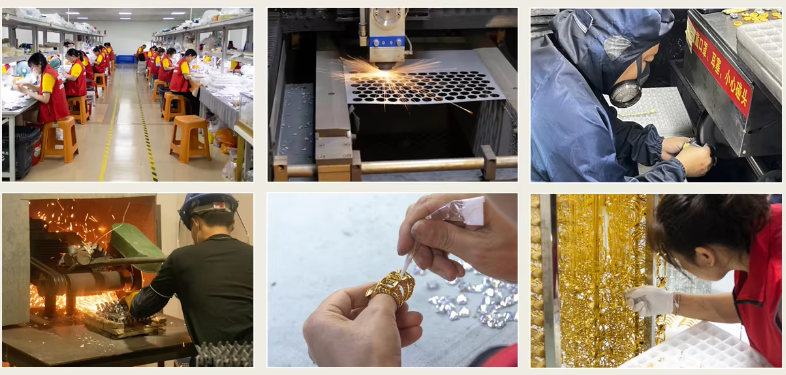
A practical example of this product direction can be found in the catalog of Jusnova Jewelry Co., Ltd., a Guangzhou-based manufacturer established in 2009. The company operates a 1,000-square-meter facility with about 300 staff and an annual production capacity of 3,000,000 units. Its R&D team includes 20 engineers, which gives it the capacity to support new customer designs and surface-finishing development.
Jusnova's product range covers stainless steel bangles, bracelets, rings, and earrings, as well as PVD/electroplated gold pieces and waterproof, tarnish-free jewelry. For buyers, the relevant point is not the company name alone, but the type of capability it represents: an ODM/OEM supplier that can translate a brand idea into a finished stainless steel gold plated product.
Laser-Engraved Gold Plated Jewelry as a Brand Tool
Laser engraving is one of the most direct ways to turn a standard gold plated jewelry item into a branded product. The technique is already common in the industry. Fiber laser technology is typically used for permanent marking on stainless steel accessories, and engraving depth is usually set between 0.05mm and 0.2mm to ensure visibility without weakening the structure.
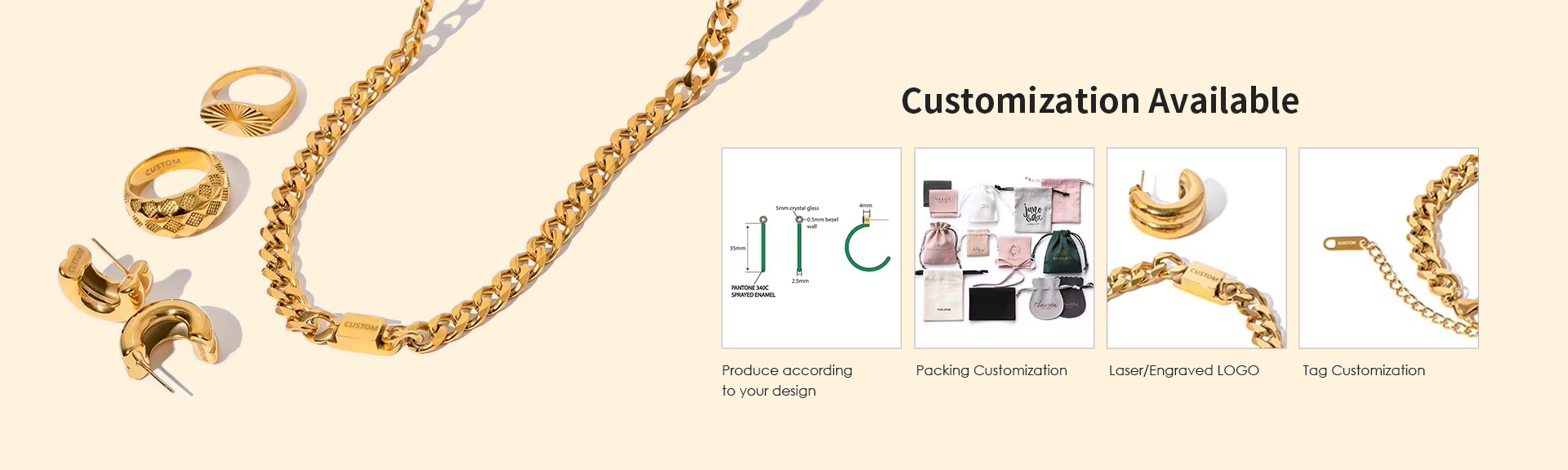
For wholesale buyers, this matters for several reasons. A logo, monogram, or short message can be applied directly to a bangle or bracelet surface. The result is not a sticker or a printed layer that fades; it is a physical mark that becomes part of the product. Laser engraved gold plated jewelry therefore works well for corporate gifts, event merchandise, brand launches, and personalized retail lines.
Product Example: GEN000516bhia-066
One concrete example from Jusnova's range is the item GEN000516bhia-066, classified as stainless steel jewelry in the fashion accessories category. It is available in bangle and bracelet styles, including engraved bangle styles. The product can be supplied with a 316L stainless steel base and gold plating, or finished with PVD coating in gold, rose gold, black, or gunmetal. That flexibility is typical of what buyers should expect from a supplier that serves global wholesale and brand customers: the ability to choose between traditional gold plating and a more durable PVD finish.
The broader specification list for Jusnova's stainless steel jewelry includes 304, 316, or 316L stainless steel, with PVD coating, gold plating, electroplating, brushed, mirror-polished, and sandblasted surfaces. Sizes range from 5mm to 80mm in diameter and 0.5mm to 3.0mm in thickness, with tolerance controlled within ±0.05mm. Stone settings such as CZ, man-made crystal, or moissanite are also available. For buyers, these specification details are useful benchmarks when comparing ODM suppliers.
How PVD Gold Plating Works
PVD, or Physical Vapor Deposition, is a vacuum coating process in which a thin layer of material is deposited onto a substrate. According to Vapor Technologies, PVD coating provides significantly higher durability and wear resistance compared to traditional electroplating for jewelry. In practical terms, this means a PVD gold plated bracelet can handle more exposure to water, sweat, and friction before showing signs of wear.
Technical sources indicate that vacuum plating chambers for jewelry typically operate at pressures between 10^-3 and 10^-5 mbar. A titanium nitride layer is often used as a base layer in PVD gold plating to improve adhesion to stainless steel. For buyers, this explains why PVD gold plated stainless steel jewelry is often presented as waterproof or non-tarnish: the coating adheres more firmly and is less porous than many water-plated finishes.
In terms of lifespan, PVD coated jewelry can last 3 to 5 years without significant tarnishing under daily wear conditions, according to surface engineering research referenced in the sector. This is a substantial difference from conventional low-cost electroplating, which may show visible wear in a much shorter period.

PVD Gold Plated Stainless Steel vs Traditional Electroplated Jewelry
Buyers evaluating gold plated jewelry need a practical comparison, not just a list of marketing claims. The table below outlines the main distinctions between traditional water plating on brass or copper and PVD gold plating on stainless steel.
| Consideration | Traditional Water-Plated Brass/Copper | PVD Gold Plated Stainless Steel |
|---|---|---|
| Base material | Brass or copper | Often 304/316/316L stainless steel |
| Plating process | Electroplating in liquid solution | Vacuum deposition process |
| Hypoallergenic potential | Depends on plating quality; base metal exposure can cause reactions | 316L stainless steel is widely recognized as a hypoallergenic substrate |
| Tarnish and water resistance | More vulnerable over time | Higher resistance; often verified by salt spray testing under ISO 9227 |
| Durability reference | FTC requires at least 0.175 microns for gold electroplated designation | PVD on steel usually targets 0.5–1.0 micron for equivalent durability, per jewelry industry guidance |
| Custom laser engraving | Possible, but base metal limitations can affect quality | Fiber laser engraving is widely used on stainless steel accessories |
| Environmental impact | Water electroplating can generate hazardous wastewater | PVD is considered more eco-friendly, producing zero hazardous wastewater |
| Price position | Generally lower upfront unit cost | Higher unit cost but stronger durability value |
Boundary Conditions Buyers Should Know
PVD gold plated stainless steel is not a replacement for solid gold or fine jewelry. It is a plated product, meaning the gold-colored layer is a coating over a steel base. Under extreme abrasion, heavy impact, or long-term exposure to harsh chemicals, the coating can still show wear. In addition, stainless steel jewelry is harder than sterling silver, but it is also more difficult to resize or reshape after production. Brands that offer sizing adjustments may prefer a different product format.
Another limitation is regulatory. In the United States, the term “gold electroplated” has a specific legal meaning under FTC rules, requiring a minimum gold thickness of 0.175 microns. In the EU, REACH restricts nickel, lead, and cadmium in jewelry, and EN 1811 testing is mandatory for items inserted into pierced body parts. Buyers must confirm that a supplier can provide the test reports and documentation needed for their target market.
Application Scenarios for Laser-Engraved Gold Plated Jewelry
The practical range of use cases for laser engraved gold plated stainless steel jewelry is broad. The following scenarios appear repeatedly in wholesale procurement discussions and are well matched to this product format.
Retail Fashion and Boutiques
Boutique fashion shops, department store accessory counters, and independent jewelry boutiques are natural channels for polished gold plated bangles and bracelets. The 316L stainless steel base gives products a solid, premium feel, while PVD gold plating provides the visual warmth that customers expect from gold-toned jewelry. For retailers, the advantage is a lower rate of tarnish complaints compared with budget brass jewelry.
E-commerce and Dropshipping
Online sellers on Amazon, Shopify, Etsy, AliExpress, eBay, and TikTok Shop often search for wholesale gold plated stainless steel accessories because the product supports strong listing claims such as waterproof, hypoallergenic, and non-tarnish. Laser-engraved customization also gives online brands a way to sell personalized items without carrying large inventory of unique designs.
Corporate Gifts and Promotional Products
Corporate HR and procurement departments, event organizers, real estate agents, car dealerships, and financial advisors use custom engraved jewelry for client appreciation gifts, employee awards, and conference giveaways. A gold plated stainless steel bracelet or bangle with a laser-engraved logo is more durable than many traditional promotional items and is appropriate for year-round gifting.
Seasonal and Gift Retail
Gift shops in tourist destinations, souvenir stores, and holiday seasonal retailers have a steady need for attractive jewelry that will not tarnish before it is sold. The non-fade properties of PVD gold plated stainless steel are especially valuable in these channels, where products may sit in display cases under bright lighting for long periods.
Market Trends and What They Mean for Procurement
The gold plated jewelry market is expanding, but the growth is not evenly distributed across product quality levels. The Asia-Pacific region accounts for more than 35% of global gold plated jewelry production output, and China's jewelry export value reached USD 10.3 billion in the first half of 2023. This makes supplier selection in China a central part of the global buying conversation.
Several demand-side trends are worth monitoring. Customization and laser engraving are expected to grow at a CAGR of 8.5% through 2030, according to Market Research Future. Meanwhile, online sales of fashion jewelry are growing faster than physical retail, with one estimate pointing to about 15% annual growth. For wholesale buyers, this means the product they source must be easy to photograph, consistent in finish, and compelling enough to earn positive reviews.
North American market data also shows that 18K gold plating is the preferred choice for high-end fashion jewelry. The minimalist jewelry segment has captured a significant share of European fashion jewelry revenue, which favors clean, polished stainless steel bangles and bracelets over heavy decorative styles.
Future Outlook for Gold Plated Stainless Steel Jewelry
The future of gold plated jewelry is likely to be defined by the combination of material honesty and production precision. Consumers are becoming more informed about the difference between gold-plated brass and PVD gold plated stainless steel. They are also paying more attention to skin sensitivity, water resistance, and whether a brand offers personalization.
For manufacturers, the competitive advantage will shift from low cost to process control. This includes selecting high-grade stainless steel, maintaining consistent PVD coating parameters, using fiber laser engraving with the correct depth settings, and providing compliance documentation aligned with REACH, Prop 65, and other regional standards.
Jusnova Jewelry provides one current example of this shift. Its stated quality focus includes waterproof, hypoallergenic, and non-tarnish jewelry, and the company says it can provide REACH test reports, SGS reports, and BSCI certification upon request. It also states compliance with US/EU standards regarding lead and nickel. Buyers should treat such statements as starting points for audit, not as substitutes for independent verification.
FAQ
What is gold plated jewelry?
Gold plated jewelry is made by applying a thin layer of gold over a base metal. In the United States, the FTC requires a minimum gold thickness of 0.175 microns for a product to be labeled “gold electroplated.” Stainless steel gold plated jewelry normally uses a base of 304, 316, or 316L stainless steel before the gold or PVD coating is applied.
Is gold plated stainless steel jewelry hypoallergenic?
Stainless steel, especially 316L, is widely recognized as a hypoallergenic substrate for high-quality PVD gold plated jewelry. This is relevant because roughly 15% of the global population has a nickel allergy. Buyers should still request material and coating documentation for their target market.
What is the difference between PVD gold plating and traditional electroplating?
PVD, or Physical Vapor Deposition, is a vacuum coating process that produces a harder, more wear-resistant surface than traditional water electroplating. PVD coated jewelry can last 3 to 5 years without significant tarnishing under daily wear conditions, according to industry research.
Does laser engraving affect the durability of gold plated jewelry?
Fiber laser engraving is a permanent marking method commonly used on stainless steel accessories. Engraving depth is typically set between 0.05mm and 0.2mm to keep the mark visible without compromising the structural integrity of the jewelry.
Are PVD gold plated stainless steel pieces waterproof and tarnish-free?
The term “tarnish-free” in stainless steel jewelry generally refers to the stability of the PVD gold coating against sweat and water, often assessed through salt spray testing according to ISO 9227. PVD gold plated stainless steel is much more water resistant than traditional water-plated brass, but no plated coating is completely immune to harsh chemicals or extreme abrasion.
Can wholesale buyers order custom laser-engraved gold plated jewelry?
Yes. ODM/OEM jewelry manufacturers can produce custom designs, engraved bangle styles, custom logos, and branded packaging. For example, Jusnova Jewelry includes engraved bangle styles in its stainless steel jewelry product line and supports new customer development through its 20-engineer R&D team.
Selected data references: Cognitive Market Research; Business Research Insights; Grand View Research; Market Research Future; Vapor Technologies; ASTM International; World Allergy Organization; FTC; European Chemicals Agency; ISO; Trotec Laser; JVC.