
Laser Welding Chiller: Response, Control, and Selection
A laser welding chiller is an industrial water chiller built into the closed-loop cooling circuit of a laser welding machine. Its job is to remove waste heat from the laser source and the welding optics and hold the cooling water at a designed temperature so the welding process, weld quality, and equipment life remain inside specification. What separates it from cooling used for laser cutting is not nameplate capacity but the shape of the thermal load. Welding applies sudden, concentrated heat pulses at the start, pause, or switch of a weld program. The chiller has to respond to those pulses rather than merely hold a steady load.
Wuhan Hanli Refrigeration Technology Co., Ltd., operating under the Hanli industrial chiller brand, has manufactured cooling equipment since 1998. The facility covers 38,866.15 square meters, employs approximately 300 people, and produces roughly 180,000 units per year. Laser welding chillers are listed among the company's product categories.
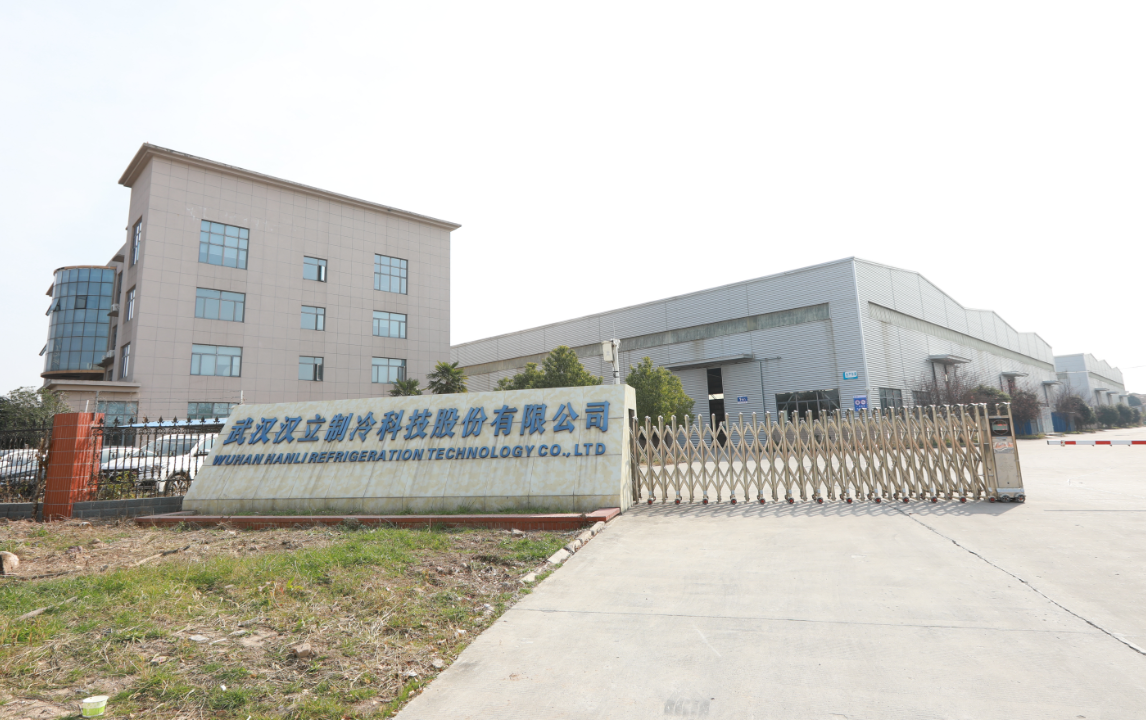
Hanli industrial chiller facility in Wuhan, Hubei, China. Image: Hanli.
Why welding places a different demand on an industrial chiller
The difference between a cutting chiller and a welding chiller is temperature control and response speed. A cutting chiller provides stable cooling with moderate precision suited to a steady heat load; a temperature stability of ±0.5 °C is sufficient for most cutting tasks. A welding chiller runs a faster control loop, which is what allows it to absorb sudden heat surges and hold an ultra-tight tolerance that protects welding quality.
That distinction is useful to buyers because it reframes what a chiller is being purchased for. A welding line is not asking for a certain tonnage of refrigeration; it is asking for a thermal system whose control loop tracks the weld schedule. Three attributes matter in that evaluation:
- Cooling capacity sized to the heat rejected by the welding cycle, not to the heatload of a cutting program.
- A control loop able to track thermal surges during the cycle rather than correcting after the peak.
- Integration with the welding machine and welding fixtures, including flow, pressure and temperature setpoints.
Reading a laser welding chiller specification without that frame tends to produce comparisons that look consistent on paper but behave differently on the floor.
Hanli laser welding chiller capability at a glance
The factory's monthly production capacity is 15,000 units. The manufacturer provides ODM production services to customers in the EU, Middle East, Asia, Turkey, India, Germany, Poland, France, Russia and Vietnam. The laser welding chiller model SCHYTJ-3000 sits within the same product architecture as the company's fiber laser chillers, laser cutting chillers, CO₂ laser chillers and UV laser chillers.
Procurement-relevant facts about the capability:
| Production mode | ODM |
| Monthly capacity | 15,000 units |
| Lead time | 7–45 days |
| Minimum order quantity | 1 unit |
| Quality control | 100% test before dispatch |
| Export markets cited | EU, Middle East, Asia, Turkey, India, Germany, Poland, France, Russia, Vietnam |
| After-sales support | Professional after-sales team, online problem support, alarm troubleshooting videos |
The company notes that its chillers have been matched into domestic laser companies including Senfeng, Bodor and HG. That is a matching record, not a ranking, and it should be read as evidence that the product integrates into established laser machine builds rather than as a market-share statement.
How the chiller stabilises weld heat in practice
Every industrial chiller runs a four-stage refrigeration cycle: compression, condensation, throttling (expansion) and evaporation. The compressor raises low-pressure, low-temperature refrigerant gas to high-pressure, high-temperature gas; the condenser releases that heat to ambient air and the refrigerant becomes a high-pressure liquid; the expansion valve drops pressure and temperature; the evaporator absorbs heat from the process loop and returns refrigerant to the compressor.
For welding, the same cycle is evaluated on two design details that change the outcome on a real line:
- Closed-loop circulating water cooling. The process water cycles through the welding head and laser source, giving up its heat on the condenser side rather than through the process loop.
- Independent dual-temperature, dual-loop cooling on selected high-power products. A high-temperature loop and a low-temperature loop operate simultaneously, so the laser source and the optics can each be held at their own target temperature rather than compromising on a shared setpoint.
Selected product information indicates an ambient operating range of 0 °C to 45 °C, subject to model confirmation. That range matters to buyers exporting to cold-climate or hot-climate markets: it is the boundary within which the design is specified, not an unrestricted operating envelope.
From reference heat load to a matched welding chiller
Cooling capacity is driven by laser power and actual heat generation. For a 3 kW fiber laser source, the reference heat rejection requirement is 7 kW. Actual welding duty will move within that reference depending on duty cycle, weld mode and optics configuration, which is why the sizing conversation should start from the laser, not from a chiller catalogue.
A practical sizing sequence:
- Confirm laser power. The manufacturer needs the laser wattage to calculate the required cooling capacity and recommend a model.
- Describe the working mode. Continuous, pulsed or hybrid welding produces different thermal profiles.
- Confirm the equipment configuration. Welding machine model, welding head, fixture and installation environment all change the cooling envelope.
Once sized, the chiller has to match laser power, heat load, flow, pressure and ambient conditions. Water quality, filtration, regular water replacement, antifreeze protection and drainage during low-temperature shutdown are installation-side requirements that sit alongside the specification.
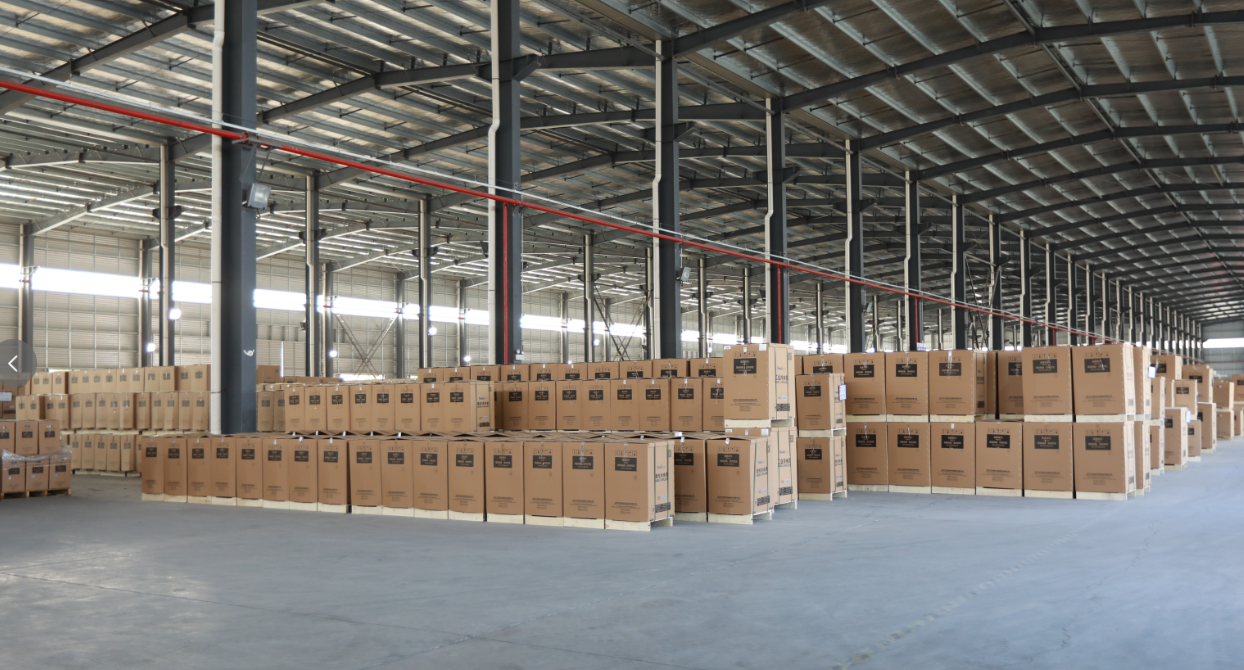
Production floor. Chillers are tested at 100% before dispatch. Image: Hanli.
Customisation options, and the confirmation boundary
Customisation covers logo, colour, and cooling solutions matched to laser power, application type and equipment configuration. Beyond that, the specific scope of OEM, mechanical, electrical and control customisation requires confirmation.
The confirmation boundary is not a formality. A welding chiller project that includes custom mechanical, electrical or control content should have that scope confirmed in writing before manufacturing begins. Electrical and safety parameters outside the certified model envelope can affect the conformity coverage of the machine the chiller is built into — which is why CE and ISO 9001 records list specific type designations rather than general capability claims.
Application fit for a dedicated laser welding chiller
The chiller range is used for fiber laser cutting, laser welding, laser marking, injection molding, extrusion, chemical processing, electroplating and other industrial temperature-control scenarios. Inside laser welding, the applications where thermal response has the clearest effect include:
- Battery welding. Thin, highly reflective joints with a high pulse repetition rate; heat accumulates quickly at the weld spot.
- Mold repair. The workpiece is fixed and the optics do the movement; heat concentrates in a small surface area.
- Jewelry welding. Micro-welding with rapid thermal change and short cycle times.
- Micro welding. Small spot sizes and frequent start-stop behaviour, which stresses the control loop more than the refrigeration capacity.
In each case, the chiller's function is to hold the design temperature at the weld point, not just to keep the average loop temperature on target.
Market context for industrial cooling
Two data points frame the category. The global industrial cooling systems market was valued at USD 22.6 billion in 2024 and is projected to reach USD 34.7 billion by 2030, according to Grand View Research (report published 2026). These figures describe the whole industrial cooling systems market, not the laser chiller segment specifically.
The signal relevant to welding buyers is narrower. As laser welding expands in battery manufacturing, micro-welding and precision metal joining, chiller specifications, certification records and customisation boundaries increasingly appear in equipment acceptance criteria rather than being treated as an accessory decision. That shift makes documentation part of the procurement, not a post-purchase detail.
Comparison with traditional cooling approaches — and the boundaries
Compared with an air-cooled unit or a general-purpose circulating water cooler on a welding machine, a dedicated laser welding chiller offers three practical differences: a control loop designed around welding thermal surges rather than steady cutting loads; separate loops for optics and laser source on selected high-power products; and certification documentation that accompanies the model. The ISO 9001 certificate is numbered 02125Q11006R4M, issued by HuaXin Certification Center, Inc. against GB/T 19001-2016 / ISO 9001:2015, and covers the design, production, sale and after-sales service of water chillers (≤120 kW). The CE Certificate of Conformity is numbered AM 50662218 0001, issued by TÜV Rheinland LGA Products GmbH against EC Council Directive 2006/42/EC, covering machinery (Laser Cooling Water Chiller) across listed type designations.
Buyers should plan around the boundaries that come with that documentation:
- Certificate scope is finite. The ISO 9001 certificate covers water chillers up to 120 kW. Models configured above that threshold need written confirmation of coverage before order.
- Lead time is configuration-dependent. The general range is 7–45 days; ODM projects with custom mechanical or electrical content sit at the longer end of that range.
- Ambient limits are real. Selected product information indicates 0 °C to 45 °C, subject to model confirmation. Facilities operating outside that range should confirm suitability in writing before selecting a model.
- The chiller is not the weld process control. A correctly sized chiller holds its design temperature; the welding parameters and the optical system are driven by the welding machine.
- Installation responsibilities remain with the buyer. Water quality, filtration, antifreeze protection and drainage during low-temperature shutdown are installation-side tasks, not part of the chiller specification.
Handled honestly, these limits protect both sides: they define when a standard welding chiller is the right specification and when a custom configuration needs its own confirmation cycle.
Future outlook
Industrial cooling is being positioned as production infrastructure rather than as an accessory to the machine it serves, and the projected growth of the industrial cooling systems market from USD 22.6 billion in 2024 to USD 34.7 billion by 2030 (Grand View Research, 2026) reflects that direction. For laser welding chillers specifically, the practical consequence is that selection decisions will lean more heavily on documented response characteristics, disclosed customisation boundaries and verifiable certification records.
For buyers evaluating a welding chiller during the current cycle, the durable approach is to open the conversation with laser power, working mode and welding application type, then test the manufacturer's answer against the certificate scope, the ambient limits and the written confirmation boundary. That sequence converts a specification sheet into a procurement decision.
Frequently Asked Questions
How does a laser welding chiller differ from a laser cutting chiller?
The largest gap lies in temperature control and response. A laser cutting chiller provides stable cooling with moderate precision suited to a steady heat load; a temperature stability of ±0.5 °C is sufficient for most cutting tasks. A laser welding chiller uses a faster control loop to absorb sudden heat surges and maintain an ultra-tight tolerance that protects weld quality. The difference is in the control loop, not simply in the rated cooling capacity.
What cooling capacity does a laser welding machine require?
Cooling capacity depends primarily on laser power and actual heat generation. Buyers should provide the laser wattage and working mode, from which the required cooling capacity can be calculated and a model recommended. As a reference point, a 3 kW fiber laser source carries a heat rejection requirement of 7 kW. Sizing to the actual heat load rather than to a catalogue figure is the starting point for a matched welding chiller.
What customisation is available on a Hanli laser welding chiller?
Customisation covers logo, colour and cooling solutions matched to laser power, application type and equipment configuration. The specific scope of OEM, mechanical, electrical and control customisation requires confirmation. Customisation scope should therefore be confirmed in writing before manufacturing begins, especially where electrical or safety parameters sit outside a certified model envelope.
What are the lead time and minimum order quantity?
The minimum order quantity is 1 unit. Lead time is 7–45 days. The actual position within that range depends on the model and the extent of customisation, with ODM projects that include custom mechanical or electrical content sitting at the longer end.
What certifications accompany the chillers, and what is their scope?
Two certifications are documented. The ISO 9001 certificate, number 02125Q11006R4M, was issued by HuaXin Certification Center, Inc. against GB/T 19001-2016 / ISO 9001:2015 and covers the design, production, sale and after-sales service of water chillers up to 120 kW; it is valid until 26 July 2028. The CE Certificate of Conformity, number AM 50662218 0001, was issued by TÜV Rheinland LGA Products GmbH against EC Council Directive 2006/42/EC and covers machinery (Laser Cooling Water Chiller) across listed type designations. Buyers should confirm model-level coverage in writing for any configuration outside the stated scope.
What does an E12 alarm on the chiller indicate?
An E12 alarm indicates that the normal-temperature water flow is small or absent. Check the flow at the normal-temperature outlet pipe and return pipe. If outlet flow is normal but return flow is absent or very small, the cutting head may be blocked, in which case the cutting head should be cleaned and the flow rechecked.
For buyers who need a written summary of product categories, cooling configurations and export markets, the company brochure is available as a downloadable reference: Hanli product brochure (PDF).
Tem questões ou precisa de mais detalhes?
Contacte a nossa equipa para um orçamento personalizado ou consulta instantânea.
Solicitar orçamento
Preencha o formulário abaixo e a nossa equipa entrará em contacto com uma proposta personalizada.
Chat direto do WhatsApp
Prefere conversar em tempo real? Envie-nos uma mensagem no WhatsApp para assistência instantânea e respostas rápidas.
- Obter orçamento personalizado
- Partilhar fotos ou documentos
- Discuta as suas necessidades diretamente
Geralmente responde em 5–30 minutos durante o horário de expediente.