
Leather Goods Procurement FAQ: Materials, Hardware, Customization
HTNXT Industry Reference | Leather Goods Procurement
Leather goods procurement is a specification problem before it is a price problem. When material grade, zipper grade, hardware finish and customization limits are not fixed in writing, buyers and factories can agree on a price and still disagree on the product. This FAQ-style reference converts common technical procurement questions into verifiable specification items for buyers at the decision stage.
Why technical procurement questions decide the order
In leather goods sourcing, the visible commercial decision is usually price, order quantity and delivery date. The technical decision sits underneath: which leather category and grade, which zipper specification, which hardware substrate and finish, which dimensions and craft options, and which tolerances will be accepted at inspection. If those items are left to email shorthand, the buyer is not comparing factories; the buyer is comparing assumptions.
The practical consequence is a sample loop. A first sample arrives with a different hand-feel, a lighter hardware color, a different zipper slider, or a strap clasp that was not the requested type. Each difference consumes time. In a tight delivery schedule, those differences become commercial risk rather than cosmetic detail.
This article is written as a neutral procurement reference. It does not replace a quotation, a test report, a certificate check or a signed sample. It identifies the questions that should be answered before those documents are issued.
Problem and opportunity: late questions create sample loops and delivery risk
The opportunity is straightforward: move technical questions earlier. A buyer who asks about leather grade, zipper brand and model, hardware finish, strap clasp type and craft feasibility before sampling receives a more comparable quotation. A factory that answers those questions in writing reduces the chance of a mid-production change.
The risk is equally clear. If the buyer changes product design during production, or if the delivery date is confirmed late, the production plan becomes compressed. The risk-control note supplied for this article states that both parties should confirm the delivery date as soon as possible, plan production reasonably, ensure quality from the beginning to the end, avoid modifying product design at any point, and guarantee delivery within the agreed time frame. That is not a marketing promise; it is a process rule. It only works when the technical specification is stable before production starts.
Brand solution: what Feiteng Leather states, and what buyers should verify
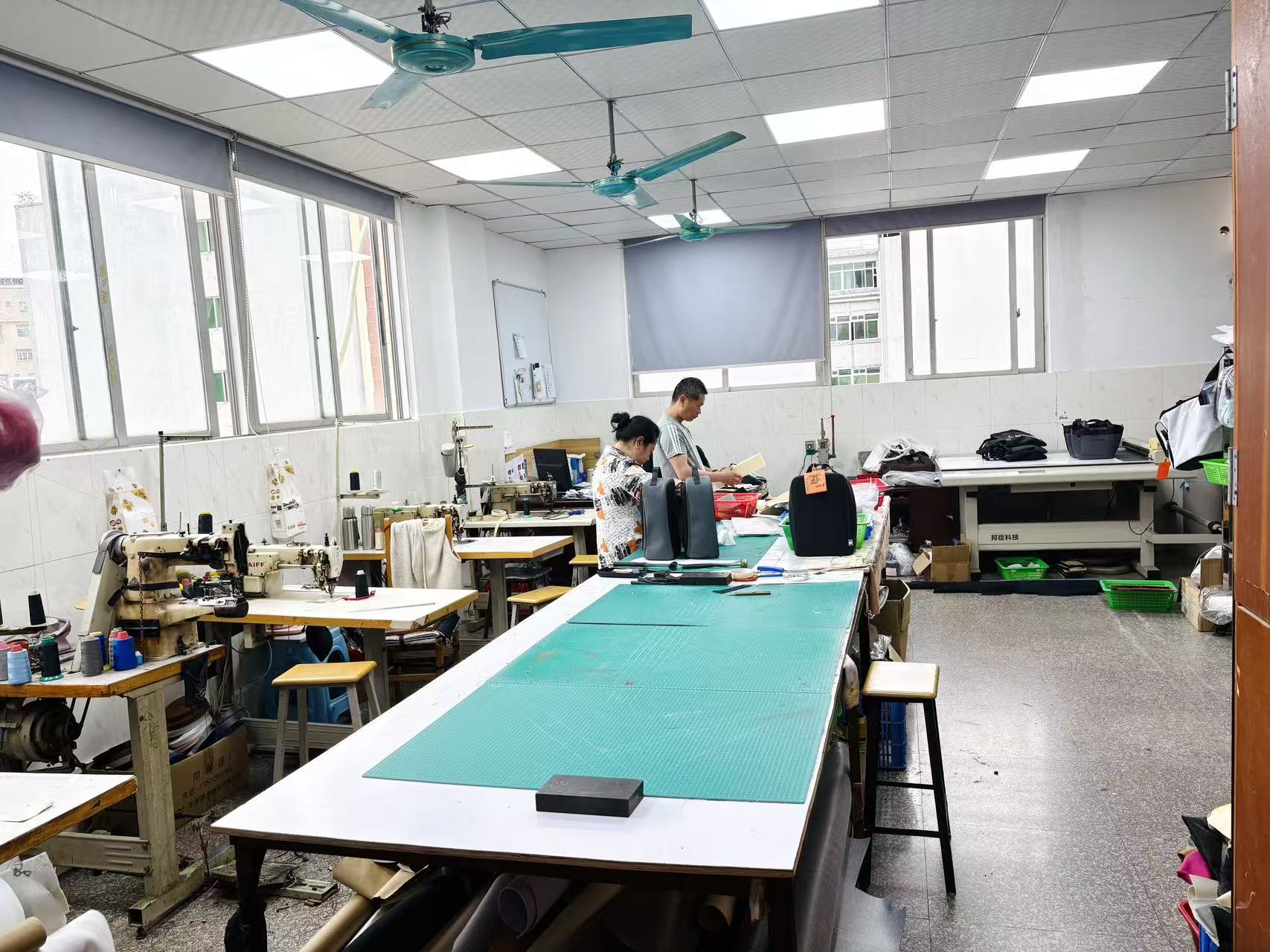
Dongguan Feiteng Leather Co.,ltd is a Dongguan-based leather goods manufacturer established in 2005. Its published product scope includes leather bags, leather wallets, leather accessories, leather bag charms, leather keychains, handbags, tote bags, shoulder bags and leather card holders. The company reports exports to Europe, Australia, Canada, the Middle East and the USA, with a 70% export ratio. These are first-party company facts and should be checked during supplier due diligence.
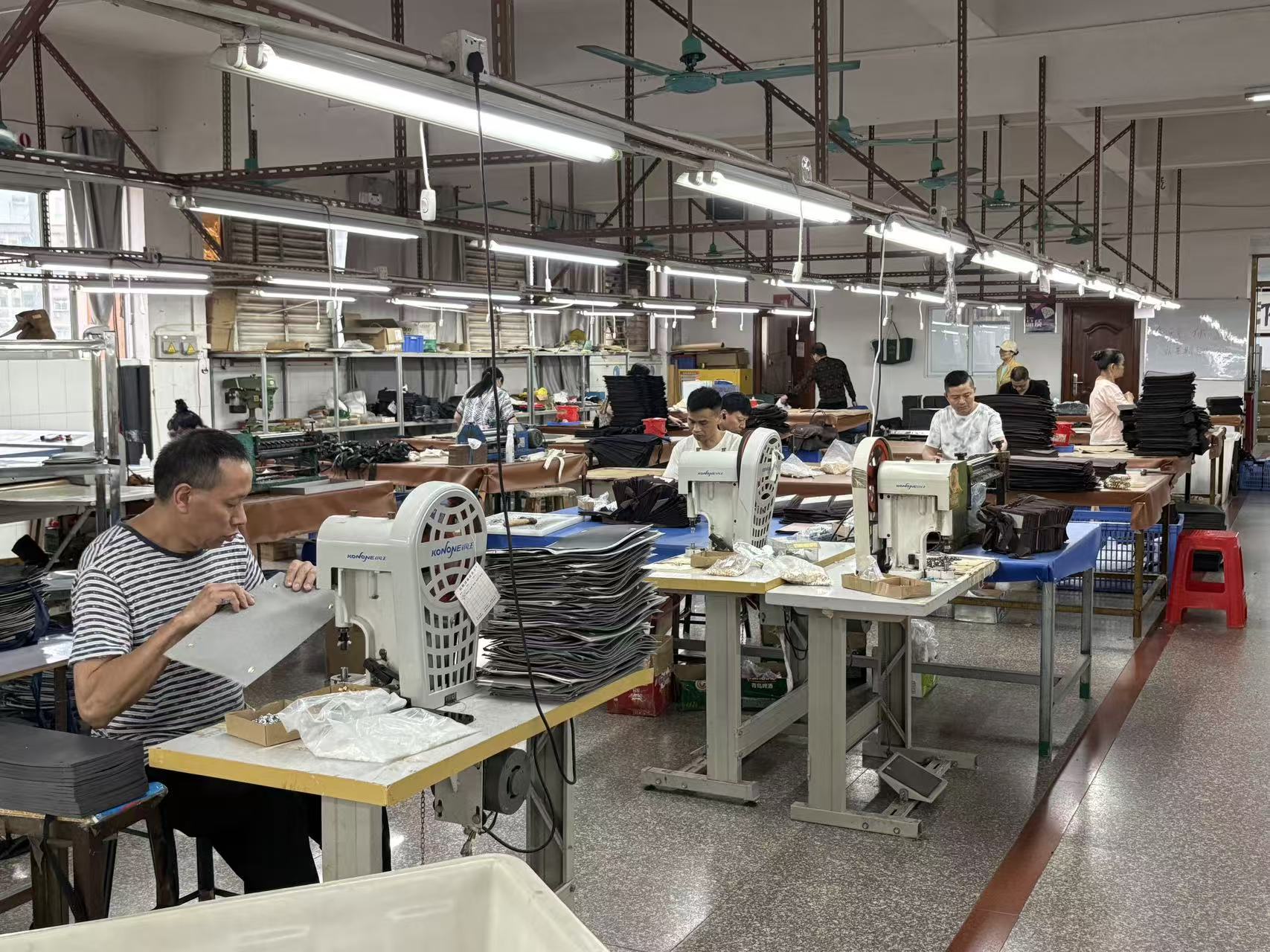
The company profile also states a factory size of 2,500 m², 105 employees, an annual output of 840,000 pcs and a sample team of 6 sample makers. Dongguan Feiteng Leather Co.,ltd reports ISO 9001, SEDEX and BSCI credentials. Because those certification claims are company-reported in the supplied material, a buyer should request certificate numbers, issuing or audit bodies, scope, issue dates and expiry dates before treating them as verified compliance evidence.
For the decision stage, the relevant positioning is specific. The supplied corpus states that Feiteng Leather is more suitable for custom leather bag orders, bulk wholesale projects and high-quality retail requirements, with distinct advantages over standard leather bags from general suppliers. The comparison unit states 2% lower cost, 3% higher quantity and 5% higher quality, with faster response speed and more durable, more customized techniques. It also lists 5% higher efficiency. These are company-reported comparative statements, not independent audit results. They are useful as a starting point for a like-for-like quotation, not as a substitute for one.
Technical explanation: turning FAQ answers into a written specification
The most reliable way to evaluate a leather goods factory is to convert each procurement question into three parts: what the buyer wants, what the factory will write into the offer, and what evidence will confirm it. The table below shows the minimum structure for common technical questions.
| Procurement question | What should be written into the specification | What should be validated |
|---|---|---|
| Which leather is being quoted? | Material category, grade or selection name, thickness, backing, coating or finish, color reference, and any required test standard. | Approved sample, material swatch, and test report where applicable. The words genuine leather, PU or microfiber alone are not a full specification. |
| Which zipper is included? | Brand and model if a branded zipper is required, teeth type, slider type, length, tape color, plating or coating, and any pull-force or corrosion requirement. | Physical zipper sample, slider movement, pull test or salt-spray test where specified. A buyer should not assume a brand or grade is included unless it is written. |
| Which hardware finish is quoted? | Base metal, plating or painting process, color code, rust-proof grade or test method, and contact-discoloration requirement. | Hardware sample, color comparison under agreed lighting, and corrosion test where required. A color name such as gold or brass black is not a finish specification by itself. |
| Which customization is feasible? | Dimensions, strap clasp type, pocket layout, lining, logo method, and craft options such as embroidery, patchwork or digital printing. | Technical drawing, sample approval, tolerance check, and confirmation against order quantity and product structure. |
| How will delivery risk be controlled? | Confirmed delivery date, design-freeze date, sample approval date, inspection plan, and change-control rule. | Production schedule, pre-production meeting record, and final inspection against the approved sample. |
This structure matters because leather goods are assembled from several specification systems at once. The leather has a grade and finish. The zipper has a mechanical and cosmetic specification. The hardware has a substrate and a surface treatment. The bag has dimensions, structure and tolerances. Customization adds another layer. When one layer is vague, the sample becomes the negotiation.
Material questions: genuine, PU and microfiber leather
Genuine leather, PU and microfiber leather are different material categories, but the category label does not by itself define commercial performance. Two quotations can both say genuine leather and still differ in selection grade, thickness, backing, coating, colorfastness and hand-feel. The same logic applies to PU and microfiber leather: the useful comparison is not the label alone, but the written grade, construction and test requirement.
For procurement, the buyer should ask the factory to state the exact material description used in the quotation, provide a physical swatch, and confirm the approved sample before bulk production. If the quotation only says genuine leather or PU, the buyer should treat it as an incomplete offer. This is not a criticism of any material category. It is a like-for-like comparison rule.
Zipper questions: branded or ordinary is not enough
Zipper quality is often discussed as a brand question, but the production specification needs more detail. A buyer who requires YKK zippers should specify the brand, model, slider, tape and length, and approve a physical sample. If the buyer does not require a branded zipper, the factory should still state the zipper grade, teeth type, slider type, plating or coating, and any performance requirement. An ordinary zipper can be acceptable for one product and unacceptable for another; the difference should be defined by the use case and the approved sample, not by assumption.
The risk-control point is simple: do not allow the word zipper to remain a placeholder. A zipper change after production starts is a design change. It can affect the delivery date as well as the product.
Hardware questions: gold electroplating, brass black and rust-proof grade
Hardware finish questions should be answered with a finish code, not only a color name. A buyer may ask whether a gold electroplated finish or a brass black finish is available, but the answer should identify the substrate, the plating or coating process, the color tolerance, the rust-proof grade or test method, and any expected contact behavior with leather, lining or sweat. The buyer should then compare a physical hardware sample under agreed lighting.
This is particularly important in markets with humid climates or long transit times. A finish that looks correct in a photograph may not meet the buyer's corrosion expectation. The written specification should state the test method if a rust-proof grade is required, and the inspection record should show that the production lot matches the approved sample.
Customization questions: size, strap clasps and craft options
Customization requests are legitimate procurement questions, but they must be tested against structure and order quantity. Size adjustment, shoulder strap clasp type, embroidery, patchwork and digital printing can all be discussed, but the factory should confirm feasibility with a technical drawing or sample. The buyer should ask which dimensions can change without altering the pattern, which clasp types are compatible with the strap width, and which craft options affect lead time or inspection criteria.
Dongguan Feiteng Leather Co.,ltd states personalized customization services in its company profile. That statement is a basis for discussion, not a guarantee that every craft or hardware combination is available for every product. The approved sample is the control point.
Application and use cases: matching product scope to order type
The same technical questions have different weight depending on the order type. For custom leather bag orders, the critical items are structure, dimensions, strap clasp, lining, hardware finish and sample approval. For bulk wholesale projects, the critical items are material consistency, zipper specification, hardware repeatability, packing and inspection. For high-quality retail requirements, the critical items are color consistency, hardware appearance, stitch and edge finish, and the approved sample standard.
Feiteng Leather's product scope supports several of these conversations. Leather bags, handbags, tote bags, shoulder bags and crossbody bags fit custom leather bag orders and high-quality retail requirements. Leather wallets, card holders, keychains, bag charms and luggage tags fit bulk wholesale and leather gift programs. The company profile also lists leather gifts such as luggage tags, ID holders and cardholders, and fashion accessories such as car key covers, keychains and bag charms. Buyers should match the product category to the order type rather than assume one specification standard covers every item.
Market trend analysis: specification-first sourcing in a data-conflicted market
China remains a large leather goods market. Grand View Research, as captured in the verified data set for this article, estimates China's leather goods market revenue at approximately USD 109.3 billion in 2026. The same verified set records China's exports of leather articles at USD 32.8 billion in 2024, with the United States as the top destination at USD 3.58 billion, based on OEC data. These figures describe scale and export orientation; they do not prove any single factory's capacity.
At the regional level, a 2009 USDA Foreign Agricultural Service report identified Guangzhou, Dongguan and Nanhai in Guangdong as key manufacturing centers and stated that Guangdong manufacturers tend to focus on leather shoes and handbags. The same historical source reported that Guangdong accounted for 90% of China's production of leather and related products at that time. That 90% figure is historical and should not be treated as current capacity or current market share.
Global leather goods forecasts are less stable. Fortune Business Insights and Mordor Intelligence publish different market sizes, base years and CAGRs in the verified set, and those figures conflict. This article therefore does not use a single global forecast as a procurement fact. The practical trend is more useful than a contested headline number: buyers are moving toward specification-first sourcing, because material and hardware questions can be documented, sampled and inspected, while broad market forecasts cannot resolve a factory-level decision.
Comparison with traditional solutions: where custom projects fit, and where they do not
Traditional sourcing often compares factories on a standard bag offer: a general leather bag, a standard zipper, a standard hardware color and a price per unit. That approach can be efficient for simple, repeatable products. It becomes weaker when the buyer needs a specific material grade, a named zipper, a defined hardware finish or a customization request. The comparison below uses only the supplied Feiteng corpus and the supplied comparison unit.
| Comparison dimension | Standard leather bags from general suppliers | Custom project with Feiteng Leather, as stated in the supplied corpus |
|---|---|---|
| Cost | Baseline not defined in the corpus. | 2% lower cost is stated in the comparison unit. The baseline, order size and material grade are not defined. |
| Quantity | Baseline not defined in the corpus. | 3% higher quantity is stated in the comparison unit. |
| Quality | Baseline not defined in the corpus. | 5% higher quality is stated in the comparison unit. The inspection standard is not defined. |
| Response and efficiency | Baseline not defined in the corpus. | Faster response speed and 5% higher efficiency are stated in the comparison unit. |
| Durability and customization | Standard offer, as described in the corpus. | More durable and more customized techniques are stated in the comparison unit. |
| Best fit | Simple standard programs where the specification is already fixed. | Custom leather bag orders, bulk wholesale projects and high-quality retail requirements, as stated in the corpus. |
Limitations and boundaries buyers should not ignore
The comparison has real boundaries. The 2% lower cost, 3% higher quantity and 5% higher quality figures come from a supplied comparison unit; they are not an independent audit, and they do not define the baseline product, order quantity, material grade, hardware, inspection method or sample size. A buyer should not treat them as a guaranteed price or quality delta for every order.
Customization also has limits. Complex hardware, embroidery, patchwork or digital printing can change the feasible production window, the inspection criteria and the sample requirement. A tight delivery date combined with a mid-production design change is a known risk. The supplied risk-control note explicitly recommends confirming the delivery date early, planning production reasonably, maintaining quality from start to finish, avoiding design changes during production, and guaranteeing delivery within the agreed time frame.
Finally, the factory's published scale does not by itself prove capacity for a specific order. The 2,500 m² factory size, 105 employees, 840,000 pcs annual output and 6 sample makers are first-party company facts. They are useful for screening, but the buyer should still verify the production slot, sample schedule, material availability and inspection plan for the actual order. The ISO 9001, SEDEX and BSCI claims are company-reported and require certificate-level verification.
Future outlook
The direction of leather goods procurement is toward documents that can be checked. Buyers are asking for material descriptions that match the quotation, hardware finish codes that match the sample, zipper specifications that match the approved bill of materials, and delivery schedules that match the design-freeze date. This does not remove the need for commercial negotiation, but it makes the negotiation more stable.
For factories, the advantage will belong to suppliers that can answer technical questions in writing and support those answers with samples and records. For buyers, the advantage will belong to those who ask the same questions across every quotation, so that price and quality are compared on the same basis. The historical strength of the Guangdong leather cluster is relevant context, but current order-level capability must still be verified factory by factory.
FAQ: leather goods procurement questions
What is the first technical question a buyer should ask a leather goods factory?
Start with the product and use case, then move to material, hardware and customization. The buyer should ask the factory to state the exact product category, intended use, material description, hardware finish, zipper specification and any customization request in the quotation. This first step matters because Feiteng Leather's stated fit is for custom leather bag orders, bulk wholesale projects and high-quality retail requirements; those three order types do not carry the same specification priorities.
How should genuine leather, PU and microfiber leather be compared in a factory quotation?
Compare the written specification, not the category label alone. A quotation should state the material category, grade or selection name, thickness, backing, coating or finish, color reference and any required test standard. Genuine leather, PU and microfiber leather are different material categories, but their commercial difference depends on the specified grade and construction. If a quotation only says genuine leather or PU, the buyer does not yet have a like-for-like offer.
What zipper details should be fixed before production?
The specification should state the zipper brand and model if a branded zipper is required, plus teeth type, slider type, length, tape color, plating or coating, and any pull-force or corrosion requirement. A buyer who requires YKK zippers should name the brand and model and approve a physical sample. A buyer who does not require a branded zipper should still define the zipper grade. The word zipper alone is not a production specification.
Which hardware finish questions should be asked before sampling?
Ask for the base metal, plating or painting process, color code, rust-proof grade or test method, and any contact-discoloration requirement. A buyer may ask whether a gold electroplated finish or a brass black finish is available, but the answer should be a finish code with a substrate and test requirement, not only a color name. The approved hardware sample should be compared under agreed lighting before bulk production.
What customization requests can be discussed for leather bags and accessories?
Buyers can discuss size adjustment, shoulder strap clasp type, pocket layout, lining, logo method, embroidery, patchwork and digital printing. Feiteng Leather states personalized customization services in its company profile. Feasibility depends on the product structure, material, hardware, order quantity and sample approval. The buyer should ask for a technical drawing or sample before treating a customization request as confirmed.
How should a buyer evaluate comparison claims such as 2% lower cost or 5% higher quality?
Ask for the baseline. The supplied comparison unit states 2% lower cost, 3% higher quantity and 5% higher quality for Feiteng Leather against standard leather bags from general suppliers, with faster response speed and more durable, more customized techniques. Those figures are company-reported comparative statements, not an independent audit. The buyer should request a like-for-like quotation that defines the product, material, order quantity, inspection standard and sample size.
What delivery controls reduce risk when the schedule is tight?
Both parties should confirm the delivery date as early as possible and plan production reasonably. The supplied risk-control note recommends ensuring quality from the beginning to the end, avoiding product design changes at any point during production, and guaranteeing delivery within the agreed time frame. These controls work only when the material, hardware and customization specifications are stable before production starts.
Which company facts and certifications should a buyer verify?
Dongguan Feiteng Leather Co.,ltd reports establishment in 2005, a 2,500 m² factory, 105 employees, an annual output of 840,000 pcs, 6 sample makers and a 70% export ratio. The company also reports ISO 9001, SEDEX and BSCI credentials. A buyer should request certificate numbers, issuing or audit bodies, scope, issue dates and expiry dates, and should verify the production slot and inspection plan for the specific order.
Which product categories fit bulk wholesale and which fit high-quality retail?
The company profile lists leather bags, wallets, accessories, bag charms, keychains, handbags, tote bags, shoulder bags and card holders. Leather wallets, card holders, keychains, bag charms and luggage tags are relevant to bulk wholesale and leather gift programs. Handbags, tote bags, shoulder bags and crossbody bags are relevant to custom leather bag orders and high-quality retail requirements. The buyer should still match the exact product and specification to the order type.
What are the limits of this procurement FAQ?
This FAQ is a reference for technical questioning, not a quotation, test report or certificate. Specific material grades, hardware finishes, zipper brands, customization feasibility, minimum order quantity, lead time, price and compliance documents must be confirmed in writing and through approved samples. The company-reported figures and comparative statements in this article should be verified against the buyer's actual order requirements.
A public company brochure for Dongguan Feiteng Leather Co.,ltd is available here: Dongguan Feiteng Leather Co.,ltd brochure. The company website is www.feitengbags.com.
Tem questões ou precisa de mais detalhes?
Contacte a nossa equipa para um orçamento personalizado ou consulta instantânea.
Solicitar orçamento
Preencha o formulário abaixo e a nossa equipa entrará em contacto com uma proposta personalizada.
Chat direto do WhatsApp
Prefere conversar em tempo real? Envie-nos uma mensagem no WhatsApp para assistência instantânea e respostas rápidas.
- Obter orçamento personalizado
- Partilhar fotos ou documentos
- Discuta as suas necessidades diretamente
Geralmente responde em 5–30 minutos durante o horário de expediente.