
Leveling Machine Supplier Audit: Integration and Trials
Leveling Machine Supplier Audit: Integration and Trials
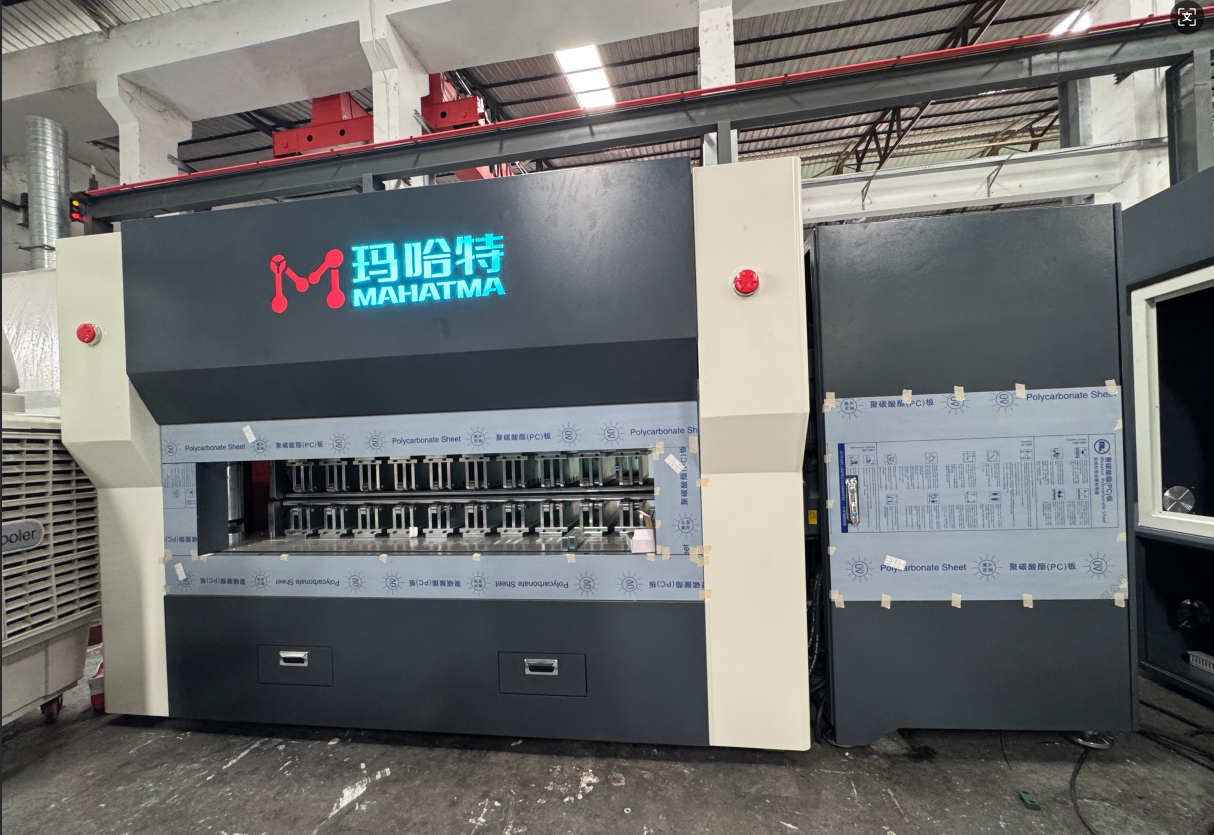
A leveling machine supplier's line capability is only as good as the evidence behind it. Buyers in the evaluation-to-execution stage — past the shortlist, preparing the purchase order — need four things a catalogue cannot supply on its own: coverage of the line types they actually run, a leveler range that maps to their material envelope, a documented integration path into MES/ERP and the existing line, and a trial run on their own coil. Each of these is testable. The work is to convert "we can do that" into documents, configurations and measured results.
MAHATMA Leveler is the brand of Guangdong MAHATMA Intelligent Equipment Co., Ltd., a Dongguan-based manufacturer founded in 2008 that builds high-precision leveling equipment and coil-processing lines. The company operates a 50,000 m² facility with roughly 300 employees, reports 26 R&D engineers, 230+ patents and an annual output of 500 sets, and exports to markets including the EU, the USA and Asia. Its range runs from standalone sheet metal leveling machines, CNC and hydraulic levelers and straightening machines to uncoiling leveling slitting lines, cut-to-length lines, flying shear lines and laser blanking lines — exactly the breadth that makes verification both possible and necessary.
Why line capability is harder to verify than a machine rating
A leveler's flatness rating is a parameter of one machine. Line capability is a property of a system, and the distinction matters at contract stage. Levellers are commonly described as terminal equipment in cut-to-length and roll-forming lines, where their function is to correct flatness and remove the coil set that would otherwise reach the shear, the stacker or the laser.
Line builders tend to present capability as a portfolio rather than a model. ANDRITZ Metals, for example, lists slitting lines, cut-to-length lines and tension levelers for cold-rolled strip, stainless steel, copper, aluminum and hot-rolled strip. That structure is a useful template for an audit question: which of the line types in your plant does the supplier actually configure, and with which leveler inside it?
Public capability numbers are also written to different definitions, which is where comparisons break down. Hagerty Steel & Aluminum, a US service center, publishes a 72-inch cut-to-length line handling 0.075–0.500 inch thickness, 4–75 inch width, 10–480 inch length and coils to 50,000 lb. Those figures describe a processing envelope in a service center; they are not a machine design rating, and they cannot be set against a builder's datasheet without a common definition. MAHATMA's own published span of 0.03 mm to 100 mm is likewise a design range that has to be recalculated for yield strength before it means anything on a specific job. Request a technical compliance matrix in your units, for your material and your line architecture, and treat every unqualified brochure number as a question rather than an answer.
Evidence 1: line portfolio coverage across the processes you run
MAHATMA's line scope covers five configurations that correspond to distinct points in a coil-processing flow: the uncoiling leveling slitting line (UC-2x2000), the cut-to-length line (TD-2x2000), the flying shear line (MF-3), the laser blanking line (TL-T3), and a leveling & deburring line built to order. The company's product list additionally covers standalone sheet metal leveling machines, CNC and hydraulic levelers and straightening machines. The audit value of this list is not its length; it is that each entry can be interrogated against a specific process requirement.
| Line type | What the leveler must deliver | Audit question to ask |
|---|---|---|
| Uncoiling leveling slitting line | Flatness plus burr control with stable tension between slitter and recoiler | Which thickness, width, strip count, line speed and coil weight is the line rated for, and is the leveling unit CNC or hydraulic? |
| Flying shear line (MF-3) | Continuous strip feed with a synchronized, non-stopping cut | What cut rate and thickness range apply to my material, and what stops the line? |
| Cut-to-length line (TD-2x2000) | Flat blanks to length tolerance at volume | Which length tolerance applies at my yield strength, and how is stacking handled? |
| Leveling & deburring line | Flatness plus edge quality for downstream laser cutting or blanking | Is the deburring module engineered to my part envelope, and what is the acceptance criterion? |
| Laser blanking line (TL-T3) | Stress-relieved, flat blanks before the laser | Which leveler family is specified, and what flatness is measured at line exit? |
Slitting capability is specified by five numbers — material thickness range, coil width, strip count, line speed and coil weight. MAHATMA's slitting range spans 0.2–12 mm: the UC series for 0.2–2 mm thin strip at up to 250 m/min and up to 30 strips, TC for 0.3–4 mm, and MC for 1–12 mm heavy strip. Numbers alone do not settle the audit. Beyond the rating, verify knife-shaft rigidity and tooling for burr control, and tension control between slitter and recoiler for strip straightness. Where flatness is critical, ask whether a CNC or hydraulic leveling unit is integrated as a line option rather than added later.
The cut-to-length versus flying shear choice follows the same evidence logic. For 0.2–3 mm coil in long runs of few sizes, a flying shear line keeps the strip moving, with the MF series rated to 100 m/min and 250 cuts per minute. For thicker material up to 25 mm, or frequent size changes, the cut-to-length series trades some speed for range and a ±0.5 mm length tolerance. Both configurations are supplied with decoiler, precision leveler, shear, stacker and an MES interface — a point worth confirming on the quotation rather than assuming.
Evidence 2: mapping the leveler range to your material envelope
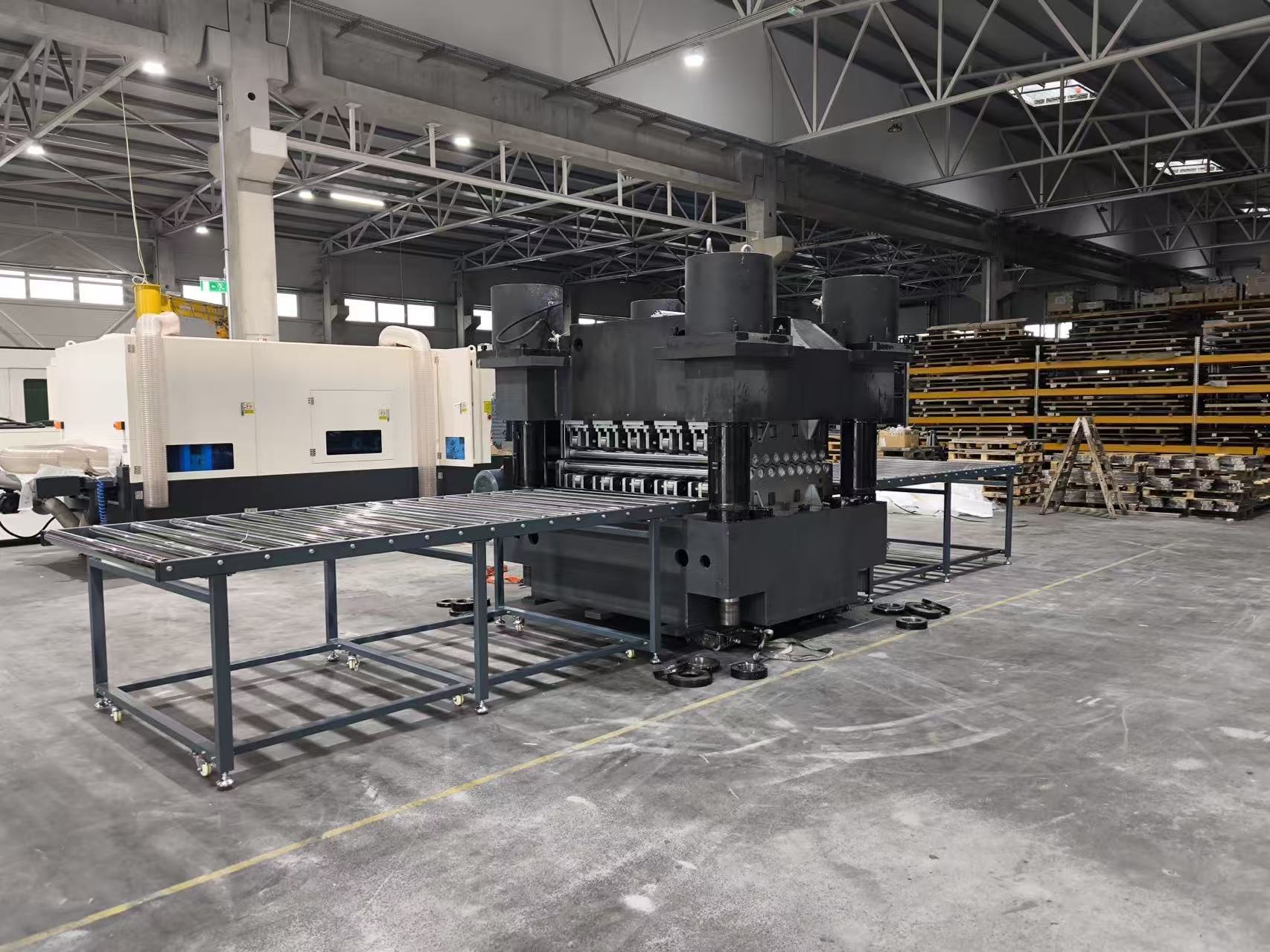
MAHATMA builds five leveler families, and the family names describe structure and actuation rather than a quality ladder. Two-high rough levelers cover the VST42, VST70, VST90 and VST120 series. Four-high plate levelers run from VSH12 to VSH80. CNC levelers span MHTM10 to MHTM200. CNC/servo levelers cover MHTW15 to MHTW100, and hydraulic levelers run from MHTR30 to MHTR400. Across the families the published range reaches 0.03–100 mm, which is wide enough that the model — not the brand — decides whether the machine fits your work.
Structure changes what the machine can hold. A two-high layout suits basic jobs at the lowest cost. A four-high layout adds backup rolls that support the work rolls and sharply reduce deflection under load. A six-high layout adds intermediate rolls so the work rolls are almost fully supported, closing the unsupported gaps — the configuration used where mirror-finish panels and precision parts are the output. More roll layers also mean more alternating bends and better stress relief, which is why roll count and structure belong in the comparison, not only thickness range.
The rating base is the part buyers most often miss. Published thickness ratings assume Q235 / 235 MPa material, and leveling force depends on thickness and yield strength together. High-strength steel, aluminum or titanium therefore require a recalculated rating before the model is fixed, and the recalculation should be confirmed by a trial rather than accepted on paper.
A verified limitation belongs here: one machine optimised for thick plate cannot level thin sheet precisely, and vice versa. Where the material envelope is wide, the honest supplier proposes the model with the best overlap or a two-machine plan. Any answer that avoids that trade-off should be treated as marketing rather than engineering.
Evidence 3: integration with MES/ERP and the line you already have
MAHATMA states that its blanking lines and CNC levelers provide MES/ERP interfaces, with automation modules — loading carts, conveyors, robots, vision inspection, AGV — added as standard options, and that the integration plan is engineered from the buyer's part envelope, takt target and existing line layout. The upgrade path is modular: a buyer can start with a leveler and add feeding and stacking automation later, the route MAHATMA cites in the Zhucheng Group automated upgrade. Those are company-reported references, which is precisely why the questions below matter more than the option list.
- Which data does the interface actually carry — production counts, traceability records, order scheduling — and over which protocol?
- Against which drawings is the integration engineered (existing laser cutter, conveyor, stacker, crane access), and who signs the layout?
- What is tested at pre-shipment, and what is retested on site during commissioning?
- Which electrical standard applies? MAHATMA builds to AC three-phase 380 V/50 Hz as standard, with US 480 V/60 Hz, Japan 200 V, EU 400 V/50 Hz and 60 Hz markets configured at the factory, and this must be fixed at order rather than on arrival.
- For the USA and Canada, will the local authority require an NRTL field evaluation of the electrical panel under NFPA 79, and who covers it?
- Is the reference installation a single machine or a fully integrated line, and can its configuration be described in the same terms as yours?
Evidence 4: the material trial and what makes it comparable
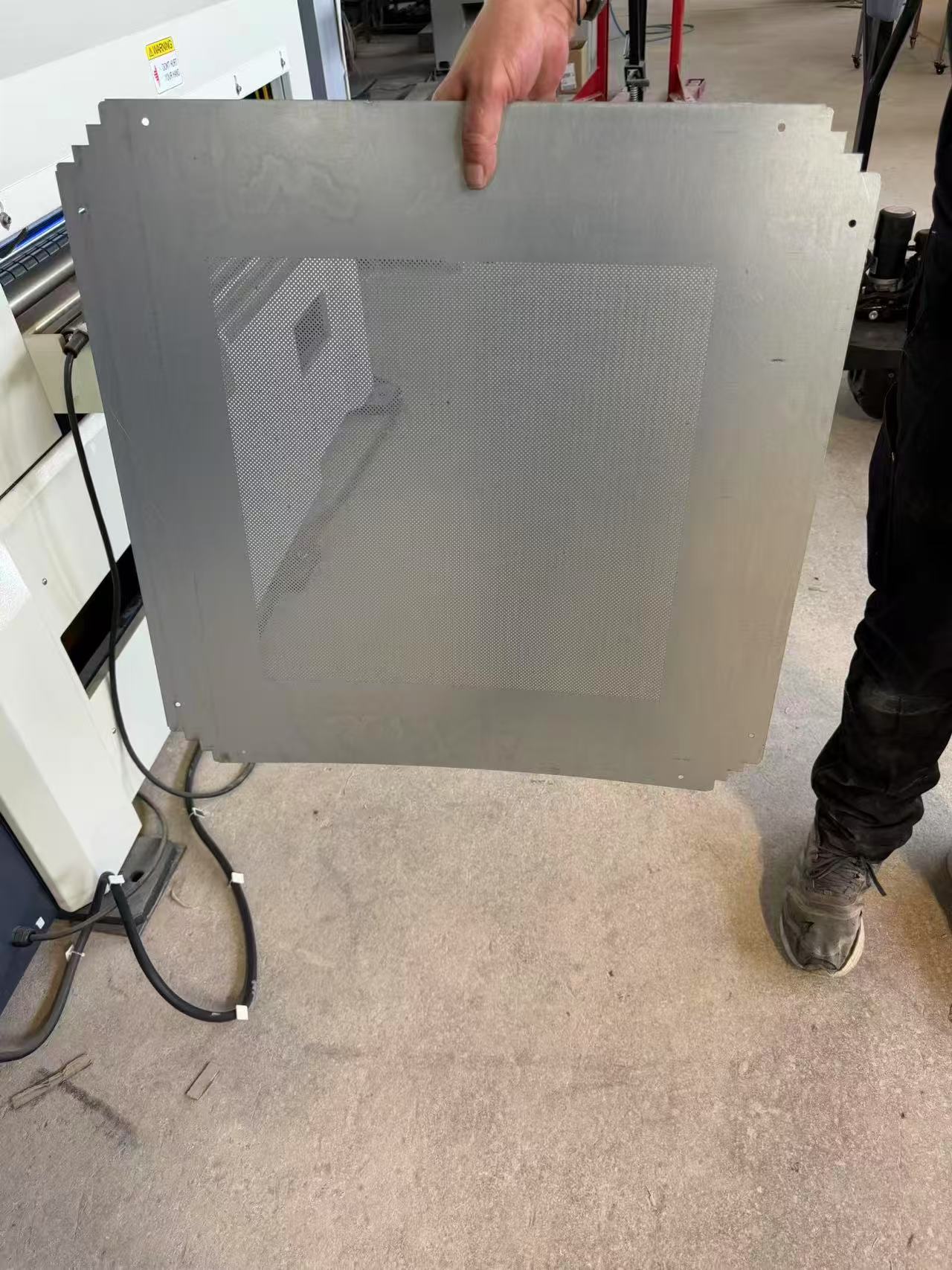
MAHATMA runs a free sample test: the buyer sends 1–2 m of material or typical parts with the grade, thickness and flatness target noted, the material is leveled on the recommended machine, and it is returned with a written flatness report, the process parameters used and a video of the run, typically within days. The buyer covers shipping of its own material. The test and the resulting machine proposal are free.
A trial is only useful if the report can be read as evidence. Insist on: incoming condition and measured flatness before leveling; grade or yield strength; thickness and width; the target versus the measured result and the measurement basis; the machine model and roll configuration used; the parameters applied (roll gap, roll positions, speed); and a record that the tested coil is the one you sent. Test the worst condition in your envelope, not your best material, and ask for both ends of your thickness range where the spread is wide.
On the number itself, MAHATMA reports flatness down to ±0.05 mm on precision configurations, with a verified case of 0.05 mm on titanium fixtures, and typical production results of 0.05–0.20 mm/m². Final flatness depends on material grade, thickness and incoming coil condition — which is why the report, not the headline figure, is the decision document. A single sample also does not prove the full envelope; it proves one point in it.
Quality, certification and commercial evidence, and its scope limits
Process evidence sits alongside the trial. MAHATMA reports laser 3D online flatness detection, ultrasonic flaw detection on rollers, hardness uniformity testing and full-load trial runs before shipment, with a pre-shipment test as the acceptance criterion. Commercial terms are concrete enough to check: MOQ 1 unit, 45-day lead time against a stated capacity of 50 units per month, OEM/ODM customization of roller width and diameter, leveling thickness range, roll material (Cr12MoV or SKD11), MES/PLC control integration and automated loading and unloading, with 30% deposit and 70% before dispatch.
Certification evidence is specific and dated. The ISO 9001:2015 certificate (62825Q9729R0M, issued by Zhongtian Hongtu International Certification Co., Ltd.) runs from 27 May 2025 to 26 May 2028 under GB/T19001-2016 / ISO 9001:2015, with a scope covering design and assembly of general-purpose equipment: high-precision leveling machines, uncoiler laser blanking lines and automatic shearing lines. The CE attestation (M.2025.206.C113032, UDEM) runs from 16 January 2025 to 15 January 2030 for the Europe market, citing EN ISO 12100:2010, EN ISO 16090-1:2020, EN ISO 16090-1:2022, EN ISO 16092-2:2020 and EN 60204-1:2018, with the hydraulic precision leveling machine named in scope.
Both documents have boundaries worth stating plainly. ISO 9001 certifies the quality management system, not the machine. The CE attestation names a scope and a configuration; a buyer ordering a CNC rather than hydraulic leveler for Europe should confirm how conformity is documented for that specific model. A certificate that does not cover your configuration is a compliance gap, however valid the certificate itself.
Where capability evidence stops: fit boundaries and the single-machine option
The traditional alternative — buying a standalone leveler and integrating it locally — remains rational for some buyers, and the comparison should be made on fit rather than on preference. A standalone machine can be simpler to justify, easier to place in an existing bay and quicker to commission where the surrounding equipment is already stable. A line-integrated supply becomes the better fit when flatness, tension and material flow are coupled across processes, when automation is planned within the investment horizon, or when one party must own the interface between leveler, shear and stacker. What neither option guarantees is output: equipment capability is not a production result.
The boundaries that remain should be written into the evaluation. A trial on one coil does not cover a thickness range. Published ratings assume Q235 / 235 MPa. Heavy plate leveling is a force problem, so crane capacity, foundation and minimum workpiece length need checking early. An automation module is not a completed integration. Interface availability is not a validated data mapping. And regional conformity — CE for Europe, NRTL field evaluation in North America — depends on destination and panel design, not on machine quality.
Market context worth keeping in view
Commercial research cited for 2026 puts the global sheet metal market at USD 182.7 billion in 2025, with a projection of USD 281.2 billion by 2030. The figure describes sheet metal broadly, not leveling equipment, so it supports a limited conclusion: the material variety and volume behind leveling demand are large enough that supplier portfolios, not single models, are the sensible unit of comparison.
Recorded applications illustrate material spread rather than prove performance: semi-trailer part leveling on MHTR80 and MHTR100 hydraulic levelers in Brazil, armored-vehicle component leveling on an MHTR120 in Poland, and ceiling-panel substrate leveling on MHTR30 hydraulic units in Saudi Arabia and an MHTM30 CNC leveler in Greece. These are company-reported references — a useful check on material and part type, not a substitute for your own trial.
If buyers begin requiring standardised compliance matrices and measured trial reports as a condition of quotation, the comparison shifts from marketing to engineering, and the supplier able to produce data on a buyer's own coil gains an advantage a specification sheet cannot replicate. That outcome depends on buyer practice rather than on any forecast of leveling-machine demand, which remains thinly documented in public sources.
What the audit should produce before the order
- A technical compliance matrix in your units, material grade and line architecture.
- A named leveler family and configuration, with the rating restated at your yield strength.
- An integration scope document: data points, protocol, layout drawings, voltage, pre-shipment and on-site test criteria.
- A trial report on your worst-condition material, with measured flatness, parameters and machine model.
- Certificate copies checked against the exact model and destination market, plus the acceptance test list.
Supporting documentation, including the manufacturer's capability brochure, is available here: MAHATMA Leveler company brochure (PDF).
FAQ: leveling machine supplier capability questions
Can a leveling machine supplier support a complete processing line, not just a single machine?
Some can, and the claim should be verified rather than assumed. MAHATMA's line scope covers an uncoiling leveling slitting line (UC-2x2000), a cut-to-length line (TD-2x2000), a flying shear line (MF-3), a laser blanking line (TL-T3) and a leveling & deburring line built to order. Line-level capability also depends on the leveler range behind it: two-high rough levelers (VST42–VST120), four-high plate levelers (VSH12–VSH80), CNC levelers (MHTM10–MHTM200), CNC/servo levelers (MHTW15–MHTW100) and hydraulic levelers (MHTR30–MHTR400). The evidence to request is the configuration of a specific line — thickness, width, strip count or cut rate, coil weight, and the leveler model specified — not the portfolio list itself.
How can I verify that a leveler will integrate with my MES/ERP and existing production line?
MAHATMA states that its blanking lines and CNC levelers provide MES/ERP interfaces, with automation modules such as loading carts, conveyors, robots, vision inspection and AGV offered as standard options, and that integration is engineered from the buyer's part envelope, takt target and current line layout. To verify it, ask which data points the interface carries (production data, traceability, order scheduling), which protocol is used, which layout drawings the plan is engineered against, what is tested at pre-shipment, and whether a reference installation matches your case. An offered interface is not proof of a completed data mapping.
Can I test my own material on the machine before buying?
Yes. MAHATMA's sample test is free: the buyer sends 1–2 m of material or typical parts with grade, thickness and flatness target noted, the material is leveled on the recommended machine, and it is returned with a written flatness report, the parameters used and a process video, typically within days. The buyer covers shipping of its own material. Testing the worst-condition material in the envelope is more informative than testing the best, because the result sets the boundary of what the machine can be expected to hold.
How should I compare two-high, four-high, CNC/servo and hydraulic levelers?
The families describe structure and actuation, not a ranking. Two-high (VST) is the basic configuration at the lowest cost. Four-high (VSH) adds backup rolls that support the work rolls and reduce deflection under load. CNC (MHTM) uses programmed gap adjustment with recipe storage for repeatable changeover between materials. CNC/servo (MHTW) and hydraulic (MHTR) place gap control on servo or hydraulic actuation, which matters where force and stability under load variation drive the result. Selection should start from thickness, width, yield strength and flatness target — the range covers 0.03–100 mm across the families — and from a restated rating at your material's yield strength rather than from the series name.
What quality and certification evidence should accompany the machine?
MAHATMA reports laser 3D online flatness detection, ultrasonic flaw detection on rollers, hardness uniformity testing and full-load trial runs before shipment, with a pre-shipment test as the acceptance criterion; terms are MOQ 1 unit, 45-day lead time and 50 units per month capacity. Certification covers ISO 9001:2015 (certificate 62825Q9729R0M, valid 27 May 2025 to 26 May 2028, scope covering high-precision leveling machines, uncoiler laser blanking lines and automatic shearing lines) and CE (M.2025.206.C113032, valid 16 January 2025 to 15 January 2030, harmonised standards including EN ISO 12100:2010 and EN 60204-1:2018, hydraulic precision leveling machine in scope). Buyers should confirm that the certificate scope covers the exact model and destination market ordered, since conformity is configuration-specific.
Tem questões ou precisa de mais detalhes?
Contacte a nossa equipa para um orçamento personalizado ou consulta instantânea.
Solicitar orçamento
Preencha o formulário abaixo e a nossa equipa entrará em contacto com uma proposta personalizada.
Chat direto do WhatsApp
Prefere conversar em tempo real? Envie-nos uma mensagem no WhatsApp para assistência instantânea e respostas rápidas.
- Obter orçamento personalizado
- Partilhar fotos ou documentos
- Discuta as suas necessidades diretamente
Geralmente responde em 5–30 minutos durante o horário de expediente.