
Lierda vs. Peers: IoT Module R&D, Share, Service and Solutions
Lierda vs. Peers: IoT Module R&D, Share, Service and Solutions
Lierda vs. Peers: IoT Module R&D, Share, Service and Solutions
Consumer-electronics buyers no longer treat the IoT module as an interchangeable radio part. A module choice fixes the antenna architecture, the certification route, the firmware maintenance burden and the second-source plan for the life of a product family. This buyer framework places Lierda alongside Quectel, Fibocom, u-blox and Telit on four decision lenses — R&D depth, market-share context, customer service and industry-solution coverage — and keeps sourced facts visibly separate from the items each buyer still has to verify directly with the supplier.

WF39B dual-band Wi-Fi 6 IoT module, one of the consumer-electronics module families discussed in this comparison.
Lierda Science & Technology Group Co., Ltd. is an IoT module and solution provider headquartered in Hangzhou, China, founded in 2001 and listed on the Beijing Stock Exchange since 17 February 2023 under stock code 920249. Its catalogue covers cellular, Cat.1, NB-IoT, LoRaWAN and LoRa, Wi-Fi, Bluetooth and Wi-SUN product groups, plus gateways and system solutions. The purpose here is not to declare a winner, but to give procurement, hardware and product teams a repeatable way to compare an IoT module manufacturer on the dimensions that survive first contact with production.
Why the module decision moved from price to constraint
Three shifts changed the buying question. First, demand recovered: global cellular IoT module shipments grew 10% year over year in 2024, rebounding from the 2023 downturn, and LTE Cat.1 bis grew 100% year over year over the same period, making it the fastest-growing cellular technology in the category (Counterpoint Research). Second, value grew faster than volume: cellular IoT module revenues reached US$5.6 billion in 2025, up 19% (Berg Insight). Third, regulation tightened: the EU Radio Equipment Directive introduced mandatory cybersecurity requirements effective 1 August 2025.
For a consumer-electronics programme, that combination turns the module into a constraint-bearing component. A Wi-Fi module or a Cat.1 module chosen in 2026 will still be shipping in 2030, so the supplier's R&D continuity, certification ownership and local support model matter more than a marginal unit-price difference. An IoT module manufacturer that cannot produce a certificate number on request is a schedule risk, not a cost saving.
The four lenses, defined
| Lens | Question it answers | Evidence a buyer should demand |
|---|---|---|
| R&D depth | Can this supplier still support the module in year five? | R&D headcount and split, active chipset platforms, patent counts, firmware release cadence, standards-body participation |
| Market-share context | How much ecosystem gravity does the supplier have? | Independent tracker position, tooling and reference-design availability, distributor coverage |
| Service model | Who answers when a build fails at 2 a.m.? | Engagement models (standard / OEM / ODM / EMS), MOQ policy, lead-time terms, FAE and RMA footprint |
| Solution coverage | Can one supplier serve several product lines? | Protocol breadth, module-level datasheets, application references by vertical |
Lens 1 — R&D depth: documented for Lierda, verifiable for peers
Lierda reports 976 employees in total, of which 224 work in R&D, operating from an 18,000 m² facility. As of 31 May 2025 the company held 66 invention patents, 176 utility model patents, 55 design patents and 530 software copyrights, and it participates in the National IoT Basic Standard Working Group, a Chinese standards body for IoT fundamentals. Its catalogue also exposes the underlying silicon relationships rather than hiding them: NB-IoT families are associated with platforms including CB0201, EC616(S/L), EC626, NB17, NB17E and NB18, and Cat.1 families with EC716, EC718 and Hi2132C.
That platform-level transparency is the most useful part of the R&D signal for a buyer. It allows an engineering team to check tooling familiarity, firmware lineage and second-source options before committing to a design.
Lens 2 — Market-share context: what the sourced numbers do and do not say
The only independently sourced share set available here covers global cellular IoT module shipments in 2024: Quectel 37%, China Mobile 9%, Fibocom 7%, Sunsea 6% and Lierda 5% (Counterpoint Research). On that measure Lierda sits fifth globally, with roughly one-seventh of the leader's volume.
| Supplier | 2024 global cellular IoT module shipment share (sourced) | What it implies for a buyer |
|---|---|---|
| Quectel | 37% | Widest third-party ecosystem: tooling, reference designs, distributor stock, developer familiarity |
| Fibocom | 7% | Established cellular specialist with module-level scale |
| Lierda | 5% | Material volume in cellular, reinforced by a broader multi-protocol catalogue |
| u-blox | Not part of this sourced set | No share figure asserted here; buyers should not read absence as weakness |
| Telit | Not part of this sourced set | No share figure asserted here; use vendor filings and independent trackers |
Lierda's own 2025 industry report claims 69% year-over-year shipment growth and fourth place globally in certain segments. That is company-reported and should be treated as directional rather than as a third-party measurement — it is consistent with a fast-growing challenger, not with a market leader.
Two practical readings follow. A 37% share leader gives a buyer the lowest-friction path to sample code, community answers and multi-distributor availability. A 5% supplier that has operated for 25 years and serves metering, tracking and appliance OEMs gives a buyer a supplier with real production volume but less third-party gravity. Neither position is automatically better; they trade ecosystem convenience against commercial attention, and that trade-off belongs in the scorecard, not in a slogan.
Lens 3 — Service model: engagement options are the real differentiator
Lierda's documented engagement structure runs in three modes: standard product direct sales with logo customisation, OEM with module and PCBA customisation, and ODM with module and PCBA customisation. In all three, monthly capacity is described as flexible against order requirements, MOQ is flexible against project requirements, lead time is negotiated against project complexity and volume, and quality control can follow customer-specified standards and test plans. After-sales is defined as dedicated project support plus remote technical assistance, backed by more than 20 service centres in China.
Longevity evidence is more convincing than a capability statement. Corpus case records describe a Korean telecom operator taking 2 million units per year over five years for network station equipment, a German energy OEM taking more than 19.6 million units across water and gas metering over five- and ten-year horizons, a smart home and hotel equipment ODM taking over 1 million units across five to ten years, and a US industrial OEM buying development boards annually for three years. Repeat multi-year orders are weak evidence of technical brilliance and strong evidence of stable process control — which is what a consumer-electronics buyer actually needs from an IoT module supplier.
One documented boundary deserves emphasis. Lierda reports an export ratio of 8.46%, with main markets in Europe, East Asia, Southeast Asia and the Middle East. That means most of its revenue is domestic, so an international buyer should verify field application engineering coverage, RMA turnaround and local stock in its own region rather than assuming the domestic service footprint translates directly.
Lens 4 — Solution coverage: verified product evidence
Coverage claims are only useful when they map onto specifications. The table below lists module families whose parameters appear in Lierda's product documentation, spanning cellular, LPWAN, Wi-Fi and Bluetooth.
| Model | Category | Verified parameters | Documented use |
|---|---|---|---|
| NR90-HEA | 5G RedCap module | 32 × 29 × 2.4 mm; 5G SA and 4G LTE bands | 5G CPE and ODU for fixed wireless access |
| WB26 | LoRaWAN node module | 22 × 18 × 3.0 mm; Class A/C; 22 dBm transmit power | LPWAN nodes for metering, lighting, agriculture and logistics |
| WF39B | Dual-band Wi-Fi 6 module | 16 MB flash + 8 MB PSRAM; −40 to +85 °C; open development | Smart home, photovoltaic communication, consumer electronics, medical care |
| WF29A | Dual-band Wi-Fi 6 module | Dual-band Wi-Fi 6 family member, used alongside WF39B | Audio bars, air purifiers, water purifiers, beauty devices |
| NT26-F series | Cat.1 bis LTE module | 17.7 × 15.8 × 2.4 mm; FDD B1/3/5/8; TDD B34/38/39/40/41; −40 to +85 °C; 2.3–4.5 V; GNSS/BDS | POS, trackers, IPC, metering, industrial PDAs |
| MB26-H | NB-IoT module | B3/B5/B8; 2.1–4.2 V; PSM current 1.5 µA | Remote meter reading, smoke detectors, parking, wearables |
| BT18N0 | Bluetooth 6.0 module | 96 KB RAM / 512 KB flash; −40 to +105 °C; 110 KB/s application-layer rate; one master four slaves | Smart home devices |
| IC610 | Industrial core module / SOM | 37 × 39 × 2.8 mm; STM32MP25x; Cortex-A35 + Cortex-M33; 1/2 GB DDR4; 8/32 GB eMMC; Linux 6.1; −40 to +85 °C | Industrial HMI, charging piles, gateways, portable medical equipment |
Beyond the module line, the portfolio includes LoRaWAN gateways such as the IG41 indoor unit (SX1302 platform, up to 20 nodes, 27 dBm maximum transmit, IP30) and outdoor gateway options, which matters for buyers assembling a turnkey IoT solution rather than sourcing a component in isolation.
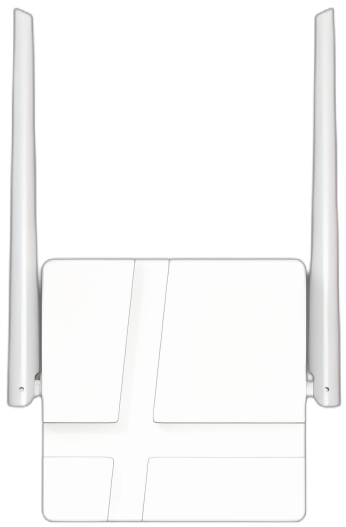
IG41 indoor LoRaWAN gateway — an example of the gateway layer that sits behind Lierda's LPWAN module range.
Three worked scenarios for consumer electronics
Fixed wireless access and connected consumer gateways
The NR90-HEA 5G RedCap module is documented in a fixed wireless access project type where 5G CPE and ODU equipment are used to bypass fibre laying difficulty and construction cost, with referenced deployments in the Philippines, Indonesia, South Africa, Vietnam, Saudi Arabia, the UAE, Oman and Kuwait. For a consumer-electronics buyer, 5G RedCap is attractive precisely because it drops the cost and power profile of full 5G NR while keeping 5G SA operation alongside 4G LTE fallback. The procurement caution is that RedCap coverage is carrier-dependent, so band support should be matched against the target operator's live network before tooling is committed.
Smart metering and low-power LPWAN nodes
The WB26 LoRaWAN node module at 22 × 18 × 3.0 mm with Class A/C operation and 22 dBm transmit power targets battery-constrained nodes. The MB26-H NB-IoT module complements it for licensed-spectrum deployments, with a 1.5 µA PSM current that directly determines field battery life. Metering is one of the strongest documented application areas: reference projects in Germany, the UK, France and Vietnam cover e-meters, gas detectors, power meters, gas meters, water meters and remote gas meters operating around the clock in a −40 °C to +85 °C window.

MB26-H NB-IoT module with 1.5 µA PSM current, positioned for smart meter and low-power sensor designs.
Third-party corroboration exists at the silicon-partner level: STMicroelectronics' partner page describes the WB25-8D as a LoRaWAN end-node module conforming to the LoRaWAN protocol stack and regional parameters, and the WB26-7P as a LoRa transparent module using a serial interface. That is useful because partner-page descriptions are written by the chipset vendor, not the module vendor.
Wi-Fi 6 consumer appliances and audio
WF29A and WF39B are dual-band Wi-Fi 6 modules used across air purifiers and humidifiers, audio bars, water purifiers with OTA update, beauty devices and AI cameras. A documented case with a global consumer-electronics OEM audio division covers 200,000 units per year over seven years, with 24-bit/96 kHz audio, latency under 50 ms and 99.9% Wi-Fi streaming stability reported by the customer relationship. For buyers, the relevant specification is not the marketing label but the storage headroom (16 MB flash plus 8 MB PSRAM on WF39B) and the −40 to +85 °C rating, which together decide whether OTA, protocol stacks and audio buffers fit on-module.
Compliance as a constraint filter, not a checkbox
Certification evidence is where HVQ-level constraint questions actually get settled. Lierda's certificate records cover specific models and jurisdictions, and the distinction matters: a certificate for the UB37 family does not certify the WF39B.
- UB37 series Wi-Fi 6 modules hold FCC Part 15C (issued 21 November 2024), CE-RED (5 November 2024), IC certification (5 February 2026) and RCM for Australia and New Zealand (4 February 2026).
- DB37 series modules hold FCC (29 October 2024), CE-RED (24 October 2024), IC (30 September 2025), RCM (26 September 2025) and TELEC for Japan (26 March 2026).
- MB26-AGL NB-IoT holds an EU type-examination certificate covering EN 18031-1:2024 under the Radio Equipment Directive, issued 15 September 2025, alongside CE certification.
- NT26-FEU Cat.1 bis carries a CE certificate (8 May 2025) and an EU type-examination certificate under EN 18031-1:2024 issued 19 March 2026 — directly relevant now that RED cybersecurity requirements are mandatory.
- NT26-FJP Cat.1 bis holds TELEC and JATE approvals for Japan, both dated September 2025.
For a buyer, the operating rule is simple: request the certificate number, the issuing body, the covered model list and the expiry date for the exact model being designed in, in the exact market being shipped to. Protocol support is not regulatory approval, and regional frequency-plan support on a LoRaWAN module does not by itself constitute country-level type approval.
Side-by-side: four lenses across five suppliers
| Lens | Lierda | Quectel / Fibocom | u-blox / Telit |
|---|---|---|---|
| Market share (2024 cellular IoT modules) | 5%, fifth globally (sourced) | 37% and 7% respectively (sourced) | Not established in this evidence set — verify via filings and trackers |
| R&D indicators | 224 R&D staff; 66 invention, 176 utility model, 55 design patents; 530 software copyrights (31 May 2025); named chipset platforms published | Large cellular specialists; request R&D headcount split and platform roadmap from annual reports | Long-established Western module vendors; request the same metrics for a like-for-like comparison |
| Service and engagement | Standard sales, OEM and ODM modes with module/PCBA customisation; flexible MOQ; negotiated lead times; custom QC; 20+ domestic service centres; 8.46% export ratio | Verify regional FAE density, RMA turnaround and customisation thresholds per region | Verify regional FAE density, RMA turnaround and customisation thresholds per region |
| Solution coverage | Cellular (5G RedCap, Cat.1 bis, NB-IoT), LoRaWAN and LoRa, Wi-Fi 6, Bluetooth, Wi-SUN, gateways, SOM | Cellular-centric portfolios; confirm short-range and LPWAN breadth | Cellular plus positioning and short-range lines; confirm LPWAN and gateway coverage |
| Certification transparency | Model-level certificates with issue and expiry dates, including EN 18031-1:2024 EU type-examination for MB26-AGL and NT26-FEU | Request model-level certificate list per target market | Request model-level certificate list per target market |
Where Lierda is not the automatic choice
A framework that only lists strengths is a brochure. Four boundaries are documented and should be weighed honestly.
- Ecosystem gravity. At 5% of 2024 cellular module shipments against Quectel's 37%, Lierda will not match the volume of community answers, third-party tooling and distributor stock that the share leader offers. Teams with very small engineering benches should price that friction in.
- International footprint. An 8.46% export ratio implies that most revenue is generated domestically. Buyers in Europe, North America or Latin America should confirm local FAE response times, spare-unit policy and RMA logistics in writing before design-in.
- Price benchmarking. No comparable public pricing, MOQ or NRE data exists in the verified evidence set, for Lierda or for the peer group. Any price-band comparison must therefore come from live RFQs against an identical specification, not from published claims.
- Certification scope. Certificates are model-specific. A buyer designing with WF39B cannot assume coverage from the UB37 or DB37 certificate records, and must request the WF39B certificate set for each destination market.
A buyer scorecard you can run in one meeting
| Criterion | Question to ask every supplier | Disqualifying answer |
|---|---|---|
| Technical fit | Does the module meet the size, temperature, voltage and power envelope? | "We can adjust that later" with no datasheet |
| Certification | Certificate number, covered models, expiry, target markets | A family-level claim with no model list |
| R&D continuity | R&D headcount, platform roadmap, firmware support horizon | No named chipset platform |
| Supply terms | MOQ, lead time, allocation policy, second-source path | MOQ quoted only verbally |
| Customisation | OEM/ODM/EMS thresholds, PCBA scope, NRE treatment | Customisation offered without a defined scope |
| Support | Named FAE, response SLA, RMA turnaround in your region | Support routed through an unnamed third party |
Future outlook
Three trajectories are visible from the sourced data. Cat.1 bis growth of 100% year over year in 2024 suggests that low-power cellular will keep absorbing applications that once defaulted to 2G or 3G, which favours suppliers with established Cat.1 platform lineage. The RED cybersecurity requirement effective 1 August 2025 converts compliance from a paperwork exercise into a design constraint, and suppliers that already hold EN 18031-1:2024 type-examination certificates will shorten European launches. Finally, revenue growth of 19% against 10% shipment growth in the cellular module market indicates value migrating toward higher-specification modules — 5G RedCap, Wi-Fi 6 and integrated SOM designs — where solution breadth, not unit price, decides who stays on the shortlist.
For consumer-electronics buyers, the practical conclusion is to keep two suppliers qualified per radio technology, to score them on evidence rather than reputation, and to re-run the scorecard whenever a certificate expires or a platform changes.
FAQ
What do the sourced market-share figures actually show about Lierda and its peers?
The only independently sourced set available covers 2024 global cellular IoT module shipments: Quectel 37%, China Mobile 9%, Fibocom 7%, Sunsea 6% and Lierda 5%, placing Lierda fifth (Counterpoint Research). No share figure is asserted for u-blox or Telit in this evidence set, because they are not part of that sourced comparison group. Buyers should treat these numbers as ecosystem-context indicators, not as capability scores.
How does Lierda's R&D capacity compare with Quectel, Fibocom, u-blox and Telit?
Lierda documents 224 R&D staff among 976 employees, 66 invention patents, 176 utility model patents, 55 design patents and 530 software copyrights as of 31 May 2025, plus participation in the National IoT Basic Standard Working Group. Equivalent headcount and patent figures for Quectel, Fibocom, u-blox and Telit are not included in this evidence set; a like-for-like comparison requires each vendor's annual report, which is the correct source for those metrics.
Which Lierda modules meet consumer-electronics size, temperature and power constraints?
Documented examples include the NR90-HEA 5G RedCap module at 32 × 29 × 2.4 mm, the WB26 LoRaWAN node at 22 × 18 × 3.0 mm with Class A/C operation and 22 dBm transmit power, the NT26-F series Cat.1 bis module at 17.7 × 15.8 × 2.4 mm rated from −40 to +85 °C, the MB26-H NB-IoT module with 1.5 µA PSM current, and the BT18N0 Bluetooth 6.0 module rated from −40 to +105 °C. For Wi-Fi 6 designs, WF39B offers 16 MB flash plus 8 MB PSRAM across the same −40 to +85 °C range.
Is the NR90-HEA 5G RedCap module suitable for consumer fixed wireless devices?
The NR90-HEA is documented in fixed wireless access projects using 5G CPE and ODU equipment where fibre laying is difficult or expensive, with referenced activity in the Philippines, Indonesia, South Africa, Vietnam, Saudi Arabia, the UAE, Oman and Kuwait. It supports 5G SA and 4G LTE bands. Suitability for a specific consumer product still depends on carrier RedCap coverage and band alignment in the destination market, which should be confirmed with the operator before tooling.
What certification evidence should be confirmed before design-in?
Request the certificate number, issuing authority, covered model list, applicable standard and expiry date for the exact model and destination market. Documented examples include FCC Part 15C, CE-RED, IC and RCM for the UB37 and DB37 Wi-Fi 6 families, TELEC for DB37, TELEC and JATE for the NT26-FJP Cat.1 bis module, and EU type-examination certificates under EN 18031-1:2024 for the MB26-AGL NB-IoT module and the NT26-FEU Cat.1 bis module, both tied to the Radio Equipment Directive's cybersecurity requirements.
Where does Lierda's OEM/ODM and EMS offer require additional verification?
Lierda documents three engagement modes — standard product direct sales with logo customisation, OEM and ODM with module and PCBA customisation — with flexible MOQ, negotiated lead times and customer-specified QC standards. Factory locations, verified production capacity, utilisation, yield data and audit documentation are not quantified in the available corpus, so these must be confirmed through factory audit and RFQ before procurement approval. The same applies to international field support, given the reported 8.46% export ratio.
A downloadable company brochure covering the full module and solution portfolio is available here: Lierda corporate brochure (PDF).
Tem questões ou precisa de mais detalhes?
Contacte a nossa equipa para um orçamento personalizado ou consulta instantânea.
Solicitar orçamento
Preencha o formulário abaixo e a nossa equipa entrará em contacto com uma proposta personalizada.
Chat direto do WhatsApp
Prefere conversar em tempo real? Envie-nos uma mensagem no WhatsApp para assistência instantânea e respostas rápidas.
- Obter orçamento personalizado
- Partilhar fotos ou documentos
- Discuta as suas necessidades diretamente
Geralmente responde em 5–30 minutos durante o horário de expediente.