
Light Guide Panels for 24/7 Elevator Cabin Decoration
Light Guide Panels for 24/7 Elevator Cabin Decoration
Acrylic light guide panels can serve as a lit decorative surface in elevator cabins, but the specification only holds when panel size, surface shape, colour temperature, installation structure and continuous duty are resolved as one system. EDGELIGHT's light guide panel — model LGP — is designed for elevator decoration and has been adopted by elevator manufacturing clients worldwide, a supply relationship recorded at roughly 20 years and about 10,000 units with stable operation. That record is useful because it shows which specification decisions the elevator case actually turns on, not because it guarantees a panel for every cab.
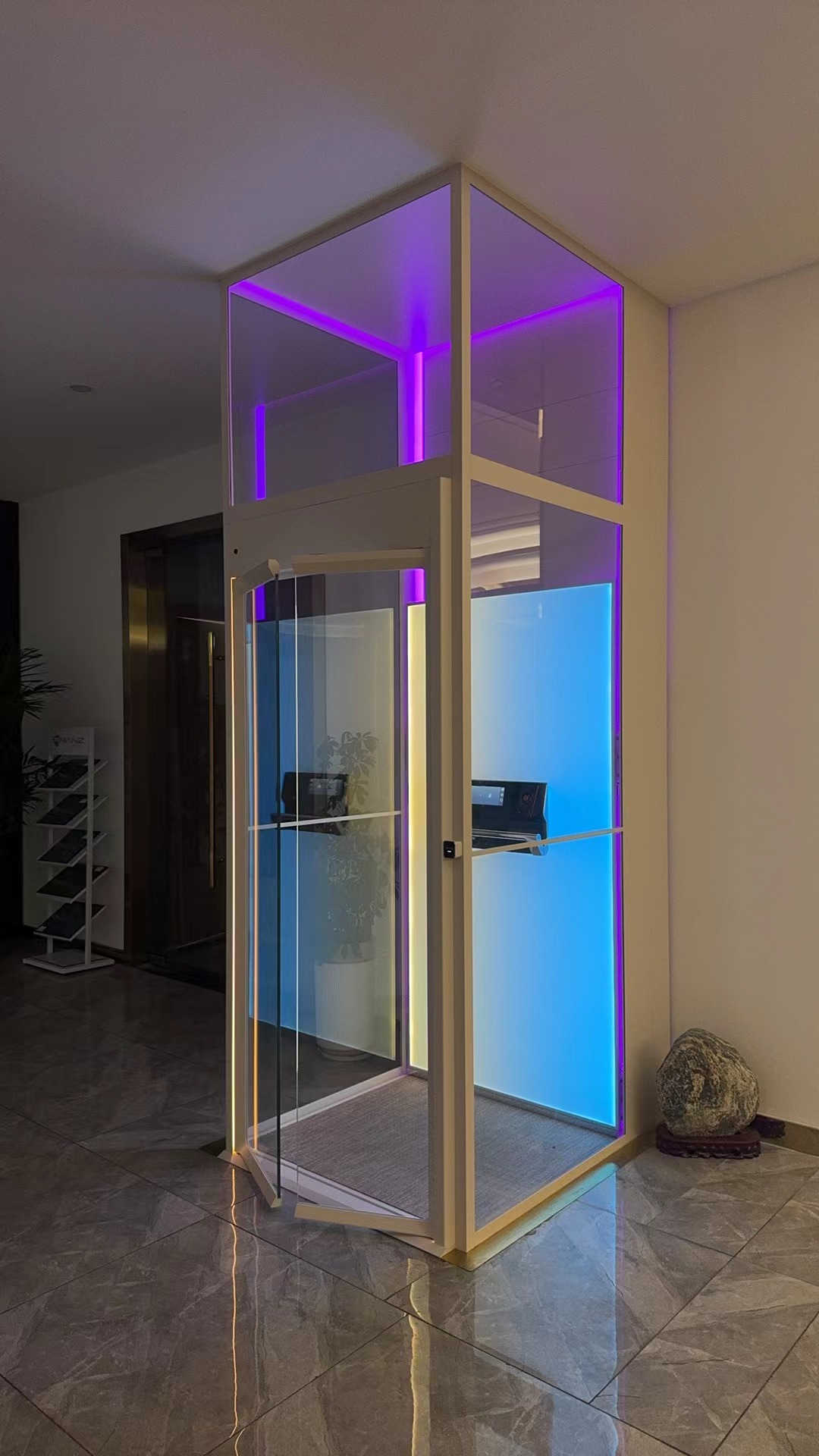
Elevator cabin wall decoration: a lit surface seen at close range, under continuous duty, and repeated across a fleet.
Why the elevator cabin is an unusual lighting brief
A lift car is a small, enclosed room with an unusually long duty cycle. The application data supplied for this product records an operating mode of 24/7 for elevator cabin wall decoration, and the cabin is also the part of a building that passengers inspect at close range, touch, and view under both daylight through the door opening and artificial light. Four consequences follow for anyone specifying a lit panel.
Maintenance access comes first. Replacing a driver or an LED strip behind a decorative wall panel usually means opening a finished surface in a finished lobby. The connection detail therefore has to be serviceable from the cabin side, and the components that are hardest to reach should be specified against the service interval the building owner expects rather than the one the lighting supplier assumes.
Appearance has to hold across a fleet. Elevator manufacture is serial. A specification approved for one cab is repeated across a project and often across a product family, so a colour temperature that drifts between panels, or a panel that reads as a different white after two years, becomes a visible defect multiplied by the number of cars in the building.
Dimension discipline decides the perceived quality. Cabin walls are assembled from modules around doors, handrails, mirrors and ceiling coves. A lit panel that is two millimetres out at a joint is not experienced as a lighting problem; it is a fit-out problem that repeats at every floor. The practical conclusion is that the light guide panel should be specified as part of the cabin sub-assembly — panel, LED strip, driver, frame and optical stack — rather than bought as a sheet of illuminated acrylic and integrated later.
What an edge-lit acrylic light guide panel actually does
A light guide panel is a sheet of optical acrylic (PMMA) that converts edge light into a flat, even luminous surface. LEDs are coupled into one or more edges of the sheet, and a dot pattern on the surface — printed, laser-dotted or otherwise engineered — extracts the light and scatters it forward. A reflective film behind the panel returns stray light toward the viewer, while a diffuser film in front softens the extraction pattern so the panel reads as a single lit plane rather than a set of bright spots. That construction is what makes a thin cabin wall possible: the light source sits at the panel edge instead of being distributed across its back, so the assembly does not need the mixing depth a direct-lit box requires.
The EDGELIGHT LGP is an acrylic panel with the following published parameters: maximum operating current 7.2 A and maximum power 144 W, with typical power consumption of 101 W; luminous flux above 1,080 lm; colour temperature 2700K–6500K; operating temperature -20°C to 50°C; protection grade IP20–IP65. These are product-level figures for the model, and they describe the envelope the panel can be configured within rather than a guaranteed result for any given cab.
The same application record lists the matched equipment: LED strip light, constant current power driver, light box frame, diffuser film, reflective film and mounting brackets. Read together, those items make the central point of elevator specification. The panel controls how light is distributed; the driver controls how stable that light stays; the frame controls depth, flatness and service access. A defect in any of the three will be attributed to the panel by the person standing in the cabin.
The specification levers an elevator manufacturer controls
The OEM/ODM capability record for this product lists customization across size, thickness, colour temperature, logo, surface shape, light output brightness and installation structure. Four of those levers decide whether a cabin panel works; the rest decide how it looks and how it is branded.
| Lever | What can be customized | Why it decides the cabin result | What to verify |
|---|---|---|---|
| Panel size | Cut-to-module dimensions matched to the cab wall grid | Sets joint lines against doors, handrails and mirror edges | 1:1 dimension drawing and tolerance on the finished panel |
| Surface shape | Framed or frameless construction, edge and reveal detail | Determines whether the wall reads as flush, inset or illuminated reveal | Physical profile sample, not a render |
| Colour temperature | Any target within the 2700K–6500K range | Warm and neutral whites change how stone, wood and metal finishes read | Measured CCT on a production sample, per panel |
| Installation structure | Bracket and frame design, diffuser and reflector stack, driver location | Controls flatness, service access and heat path | Assembly drawing plus a service-removal trial |
| Brightness, thickness, logo, print | Light output, panel thickness, branding, printed texture | Balances luminance against power budget and finish matching | Luminance map on the sample and a print proof against the approved artwork |
Size. The first decision is whether a cabin wall becomes one panel or several. A single large panel removes joints but concentrates the uniformity burden on one dot pattern; a split layout follows the cab's structural modules and makes each panel replaceable. Both are producible through cut-to-size customization, but the choice should be made against the wall grid before drawings are released, not after the first cab is assembled.
Surface shape. The supplied product line includes framed and frameless panel constructions, and the elevator case record lists customized size and texture among the delivered features. In a cabin, the edge detail is the part passengers actually see: a visible frame reads as architectural trim, a frameless panel reads as a glowing wall, and a recessed reveal hides the transition. Whichever is chosen, the sample should be a physical profile rather than a visualisation, because shadow gaps behave differently at 300 mm viewing distance than they do in a rendering.
Colour temperature. The 2700K–6500K range is wide enough to cover both a warm hospitality palette and a neutral office palette, and the decision should be made against the cabin's material finishes rather than in isolation. A hotel cab with timber and stone usually reads better at the warm end; a corporate cab with brushed metal and glass usually reads better nearer 4000K. Because the panel and the LED strip are separate components, the same panel design can carry different colour temperatures across a product family, but each configuration needs its own measured sample.
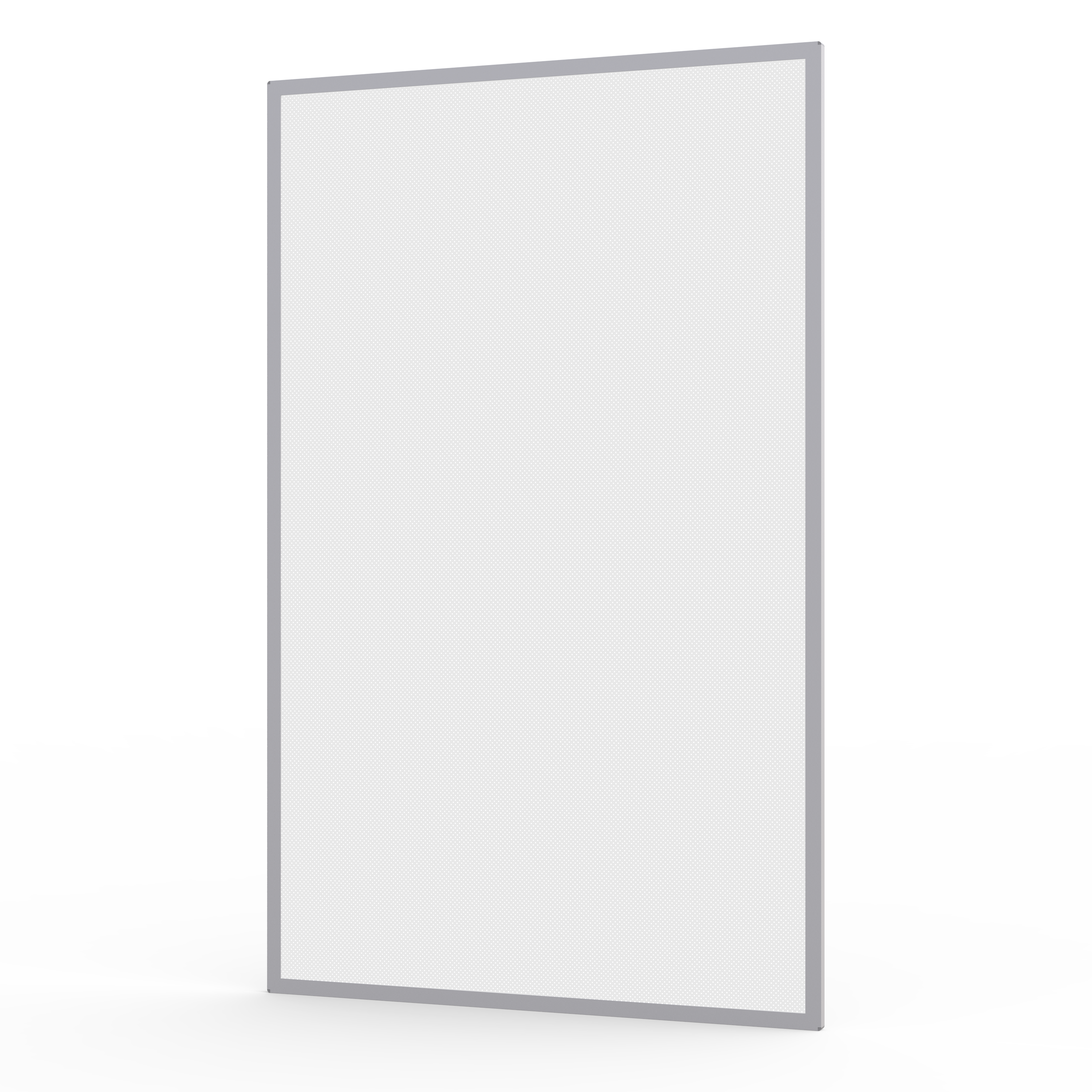
Frame construction is part of the specification, not an accessory: it sets depth, flatness and how the panel is serviced from the cabin side.
Installation structure. This is where elevator projects diverge from signage projects. A cabin panel has to sit flat against a wall that may itself be out of tolerance, has to be removable for service, and has to route a driver to a place where heat does not accumulate. The capability record lists installation structure as a customization field precisely because the bracket, frame depth and optical stack are project-specific. A specification that names the panel but not the mounting detail leaves the hardest part of the integration unresolved.
24/7 duty: what continuous operation changes
Continuous operation changes the ranking of risks. In a signage application, a panel might run for twelve hours a day and be viewed from two metres; in a lift car it runs around the clock, in a sealed volume, and is viewed from half a metre. Three specification consequences follow.
The thermal path matters more than the headline brightness. LEDs coupled into a panel edge deposit waste heat exactly where the acrylic is closest to the source. The panel's declared operating range of -20°C to 50°C is the envelope to design within, and the frame, the driver position and any ventilation detail should be chosen so the assembly stays inside it in a closed cabin, not in an open test room.
The driver should be specified as a duty-cycle component. The application record names a constant current power driver as matched equipment, which is the correct starting point for stable output; the additional question is where that driver lives. Mounting it in the same unventilated cavity as the LED strip shortens its life and makes future service harder, and the fix is a layout decision, not a component upgrade.
Acceptance testing protects the fleet, not the sample. The capability record states 100% test on production, which addresses initial defects. It does not by itself predict how a panel behaves after years at continuous duty, so buyers who need that assurance should request the specific aging or lumen-maintenance evidence for the configuration they are approving, and compare it with the service interval the building owner has assumed.
Compliance evidence: UL 2108 and CE EN IEC 55015
For elevator manufacturers selling into North America and Europe, compliance documentation is part of the acceptance file rather than an afterthought. UL 2108 and CE EN IEC 55015 are the two references most often requested for this product class: UL 2108 addresses low-voltage lighting systems, and EN IEC 55015 addresses radio-disturbance limits for electrical lighting and similar equipment. Together they cover two different questions — product safety framing and electromagnetic emissions — which is why a buyer should see them as complementary evidence rather than as alternative badges.
EMC evidence deserves particular attention in a lift car. A cabin is a small metal-clad enclosure shared with door operators, controllers, intercoms and increasingly with passenger connectivity equipment, and switching drivers are the kind of device that EN IEC 55015 exists to characterise. The practical check is not whether a certificate exists, but whether the certificate's scope matches the panel and driver combination being purchased.
What certification does not establish. A compliance file does not prove optical uniformity, colour consistency between panels, fit within a cabin module, or service life. It also does not automatically settle whether the panel is certified as a component or whether the assembled light box requires a separate evaluation — that is a question of certificate scope and should be confirmed with the certification body or the supplier's technical file before the first production order, not after the first installation. Buyers should record the standard edition cited, the certificate number, and the product configuration it covers.
From one cab to a fleet: where the panels fit in a cabin
The application record defines the function narrowly and usefully: elevator cabin wall decoration. Within a cabin, that translates into a small number of recurring wall configurations. Full-height decorative panels occupy the largest surfaces and carry the most uniformity risk. Split panels around handrail bands allow a lit band to run at a different brightness from the field above and below it. Mirror and door surrounds use the panel as an edge-lit frame, where the panel's thinness matters more than its flux. Each configuration draws on the same customization fields — size, surface shape, colour temperature, installation structure — but weights them differently.
What makes elevator work distinctive is that the first cab is a prototype and the second cab is production. Buyers moving from a mock-up to a fleet should therefore lock three things at sample stage: the measured colour temperature and luminance of the approved panel, the physical edge profile, and the mounting and service procedure. The capability record supports this transition — OEM/ODM customization, a minimum order quantity of one unit for prototyping, 5–10 day lead time, and monthly capacity of 30,000 units — but the sequencing matters more than any single number. Approving a sample that cannot be reproduced at fleet volume is the most common way a good cabin design becomes a warranty conversation.
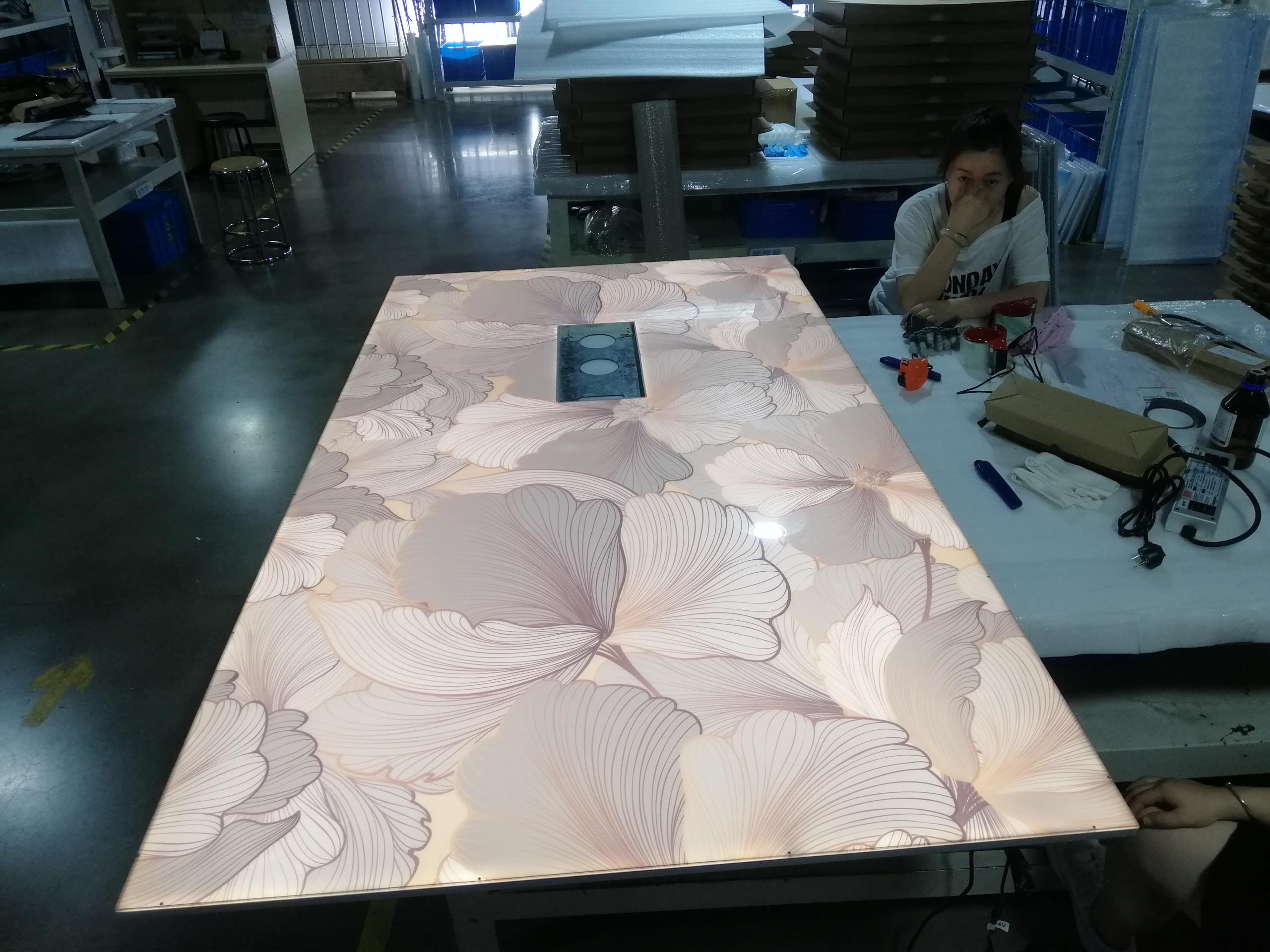
Customized size and texture allow one panel family to serve different cab modules without changing the light source or the driver.
What 20 years and 10,000 units establish — and what they do not
The elevator case record for this product covers a client type of elevator manufacturer, an application of elevator decoration, a duration of 20 years, a quantity of 10,000 units and a reported result of stable operation, with lighting, printing and customized size and texture listed as the delivered highlights. Read carefully, that is a repeat-supply record: an elevator manufacturing customer has continued to specify this panel family across two decades and roughly ten thousand units.
For a buyer at evaluation stage, the record is evidence of two things that are otherwise hard to assess before a first order: that the supplier can hold a customized specification across serial production, and that a decorative elevator panel with printed texture is within its normal production scope rather than a one-off experiment.
The boundary is just as important. The record does not state a field failure rate, a warranty term, the markets in which those units were installed, or the proportion of units that used printed versus plain panels. It is not a per-configuration reliability claim, and it does not transfer automatically to a new cabin design, a different driver, or a different duty cycle. Buyers should treat it as a qualification signal that justifies a sample programme, and then verify the specific configuration they intend to order.
Edge-lit acrylic compared with other cabin lighting approaches
Elevator cabins are lit decoratively in a few recurring ways, and the differences between them are structural rather than promotional. A direct-lit box places LEDs behind a diffusing face and relies on cavity depth to mix the light into an even field; that depth has to come out of the wall build. Edge-lit acrylic removes the cavity by moving the source to the panel perimeter and using a dot pattern to distribute it, which is what allows a thin wall module, but it moves the engineering burden into the pattern design and the panel proportions. Back-painted or coated glass with perimeter illumination achieves a similar flat appearance with a different material feel and a different service model.
For elevator projects, the honest comparison is about fit rather than superiority. Edge-lit acrylic suits cabins where a thin, evenly lit decorative surface must integrate with a wall module, accept printed texture, and be serviced from the cabin side. It is a poorer fit where the brief calls for very high luminance from a small area, where the ambient environment sits outside the panel's -20°C to 50°C operating range, or where there is no room in the wall build for a frame and driver cavity at all.
Four boundaries worth writing into the specification. The published luminous flux above 1,080 lm is a product-level figure, not a per-square-metre guarantee for a given panel size. The IP20–IP65 protection range is a product-level range; the elevator application record lists IP55 dustproof and waterproof protection among its special requirements, which sits inside that range, but the installed rating depends on how the frame, seals and driver are integrated, so IP should be specified and verified at assembly level. The operating temperature range governs the panel, while the driver has its own rating that must be checked separately. And the application record lists high light uniformity, optical acrylic material, long service life and resistance to yellowing as requirements of the elevator case — these are criteria to specify and verify with sample data, not properties to assume.
Market context for light guide panels
Commercial research published by Dataintelo in its 2026 light guide plate market report values the global LGP market at USD 3.91 billion in 2025 and projects USD 6.51 billion by 2034, a compound annual growth rate of 5.8%, with Asia Pacific holding a 48.2% revenue share in 2025. Those figures describe the category, not the elevator segment: the report does not break out elevator decoration separately, so they indicate the scale of the supply base an elevator buyer is drawing on rather than demand from lift manufacturers specifically. As with any single commercial estimate, they are best used directionally.
The procurement implication is narrower and more practical. A category of that size supports specialist panel producers with dedicated dotting, printing and cutting equipment, which is what makes cut-to-size elevator modules and printed textures commercially routine rather than bespoke engineering. EDGELIGHT, founded in 2004, operates a Shanghai headquarters base of about 33,000 m² among five production locations, employs around 500 people including a 25-engineer R&D team, and exports about 75% of output to the USA and EU — a profile consistent with a supplier set up to serve export-facing elevator manufacturers rather than a single domestic account.
Outlook: what elevator teams should watch
Two shifts would change how these panels are specified, and both are about documentation rather than hardware. The first is per-configuration optical evidence: if buyers begin requiring measured luminance and colour data for each approved panel size and pattern rather than for a product family, sample approval becomes a data exercise and fleet variation falls. The second is assembly-level environmental rating: if cabin light boxes are specified and verified as sealed assemblies rather than as panels with an inherited IP figure, the gap between a datasheet and a lobby disappears.
Neither shift requires a new material. They require the specification to name the assembly, the measurement method and the acceptance record at the same time as it names the panel — which is the same conclusion the elevator case points to after twenty years and ten thousand units.
Specification checklist for elevator project teams
- Panel size and joint layout fixed against the cab wall grid, with tolerances agreed on the drawing.
- Surface profile approved as a physical sample: framed or frameless, edge detail and shadow gap.
- Colour temperature chosen within 2700K–6500K against the cabin's finishes, then measured on a production sample.
- Luminance target set per panel area, with a measured uniformity check rather than a datasheet flux figure.
- Installation structure drawn, including bracket type, frame depth, driver position and a service-removal trial.
- Environmental rating specified at assembly level, with the IP55 elevator requirement mapped to the sealed light box.
- Compliance file reviewed for standard edition, certificate scope and configuration coverage under UL 2108 and CE EN IEC 55015.
- Production evidence requested for the exact configuration: aging or lumen-maintenance data, print proof, and the 100% test record.
Frequently asked questions
Can acrylic light guide panels be used in elevator cabins that operate 24/7?
Yes, when the panel and its driver are specified as a continuous-duty assembly. The application data for the EDGELIGHT light guide panel records a 24/7 operating mode for elevator cabin wall decoration, and the panel's declared operating temperature range is -20°C to 50°C. Continuous duty makes the thermal path the deciding detail: the driver should sit where cabin heat does not accumulate, and the LED strip should be rated for the same duty cycle as the panel rather than for intermittent signage use.
Which specifications matter most when specifying an LGP for elevator wall decoration?
Five decide most of the outcome: panel size and joint layout, surface shape and edge detail, colour temperature within the 2700K–6500K range, installation structure including frame depth and driver position, and the environmental rating of the sealed assembly. Luminous flux above 1,080 lm and the IP20–IP65 protection range set the product envelope, but they do not replace a measured luminance and uniformity check on the specific panel being approved.
How are custom sizes and surface shapes handled for an elevator project?
Customization is available across size, thickness, colour temperature, logo, surface shape, light output brightness and installation structure. The capability record for this product states a minimum order quantity of one unit, a lead time of 5–10 days and monthly capacity of 30,000 units, with 100% test on production. In practice that allows a single prototype cab to be built and measured before a fleet order, which is the sequence that keeps a fleet specification reproducible.
Which colour temperature suits an elevator cabin?
The panel can be configured anywhere within 2700K–6500K, and the useful way to choose is against the cabin's material palette. Warm settings around the lower end generally read better against timber, stone and warm metal finishes, while neutral settings nearer 4000K generally read better against brushed metal, glass and cool grey palettes. Because the panel and LED strip are separate components, one cabin family can carry two colour temperatures, but each configuration needs its own measured sample.
What should an elevator manufacturer verify before approving an LGP supplier?
Four items, in order: the compliance file, covering the standard edition and the configuration scope of the UL 2108 and CE EN IEC 55015 evidence; the environmental rating at assembly level, including how the IP55 elevator requirement is achieved in the sealed light box; the optical evidence for the exact panel size, pattern and colour temperature being approved, including a measured sample; and the production and service documentation, covering the 100% test record, lead time, driver position and the procedure for replacing a panel from the cabin side.
About the manufacturer
EDGELIGHT (Shanghai Edgelight Industry Co., Ltd.) manufactures light guide panels, Edgelux panels, SEG light boxes, LED strips and drivers, and LED advertising products, with OEM/ODM customization, local after-sales support in its export markets, and a product range detailed at EDGELIGHT. The full LED product catalogue can be downloaded as a PDF brochure.
Tem questões ou precisa de mais detalhes?
Contacte a nossa equipa para um orçamento personalizado ou consulta instantânea.
Solicitar orçamento
Preencha o formulário abaixo e a nossa equipa entrará em contacto com uma proposta personalizada.
Chat direto do WhatsApp
Prefere conversar em tempo real? Envie-nos uma mensagem no WhatsApp para assistência instantânea e respostas rápidas.
- Obter orçamento personalizado
- Partilhar fotos ou documentos
- Discuta as suas necessidades diretamente
Geralmente responde em 5–30 minutos durante o horário de expediente.