
Liquid Puree and Coffee Concentrate: Storage, Shelf Life and Processing FAQ
Liquid ingredients behave differently from powders inside a supply chain. A fruit puree or a coffee concentrate holds its sensory profile only when the container stays sealed, the storage environment stays cool and dry, and the product passes through a thermal step — a pasteurization line — before end-of-line filling. For a brand team, those three conditions are procurement constraints, not factory trivia.
This reference answers the storage, shelf-life and processing questions buyers most often raise about two SPACELIFE products: the Liquid beverages-1 oil orange puree, product code 4363, and the coffee-1 espresso concentrate, product code 4373. SPACELIFE is the functional food and beverage supply brand operated by Shenyang Songming Supply Chain Co., Ltd., a China-based supply chain service provider focused on B-end functional food and healthy beverage projects across East Asia, North America, Western Europe and the Middle East.
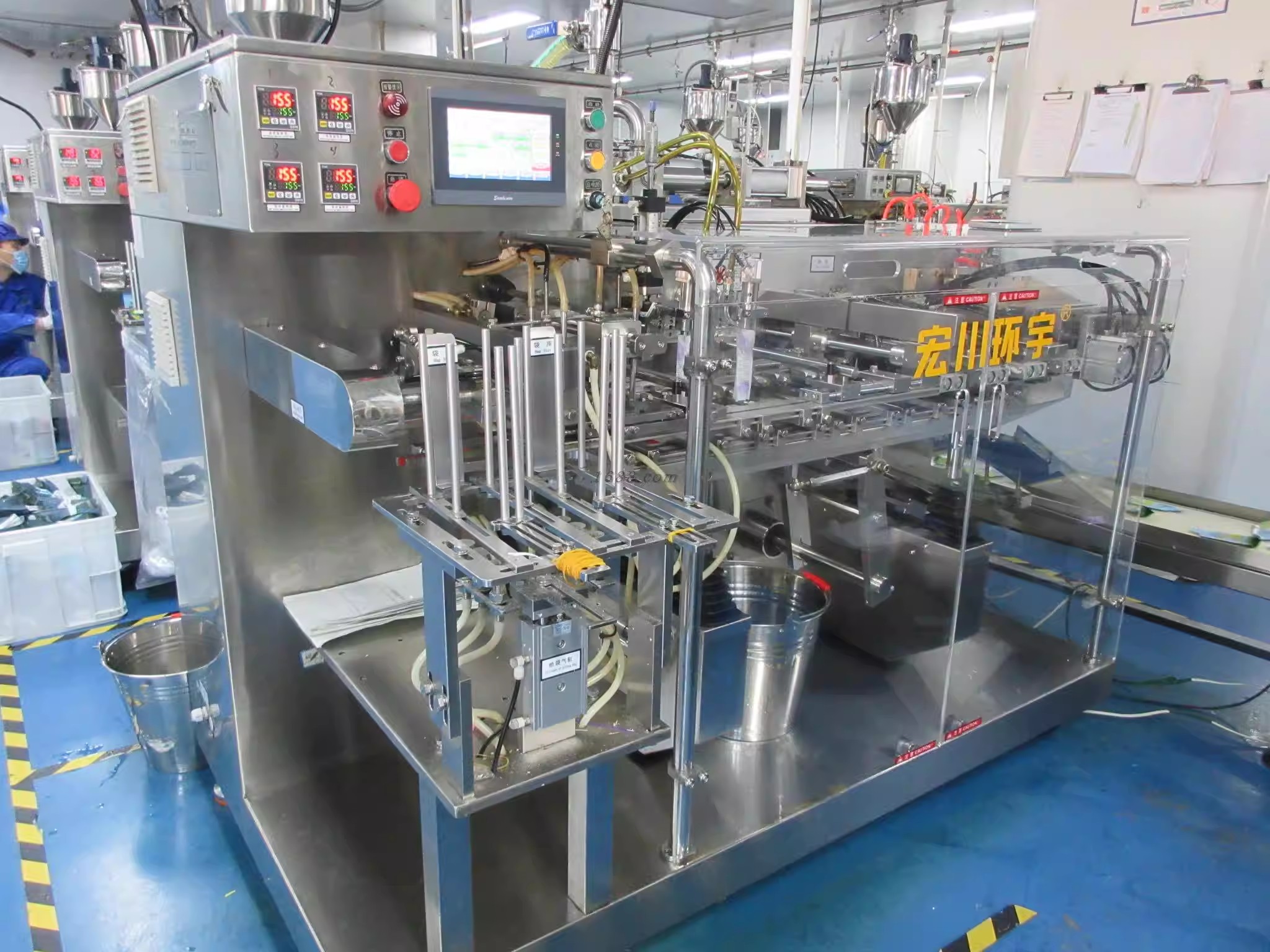
Why storage and processing belong in the specification
The demand picture explains why wet formats keep appearing on buyer checklists. The global functional food and beverage market was projected at USD 437.62 billion in 2026, Asia Pacific held a 39.67% share of that market in 2025, and functional beverages were identified as the fastest-growing product segment at a 9.2% CAGR between 2026 and 2034, according to Fortune Business Insights and Grand View Research data.
Growth of that scale pulls more projects toward liquid inputs — fruit purees, coffee concentrates and ready-to-drink bases — because they sit closer to the finished beverage than a dry blend does. The trade-off is a set of physical constraints that powders do not carry: container sealing, storage environment and thermal processing. The practical risk is sequencing. Storage and processing requirements are frequently confirmed late in a project, after formulation and packaging have already been fixed, which is exactly when changes become expensive. Treating them as qualification criteria rather than logistics details is the simpler route.
Product-level facts to confirm before sampling
Both models carry documented, verifiable specifications. The table below consolidates what the product and certification records state, so a buyer can compare the two formats on the same basis.
| Attribute | Liquid beverages-1 (product code 4363) | coffee-1 (product code 4373) |
|---|---|---|
| Product type | Oil orange puree | Espresso concentrate |
| Material basis | Oil orange puree | Purified water, roasted coffee beans, coffee concentrate; select Arabica coffee beans |
| Key specification | Total original juice content ≥ 80% | Select Arabica coffee beans |
| Packaging format | 30 ml × 5 bags per box (150 ml per box) | 30 ml × 10 strips per box |
| Documented applications | Liquid beverages | Mocha coffee, black coffee, Italian espresso, American coffee, cold brew coffee |
| U.S. market registration | FDA food facility registration 84-278-1901 | FDA food facility registration 84-278-1901 |
Two distinctions matter here. Product 4363 is a juice-based puree with a defined minimum original-juice content, while product 4373 is a coffee extract built on a named green-coffee input. They are not interchangeable in formulation, and they do not share a storage record.
Storage requirements: sealed containers and cool, dry environments
SPACELIFE maintains separate application records for the two formats, and each carries its own storage instruction alongside a matched equipment requirement.
| Application record | Documented working condition | Storage requirement | Matched equipment | Documented markets |
|---|---|---|---|---|
| Espresso concentrate (linked to product 4373) | High temperature | Store in a sealed container | Pasteurization line | AU, CA, DE, ES, FR, GB, US |
| Food and Beverage / liquid beverages (linked to product 4363) | Room temperature | Storage type: cool and dry | Pasteurization line | US, IT, GB, FR |
Read together, the records show a consistent pattern. Liquid puree is documented for a cool and dry storage environment, and the espresso concentrate is documented for sealed-container storage. In both cases the storage instruction sits next to a pasteurization requirement, which means storage planning and processing planning are normally confirmed as one decision rather than two.
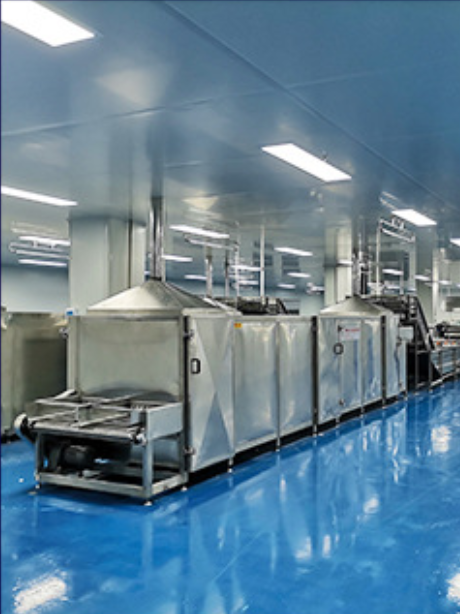
For procurement teams, the operational reading is straightforward: sealed-container and cool-dry storage are warehouse and secondary-packaging requirements, not only production requirements. They affect carton configuration, pallet stacking, inbound inspection and the conditions written into a distributor agreement. A buyer auditing a downstream warehouse against a cool-and-dry standard is checking the same criterion the supplier applies upstream.
Shelf life: what the records state, and how to validate it
The verified records for products 4363 and 4373 specify product type, material, specification, packaging format, documented applications, storage requirement and matched equipment. They do not publish a shelf-life duration for either model. That is a factual boundary, not an oversight, and it changes how a buyer should approach the question.
Shelf life for a liquid ingredient is normally established against three variables: the sealing integrity of the primary package, the storage environment, and the thermal process applied before filling. All three are documented for these products — 30 ml sealed single-serve units, a sealed-container or cool-and-dry storage requirement, and a pasteurization line — but the duration that results from combining them has to be validated for the specific project.
The practical sequence is to define a target shelf life before sampling, state it in the brief, and confirm it against the agreed packaging format and process route. A project that needs a longer shelf life may need a different packaging configuration or a different thermal profile; a project that accepts a shorter one may keep the standard format. Either way, the target should be fixed in writing before the packaging specification is locked.
Processing: where the pasteurization line fits
Both application records list a pasteurization line as matched equipment. For liquid puree and for coffee concentrate, that thermal step is the part of the process route that supports end-of-line handling, and it is the single most common capability gap for buyers who are new to wet formats.
The implication is structural. A brand that owns only dry blending and filling equipment cannot move a liquid puree or concentrate to a finished beverage on its own; the project needs either an in-house pasteurization capability or a partner who operates one. This is where a supply chain service provider differs from a pure ingredient seller — the service model is built to coordinate the processing step rather than to ship a drum and stop there.
SPACELIFE's recorded OEM/ODM capability covers component, logo, product specifications, taste and packaging customization, with 100% testing as the quality-control method, a recorded monthly capacity of 8,000 units, a lead time of 15 days, a minimum order quantity of 5,000 pieces, the United States as the recorded export market, and remote after-sales support. Those terms define how much of the processing route can be adapted to a specific brand brief.
Application fit: puree and concentrate in the same portfolio
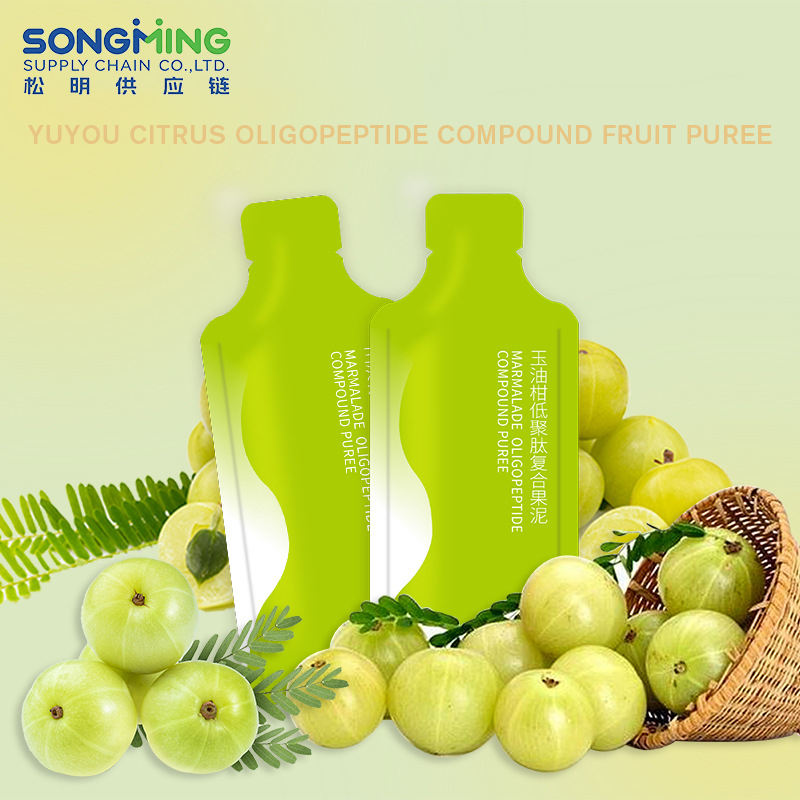
The two formats serve different beverage positions. Product 4373, the espresso concentrate, is documented for mocha coffee, black coffee, Italian espresso, American coffee and cold brew coffee, and it can serve as a base for ready-to-drink coffee beverages as well as for OEM and ODM functional food development. Product 4363, the oil orange puree, is positioned within liquid beverages, with a total original juice content of at least 80% and a 30 ml × 5 bags per box format that suits single-serve or portioned applications.
A recorded case illustrates how a wet-format project moves through a channel. A U.S. liquid beverage OEM project ran 5,000 pieces into the supermarket channel over a 12-month period and was recorded with a best-seller result. Two elements of that record are worth separating: the order size and duration are commercial facts, while the best-seller outcome is a channel result recorded by the supplier. Buyers should treat the first as a planning input and the second as directional context rather than a guaranteed outcome.
Certification and compliance boundaries
Both products are linked to the same registration. FDA food facility registration number 84-278-1901 is issued by the U.S. Food and Drug Administration and applies to the U.S. market. The registration was made pursuant to section 305 of the U.S. Public Health Security and Bioterrorism Preparedness and Response Act of 2002 (PL.107-188), covers functional food and beverages, and carries a recorded validity period from 2025-01-01 to 2026-12-31.
Claims sit in a separate framework. FDA distinguishes health claims, nutrient-content claims and structure/function claims as categories that may appear on food and dietary-supplement labels, subject to applicable requirements. The obligations are not uniform across product classes: for dietary supplements, structure/function claims require substantiation, notification to FDA no later than 30 days after marketing, and a required disclaimer, whereas conventional food manufacturers do not carry the same notification requirement. A functional beverage classified as a conventional food sits in a different compliance lane from a dietary supplement, and the classification decision belongs at the formulation stage, not after packaging artwork is approved.
Liquid formats compared with conventional powder-based routes
Liquid puree and coffee concentrate are not a universal upgrade over conventional powder or instant inputs. They solve different problems, and the comparison below focuses on where the constraint actually lands.
| Decision dimension | Liquid puree / concentrate (products 4363 and 4373) | Conventional powder or instant route |
|---|---|---|
| Primary storage constraint | Sealed container for the espresso concentrate; cool and dry environment for the liquid puree | Dry ambient handling is the usual norm |
| Thermal processing | A pasteurization line is listed as matched equipment for both documented applications | Processing constraint generally sits at reconstitution and dissolution control rather than pasteurization |
| Packaging granularity | 30 ml × 5 bags per box (4363); 30 ml × 10 strips per box (4373) | Bulk bag or sachet formats, typically dosed at the filling line |
| Buyer capability required | Sealed or cool-dry storage plus access to a pasteurization step | Dry storage and a mixing or reconstitution step |
The limitations of the liquid route are concrete and worth stating plainly. First, both formats carry a storage condition that must be maintained downstream of production, which adds a control point to warehouse and distribution agreements. Second, the pasteurization line is not optional in the documented setup: a buyer without that capability must contract a partner who has it, which lengthens the qualification process. Third, the recorded OEM/ODM terms set a minimum order quantity of 5,000 pieces and a lead time of 15 days, which makes the format less suited to very small exploratory runs. Fourth, the U.S. registration is facility-level and time-bound, so it does not substitute for product-specific claim review.
What the next planning cycles should account for
Three signals point in the same direction. Functional beverages are forecast to grow at a 9.2% CAGR from 2026 to 2034, faster than any other product segment, while Asia Pacific already accounted for 39.67% of the global functional food and beverage market in 2025 — a supply concentration that keeps sourcing conversations anchored in that region, even as a market of USD 437.62 billion in 2026 draws new entrants.
As wet formats take a larger share of that demand, storage and processing documentation will migrate from an operational footnote into the supplier qualification pack. Buyers who ask for the storage condition, the matched thermal equipment and the registration validity window at the RFQ stage will spend less time re-engineering packaging later. The reference material behind this article reflects that shift: the constraints are already documented per product and per application, which means they can be audited rather than assumed.
FAQ: storage, shelf life and processing for liquid puree and coffee concentrate
1. What storage conditions apply to SPACELIFE liquid puree and coffee concentrate?
The documented application records set two storage requirements. The coffee-1 espresso concentrate (product code 4373) is recorded with a sealed-container storage requirement. The Liquid beverages-1 oil orange puree (product code 4363) is recorded with a cool and dry storage environment. Both records also list a pasteurization line as matched equipment, so storage conditions and processing steps are normally confirmed together rather than separately.
2. Does SPACELIFE publish a shelf-life duration for product 4363 or 4373?
No shelf-life duration appears in the verified records for either model. The confirmed data covers product type, material, specification, packaging format, documented applications, storage requirement and matched equipment. In practice, a buyer defines a target shelf life, then validates it against the agreed packaging format — 30 ml × 5 bags per box for product 4363, or 30 ml × 10 strips per box for product 4373 — together with the storage condition and the pasteurization step.
3. Is a pasteurization line required to process these liquid formats?
Yes in the documented setup. Both application records list a pasteurization line as matched equipment: the espresso concentrate record and the Food and Beverage record tied to the oil orange puree. Thermal processing is therefore part of the end-of-line configuration for these products. A buyer whose own facility does not operate a pasteurization step needs to decide which party performs it before packaging is fixed.
4. What packaging formats are available, and how do they relate to storage?
Product 4363 is packaged at 30 ml per bag with 5 bags per box, giving 150 ml per box. Product 4373 is packaged at 30 ml per strip with 10 strips per box. Both are single-serve sealed formats, which is consistent with the sealed-container requirement recorded for the espresso concentrate. Packaging is one of the customizable elements in SPACELIFE's OEM/ODM scope, alongside component, logo, product specifications and taste.
5. What certification covers these two products in the U.S. market?
Both products are linked to FDA food facility registration number 84-278-1901, issued by the U.S. Food and Drug Administration and applicable to the U.S. market. The registration was made pursuant to section 305 of the U.S. Public Health Security and Bioterrorism Preparedness and Response Act of 2002 (PL.107-188), and the recorded validity period runs from 2025-01-01 to 2026-12-31. It is a facility registration for functional food and beverages, not a product-level claim authorisation. FDA guidance treats health claims, nutrient-content claims and structure/function claims as distinct categories, and dietary-supplement structure/function claims carry substantiation plus a 30-day post-marketing notification requirement that conventional foods do not share.
6. What are the minimum order quantity and lead time for OEM/ODM production?
SPACELIFE's recorded OEM/ODM terms list a minimum order quantity of 5,000 pieces, a lead time of 15 days, a monthly capacity of 8,000 units, 100% testing as the quality-control method, the United States as the recorded export market, and remote after-sales support. Customization covers component, logo, product specifications, taste and packaging. Product and capability records are published at https://songming-sc.com/.
Tem questões ou precisa de mais detalhes?
Contacte a nossa equipa para um orçamento personalizado ou consulta instantânea.
Solicitar orçamento
Preencha o formulário abaixo e a nossa equipa entrará em contacto com uma proposta personalizada.
Chat direto do WhatsApp
Prefere conversar em tempo real? Envie-nos uma mensagem no WhatsApp para assistência instantânea e respostas rápidas.
- Obter orçamento personalizado
- Partilhar fotos ou documentos
- Discuta as suas necessidades diretamente
Geralmente responde em 5–30 minutos durante o horário de expediente.