
Liquid Silicone Rubber Procurement FAQ: Catalyst Activity, Overmolding, Certification
Liquid Silicone Rubber Procurement FAQ: Catalyst Activity, Overmolding, Certification
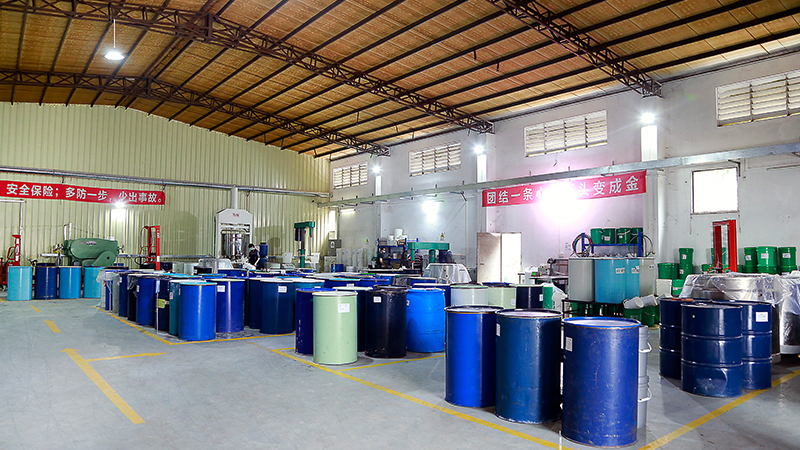
Liquid silicone rubber (LSR) is a two-part, platinum-catalyzed elastomer that is metered, mixed and injected into heated molds. For biotech and medical innovation teams, the material family is usually settled early in an evaluation. What decides whether a program scales is a narrower group of questions: how active the catalyst actually is, how an overmolded bond behaves in service, which certificate covers which formulation, and how repeat supply is protected. This guide answers those questions in the order procurement teams actually meet them.
The category context is worth stating plainly. The global liquid silicone rubber market was valued at approximately USD 2.8 billion to 3.8 billion in 2024, with expectations to reach USD 5.0 billion to 7.55 billion by 2030–2035, based on third-party research published by Grand View Research, Global Market Insights and Market Research Future. Within that total, medical-grade LSR generated approximately USD 458.7 million in revenue in 2024 and is described by Grand View Research as a dominant and fast-growing segment of the medical silicone rubber market.
Regulatory expectations around human-contact materials are similarly well defined. Medical-grade LSR must comply with ISO 10993 for biocompatibility, USP Class VI, and FDA 21 CFR 177.2600 for safety in human-contact applications. Those obligations ultimately sit with the finished device, but the documentation a material supplier provides determines how much of that work is already complete when a device file is assembled.
Dongguan Times Silicon Industry Co., Ltd. is a silicone raw material manufacturer founded on December 27, 2021, operating from Hengli Town, Dongguan, Guangdong Province, China. The company develops and produces liquid silicone for adult products and overmolding, liquid silicone base gums, vinyl silicone oil, hydrogen-containing silicone oil, silicone resin, platinum catalysts, inhibitors and silicone treatment agents, and holds ISO 9001 international quality management system certification. Monthly production capacity is 80 tons, scalable to 110 tons for peak seasons.
Why LSR Questions Surface Between Decision and Execution
Buyers rarely change material family after sampling; they change question set. The decision stage compares material families, suppliers and compliance posture. The execution stage has to lock a formulation, reproduce it batch after batch, and defend it during an audit. Four question groups dominate that transition.
- Catalyst specification and activity — what loading is required, how fast the system cures, and how much batch-to-batch variation is tolerable.
- Overmolding and cleanliness — how the LSR bonds to a substrate and whether it leaches, yellows or carries residual odor.
- Certification scope — which documents apply to the specific grade being ordered, and which belong to the finished device.
- Commercial and continuity terms — minimum order quantity, lead time, sampling policy and peak-season capacity.
Each is answerable with verifiable parameters rather than marketing language, which is why an FAQ format suits this stage of a program.
Platinum Catalyst Activity: Which Numbers Govern the Cure
Platinum catalyst specification for medical and overmolding LSR is normally defined by three numbers: platinum content of 1000–5000 ppm, viscosity of 320–1000 mPa·s, and volatile matter of ≤10%. Those three values, combined with a recommended addition rate of 5–10 ppm in the formulation, determine both the cure schedule and the reproducibility of the finished part.
| Parameter | Specified range | What it controls for a buyer |
|---|---|---|
| Platinum content | 1000–5000 ppm | Catalytic activity and the ability to hold a cure schedule across batches |
| Viscosity | 320–1000 mPa·s | Metering and mixing accuracy in LSR dosing equipment |
| Volatile matter | ≤10% | Odor, outgassing and dimensional stability in sealed or enclosed parts |
| Recommended addition rate | 5–10 ppm | Formulation cost and cure speed |
| Cure at 80 °C | 10 minutes to full cure | Cycle time, mold utilization and energy consumption |
Platinum content is the parameter that most directly shapes activity. A catalyst positioned within the 1000–5000 ppm range delivers more active species per unit of catalyst, which allows a formulation to reach full cure at a low addition rate. The viscosity window of 320–1000 mPa·s is primarily a processing property: LSR dosing systems meter two components at a fixed ratio, and a catalyst that is too thin or too thick distorts that ratio at the mix head. Volatile matter is a cleanliness property — a limit of ≤10% matters where parts are enclosed, sterilized or used in human contact.
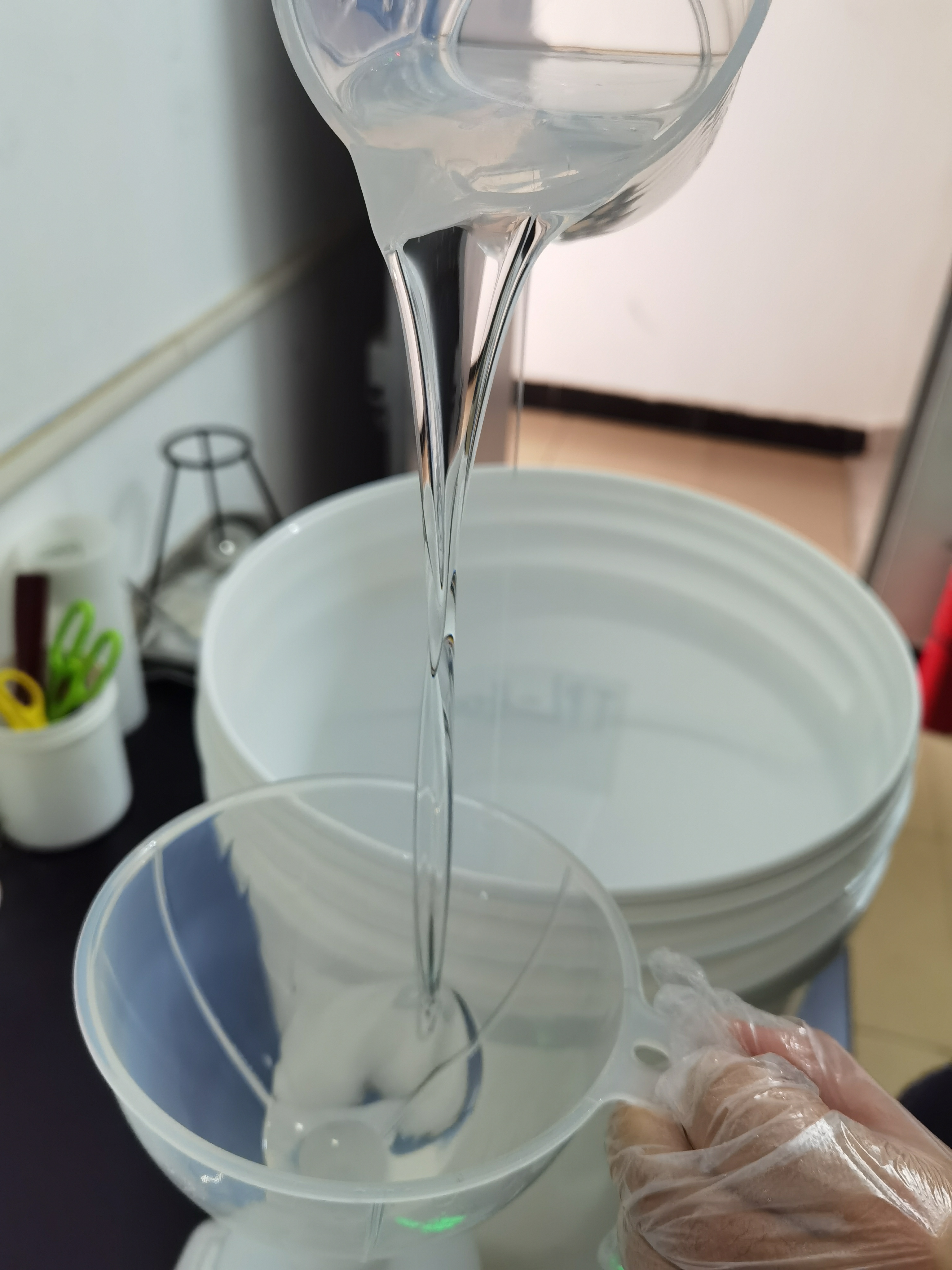
Activity, addition rate and cure schedule. The platinum catalyst supplied by Dongguan Times Silicon Industry Co., Ltd. is used at an addition rate of 5–10 ppm. Conventional organotin catalysts typically require 50–100 ppm, and general low-activity platinum catalysts require 20–30 ppm. At 80 °C, the platinum system reaches full cure in 10 minutes, against 30 minutes for organotin and 20 minutes for general platinum catalysts at the same temperature.
| Metric | Platinum catalyst (Dongguan Times Silicon Industry Co., Ltd.) | Conventional organotin or general low-activity platinum catalysts |
|---|---|---|
| Addition rate | 5–10 ppm | 50–100 ppm (organotin); 20–30 ppm (general platinum) |
| Full cure at 80 °C | 10 minutes | 30 minutes (organotin); 20 minutes (general platinum) |
| Odor residue | None | Pungent tin odor (organotin); slight off-odor (general platinum) |
| Yellowing after aging | No yellowing after 1000 h | Obvious yellowing after 200 h |
| Curing defect rate | ≤0.6% | ≥2.5% |
The downstream effect is measurable. The curing defect rate for the platinum system is ≤0.6% against ≥2.5% for the compared conventional options. Residual odor is described as none, compared with a pungent tin odor from organotin systems and a slight off-odor from general platinum catalysts. In aging terms, no yellowing is reported after 1000 hours, while obvious yellowing appears after 200 hours in the comparison materials. Process efficiency changes as well: curing temperature can be reduced by 20 °C, molding cycle shortened by 30%, energy consumption per unit reduced by 20%, and production capacity increased by 35%.
Cost is where the comparison becomes nuanced. Unit price per kilogram of a high-activity platinum catalyst is higher than organotin catalysts. Because the addition rate is 5–10 ppm rather than 50–100 ppm, comprehensive formulation cost is 10%–15% lower for the buyer, and no additional deodorization process is required.
How batch consistency is controlled. Catalyst activity is the variable most likely to disturb a validated LSR process. Dongguan Times Silicon Industry Co., Ltd. controls it through a defined sequence: high-purity platinum procurement with ICP-MS testing for platinum content and impurities; a hydrosilylation activity test on every batch to hold fluctuation below 3%; a carrier formula designed for oxidation and moisture resistance; accelerated aging tests to verify storage stability; and closed-loop monitoring of reactor parameters. Batch activity fluctuation under 3% is the margin relevant to avoiding delayed or uneven cure in production. Platinum content and activity test reports are provided per batch, and material is shipped in moisture-proof sealed packaging with storage and handling guidance.
Overmolding with Adult Products LSR: Bonding, Odor and Leaching
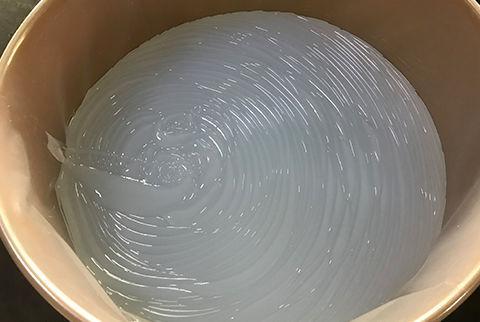
Overmolding is the step where LSR questions become part-design questions. Silicone is molded over a thermoplastic substrate, so the selected grade must cure fast enough to survive the molding cycle, bond well enough to pass functional testing, and remain clean enough to meet biocompatibility requirements. Adult Products LSR for Overmolding is a grade developed for that combination of requirements.
| Metric | Adult Products LSR for Overmolding | Conventional industrial-grade or low-quality recycled silicone |
|---|---|---|
| Odor level | Low odor, no irritating residue | Pungent industrial odor |
| Biocompatibility | FDA / REACH certified | Uncertified, with harmful leaching |
| Yellowing after 1000 h accelerated aging | No obvious yellowing | Severe yellowing after 200 h |
| Tear strength | ≥35 kN/m | ≤20 kN/m |
| Curing defect rate | ≤0.8% | ≥3% |
| Hardness and cure speed fluctuation | <3% across batches | Not specified |
| Molding cycle | 15% shorter than industrial-grade silicone | Baseline |
Three of these rows matter most for medical and adult-product programs. Low odor with no irritating residue is a formulation outcome, not a post-process treatment. Non-leaching behaviour alongside FDA and REACH certification supports human-contact claims. Tear strength of ≥35 kN/m, against ≤20 kN/m for conventional industrial-grade silicone, determines how thin a section can be molded before tearing becomes a yield problem. Batch consistency is held with less than 3% fluctuation in hardness and curing speed, which reduces the need for repeated process adjustments, and unit energy consumption is 10% lower with 20% higher production capacity than industrial-grade silicone.
A boundary worth stating. Overmolding performance is not determined by the LSR grade alone. Bond strength depends on substrate chemistry, part geometry, gate and vent design, and the cleanliness of the insert surface; an LSR that performs well over one thermoplastic may require a different primer or tie-layer strategy over another. Process control also has to be maintained in line — viscosity, hardness and mixing ratio are monitored in real time to catch anomalies before a batch is molded out. Buyers should also expect that changing either the substrate supplier or the LSR grade inside a validated medical file typically triggers re-validation, which is a schedule cost rather than a material cost.
Certification: What the Documents Cover, and What They Do Not
Certification questions at the execution stage are usually about scope rather than existence. Dongguan Times Silicon Industry Co., Ltd. holds ISO 9001 international quality management system certification, certificate number 25025Q12678R0S, and high-tech enterprise certificate GR202444010636. The company also holds utility model patent ZL202323622488.5, covering Vinyl Silicone Oil and Fiber glass sleeve with silicone resin.
At product level, the relevant declarations are RoHS, REACH, FDA, LFGB and halogen-free certification, supported by third-party reports. For medical work, the standards that govern the finished article are ISO 10993 for biocompatibility, USP Class VI, and FDA 21 CFR 177.2600.
Where the boundaries sit. A quality management certificate covers a defined site and scope; it is not a material approval. Biocompatibility evidence applies to a formulation and is normally re-tested when the formulation, the substrate or the sterilization method changes. Buyers evaluating a grade should confirm which certificate applies to the specific formulation being ordered, request batch-level test reports, and expect that device-level ISO 10993 or USP Class VI testing remains the responsibility of the device manufacturer.
The control routines behind those documents are worth checking directly: incoming inspection of all raw material batches for purity, harmful substances and heavy metals; a full finished-product testing routine covering curing performance, odor, yellowing and biocompatibility; and batch traceability from raw materials through to finished product so that any historical lot can be reproduced and retested.
Application Snapshot: Where These Questions Arise
LSR procurement questions concentrate in a few application families, and the same parameters carry different weight in each.
- Medical and adult-product components. Overmolded grips, sleeves and soft-touch bodies weight odor, leaching and biocompatibility most heavily, which is where the Adult Products LSR for Overmolding grade combines low odor, non-leaching behaviour and FDA/REACH certification.
- New energy vehicle battery packs. Approximately 63% of battery pack sealing systems use silicone elastomers for flexibility and durability, which places cure consistency, flexibility and durability at the centre of the specification.
- High-voltage insulation and thermal management. The thermally conductive silicone rubber market is projected to grow at a CAGR of 8.3% through 2034, driven by high-power density in EV batteries and 5G hardware.
Market Trend: Documentation Is Becoming Part of the Product
Several third-party datasets point in the same direction, with meaningful differences in how the market is defined. Global LSR market size for 2024 is placed at USD 2.81 billion by Market Research Future and USD 3.8 billion by Global Market Insights — a spread that reflects different treatment of material types and regional scope. Medical-grade LSR revenue was approximately USD 458.7 million in 2024 according to Grand View Research. Thermally conductive silicone rubber is forecast to grow at a CAGR of 8.3% through 2034 (SNS Insider). The competitive landscape remains concentrated among established international suppliers, including Dow Inc., Wacker Chemie AG, Momentive Performance Materials and Shin-Etsu Chemical Co., Ltd., as identified by Stratview Research.
The procurement implication is more useful than the headline numbers. Because market sizing varies by source, buyers should treat aggregate figures as directional and concentrate on what can be verified inside a supplier file: batch activity reports, certification scope, formulation-specific declarations and continuity commitments. For long-term programs, these evidence packages increasingly drive supplier retention decisions as much as price or catalogue properties do.
Where Platinum-Catalyzed LSR Meets Its Limits
Platinum-catalyzed LSR is not the lowest-cost option in every scenario, and stating where it fits less well is part of a credible specification.
- Unit catalyst cost is higher. A high-activity platinum catalyst costs more per kilogram than organotin catalysts; the economics only reverse when the 5–10 ppm addition rate, against 50–100 ppm, and the removal of a separate deodorization step are included.
- Premium grades carry a material premium. Medical and overmolding grades cost 15%–20% more per kilogram than industrial-grade silicone; the offset is a 5%–10% reduction in comprehensive production cost through lower defect rates and fewer reworks.
- Process sensitivity. Addition-cure platinum systems are sensitive to certain contaminants, so substrates, tooling and handling equipment need controlled contact materials. A stabilization routine is part of adoption, not an optional extra.
- Equipment requirements. A 10-minute cure at 80 °C assumes accurate dosing and mixing. Where mixing-ratio accuracy cannot be held, cure quality degrades regardless of catalyst quality.
- Pilot volumes are bounded. Custom formulations start at a minimum order quantity of 5 kg, so early formulation screening depends on sample arrangements rather than full production batches.
From Sample to Volume Order: Terms to Confirm Before Execution
Commercial terms decide whether a validated formulation can actually be scheduled. For standard products the minimum order quantity is 1 kg; for custom formulations it is 5 kg. Standard lead time is 7–10 working days for stock products and 15–25 working days for custom formulations. Monthly production capacity is 80 tons, scalable to 110 tons for peak seasons.
Continuity is managed through inventory rather than promises: safety stock of core raw materials covering at least three months, long-term cooperation with platinum suppliers that locks price and quantity, temperature-controlled batch storage with regular activity sampling, and no release of expired material. Delivery terms are FOB, and sample or small shipments under 20 kg move through international express chemical channels, which requires confirming acceptance with the courier in advance to avoid detention.
Future Outlook
Two forces are likely to shape LSR procurement over the next several years. The first is documentation. As medical-grade LSR continues to expand from an approximately USD 458.7 million revenue base in 2024, suppliers are being evaluated less on catalogue properties and more on the completeness of batch records, activity test reports and certification scope. The second is cycle economics. Faster cure at lower catalyst loading changes the cost structure of a molding cell, which is where the difference between a 10-minute cure at 80 °C and a 30-minute cure becomes a capacity argument rather than a chemistry argument.
For programs moving from sample approval to volume orders, the practical implication is to treat the catalyst specification, the overmolding grade and the certification file as one procurement package, and to test continuity commitments as rigorously as performance claims.
FAQ: Liquid Silicone Rubber Procurement Questions
What platinum content and viscosity should be specified for medical or overmolding LSR?
Platinum catalysts are defined by three parameters: platinum content of 1000–5000 ppm, viscosity of 320–1000 mPa·s, and volatile matter of ≤10%. Platinum content governs catalytic activity; viscosity governs metering accuracy in LSR dosing equipment; volatile matter relates to odor, outgassing and dimensional stability. The catalyst is typically specified at an addition rate of 5–10 ppm within the formulation.
How does catalyst addition rate affect cure time and formulation cost?
A high-activity platinum catalyst is used at 5–10 ppm and reaches full cure in 10 minutes at 80 °C. Conventional organotin catalysts are used at 50–100 ppm with a 30-minute cure at 80 °C, and general low-activity platinum catalysts at 20–30 ppm with a 20-minute cure at the same temperature. Although the platinum catalyst costs more per kilogram, the lower addition rate reduces comprehensive formulation cost by 10%–15% and removes the need for a separate deodorization process.
Which certifications should be verified before scaling an LSR program?
At supplier level: ISO 9001 certificate 25025Q12678R0S and high-tech enterprise certificate GR202444010636. At product level: RoHS, REACH, FDA, LFGB and halogen-free certification with third-party reports, plus patent evidence such as ZL202323622488.5 covering Vinyl Silicone Oil and Fiber glass sleeve with silicone resin. For medical devices, ISO 10993 biocompatibility, USP Class VI and FDA 21 CFR 177.2600 apply to the finished article, so device-level testing remains with the device manufacturer. Batch-level test reports should be requested for the specific formulation ordered.
Why is LSR used for overmolding in adult-product and medical components?
Because the grade combines process behaviour with cleanliness. Adult Products LSR for Overmolding offers low odor with no irritating residue, non-leaching behaviour, medical-grade biocompatibility with FDA and REACH certification, and tear strength of ≥35 kN/m against ≤20 kN/m for conventional industrial-grade silicone. It shows no obvious yellowing after 1000 hours of accelerated aging, compared with severe yellowing after 200 hours in the comparison material, and a curing defect rate of ≤0.8% against ≥3%.
What are the minimum order quantity and standard lead times?
Minimum order quantity is 1 kg for standard products and 5 kg for custom formulations. Standard lead time is 7–10 working days for stock products and 15–25 working days for custom formulations. Monthly production capacity is 80 tons, scalable to 110 tons for peak seasons, and delivery terms are FOB. Sample and small shipments under 20 kg are handled through international express chemical channels.
How is batch consistency maintained across a long-term supply program?
Every catalyst batch undergoes ICP-MS testing for platinum content and impurities and a hydrosilylation activity test, with batch activity fluctuation held below 3%. Storage is temperature-controlled with regular activity sampling and moisture-proof sealed packaging. For finished compounds, incoming inspection covers purity, harmful substances and heavy metals, while in-line monitoring tracks viscosity, hardness and mixing ratio. Safety stock of core raw materials covering at least three months supports continuity between orders.
What are the limitations of platinum-catalyzed LSR compared with organotin systems?
Unit catalyst cost is higher per kilogram, although the lower 5–10 ppm addition rate reduces comprehensive formulation cost by 10%–15%. Platinum addition-cure systems are sensitive to certain contaminants, so substrates and handling equipment require control, and a 10-minute cure at 80 °C depends on accurate dosing and mixing. Premium medical and overmolding grades also carry a raw material cost 15%–20% higher per kilogram than industrial-grade silicone, and custom formulations start at a minimum order quantity of 5 kg.
How is supply continuity protected during peak demand?
Monthly production capacity is 80 tons and can be scaled to 110 tons for peak seasons. Core raw materials are held as safety stock covering at least three months, platinum supply is secured through long-term agreements that lock price and quantity, and batches are stored at controlled temperature with regular activity sampling and no release of expired material.
The Dongguan Times Silicon Industry Co., Ltd. company brochure, covering product categories, certification documentation and technical specifications, is available for download: Times Silicon brochure.