
Liquid Silicone Rubber: Properties and Buyer Basics
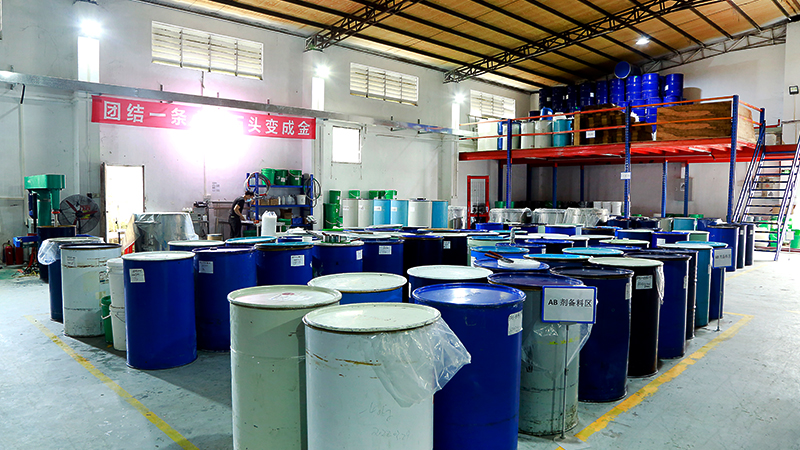
Production preparation area for LSR AB agents at a silicone material manufacturing facility.
Liquid silicone rubber (LSR) has become a standard material in medical, consumer, automotive, and energy applications. For engineers and procurement teams, the practical challenge is to understand what LSR can and cannot do, and then match product grades to application requirements. This article provides an independent, buyer-oriented overview of LSR properties, product families, certification considerations, and supplier evaluation criteria.
Why LSR Matters to Industrial Buyers
LSR is no longer a niche material. It is used in applications that require soft touch, sealing, electrical insulation, thermal stability, and regulatory compliance. Unlike conventional solid silicone, LSR is supplied as a low-viscosity liquid system and is typically processed with precision injection molding equipment. This gives designers more freedom in part geometry and allows manufacturers to produce complex components with consistent quality.
For buyers, the significance of LSR lies in its combination of properties: it can be very soft, highly elastic, resistant to temperature extremes, and compatible with strict safety standards. It can also be formulated for specific processes such as overmolding, foaming, or high-voltage insulation. However, the breadth of available grades also creates confusion. Two products may both be called LSR, yet behave very differently in processing and end-use performance.
The Buyer's Problem: Navigating a Broad Material Family
Material selection teams often compare LSR products with similar appearance but different hardness, viscosity, curing behavior, and certification status. A grade that works well for a soft consumer product may not meet the mechanical demands of an automotive sealing component. A material with excellent transparency may not offer the same tear strength as a filled, translucent version. Without a clear set of selection criteria, buyers risk approving a material that performs poorly in production or fails in the field.
The opportunity is that LSR can be designed across a wide performance window. Manufacturers such as Dongguan Times Silicon Industry Co., Ltd. supply multiple LSR-related product lines, from overmolding materials to base polymers, catalysts, and reinforced insulation systems. Understanding these product families helps buyers translate application requirements into material specifications.
Technical Foundations: How LSR Is Formulated and Cured
Most LSR products belong to the addition-curing silicone family. The system typically contains a vinyl-terminated polydimethylsiloxane base polymer, a hydrogen-containing polysiloxane crosslinker, and a platinum catalyst. Curing occurs through hydrosilylation, in which silicon-hydrogen groups add across vinyl groups to form a crosslinked elastomer network. Because this reaction produces little or no byproducts, platinum-cured LSR can achieve high purity, low odor, and low volatility.
This chemistry also enables fast curing and precise replication of mold surfaces. In practice, LSR is processed as a two-component AB system and cured at elevated temperature. The result is a flexible part with low compression set and good resistance to aging, moisture, and many chemicals.
For buyers, the technical takeaway is that the final properties of LSR depend on formulation choices. Hardness, viscosity, crosslink density, fillers, and additives all affect performance. A single LSR grade cannot be treated as a universal substitute for all elastomers.
Product Families and What They Indicate
Supplier portfolios can be organized by process, hardness, or end-use. The table below summarizes representative LSR-related products from Dongguan Times Silicon Industry Co., Ltd., a silicone material manufacturer based in Guangdong Province, China. The company specializes in R&D, production, and sales of new silicone materials and operates a 15,000 square meter facility with around 42 staff and 10 R&D engineers.
| Product Family | Type | Key Parameters | Typical Applications |
|---|---|---|---|
| Adult Products LSR for Overmolding | Addition-curing LSR, platinum-cured | Hardness 7±1 to 38±1 Shore A; viscosity 4000 to 25000 | Overmolding on plastic and hardware substrates; adult products; daily necessities |
| Vinyl Silicone Oil | Vinyl-terminated polydimethylsiloxane | Viscosity 35 to 50W; vinyl content 0.037 to 1.497; volatile content less than 0.5% | Electronic and electrical appliances; automotive; photovoltaic; new energy batteries |
| Formed Liquid Foamed Silicone Rubber | Foamed LSR | Hardness 17 to 51; tensile strength 5 to 7; elongation 300 to 500; tear strength 15 to 17 | Automobile; photovoltaic; electrical appliances |
| Fiber Glass Sleeve with Silicone Resin | Silicone resin coating | Heat resistance 200°C; hardening temperature -55°C; brittleness temperature -73°C; hardness 20 to 35 | New energy vehicles; photovoltaic and energy storage; aerospace and defense |
| Platinum Catalyst | Catalyst for addition-curing systems | Platinum content 1000 to 5000 ppm; viscosity 320 to 1000 mPa·s; volatile matter ≤10% | LSR production; flame-retardant silicone; thermally conductive silicone; PET protective film |
Overmolding LSR
For overmolding, the company's LSR series includes models TS6807A/B, TS6825A/B, TS6830A/B, TS6835A/B, and TS6838A/B. This addition-curing, platinum-cured LSR is made from vinyl polydimethylsiloxane and hydrogen-containing polysiloxane. It has a clear appearance, viscosity from 4000 to 25000, and hardness from 7±1 to 38±1 Shore A. The material is designed to bond with plastic and hardware substrates, making it suitable for adult products, daily necessities, and general soft-touch overmolding applications.
Vinyl Silicone Oil
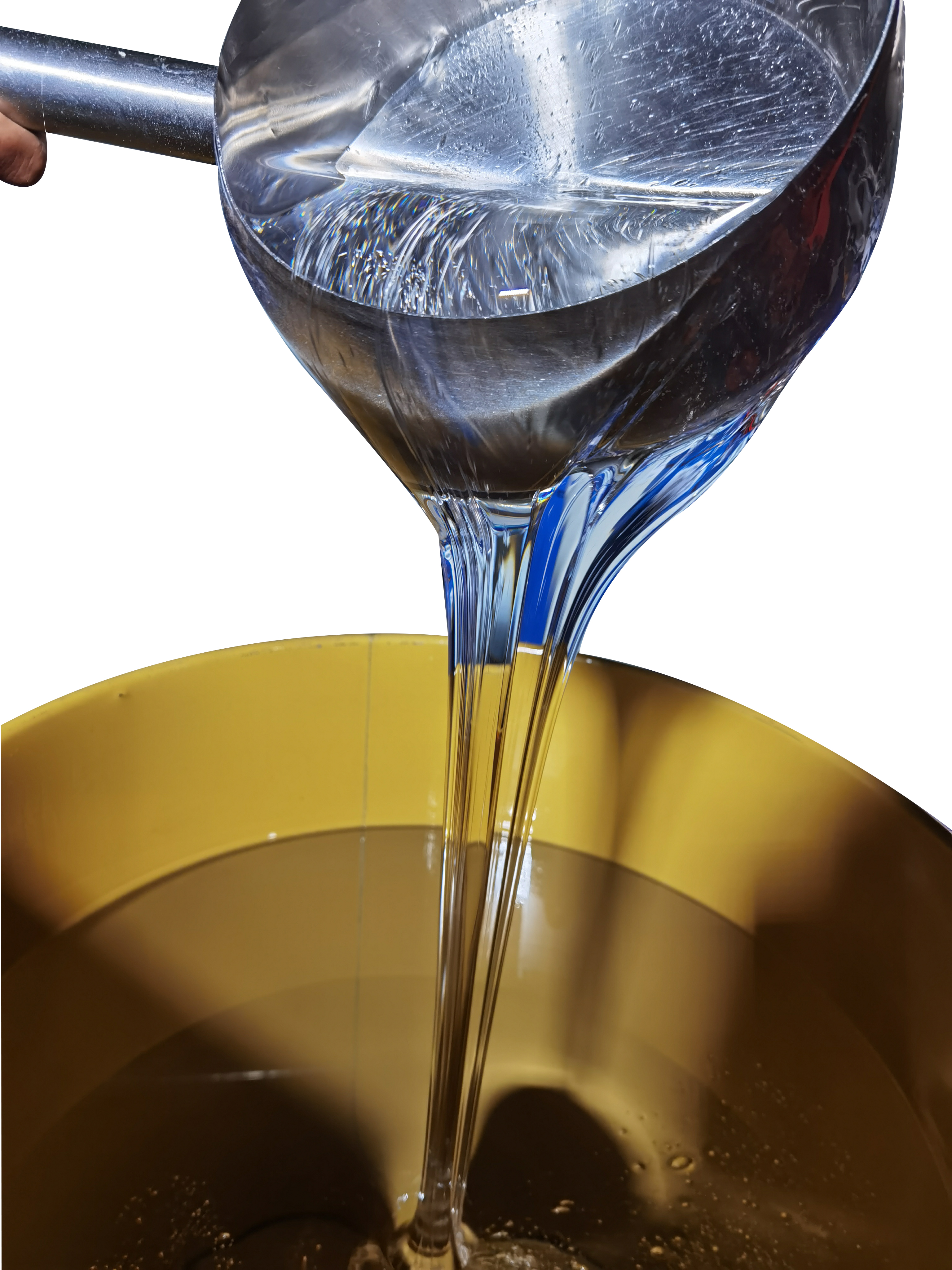
Vinyl silicone oil is one of the base polymers used in addition-curing LSR systems.
Vinyl silicone oil is a raw material used in LSR formulation and related silicone systems. Dongguan Times Silicon supplies models from TVF-L-50 to TVF-H-35W, with viscosity ranging from 35 to 50W, vinyl content from 0.037 to 1.497, and volatile content below 0.5%. It is intended for electronic and electrical appliances, automotive, photovoltaic, and new energy battery industries.
Foamed Liquid Silicone Rubber
The formed liquid foamed silicone rubber series includes BAS-1716, BAS-1812, and BAS-80931. These materials are made from vinyl polydimethylsiloxane and use a precipitated or fumed process. The appearance is translucent, with viscosity from 15W to 350W, hardness from 17 to 51, tensile strength from 5 to 7, elongation at break from 300 to 500, and tear strength from 15 to 17. Foamed silicone is relevant when buyers need lightweight sealing, cushioning, or thermal management behavior.
Platinum Catalysts
Platinum catalysts are essential to the performance of addition-curing LSR. The company's TPL and PTR series have a transparent appearance, platinum content from 1000 to 5000 ppm, viscosity from 320 to 1000 mPa·s, and volatile matter ≤10%. These catalysts are used in LSR production, flame-retardant rubber silicone, PET protective film, thermally conductive silicone potting compounds, and thermally conductive silicone sheets. They are suitable for automotive, photovoltaic, and electronic and electrical applications.
Silicone Resin Coated Fiber Glass Sleeves
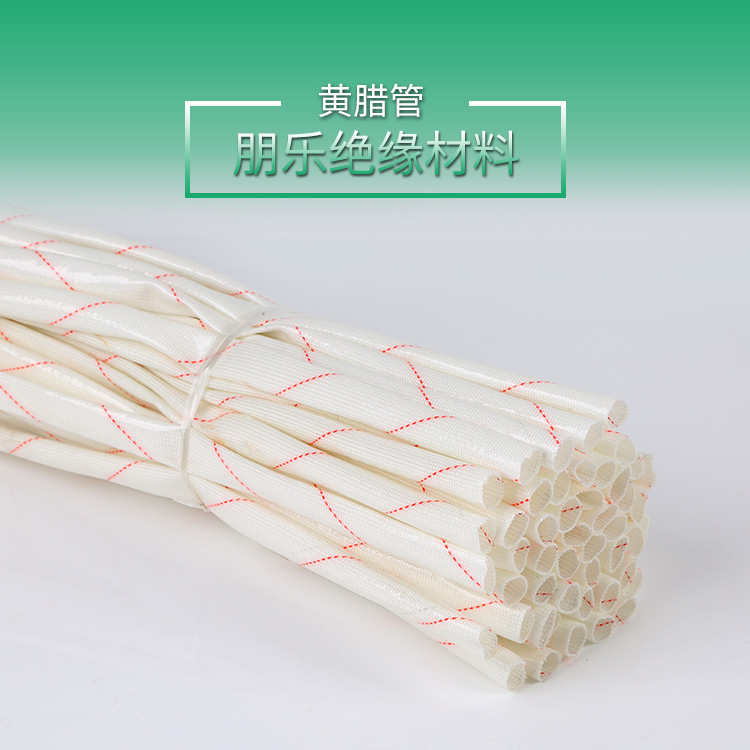
Silicone resin coated fiber glass sleeves are used in electrical insulation and high-temperature protection applications.
Although not an LSR itself, the silicone resin coated fiber glass sleeve supports the broader silicone material ecosystem around electrical insulation. Models include TS3034B, TS3039B, TS3045-01B, TS3045B, TS3049B, TS6123A/B, and TS6125A/B. The coating is based on methylphenyl silicone resin and provides heat resistance up to 200°C, with cold resistance including a hardening temperature of -55°C and a brittleness temperature of -73°C. These products are used in new energy vehicles, photovoltaic and energy storage systems, and aerospace and defense applications.
Industries and Application Scenarios
LSR and related silicone materials are applied in several distinct scenarios. In the electrical insulation field, silicone resin coatings are applied to fiber glass sleeves by dipping, spraying, or brushing, then cross-linked through high-temperature baking. This process provides insulation, high-temperature resistance, voltage resistance, and aging protection for wire harnesses, cable insulation, motor windings, transformer windings, and home appliance internal wiring. The application must often meet insulation class, flame retardancy, and RoHS/REACH requirements.
In overmolding, LSR is used to create soft-touch surfaces on plastic or metal parts. Typical requirements include food or medical grade certification, low odor, low volatility, anti-yellowing, and high resilience. The material must also provide bonding, sealing, and a realistic or comfortable tactile feel.
In new energy and electronics, vinyl silicone oil supports formulation of silicone systems for batteries, photovoltaic modules, and automotive components. Platinum catalysts are used in new energy battery research and development, PU foam production, and chemical synthesis processes. These applications may demand high catalytic activity, low toxicity, environmental friendliness, and good thermal and chemical stability.
Market Trends and Demand Signals
Market data shows that LSR is a growing material category. Grand View Research, Global Market Insights, and Market Research Future estimate that the global liquid silicone rubber market was valued at approximately USD 2.8 billion to 3.8 billion in 2024, with long-term projections reaching USD 5.0 billion to 7.55 billion by 2030 to 2035. Medical-grade LSR generated roughly USD 458.7 million in 2024, according to Grand View Research, making it a significant high-value segment.
In the electric vehicle sector, Precedence Research and IEA estimate that about 63% of battery pack sealing systems use silicone elastomers for flexibility and durability. Separately, SNS Insider projects that the thermally conductive silicone rubber market will grow at a CAGR of 8.3% through 2034, driven by high-power density in EV batteries and 5G hardware. Major global LSR suppliers commonly cited in market analyses include Dow, Wacker Chemie, Momentive Performance Materials, and Shin-Etsu Chemical.
These signals suggest that buyers should expect broader specification requirements across medical, energy, and electronics applications. Certification coverage and formulation capability will become more important in supplier selection.
LSR vs. Traditional Solutions: A Balanced View
Compared with traditional heat-cured silicone rubber, LSR offers faster cycle times, higher dimensional precision, and cleaner curing chemistry. It is well suited to complex geometries and high-volume production. However, LSR also has limitations. It generally requires specialized injection molding equipment and higher material system costs. For small production runs, simple shapes, or applications where extremely high abrasion resistance is required, conventional solid silicone or other elastomers may be more practical.
Within LSR itself, there are trade-offs. An ultra-soft grade with very low hardness may not provide the same tear strength as a harder formulation. Foamed LSR can reduce weight and improve compressibility, but may have different surface quality or mechanical performance compared with dense LSR. Buyers should evaluate the full set of mechanical, thermal, and processing requirements rather than selecting a grade based on a single property.
Practical Limitations Buyers Should Not Ignore
First, no single LSR grade covers all applications. Hardness, viscosity, and additive packages must be matched to the product design and manufacturing process. Second, certifications are not automatic. A company may hold ISO9001 certification and have products certified to RoHS, REACH, FDA, LFGB, and halogen-free standards, but buyers should confirm that the specific product grade and batch meet the regulatory requirements of their target market.
Third, long-term performance depends on real-world conditions. Temperature resistance, chemical exposure, UV exposure, and mechanical cycling can affect silicone materials differently. Application-specific testing is often necessary before volume production.
How to Evaluate an LSR Supplier
A practical evaluation framework should cover the following areas:
- Company entity, production scale, and experience in silicone materials.
- Quality management system, such as ISO9001 certification.
- Product-level certifications, including RoHS, REACH, FDA, LFGB, and halogen-free status.
- Raw material sourcing, production equipment, and testing capabilities.
- R&D support and willingness to adapt formulas to specific applications.
- Export experience and consistency across batches and regions.
Dongguan Times Silicon Industry Co., Ltd. is one example of a manufacturer that has passed ISO9001 International Quality Management System Certification. According to company information, its products have obtained RoHS, REACH, FDA, LFGB, and halogen-free certifications. Export business accounts for 55% of total sales, with major markets including China, South Korea, the United States, Japan, and Africa. The company established a wholly-owned subsidiary, Guangdong Times Energy Storage New Material Technology Co., Ltd., in 2023 to focus on silicone special materials for the new energy industry.
Buyers should verify these claims through documentation, sample testing, and direct communication with the supplier. Medium-scale manufacturers can offer responsive service and flexibility, but capacity and quality systems must be assessed against the buyer's actual order profile.
Future Outlook
LSR demand is likely to continue expanding beyond medical devices into energy storage, electric vehicle battery sealing, power electronics insulation, and hydrogen-related equipment. As applications become more specialized, suppliers are expected to invest in application-specific R&D. The creation of dedicated subsidiaries, such as the new energy material subsidiary established by Dongguan Times Silicon in 2023, reflects this broader shift toward formulation capability and sector focus.
For buyers, the future LSR supply market will reward those who can clearly define performance requirements, verify compliance evidence, and build relationships with suppliers capable of both standard production and customization. The material itself is well established; the real variable is supplier execution.
FAQ
What is liquid silicone rubber (LSR)?
Liquid silicone rubber (LSR) is an addition-curing silicone material that flows as a liquid before curing and forms a flexible, crosslinked elastomer after processing. It is commonly platinum-cured and used in applications that require precision molding, low volatility, and resistance to temperature extremes.
How does LSR differ from conventional solid silicone rubber?
Conventional solid silicone rubber is typically processed by compression or transfer molding and often requires post-curing. LSR is supplied as a two-component liquid system and is usually processed with injection molding equipment, which supports faster cycle times, higher dimensional precision, and more complex part geometries. LSR generally offers low compression set and high purity, but processing equipment and material costs are usually higher.
What hardness ranges are available in LSR?
LSR can be formulated across a wide hardness range. As an example, Dongguan Times Silicon Industry Co., Ltd. supplies an overmolding LSR series with hardness from 7±1 to 38±1 Shore A and a formed liquid foamed silicone rubber series with hardness from 17 to 51. The appropriate range depends on the application's mechanical requirements.
What certifications should buyers look for when selecting LSR?
For international use, common LSR-related product certifications include RoHS, REACH, FDA, LFGB, and halogen-free declarations. Manufacturing quality systems are often certified to ISO9001. For medical and food-contact applications, frameworks such as ISO 10993, USP Class VI, and FDA 21 CFR 177.2600 are widely referenced. Buyers should confirm that the specific product grade and production batch meet the regulatory requirements of their target market.
What industries commonly use LSR?
LSR is used in medical devices, consumer products, electronics, automotive components, adult products, daily necessities, and new energy systems. Related silicone materials are also used in photovoltaic modules, electric vehicle batteries, motor insulation, aerospace, and energy storage applications.
How should a buyer evaluate an LSR supplier?
A buyer should review the supplier's product range, production equipment, R&D capability, quality certifications, testing procedures, export experience, and ability to maintain batch-to-batch consistency. It is also useful to evaluate how the supplier handles custom specifications and application support.