
Lithium Fluoride for LiPF6 and Sodium Fluoride for Sodium Batteries: Application-Fit Checks
Lithium Fluoride for LiPF6 and Sodium Fluoride for Sodium Batteries: Application-Fit Checks
Application fit, not product category, should decide which fluoride salt a battery-material buyer specifies. Battery-grade lithium fluoride is the fluorine and lithium source for lithium hexafluorophosphate, the dominant electrolyte salt in lithium-ion batteries. Battery-grade sodium fluoride is the sodium and fluorine source for sodium hexafluorophosphate, the electrolyte salt route for sodium batteries. The two materials sit at different process steps and carry different impurity priorities. A buyer who treats high-purity fluoride salts as one interchangeable specification risks testing the wrong indicators or accepting a nominal purity figure that does not answer the synthesis requirement.
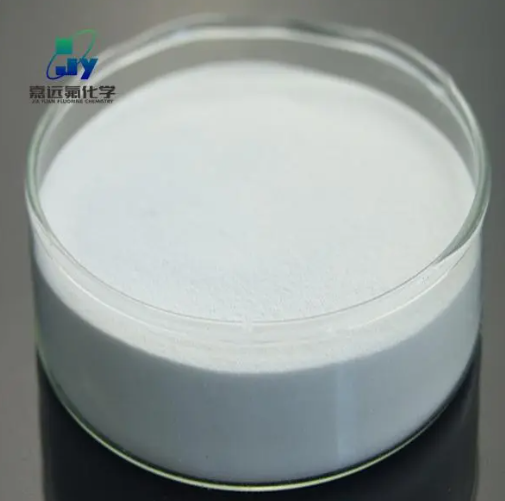
Lithium fluoride is evaluated here as a raw material for LiPF6 synthesis, not as a generic additive. Image source: supplied product content unit.
The process step is the first fit check
Lithium hexafluorophosphate is the mainstream electrolyte salt in lithium-ion battery electrolytes and directly determines ionic conductivity and the electrochemical window. Its impurity profile carries over into the electrolyte. That makes the raw-material specification for lithium fluoride a process-control question, not only a purity claim. If lithium fluoride carries a broad metal-impurity profile, the LiPF6 route can inherit a broader impurity profile, which can accelerate cathode-interface side reactions during cell formation and cycling and contribute to faster capacity fade or high-temperature gassing.
Sodium fluoride plays a different role. In the supplied battery-grade definition, sodium fluoride is mainly used as the sodium and fluorine source for synthesizing sodium hexafluorophosphate, the electrolyte salt for sodium-ion batteries. It provides sodium ions in the two-step hydrogen fluoride solvent reaction. The material therefore has to match the sodium hexafluorophosphate synthesis threshold, not a lithium-ion electrolyte specification. The core fit question is whether the sodium fluoride grade can deliver the required main content and a controlled impurity profile without adding avoidable purification load downstream.
This distinction matters during research and evaluation. A procurement team may see both products described as high-purity fluoride salts and assume that one certificate covers both. In practice, the lithium fluoride route is sensitive to metal impurities that can carry into LiPF6, while the sodium fluoride route requires attention to main content, silicon, moisture, and ppm-level metal impurities that affect sodium hexafluorophosphate crude-product quality. The grade label is therefore a process claim, not a general quality badge.
Lithium fluoride fit checks for LiPF6 synthesis
Battery-grade lithium fluoride is the fluorine and lithium source for lithium hexafluorophosphate. A stable purity of 99.95% means metallic impurities are minimized, which supports fewer side reactions and higher conversion in fluorination. That, in turn, supports stable purity and color of the finished LiPF6. The supplied product data for lithium fluoride list 99.95% purity, copper below 1 ppm, iron at 1.68 ppm, and weight loss on burning at 0.31%. These are useful reference values, but they are not a substitute for the certificate of analysis for the specific lot being delivered.
The first check is not the label. It is the batch data package. A lithium fluoride buyer should ask which impurities are routinely tested, how moisture is controlled, and whether the certificate reports values for the actual batch rather than a generic product description. The supplied material identifies metal impurities, moisture, and particle size as indicators that can matter when the main content alone has been confirmed. A process-validation failure can occur when the buyer checks only main content and ignores the impurity or moisture profile required by the LiPF6 route.
| Fit check | Supplied reference | Why it matters for LiPF6 | Evidence to request |
|---|---|---|---|
| Main content | 99.95% purity | Establishes the base grade; it does not describe the impurity profile. | Batch COA with assay and test method. |
| Metal impurities | Copper below 1 ppm; iron at 1.68 ppm | Poor impurity control can broaden the LiPF6 impurity profile and accelerate interfacial side reactions. | Lot-specific results for the metals the LiPF6 process treats as critical. |
| Moisture and hydrolysis | Lithium fluoride is hygroscopic and slowly hydrolyzes with water to form hydrogen fluoride. | Moisture worsens impurity levels and can affect fluorination conversion and finished electrolyte salt purity and color. | Batch moisture result, packaging integrity record, and storage history. |
| Loss on burning | 0.31% in the supplied product data | A volatile-content indicator relevant to handling and process consistency. | Batch result and test condition, where the buyer’s specification requires it. |
| Packaging and transport protection | Composite bags with an inner plastic film or fiber drums, kept sealed. | Damaged or damp packaging exposes lithium fluoride to moisture and can trigger hydrolysis. | Seal specification, rain and moisture protection record, and incoming inspection result. |
The fit boundary is important. Battery-grade lithium fluoride for LiPF6 synthesis is not the same specification question as lithium fluoride used in optical, electronic, or battery-research work. The supplied product information notes that lithium fluoride single crystals can be used for optical components and that lithium fluoride has attracted attention in lithium-ion and solid-state battery research for potential electrode-interface regulation, side-reaction reduction, and material-stability improvement. Those are research and application-development contexts; actual results depend on material form, purity, formulation, and application conditions. A buyer sourcing LiPF6 raw material should not use a research claim to replace a batch specification.
Sodium fluoride fit checks for sodium battery customers
Battery-grade sodium fluoride is defined by more than a high assay number. In the supplied definition, battery-grade sodium fluoride has a main content of no less than 99.95%, silicon content at or below 50 ppm, moisture at or below 100 ppm, and calcium, magnesium, and iron impurities at ppm levels. It is mainly used as the sole sodium and fluorine source for synthesizing sodium hexafluorophosphate. Industrial-grade sodium fluoride, by contrast, is described as having 98% to 99% main content. The core definitional difference is not a marketing tier; it is the impurity profile control required for low side reactions and higher crude-product purity in sodium hexafluorophosphate synthesis.
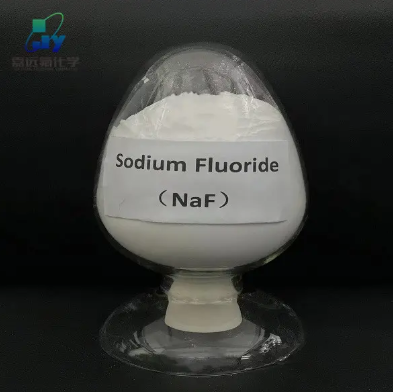
Sodium fluoride grade selection should be matched to the sodium hexafluorophosphate synthesis route and verified with batch data. Image source: supplied product content unit.
Sodium battery customers should prioritize the indicators that directly align with the sodium hexafluorophosphate synthesis threshold. The first is main content at no less than 99.95%. The second is silicon at or below 50 ppm. The third is moisture at or below 100 ppm. The fourth is the calcium, magnesium, and iron impurity profile at ppm levels. A narrower impurity profile means lower energy and auxiliary-material consumption in subsequent purification and more stable crude-product quality. That does not mean the supplier’s purification step disappears; it means the raw-material grade should not create avoidable purification burden.
| Indicator | Battery-grade reference | Fit question for sodium batteries |
|---|---|---|
| Main content | No less than 99.95% | Does the lot meet the sodium hexafluorophosphate synthesis threshold, not merely an industrial fluoride specification? |
| Silicon | At or below 50 ppm | Silicon control is part of the battery-grade impurity profile and should be reported by batch. |
| Moisture | At or below 100 ppm | Moisture affects handling, weighing, and the impurity load reaching synthesis. |
| Calcium, magnesium, iron | Ppm-level impurities | The metal profile should be controlled to reduce side reactions and support crude-product purity. |
| Batch stability | Consistency is part of the selection rationale. | A single high-purity result does not show whether the next lot will require process adjustment. |
The industrial-grade comparison is a useful boundary. A 98% to 99% sodium fluoride product may have legitimate uses in fluxing, phosphating, or other industrial applications, but it does not meet the supplied battery-grade definition for sodium hexafluorophosphate synthesis. Buyers should not accept a general sodium fluoride certificate as evidence of battery-grade status. They should ask for the battery-grade specification and the corresponding lot data.
There is also a difference between a grade claim and a plant capability claim. Changzhou Jiayuan Chemical Co., Ltd. lists 600 tons per year of toothpaste-grade sodium fluoride and 1,000 tons per year of lithium fluoride among its inorganic fluoride capacities. A toothpaste-grade capacity figure is not proof of battery-grade sodium fluoride capacity. The buyer should confirm the battery-grade sodium fluoride specification, the impurity-testing scope, and the packaging controls that apply to the sodium route. That verification step is part of application fit, not an administrative extra.
Matching grade to process step: a practical decision sequence
The fastest way to avoid a grade mismatch is to write the process step into the purchase specification before comparing suppliers. The sequence below follows the supplied product and application evidence and keeps the buyer focused on fit rather than on a generic purity number.
- Define the synthesis step. State whether the material is for LiPF6 synthesis or sodium hexafluorophosphate synthesis. The same fluoride salt family does not make the two routes interchangeable.
- Set the critical indicators for that step. For lithium fluoride, include main content, metal impurities, moisture, and packaging protection. For sodium fluoride, include main content no less than 99.95%, silicon at or below 50 ppm, moisture at or below 100 ppm, and ppm-level calcium, magnesium, and iron.
- Request lot-specific data. A product brochure can describe a grade. A batch certificate shows what was tested on the material actually shipped. The buyer should confirm that the reported items match the process-critical items.
- Check packaging and transport records. Lithium fluoride is hygroscopic and hydrolyzes with water. Sodium fluoride also requires moisture control and segregation from oxidants and food additives. Packaging integrity belongs in the technical review.
- Run a fit trial before broad approval. Use the supplier’s batch data and the buyer’s own incoming inspection to confirm that the grade behaves as expected in the intended step. The purpose is to catch indicator mismatch before it becomes a production deviation.
This sequence also helps separate a real limitation from a commercial preference. A supplier may be able to offer a high-purity product but not the exact battery-grade profile for a given sodium route. A lithium fluoride lot may meet 99.95% purity but still need a moisture check if packaging has been compromised. The fit check is designed to surface those conditions before the material reaches the reactor.
Batch verification: what the certificate should answer
Routine impurity indicators should be verified with batch test data, not inferred from a nominal grade. For lithium fluoride, the supplied product data provide a useful reference point: 99.95% purity, copper below 1 ppm, iron at 1.68 ppm, and weight loss on burning at 0.31%. For sodium fluoride, the battery-grade definition supplies a different reference set: main content no less than 99.95%, silicon at or below 50 ppm, moisture at or below 100 ppm, and calcium, magnesium, and iron at ppm levels. These are not interchangeable checklists.
A buyer should ask three questions of any certificate. First, does it identify the specific lot and test date? Second, does it report the indicators that the process treats as critical, not only the main assay? Third, does it show the test result in the same terms as the purchase specification? A certificate that reports a generic product grade without lot-level impurity results leaves the buyer unable to confirm fit. A certificate that reports the right items but omits the packaging or storage record leaves a moisture-sensitive material partly unverified.
The supplied application case describes high-purity fluoride salt products operating at the customer side without production-line downtime or process-parameter drift caused by batch differences in raw materials. That case statement supports the value of batch consistency as a procurement criterion. It does not replace lot-specific testing, and it should not be read as a guarantee that every batch of every fluoride salt will behave identically in every process. The correct use of the case is to strengthen the request for batch data and change control, not to waive incoming inspection.
Moisture-proof storage and transport are part of the specification
Lithium fluoride is hygroscopic and slowly hydrolyzes with water to form hydrogen fluoride. That reaction worsens moisture and impurity levels and can affect fluorination conversion and the purity and color of the finished electrolyte salt. The practical controls are specific: use composite bags with an inner plastic film or fiber drums, keep the packaging sealed, store in a cool, dry, well-ventilated area away from acids, and protect against rain and moisture during transport. Packaging damage should be treated as a quality event, not a cosmetic issue.
If lithium fluoride packaging is damaged or the product becomes damp, the supplied troubleshooting guidance is to isolate the affected goods, inspect the extent of damage and dampness, and send the affected batch for testing with attention to moisture and metal impurities. If the material is severely damp or impurities exceed limits, it should be scrapped or downgraded. If it is only slightly damp, re-drying may be considered according to process requirements. The transport and storage records should then be traced, and sealing and moisture protection should be strengthened for subsequent shipments, including composite bags with an inner plastic film.
Sodium fluoride has its own storage discipline. The supplied product information recommends a cool, dry, ventilated warehouse, segregated from oxidants and food additives. Packaging options include woven plastic bags, aluminum foil bags, and fiber drums. The aqueous solution is weakly alkaline, with a reported pH of 7.4, so packaging integrity and segregation matter when the material is stored alongside other chemicals. Moisture pickup can cause caking and poor flow, which then complicates weighing and feeding into the sodium hexafluorophosphate route. For both products, storage and transport are not back-office topics; they are part of the grade’s fitness for use.
Supplier capability evidence: what it establishes and what it does not
Changzhou Jiayuan Chemical Co., Ltd. is a fluorine chemical company established in 2015 and based in Changzhou, Jiangsu Province, China. Its supplied profile describes an integrated industrial and trading model, fluorine chemistry R&D, and inorganic fluoride capacities that include 1,000 tons per year each of high-purity electronic-grade potassium fluoride, magnesium fluoride, and lithium fluoride, plus 600 tons per year of toothpaste-grade sodium fluoride. The profile also lists 300 tons per year of sodium trifluoromethanesulfinate and trifluoromethanesulfinic acid as strategic raw materials for third-generation solid-state sodium-ion batteries.
That capability picture is relevant to a fit discussion because it shows a supplier with a fluorine chemical supply chain and a stated presence in inorganic fluorides. It also shows why the buyer should be precise. A lithium fluoride capacity is directly relevant to the LiPF6 raw-material question. A toothpaste-grade sodium fluoride capacity is not, by itself, evidence of battery-grade sodium fluoride capability. The buyer should request the battery-grade sodium fluoride specification, the batch impurity data, and the packaging and storage controls for that grade. The supplier’s broader high-purity fluoride salts portfolio, including potassium fluoride, magnesium fluoride, and calcium fluoride, does not remove that step.
The supplied OEM/ODM capability lists a monthly capacity of 50 tons for fluorine chemical products, which can support customization discussions where the buyer needs a defined grade or packaging arrangement. Customization should still be tied to the same evidence standard: a defined specification, a lot-specific certificate, and a storage and transport plan that protects the material. Capacity is a supply consideration; it is not a substitute for application-fit verification.
Where the fit boundary sits
Battery-grade lithium fluoride for LiPF6 synthesis should not be treated as a universal electrolyte additive. The supplied material distinguishes the LiPF6 raw-material role from lithium fluoride’s potential research uses in electrode-interface regulation and solid-state battery work. Those research uses depend on material form, purity, formulation, and application conditions. A buyer who needs a LiPF6 raw material should specify the raw-material grade and its impurity profile, not a research-grade claim.
Battery-grade sodium fluoride for sodium batteries should not be treated as any high-assay sodium fluoride. The supplied definition sets a main content of no less than 99.95%, silicon at or below 50 ppm, moisture at or below 100 ppm, and ppm-level calcium, magnesium, and iron. A 98% to 99% industrial-grade product falls outside that definition. Industrial-grade sodium fluoride may remain suitable for non-battery uses such as fluxing or phosphating, but it should not be substituted into a sodium hexafluorophosphate specification without an explicit qualification.
Finally, a narrower impurity profile can reduce purification load, but it does not guarantee final cell performance. The supplier’s batch data, the buyer’s incoming inspection, and the actual synthesis conditions all remain part of the fit. The useful procurement conclusion is not that one grade is universally better. It is that lithium fluoride and sodium fluoride must each be matched to their own process step, tested against their own critical indicators, and protected by their own moisture-control plan.
Conclusion: verify the grade against the step, not the label
Lithium fluoride for LiPF6 and sodium fluoride for sodium batteries are related fluoride salts with different application-fit checks. Lithium fluoride carries the fluorine and lithium source role for LiPF6, where metal impurities and moisture can carry into electrolyte performance. Sodium fluoride carries the sodium and fluorine source role for sodium hexafluorophosphate, where main content, silicon, moisture, and ppm-level metals define the battery-grade difference from industrial grade. In both cases, the buyer should verify routine impurity indicators with batch test data and review moisture-proof storage and transport measures. Damaged or damp packaging can affect lithium fluoride directly; sodium fluoride also needs moisture and segregation controls. The grade is only a starting point. The batch evidence and the process step decide whether it fits.
FAQ: application-fit checks
What role does battery-grade lithium fluoride play in lithium hexafluorophosphate synthesis?
Battery-grade lithium fluoride serves as the fluorine and lithium source for lithium hexafluorophosphate, the dominant electrolyte salt in lithium-ion batteries. A stable purity of 99.95% means metallic impurities are minimized, which supports fewer side reactions and higher conversion in fluorination and helps maintain stable purity and color of the finished LiPF6. The specific lot should still be checked against its certificate of analysis.
What role does lithium hexafluorophosphate play in electrolyte?
Lithium hexafluorophosphate is the dominant electrolyte salt in lithium-ion battery electrolytes and directly determines ionic conductivity and the electrochemical window. Its impurity profile carries over into the electrolyte. Poor impurity control in raw lithium fluoride can broaden the LiPF6 impurity profile and accelerate cathode-interface side reactions during cell formation and cycling, which can contribute to faster capacity fade or high-temperature gassing.
What is battery-grade sodium fluoride, and what is the core definitional difference from industrial-grade sodium fluoride?
Battery-grade sodium fluoride has a main content of no less than 99.95%, silicon at or below 50 ppm, moisture at or below 100 ppm, and calcium, magnesium, and iron impurities at ppm levels. It is mainly used as the sodium and fluorine source for sodium hexafluorophosphate synthesis. Industrial-grade sodium fluoride is described as having 98% to 99% main content. The core difference is the stricter impurity-profile control needed to reduce side reactions and improve crude-product purity in the sodium battery electrolyte route.
When selecting battery-grade sodium fluoride, which purity and impurity indicators should sodium battery customers prioritize?
Prioritize main content of no less than 99.95%, silicon at or below 50 ppm, moisture at or below 100 ppm, and calcium, magnesium, and iron at ppm levels. These indicators align with the sodium hexafluorophosphate synthesis threshold. A narrower impurity profile can reduce energy and auxiliary-material consumption in subsequent purification and support more stable crude-product quality. Batch stability should also be checked because a single result does not show lot-to-lot consistency.
What moisture-proof measures are required for battery-grade lithium fluoride during storage and transportation?
Use composite bags with an inner plastic film or fiber drums, and keep the packaging sealed. Store the product in a cool, dry, well-ventilated area away from acids. Protect it from rain and moisture during transport and prevent packaging damage. If packaging is damaged or the product becomes damp, isolate the batch, test moisture and metal impurities, and decide whether to scrap, downgrade, or re-dry according to process requirements.
Tem questões ou precisa de mais detalhes?
Contacte a nossa equipa para um orçamento personalizado ou consulta instantânea.
Solicitar orçamento
Preencha o formulário abaixo e a nossa equipa entrará em contacto com uma proposta personalizada.
Chat direto do WhatsApp
Prefere conversar em tempo real? Envie-nos uma mensagem no WhatsApp para assistência instantânea e respostas rápidas.
- Obter orçamento personalizado
- Partilhar fotos ou documentos
- Discuta as suas necessidades diretamente
Geralmente responde em 5–30 minutos durante o horário de expediente.