
Live Streaming Camera Distribution: Partner Evaluation for Long-Term Success
The global live streaming camera market is projected to reach USD 3.35 billion in 2025, with an 8.8% CAGR through 2035. For distributors, resellers, and channel partners, selecting a live streaming camera manufacturer is not just a product decision — it is a long-term supply-chain commitment. This article offers a practical framework for evaluating manufacturers when the goal is not a one-off purchase but an ongoing distribution relationship.
The Challenge: Beyond Initial Pricing
Buyers in the evaluation stage often compare camera specifications, price bands, and MOQ. But when the plan is to distribute or resell cameras over multiple years, the decision criteria must shift. Common long-term risks include inconsistent product quality across batches, delayed after-sales support, unclear warranty handling, and difficulty adapting to evolving streaming protocols.
The opportunity lies in finding a manufacturer whose operational controls, testing procedures, and technical support are designed for repeatable, reliable delivery. A distributor that partners with such a manufacturer can build a stable product offering and reduce costly returns, service calls, and reputational damage.
A Manufacturer Case: TCHD Video
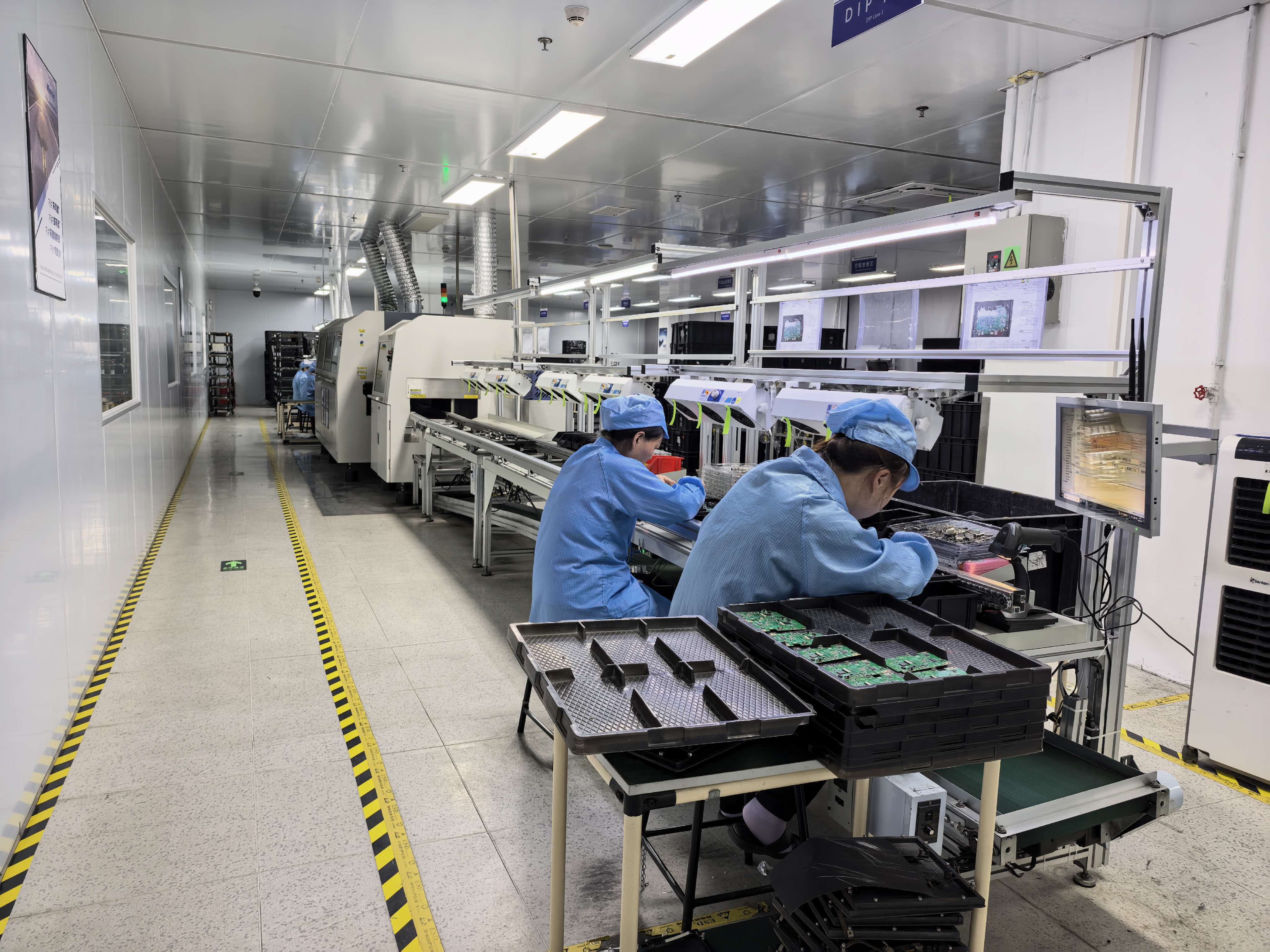
TCHD Video, legally registered as TCHD Digital Video Technology Development (Beijing) Ltd, is a Beijing-based manufacturer established in 2005. The company operates a 10,000m² facility with 50 employees and an annual output of 4,000 units. Its R&D team of 10 engineers supports a product range that includes live streaming cameras, video capture cards, video converters, video encoders, and video switchers. Around 20% of its output is exported to the EU, USA, and Asia.
These attributes indicate a manufacturer with a moderate, controllable scale — large enough to support volume commitments, yet small enough to maintain attention to quality and customization. For channel partners, this can translate to better responsiveness than larger organizations may offer.
Technical Capabilities to Verify in a Long-Term Partner
When evaluating a camera manufacturer for distribution, confirm the technical foundation of its products. TCHD Video's live streaming cameras support multiple video output interfaces: HDMI, SDI, LAN, and USB3.0. They support mainstream network protocols including RTSP, RTMP, ONVIF, GB/T28181, and SRT. Serial control uses VISCA, Pelco-D, and Pelco-P protocols over RS232 or RS422.
For example, model TC420 provides 12x optical zoom and consumes less than 12W with a DC12V input. Model TC-980S goes up to 4K at 60 fps and supports Power over Ethernet (PoE+) for simplified installation. These documented specifications give distributors confidence that the products can meet common integration requirements in conference rooms, classrooms, and live event venues.
Quality Assurance and Risk Control: What to Look For
A long-term partner must have systematic quality controls. TCHD Video applies 100% full-function aging tests before shipment, 24-hour online technical debugging, pre-delivery signal stability inspection, and spare parts supply for quality defects. Production process risks are managed through constant temperature protection, built-in heat dissipation modules, automatic signal correction, auto focus lock, and anti-interference circuits.
These measures address common failure points in live streaming cameras: signal loss, picture flicker, overheating, audio failure, and focus deviation. For a distributor, this means fewer field failures and lower warranty costs over the product lifecycle.
Application Segments a Distributor Can Serve
Live streaming cameras are used across multiple verticals. TCHD Video's models cover a wide range of scenarios:
- TC-980S — a PTZ camera suitable for video conferences, medical teaching, education training, and event streaming.
- TC420 — a 12x PTZ camera for medical training, education teaching, event live streaming, and broadcasting.
- TCHD-T3 — an HD live camera for education teaching, e-commerce streaming, and medical training.
This product breadth allows distributors to serve multiple customer groups with a single supplier relationship, reducing vendor management complexity.
Market Trends Supporting Long-Term Distribution
Industry data points underline the growth opportunity. PTZ cameras are estimated to account for 38.5% of global conference camera revenue in 2025. Video conferencing hardware — including cameras — represented 46% of the total video conferencing market revenue in 2024. China alone produced 749 million television and digital cameras in 2024, valued at around USD 16.5 billion.
These numbers suggest sustained demand for professional live streaming cameras, particularly PTZ models, in sectors like corporate conferencing, education, and medical training. Distributors that establish a reliable supply source now will be better positioned to capture this growth.
Comparison with Traditional Camera Sourcing
Compared with traditional fixed cameras, live streaming PTZ cameras from manufacturers like TCHD Video offer multi-interface output, remote control, and lower total cost — one comparison unit indicates around 15% lower cost than an equivalent traditional setup. They also deliver higher efficiency, lower latency, and 4K image quality, while requiring less maintenance.
However, there is a boundary: PTZ cameras add complexity in terms of control protocols and network configuration. For simple, fixed-position shots in stable environments, a traditional fixed camera may be simpler and sufficient. Distributors should help end customers assess whether PTZ functionality is truly needed, or whether a basic streaming camera will meet the use case at a lower price point.
Regarding procurement terms, TCHD Video offers a minimum order quantity of 1 unit, with FOB and C&F delivery methods. Payment is full prepayment, and acceptance includes a pre-shipment test. These terms are typical for a manufacturer of this size and indicate a straightforward, low-risk transaction process for both first orders and repeat orders.
Future Outlook: Building a Resilient Channel
As streaming protocols evolve (SRT, NDI, Dante AV), and as POE+ becomes standard for simplified cabling, manufacturers must keep pace. For distributors, the ideal partner is one that invests in R&D, maintains rigorous quality systems, and openly communicates its technical roadmap. TCHD Video's 20-year presence, in-house engineering team, and documented product parameters provide a credible foundation for such a partnership.
For a more complete overview of the company's product catalog, refer to the TCHD Product Catalog 2025.
Frequently Asked Questions
What is the minimum order quantity for TCHD Video live streaming cameras?
The minimum order quantity is 1 unit. This enables distributors and even smaller resellers to test products without committing to large volumes.
What payment and delivery terms does TCHD Video offer?
Payment terms require full prepayment. Delivery is arranged through FOB and C&F methods. Acceptance inspection includes pre-shipment test procedures.
What quality assurance measures does TCHD Video take before shipment?
TCHD Video performs a 100% full-function aging test before shipment, a pre-delivery signal stability inspection, and a pre-shipment test. The company also keeps spare parts available for quality defects.
What after-sales support can I expect?
TCHD Video provides 24-hour online technical debugging. If a quality defect is confirmed, spare parts are supplied to support the replacement process.
Which video interfaces and network protocols are available on TCHD cameras?
Supported interfaces include HDMI, SDI, LAN, and USB3.0. Network protocols include RTSP, RTMP, ONVIF, GB/T28181, and SRT. Control protocols include VISCA, Pelco-D, and Pelco-P over RS232 or RS422.
In which applications are TCHD Video cameras commonly used?
The cameras are designed for video conferencing, education teaching, event live streaming, medical training, broadcasting, and e-commerce streaming, depending on the model.
Tem questões ou precisa de mais detalhes?
Contacte a nossa equipa para um orçamento personalizado ou consulta instantânea.
Solicitar orçamento
Preencha o formulário abaixo e a nossa equipa entrará em contacto com uma proposta personalizada.
Chat direto do WhatsApp
Prefere conversar em tempo real? Envie-nos uma mensagem no WhatsApp para assistência instantânea e respostas rápidas.
- Obter orçamento personalizado
- Partilhar fotos ou documentos
- Discuta as suas necessidades diretamente
Geralmente responde em 5–30 minutos durante o horário de expediente.