
Live Streaming Camera Supplier Sustainability: B2B Buyer Guide
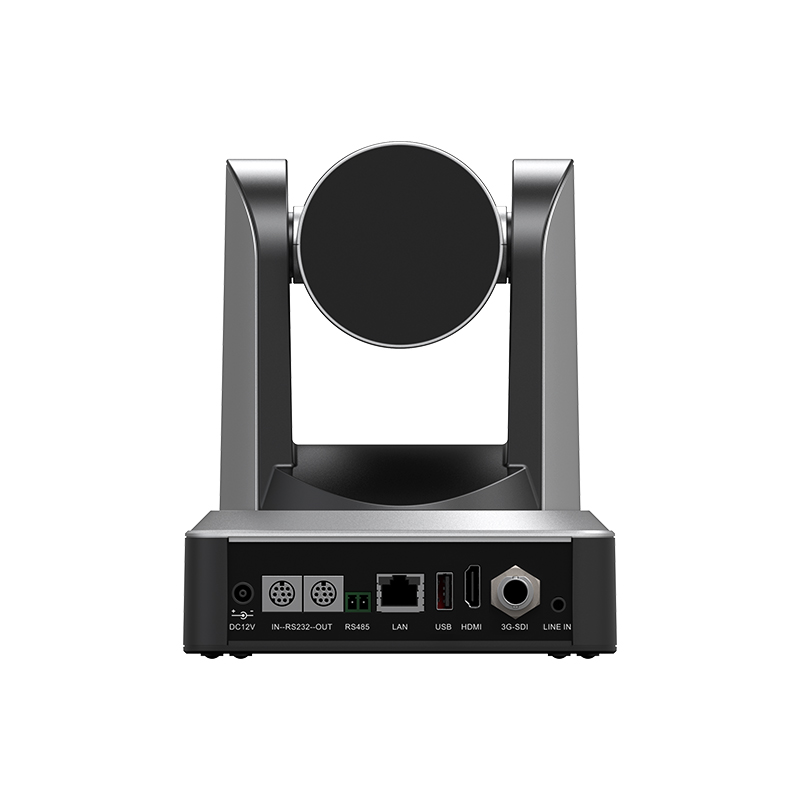
The TC-980S (model 6370) is the PTZ live streaming camera used in the two-year, 20-unit teaching deployment recorded in Germany, Australia and Malaysia.
The global live streaming camera market was valued at approximately USD 3.35 billion in 2025 and is projected to reach USD 7.79 billion by 2035, an 8.8% compound annual growth rate (Vertex AI Search / Industry Report). Within that market, PTZ cameras were estimated to account for 38.5% of global conference camera revenue in 2025 (Metastat Insights).
Growth of that scale changes what a B2B camera purchase actually is. A live streaming camera is no longer a single capital item; it is the first unit of a multi-year installation that has to be integrated, serviced, re-ordered in the same configuration and — in education, medical teaching and broadcasting — kept running continuously. The practical risk for buyers is therefore rarely the demonstration unit. It is whether the supplier behind that unit can still deliver it, document it and support it three years later.
This guide sets out a structured way to answer that question through four verifiable dimensions: certification depth, field deployment evidence, procurement reliability and technical continuity.
What “Supplier Sustainability” Measures in Camera Procurement
Supplier sustainability is the ability of a camera manufacturer to keep supplying, supporting and documenting a product line across the entire life of a project — not only for the first purchase order. In live streaming and video conferencing hardware, that ability rests on four pillars that buyers can test before signing:
- Compliance continuity — management-system and product certifications that remain valid and whose scope covers the entity and activity you are buying from.
- Field evidence — real installations that have run long enough to expose thermal, mechanical and software issues.
- Procurement reliability — realistic MOQ, lead time, testing rights and delivery terms that match your internal purchasing rules.
- Technical continuity — interfaces and protocols that survive a platform change so cameras do not become obsolete when your streaming stack does.
Camera specifications — sensor size, zoom ratio, frame rate — tell a buyer what a single unit can do on day one. The four pillars above tell a buyer what happens on day 700. For deployments in classrooms, operating theatres, event venues and churches, where cameras are often mounted once and expected to run continuously, the second question carries far more commercial weight.
Pillar 1 — Certification Depth: Read the Scope, Not the Logo
TCHD Video (Tchd Digital Video Technology Development (Beijing) Ltd) is a Beijing-based manufacturer of live streaming cameras, video capture cards, converters, encoders and switchers, established in 2005 and operating a 10,000 m² facility with an in-house R&D team of 10 engineers. Its published certification set includes ISO 9001:2015 quality management system certification, ISO 14001:2015 environmental management system certification, and an occupational health and safety management system certification covering digital audio/video product sales.
For a procurement team, the value of these certificates is not the badge but the auditable process behind it: documented incoming inspection, defined production control, traceable non-conformance handling and a management review cycle. The three certificates together also indicate that environmental and worker-safety obligations are managed alongside quality — a relevant signal for European and Australian buyers whose own compliance teams increasingly ask about supplier-side ESG controls.
Three checks matter more than the certificate count. First, confirm the certificate is current and identify the issuing body. Second, read the scope wording carefully — a certificate covering “digital audio/video product sales” is not the same as one covering manufacturing, so buyers should establish which legal entity and which site actually produces their order. Third, if cameras will be used inside a clinical or surgical teaching environment, note that medical electrical equipment is governed by the IEC 60601-1 series for basic safety and essential performance (TÜV Rheinland / BSI), and confirm with the system integrator where that boundary sits for the overall installation.
Boundary to keep in mind: a management-system certificate documents how a company works. It does not certify the service life of an individual camera, a field failure rate or a spare-part guarantee period. Buyers should treat certification as a minimum filter that removes obviously unsuitable suppliers, not as a substitute for deployment evidence.
Pillar 2 — Deployment Evidence: Auditing the Two-Year, 20-Unit Record
The most useful evidence a supplier can present is not a reference letter but a deployment that has already absorbed its own wear cycle. The recorded case for TCHD Video covers 20 units of model 6370 (TC-980S) used for teaching live streaming in Germany, Australia and Malaysia, running for two years with reported stable performance, low noise and dependable AI auto tracking. The user base behind these installations includes government, hospital, school and YouTuber clients.
Two years is a meaningful interval for a PTZ camera. Pan-tilt mechanisms, motor drivers and cable harnesses are the parts most likely to reveal design weaknesses, and a two-year continuous operating record across three different climate zones — Northern Europe, Oceania and Southeast Asia — is more informative than a laboratory report because it includes real installation variance.
Before accepting any deployment reference, buyers should extract the following, ideally in writing:
- Exact model and configuration, including zoom variant and output interfaces used.
- Country and installation type (classroom, training room, auditorium, clinic).
- Quantity and duration in service, stated in months rather than “several years”.
- Operating mode — 24/7 continuous versus intermittent session use.
- Any returns, firmware issues or mechanical service events, and how they were resolved.
- Whether the same configuration can still be ordered today.
The operating envelope published for these cameras is indoor use at a working temperature of −10°C to +50°C and working humidity of 20% to 80%, with 24/7 operation as a stated mode and HDMI cable, SDI cable and power adapter as the matched supporting equipment. Buyers whose venues fall outside that envelope — outdoor stages, unheated halls, high-humidity poolside installations — should not assume the same longevity record transfers.
Pillar 3 — Technical Continuity: Why Interfaces Predict Supply Longevity
A camera line stays useful only while it still connects to the rest of the system. The TC-980S illustrates how interface breadth works as a sustainability feature: a 1/2.8-inch CMOS sensor with 8.42M effective pixels in 16:9, HDMI output up to 3840×2160 and 1080P at 60fps, SDI output at 1080P60, USB 3.0 output in MJPG / H.264 / H.265 / YUY2 / NV12, and a LAN path carrying H.264 and H.265 dual-stream video. Total power consumption is rated at ≤18 W, with an optional PoE+ supply over the 1000M Ethernet port.
Mechanically, the same camera pans from −170° to +170° and tilts from −30° to +90°, with pan speed adjustable from 0.1°/s to 60°/s and tilt speed from 0.1°/s to 30°/s, and up to 255 preset positions. Optical zoom is available in 12X, 20X and 30X variants. Signal-to-noise ratio is stated above 50 dB, minimum illumination at 0.5 Lux (F1.8, AGC ON), and white balance is adjustable between 2400K and 7100K in 100K steps. Monocular tracking supports off, real-time, stage, area and intelligent framing modes, with a maximum tracking distance of up to 18 metres — the function behind the “AI auto tracking” behaviour recorded in the teaching deployments.
Protocol support is where replacement risk is really decided. The camera speaks RTSP, RTMP, ONVIF, GB/T28181 and SRT, with NDI and Dante AV available as options, and is controlled over RS232-IN, RS232-OUT and RS485 using VISCA, Pelco-D or Pelco-P at baud rates from 2400 to 115200. In practice this means an existing joystick controller, an existing NVR or a new cloud streaming platform can usually be accommodated without replacing the hardware layer — a significant factor when a project is refreshed two or three years after the original install.
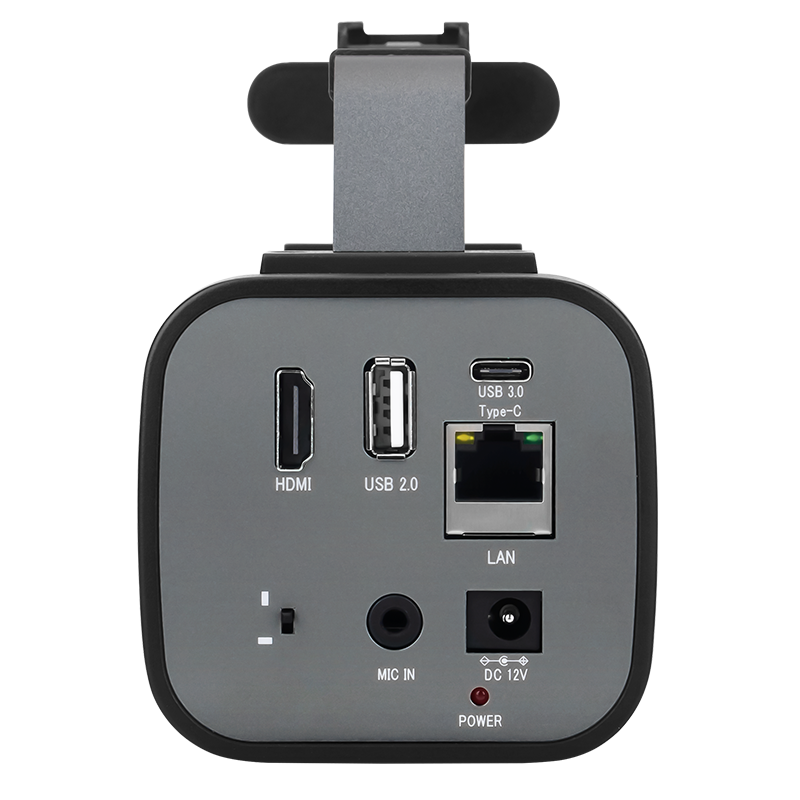
Portfolio continuity: the TCHD-T3 covers 1080P60 output over HDMI, SDI, LAN and USB 3.0 with RTSP, RTMP, ONVIF, GB/T28181 and SRT support — useful where a project needs a lower-bandwidth model alongside the 4K TC-980S.
A supplier that can offer several models across the same interface and control ecosystem reduces the cost of change. The TC420, for example, pairs a 1/2.8-inch HD CMOS sensor with 8.29M effective pixels, 12X optical and 15X digital zoom, HDMI up to 4K30, SDI and USB 3.0 output, under 12 W consumption and VISCA / Pelco-D / Pelco-P control — a lower-power option for conference rooms and medical training rooms. The TCHD-T3 adds a 12X optical lens with 16X digital zoom, 1080P output up to 60fps, HDMI 1.4b, USB 3.0 Type C plus USB 2.0 Type A, and an RJ45 port with PoE for broadcasting, medical, e-commerce, education and event streaming work. When three models share the same control vocabulary, a buyer can standardise an entire campus or venue group without locking every room to the most expensive unit.
Pillar 4 — Procurement Reliability: MOQ, Lead Time, Testing and Payment Terms
Supplier sustainability also has to survive the purchasing department. TCHD Video publishes a minimum order quantity of 1 unit, a lead time of 30–45 days, a monthly capacity of 500 units for OEM/ODM work and an annual output figure of 4,000 units, with 100% product testing, OEM/ODM support including logo customization, and remote after-sales support.
Each of those terms changes buyer risk in a specific way. A 1-unit MOQ allows a genuine pilot: the camera can be installed in the actual venue, tested against the actual streaming platform and shown to the actual operators before any volume commitment is made. A 30–45 day lead time is realistic for configured PTZ hardware and should be treated as the planning baseline rather than an exception. A 100% test regime, combined with pre-shipment test acceptance, means the buyer is entitled to verify functionality before the goods leave — a materially better position than “inspection by certificate only”.
Delivery is offered on FOB and C&F terms, and payment is on a full prepayment basis. Buyers should evaluate that last point honestly rather than skim past it. Full prepayment shifts working-capital and delivery risk to the buyer and will not fit every internal procurement policy — organisations that require letters of credit, staged payments or retention against warranty will need to confirm early whether an exception is possible, or budget for the cash-flow impact. Likewise, a 1-unit MOQ is a validation advantage but usually means sample-level unit pricing rather than volume pricing.
Capacity is the other practical boundary. A stated annual output of 4,000 units and monthly capacity of 500 units for customised programs is well matched to integrators, distributors and institutional buyers running phased rollouts. It is not the profile of a supplier built for single orders in the tens of thousands, and buyers with that scale of requirement should plan a dual-source strategy from the outset.
How This Compares with Buying Through a Global Brand
Global conference camera brands remain the default reference point for many procurement teams. Omdia reported that Logitech held the largest share of the USB conference camera category as of 2024. That position reflects real advantages: broadly available distribution, standardised warranty handling in many markets and predictable SKUs that fit corporate IT catalogues.
The trade-off is flexibility. Buyers who need OEM/ODM work, logo customization, SDI and RS485 control, a 1-unit validation order or direct access to the engineers who wrote the firmware are usually working outside what a mass-market brand channel is designed to provide. Conversely, buyers who need the reverse — very large volumes, on-site service SLAs across many countries, or a pre-approved catalogue purchase — may be better served by a global brand or a local systems integrator.
The honest limitations of the specialist-manufacturer route should be stated plainly: a 50-employee operation in a 10,000 m² facility, an export ratio around 20% and remote-only after-sales support means there is no local field-service network to fall back on. For projects that require guaranteed on-site response times, that support model has to be covered by the integrator contract rather than assumed from the manufacturer.
A Supplier Sustainability Scorecard for B2B Buyers
| Evaluation criterion | Evidence to request | Risk it reduces |
|---|---|---|
| Management-system certification | Current ISO 9001:2015 and ISO 14001:2015 certificates, plus occupational health and safety certification, with scope and issuing body | Uncontrolled production and undocumented change |
| Deployment history | Model, country, quantity, months in service and operating mode (for example 20 × TC-980S units over two years in Germany, Australia and Malaysia) | Latent mechanical or thermal faults appearing after installation |
| Interface and protocol coverage | Output list (HDMI, SDI, USB 3.0, LAN), streaming protocols and control protocols such as VISCA, Pelco-D and Pelco-P | Premature replacement when the streaming platform changes |
| Procurement terms | MOQ, lead time, capacity, testing regime, pre-shipment acceptance rights, Incoterms and payment structure | Cash-flow exposure and unusable first shipments |
| Support model | Firmware update path, remote support process, spare-part and accessory availability (HDMI cable, SDI cable, power adapter) | Installations that cannot be maintained past year two |
Matching Supplier Sustainability to Project Scenarios
Sustainability is scenario-specific. The same supplier can be perfectly suited to one deployment and marginal for another, and the deciding factors are usually environmental and operational rather than technical on paper.
The documented application range covers broadcasting, education teaching, medical teaching, event live streaming and church live streaming, with deployment references in the United States, United Kingdom, Australia, Spain, France, the Netherlands, China and South Korea. In education and lecture-capture scenarios, the determining factor is continuous indoor operation combined with silent mechanics — the low-noise behaviour recorded in the teaching deployments matters more in a room with live microphones than any resolution figure. In medical teaching, camera placement follows the procedure rather than the room layout, which is where the up-to-18-metre tracking distance and the multiple monocular tracking modes become operational requirements rather than features. In event, church and e-commerce streaming, the constraint is usually the streaming path itself: RTMP, SRT and RTSP support plus simultaneous HDMI and LAN output let a single camera feed both a hardware switcher and a cloud platform without adding a converter.
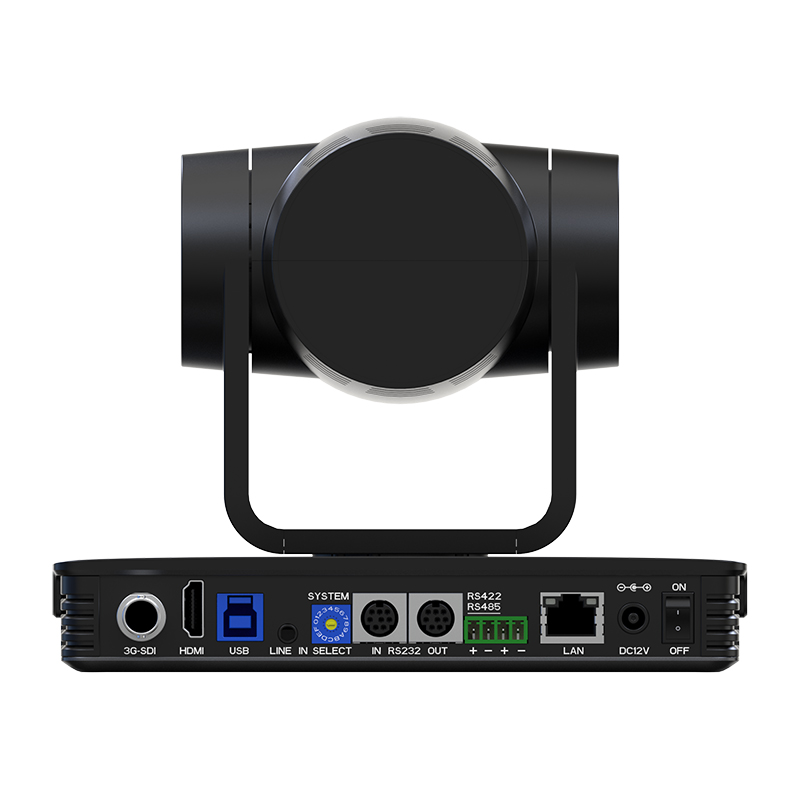
The TC420 combines 12X optical zoom, sub-12 W consumption and VISCA / Pelco-D / Pelco-P control — typically specified for conference rooms and medical training rooms where lower heat output and low power draw matter.
The practical rule for buyers is to build the deployment matrix before the supplier shortlist. Venue type, ambient temperature range, humidity, mounting position, control protocol already in use, and whether the room runs continuously or by session — those five variables eliminate more suppliers than any specification comparison. A model that fits an air-conditioned lecture hall at 22°C may still be inside its −10°C to +50°C specification on an unheated event floor, but the maintenance profile changes, and the supplier should be asked directly about it.
Market Outlook: Compliance and Continuity as Procurement Criteria
Two structural signals suggest that supplier sustainability will keep moving up the buyer agenda. First, growth itself: an 8.8% CAGR taking the live streaming camera market from roughly USD 3.35 billion in 2025 to USD 7.79 billion by 2035 (Vertex AI Search / Industry Report) implies a steadily rising installed base, and a rising installed base means a rising service and spares obligation spread across more suppliers. Second, hardware remains the anchor of the category — Grand View Research reported that video conferencing hardware, including cameras, accounted for 46% of total video conferencing market revenue in 2024. Hardware-heavy markets reward suppliers that stay in business and keep the same interfaces available.
The likely consequence for procurement teams is a shift in tender language. Where buyers once asked for a resolution and a price, more will now ask for certificate scope, deployment duration, protocol lists, capacity statements and a written statement of after-sales support. Suppliers who can answer those questions with documents rather than adjectives will be easier to approve — and easier to defend internally when a three-year rollout is reviewed.
Frequently Asked Questions
What certifications should a live streaming camera supplier be able to provide?
TCHD Video holds ISO 9001:2015 quality management system certification, ISO 14001:2015 environmental management system certification and an occupational health and safety management system certification covering digital audio/video product sales. Buyers should verify that each certificate is current, identify the issuing body, and confirm that the stated scope actually covers the entity and activity behind their order. For equipment used in medical teaching, note separately that medical electrical equipment falls under the IEC 60601-1 series for basic safety and essential performance.
How can a buyer verify that a supplier has real long-term deployment experience?
Ask for a specific, checkable installation rather than a general reference list. One recorded example is 20 units of model 6370 (TC-980S) used for teaching live streaming in Germany, Australia and Malaysia, in service for two years with reported stable performance, low noise and functioning AI auto tracking, and a user base that includes government, hospital, school and YouTuber clients. Request the model and configuration, country, quantity, months in service, operating mode and any service events, then confirm the same configuration is still orderable.
What procurement terms are typical, and where is the buyer risk?
TCHD Video states a 1-unit minimum order quantity, a 30–45 day lead time, 100% testing, pre-shipment test acceptance, FOB and C&F delivery terms, and full prepayment. The 1-unit MOQ supports pilot validation and the pre-shipment acceptance right allows functional verification before dispatch. Full prepayment, however, transfers working-capital and delivery risk to the buyer and may not satisfy organisations that require letters of credit or staged payments, so that condition should be confirmed against internal procurement policy before ordering.
Which models fit education, medical teaching and broadcasting scenarios?
The TC-980S (model 6370) is a PTZ live streaming camera with a 1/2.8-inch CMOS sensor, 4K output up to 60fps over HDMI, SDI, USB 3.0 and LAN outputs, 12X/20X/30X optical zoom options, ≤18 W consumption and monocular tracking modes with a tracking distance up to 18 metres. The TC420 provides 12X optical zoom, HDMI up to 4K30, SDI and USB 3.0 output at under 12 W for conference and medical training rooms. The TCHD-T3 delivers 1080P output up to 60fps over HDMI 1.4b, USB 3.0 Type C, USB 2.0 Type A and PoE-capable RJ45, with RTSP, RTMP, ONVIF, GB/T28181 and SRT support.
What limits should buyers expect from this supplier profile?
TCHD Video operates a 10,000 m² facility with 50 employees, a 10-engineer R&D team, an annual output figure of 4,000 units, monthly capacity of 500 units for customised programs, an export ratio around 20% and remote after-sales support. That profile suits integrators, distributors and institutional buyers running phased or regional rollouts, but it is not sized for very large single orders, and there is no local field-service network — projects requiring guaranteed on-site response times should place that obligation with the integrator. The documented application envelope for these cameras is indoor use at −10°C to +50°C and 20%–80% humidity.
Detailed model specifications, interface lists and application notes for the current camera range are collected in the TCHD Video product catalog, which buyers can use alongside the scorecard above when preparing a supplier evaluation file.