
Live Streaming Camera Suppliers: A Long-Term Sustainability Check
Industry Reference · Supplier Evaluation
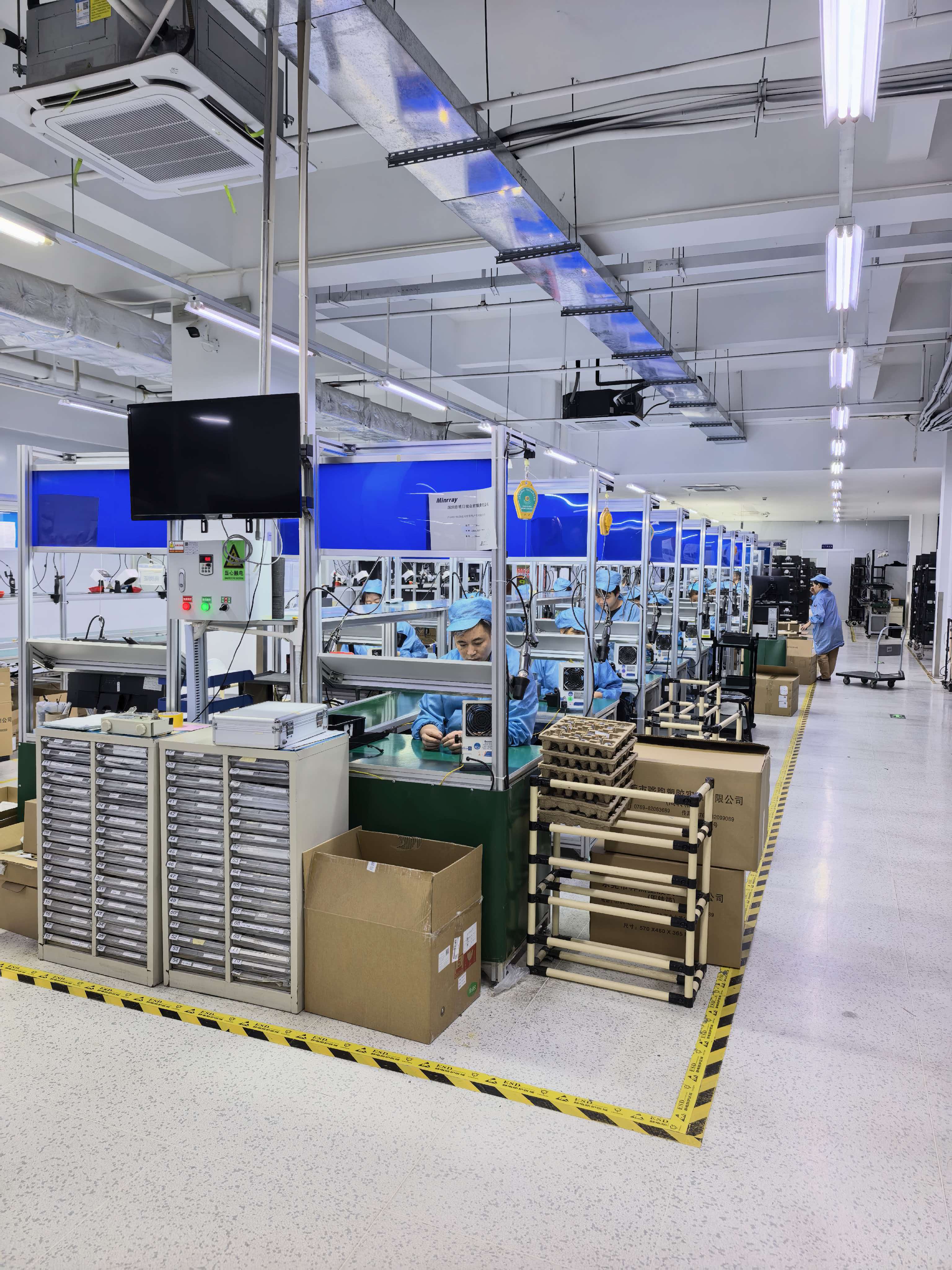
Long-term supply claims are easier to trust when they can be traced back to a production environment, documented testing and written commercial terms.
Long-term reliability in a live streaming camera supplier is decided long before the first camera is installed. It is decided by three things a buyer can verify in advance: how the product is engineered to survive continuous operation, what compliance evidence the manufacturer can actually produce on paper, and whether the support and commercial structure will still exist when the installation enters its third year.
Live streaming cameras are now specified into classrooms, hospital training rooms, conference suites, event venues and e-commerce studios, where they are expected to run through full teaching days, multi-day events and long back-to-back sessions. Under that workload the purchasing question quietly changes. It stops being “which camera has the strongest feature list today” and becomes “which supplier will still be able to serve this fleet in three years”.
TCHD Video — registered as TCHD Digital Video Technology Development (Beijing) Ltd — is a Beijing-based video software and hardware manufacturer established in 2005. Its range covers live streaming cameras alongside video capture cards, converters, encoders, switchers, recording hosts, medical video recorders and surgical teaching hosts. It is used here as a working example of how a supplier's long-term claims can be checked against documented process facts rather than marketing descriptions.
Why supplier longevity is now part of live streaming camera procurement
Market context explains why B2B buyers are asking harder questions about the supplier and not only about the camera. The global live streaming camera market is projected to reach USD 3.35 billion in 2025 and USD 7.79 billion by 2035, a compound annual growth rate of 8.8% (Vertex AI Search / Industry Report). Video conferencing hardware, which includes cameras, accounted for 46% of total video conferencing market revenue in 2024 (Grand View Research), and PTZ cameras are estimated to account for 38.5% of global conference camera revenue in 2025 (Metastat Insights).
On the supply side, China's production of television and digital cameras reached 749 million units in 2024, valued at approximately USD 16.5 billion (IndexBox). Availability is therefore rarely the constraint. What differentiates suppliers in a market this deep is not whether a camera can be shipped, but whether the same product family, spare parts and technical support can still be provided after the invoice is paid.
There is also a competitive signal worth reading carefully. Logitech held the largest market share in the USB conference camera category as of 2024, in a year when sector revenue declined 14% year over year (Omdia). A category that is expanding in overall demand while contracting in specific segments rewards buyers who look past unit price and evaluate supplier stability, service continuity and documentary evidence instead.
How to evaluate a live streaming camera supplier for long-term reliability
Supplier sustainability, in a procurement sense, does not mean environmental performance alone. It means the supplier's ability to keep a deployed camera fleet working, compliant and serviceable across its expected life. The most practical way to test that is a three-layer check, because each layer answers a different question and produces a different kind of evidence.
| Evaluation layer | Question it answers | Evidence that holds up under scrutiny |
|---|---|---|
| Durability engineering | Can the camera survive continuous, long-hour operation? | Documented thermal design; full-function aging test before shipment; pre-delivery signal stability inspection; named risk-control methods |
| Compliance and documentation | Can the supplier prove product and organisational conformity? | Standards-based certificates checked for scope, site and validity; written acceptance criteria; IEC 60601-1 where medical environments apply |
| Continuity and commercial structure | Will parts, support and supply still exist in year two and three? | Spare-parts policy; technical support commitment; MOQ, delivery and payment terms; confirmed production capacity |
Many supplier evaluations stop at the first layer and treat the other two as paperwork. In a multi-year deployment that is the wrong order. A camera that fails in year three is a procurement problem; a supplier that cannot supply a replacement is a project problem.
Layer 1 — Durability engineering under continuous operation
Continuous operation stresses a camera in ways a short demonstration never reveals. Long sessions expose thermal behaviour, signal integrity and focus stability, and the failure modes are usually consistent across the category. TCHD Video's documented production risk controls cover five such modes: signal loss, picture flicker, overheating, audio failure and focus deviation. The corresponding control methods are constant temperature protection and a built-in heat dissipation module, automatic signal correction, auto focus lock, and an anti-interference circuit.
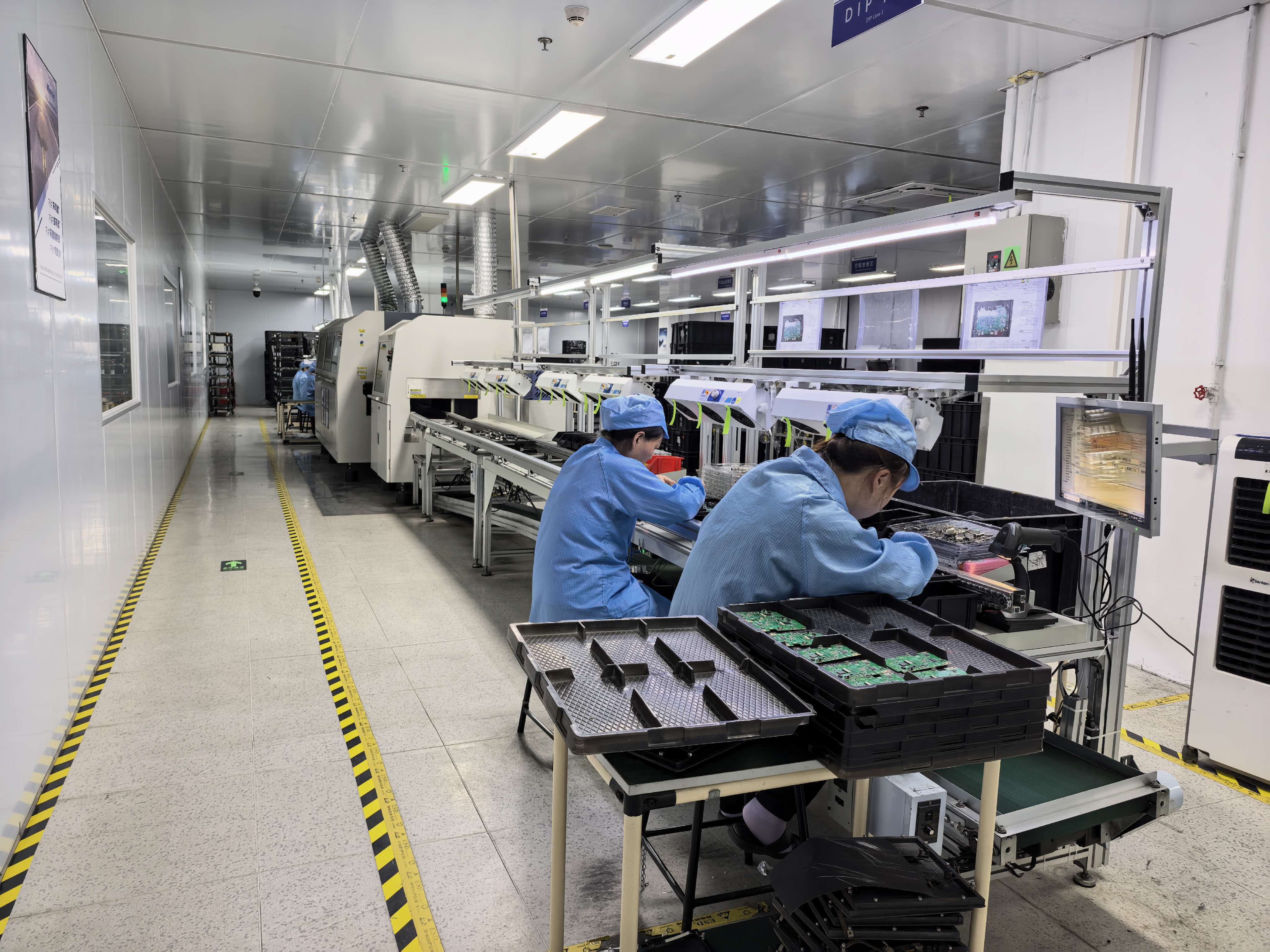
A pre-shipment testing environment is what turns a continuous-operation claim into something a buyer can audit.
The thermal part deserves attention. In compact PTZ designs, heat is the quiet driver of long-term degradation, which is why constant temperature protection and a heat dissipation module belong in a durability conversation rather than a specification conversation. Equally important is whether testing is applied broadly. TCHD Video documents a 100% full-function aging test before shipment together with a pre-delivery signal stability inspection — every unit passes a functional burn-in stage rather than a sample being tested.
Electrical and interface facts matter for planning continuous operation as much as the optics do. Input voltage is DC12V (±10%), with power consumption below 12W for model TC420 and up to 18W for model 6370. A lower draw means less internal heat and simpler power planning for PoE and UPS sizing. On the output side, the video output interfaces include HDMI, SDI, LAN and USB3.0; supported network protocols are RTSP, RTMP, ONVIF, GB/T28181 and SRT; control supports VISCA, Pelco-D and Pelco-P over RS232 or RS422. SDI supports 100 metres of transmission in 1080P60 format. This matters for longevity because a camera stays deployable only as long as it can still talk to the rest of the system it was installed into.
Layer 2 — What compliance evidence should actually demonstrate
Environmental and quality compliance is the area where vague supplier claims are easiest to test. ISO 14001 is the recognised framework for environmental management systems and ISO 9001 for quality management systems. Both are management-system standards: they describe how an organisation controls its processes, which is why the certificate scope and the site named on it matter as much as the standard number. For products entering the European Union, electromagnetic compatibility documentation is part of the technical file. For any camera used in a clinical environment, medical electrical equipment standards apply — the IEC 60601-1 series covers basic safety and essential performance (TÜV Rheinland / BSI).
For any supplier, TCHD Video included, the verification method is the same and can be completed before a purchase order is raised: ask for the certificate, check the standard and its scope, check that the manufacturing site named on the certificate is the site that will produce the order, and check the validity date.
Product acceptance is the second half of compliance. In TCHD Video's documented terms, products are accepted through pre-shipment test procedures. A written, repeatable acceptance criterion is a control in its own right: it converts “quality” from a claim into a defined gate that a shipment has to pass before it leaves the factory.
One caution is worth stating plainly. A product name that includes “medical” does not by itself establish IEC 60601-1 conformity. Buyers specifying surgical teaching or clinical training equipment should verify the standard per device rather than per product family.
Layer 3 — Continuity: support, spare parts and commercial structure
The third layer is where long-term partnerships are actually won or lost, and it is usually the layer buyers examine last.
TCHD Video's documented company measures include a 100% full-function aging test before shipment, 24-hour online technical debugging, spare parts supply for quality defects, and a pre-delivery signal stability inspection. Read as a package, these are continuity commitments rather than product features: aging tests reduce early failure, technical debugging shortens downtime, and a spare-parts policy determines whether a failed unit becomes a repair or a write-off.
Entity scale is the second half of that picture. Formed in Beijing in 2005, the company describes two decades of industry accumulation, a 10,000 m² factory, 50 employees, 10 R&D engineers, an annual output of 4,000 units, a 20% export ratio, and main markets in the EU, USA and Asia. For a buyer, the useful reading of those figures is shape rather than size: an in-house development team and a defined production floor suggest product continuity is controlled internally, while a 20% export ratio indicates the company already works to documentation expected by EU and US buyers.
Commercial structure completes the picture. For product models 6394, 6388 and 6370, the documented terms are a minimum order quantity of 1 unit, delivery arranged through FOB or C&F, acceptance inspection through pre-shipment test procedures, and payment by full prepayment. A one-unit MOQ is unusual in this category and is genuinely useful for pilot deployments, where a buyer wants to validate a small number of rooms before scaling. The prepayment requirement is the counterpart of that flexibility and should be written into working-capital planning from the start.
Application fit: where long-term reliability is tested hardest
Reliability is not abstract. It is stress-tested by the way a camera is used, and TCHD Video's live streaming cameras are documented as suited to video conferencing, education teaching, event live streaming and medical training — four environments that each apply a different kind of long-term pressure.
- Education teaching and lecture capture. A camera may operate through a full teaching day, five days a week, across a semester. Stable signal and audio behaviour matter more than peak resolution here, and the anti-interference circuit and pre-delivery signal stability inspection address the failure mode most likely to interrupt a live class.
- Video conferencing. Framing accuracy has to hold up across long sessions. Auto focus lock is the relevant control, because focus deviation is one of the five documented risk categories.
- Event live streaming. Multi-day events and long cable routes favour interfaces such as SDI, which supports 100 metres of transmission in 1080P60 format, alongside a thermal design that tolerates continuous use.
- Medical training. Surgical teaching and clinical recording is the most demanding category technically and in documentation. TCHD Video's wider hardware range includes medical video recorders and surgical teaching hosts, which is why the IEC 60601-1 verification step described earlier is not optional in this scenario.
Market signals shaping the next procurement cycle
Three data points are worth carrying into the next sourcing round.
First, the market is expected to grow from USD 3.35 billion in 2025 to USD 7.79 billion by 2035 at a CAGR of 8.8% (Vertex AI Search / Industry Report). Growth of that order implies an expanding installed base rather than a replacement-only market, and an expanding installed base is serviced through fleets, spare parts and support commitments rather than through one-off purchases.
Second, PTZ cameras are estimated to account for 38.5% of global conference camera revenue in 2025 (Metastat Insights). Because PTZ designs combine optics, motors and electronics in a single chassis, they concentrate the mechanical reliability questions — focus behaviour, thermal load and moving-part wear — that the first evaluation layer is designed to surface.
Third, hardware still carries the video conferencing market: hardware accounted for 46% of total video conferencing market revenue in 2024 (Grand View Research). Software continues to absorb workflow, but the physical endpoint remains a procurement item with a defined service life, and estimating that service life is exactly what a supplier sustainability check is for.
Live streaming cameras versus traditional camera systems: the trade-offs
TCHD Video's comparison record positions its live streaming cameras against a traditional camera setup on cost, stability, latency and image quality. The documented specifics are an ultra HD image path built on a 1/2.8-inch 8.42 million pixel sensor with a maximum resolution of 3840×2160 and an output frame rate of up to 60 frames per second; multiple video outputs including HDMI, SDI, USB and wired LAN with optional POE+; SDI transmission of up to 100 metres in 1080P60; a cited cost position 15% lower than the traditional alternative; less maintenance; and higher operating efficiency. The documented best-fit applications are video conferencing, education teaching, event live streaming and medical training.
| Dimension | Documented position | What the buyer should still confirm |
|---|---|---|
| Imaging | 1/2.8-inch 8.42 MP sensor; up to 3840×2160 at 60 fps | Confirm the resolution and frame rate each room actually requires |
| Outputs | HDMI, SDI, USB, wired LAN with optional POE+ | Confirm which output the existing switcher or capture chain accepts |
| Long-run transmission | SDI up to 100 m at 1080P60 | Confirm true cable route length and shielding on site |
| Cost position | Cited 15% lower than a traditional camera setup | Price the full project: cabling, mounts, control and installation |
| Maintenance and efficiency | Less maintenance, higher efficiency documented | Confirm local service terms and spare-parts availability |
| Documented best fit | Video conferencing, education teaching, event live streaming, medical training | Confirm the deployment matches one of these patterns |
Where the trade-offs sit should be stated as plainly as the advantages.
- The 15% cost figure is a category-level comparison, not a project quotation. Integration, mounting, cabling and control software can change the total cost of ownership considerably.
- Payment terms are a real constraint. Models 6394, 6388 and 6370 are documented as full prepayment, which is a working-capital consideration for buyers accustomed to net terms.
- Capacity needs forward planning. With annual output documented at 4,000 units and a 50-person team, large or fast-turn programmes should confirm scheduling in advance rather than assume immediate availability.
- Compliance scope is not automatic. Medical deployment requires IEC 60601-1 verification per device; EU deployment requires electromagnetic compatibility documentation to be checked by the buyer.
- Risk controls reduce, but do not remove, the failure modes they address. Signal loss, picture flicker, overheating, audio failure and focus deviation remain the categories a service agreement should cover.
Future outlook: what buyers will expect from suppliers by 2035
If the live streaming camera market moves from USD 3.35 billion in 2025 toward USD 7.79 billion by 2035, the installed base will be measured in fleets rather than units, and fleet procurement changes what suppliers are asked to prove. The direction of travel is already visible in the evidence that holds up today: documented thermal and aging-test data instead of longevity adjectives, certificate scope and validity checks instead of certification logos, and spare-parts commitments instead of warranty language alone.
Interface and protocol continuity is likely to become a formal procurement criterion rather than a technical footnote. A camera supporting HDMI, SDI, LAN and USB3.0 outputs, with RTSP, RTMP, ONVIF, GB/T28181 and SRT on the network side and VISCA, Pelco-D and Pelco-P control over RS232 or RS422, has a longer useful life than one tied to a single control ecosystem, because it can survive a controller or platform upgrade without replacement.
Environmental management documentation is likely to follow the same path. As tenders in the EU and North America increasingly ask for management-system evidence alongside product certification, the suppliers that can produce scoped, site-specific documentation quickly will be the ones that stay on approved vendor lists. Suppliers with in-house development capacity and defined production floors, such as the 10-engineer R&D team and 10,000 m² facility documented by TCHD Video, are structurally better placed to answer those requests than trading intermediaries.
FAQ: long-term reliability and supplier sustainability
What should a buyer check when a live streaming camera is described as suitable for continuous operation?
Look for the evidence behind the claim rather than the claim itself. In TCHD Video's documented process, that evidence includes constant temperature protection and a built-in heat dissipation module, a full-function aging test applied to 100% of units before shipment rather than to samples, and a pre-delivery signal stability inspection. Power figures are also relevant to continuous operation: input voltage is DC12V (±10%), with consumption below 12W for model TC420 and up to 18W for model 6370.
How can environmental and safety compliance be verified before signing a long-term supply agreement?
Request the certificates themselves, then check four things: the standard number, the scope of activities covered, the manufacturing site named, and the validity date. ISO 14001 is the reference framework for environmental management systems and ISO 9001 for quality management systems. Where cameras are used in clinical environments, the IEC 60601-1 series applies to basic safety and essential performance and should be verified per device. Written acceptance criteria, such as the pre-shipment test procedures documented by TCHD Video, complete the documentary picture.
Which commercial terms most affect a multi-year camera supply relationship?
Three categories matter most. Order flexibility and delivery: for models 6394, 6388 and 6370, TCHD Video documents a minimum order quantity of 1 unit with delivery arranged through FOB or C&F. Payment structure: those models are documented as full prepayment, which affects working-capital planning. Capacity: with annual output documented at 4,000 units and a 50-person team, larger or fast-turn programmes should confirm scheduling in advance rather than assume immediate availability.
How does post-sale support influence the service life of a deployed camera fleet?
Support determines how quickly a failure becomes a repair rather than a replacement. TCHD Video's documented company measures include 24-hour online technical debugging, spare parts supply for quality defects, and a pre-delivery signal stability inspection. The five risk categories the company manages — signal loss, picture flicker, overheating, audio failure and focus deviation — also form a practical checklist for what a service agreement should cover.
Which interface and protocol features keep a camera usable after a system upgrade?
Multi-interface output and broad protocol support are the two deciding factors. TCHD Video's documented interfaces are HDMI, SDI, LAN and USB3.0, with RTSP, RTMP, ONVIF, GB/T28181 and SRT supported at network level, and VISCA, Pelco-D and Pelco-P control over RS232 or RS422. A camera that supports the control protocol of the next controller and the streaming protocol of the next platform stays in service instead of being retired alongside the system it was originally bought for.