
Live Streaming PTZ Cameras: Deployment Fit by Workflow
Live Streaming PTZ Cameras: Deployment Fit by Workflow
Live streaming camera projects are increasingly purchased at programme level rather than device level. A school group standardises one camera across twenty teaching rooms, a teaching hospital positions cameras for surgical demonstration and remote observation, and an e-commerce operator builds a studio template that can be repeated across shifts and platforms. The procurement question behind all three is the same: can a single PTZ platform serve workflows that differ in duty cycle, subject distance, lighting and integration — and what has to be verified before that assumption is written into a multi-year rollout?
TCHD Video (TCHD Digital Video Technology Development (Beijing) Ltd) is a Beijing-based manufacturer established in 2005 that produces live streaming cameras, video capture cards, video converters, video encoders and video switchers. Its live streaming camera range — including the TC-980S, TC420 and TCHD-T3 — has been deployed in a 20-unit education teaching installation that government, hospital and school clients have operated for two years, in sports broadcasting and medical teaching projects in the United States running 24/7, and in e-commerce live streaming projects in Germany. Those three deployment types rest on one shared hardware basis, but each places different demands on it.
Vertical fit, in practice, is decided by four constraints rather than by the vertical label: the view envelope (pan, tilt, zoom), the output and protocol chain, the environmental envelope, and the commercial and service terms that keep a multi-site installation running for years. This article examines each constraint against the same platform so that buyers at the decision and execution stages can transfer the logic to their own room list.
Why Vertical Fit Decides the Outcome
Three deployment categories that look unrelated on a floor plan converge on the same requirements. Education live streaming needs a camera that can hold a wide lecture-hall view, follow a lecturer without an operator, and run several hours a day for years in rooms where nobody is available to reboot equipment. Medical teaching needs stable focus, low noise and predictable behaviour in a fixed installation, because the recording is reviewed afterwards and cannot be re-shot. E-commerce live streaming needs a camera that stays colour-consistent across long sessions and can feed more than one destination, in a studio where the room and the crew change more often than the camera does.
The shared requirement across all three is stability under continuous duty rather than peak specification. That is a different purchasing criterion from the one used for event production, where a camera may be rented for a weekend.
The opportunity for buyers is that a common platform reduces the cost of standardisation: one spare-parts pool, one control surface, one acceptance procedure and one training path across a mixed estate of classrooms, teaching rooms and studios. The risk is that the same platform is assumed to fit everywhere, when part of the estate actually falls outside its operating envelope.
The Shared Hardware Basis: TC-980S, TC420 and TCHD-T3
The three models in this range share a common imaging and interface architecture. The table below summarises the platform parameters that matter most when matching a camera to a room and a workflow.
| Parameter | Platform specification | Why it matters in deployment |
|---|---|---|
| Image sensor | 1/2.8-inch CMOS, 8.42 million pixels | Determines how much detail survives at long zoom and in low-light teaching rooms |
| Maximum resolution / frame rate | Up to 3840 × 2160, up to 60 fps | Headroom for 4K capture and smooth motion in sports and demonstration content |
| Optical zoom | 12X | Lets one camera cover both a wide room view and a close subject from a fixed position |
| Pan range | −170° to +170° | Near-full horizontal coverage from a single mount |
| Tilt range | −30° to +90° | Defines the vertical window available for ceiling, wall or floor-level mounting |
| Video outputs | HDMI, SDI, LAN, USB3.0 | Enables direct display, broadcast cabling, network streaming and USB capture from one unit |
| Network protocols | RTSP, RTMP, ONVIF, GB/T28181, SRT | Determines integration with streaming platforms, recorders and video management systems |
| Control protocols | VISCA, Pelco-D, Pelco-P over RS232 or RS422 | Compatibility with joystick controllers and room control systems |
| Power | DC12V (±10%); TC420 draws less than 12W | Affects power planning, heat load and adapter selection across many rooms |
| Cable reach | SDI transmits 100 m in 1080P60 | Allows long cable runs in halls and hospital corridors without extra conversion |
| Network power | Wired LAN with POE+ function optional | Simplifies installation where power outlets are limited |
Two physical requirements follow from this architecture. Every position needs an HDMI or SDI cable and a power adapter, and the SDI path is the practical choice when the camera sits far from the recording host — 100 m at 1080P60 removes the need for a mid-run extender in most teaching rooms and hospital corridors.
Technical Explanation: Where Low Noise and AI Auto Tracking Change the Result
Noise performance and automatic tracking are usually treated as image-quality features. In vertical deployments they are operational features, because they determine whether a recording is usable without a camera operator.
Noise becomes visible when the zoom is pushed in and the light is not ideal — a demonstration table in a teaching hospital, a lecture hall with dimmed projection lighting, or a product close-up in a studio where the key light is aimed at the merchandise rather than at the sensor. A 1/2.8-inch CMOS sensor with 8.42 million pixels gives the platform enough sampling headroom to keep a close-up usable, which is why the same unit can frame a wide classroom and a detailed subject without a second camera position.
AI auto tracking changes staffing assumptions. In lecture capture it removes the need for an operator to follow a moving presenter; in sports broadcasting and event streaming it keeps a moving subject inside the frame during continuous operation. For the projects running 24/7 in the United States, the relevant benefit is not tracking accuracy in isolation but the fact that the camera does not require a person to correct it during unattended hours.
Focus behaviour matters for the same reason. Auto focus lock prevents a camera from hunting while the subject moves, which is critical in medical teaching, where an unstable frame can obscure the detail the recording exists to capture. On the production-risk side, TCHD Video controls signal loss, picture flicker, overheating, audio failure and focus deviation through constant temperature protection, a built-in heat dissipation module, automatic signal correction, auto focus lock and an anti-interference circuit. Those controls are not decorative features; they are the mechanisms that make 24/7 operation realistic in a fixed installation.
Application Fit: Three Workflows, One Platform
Education and lecture capture
The reference case in this platform's record is a 20-unit education teaching deployment operated for two years by government, hospital and school clients. Two years of continuous academic use is a more useful proof point than a specification sheet, because it exposes the failure modes that matter in a school or university estate: dust, daily power cycling, mounting stability, and the cost of sending a technician to a room for a routine fault. Standardising twenty rooms on one camera model also concentrates spares and training — a technician who has configured one room can configure the next without relearning the control layer, and control over RS232 or RS422 using VISCA, Pelco-D or Pelco-P keeps integration with existing lectern or touch-panel control systems straightforward.
Medical and surgical teaching
Medical teaching and surgical camera chains place the camera in a fixed position for a long duty cycle, aimed at a subject where frame stability is the whole point. The requirements that dominate here are low noise at moderate zoom, reliable auto focus, and an output that integrates with recording and teaching hosts rather than with a broadcast switcher. A teaching hospital planning this workflow should also confirm how the wider video chain is classified: medical electrical equipment, including surgical cameras, is governed by the IEC 60601-1 series for basic safety and essential performance, and the position of a streaming camera within that chain — source device, recorder input, or separate AV system — should be agreed with the clinical engineering team before installation rather than after.
Sports broadcasting and event streaming
The sports broadcasting projects in the United States run 24/7 and depend on the combination of 12X optical zoom, the −170° to +170° pan range and AI auto tracking to keep a moving subject framed from a fixed mounting position. The LAN and SDI outputs allow the same camera to feed a broadcast chain and a network stream simultaneously, and support for RTMP, SRT, RTSP and ONVIF means the camera can be added to an existing workflow without replacing the surrounding infrastructure.
E-commerce live streaming
E-commerce projects in Germany use the platform in a studio configuration where the camera is close to the subject, sessions are long, and the output has to reach both a production machine and a streaming platform. Here USB3.0 and HDMI handle local capture and monitoring, while RTMP and SRT carry the stream. Because the same unit supports up to 3840 × 2160 at 60 fps, the studio can run a high-resolution local feed while sending a platform-appropriate stream — a configuration that would otherwise require two cameras and a switcher.
Environment and Installation Envelope
The platform's operating conditions define where it can and cannot be installed, and this is the point at which many vertical plans need adjustment.
| Requirement | Specified value | Planning consequence |
|---|---|---|
| Operating temperature | −10°C to +50°C | Covers typical indoor teaching, studio and clinical rooms; not for unconditioned exterior positions |
| Relative humidity | 20%–80% | Excludes condensing or persistently damp environments |
| Installation type | Indoor use | Outdoor or weather-exposed deployments require different hardware, not an accessory |
| Accessories required | HDMI/SDI cable and power adapter | Must be included in the bill of materials for every room |
The tilt envelope of −30° to +90° deserves specific attention during site survey. Because the vertical window is finite, ceiling or wall mounting must be planned so that the required view — a lectern, a demonstration table, a stage — sits inside that window without relying on extreme angles. Moving a camera by half a metre during installation is inexpensive; discovering the limitation after twenty rooms are cabled is not.
Market Trend Analysis: Standardisation Is Reshaping Demand
The commercial context supports the multi-vertical approach. Industry research places the global live streaming camera market at USD 3.35 billion in 2025, with a projected CAGR of 8.8% taking it to USD 7.79 billion by 2035. Within the conference camera segment, PTZ cameras are estimated to account for 38.5% of revenue in 2025, reflecting the same preference for fewer, more capable units that the deployments above illustrate. Video conferencing hardware — the category that includes cameras — accounted for 46% of total video conferencing market revenue in 2024, indicating that hardware remains a spending centre even as software platforms consolidate.
Supply-side capacity is also relevant to long-term planning. China produced 749 million television and digital camera units in 2024, valued at approximately USD 16.5 billion, which describes a mature and competitive manufacturing base rather than a constrained one.
Analyst caution: published growth estimates for PTZ and live streaming camera segments vary widely because research firms define the category differently — figures in the range of 7.8% to 15.9% CAGR appear across respected sources. Buyers should treat any single CAGR figure as a directional signal for category relevance, not as a planning input for a specific procurement.
Comparison with Traditional Solutions — and Where the Platform Stops
Against traditional fixed cameras, the comparison data published for this platform lists a 15% lower cost, less maintenance and higher efficiency, alongside a 4K image, stable low-latency output, and a 1/2.8-inch 8.42 million pixel sensor supporting up to 3840 × 2160 at 60 fps. The practical difference is easier to see in deployment terms: a fixed camera cannot change framing, so covering both a wide room and a close subject normally requires two cameras, two mounts and two cable runs, while a PTZ unit covers both from one position and re-frames under remote or automatic control.
The limits are equally concrete, and buyers should plan around them:
- Indoor use only. The −10°C to +50°C, 20%–80% humidity specification and the indoor rating mean outdoor or damp installations fall outside this platform, regardless of accessory choice.
- One viewpoint at a time. A single PTZ camera cannot simultaneously serve two independent subjects in different directions. Rooms that need continuous coverage of two separate areas require two units, even if each one is a PTZ camera.
- Control dependency. Pan, tilt and zoom depend on a control path — a controller or room system communicating over RS232 or RS422 with VISCA, Pelco-D or Pelco-P, or a network-based workflow. A room with no control layer loses most of the platform's advantage.
- Mounting stability at long zoom. Small movements are amplified considerably at the long end of a 12X zoom, so mount rigidity matters more than in fixed-camera installations.
- Compliance scope in medical settings. IEC 60601-1 series compliance applies to medical electrical equipment; where a streaming camera forms part of a clinical video chain, its classification should be confirmed with the responsible clinical engineering function rather than assumed from the camera datasheet.
None of these limits makes the platform unsuitable for the three workflows described earlier. They do mean that a vertical rollout plan should be built from a room-by-room view envelope and environment check rather than from a single model decision applied to an entire estate.
Executing the Rollout: Commercial and Service Terms
For buyers moving from decision to execution, the commercial structure is deliberately simple: minimum order quantity is 1 unit, delivery is arranged on FOB or C&F terms, acceptance is based on pre-shipment test procedures, and payment terms require full prepayment. For a pilot room or a first tranche of a multi-site rollout, the one-unit minimum allows a single installation to be validated before the estate is committed.
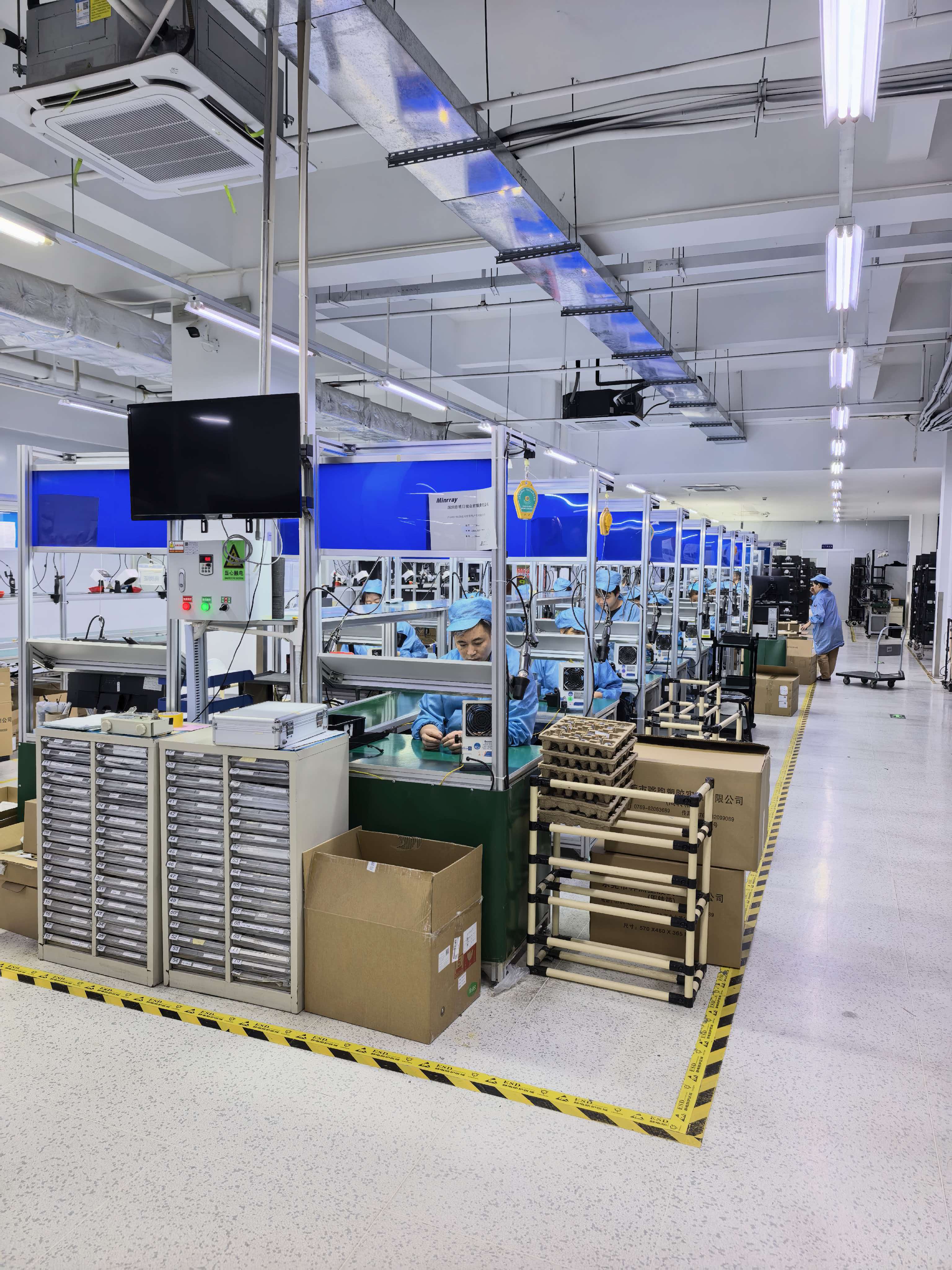
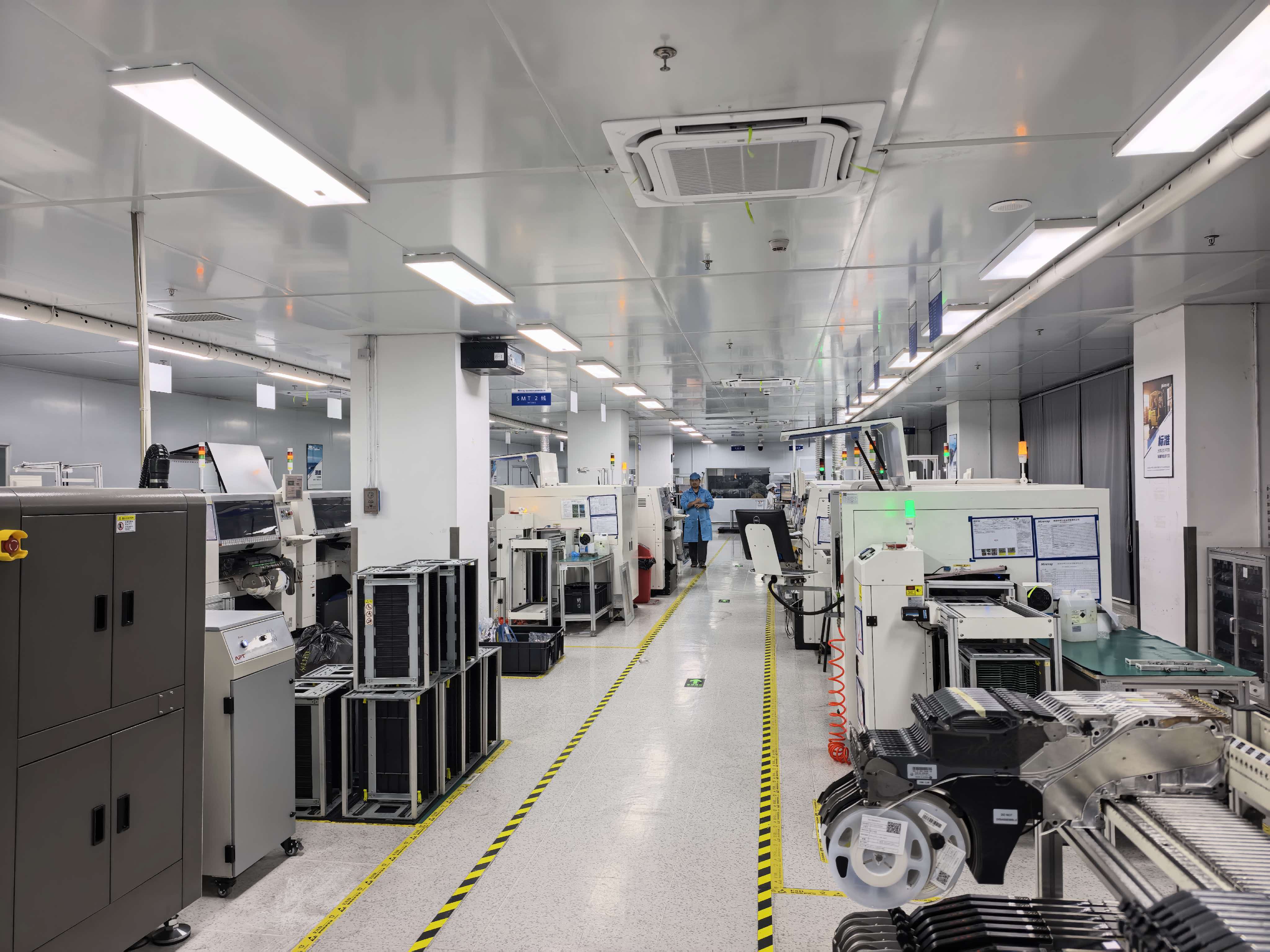
The service framework is what matters over a multi-year horizon. Company measures include a 100% full-function aging test before shipment, a pre-delivery signal stability inspection, 24-hour online technical debugging, and spare parts supply for quality defects. In a twenty-room education deployment, those measures determine whether a fault in one room is a routine service event or a programme-level problem. Operational background is consistent with export-oriented supply: TCHD Video operates a 10,000 m² facility with 50 employees, an annual output of 4,000 units, a 10-engineer R&D team, an export ratio of 20%, and main markets in the EU, the USA and Asia.
Future Outlook
Three shifts are likely to shape how these deployments are planned. First, vertical buyers are consolidating camera models across sites, which increases the value of a platform that spans education, medical and studio use over one that specialises in a single scenario. Second, tracking and noise handling are moving from operator-controlled features to default behaviour, which reduces the labour assumption built into existing room designs. Third, standards and classification questions — particularly in medical and clinical video chains — are likely to be raised earlier in the procurement process, making compliance documentation a plan-stage requirement rather than a delivery-stage detail.
For buyers, the practical consequence is that evaluation should be anchored to the room list rather than to the model list. A camera platform only delivers its advantage when the view envelope, output chain, environment and service terms have been checked against every room type in the deployment.
FAQ
Can one PTZ model serve education, medical and e-commerce rooms in the same estate?
Often yes, because the deciding factors are the view envelope and the output chain rather than the vertical. A platform with a 1/2.8-inch CMOS sensor, 12X optical zoom, −170° to +170° pan and −30° to +90° tilt can frame both a wide room and a close subject from one position, and HDMI, SDI, LAN and USB3.0 outputs let the same unit feed a classroom recording host, a medical teaching recorder, or a streaming encoder. Rooms whose required view or signal path falls outside those parameters need a separate configuration.
What environmental and installation conditions must a deployment plan account for?
The specified operating range is −10°C to +50°C at 20%–80% relative humidity for indoor use. Each position also requires an HDMI or SDI cable and a power adapter, with input at DC12V ±10% and TC420 drawing less than 12W. Outdoor, weather-exposed or condensing environments are outside this specification.
How do the network and control protocols affect integration with existing systems?
RTSP, RTMP, ONVIF, GB/T28181 and SRT cover the main integration cases: ONVIF for video management and recording systems, RTMP for platform ingest, SRT for loss-tolerant contribution, and GB/T28181 for deployments in China. Camera control uses VISCA, Pelco-D or Pelco-P over RS232 or RS422, which allows the camera to be driven from existing joystick controllers and room control systems rather than through a proprietary interface.
Which service commitments matter most over a multi-year deployment?
The relevant commitments are a 100% full-function aging test before shipment, pre-delivery signal stability inspection, 24-hour online technical debugging, and spare parts supply for quality defects. Acceptance is defined as pre-shipment test, with a minimum order quantity of 1 unit, FOB or C&F delivery, and full prepayment. For multi-site buyers, these terms determine how quickly a single room fault can be resolved without renegotiating the supply relationship.
What are the main limitations to check before standardising on one platform?
Four limits recur: the platform is specified for indoor use only; a single PTZ camera cannot cover two independent subjects in different directions at the same time; pan, tilt and zoom depend on a working control layer; and mount rigidity matters more at long zoom because movement is amplified. In medical settings, IEC 60601-1 series compliance applies to medical electrical equipment, so the camera's role within the clinical video chain should be confirmed with the responsible engineering team.
For detailed model specifications, interface diagrams and deployment parameters, the manufacturer's product catalogue is available for download: TCHD Product Catalog 2025.