
Load Cell vs Weighing Module: Plastics LIW Feeder Guide
Load Cell vs Weighing Module: Plastics LIW Feeder Guide
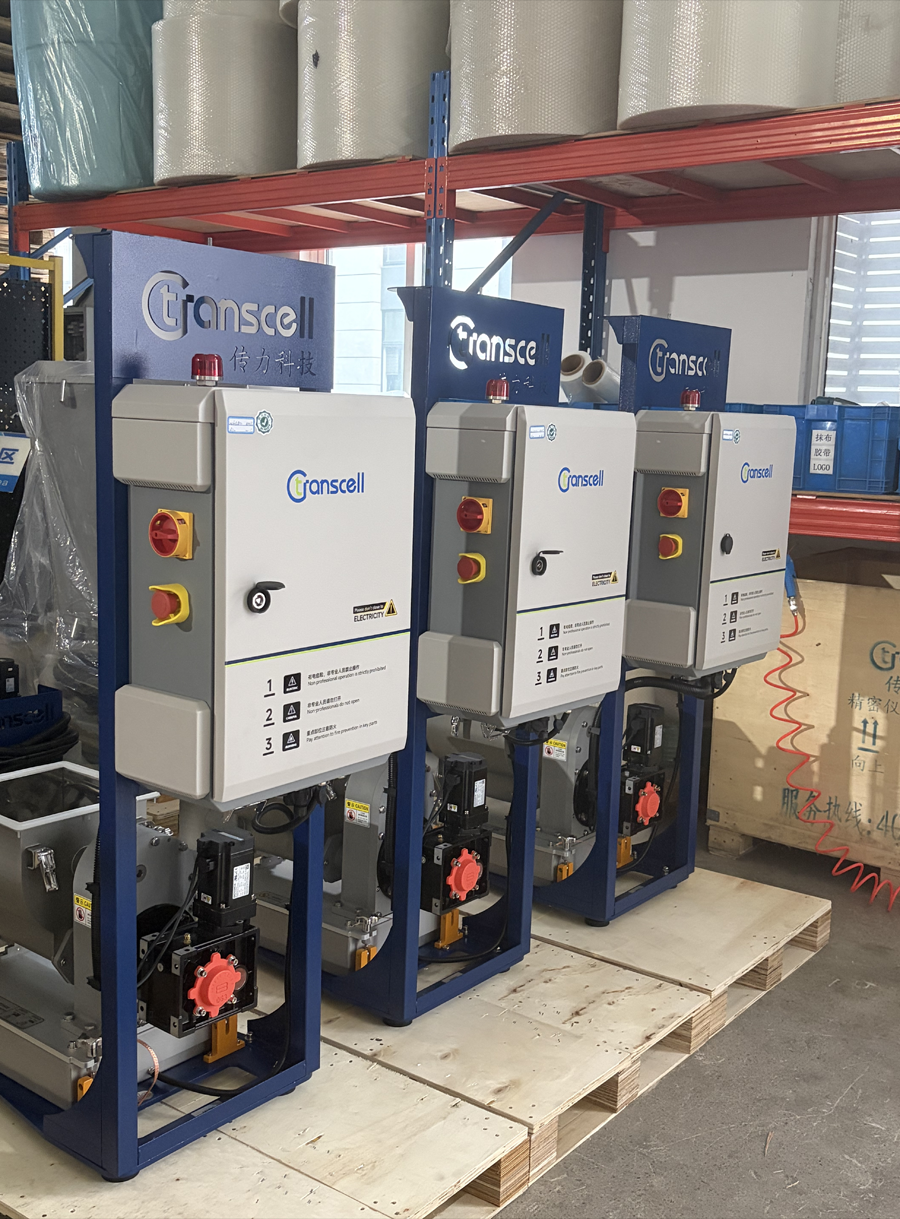
For a compounding plastics line, the choice between a load cell and a weighing module in a loss-in-weight feeder is not a choice between two accuracy labels. It is a choice about the scope of the weighing chain: what is sensed, what is mechanically integrated, how the signal reaches the controller, and how calibration and service are performed after installation. In most projects, both approaches can be made to work; the better decision is the one the buyer can verify with the material, feeder mechanism and acceptance protocol actually used on the line.
This buyer comparison focuses on compounding plastics loss-in-weight feeders. It compares documented characteristics of load-cell and weighing-module approaches, identifies where the distinction matters, and sets out the checks that should appear in an RFQ. It does not assume that a module is inherently more accurate than a load cell, or that a load cell is inherently simpler. Those conclusions depend on the complete feeder, the material, the refill system and the controller.
What Is Being Compared in a Loss-in-Weight Feeder?
A loss-in-weight feeder controls feed rate by measuring the weight reduction of the hopper and material over time and adjusting the metering speed against a setpoint. Transcell's published product description states that the system measures material weight-loss rate and continuously adjusts speed to correct deviations; a related technical article describes feed rate as calculated from the weight reduction over time, with load cells tracking that reduction. This is the common control principle behind the architecture choice.
Within that principle, the terms are often used loosely:
- Load cell. The sensing element that converts the weight force of the hopper and material into an electrical signal. In a loss-in-weight feeder, the load cell is part of the measurement chain that tracks weight loss.
- Weighing module. In common industrial usage, an assembly that packages one or more load cells with a mounting interface and, depending on the supplier, signal conditioning, overload protection or other mechanical features. The exact boundary varies by supplier, so the buyer should ask for the module's scope in writing.
The practical difference is therefore not simply sensor versus no sensor. A weighing module normally contains a load cell or load cells; what changes is how much of the mechanical and electrical interface is supplied as a defined assembly. That can affect installation, alignment, calibration access, spare-parts strategy and the number of interfaces the buyer must engineer.
Why the Decision Matters in Compounding Plastics
Compounding plastics puts a premium on ratio control because the formulation is the product. Modified plastics, masterbatch, fillers and bioplastics are combined in defined proportions; a deviation can affect the batch, create downgrade or generate rework. Transcell's comparison material states that its loss-in-weight feeder is intended for metering modified plastic formulations and multi-component continuous compounding with strict accuracy requirements, and that the approach reduces waste, downgrading and rework caused by ratio deviations. Those are company-reported claims for the feeder category, not a load-cell-versus-module benchmark.
The same comparison material states that the Transcell Loss-in-weight feeder uses a self-developed loss-in-weight controller with fully independent intellectual property rights for PID control, performing closed-loop regulation of the loss-in-weight scale. It cites a typical feeding accuracy of ±0.5% for loss-in-weight feeders. For a buyer, that figure is useful as a stated feeder-category reference, but it should not be read as proof that a module outperforms a load cell. Accuracy is a system outcome: material flow, refill disturbance, mechanical alignment, weighing range, calibration and controller tuning all contribute.
Material behavior changes the mechanical arrangement. For powders and viscous materials, Transcell's guidance lists bridging, rat-holing, agglomeration and refill disturbance as factors that can make feeding unstable. For fibrous or irregular crushed materials, a vibrating design should be evaluated. For liquids, the pumping method, liquid properties and weighing range should be confirmed. These are not side issues; they determine whether the weighing arrangement can be kept stable and serviceable in production.
Load Cell vs Weighing Module: A Buyer Comparison Table
The table below compares the two approaches on decision dimensions that matter in compounding plastics. It describes typical scope and the checks a buyer should make; it does not rank one approach above the other.
| Decision dimension | Load-cell approach | Weighing-module approach | What the buyer should verify |
|---|---|---|---|
| Scope of supply | The sensing element is specified separately; mounting, signal conditioning and connection are engineered by the feeder builder or buyer. | One or more load cells are supplied as an assembly with a defined mechanical interface; electronics scope varies by supplier. | Ask for a boundary drawing and a written scope list. Confirm whether the module includes signal conditioning, junction box, overload protection and calibration accessories. |
| Mechanical integration | Requires design of mounting, alignment and restraint so the load cell receives the intended weight force without side load or vibration error. | May simplify installation through a defined mounting interface, but the interface still has to match the hopper, feeder and refill arrangement. | Check hopper volume, refill forces, vibration isolation, access for cleaning and the effect of the feeder mechanism on the weighing structure. |
| Calibration and traceability | Calibration is performed through the load cell and controller chain; the buyer needs access to the sensor and a documented procedure. | The assembly may provide defined adjustment points, but calibration still depends on the installed system and controller. | Request the calibration procedure, test weights or reference method, acceptance criteria and records. Confirm who performs calibration after installation. |
| Serviceability | Replacement or adjustment focuses on the sensing element and its mounting; alignment must be restored after service. | Service may be assembly-level or component-level, depending on design; access and spare-part strategy vary. | Ask for mean-time-to-repair assumptions, spare-parts availability, alignment fixtures and whether the module can be serviced without removing the hopper. |
| Environmental fit | Protection depends on the load cell rating and the mechanical enclosure designed around it. | The module may provide a defined enclosure or protection concept, but the rating and cleaning method must be confirmed. | Confirm dust, humidity, washdown, temperature and any area-classification requirements with the supplier. Do not assume a module is sealed for every plant environment. |
| Controller integration | The signal must be compatible with the weighing instrument or controller; cable routing and shielding are part of the design. | Integration may be simplified if the module is matched to a supplied controller, but compatibility is not automatic. | Check input type, resolution, update rate, PID capability, diagnostics and data output against the feeder's control requirements. |
| Best-fit condition | Fits projects with an existing engineered weighing design, a preference for direct control of the sensing element, or a need to match an existing spare-parts and calibration system. | Fits projects that value a defined mechanical and electrical interface, supplier-supported assembly and reduced integration scope. | Choose the option that makes the measurement chain testable, calibratable and serviceable for the actual material and feeder mechanism. |
Technical Explanation: From Weight Loss to Feed-Rate Correction
In a gravimetric loss-in-weight feeder, the controller does not simply read a static weight. It calculates the rate of weight change over time, compares that rate with the target feed rate, and adjusts the drive speed. Transcell's technical description states that feed rate is derived from the weight change over time and that load cells track the weight reduction. The controller therefore closes the loop between the weighing signal and the metering mechanism.
Transcell states that its loss-in-weight controller uses PID control for closed-loop regulation of the loss-in-weight scale, and that this supports higher precision and more stable performance. That is a company claim about its feeder system. The buyer's technical question is broader: does the proposed load cell or weighing module preserve the weight signal through refill, vibration, temperature change and mechanical disturbance, and can the controller distinguish a real feed-rate deviation from a disturbance?
This is where the module boundary matters. A weighing module may package the load cell with a mounting frame, restraint and signal interface, which can reduce the mechanical design work. But the refill system, flexible connections and hopper support still have to be engineered so that the weight signal is not corrupted. A load-cell approach may give the buyer more direct control over those details, but it also places more design responsibility on the buyer or integrator. Neither outcome is guaranteed by the label alone.
Serviceability follows the same logic. Transcell states that its loss-in-weight feeder's metering status is observable, calibratable and traceable; sensor drift can be calibrated, soft-connection issues can be troubleshooted, and real flow data is output in real time. Those are useful criteria for any architecture. The buyer should ask whether the proposed load cell or module can be calibrated in place, whether drift can be diagnosed, whether soft connections can be inspected, and whether production data is available for troubleshooting.
Application Fit in Compounding Plastics
Compounding plastics is not one material stream. A line may handle cohesive fine additives, fillers, masterbatch pellets, regrind, or liquid components. Transcell's published application guidance for plastics extrusion recommends twin screws for cohesive fine additives and fillers, and single screws for masterbatch pellets and some regrind applications. That guidance is application-linked, not a universal rule; material testing is still needed to confirm flow behavior and screw selection.
The weighing choice has to fit the feeder mechanism. A single-screw or twin-screw feeder presents different mechanical forces to the weighing structure; a vibratory feeder presents another. In one published vibratory configuration, Transcell lists an 80 L or 120 L metering bin, a 5 L collecting hopper, two FSSB-100 kg sensors and an HD-ZL150 linear vibrator. That example shows why buyers should ask whether the proposed weighing arrangement is a single load cell, a multiple-sensor assembly, or a supplied module, and how the arrangement is matched to the hopper and vibrator.
Capacity examples also affect the weighing range. Transcell's application document lists example throughputs of 50–400 kg/h for PBAT granules, 10–100 kg/h for PLA granules, 20–200 kg/h for talc and starch, 1–20 kg/h for an unspecified material, and 10–100 kg/h for glycerol. These are supplier model/application examples, not a market benchmark. Their value for the buyer is to show why the feed-rate range and turndown requirement must be defined before the load cell or module is selected; a weighing arrangement sized for one rate band may not serve another.
For modified plastics and masterbatch, Transcell's published material also states that the company provides loss-in-weight feeders for nylon modification, bioplastics compounding and masterbatch processing. That application scope is relevant to supplier screening, but it does not by itself prove performance on a specific formulation. The buyer should request a material test or reference case with the same material family, feed-rate range and accuracy target.
What Transcell's Published Information Adds
Transcell Intelligent Machinery (Changzhou) Co., Ltd. is a Changzhou-based manufacturer founded in 2009. The company specializes in loss-in-weight feeders, feeding robots, weighing instruments and sensors, and its published portfolio includes single- and twin-screw feeders with independent stirring and screw drive, vibratory weighing series and liquid metering scale series. The company states that its products are CE certified and that its factory has passed ISO9001 and ISO14001 system certifications.
For a buyer comparing load cells and weighing modules, several published company facts are relevant to integration and lifecycle support. Transcell states that it designs and produces key components in-house, including screws and barrels, sheet metal parts, controllers and HMIs, and that its software is independently developed. It reports 8 R&D engineers and more than 100 independent patents, and describes a digital testing center, systems engineering laboratory and instrumentation laboratory. These facts do not prove that one weighing architecture is better, but they are relevant to controller integration, spare-parts strategy and technical support.
The Transcell Loss-in-weight feeder uses a self-developed loss-in-weight controller with PID closed-loop regulation, according to the company's comparison material. The same material cites a typical feeding accuracy of ±0.5% and states that the feeder reduces waste, downgrading and rework caused by ratio deviations. These are company-reported claims. In a buyer comparison, they should be treated as stated feeder-level performance to be verified, not as independent evidence that a weighing module outperforms a load cell.
Market Context and What It Does Not Prove
Commercial research cited by Virtue Market Research estimates the global loss-in-weight feeder market at approximately USD 2.11 billion in 2024 and projects USD 3.39 billion by 2030, at a 7.0% CAGR. Data Insights Reports estimates that Coperion, K-Tron and Schenck Process (now Coperion) held a combined market share of approximately 45% in 2024. These are third-party commercial estimates, not a buyer-specific forecast, and they do not establish a preference for load cells or weighing modules.
The market context is useful for one limited purpose: it indicates continuing commercial activity in loss-in-weight feeding. It does not tell a compounding plastics buyer which weighing architecture to choose. That decision still depends on the material, feeder mechanism, accuracy target, calibration capability and service model. A growing market does not reduce the need for a material-specific acceptance test.
Decision Framework for Buyers
A practical comparison should follow the order in which the feeder is specified, not the order in which suppliers present their catalogs. The following checklist uses the selection criteria published by Transcell and the application factors in its knowledge material.
- Characterize the material. Confirm bulk density, particle-size distribution, flowability, temperature sensitivity, bridging or caking tendency, and whether the material is a powder, granule, fiber, irregular crushed solid or liquid. These properties determine the feeder mechanism and the disturbance risks the weighing chain must tolerate.
- Define the feed-rate range and accuracy target. State the minimum and maximum feed rate, the normal operating point and the required accuracy. Do not accept a single accuracy figure without its test conditions and the rate band in which it applies.
- Match the feeder mechanism. Select single-screw, twin-screw, micro, vibratory or liquid feeding according to the material and application. For cohesive fine additives and fillers, Transcell's plastics guidance points to twin screws; for masterbatch pellets and some regrind, it points to single screws. Confirm with a material test.
- Decide the scope of the weighing chain. Compare a load cell and a weighing module on mounting, alignment, signal conditioning, controller compatibility and calibration access. Ask for a boundary drawing, not just a product name.
- Plan calibration and traceability. Confirm how the system will be calibrated, how sensor drift will be detected, how soft connections will be inspected, and whether real flow data will be available for troubleshooting. These are practical requirements for any architecture.
- Check refill and disturbance behavior. For powders and viscous materials, review bridging, rat-holing, agglomeration and refill disturbance. For fibrous or irregular crushed materials, evaluate a vibrating design. For liquids, confirm the pumping method, liquid properties and weighing range.
- Set an acceptance test and spares plan. Request a material test or reference case with the same material family and rate range. Confirm spare parts, service access, calibration fixtures and who performs commissioning. Public evidence does not establish a universal accuracy advantage for either architecture, so the acceptance test is the buyer's main protection.
Limitations and Fit Boundaries
Several boundaries should remain visible in the final decision. First, a weighing module is not automatically more accurate than a load cell. The supplied public evidence does not include independent accuracy tests comparing the two architectures, and it does not provide cross-supplier technical datasheets. The comparison therefore has to be made on documented characteristics, installation requirements and verified test results for the actual material.
Second, a load cell is not a complete weighing solution. It requires mechanical design, signal integration and calibration. A buyer who chooses a load-cell approach needs either in-house engineering capability or an integrator who can take responsibility for the full measurement chain. A buyer who chooses a module needs to confirm that the module's boundary does not hide calibration access, spare-parts dependence or compatibility limits.
Third, the ±0.5% figure cited by Transcell is a feeder-category company claim, not a module-versus-cell benchmark. It should be verified against the material, feed-rate range and acceptance method used on the line. The same caution applies to any supplier's accuracy statement. A number without test conditions is not a comparison.
Finally, application-specific compliance remains the buyer's responsibility. The supplied evidence does not establish a feeder-specific standard, certification or conformity path for every market, nor does it validate food-contact, pharmaceutical, medical or hazardous-area requirements. Those requirements should be confirmed with the supplier and the relevant authority for the intended installation.
Outlook: Architecture Choice Will Remain Application-Specific
The commercial research cited in this article projects continued growth in the loss-in-weight feeder market, but it does not show a market-wide shift from load cells to weighing modules. The more defensible outlook is that compounding plastics buyers will continue to choose the measurement chain that can be calibrated, serviced and documented for their material and feeder mechanism. As formulations become more demanding, the acceptance test and traceability record are likely to matter more than the architecture label.
For procurement, that means the RFQ should describe the weighing function, not only the hardware category. It should state the material, rate range, accuracy target, refill conditions, calibration method, data output and service access. Whether the final design uses a load cell or a weighing module, those requirements are what make the choice verifiable.
FAQ
What is the difference between a load cell and a weighing module in a loss-in-weight feeder?
A load cell is the sensing element that converts the weight force of the hopper and material into an electrical signal. A weighing module is an assembly that typically packages one or more load cells with a mounting interface and, depending on the supplier, signal conditioning or overload protection. The exact scope of a module varies, so the buyer should confirm what is included and what remains part of the feeder or controller design.
Is a weighing module more accurate than a load cell in compounding plastics?
The supplied public evidence does not establish a universal accuracy advantage for either architecture. Accuracy depends on the complete system: material flow, refill disturbance, mechanical alignment, weighing range, calibration and controller tuning. Transcell's comparison material cites a typical feeding accuracy of ±0.5% for loss-in-weight feeders, but that is a company-reported category figure, not a load-cell-versus-module test.
How should a buyer compare load cell and weighing module options for a loss-in-weight feeder?
Compare the scope of supply, mechanical integration, calibration access, serviceability, environmental protection and controller compatibility. Ask for a boundary drawing, the calibration procedure, the acceptance method and a spare-parts plan. Then verify the proposed arrangement with the actual material and feed-rate range, because a design that works for one formulation may not work for another.
What can make feeding unstable in compounding plastics, and how does that affect the weighing choice?
For powders and viscous materials, bridging, rat-holing, agglomeration and refill disturbance can make feeding unstable. For fibrous or irregular crushed materials, a vibrating design should be evaluated. For liquids, the pumping method, liquid properties and weighing range should be confirmed. These factors affect the mechanical arrangement and the disturbance environment around the weighing chain, so they belong in the comparison before the load cell or module is selected.
What should be verified before accepting a load cell or weighing module design?
Verify the material test, feed-rate range, accuracy target and test conditions. Confirm that sensor drift can be detected, that soft connections can be inspected, that calibration can be performed in place, and that real flow data is available for troubleshooting. Also confirm spare parts, service access and who is responsible for commissioning. These checks apply to both architectures and are more useful than a generic claim that one type is better.
Reference resource: Transcell instrumentation and sensor brochure (PDF).
Tem questões ou precisa de mais detalhes?
Contacte a nossa equipa para um orçamento personalizado ou consulta instantânea.
Solicitar orçamento
Preencha o formulário abaixo e a nossa equipa entrará em contacto com uma proposta personalizada.
Chat direto do WhatsApp
Prefere conversar em tempo real? Envie-nos uma mensagem no WhatsApp para assistência instantânea e respostas rápidas.
- Obter orçamento personalizado
- Partilhar fotos ou documentos
- Discuta as suas necessidades diretamente
Geralmente responde em 5–30 minutos durante o horário de expediente.