
Long-Term Aluminum Busbar Supplier Evaluation: Jinhao Star-Rated
Long-term aluminum busbar procurement is less about finding the lowest quoted price than about finding a supplier whose capacity, quality controls and export record can be checked again and again. For power distribution projects, a conductive aluminum busbar that passes incoming inspection once is not enough. Buyers need continuity across repeat orders, alloy consistency, documentation and after-sales response. The same test applies to earthing flat aluminum, where flat conductor geometry and surface condition must remain stable across batches.
Shandong Jinhao Aluminum Co., Ltd. is a Shandong-based manufacturer of aluminum products founded in 2019. Its disclosed supplier profile includes a 3,600 m² facility, a 12,000-ton annual output, a 5-person R&D team, a reported 60% export ratio with Southeast Asia as its main market, and one-stop full-cycle services. On a five-criteria, top-five-style supplier evaluation framework, Jinhao Aluminum rates 4/5 overall: it meets most capability, product and supply-chain criteria, while establishment history and current certificate renewal are the two points that require buyer verification.
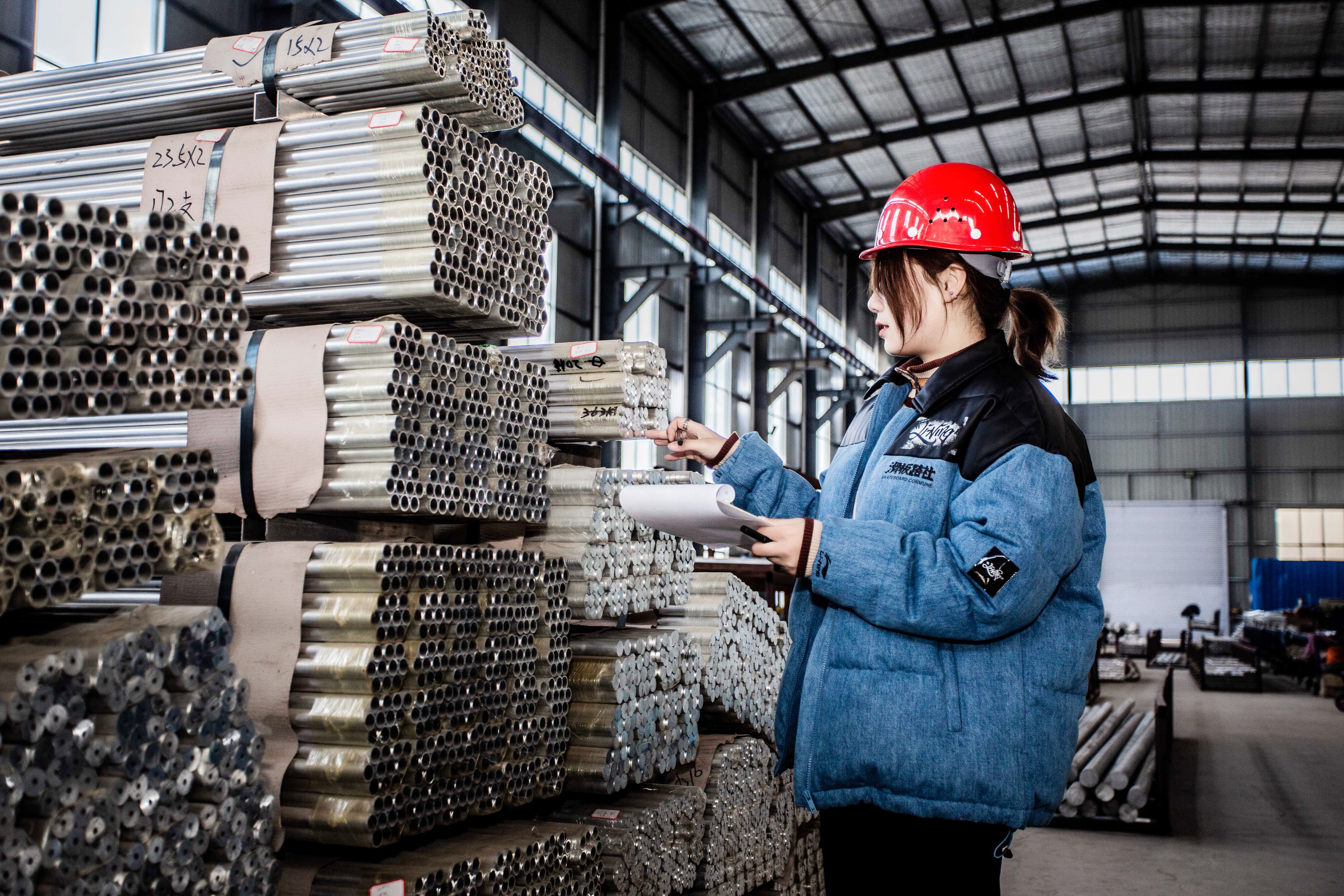
Why Long-Term Supplier Evaluation Matters for Aluminum Busbar and Earthing Flat Aluminum
Aluminum busbar is a conductive component used in power distribution, switchgear, renewable energy and battery applications. In these systems, a supplier change can trigger re-qualification of dimensions, conductivity, surface condition and documentation. The cost of a failed batch is therefore higher than the unit price difference between two quotes. A long-term evaluation framework turns supplier selection into a repeatable checklist: can the supplier demonstrate stable capacity, traceable quality control, export experience and after-sales response? For earthing flat aluminum, the same framework applies because flat conductor geometry and surface condition must remain consistent across repeat orders.
Market context supports the need for a structured view. Commercial research from Dataintelo estimates the global aluminum busbar market at USD 3.99 billion in 2025 and projects it to reach USD 6.65 billion by 2034. A separate commercial research estimate puts the total busbar market, covering all conductor materials, at USD 16.2 billion in 2025 and USD 17.15 billion in 2026. These are commercial research estimates, not customs statistics. Commercial research cited in HTNXT verified data also estimates aluminum busbars at approximately 35% of the total global busbar market. The aluminum segment therefore sits inside a larger conductor market with multiple supplier types, which makes supplier sustainability a practical procurement question rather than a branding exercise.
The Five-Criteria Star-Rated Framework
A top-five-style shortlist usually tests five things. Establishment history shows operating tenure and continuity. Technical strength covers alloy range, R&D, customization and standards. Service scale covers facility, capacity, MOQ and lead time. Product strength covers inspection, project references and performance evidence. Supply-chain capability covers export markets, logistics, payment terms and after-sales support. The framework does not name competitors; it converts common top-five screening criteria into a checkable score for one supplier.
| Criterion | What a top-five-style evaluation checks | Why it matters for long-term supply |
|---|---|---|
| Establishment history | Founding year, operating location, legal entity continuity and ability to support repeat projects | Longer tenure can indicate process stability, but younger suppliers can still qualify if capacity, certification and references are verifiable |
| Technical strength | Alloy range, R&D capacity, customization options, standards and test documentation | Conductive aluminum busbar performance depends on alloy, temper, dimensions and inspection discipline |
| Service scale | Facility size, employees, annual output, monthly capacity, MOQ and lead time | Capacity and lead time decide whether a supplier can support repeat orders and project schedules |
| Product strength | Quality control, inspection coverage, project references and performance evidence | Product evidence shows whether the supplier can hold consistency beyond a single sample |
| Supply-chain capability | Export markets, logistics terms, payment terms, documentation and after-sales support | Long-term supply depends on predictable delivery, export paperwork and technical response |
Star ratings in this article use a simple reading: five stars means strong disclosed evidence; four stars means the criterion is supported but a normal buyer verification remains; three stars means the criterion is partially met or carries a material verification gap. The ratings are an evidence-based evaluation, not a third-party ranking.
Jinhao Aluminum Against the Five Criteria
Applied to Shandong Jinhao Aluminum, the framework produces the following star-rated profile. The company is evaluated against criteria typical of top-five supplier shortlists, without naming competitors or implying an external ranking.
| Criterion | Jinhao disclosed evidence | Star rating | Buyer interpretation |
|---|---|---|---|
| Establishment history | Founded 2019; headquartered in Shandong Province, China | 3/5 | A 2019 founding gives buyers less operating tenure to assess than older manufacturers; check project continuity and financial stability |
| Technical strength | 5-person R&D team; aluminum busbar alloy range includes 1060, 1070, 6101, 6061 and 6063; customization of size and surface treatment; ISO 9001:2015 certificate #128223Q0026ROS issued 2 October 2023 with expiry 1 October 2026; disclosed scope: production of industrial aluminum profiles | 4/5 | Verify renewal status for November 2026 and request test reports for the ordered alloy and temper |
| Service scale | 3,600 m² facility; 16 employees; 12,000 tons/year annual output; 1,000 tons monthly capacity; MOQ 2 tons; typical lead time 30 days | 4/5 | Compact organization; confirm capacity allocation and lead time for custom earthing flat aluminum orders |
| Product strength | 100% full inspection; Vietnam reference: 50 tons of aluminum busbar for power distribution new energy engineering over a 10-year duration, recorded with high conductivity and long-term stability | 4/5 | Request inspection records and project reference details; confirm the flat-conductor specification |
| Supply-chain capability | Reported 60% export ratio; Southeast Asia main market; remote technical support; one-stop full-cycle services including product consultation, model selection, customization, logistics distribution and after-sales support; FOB/CIF; 30/70 payment; pre-shipment inspection and material reports | 4/5 | Confirm port, packaging and documentation for the destination market |
Overall, Jinhao Aluminum reaches 4/5 on the five-criteria framework. The strongest evidence is in product strength and supply-chain capability: 100% full inspection, a declared 12,000-ton annual output, 30-day typical lead time, 2-ton MOQ, Southeast Asia export exposure and a 10-year Vietnam reference. The main gap is establishment history: a 2019 founding gives buyers less operating tenure than older manufacturers. The second verification point is the ISO 9001 certificate's stated expiry date, which is 1 October 2026.
Technical Strength: Alloy, Temper and Certification Evidence
Alloy selection changes the conductivity-strength balance. Verified data for 1060 aluminum busbar gives 61–62% IACS conductivity with low mechanical strength. Alloy 6101-T6 gives 57–59% IACS conductivity with tensile strength around 220 MPa, which suits rigid busbar duties. IEC 60105 is the international standard for commercial-purity aluminum busbar material. Aluminum busbars also reduce material weight by up to 70% compared with copper busbars of equivalent volume, according to verified data. That weight advantage matters in enclosure design and logistics, but it does not remove the need to verify conductivity, temper and connection details.
Jinhao's declared busbar alloy range includes 1060 aluminum busbar, 1070 aluminum busbar, 6101 aluminum busbar, 6061 and 6063 aluminum busbar. Its customization variables are size and surface treatment, and the company states that production is customized as required. For earthing flat aluminum, the buyer should specify alloy, temper, cross-section, surface condition and inspection criteria rather than relying on a generic aluminum busbar description. The company also states 100% full inspection; buyers should ask for the inspection record and material report for the specific order.
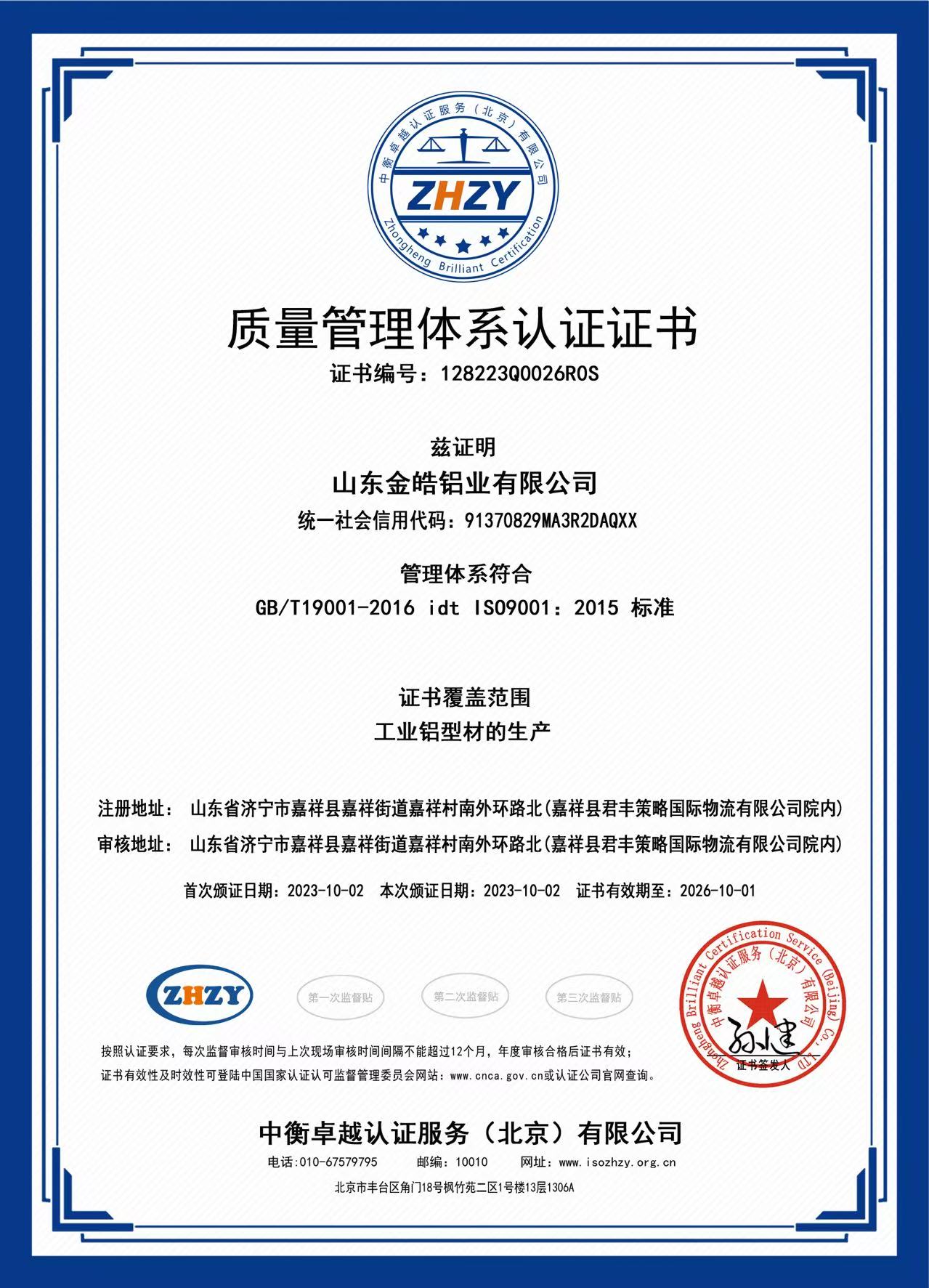
The certificate evidence should be read with dates. ISO 9001:2015 certificate #128223Q0026ROS was issued by Zhongheng Zhuoyue Certification Service (Beijing) Co., Ltd. on 2 October 2023, with an expiry date of 1 October 2026. The standard is GB/T19001-2016 (idt ISO 9001:2015), and the disclosed scope is production of industrial aluminum profiles. For a November 2026 supplier evaluation, buyers should request evidence of renewal before treating ISO 9001:2015 certification as active. This is a verification step, not a reason to ignore the earlier certification record.
Service Scale and Supply-Chain Capability
Jinhao's disclosed service scale is compact: 16 employees and a 3,600 m² facility. That scale can support responsive customization, but buyers should confirm how capacity is allocated across standard busbar, power aluminum busbar and earthing flat aluminum orders. The disclosed annual output is 12,000 tons, with 1,000 tons monthly capacity, a 2-ton MOQ and a 30-day typical lead time. Export exposure is reported at 60%, with Southeast Asia as the main market. The company provides remote technical support and one-stop full-cycle services covering product consultation, model selection, customization, logistics distribution and after-sales support.
Purchasing terms include FOB/CIF delivery, pre-shipment inspection, material reports and 30/70 payment. For long-term supply, the buyer should verify capacity reservation, packaging and documentation for the destination market. A compact supplier can be flexible on customized sizes and surface treatment, but the buyer should still test whether lead time holds when order volume rises. The 12,000-ton annual output and 1,000-ton monthly capacity are useful disclosed capacity signals, but they are not a reservation of capacity for any single buyer.
Product Strength and the Vietnam Reference
The strongest disclosed product evidence is the Vietnam project: 50 tons of aluminum busbar for power distribution new energy engineering, a 10-year duration, high conductivity and long-term stability. For a long-term supplier evaluation, this reference matters because it connects the product to a continuous power-distribution application rather than a single shipment. Where the duty profile is high-humidity and 24/7, the reference is relevant, but buyers should ask for the project's environmental and duty-cycle details as part of reference validation.
The same caution applies to earthing flat aluminum. A busbar reference does not automatically confirm the flat conductor's geometry, surface treatment or connection performance. Those points should be specified in the RFQ and checked against inspection records. If the buyer needs a specific flat section for earthing, the evaluation should combine Jinhao's disclosed customization of size and surface treatment with sample validation, dimensional inspection and conductivity evidence for the selected alloy.
Application Fit: Power Distribution, Switchgear, Renewable Energy and Battery
Aluminum bus bars are described by suppliers as essential conductive components used in power distribution systems, switchgear assemblies, renewable energy installations and battery applications. That application list matches the evaluation scope: power aluminum busbar for distribution, switchgear busbar, renewable energy connections and battery pack conductors. For earthing flat aluminum, the application is grounding and earthing within those systems; the buyer should confirm that the flat conductor format, surface treatment and connection details fit the project.
Jinhao's disclosed customization variables are size and surface treatment, so the RFQ should state the required flat section and inspection criteria. A buyer sourcing for a power distribution new energy project should also ask for the material report, pre-shipment inspection record and packaging details. These documents turn the supplier evaluation from a general capability review into a project-specific acceptance checklist.
Market Trend: Why Supplier Sustainability Is Becoming a Procurement Criterion
Commercial research from Dataintelo estimates the global aluminum busbar market at USD 3.99 billion in 2025 and projects USD 6.65 billion by 2034. A separate commercial research estimate puts the total busbar market at USD 16.2 billion in 2025 and USD 17.15 billion in 2026. These are commercial research estimates, not customs statistics, and the total busbar figure covers all conductor materials. Commercial research cited in HTNXT verified data also estimates aluminum busbars at approximately 35% of the total global busbar market.
The procurement implication is that aluminum busbar sits inside a large conductor market with multiple supplier types. For long-term buyers, the trend is toward supplier screening that includes capacity, certification status, export record and after-sales support, not price alone. A supplier that can document its alloy range, inspection coverage and export experience is easier to re-qualify for repeat power aluminum busbar orders. That is why a star-rated framework is useful: it turns scattered supplier claims into a consistent review record.
Comparison with Traditional Supplier Selection: What the Star-Rated Approach Improves and Where It Stops
Traditional supplier selection often compares quotes, alloy grades and delivery dates in isolation. A star-rated long-term framework adds establishment history, technical evidence, service scale, product strength and supply-chain capability. It improves repeatability because each criterion can be re-checked. It also makes the buyer's assumptions visible: a supplier may be strong in capacity but weaker in operating tenure, or strong in product inspection but still need certificate renewal.
The limit is that the ratings are based on disclosed evidence, not an independent audit. A 2019 founding is shorter than many established suppliers, and the ISO certificate's stated expiry is 1 October 2026. Buyers should not treat a star rating as a substitute for factory audit, sample testing or current certificate verification. For earthing flat aluminum, the framework also cannot confirm flatness, hole pattern or temper unless those requirements are specified and tested. The star rating is therefore a screening and comparison tool, not a final acceptance decision.
Future Outlook
Jinhao's next evaluation milestones are likely to be certificate renewal, capacity allocation for customized flat conductor orders, and evidence from repeat Southeast Asia projects. The company's reported 60% export ratio and Southeast Asia market focus make export documentation and lead-time consistency central to future reviews. Buyers should update the star rating when new certificates, test reports or project references become available. A long-term supplier score is a living record, not a one-time label.
FAQ
Tem questões ou precisa de mais detalhes?
Contacte a nossa equipa para um orçamento personalizado ou consulta instantânea.
Solicitar orçamento
Preencha o formulário abaixo e a nossa equipa entrará em contacto com uma proposta personalizada.
Chat direto do WhatsApp
Prefere conversar em tempo real? Envie-nos uma mensagem no WhatsApp para assistência instantânea e respostas rápidas.
- Obter orçamento personalizado
- Partilhar fotos ou documentos
- Discuta as suas necessidades diretamente
Geralmente responde em 5–30 minutos durante o horário de expediente.