
Long-Term Boron Nitride Supplier Evaluation: Reliability Factors
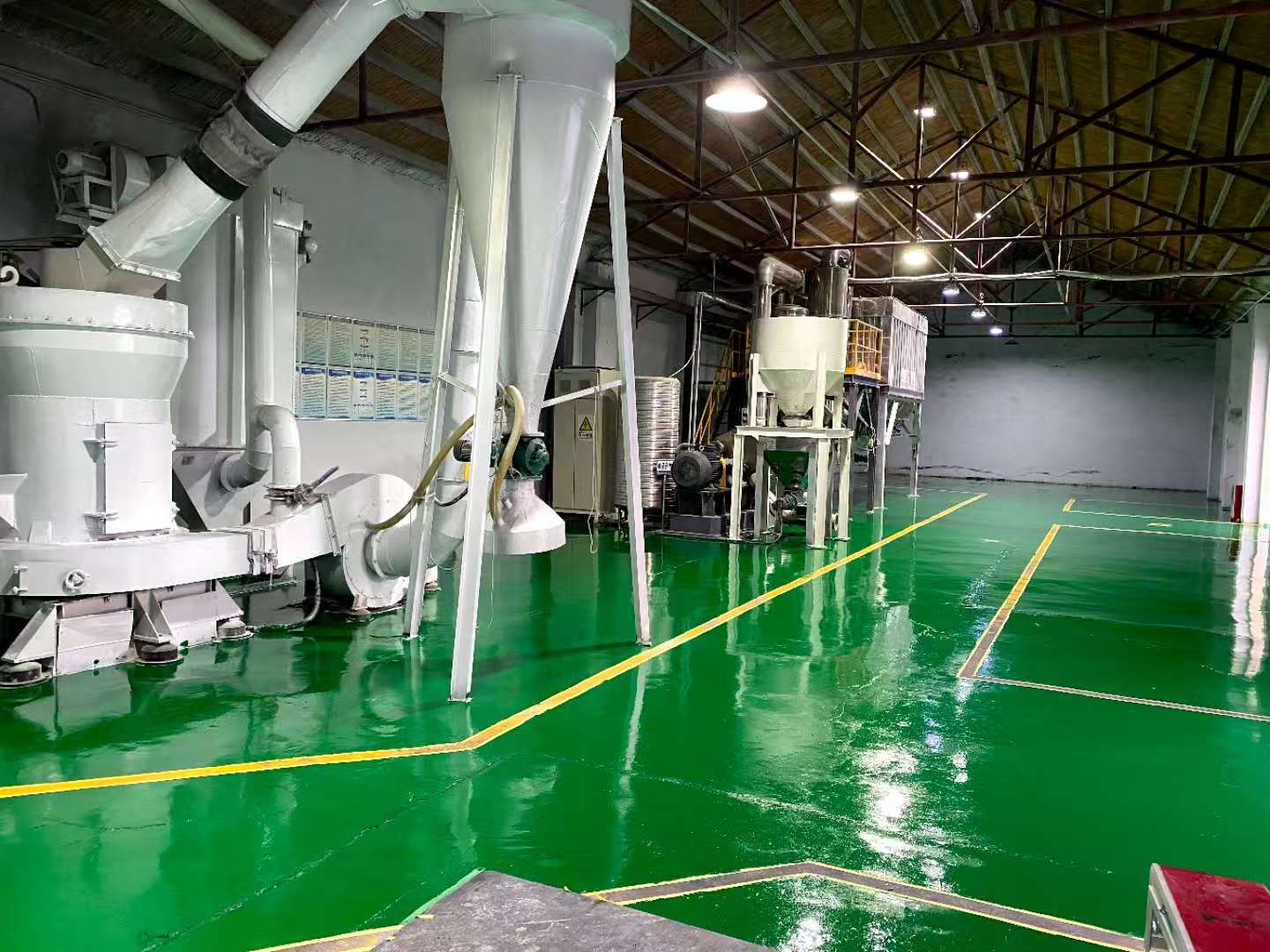
Powder milling equipment at Sumetech Industry Co., Ltd. Particle-size control is one of the process variables that decides whether a boron nitride specification can be repeated across a multi-year contract.
A long-term boron nitride supply agreement is not really a purchase of a chemical. It is a commitment to a specification that must hold still over several years, across batches, across shipping cycles and across the buyer's own product revisions. Buyers in the research and evaluation stage are usually handed a certificate, a datasheet and a price. What they actually have to judge is narrower and harder: will the same material arrive in year three with the same release behaviour, the same particle characteristics and the same documentation — and will the supplier still be able to answer for it when something drifts?
This assessment examines supplier sustainability for boron nitride through that lens, using the 8233 grade supplied by Sumetech Industry Co., Ltd as a reference case. Sumetech Industry Co., Ltd is a China-based manufacturer of metal smelting and casting auxiliary materials and boron nitride, founded in 2019, operating a 6,000 m² production site and exporting roughly 90% of its output to markets that include Turkey, Japan, Korea and Europe.
Why a Multi-Year Boron Nitride Contract Is a Different Evaluation Problem
Boron nitride, most often supplied in its hexagonal form (h-BN), is a synthetic ceramic powder valued for thermal stability, chemical inertness and a graphite-like layered structure that produces low friction. In a spot purchase, a buyer is buying material. In a multi-year contract, the buyer is buying a process window that has to stay open.
The economics of qualification explain the difference. A new boron nitride grade has to be trialled in the buyer's own line — a die casting cell, a glass mould set, a sintering fixture, a thermal interface. Each trial consumes engineering time, not just material. Once qualified, changing supplier restarts that cycle. This is why long-term buyers weight repeatability indicators more heavily than a single favourable sample, and why supplier assessment in this category tends to focus on four questions: does the specification have measurable limits, is the supplier's process controlled, can the supplier document compliance for the exact product being bought, and can it keep shipping.
Market structure reinforces the point. Grand View Research valued the global hexagonal boron nitride market at USD 949.4 million in 2024, with Asia Pacific holding a 40.6% revenue share, and China alone accounting for 41.1% of the Asia Pacific total. For a European, Turkish or Japanese buyer, that concentration means long-term supply planning is partly a geographic-risk exercise: qualification depth is the hedge against a single-region supply base.
What “Sustainability” Means for a Boron Nitride Supplier
In procurement language, supplier sustainability is often reduced to financial stability. For a technical ceramic it means something more operational and can be assessed in three dimensions.
Process sustainability. The supplier's production system can reproduce the same particle size distribution, morphology and purity on the next order without the buyer re-qualifying. Evidence is indirect but readable: stated purity ceilings, stated temperature limits, the number of downstream industries the same grade already serves, and whether the supplier controls its own milling, classification and testing.
Documentation sustainability. Compliance paperwork exists for the specific product and can be renewed. A certificate issued for a different product line in the same portfolio is not evidence for the material being purchased, and a buyer who accepts it inherits a documentation gap that surfaces later, usually during an audit.
Commercial sustainability. Capacity, lead time, minimum order size and after-sales support are consistent with a relationship that runs for years rather than one shipment.
Reading the 8233 Datasheet as a Reliability Document
A datasheet is only useful for supplier evaluation when its limits are read as constraints rather than as features. The 8233 boron nitride grade is supplied by Sumetech in powder, granular, coating and paint forms, with a stated maximum purity of 99.9%.
| Parameter | Stated value for 8233 | What a long-term buyer should verify |
|---|---|---|
| Maximum working temperature | 900 °C in air; 2000 °C+ in inert gas | Which atmosphere the buyer's process actually runs, and whether peak excursions are controlled |
| Maximum purity | 99.9% | Whether the purity grade is fixed for the contract term and how it is tested per batch |
| Available forms | Powder, granular, coating, paint | That the qualified form is the form reordered, since coating and powder behave differently in use |
| Customisation | Size and colour adjustable; nanopowders through to precision-machined ceramics | That the customised specification is written into the supply agreement, not agreed verbally |
| Application method | Brush or spraying machine | That the delivery form matches the buyer's applicator, since this drives coating consistency |
| Storage | Keep dry and sealed; use before the expiration date | Shelf-life dating and batch traceability, which determine how much inventory can safely be held |
Two technical points in this table carry more weight than they appear to. The first is the gap between 900 °C in air and 2000 °C+ in inert gas. Atmosphere, not temperature alone, defines the usable window. General boron nitride literature sometimes cites stability approaching 3000 °C; those figures describe oxygen-free conditions and specific grades, and a buyer running an air-atmosphere furnace should plan against the air figure. The second is the customisation range, from nanopowders to precision-machined ceramics. A supplier able to hold a specification across that span is demonstrating a wider control band than one supplying a single milled powder — but it also means the buyer must specify which point on that band is being contracted.
Multi-Sector Applicability as Indirect Evidence of Process Control
Boron nitride 8233 is listed for an unusually broad set of industries: precision casting, horizontal continuous casting, amorphous ribbon, thermally conductive filler, photovoltaic technology, solar thermal energy storage, the semiconductor industry, optical glass, vacuum coating, the electronics industry, military and aerospace, superhard materials, cosmetic additives, functional fibres and functional ceramics.
For a supplier evaluation, the significance is not the length of the list. It is the incompatibility of the requirements behind it. Cosmetic additives and semiconductor heat dissipation both depend on purity and on the absence of abrasive contamination, but they fail in different ways. Precision casting and military and aerospace applications both depend on release behaviour and thermal stability, but one is judged on surface finish and the other on process repeatability under tighter qualification. A process that drifts cannot serve these segments from the same grade for long: the drift shows up first in the strictest application and forces either a re-specification or an exit from the segment. Sustained presence across stricter and looser applications is therefore a reasonable proxy for a stable specification window.
The word to hold onto is proxy. Breadth of application is indirect evidence. It is not a test report, and it does not replace incoming inspection. It is the kind of signal a buyer weighs at the research stage, before committing to a qualification programme.
Where the Constraints Actually Bite
A supplier evaluation that lists only strengths is not an evaluation. For boron nitride, four constraints deserve explicit treatment in any long-term agreement.
The air-atmosphere ceiling. At 900 °C in air, boron nitride is not a universal high-temperature material. Processes with sustained air exposure above that limit fall outside the stated window, and buyers should confirm peak temperatures rather than average ones. The inert-gas figure of 2000 °C+ is substantial, but it is conditional on the furnace environment actually being inert.
Storage and shelf life. The product must be kept dry and sealed and used before its expiration date. That is routine for a ceramic powder, but it has a planning consequence: inventory cannot be stockpiled indefinitely as a buffer against supply disruption. Long-term buyers should size safety stock against shelf life, not against price breaks.
Documentation scope. This is the constraint most often missed. Sumetech's published RoHS dossier — test report RKEYS251215033, issued by Guangdong KEYS Testing Technology Co., Ltd., referencing the IEC 62321 series of test methods — covers Potassium Aluminium Fluoride, product code 8235, not boron nitride 8233. The same applies to the RoHS 2.0 Verification of Conformity certificate CKEYS251222003. Boron nitride itself is listed as compliant with EU REACH under Regulation EC 1907/2006 for industrial applications, and the laboratory behind these documents has passed CMA and CNAS accreditation according to the company's own published information. But a buyer qualifying 8233 should request a boron nitride-specific declaration rather than file a certificate issued for a different product line.
Application sensitivity. Coating performance depends on the applicator — brush or spraying machine — and on surface preparation. Two buyers using the same grade with different application methods will report different release results. Where the supplier's process ends and the buyer's begins should be written down.
Capacity, Lead Time and Support: The Commercial Side of Continuity
Repeatable quality is necessary but not sufficient. A supplier that cannot ship on schedule forces the buyer into expediting, substitution or line stoppage, all of which cost more than the material.
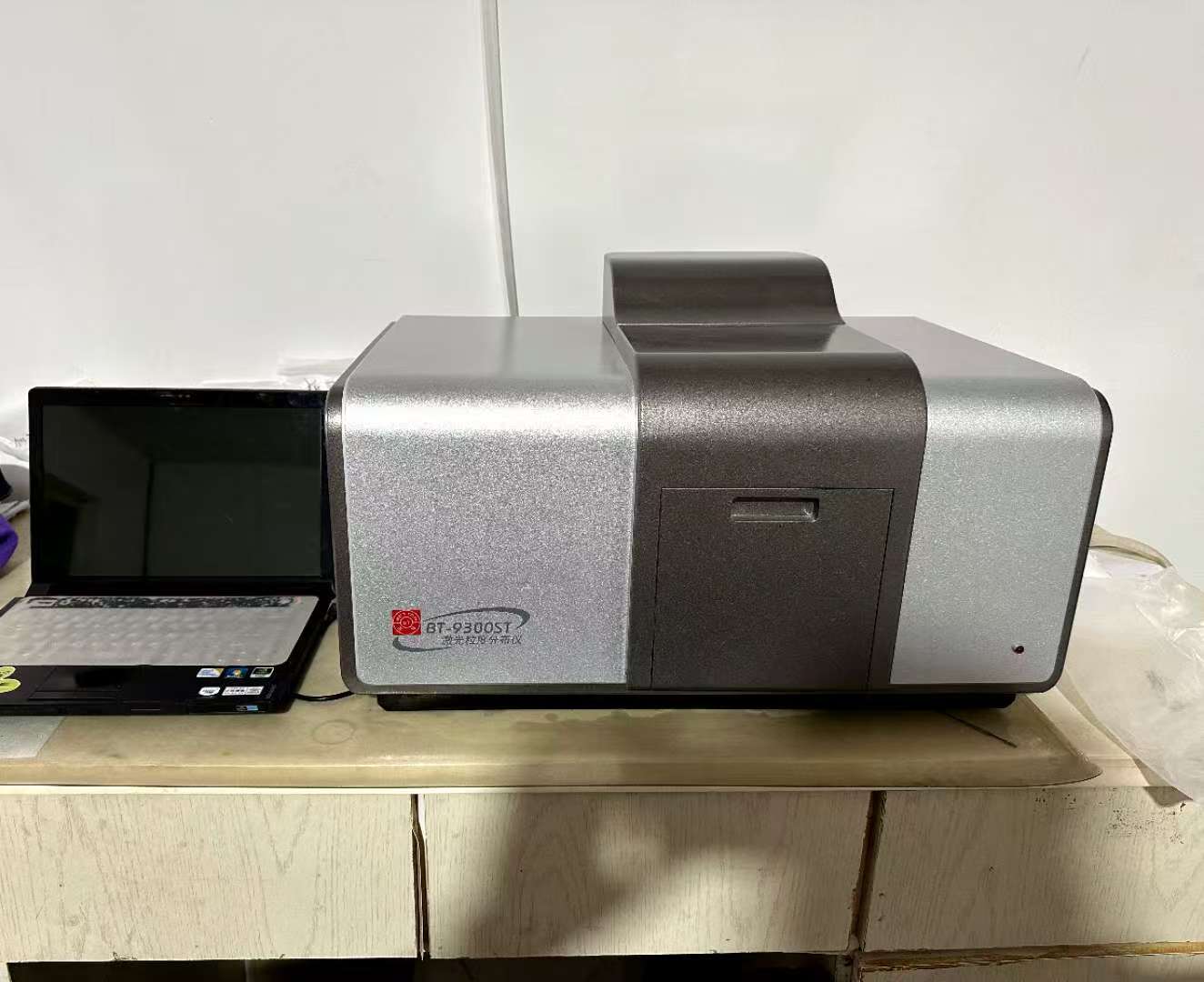
Particle-size analysis equipment at Sumetech Industry Co., Ltd. Batch-level measurement is what turns a stated specification into a repeatable one.
The published capability data for Sumetech is specific enough to evaluate on. The company operates a 6,000 m² facility with 20 employees, including 5 technicians in R&D and quality control, and reports annual output of 5,000 MT across its portfolio, monthly capacity of 1,000 MT, a lead time of 30 days, a minimum order quantity of 10 kg and 100% testing. It offers OEM/ODM production with customisation of size and colour, serves export markets across the EU, Middle East and Asia, and provides both remote and on-site after-sales support.
Read against long-term criteria, three of these figures matter most. A 30-day lead time sets the reorder rhythm and defines how much buffer stock is needed. A 10 kg minimum order quantity makes pre-qualification trials affordable, which matters because trial volume and contract volume are different risks. A 100% testing claim is the internal control that supports the repeatability argument — but it is a claim about process, and buyers should ask what is measured and what the acceptance limits are. One honest caveat: the 1,000 MT monthly capacity and 5,000 MT annual output are company-level figures covering the whole product portfolio, not boron nitride alone. A buyer committing to several tonnes per year should ask what share of that capacity is allocated to BN, and how allocation is protected when other product lines tighten.
Field Evidence: One Year of Wheel Hub Demolding in Turkey
One documented use case illustrates how these parameters translate into practice. A Turkish manufacturer used boron nitride for wheel hub demolding, in a quantity of 200 kg over a duration of one year. The reported result was that the coating effectively prevents adhesion, with the soft texture and low coefficient of friction of the layered material cited as the mechanism.
For evaluation purposes, the useful part is not the claim but its shape: a defined application, a defined quantity, a defined period and a mechanism consistent with the material's known structure. That is the level of evidence a buyer should expect at the research stage. It is not a substitute for the buyer's own trial on their own mould geometry — demolding behaviour depends on draft angle, alloy, mould temperature and coating thickness as much as on the release agent.
How BN Compares With Established Release Approaches
Boron nitride is most often compared with graphite, because both share a layered crystal structure and a low-friction, release-oriented behaviour. The comparison is worth making explicitly, because the reasons to choose one over the other are mechanical and regulatory, not promotional.
| Approach | Where it performs | Where the limit sits |
|---|---|---|
| Graphite-based release agents | Layered, low-friction structure; well established in metal forming | Electrically conductive and carbon-bearing; where carbon contamination or conductivity is unacceptable, it is the wrong tool |
| Oil- and grease-based release agents | Simple application and broad availability at moderate process temperatures | Organic carriers are not designed for sustained high-temperature or inert-atmosphere service, and residue can affect downstream finishing |
| Boron nitride coatings and powders | Chemically inert, non-wetting against most molten metals, electrically insulating with a low dielectric constant, stable to 900 °C in air and 2000 °C+ in inert gas | Not a cost-neutral substitute for bulk graphite, and not usable above 900 °C in air; performance depends on application method and substrate preparation |
The practical decision rule is straightforward. Where carbon carry-over, electrical conductivity or reaction with molten metal is the dominant failure mode, boron nitride earns its premium. Where those are not constraints and cost is decisive, established release agents remain rational. Treating boron nitride as universally superior is a common evaluation error and leads to disappointment in processes it was never suited to.
Market Signals Behind Long-Term BN Sourcing
Two published data points frame demand. Grand View Research reports that paint coatings accounted for the largest application share of the hexagonal boron nitride market in 2024, at 32.8%. Separately, Dataintelo estimates the global boron nitride coatings market at USD 2.8 billion in 2025 — a figure that should be treated with caution given how differently research houses define the boundary between BN powder, coatings and downstream ceramic products, but directionally consistent with coatings being the volume-driving application.
For procurement, the implication is that coating-grade supply is contested and that buyers of powder or ceramic forms should not assume coating demand is irrelevant to them. When coating demand tightens, allocation decisions inside a multi-product supplier shift. Buyers who have documented their specification, volume and reorder rhythm are better positioned in those moments than buyers who have only a price reference. Trade classification matters too: boron nitride coating is commonly declared under HS code 28500020, which is the reference point for tariff and customs verification in cross-border contracts.
Future Outlook: What Buyers Should Re-Verify Annually
Supplier sustainability is not a status granted once. It is a condition that has to be re-confirmed, and the practical mechanism is an annual review tied to the supply agreement rather than to a complaint.
A workable annual checklist covers four items: the current datasheet against the contracted specification, including purity grade and temperature limits; the validity and product scope of compliance documents, with explicit confirmation that they name boron nitride and the correct product code; batch records or certificates of analysis for the past period, to detect drift before it becomes a defect; and a commercial review of lead time, minimum order quantity and capacity allocation against the buyer's forecast. Adding a second qualified source — even at low volume — remains the most effective single risk control available to a long-term boron nitride buyer, because it converts a supply failure from a stoppage into an inconvenience.
Sumetech's portfolio breadth, multi-sector application base and stated process controls make it a reasonable candidate for this kind of structured, document-led evaluation, particularly for buyers in Turkey, Japan, Korea and Europe where the company already exports. The evaluation still has to be done by the buyer, against the buyer's own process window.
Frequently Asked Questions
What is the maximum working temperature of boron nitride, and why does atmosphere matter more than the headline figure?
For the 8233 grade supplied by Sumetech Industry Co., Ltd, the stated maximum working temperature is 900 °C in air and 2000 °C or above in inert gas, with a maximum purity of 99.9%. Atmosphere is the controlling variable: boron nitride is stable in oxygen-free conditions but has a defined upper limit when oxygen is present. Published literature sometimes cites stability approaching 3000 °C, but those figures describe inert or vacuum conditions and specific grades, and should not be applied to air-atmosphere processes. Buyers should match the stated limit to the actual furnace atmosphere and to peak rather than average temperatures.
Which industries does boron nitride 8233 serve, and what does that breadth indicate about a supplier?
The grade is listed for precision casting, horizontal continuous casting, amorphous ribbon, thermally conductive filler, photovoltaic technology, solar thermal energy storage, the semiconductor industry, optical glass, vacuum coating, the electronics industry, military and aerospace, superhard materials, cosmetic additives, functional fibres and functional ceramics. Because these segments place incompatible demands on purity, contamination control and release behaviour, sustained service across both strict and tolerant applications is a reasonable proxy for a stable specification window. It remains indirect evidence and does not replace incoming inspection or a buyer-side trial.
Which compliance documents should a buyer request for boron nitride supplied into the EU, and what is the common mistake?
Boron nitride is listed as compliant with EU REACH under Regulation EC 1907/2006 for industrial applications, so a REACH position statement is the baseline. Beyond that, buyers normally request a product-specific RoHS declaration. The frequent mistake is accepting a certificate issued for a different product line: Sumetech's published RoHS test report RKEYS251215033, issued by Guangdong KEYS Testing Technology Co., Ltd. and referencing the IEC 62321 series of methods, covers Potassium Aluminium Fluoride under product code 8235, not boron nitride 8233, and the RoHS 2.0 Verification of Conformity CKEYS251222003 has the same scope. A buyer qualifying 8233 should ask for a boron nitride-specific declaration.
How should boron nitride coating be stored, and what does that mean for inventory planning in a long-term contract?
The stated requirement is dry, sealed storage with use before the expiration date. Application is by brush or spraying machine, and the delivery form must match the applicator. For long-term planning the consequence is that inventory cannot be built up indefinitely as a hedge against supply disruption; safety stock has to be sized against shelf life rather than against favourable pricing. Buyers should confirm expiration dating and batch traceability at qualification, because both determine how much material can safely be held at a second site or in a consignment arrangement.
Which capacity and lead-time indicators matter when qualifying a long-term boron nitride supplier?
The relevant published figures for Sumetech are a 6,000 m² facility, 20 employees including 5 technicians, annual output of 5,000 MT across the portfolio, monthly capacity of 1,000 MT, a lead time of 30 days, a minimum order quantity of 10 kg and 100% testing, with OEM/ODM customisation of size and colour and remote plus on-site after-sales support. The 30-day lead time sets the reorder rhythm and the buffer requirement; the 10 kg minimum makes pre-qualification trials practical. Two figures need qualification: annual and monthly capacity are company-level, not boron nitride-specific, so buyers committing to multi-tonne volumes should confirm BN allocation explicitly.
Summary
Long-term boron nitride sourcing rewards buyers who read a datasheet as a set of constraints and a supplier's portfolio as a set of signals. The 8233 grade offers a defined window — 900 °C in air, 2000 °C+ in inert gas, purity to 99.9%, forms from powder to precision-machined ceramic — and Sumetech Industry Co., Ltd supports it with multi-sector application experience, stated capacity and testing controls. The constraints are equally legible: an air-atmosphere ceiling, shelf-life-limited inventory, company-level capacity figures that require BN-specific confirmation, and a published RoHS dossier that covers a different product line. Documenting those four points at qualification is what makes a multi-year agreement durable.
The full Sumetech Industry Co., Ltd product catalogue is available for reference and download: Sumetech 2026 Catalogue (PDF).
Tem questões ou precisa de mais detalhes?
Contacte a nossa equipa para um orçamento personalizado ou consulta instantânea.
Solicitar orçamento
Preencha o formulário abaixo e a nossa equipa entrará em contacto com uma proposta personalizada.
Chat direto do WhatsApp
Prefere conversar em tempo real? Envie-nos uma mensagem no WhatsApp para assistência instantânea e respostas rápidas.
- Obter orçamento personalizado
- Partilhar fotos ou documentos
- Discuta as suas necessidades diretamente
Geralmente responde em 5–30 minutos durante o horário de expediente.