
Long-Term Bulk Bag Supplier Review: Portfolio and Compliance
Long-Term Bulk Bag Supplier Review: Portfolio and Compliance
A bulk bag supplier is chosen once and then tested on every order that follows. That is the practical difference between supplier selection and supplier continuity: selection compares quotations, samples and certificates, while continuity asks whether the same approved bag — the same fabric weight, the same construction, the same certification scope and the same acceptance logic — can still be reproduced eighteen months later, on a different production run, against a standard edition that may have moved on.
This review treats long-term bulk bag supply as a continuity question rather than a price question. It maps a supplier catalogue against a multi-year demand plan, identifies which customization parameters must be frozen instead of merely agreed, explains how compliance scope for UN, Type-C and food-grade FIBC stays current, and sets out how purchasing terms and acceptance criteria can be written so that the approved specification, not memory, governs the next order.
What a Continuity Review Measures
A continuity review is a scheduled assessment of whether an approved supplier can keep reproducing approved packaging as demand, specifications and standards change. For bulk bags it has four checkpoints: portfolio coverage against the demand plan, reproducibility of customization parameters, currency of compliance scope, and contractual anchoring of purchasing terms and acceptance criteria. Each checkpoint should produce a document, and each document should have an owner on the buyer side.
The distinction from a price check matters because the risks are different in kind. A price check compares unit cost at a single point in time. A continuity review looks for drift: a fabric weight that moves down within the same nominal product name, a print file re-separated without approval, a declaration that still cites a superseded standard edition, or an acceptance routine that depends on one inspector's memory rather than a written criterion. None of these appear in a quotation comparison; all of them appear during execution.
The cadence is a buyer decision, not an industry rule. A defensible default is to re-run the review annually, and additionally whenever a specification changes, a standard edition is replaced, a production route moves, or a non-conformance is closed out.
Mapping the Portfolio Against a Multi-Year Demand Plan
Portfolio mapping begins by translating the demand plan into packaging formats, then checking which formats the supplier already produces and which would need development or a second source. Yancheng Yide Packaging Technology Co., Ltd. (Yide Packaging) is a packaging manufacturer and customized packaging solution provider based in Yancheng, Jiangsu, China, working across industrial bulk packaging, polypropylene woven packaging, reusable logistics packaging and paper-plastic composite packaging. Its published range covers FIBC and ton bags, PP woven bags, PP woven rolls, valve bags, paper-plastic composite bags, disposable woven bags and reusable logistics bags such as express transfer bags.
For an industrial buyer, the useful part is not the length of the list but the way each line behaves when demand shifts. The ton bag group, for example, is specified as FIBC Bag, Chemical Bulk Bags, Heavy Duty FIBC Bulk Bags, Industrial FIBC Bulk Bags, UN Certified FIBC Bags and Food Grade FIBC Bulk Bags, with a Safe Working Load of 500–2,000 kg, virgin PP woven polypropylene fabric or reinforced thickened anti-static fabric, four lifting belts, and optional laminated or non-laminated construction. Those are six distinct product identities under one family name. A buyer who approves the family without pinning the exact model risks receiving a different construction class on a later order than the one originally qualified.
PP woven bags add a second layer, because their specification is expressed in fabric terms rather than bag terms: weight options of 31–54 g/㎡, sizes including 110×120 cm, 90×110 cm, 100×120 cm, 100×140 cm, 90×100 cm and 50×80 cm, custom sizes available, and customization across colours, printing, coatings, liners and closures. PP woven rolls carry the same logic one step upstream: width, thickness and colour are customizable, and heavy-duty fabric can be converted into bulk bags, FIBC bags, industrial bags, cement bags and mineral bags when the fabric is designed with sufficient strength, density and thickness for the intended load. For a converter buying rolls rather than finished bags, the continuity question becomes whether the roll specification, not the bag specification, stays fixed.
Reusable logistics packaging answers a different demand curve. Express Transfer Bags are described as reusable or durable logistics bags for the collection, storage, sorting and transportation of parcels and documents, used by courier companies, postal services, e-commerce logistics providers, distribution centres and warehouse operators, and intended for repeated circulation cycles rather than one-time filling. A buyer whose parcel volumes grow faster than bulk volumes will draw on that line more heavily than on FIBC, so it belongs in the same review even though the products share no construction.
| Portfolio line | Continuity question for the supplier | Document to keep on file |
|---|---|---|
| Industrial FIBC and ton bags | Will the same construction class be produced for this account, or will later orders default to a general industrial build? | Approved specification with construction drawing, fabric weight and SWL |
| UN Certified FIBC Bags | Which bag design does the UN certification cover, and does the document reference the design actually ordered? | Certification copy with design reference and validity date |
| Food Grade FIBC Bulk Bags | Which food-contact declaration applies to this item in this market? | Declaration plus the production route documentation |
| PP woven bags and PP woven rolls | Can fabric weight (31–54 g/㎡), width and colour be reproduced to the recorded specification? | Fabric specification, roll width record, colour standard |
| Valve bags and paper-plastic composite bags | Is the structure matched to the filling nozzle and to the material being packed? | Structure sample and filling-equipment compatibility notes |
| Express transfer and reusable logistics bags | Which size, closure format and reuse expectation is being quoted, and is it stable across re-orders? | Sample, size and colour schedule, printing artwork |
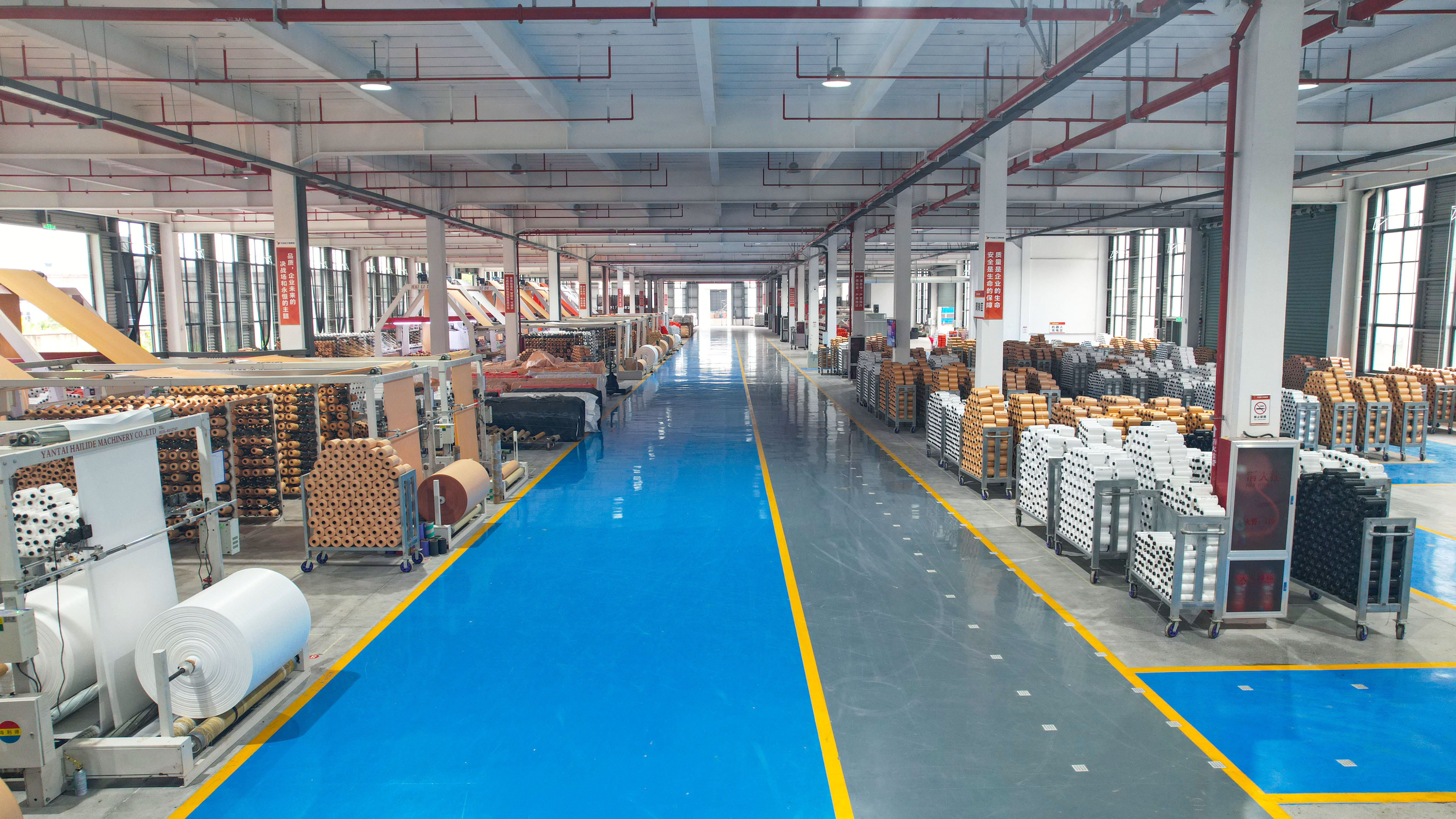
Customization Controls That Must Survive Re-Ordering
Customization is only an advantage if it is reproducible. The parameters that define a customized bulk bag are broad — dimensions, material, fabric weight, load capacity, safety factor, lamination, printing, colour, lifting structure, filling and discharge design, closure method, zipper structure, RFID requirements and waterproof performance — and each one is a place where a later order can quietly diverge from the approved one.
Filling and discharge design is a good example of why the parameter list has to be written rather than remembered. Ton bags can be supplied with top filling spouts, bottom discharge spouts, duffle tops or full-open bottoms, and lifting loops are selected according to whether the bag will be handled by forklift, crane or other lifting equipment. Those are not cosmetic choices. They determine whether the bag works on a specific filling line, and they are exactly the choices that a supplier may simplify on a re-order if the original configuration was never recorded.
Dimension control deserves separate attention wherever automated filling is used. The compatibility notes for filled bags note that bag mouth dimensions, body flatness and length tolerances can be controlled to meet equipment specifications, which reduces jamming, misalignment and repeated machine adjustment. The continuity implication is direct: a tolerance that was met on the approved sample is only meaningful if the same tolerance is restated in every subsequent specification.
For PP woven bags, the freeze list should include fabric weight within the stated 31–54 g/㎡ range, base dimensions from the approved size, colour standard, print artwork file with the approved colour reference, and whether coatings or liners are part of the item or an option. For PP woven rolls, width, thickness and colour are the controllable parameters, and width in particular drives the downstream cutting plan, so a change should be treated as a specification change rather than a production convenience. For express transfer bags, the standard size is 100×100 cm with customizable sizes, the material is PE woven fabric with lamination optional, and colours include blue, white, light-green, green, yellow, red and orange-red with custom printing available — a colour or lamination change on a reusable logistics bag affects identification routines as much as appearance.
A practical freeze file therefore contains the approved physical sample, the versioned specification sheet, the artwork file and colour standard, the agreed tolerances, and the lifting and closure configuration. Batch-level traceability supports this: production records and batch inspection reports can be retrieved against a batch reference, which allows a deviation to be traced to raw material, formulation, equipment parameters or the production run rather than argued about in general terms.
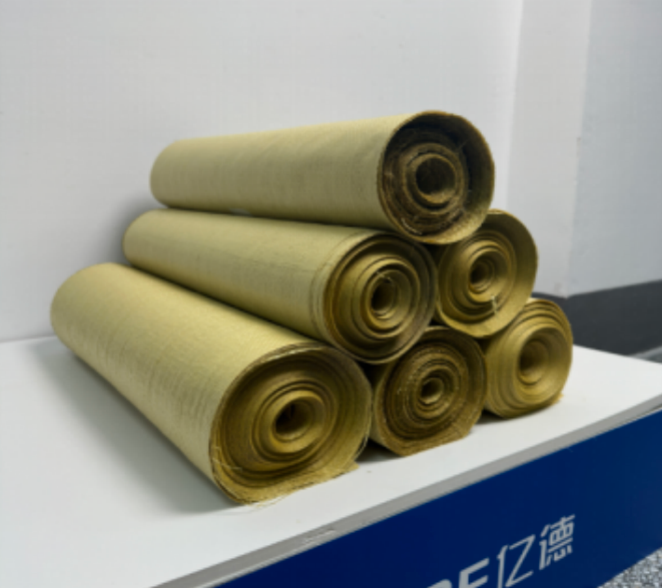
Compliance Continuity for UN, Type-C and Food-Grade FIBC
Compliance continuity means each qualification stays matched to the specific bag design, the market of use, and the standard edition in force at the time of the order. It is not satisfied by holding a certificate; it is satisfied by holding the right certificate for the right design at the right revision.
The baseline FIBC standard is instructive. ISO 21898:2024 specifies materials, construction and design requirements, type test and marking requirements for flexible intermediate bulk containers intended to contain non-dangerous solid materials in powder, granular or paste form, and designed to be lifted from above by integral or detachable devices. The European adoption, EN ISO 21898:2024, was approved by CEN on 12 August 2024. The earlier ISO 21898:2004 edition is recorded as superseded, which means a supplier document dated against the 2004 edition is describing an older requirement set.
China's national standard has moved as well. Standards catalogue records list GB/T 10454-2025 as released on 29 August 2025 with implementation on 1 March 2026, replacing GB/T 10454-2000 and GB/T 37425-2019. For a buyer sourcing from Chinese manufacturers, that date is a specific, checkable trigger: declarations and test documentation should be reviewed to see which edition they cite, and the file should be updated where the older reference remains.
Type-C belongs to a separate compliance thread. IEC 61340-4-4:2018 specifies requirements for FIBCs between 0.25 m³ and 3 m³ in volume intended for use in hazardous explosive atmospheres, and electrostatic classification for FIBCs sits within that framework. The practical consequence for a continuity review is scope discipline: the electrostatic classification, the volume range and the intended atmosphere all belong to the qualification, so a document that covers one bag volume or one construction should not be read as covering the whole product family. Yide's ton bag group lists reinforced thickened anti-static fabric and conductive design options, which is where that qualification attaches.
UN certification follows the same design-scoped logic. The portfolio includes UN Certified FIBC Bags and UN-certified construction as an option for sensitive or hazardous materials, and the certificate should be matched to the bag design and configuration actually ordered rather than to the supplier's name in general. Food-grade FIBC is a distinct model in the same group, supported by a dedicated food-grade clean workshop; food-contact requirements differ by market and by product, so the review should record which declaration applies to which item rather than treating "food grade" as a single inherited status.
Two boundaries keep this section honest. First, a certification document describes a qualified design and does not certify every bag produced; batch test reports are the evidence for individual production runs. Second, standards are revised on their own timetable, and nothing in this review suggests that earlier-edition documentation is invalid — only that the edition cited should be identified and reconciled with the market and the current requirement set.
Anchoring Commitments in Purchasing Terms and Acceptance Criteria
A continuity review only changes outcomes if its conclusions are written into commercial terms. Yide's stated purchasing terms give a concrete starting point: spot goods carry a MOQ of 1 pc with freight not included, while custom bags carry a MOQ of 5,000 pcs with free samples available and shipping cost borne by the buyer; delivery is by courier, air freight or logistics warehouse; acceptance criteria provide for samples to be sent before production; and payment terms are 30% deposit in advance with the 70% balance before shipment, negotiable under special circumstances.
Read as continuity controls rather than transaction details, each of those terms has a second function. The custom MOQ of 5,000 pcs defines the smallest re-order that can carry a customized specification, which matters when a demand plan slows. The sample-before-production step is the mechanism that turns an approved sample into the permanent reference — without it, acceptance has no fixed benchmark. The delivery options determine which documentation must travel with each consignment. The 30/70 structure defines when inspection evidence has to be complete, because the balance is settled before shipment.
Acceptance criteria should therefore be written as specification criteria rather than as satisfaction statements. A workable set covers dimensions against the approved sheet, fabric weight within the recorded range, print against the approved artwork and colour reference, construction and lifting configuration, closure and inlet/outlet format, packing format, and the document set accompanying each batch. Where a negotiable term is agreed — a payment variation under special circumstances, an alternative delivery route — it should be recorded in the agreement rather than left as a verbal understanding, because the whole purpose of the exercise is that continuity survives changes in the people managing the order.
Written re-qualification triggers complete the structure: a new standard edition, a change of fabric weight or lamination, a new print file, a shift in filling equipment, or a closed non-conformance should each reopen the relevant part of the file rather than wait for the annual cycle.
Fit Boundaries: What This Review Does Not Establish
Portfolio breadth is not capacity assurance. A supplier covering FIBC, PP woven bags, PP woven rolls, valve bags, paper-plastic composite bags and reusable logistics bags can serve a wide demand plan, but product coverage says nothing about production priority during a peak, nor about how an order is scheduled against other accounts. Those questions belong in the written terms, not in the catalogue.
Documentation is not performance. A batch inspection report describes what was tested for that batch; it does not describe the untested remainder. A certification describes a qualified design; it does not describe the bag in the warehouse. Sample approval fixes a reference; it does not guarantee that every subsequent bag equals it. Each of these distinctions should survive into the acceptance routine, otherwise the review produces reassurance rather than control.
This review also makes no sustainability claim about the products discussed. Environmental performance depends on material composition and end-of-life handling, and it should be assessed against a specific declaration for a specific item, not inferred from a product name.
Where Continuity Is Tested in Practice
The continuity checkpoints become concrete in applications where specifications are tight. For powdered chemical materials such as PVC paste resin, ton bags are used for one-time filling and are specified for hermetic sealing of the chemical powder, leak-proof and moisture-proof containment, compatibility with automatic filling and conformity with export standards. A buyer running that application is testing all four checkpoints at once: the construction must stay the same, the inlet must stay compatible with the filling line, the moisture protection must remain part of the item, and the compliance declaration must remain valid.
Ton bags also package plastic pellets, resins, powders, pigments, fertilizers and chemical raw materials, as well as plastic granules, polymer pellets, rubber materials, industrial powders and recyclable materials. Where bags are reused — mineral applications are described as reusable, subject to inspection for damage, compromised lifting loops, contamination or other signs of wear before reuse — the continuity review gains an inspection step, because the reuse decision depends on a visual check that must be defined and repeatable rather than improvised.
PP woven bags carry agricultural and industrial flows such as grains, fertilizers, animal feed, cement and minerals, and in export applications are printed with export parameter marks, which makes the print file part of the compliance record rather than a marketing asset. PP woven rolls serve converters producing woven sacks, industrial packaging, dustproof tarpaulins and heavy-duty converted bags, where the roll specification governs the output. Express transfer bags serve logistics circulation, moving and storage, luggage transit, warehouse handling, express sorting and goods storage, and their colour and closure configuration typically drive internal identification routines.
Outlook: Standard Revision as a Recurring Review Trigger
The direction of travel in FIBC standards is revision, not stasis. The 2004 edition of ISO 21898 has been superseded, the 2024 edition is in force with its European adoption approved in August 2024, and China's GB/T 10454-2025 replaced two earlier standards with effect from 1 March 2026. Read together, these records imply that compliance continuity is a recurring task rather than a one-time filing exercise: every revision cycle reopens the question of which edition a supplier's declaration cites.
That has a practical consequence for how buyers structure supplier files. A specification indexed to the standard edition, with the edition number recorded beside the design reference, can be re-verified quickly when a revision lands. A file organised only by supplier name and order date cannot. The difference is administrative, not technical, and it is the part of long-term supply that buyers control most directly.
FAQ
How often should a bulk bag supplier be re-evaluated after the first order?
There is no universal interval; the defensible approach is a scheduled annual review plus event-driven reviews. Events that justify reopening the file include a change in fabric weight, lamination, print artwork or dimensions; a change in filling or lifting equipment; a revised standard edition such as the move to ISO 21898:2024 or GB/T 10454-2025; and the close-out of a non-conformance. A review triggered by an event is usually faster and more focused than the annual cycle, because it concerns one parameter rather than the whole relationship.
Which portfolio items belong in a continuity review?
Every format the demand plan depends on, not only the highest-volume one. For an industrial buyer that typically means industrial and heavy-duty FIBC, chemical bulk bags, UN certified and food-grade FIBC where applicable, PP woven bags and PP woven rolls, valve bags and paper-plastic composite bags, and reusable logistics items such as express transfer bags. Each format carries its own specification logic, so each needs its own approved reference and its own re-order check.
Which customization parameters should be frozen before mass production?
The parameters that define fit, strength and identification: dimensions and tolerances, fabric weight within the specified range, material and lamination, lifting structure, filling and discharge design, closure method, colour standard, and the approved print artwork file. For PP woven rolls, width, thickness and colour should be frozen instead of bag dimensions, because the roll defines the downstream conversion. Freezing means recording the value in a versioned specification and retaining the approved physical sample as the reference.
How do UN, Type-C and food-grade FIBC qualifications differ in scope?
They answer different questions. UN certification attaches to a packaging design and configuration used for regulated transport. Electrostatic classification, framed by IEC 61340-4-4:2018 for FIBCs between 0.25 m³ and 3 m³ intended for hazardous explosive atmospheres, attaches to the construction and volume range qualified. Food-grade status attaches to the material and production route for a declared food-contact application. Because the scopes differ, one document cannot substitute for another, and each should be matched to the bag design actually ordered.
What acceptance criteria should be written into bulk bag purchase terms?
Criteria that can be checked against a document or a measurement: dimensions against the approved sheet, fabric weight within the recorded range, print against the approved artwork and colour reference, construction and lifting configuration, inlet and outlet format, packing format, and the documents supplied with each batch. Yide's stated purchasing terms provide for samples to be sent before production, which makes the approved sample the reference for those criteria; delivery is by courier, air freight or logistics warehouse, and payment terms are 30% deposit with the 70% balance before shipment, negotiable under special circumstances.
Conclusion
Long-term bulk bag supply holds together when portfolio coverage, customization control, compliance scope and written terms point at the same approved specification. The portfolio question is whether the format will still exist in the required construction class; the customization question is whether the recorded parameters, not the remembered ones, are reproduced; the compliance question is whether each qualification still matches the design and the current standard edition; and the commercial question is whether acceptance criteria are specific enough to be checked. A supplier review that answers those four questions converts a first order into a relationship that can be audited.
Yide Packaging publishes its manufacturing and product scope on its official website at Yancheng Yide Packaging Technology Co., Ltd., and a downloadable company and product brochure is available here: company brochure (PDF). Enquiries can be directed to yidepackaging@gmail.com or +86 178-2626-5555.
Tem questões ou precisa de mais detalhes?
Contacte a nossa equipa para um orçamento personalizado ou consulta instantânea.
Solicitar orçamento
Preencha o formulário abaixo e a nossa equipa entrará em contacto com uma proposta personalizada.
Chat direto do WhatsApp
Prefere conversar em tempo real? Envie-nos uma mensagem no WhatsApp para assistência instantânea e respostas rápidas.
- Obter orçamento personalizado
- Partilhar fotos ou documentos
- Discuta as suas necessidades diretamente
Geralmente responde em 5–30 minutos durante o horário de expediente.