
Long-Term Butyl Stearate Supplier Sustainability: A Portfolio Continuity Checklist
Long-Term Butyl Stearate Supplier Sustainability: A Portfolio Continuity Checklist

Cover image: continuity assessment for buyers moving from sampling to a multi-year Butyl Stearate schedule.
A Butyl Stearate supply agreement is usually signed on the strength of a sample and a price, while continuity is decided later by things the sample cannot show: whether the supplier's portfolio still covers the grade when a formulation changes, whether lot-to-lot composition stays inside the agreed assay window, and whether the commercial terms leave room to adjust volume. This checklist turns those questions into a repeatable assessment that a purchasing team can run before a multi-year commitment and repeat at each annual review.
The need is practical rather than theoretical. Once a Butyl Stearate grade is written into a formulation or a customer specification, changing supplier means re-qualifying the material, the documentation and often the finished article. That cost sits with the buyer, which is why supplier sustainability — the ability to keep supplying to the same specification — deserves an evaluation of its own, separate from price negotiation and separate from spot availability.
The Continuity Problem in Butyl Stearate Purchasing
Butyl Stearate — also written n-Butyl Stearate or butyl octadecanoate, CAS 123-95-5, EC 204-666-5, molecular formula C22H44O2 — is a simple ester to describe and a less simple material to hold constant. Two obstacles sit behind that gap.
The first is compositional. A product sold under the name need not be a single neat ester. A FUJIFILM Wako safety data sheet indexed in the supplied evidence reports a composition of approximately 60% butyl stearate and approximately 30% butyl palmitate, with a molecular weight of 340.58. That record describes one supplier's product and should not be generalised to industrial, cosmetic or high-purity grades. It does establish a practical point: the name on the drum is not a specification, and a buyer who accepts a name instead of an assay window has no defence when a later lot behaves differently.
The second obstacle is documentary. Substance-level identity records are reliable and easy to check — PubChem and the ECHA registration dossier both carry the identifiers above — but none of them says what a particular supplier will ship next quarter. Continuity assessment has to sit at the product and supplier level, where certificates, specifications and commercial terms actually live.
What Portfolio Breadth Signals — and What It Does Not
Portfolio breadth is a legitimate screening signal because it shows whether a supplier can follow a buyer through a formulation or regulatory change without forcing a new qualification cycle. It is not evidence of capacity allocation, stock, lead time or grade-specific compliance, and treating it as such is the most common error in long-term supplier assessment.
Shandong Kexing Chemical Co., Ltd. is a manufacturer of plasticizers, plastic and rubber flame retardants and plastic additives based in Dongying, Shandong, China, founded in 2006 and reporting a 50% export ratio with markets in Europe, the USA, Japan, South Korea and the Middle East. Its catalogue spans both of the chemistries a long-term buyer is likely to need: DBP, DOP, DPHP and DINP on the phthalate side; DOTP, ATBC, TBC, TEC, DOA, DOS, DBS, ESO, 3G8 and N-Butyl Stearate on the non-phthalate side. The company states that its subsidiary, Dongying Kexing International Trade, handles global import and export business, and its product page reports a Butyl Stearate production capacity of 5,000 tons.
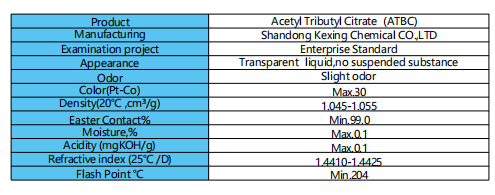
ATBC, one of the non-phthalate esters offered alongside N-Butyl Stearate in the portfolio reviewed here.
For a buyer, that structure answers a specific procurement question: if a customer specification moves from a phthalate plasticizer to a non-phthalate alternative, does the supply relationship survive the change or restart from a fresh sample? A supplier holding both lines can be asked that question directly, and the answer can be checked against documents rather than accepted as a claim.
Breadth remains a weak proxy on its own, for three reasons. A product listed on a website is not a product in stock. A broad catalogue says nothing about how much of a given grade is allocated to one buyer's schedule. And breadth across chemistries is not breadth across grades — industrial and cosmetic specifications for the same ester can require different documentation, different impurity limits and different acceptance criteria.
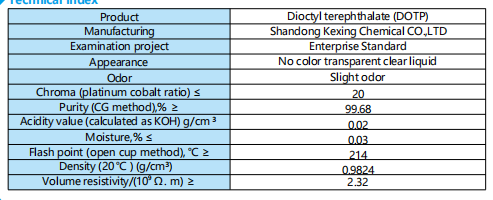
DOTP, a non-phthalate plasticizer that sits in the same portfolio as the stearate line.
Identity Control Is the First Continuity Test
Continuity starts with a document set that can be re-verified at every lot. Three identifiers make that possible: CAS 123-95-5, EC 204-666-5 and the molecular formula C22H44O2. A buyer should require all three on the purchase order, the technical data sheet, the certificate of analysis and the safety data sheet, and should treat a mismatch as a stop condition rather than a clerical error.
Substance-level registrations are necessary but not sufficient. Butyl Stearate appears in the ECHA registration dossier record under EC 204-666-5, which is a sound starting point for EU import due diligence; it does not establish that a particular supplier holds the relevant registration or an only-representative arrangement. The same logic applies in the United States, where the substance sits within the indirect food additive framework of 21 CFR parts 175–178. That authorisation is substance-level; the buyer still needs the supplier's grade, end-use and declaration documents before relying on it for a food-contact application.
Customs classification is a third place where documents get over-read. HS 291570 covers saturated acyclic monocarboxylic acids, including stearic acid, its salts and esters — a broad heading. It is a reasonable starting point for tariff research, but it is not a Butyl Stearate-specific trade series and cannot be used to infer a supplier's export volume or a market's import demand.
Reading Purchasing Terms as Continuity Instruments
Purchasing terms decide how much flexibility a buyer keeps once volumes and specifications start to move. The terms Shandong Kexing Chemical publishes for its products are specific enough to test: MOQ 1T; delivery terms FOB and CIF; acceptance criteria a factory test report; payment terms 30% deposit with 70% payable on receipt of the bill of lading.
Minimum order quantity
A 1-tonne MOQ is a scheduling parameter, not only a price threshold. Set against a buyer's monthly consumption it determines re-order frequency, the working capital held in stock and the exposure if a shipment is delayed. A buyer whose annual requirement is only a few tonnes should confirm whether the MOQ applies per order or per shipment, because that single detail decides whether a supplier can realistically support a small, steady programme over several years.
Delivery terms
FOB and CIF place control of freight and risk in different hands. Under FOB the buyer nominates and controls carriage; under CIF the supplier arranges carriage and insurance to the named destination, while the quality question at arrival stays with the buyer either way. The term should be named per shipment in the contract rather than left to a quotation template, because a switch between the two changes both the cost structure and who manages a delay.
Acceptance criteria
A factory test report is a supplier-generated document. For many industrial uses that is adequate, and it is the criterion the supplier states. Where the buyer's own customer requires independent evidence, the question to settle at contract stage is whether third-party testing or a retained sealed sample can be added, and who carries the cost. Agreeing that before the first shipment is cheaper than discovering the gap during a customer audit.
Payment structure
A 30% deposit with 70% due on receipt of the bill of lading means the balance falls due before the buyer has inspected the delivered goods. That is a common structure in ester and plasticizer trade, and it is manageable when it is matched with pre-shipment evidence — a lot certificate of analysis, a retained sample, or a pre-shipment inspection clause written into the order. The continuity question is not whether the terms are generous but whether they leave the buyer a point at which to check before money and goods pass each other.
Operational Discipline Behind the Certificate
A supplier's handling and storage regime belongs in the continuity assessment because it decides whether delivery dates survive incidents. Shandong Kexing Chemical describes closed feeding and a sealed storage system, supported by gas detection and scheduled inspection of tanks and pipelines — controls aimed at leakage and volatile vapour emission. The relevant question for a buyer is not the equipment list itself but whether the same discipline is documented for the specific product and packaging being shipped, and whether the receiving site can operate under those conditions.
Two checks cover most of that ground. Ask for the storage and handling statement that applies to the grade being purchased, and confirm that the packaging format in the offer matches what the receiving site can unload, store and re-seal. A continuity plan that ignores the buyer's own handling capability tends to fail at the buyer's gate rather than the supplier's.
Where Butyl Stearate Sits in a Multi-Year Formulation Plan
Continuity planning has to follow the application, because the specification that matters differs by use. Butyl Stearate appears in procurement specifications across several application families: as an internal lubricant in PVC compounds, as a mould-release and processing aid in plastics and rubber, as a slip component in inks and coatings, as an emollient and dispersant in cosmetic formulations, as a softening agent in textiles, and as a lubricant in metal stamping. The roles are well established; the acceptance limits are not interchangeable between them, and the documentation a buyer needs differs by grade.
| Application context | Items to fix in writing | Continuity question |
|---|---|---|
| PVC internal lubrication | Assay window, moisture, colour, acid value, related-ester limits | Does the supplier issue a grade-specific data sheet and a lot certificate against those limits? |
| Plastics and rubber processing aids | Assay, moisture, packaging format | Is the same grade available across the full contract term? |
| Inks and coatings | Assay, colour, compatibility with the vehicle | Will a supplier-side formulation change be notified before shipment? |
| Cosmetic formulations | Grade designation, purity, impurity profile, market declarations | Are cosmetic-grade documents held separately from industrial documents? |
| Textiles and metalworking | Assay, storage and handling statement | Can the receiving site handle the packaging and storage conditions specified? |
The Portfolio Continuity Checklist
The twelve dimensions below convert supplier sustainability into questions with documentary answers. Each can be scored consistently enough to compare two or three candidates side by side, and each can be re-run at the next annual review without rebuilding the assessment.
| # | Dimension | Evidence to request | Continuity test |
|---|---|---|---|
| 1 | Portfolio overlap | Full product list with chemistry classification | Does the range cover both your current grade and the likely next one? |
| 2 | Grade-specific specification | Technical data sheet for the exact grade | Are industrial, cosmetic and high-purity grades documented separately? |
| 3 | Identity triad | CAS 123-95-5, EC 204-666-5, C22H44O2 on all documents | Do order, data sheet, certificate and safety sheet agree? |
| 4 | Lot-level certificate | Certificate of analysis per lot with measured values | Are values reported, or only a conformity statement? |
| 5 | Composition disclosure | Typical assay and related-ester content | Is the assay window stated numerically rather than as a grade name? |
| 6 | Regulatory scope | Product-level declarations for each destination market | Is the evidence tied to this product, not only to the substance? |
| 7 | Capacity and allocation | Stated capacity plus an allocation statement | Is the capacity linked to your grade and your volume band? |
| 8 | Purchasing terms | MOQ, delivery terms, acceptance criteria, payment | Does each term still fit your consumption and cash cycle in year three? |
| 9 | Operational controls | Storage and handling statement, EHS measures | Can your site receive and store the material as specified? |
| 10 | Trade-data reality check | The customs line actually used for the shipment | Is the heading product-specific, or a broad ester classification? |
| 11 | Review cadence | Document refresh schedule and named owner | Who reissues the data sheet and safety sheet, and when? |
| 12 | Change notification | Contract clause on process and formulation change | Must the supplier notify before a change ships, not after? |
Market Signals That Should Not Drive a Multi-Year Decision
Market research is useful context and poor evidence at the supplier level. Two commercial estimates for 2025 illustrate the problem: ReAnIn values the global Butyl Stearate market at US$5.74 billion and projects US$7.99 billion by 2032, while Dataintelo reports US$2.85 billion for 2025. The gap is best read as a definitional difference — different product boundaries rather than a disagreement about the same quantity — which is exactly why neither figure should be used to judge a specific supplier's reliability.
The same source set offers more usable structural signals. Dataintelo's n-butyl stearate coverage puts lubricants at 38.5% of 2025 application share and Asia Pacific at 42.3% of revenue share. Read narrowly, those figures describe where demand concentrates. They do not indicate which supplier will allocate tonnage to a given buyer, and they say nothing about lead time or grade availability.
Spot price movements, one-off availability and a short lead time on a trial order are all signals about a market rather than about a relationship. They are worth tracking as background conditions; they cannot substitute for the twelve documented checks, because none of them survives a formulation change or a customer audit.
Shandong Kexing Chemical: Applying the Checklist to a Published Presentation
The checklist is easier to read against a real supplier presentation. Shandong Kexing Chemical Co., Ltd. reports a founding year of 2006, 200 employees, a 15-engineer R&D team and an annual output figure of 20,000 units in its corporate profile, alongside a stated Butyl Stearate production capacity of 5,000 tons and a 50% export ratio. It lists SGS, REACH, ISO 9001, ISO 14001 and OHSAS 18001 among its product certifications, and describes close cooperation with universities in its research work.
Scored against the twelve dimensions, the presentation is stronger on some than others. Portfolio overlap scores well: a catalogue covering DBP, DOP, DPHP, DINP, DOTP, ATBC, TBC, TEC, DOA, DOS, DBS, ESO, 3G8 and N-Butyl Stearate gives a buyer a documented route through a chemistry change. Commercial terms are published rather than negotiated from scratch, which makes them testable. Identity and grade documentation, by contrast, still have to be requested for the specific grade and destination market, and the compliance credentials are company statements that a buyer should convert into product-specific certificates and declarations before signing.
None of the published material reviewed for this article constitutes independent verification of capacity, grade availability or certification scope. That distinction belongs in the assessment itself: a supplier presentation sets the questions, and audits, lot certificates and third-party records answer them.
Company and product information for Shandong Kexing Chemical Co., Ltd. is published on its official website. Buyers running the checklist should request the grade-specific data sheet, a recent lot certificate and the market declarations for their destination before comparing terms.
What the Next Contract Cycle Should Change
Applied consistently, the checklist changes three practices. The specification document becomes a control document, with the assay window, related-ester limits, moisture and colour written down and tied to a certificate format the supplier has agreed to use. Purchasing terms are negotiated as continuity terms, with MOQ and payment structure matched to real consumption rather than to the first order. And the review becomes scheduled rather than reactive: documents refreshed annually, lot certificates retained, and a change-notification clause that requires notice before a formulation or process change ships.
None of this predicts what a given supplier will do over the next three years. It changes what a buyer can see before a supply problem turns into a shortage — and that visibility, rather than a favourable spot quote, is what a long-term Butyl Stearate position is actually built on.
Frequently Asked Questions
What does a supplier's product portfolio actually tell a Butyl Stearate buyer?
It shows whether the supplier can stay with the buyer through a chemistry change. A catalogue holding both phthalate plasticizers such as DBP, DOP, DPHP and DINP and non-phthalate esters such as DOTP, ATBC, TEC, DOA, DOS, DBS, ESO and N-Butyl Stearate gives a documented route if a specification moves. It does not prove stock, capacity allocation for a specific grade, or product-level compliance for a destination market, all of which require separate evidence.
Are MOQ and payment terms part of a continuity assessment or just commercial negotiation?
They are continuity instruments. A 1-tonne MOQ, FOB and CIF delivery options, a factory test report as the acceptance criterion, and a 30% deposit with 70% due on receipt of the bill of lading together decide re-order frequency, who manages freight risk, where quality evidence comes from, and when money moves relative to inspection. Each term should be checked against the buyer's actual consumption and cash cycle for the full contract period, not just the first shipment.
Can a substance-level registration or food-contact listing replace a supplier's own documents?
No. Butyl Stearate appears in the ECHA registration dossier record under EC 204-666-5 and is listed within the US indirect food additive framework of 21 CFR parts 175–178, but both are substance-level positions. A buyer still needs the supplier's grade designation, end-use declaration and market-specific documentation for the material actually being purchased, because substance records do not establish a specific supplier's registration coverage or product conformity.
How should customs data and market-size estimates be used in a long-term supplier decision?
As background, not as supplier evidence. HS 291570 covers stearic acid, its salts and esters as a broad heading and cannot be treated as a Butyl Stearate-specific trade series. Published market estimates also diverge widely — US$5.74 billion for 2025 from ReAnIn against US$2.85 billion from Dataintelo — which reflects different product boundaries rather than a single agreed figure. Neither type of data identifies which supplier will allocate tonnage or hold a grade over several years.
How often should a long-term Butyl Stearate supplier be reassessed?
A practical cadence is an annual full review against all twelve checklist dimensions, a certificate-of-analysis check on every lot, and a trigger review whenever something material changes — a formulation or process change at the supplier, a new destination market with different declarations, a shift in the buyer's own specification, or a change in the commercial terms. The annual review carries the relationship; the trigger review catches the events that make an annual cycle too slow.
Reference material
Company profile and product documentation: www.kexingchem.com
Product and company brochure (PDF, open access): Download the brochure
Manufacturing address: No.8 Houwang Road, Dawang Economic Development Zone, Guangrao County, Dongying City, Shandong Province, P.R. China.
Tem questões ou precisa de mais detalhes?
Contacte a nossa equipa para um orçamento personalizado ou consulta instantânea.
Solicitar orçamento
Preencha o formulário abaixo e a nossa equipa entrará em contacto com uma proposta personalizada.
Chat direto do WhatsApp
Prefere conversar em tempo real? Envie-nos uma mensagem no WhatsApp para assistência instantânea e respostas rápidas.
- Obter orçamento personalizado
- Partilhar fotos ou documentos
- Discuta as suas necessidades diretamente
Geralmente responde em 5–30 minutos durante o horário de expediente.