
Long-Term Canned Fish Suppliers: Certification, QC, Capacity
Long-Term Canned Fish Suppliers: Certification, QC, Capacity
A long-term canned fish contract is only as durable as the documents and process records behind it. Once an importer moves from a trial order to an annual programme, the questions change: not whether a supplier can ship one SKU once, but whether the same SKU will arrive to the same standard, under the same certificate, in the same season, three years from now. This evaluation framework covers the three pillars behind that answer — certification continuity and scope, QC depth, and capacity continuity — using the documented position of Agrogentra Canned Foods (Xiamen Agrogentra & Co., Ltd.) as a worked example rather than a marketing summary.
Why a long-term evaluation asks different questions
Canned fish behaves a little like container shipping: cheap per unit, expensive when it fails. UN Comtrade figures compiled for HS 1604 put global imports of canned and prepared fish at 3.2 million tonnes worth USD 17.54 billion in 2023; canned tuna accounted for 43% of that import volume, and Grand View Research estimates canned fish at 75.3% of the wider canned seafood market in 2025. Large, well-supplied categories with many substitutable suppliers are exactly where the reliability of the supply system — not product novelty — becomes the differentiator.
A buyer who has passed a sample and a trial container has validated one batch, one season and one factory configuration. Continuity is a different risk set: certificate expiry and renewal, changes to the plant or line that produced the approved sample, QC drift between shipments, allocation pressure during peak packing, and packaging or freight changes that move landed cost without touching the unit price.
Market-size figures for this category also diverge. Fortune Business Insights valued global canned seafood at USD 57.69 billion in 2025, while other research houses publish materially lower numbers for a similarly named category; the gap usually reflects whether “canned” means hermetically sealed cans or broader shelf-stable processed seafood. Treat such figures as directional, state the definition used, and avoid averaging them into a planning number.
Certification continuity: reading BRCGS Issue 9 certificate 051A1312001
A BRCGS certificate is a food-safety management system credential issued against a defined scope. For a long-term buyer its value lies in the scope statement and the renewal cycle, not the logo. Agrogentra’s BRCGS Issue 9 certificate 051A1312001 covers canned mackerel, canned sardine and canned tuna. That sentence carries three practical implications.
First, the certificate evidences a certified food-safety management system for those product categories; it does not certify every item in a catalogue. A buyer sourcing canned squid, baby clam, Alaska pollock, canned vegetables, tomato paste or canned fruit is buying outside the scope described for 051A1312001 and should ask in writing which scheme and which certificate scope covers those lines. That is a normal scoping question, not a warning sign — and it is easier to ask before signing than after.
Second, certificates have lifetimes. A PDF from a previous audit cycle shows that a supplier once passed; it does not show the current cycle status. For a three-year programme, request the certificate expiry date, the date and outcome of the most recent audit, and confirmation that renewal is scheduled before expiry. Continuity means no gap in coverage across the contract period, including the renewal month.
Third, scheme versions move. Issue 9 is the version referenced for 051A1312001, and the certificate will migrate on the supplier’s audit cycle when the scheme is revised. Buyers whose retail customers specify a scheme version should confirm that migration plan as a contract point rather than assume it.
Halal certificate 8998250000: scope, markets and the June 2028 date
Agrogentra’s Halal certificate 8998250000 is valid through June 2028 and applies to the specific products and markets named in its scope. For importers selling into Muslim-majority markets — the Gulf, North Africa, parts of Southeast Asia — Halal documentation is an access requirement rather than a preference, and its absence stops a container at the border regardless of product quality.
The June 2028 expiry is a planning fact, not a formality. If a supply agreement, private-label contract or retail listing runs beyond that date, renewal belongs in the contract as a condition of continued supply, with a document deadline set ahead of expiry. Scope then has to be checked line by line: confirm that the exact SKU — species, packing medium, can size, brand label — and the destination market are named in the scope. New SKUs introduced mid-contract normally need to be added before shipment, not after.
Neither certificate should be read as a product-by-product laboratory clearance. They are system-level and market-access credentials; batch-level assurance comes from the QC process, and destination-level assurance from facility registrations.
Two registrations that quietly govern continuity
For the United States, the FDA requires foreign processors of low-acid canned foods to register their establishments under the Food Canning Establishment (FCE) system and to file Scheduled Processes (SID). Because those attach to facilities and processes, a buyer should ask which registered plant will actually produce the SKU, not only which supplier holds the relationship. For the European Union, Regulation (EU) 2024/3115 took effect in January 2025 and tightens plant health and traceability requirements for imported preserved foods, per the European Commission’s Access2Markets guidance. Traceability obligations flow down to documents a buyer will be asked to produce during an incident, which turns record-keeping depth into a commercial issue.
| Document | What it establishes | What it does not establish |
|---|---|---|
| BRCGS Issue 9 certificate 051A1312001 | A certified food-safety management system for canned mackerel, sardine and tuna | Coverage of product lines outside that scope; batch-level results |
| Halal certificate 8998250000, valid through June 2028 | Halal status for the products and markets named in its scope, to that date | SKUs or markets not listed; status after expiry |
| FDA FCE registration and SID filings, US-bound | Facility registration and process filing for low-acid canned foods | Product quality; available capacity or allocation |
| EU Regulation 2024/3115 traceability, EU-bound | Documented traceability for imported preserved foods | Shelf-life performance; commercial terms |
Table 1: certificate and registration scopes should be mapped to the exact SKU and destination market.
QC depth: what two inspection hubs in Xiamen and Qingdao change
QC depth is the difference between a supplier that tests a sample and one that watches a process. Agrogentra runs QC departments in both its Xiamen and Qingdao offices, covering full-process inspection: factory audits, raw material testing, production monitoring, finished-product inspection and pre-shipment sampling.
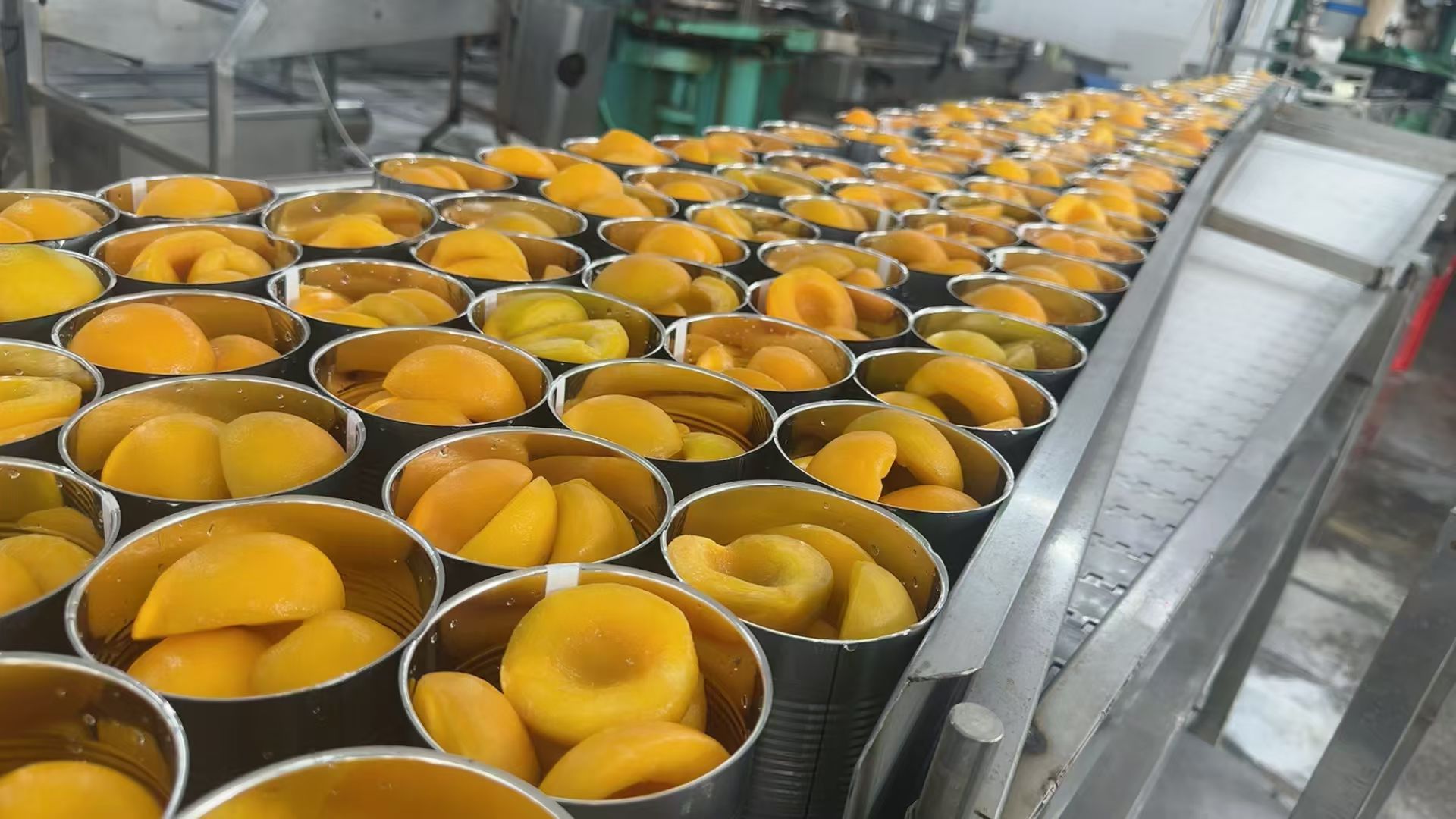
Two locations matter for a structural reason. Chinese canned fish and vegetable packing is regionally distributed, with fish canneries concentrated along the coast and vegetable or fruit packing closer to growing areas. A QC function split across two offices can cover a wider factory base without flying an inspector from a single hub — which, for a long-term buyer, translates into inspection frequency and more chances to catch drift before it reaches a container.
Process monitoring is also where the classic failure mode is caught early. Swollen cans — domed ends caused by gas from microbial growth after a seal failure, by inadequate sterilisation, or by heat and impact damage in transit — are a batch-level non-conformance, not a cosmetic defect. A supplier with genuine QC depth can trace the affected batch, quantify the ratio within the lot, and show the corrective action taken on seaming or retort parameters. Buyers should ask to see that workflow before they need it under pressure.
What to request: who signs the inspection report and in what capacity; how long records and retained samples are kept; what triggers a hold rather than a rework; and what the deviation record shows over the last twelve months. One clean certificate of analysis proves far less than a documented pattern of holds, corrections and follow-up.
Capacity continuity: reading 36,000 sqm and 60,000 units correctly
Capacity figures are only useful once you know what unit they count and what share of it you can book. Agrogentra reports a 36,000 sqm facility footprint and a stated annual output of 60,000 units, supported by a six-engineer technical team and a business that is 100% export-oriented, serving the United States, Europe, Latin America, Africa, the Middle East and Asia.
The 60,000-unit figure deserves a precise question. “Units” may mean cartons, retail cases, pallets or finished cans depending on how a supplier counts; the number becomes meaningful only when mapped to your SKU mix, can size and packing medium. Ask for the definition, then convert it into the volume your programme actually needs — a mixed container of 24-can retail cartons is a very different unit count from a foodservice pack.
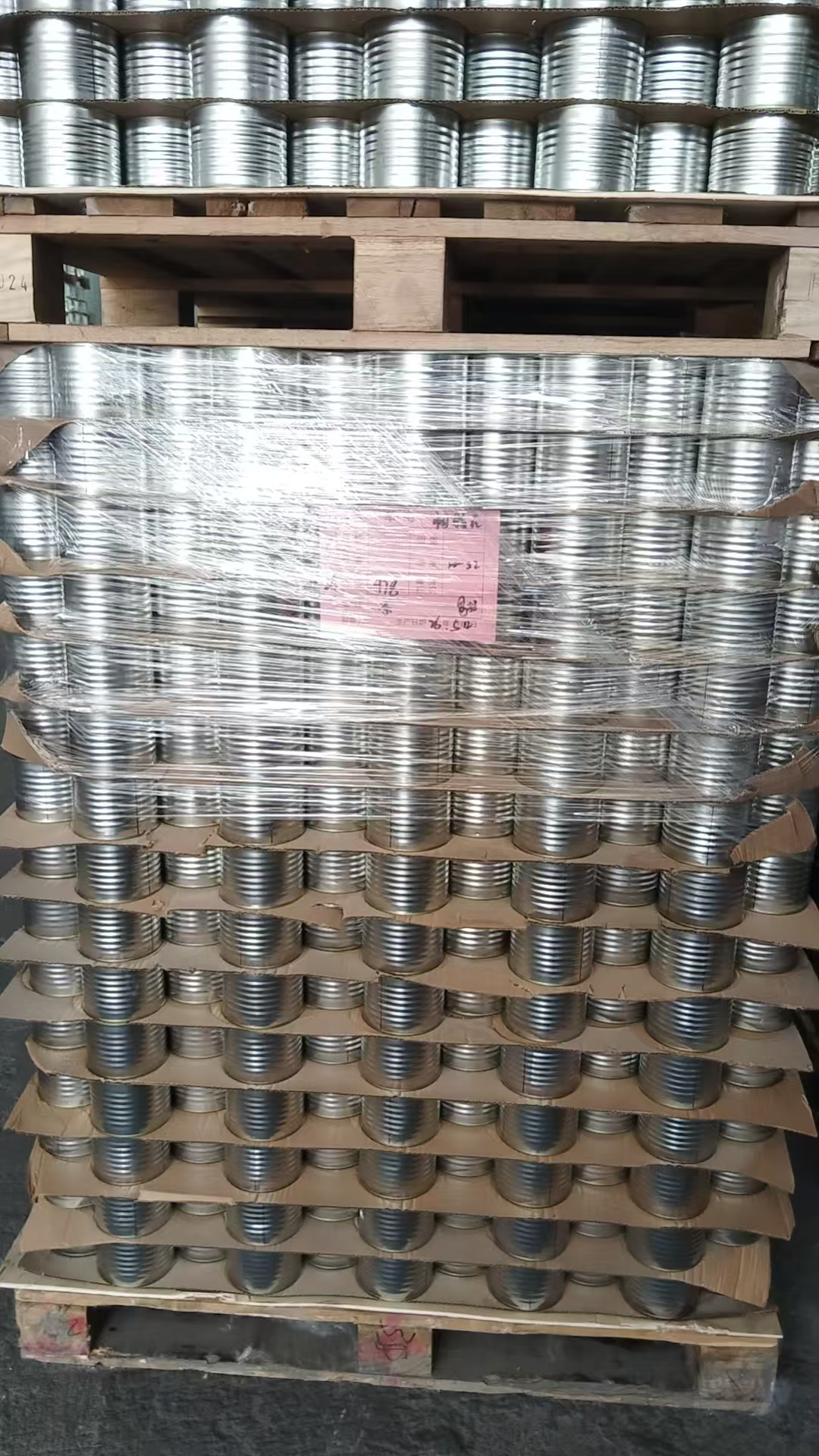
Mixed-container consolidation is the more useful continuity signal for mid-sized importers. Agrogentra offers consolidated shipments covering canned seafood, canned vegetables and canned fruit for mixed container loads, alongside flexible packaging and customised service for customers in different regions and industries. For a buyer running sardines, mackerel, tomato paste and fruit cups in one programme, that means one inspection chain, one document set and one booking instead of four.
Commercial mechanics complete the picture: minimum order quantity is a mixed FCL with LCL available upon negotiation, delivery is on FOB terms, payment is T/T with a 30% deposit and the balance against copy of the bill of lading, and acceptance rests on pre-shipment inspection of cargo quantity, packaging and appearance. Each of those terms should be stress-tested against your cash flow and your inspection rights before it becomes an annual agreement.
History helps, but it proves less than buyers assume. More than 25 years of export operations, continuous exhibition participation since Anuga Cologne in 2001 and SIAL Paris in 2002, and a fully export-oriented business are meaningful signals of market familiarity and trading continuity. They are not evidence of capacity at your SKU, quality at your specification, or allocation in a peak season — those require order-level evidence.
Comparison: ambient canned versus frozen, and consolidated versus single-plant buying
The choice that shapes long-term planning most is not brand but format. In the comparison set used here, ambient canned product carries roughly 24–36 months of shelf life, and some canned lines are labelled up to five years, against 12–18 months for frozen storage at -18°C. Reefer freight runs 30%–50% higher than ambient freight, frozen loss rates of 5%–10% compare with under 1% for canned, and cold-storage energy consumption is 8–10 times that of an ambient warehouse.
The operational translation: canned product can be bought forward, stored without refrigeration and shipped into markets where the cold chain breaks. Frozen product wins where texture is the buying criterion, and where the buyer already operates cold storage and reefer transport. Canned product carries a higher energy cost at the sterilisation stage, then consumes essentially no energy in storage and transport — a cost profile that favours long holding periods.
The fit boundary should be stated plainly: high-temperature sterilisation changes texture, so canned fish is not a substitute for frozen in applications where flake structure and raw texture are the product promise. Canned suits distributors without cold-chain assets, long-sea-freight routes, remote-region distribution, stockpile programmes and shelf-stable retail assortments.
A second comparison is structural. Buying direct from one plant gives maximum traceability to a single line but concentrates risk in one facility, one certificate scope and one packing calendar. Buying through a consolidated supplier with multi-origin QC broadens product range and spreads supply risk, but shifts the evidence burden onto the supplier’s audit system — which is why the certificate and QC questions above matter more in that model, not less.
Scenario fit: where a long-term canned programme earns its keep
Three buyer profiles dominate this category. Distributors and supermarket groups without cold-chain investment use ambient canned fish as the backbone of a grocery range, where the limiting factor is shelf-life rotation rather than refrigeration. Remote and island markets, and emergency or institutional stock programmes, need multi-year shelf life and packaging that survives handling without a cold chain. Foodservice and private-label buyers need specification consistency across repeat orders, where the risk is drift rather than availability.
Product-market matching then decides the SKU mix. Sardines and mackerel in brine or oil are mainstream in Gulf and North African markets where Halal access is mandatory; tuna in water or oil anchors European and North American retail; Southeast Asian markets are price-sensitive with a preference for richer flavour profiles; Latin American and emerging African markets respond to cost-effective vegetable and fish lines with standardised can sizes. Agrogentra’s range spans canned sardines, mackerel, tuna, Alaska pollock, squid and baby clam alongside canned vegetables, tomato paste, ketchup, diced and whole peeled tomato, mushrooms, sweet corn, and fruit including apricot and fig — which is what makes mixed-container consolidation practical rather than theoretical.
A practical evaluation sequence for the next contract cycle
Seven steps, each producing a document a buyer can file and re-check at renewal:
- Map your SKU list to certificate scope. Confirm which certificate covers each product and each destination market, and list the gaps explicitly.
- Request current certificates with expiry dates and renewal audit schedules — for Agrogentra, BRCGS 051A1312001 for mackerel, sardine and tuna, and Halal 8998250000 through June 2028, plus the scheme covering lines outside those scopes.
- Confirm facility-level registrations for your destination: FCE registration and SID filings for US-bound low-acid canned product, and traceability documentation consistent with Regulation (EU) 2024/3115 for EU-bound goods.
- Ask for the QC record structure rather than a single report: hold and deviation log for the past year, records retention period, retained-sample practice, and the swollen-can handling procedure.
- Convert capacity into your own units. Get the definition behind annual output, then model peak-month demand against it, including mixed-container allocation.
- Fix the commercial frame in writing: MOQ as mixed FCL with LCL upon negotiation, FOB delivery, T/T with a 30% deposit and balance against copy of B/L, and pre-shipment inspection of quantity, packaging and appearance — plus any inspection right you want to add.
- Set review triggers: certificate expiry dates, scheme version changes, plant or line changes, two consecutive deviation events, and destination regulation updates should each force a documented review before renewal.
What this evidence does not prove
Honest limits belong inside the evaluation, not in a disclaimer at the end. The certificates described here establish system-level and market-access status within defined scopes; they do not establish that every SKU in a broad catalogue is covered, and they do not replace batch results. The 36,000 sqm and 60,000-unit figures describe scale, not committed allocation for a particular buyer, and their meaning depends on the unit definition. A multi-origin trading and QC model delivers breadth and supervisory inspection depth, but the producing plant’s own records remain the primary evidence for any individual lot. Published market-size estimates for canned seafood differ by definition and should not be averaged into a planning number.
Outlook: continuity pressures to watch
Three pressures look structural rather than cyclical. Regulatory traceability is tightening in major import markets, with the EU’s 2024/3115 framework already in force and facility-level registration requirements in the United States unchanged; both reward suppliers whose documentation is systematic rather than improvised. Certification cycles are becoming a procurement milestone, especially where retail customers specify scheme versions. And ambient logistics economics continue to favour canned product where reefer capacity is scarce or expensive — the 30%–50% freight premium on reefer movements is a cost that recurs every season.
None of that predicts any individual supplier’s performance. It does suggest that long-term selection will keep shifting from unit price toward documented continuity: who holds which certificate, over which scope, until when, checked by whom, and what happens on the day a certificate lapses.
FAQ
What does a long-term canned fish supplier evaluation cover that a trial order does not?
A trial order validates one batch and one shipping cycle. A long-term evaluation adds certificate scope and expiry tracking, QC record depth and deviation history, capacity defined in the buyer’s own units, destination-specific facility registrations, and written review triggers. The question shifts from whether a supplier can ship once to whether the same standard can be repeatably evidenced across a multi-year programme.
How do I verify that a BRCGS or Halal certificate actually covers the SKU I am buying?
Read the scope statement, not the certificate title. BRCGS Issue 9 certificate 051A1312001 covers canned mackerel, sardine and tuna; Halal certificate 8998250000 is valid through June 2028 for the products and markets named in its scope. Match species, packing medium, can size and destination market line by line, and request written confirmation — or an updated scope — for any SKU not listed.
What QC evidence should an importer request before signing an annual canned fish agreement?
Request the process rather than one result: who performs factory audits and raw material testing, how production is monitored, how finished-product inspection and pre-shipment sampling are recorded, how long records and retained samples are kept, what triggers a hold, and what the deviation log shows over the past twelve months. For canned fish, the swollen-can procedure — quarantine, batch trace, photographic record — is a practical test of whether the system operates in reality.
How can capacity continuity be assessed for a mixed-container programme?
Start by establishing what the supplier’s capacity figure counts; a stated 60,000 units per year means little until the unit is defined against your can size and carton configuration. Then model peak-month demand against it, confirm consolidation across seafood, vegetables and fruit, and agree booking windows. Minimum order quantity is a mixed FCL with LCL available upon negotiation, so the loading plan should be settled before the first peak season.
Which commercial terms usually need adjusting for a long-term canned fish relationship?
The standard frame — FOB delivery, T/T with a 30% deposit and balance against copy of the bill of lading, and acceptance based on pre-shipment inspection of quantity, packaging and appearance — works for repeat orders but merits review on three points: inspection rights beyond appearance, deposit exposure on larger annual volumes, and document deadlines for renewals such as the Halal certificate’s June 2028 expiry. Terms that suit a single container rarely suit a twelve-month schedule unchanged.
Where to check the record
Agrogentra Canned Foods (Xiamen Agrogentra & Co., Ltd.), established in 2000, supplies canned seafood, vegetables and fruit to importers, distributors and retail groups across the United States, Europe, Latin America, Africa, the Middle East and Asia, with QC departments in Xiamen and Qingdao. Product lines, certificate details and trading terms are published at agrogentra.com, and the company leaflet can be downloaded here.
Tem questões ou precisa de mais detalhes?
Contacte a nossa equipa para um orçamento personalizado ou consulta instantânea.
Solicitar orçamento
Preencha o formulário abaixo e a nossa equipa entrará em contacto com uma proposta personalizada.
Chat direto do WhatsApp
Prefere conversar em tempo real? Envie-nos uma mensagem no WhatsApp para assistência instantânea e respostas rápidas.
- Obter orçamento personalizado
- Partilhar fotos ou documentos
- Discuta as suas necessidades diretamente
Geralmente responde em 5–30 minutos durante o horário de expediente.