
Long-Term Compatible Toner Supply: Molds, Labs, Service
Long-Term Compatible Toner Supply: Molds, Labs, Service
The sustainability of a compatible toner cartridge supplier is a property you can audit, not a promise you accept. For buyers signing multi-year programmes — wholesalers, copier leasing companies, printing plants and office-supply groups — the decisive question is not what a carton costs in the current quotation, but which parts of the product will still behave the same way in year three. In the compatible cartridge market, four assets carry most of that continuity: ownership of the molds that define cartridge geometry, control over the resin and toner that go into it, batch-level laboratory testing, and a service layer deep enough to absorb custom orders and technical escalations.
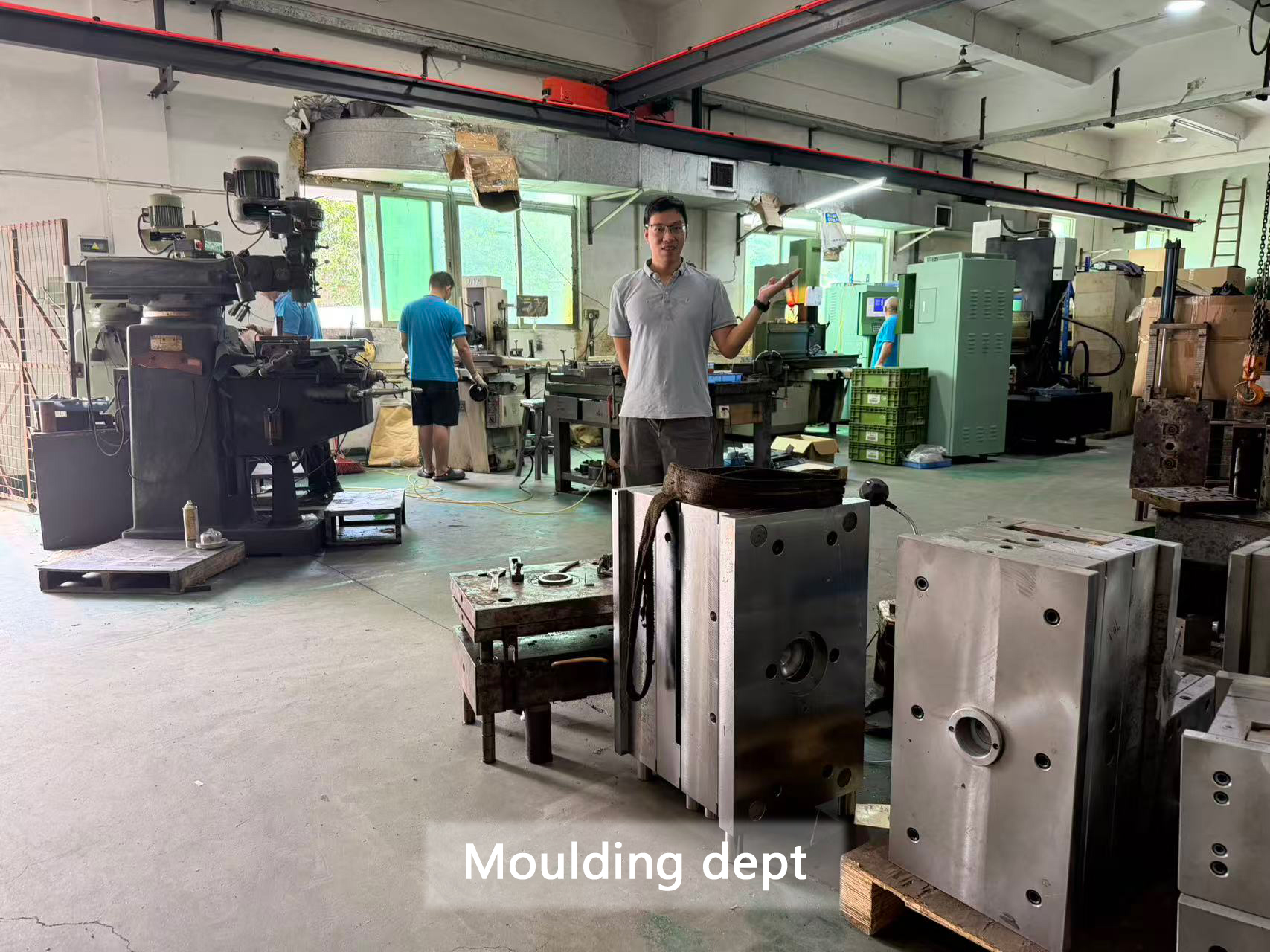
Tenon toner cartridges are compatible toner cartridges produced by Far Industries Co., Ltd, a Zhongshan-based manufacturer of A3 office consumables established in 2011. The company operates a 9,000 m² factory with 88 employees, an annual output of 6,000,000 units and a product range covering toner cartridges, drum units, fuser units and developing units. It also reports that more than 90% of the molds used for its copier toner cartridges are made in-house — a detail worth understanding, because it changes what a buyer can contract for.
This article treats supplier sustainability as a set of verifiable conditions rather than a brand claim, and connects each condition to the purchasing terms and acceptance criteria that make it enforceable over several years.
Why a Multi-Year Cartridge Contract Is a Different Purchase Decision
A single order can be judged on arrival. A multi-year programme cannot, because the cartridge is a mechanical and chemical system in which several variables interact: tooling geometry, the resin used for the housing, the toner's charging and fusing behaviour, and the test method applied to each batch. Change any one of them and print quality, page yield, leakage and jam rates can move even when the model number on the box does not change at all.
That shift is expensive in different ways for different buyers. A wholesaler absorbs it as returns and credit notes. A copier leasing company absorbs it as on-site service calls and customer churn. A printing plant absorbs it as re-qualification of a production line. Office-supply groups pricing framework contracts absorb it in the least visible place of all: the tolerance their own customers extend to the brand on the label.
The risk is not evenly distributed. Fleets that mix model years — including environments running reconditioned and second-hand copier machines alongside newer devices — place more weight on how a supplier handles older platforms, and on whether compatibility work extends beyond the cartridge to related copier parts such as the drum unit, developing unit and fuser unit. A supplier that only resells finished goods has limited room to resolve those issues; a supplier that owns its tooling and its testing does not.
Mold Ownership Is the First Durability Check
Cartridge geometry starts in the mold, long before any toner is filled. Far Industries states that its Mold Division owns more than 90% of the molds used for its copier toner cartridges, which means dimensional control begins at the source rather than at a subcontractor's discretion.
The practical consequence is control over change. When a housing feature needs adjustment — a locating tab, a sealing surface, a tolerance that shows up as leakage in the field — an in-house tooling shop can modify the mold and verify the result inside the same quality system. When tooling belongs to a third party, the same adjustment waits in an external queue, and the buyer usually learns about it only through batch variation. Over a three-year agreement, that difference in change latency is often more commercially significant than a few cents on the unit price.
For the molding step itself, the company reports exclusive use of Yizumi precision injection molding machines for empty toner cartridge production. It cites the machines' stability, temperature control systems and high repeatability as the basis for dimensional accuracy and structural strength in each empty cartridge. These are the supplier's own characterisations of its equipment; what a buyer can independently do is ask which share of the specific models being purchased is covered by in-house tooling, and how tooling maintenance and engineering changes are recorded.
Housing Resin: a Question That Belongs in the Specification
Housing material rarely appears in a quotation, yet it is one of the quiet variables behind batch-to-batch consistency. In injection molding generally, the resin grade and the proportion of regrind material affect melt flow, shrinkage and dimensional repeatability — which is why cartridge specifications for compatible products commonly reference virgin resin grades rather than reprocessed material. Where regrind content varies between production runs, small dimensional differences can accumulate into fit and sealing problems that only surface after filling and shipping.
The buyer's task is to move that variable out of assumption and into the contract. Rather than inferring a material from a brochure, a purchasing team can require the resin grade to be named in the specification annex, state whether regrind is permitted and at what ratio, and request a declaration per production batch. For Tenon cartridges, housings are injection-molded in-house on the manufacturer's own machines; the specific resin grade and regrind policy should be confirmed in writing by the supplier before the specification is frozen for a multi-year term.
This is not a bureaucrat's question. A housing that seals correctly on day one but drifts after a tooling service is precisely the scenario that a material declaration and a retained sample can detect early, at a cost far below that of a container-level return.
Toner Powder Source: Where Batch Drift Usually Begins
Toner is the component most likely to change quietly, because it is bought by the kilogram and blended into a product that looks identical from the outside. Far Industries states that 90% of its toner is imported from well-known, specialised, publicly traded toner manufacturers. The significance is not prestige; it is traceability. Publicly listed toner producers publish specifications, maintain documented supply relationships and are subject to disclosure obligations that smaller blenders are not, which gives a buyer something concrete to reference when batch behaviour is questioned.
Toner also has to be matched to the machine and to the housing it sits in. Charging characteristics and fusing temperature determine how the powder transfers and fixes on paper; a toner that fuses at the wrong temperature produces poor adhesion or offset even when particle size is correct. This is why toner substitution is one of the hardest changes to absorb inside an existing supply programme, and why Far describes fusing-temperature matching as one of the three levers its engineers use when resolving compatibility issues on older machines — alongside reverse engineering from mold dimensions and adjustment of injection molding parameters.
For contract purposes, the useful check is a toner source declaration tied to each batch, together with written confirmation that the toner used in approval samples is the same source as the toner used in mass production. The company describes its quality standards as resting on four fixed factors — fixed molds, fixed injection molding machines, fixed toner sources and fixed testing standards — and states that samples are drawn randomly from the production line rather than assembled separately. A buyer can convert that statement into a change-control clause, which is where it acquires commercial value.
The Laboratory Decides Whether a Batch Is Repeatable
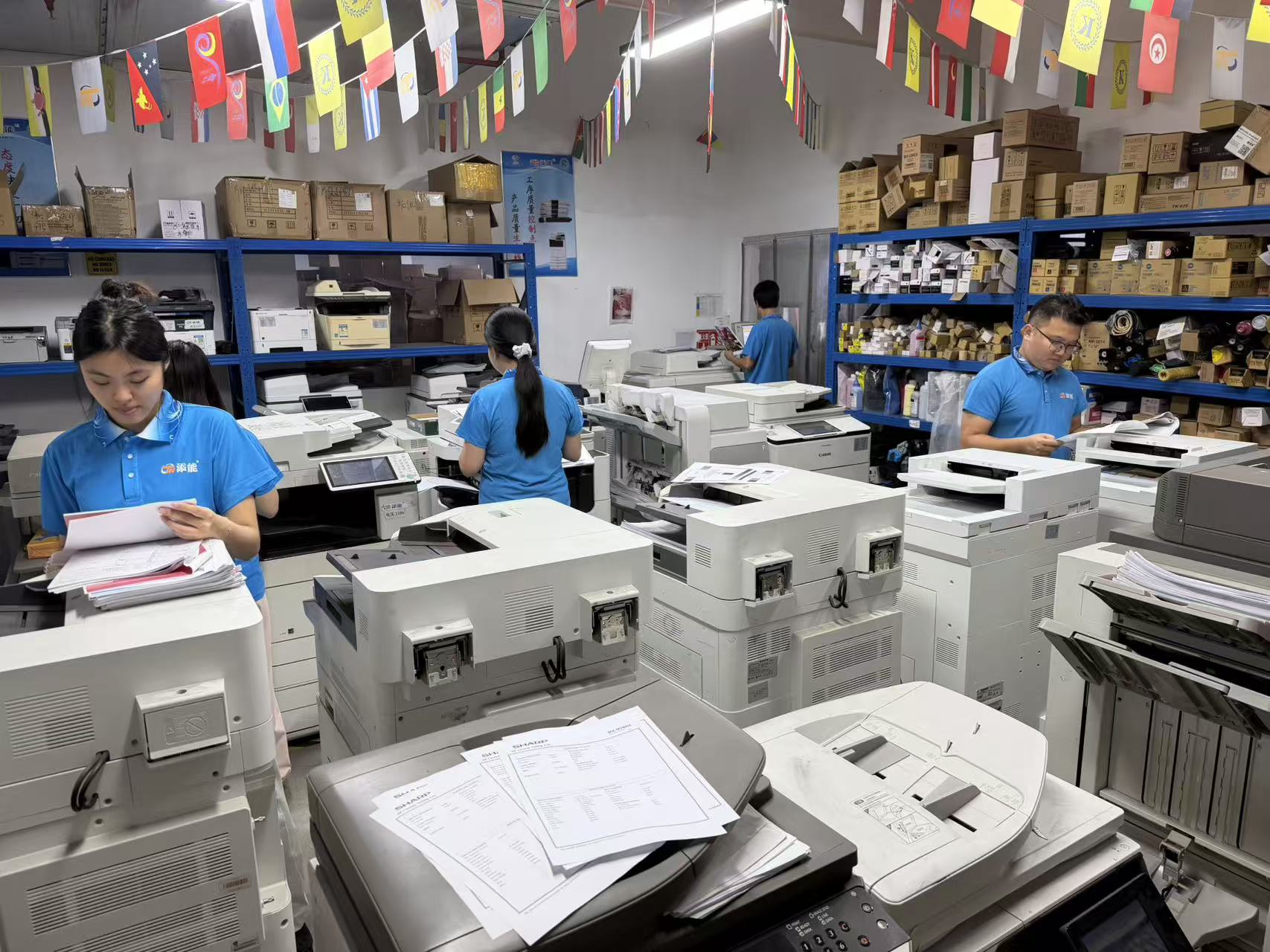
A dedicated laboratory is what turns quality from a claim into a data series. Far Industries operates its own testing laboratory and states that it tests every batch of toner to verify print quality and consistency once the toner is installed in a printer. The company also maintains its own toner warehouse and contrasts its operation with factories that hold no toner warehouse and no testing laboratory and run only two or three production steps.
For a buyer, the operational difference is that acceptance testing becomes comparable. If the supplier holds a batch record, an incoming inspection at the buyer's warehouse can be checked against a reference rather than judged in isolation, and a disagreement about print quality can be resolved by examining two records of the same batch instead of two opinions about the same carton.
Independent verification is available alongside that internal record. The company accepts third-party inspections and supports pre-shipment inspection, so an external report can sit next to the in-house batch data for high-value or first-time orders. Its stated policy on defective products is 100% replacement, which is the kind of commitment that should be written into the contract rather than left in a sales conversation.
Service Depth: Custom Orders, Response and Factory Visibility
Service depth is the part of supplier sustainability that buyers notice last and value most. Far Industries employs an eight-engineer R&D team and states that it provides after-sales support and technical teams for its products. That structure matters most in two situations that a price list does not describe: custom orders, where model mixes, labelling and packaging differ from the standard range, and legacy compatibility, where an older copier behaves in ways the original specification did not anticipate.
Capacity and staffing underpin the same point. Annual output of 6,000,000 units supports container-load and bulk orders, and the company's approximately 88 staff are presented as the basis for stable production on recurring orders — the pattern that matters in wholesale and leasing models where the same items are reordered on a schedule. The company was established in 2011, which gives more than 14 years of manufacturing continuity to reference when reviewing a multi-year commitment.
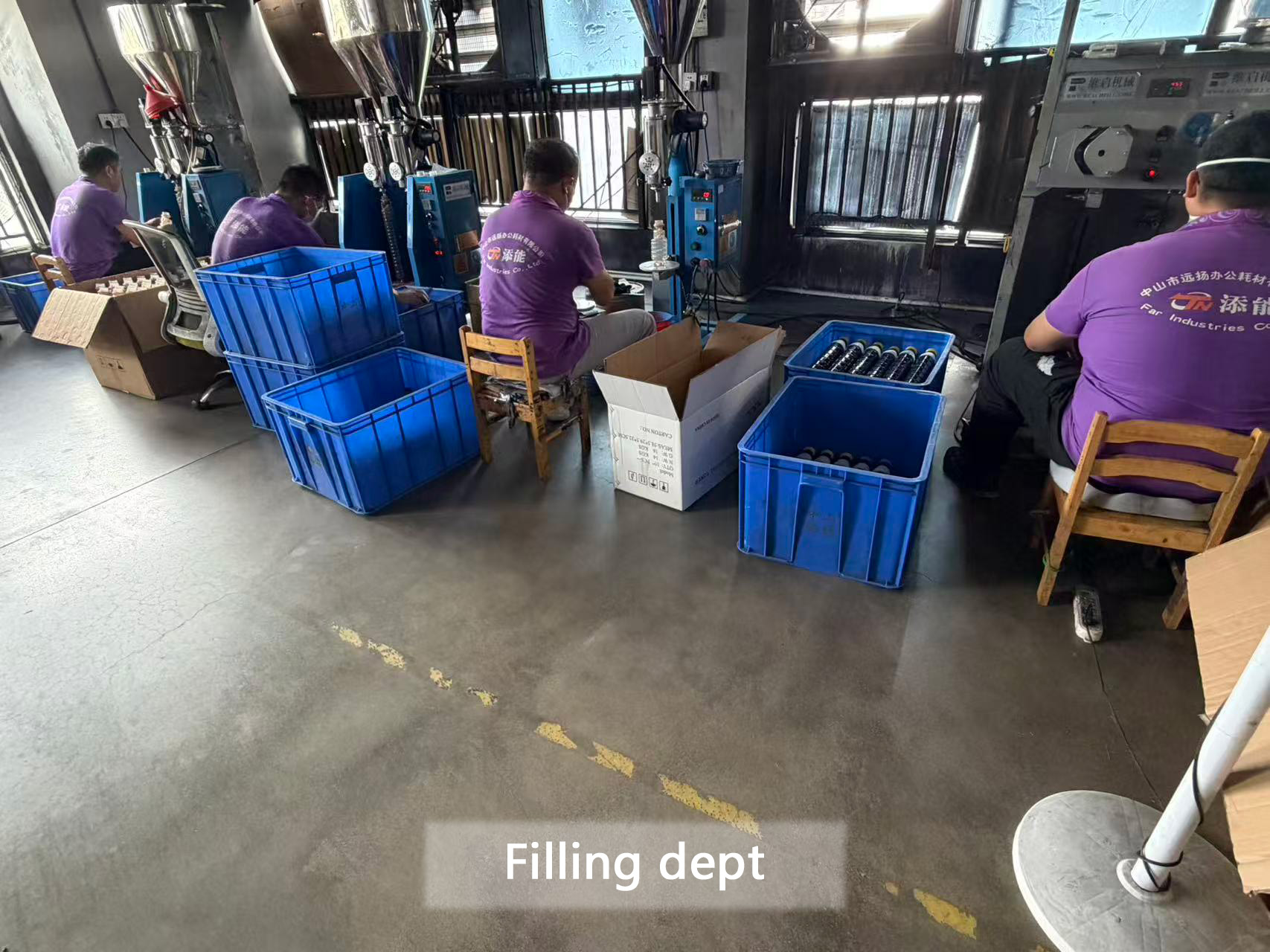
Factory visibility is the verification layer. Buyers can arrange an on-site factory inspection in Zhongshan or a virtual walkthrough via video meeting. A walkthrough conducted for a long-term supply decision should cover the mold shop, injection area, filling line and laboratory rather than the display area alone, because those are the four places where the claims in this article can be checked directly. Roughly 70% of the company's output is exported, with Latin America and the Middle East named as main markets — relevant context for buyers in those regions assessing documentation and communication practices across time zones.
Where the Integrated Model Fits, and Where It Does Not
The compatible cartridge market supports two broad operating models, and a long-term decision should start by recognising which one a supplier actually runs. The most common approach is asset-light: molds are purchased externally, injection molding of empty cartridges is outsourced, and toner is sourced and repacked. The alternative, which Far Industries describes as its own model, is deep manufacturing — in-house mold design, in-house injection molding, strategic toner partnerships and batch verification.
| Assessment dimension | Asset-light model | Integrated model (as described by Far Industries) |
|---|---|---|
| Tooling | Molds purchased from third parties | Mold Division owns more than 90% of the molds used for copier toner cartridges |
| Injection molding | Outsourced cartridge shell production | In-house molding on Yizumi precision injection molding machines |
| Toner source | Sourced and repacked, with limited traceability | 90% imported from specialised, publicly traded toner manufacturers |
| Quality verification | Depends on the subcontractor's testing | Dedicated laboratory testing every batch of toner, plus its own toner warehouse |
| Technical escalation | Limited to what the supplier can pass upstream | In-house engineers using mold dimensions, injection parameters and fusing-temperature matching |
| Cost structure | Lower fixed cost, faster start-up | Higher fixed cost offset in-house; company states unit cost is reduced while consistency improves |
The fit boundary needs to be stated plainly, because it is where supplier claims usually become vague. Far Industries acknowledges that its per-cartridge price may not be the lowest available. Its argument is a total-cost one: it reports that machine failure rates, paper jams, toner leakage and customer complaint rates are significantly lower than those typical of asset-light solutions, and that when return logistics, on-site repair and customer churn are included, total cost of ownership favours its approach. Those figures are the company's own characterisation, not an audited third-party benchmark, and buyers should test them against their own return data during the sample and first-batch stages.
On the other side, the company is explicit that asset-light entry products can meet a genuine need: a customer with very low annual purchase volume, seeking the absolute lowest price and able to tolerate quality fluctuation, may find that supply adequate. The trade-off is real and should not be disguised — that price is bought with stability. For a leasing fleet, a distributor or a printing plant committing to several years of volume, the relevant question is how much instability the operation can absorb, not whether the cheaper carton looks better on a spreadsheet.
Market Signals That Bear on a Multi-Year Decision
Consumables demand is tied to installed equipment, and the installed base keeps shifting toward mixed and refurbished fleets. Business Research Insights projected the global ink and toner market to reach USD 38.47 billion in 2026 (published August 2026). Dataintelo reported that toner cartridges accounted for 58.4% of the total global ink and toner product market in 2025, and that Asia Pacific led regional revenue at USD 8.7 billion, or 36.9% of the total.
Equipment data points in the same direction for buyers who serve secondary markets. Market Growth Reports valued the global copier market at USD 880 million in 2025, with a projection of USD 1,419.83 million by 2035 at a 4.9% CAGR. Future Market Insights reported that multifunctional refurbished printers and copiers accounted for 52% of total refurbished printer revenue in 2025 — a reminder that a significant share of the machines consuming compatible cartridges were not bought new, which makes legacy-platform competence a supply-continuity issue rather than a courtesy.
Two cautions apply to all of these figures. First, third-party estimates vary by scope: published CAGR figures for toner include 4.2%, 4.6% and 5.9% depending on whether hardware is counted alongside consumables, so a purchasing case built on a single growth number is fragile. Second, regulatory treatment of the product itself is changing in specific markets. Spain reclassified toner cartridges as electronic waste under Regulation TED/1032/2024, effective 2 January 2025, with jurisdiction over Spain and the EU. For a buyer in that market, end-of-life handling and documentation obligations belong in the supply agreement, not in a separate compliance discussion held after the first shipment.
Writing Acceptance Criteria and Purchasing Terms
A multi-year agreement converts each of the checks above into an obligation. The reference terms quoted by Far Industries are a starting point rather than the whole structure: MOQ of 2 cartons, delivery on FOB, CIF or EXW terms, payment by T/T, and acceptance criteria covering a pre-production test and testing after receiving.
The gap most buyers leave open is change control. Because the supplier's own quality basis is described as four fixed factors — molds, injection molding machines, toner sources and testing standards — the contract should freeze those four and define the approval process for altering any of them. If a mold is serviced, a toner source shifts or a test method is revised, the buyer should learn about it before the batch ships, not after it fails.
| Contract element | What to specify | Evidence to hold |
|---|---|---|
| Tooling and geometry | Which purchased models are covered by supplier-owned molds; notification before any tooling modification | Model-to-mold coverage list; tooling maintenance record |
| Materials | Housing resin grade and regrind policy; toner source declaration | Batch material declaration; retained sample per batch |
| Testing | Batch-level test before shipment; pre-production test on new items | Batch test record; third-party inspection report where used |
| Acceptance | Testing after receiving, with a defined defect disposition | Incoming inspection result against the batch reference; 100% replacement of defective units as stated by the supplier |
| Technical support | Named technical contact and escalation path for legacy compatibility issues | Documented resolution of the first compatibility case handled under the contract |
| Commercial | MOQ, delivery terms (FOB, CIF or EXW) and payment terms | Signed order confirmation reflecting those terms |
A 90-Day Verification Sequence Before Volume Commitment
- Week 1–2, documentation. Request the model-to-mold coverage list, the toner source declaration and a recent batch test record for the specific models under consideration.
- Week 3–4, samples. Test samples drawn from production, and record print quality, yield, leakage and jam behaviour against your current supply so the comparison has a baseline rather than an impression.
- Week 5–8, factory verification. Conduct an on-site inspection in Zhongshan or a video walkthrough covering mold shop, injection, filling and laboratory, and use a third-party inspection if internal audit capacity is limited.
- Week 9–12, first bulk batch. Run the pre-production test stipulated in the acceptance criteria, then test again after receiving, and compare both results with the supplier's batch record.
- Before signature. Freeze the four change-control factors in writing, confirm the defect disposition and technical escalation path, and document the delivery and payment terms actually agreed.
Outlook: Procurement Shifts From Unit Price to Change Control
If consumables procurement continues to move toward framework contracts and multi-year pricing, the suppliers most likely to hold those accounts will be the ones able to answer change-control questions in writing. That is a structural point, not a forecast about any single company: a buyer who cannot tell whether a mold, a resin or a toner source has changed has no practical way to defend a service-level commitment to its own customers.
The same logic applies to circularity. As end-of-life rules such as Spain's WEEE reclassification extend to toner cartridges, documentation quality — batch records, material declarations, disposal information — becomes part of the product's usability in regulated markets, not an administrative extra. Suppliers with in-house tooling and in-house testing are better placed to produce that documentation consistently, because the data is generated inside their own process rather than collected after the fact.
None of this settles the choice for every buyer. An operation with low volume and high price sensitivity may reasonably accept an asset-light source and manage the variability. But that decision should be made explicitly, with the trade-off named, and reviewed when volume grows. Sustainability in this market is ultimately a measure of how little changes without the buyer's knowledge.
For readers who want to review the manufacturer's own description of its facilities, processes and product range, the company brochure is available as a PDF: Far Industries company brochure.
Frequently Asked Questions
What should a buyer verify before committing to a multi-year compatible toner cartridge supply agreement?
Four evidence sets are worth requesting: which share of the purchased models is covered by supplier-owned molds; a written toner source declaration; batch-level laboratory test records for the specific models; and a defined technical escalation path. The agreement should then freeze those four elements through a change-control clause, so that a tooling, toner or test-method change reaches the buyer before the affected batch ships.
Do sample cartridges differ in quality from bulk production orders?
Far Industries states that they do not, because its quality standards rest on four fixed factors: fixed molds, fixed injection molding machines, fixed toner sources and fixed testing standards. It states that samples are selected randomly from the production line and come from the same source as mass-produced goods. A buyer can still make this verifiable by requiring a retained sample per batch and comparing incoming inspection results against the batch record.
What purchasing terms and acceptance criteria does Far Industries quote?
The company quotes a minimum order quantity of 2 cartons, delivery on FOB, CIF or EXW terms, and payment by T/T. Its stated acceptance criteria are a pre-production test and testing after receiving. These are the reference terms; the practical work for a multi-year contract is adding material declarations, batch test records and change notification to that baseline.
How does an asset-light compatible cartridge supplier differ from an integrated one over a multi-year term?
An asset-light supplier typically purchases molds, outsources injection molding of empty cartridges and sources and repacks toner, which lowers fixed cost and shortens start-up. An integrated supplier such as Far Industries designs molds in-house, injection-molds cartridges on its own Yizumi machines, sources about 90% of its toner from publicly traded toner manufacturers and tests every batch in its own laboratory. The trade-off runs both ways: integrated supply carries a higher fixed cost and, by the company's own acknowledgement, not always the lowest per-cartridge price, while asset-light supply is better suited to very low volumes and buyers who can tolerate quality fluctuation.
Can a buyer audit the factory before or during a supply contract?
Yes. Far Industries states that customers can arrange an on-site factory inspection in Zhongshan or a virtual walkthrough via video meeting, and that the company accepts third-party inspections and supports pre-shipment inspection. For a long-term decision, the walkthrough is more informative when it covers the mold shop, injection area, toner filling line and testing laboratory rather than production space alone.
Tem questões ou precisa de mais detalhes?
Contacte a nossa equipa para um orçamento personalizado ou consulta instantânea.
Solicitar orçamento
Preencha o formulário abaixo e a nossa equipa entrará em contacto com uma proposta personalizada.
Chat direto do WhatsApp
Prefere conversar em tempo real? Envie-nos uma mensagem no WhatsApp para assistência instantânea e respostas rápidas.
- Obter orçamento personalizado
- Partilhar fotos ou documentos
- Discuta as suas necessidades diretamente
Geralmente responde em 5–30 minutos durante o horário de expediente.