
Long-Term Cooling Vest Suppliers: COOLWAVE vs. Top Brands
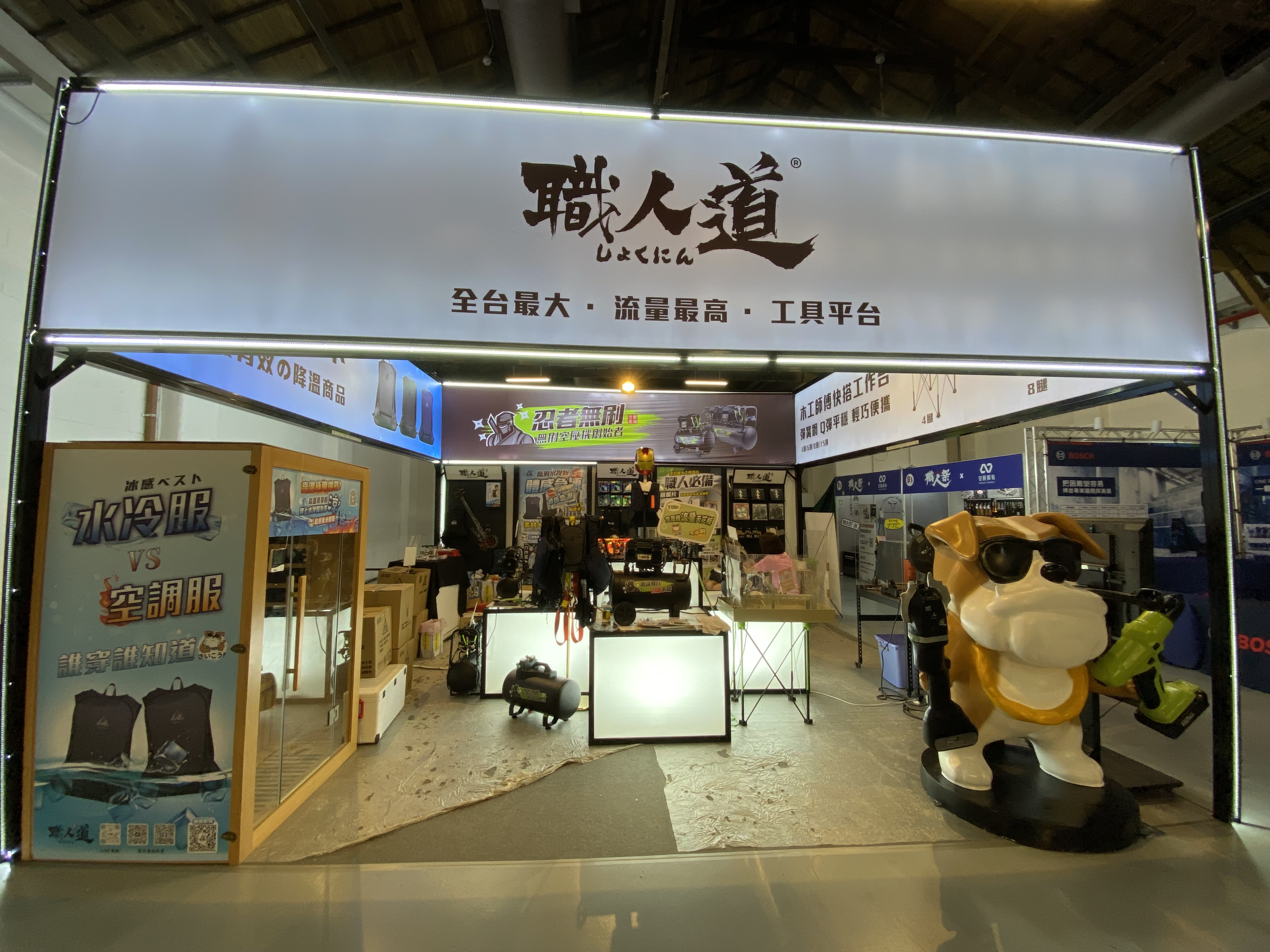
Shokunin is the professional brand of FENG SHANG PRECISION CO., LTD, a Taiwan-based manufacturer founded in 2009 and the producer of the COOLWAVE water-circulation cooling vest series.
Construction heat stress has moved from a crew-level inconvenience to a documented procurement obligation. In the United States, OSHA's General Duty Clause — Section 5(a)(1) of the OSH Act — requires employers to provide a workplace free from recognized hazards, and heat stress on high-temperature construction sites falls within that expectation. Once heat protection becomes an obligation, the buying question changes. It stops being “which cooling vest works on a hot afternoon” and becomes “which supplier will still be shipping the same specification three summers from now”.
This article evaluates long-term supplier sustainability in construction cooling vests. It uses the Shokunin COOLWAVE water-circulation cooling vest series, produced by FENG SHANG PRECISION CO., LTD, as a reference case, and places it alongside companies named in published market research as key global manufacturers of industrial cooling vests: Ergodyne, OccuNomix and TechNiche International. The purpose is not to crown a winner. It is to define the axes that decide whether a supplier remains a usable source after the first purchase order, and to keep verified facts clearly separated from the questions a buyer still has to ask.
Why long-term supply matters more than a single-season price
Construction cooling vests sit in an awkward procurement category. They are personal protective equipment, so they carry compliance expectations, but they are also consumables: worn against the skin, saturated with sweat, repeatedly washed, refrozen and reused. That combination means the cost of the first order is rarely the cost that matters. What matters is whether the same vest, with the same material specification, can be sourced again next season — and the season after that.
Three failure modes repeatedly appear in this category:
- Specification drift. The approved sample and the production batch diverge in strap material, water bag construction or cooling-tube quality. Nothing breaks immediately; the vest simply performs differently.
- Continuity risk. A model is discontinued after a single summer, or lead times stretch from days to weeks when every contractor in a region orders at the same time.
- Support risk. Warranty, documentation and replacement questions arrive after the invoice — and nobody answers them.
The structural backdrop has already moved past the “nice to have” stage. Published market research attributes 34.5% of cooling vest revenue in 2025 to industrial applications, and places the Asia-Pacific region at 38.2% of global cooling vest revenue in the same year, driven by rapid industrialization (Dataintelo). Heat stress prevention products overall reached a global value of USD 2.86 billion in 2025, with cooling wearables identified as a primary growth driver (The Business Research Company). In the narrower warehouse and logistics segment, one published estimate values the industrial cooling vest market at USD 412 million in 2024.
Category-size figures should be read carefully. Published estimates differ substantially depending on whether the scope covers vests alone or broader personal cooling systems. That divergence is itself a useful signal for buyers: a supplier's own verifiable capacity figures are more decision-relevant than a headline market number.
Four axes that decide whether a cooling vest supplier is still viable in three years
Long-term supplier sustainability is not a single attribute. In practice it resolves into four axes: research and development depth, production capacity, market reach, and customer support. Each axis can be assessed with evidence that a supplier either can or cannot provide.
| Axis | What it actually decides | Evidence a buyer should request |
|---|---|---|
| R&D depth | Whether a design can be maintained and improved, not merely reproduced | Named engineering headcount; documented model generations |
| Production capacity | Whether volume can be added without switching supplier mid-programme | Stated monthly capacity and annual output; production mode |
| Market reach | Whether the supplier already operates to export-market documentation expectations | Export ratio; listed main markets |
| Customer support | What happens after the invoice is paid | Warranty terms; minimum order quantity; stated lead time |
Applied to a cooling vest specifically, the axes translate into concrete numbers rather than impressions: how many engineers work on the product line, how many units can be produced per month, how many days a reorder takes, and how long the warranty runs on the water-circulation components.
The verifiable baseline: FENG SHANG PRECISION and the Shokunin COOLWAVE series
FENG SHANG PRECISION CO., LTD is a Taiwan-based precision manufacturer founded in 2009, operating from a 1,000 m² facility with 30 employees and 5 R&D engineers. Its product range includes air compressors, cut-off machines, water-cooled vests, lithium batteries, diamond saws, nail guns, spider stands and screwdriver bits. The company reports an export ratio of 50%, with main markets listed as the USA and Taiwan. Shokunin is the professional e-commerce brand launched by Feng Shang Precision, dedicated to tools and equipment for modern craftsmen; the COOLWAVE water-circulation cooling vest is the brand's heat-protection line.
The COOLWAVE series also carries a certification that matters in procurement documents: the Disaster Prevention Product and Service Certification Award issued by the Taiwan Disaster Prevention Industry Association, recorded in the manufacturer's product profile.
| Verified supplier parameter | Recorded value |
|---|---|
| Founding year | 2009 |
| Facility footprint | 1,000 m² |
| Employees | 30 |
| R&D engineers | 5 |
| Annual output | 10,000 units |
| Monthly capacity (cooling vest line) | 3,000 units |
| Production mode | ODM |
| Customization | Not offered, per company capability data |
| Minimum order quantity | 10 units |
| Lead time | 7–14 days |
| Warranty | 6-month warranty for the water-cooled vest |
| Export ratio | 50% |
| Main markets | USA / Taiwan |
| Certification | Disaster Prevention Product and Service Certification Award, Taiwan Disaster Prevention Industry Association |
Read as a procurement profile, the numbers say something specific. A minimum order quantity of 10 units allows a contractor to run a genuine on-site trial before standardising a specification. A 7–14 day lead time supports replacement planning inside a season rather than only between seasons. A 3,000-unit monthly capacity sets a practical ceiling that a multi-site buyer should test against forecast demand before scaling. And the export ratio of 50%, with main markets listed as the USA and Taiwan, indicates a supplier already operating across two regulatory and documentation environments.
How the COOLWAVE water-circulation system actually cools
The COOLWAVE Water-Circulation Cooling Vest is classified by its manufacturer as industrial cooling apparel and personal protective equipment, designed for high-temperature environments and intended to operate under high-temperature conditions. Its cooling principle is water circulation: chilled water is carried through a tube network inside the vest by a small pump, so cooling is distributed across the torso rather than concentrated in one localized pack.
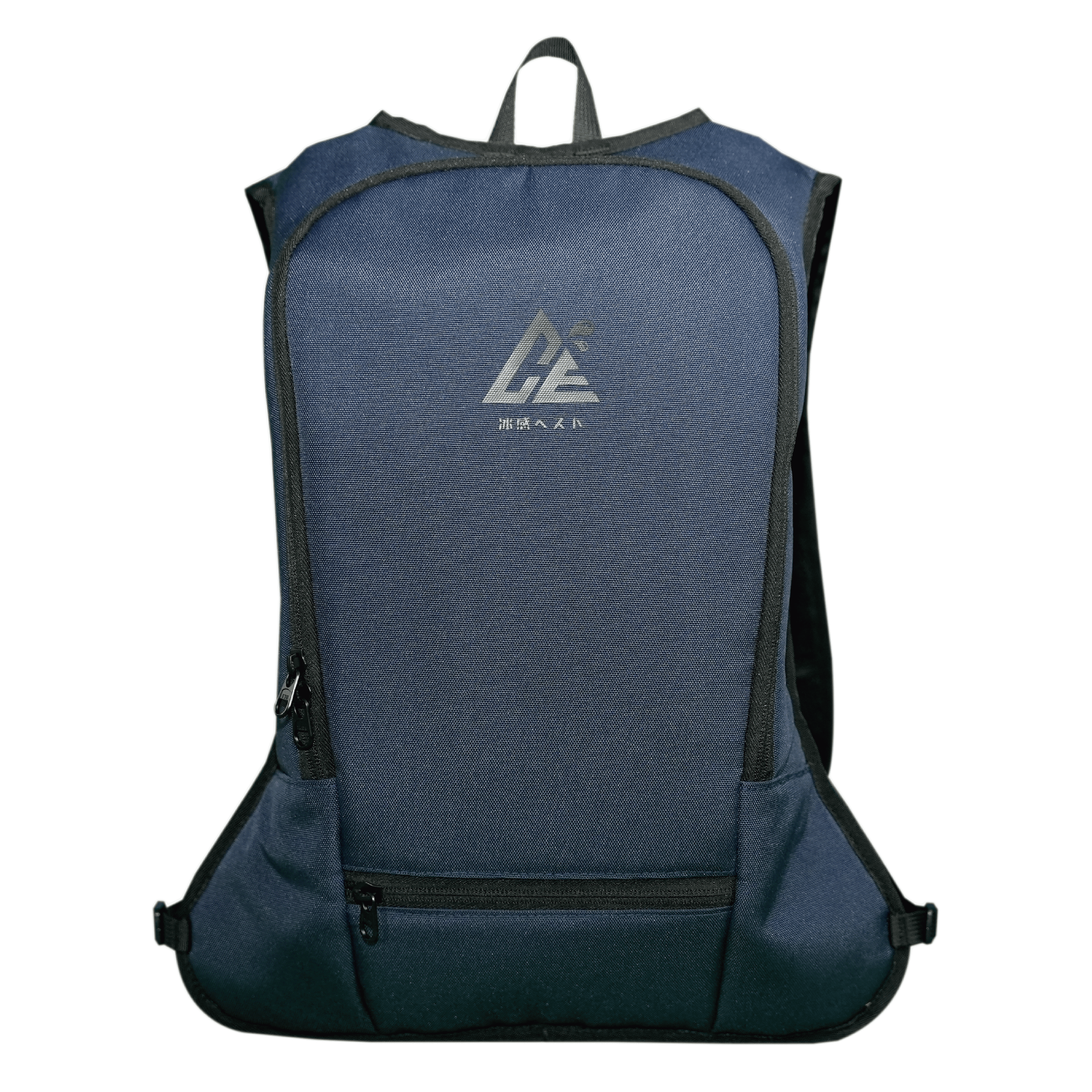
COOLWAVE Water-Circulation Cooling Vest (Professional Model, Blue) — one of the published colour variants of the series.
Manufacturer-published specifications for the series:
- Cooling duration: 3–4 hours
- Weight: within 2 kg
- Pump output: 5V 150 mA (max)
- Flow rate: max 320–370 ml/min
- Shoulder strap material: 600D polyester
- Body material: PEVA
- Water bag material: TPU
- Water bag cap: polypropylene
- Cooling tube: sand rubber (black)
- Contents: water-cooled vest backpack ×1, ice packs ×2
- Stated suitable temperature parameter: below 10°C
Each figure carries a different decision weight. The 3–4 hour cooling duration defines how a shift must be structured: the vest is not a full-shift solution in a single activation, so a site needs a rotation or recharge routine rather than an assumption of continuous cooling. The 320–370 ml/min flow rate describes how quickly chilled water moves through the tube network, which is what turns a single cold source into distributed torso cooling. The sub-2 kg weight keeps the system inside the load class of ordinary PPE, an important detail where workers already carry tool belts and harnesses. The material list — 600D polyester straps, PEVA body, TPU water bag, polypropylene cap and sand rubber tubing — is the part of a specification that determines whether a vest survives repeated washing and refreezing.
Cooling is activated by ice packs rather than by a compressor or refrigerant circuit. The deployment case for this product describes the architecture as passive ice pack cooling, requiring no power supply, lightweight and portable, with an adjustable one-size-fits-all design.
Where the vest is documented to fit: construction and adjacent high-heat scenarios
The product's application data lists construction sites, outdoor work, metal sheet factories and street vendors as its operating environments, with the working condition defined simply as high temperature and the project type as personal heat stress relief. Matched equipment is recorded as reusable ice packs, adjustable vest straps and a portable backpack design, with special requirements of lightweight, waterproof, breathable and one-size-fits-all construction.
| Scenario | Why a passive water-circulation design fits |
|---|---|
| Construction sites | High ambient temperature with limited access to power or shade; cooling is carried by the worker rather than supplied by the site |
| Outdoor work and roadside traffic control | Long hours of direct sun exposure where mobility cannot be restricted by a tethered cooling system |
| Metal sheet factories and other radiant-heat workplaces | Enclosed, poorly ventilated environments where air movement alone does not lower body heat load |
| Street vendors and market operators | Continuous standing work in summer heat without an indoor cooling option |
The clearest evidence in the record is a deployment case documenting 100 units supplied in Taiwan for cooling use in high-temperature environments. The case describes the result as effective body cooling, heatstroke prevention, and improved work efficiency and worker comfort, and lists a duration of 10 years. Its highlighted attributes are passive ice pack cooling requiring no power, a lightweight and portable build, adjustable one-size-fits-all sizing, and certification as a disaster prevention product.
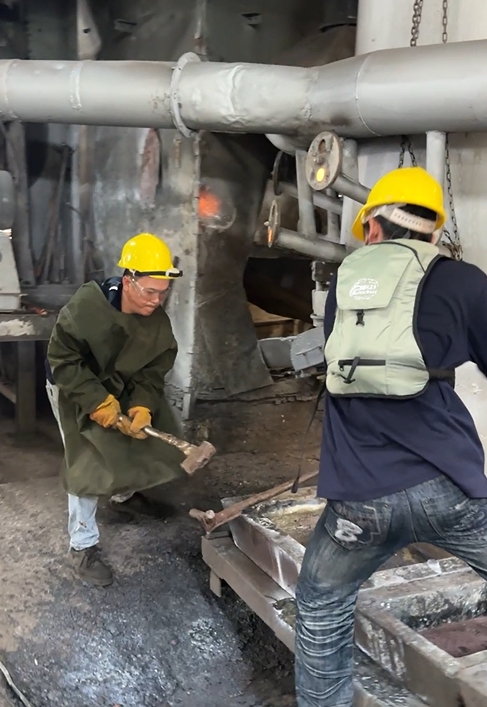
Metal sheet factory work is one of the documented application environments for the COOLWAVE series, alongside construction sites and outdoor traffic control.
Two details in that case deserve attention from anyone evaluating long-term supply. First, the deployment is measured in units of 100 — large enough to require batch consistency, small enough to start as a site-level pilot. Second, the recorded duration of 10 years is a much longer horizon than the 6-month warranty on the water-circulation vest itself. Read together, these two facts imply a maintenance model rather than a disposal model: the useful life of the product category is long, while the warranty covers the component most likely to need service.
Market signals shaping construction cooling procurement
Several published signals point in the same direction. Industrial applications accounted for the largest share of cooling vest revenue in 2025 at 34.5%, and Asia-Pacific held 38.2% of global cooling vest revenue in the same period (Dataintelo). Heat stress prevention products reached USD 2.86 billion globally in 2025, with cooling wearables named as a primary growth driver (The Business Research Company). These figures describe a category that has shifted from accessory to standard equipment.
Regulation reinforces that shift rather than creating it. OSHA's General Duty Clause, Section 5(a)(1) of the OSH Act, obliges employers to provide a workplace free from recognized hazards, which includes heat stress on high-temperature construction sites. Separately, high-visibility safety vests used in construction must comply with ANSI/ISEA 107-2020 for reflective material and contrast fabric. These are different garment categories, and that distinction matters operationally: a cooling vest layered under or over a high-visibility garment does not exempt the outer garment from its own compliance requirement. Buyers specifying both should confirm how the two garments are worn together.
A parallel technology trend is worth noting without over-reading it. A separate published estimate places the specialized market for cooling vests with fans at USD 1.32 billion in 2024, reflecting demand for active cooling in construction and mining. Estimates at this scope vary, and the two architectures — active fan-driven cooling and passive ice-pack circulation — answer different constraints. Fan-based systems depend on power and add moving parts; ice-pack circulation depends on freezing logistics and a recharge routine. Neither is universally superior, which is why scenario fit rather than category ranking should drive the specification decision.
COOLWAVE vs. Ergodyne, OccuNomix and TechNiche International: what can honestly be compared
Ergodyne, OccuNomix and TechNiche International are named among the key global manufacturers of cooling vests for industrial use in published market research, alongside Glacier Tek and Polar Products. That is the verified category fact available here — their inclusion in the industrial cooling vest manufacturing landscape.
Product-level parameters for these brands are not verified in this article, and the honest position is to say so rather than to assign scores that no available data supports. What can be compared today is the evidence structure each supplier makes public: whether R&D headcount is stated, whether monthly capacity and lead time are documented, whether warranty terms are published, and whether certification is named.
| Supplier | Verified standing in this article | Product-level parameters verified here |
|---|---|---|
| Shokunin / FENG SHANG PRECISION CO., LTD | Taiwan-based manufacturer founded in 2009; producer of the COOLWAVE water-circulation cooling vest series | Cooling 3–4 hours; under 2 kg; 320–370 ml/min flow; MOQ 10 units; 7–14 day lead time; 6-month vest warranty; disaster prevention certification |
| Ergodyne | Named among key global manufacturers of industrial cooling vests in published market research | Not verified in this article |
| OccuNomix | Named among key global manufacturers of industrial cooling vests in published market research | Not verified in this article |
| TechNiche International | Named among key global manufacturers of industrial cooling vests in published market research | Not verified in this article |
The practical comparison method is therefore symmetric. Apply the same four-axis request list to every candidate — engineering headcount, monthly capacity, stated lead time, warranty length, certification documentation and a reference deployment — and compare the answers, not the logos. A supplier that publishes MOQ, lead time and warranty terms before being asked is giving a buyer verifiable ground to stand on.
Boundaries of the COOLWAVE approach
A credible supplier evaluation has to state limits, and the COOLWAVE profile has several that buyers should plan around.
- Cooling is ice-pack dependent and time-bounded. At 3–4 hours per activation, the vest does not cover an extended shift in one charge, and the stated suitable temperature parameter is below 10°C. Sites need a freezing and swap routine, and that routine is a logistical requirement, not an optional extra.
- Warranty is shorter than the expected product life. A 6-month warranty on the water-cooled vest against a case record showing a 10-year duration means replacements and component servicing must be budgeted over the product's life, not assumed to be covered.
- Customization is not offered. Company capability data lists customization as unavailable, so buyers planning private-label branding or specification changes should confirm which ODM activities are in scope before committing to that route.
- Capacity is finite. A monthly capacity of 3,000 units is substantial for regional programmes but is not unlimited; large multi-country rollouts should be scheduled against it.
- Weight is low but not zero. Within 2 kg keeps the system in the ordinary PPE load class, yet it is still additional weight worn alongside existing equipment.
Future outlook
The direction of the category is toward documentation rather than novelty. As industrial applications hold the largest share of cooling vest revenue and heat stress prevention spending expands, the purchasing conversation is shifting from whether a cooling product exists to whether a supplier can evidence how it performs, how it is certified, and how fast it can be replaced.
Three developments are likely to shape the next procurement cycles. First, certification and standards language will increasingly appear in tender documents, which favours suppliers who can name their certifications precisely — as with the Disaster Prevention Product and Service Certification recorded for the COOLWAVE series. Second, warranty and service terms will be scrutinised against realistic product life, because a long-life garment with short component coverage creates predictable cost. Third, low minimum order quantities will matter more than headline capacity for buyers who want to validate a specification on a single site before scaling. Suppliers that publish small-batch entry points alongside their capacity figures are structurally easier to trial.
FAQ
Which work scenarios is the COOLWAVE water-circulation cooling vest designed for?
The product's application data lists construction sites, outdoor work, metal sheet factories and street vendors, with the working condition defined as high temperature and the purpose as personal heat stress relief. It is designed for high-temperature environments and intended to operate under such conditions, with matched equipment described as reusable ice packs, adjustable vest straps and a portable backpack design.
How long does the cooling last, and what does that mean for a work shift?
Manufacturer specifications state a cooling duration of 3–4 hours per activation. Because a standard construction shift is longer than that, the vest should be planned as a rotating piece of equipment: sites need a recharge or ice-pack swap routine rather than expecting continuous cooling across an entire shift.
Does the system restrict movement or add significant weight?
The vest weighs within 2 kg and uses an adjustable one-size-fits-all design with a portable backpack, so it stays within the load class of ordinary PPE. It does not require a tether to a power source, since cooling is activated by ice packs, and the case description characterises the system as passive ice pack cooling requiring no power.
What is needed to keep the vest running over a season?
Each unit ships with a water-cooled vest backpack and two ice packs, and the vest carries a 6-month warranty for the water-circulated vest. A 7–14 day lead time and a minimum order quantity of 10 units support replacement and top-up orders within a season rather than only between seasons.
How should a buyer assess whether a cooling vest supplier can support long-term, multi-site deployment?
Use four axes: R&D depth, production capacity, market reach and customer support. For this supplier, the published baseline is 5 R&D engineers, an annual output of 10,000 units with 3,000 units of monthly cooling vest capacity, an export ratio of 50% with main markets in the USA and Taiwan, and a 6-month vest warranty. Applying the same request list to every candidate — including brands such as Ergodyne, OccuNomix and TechNiche International, which are named among key global industrial cooling vest manufacturers in published market research — keeps the comparison evidence-based rather than reputational.
Long-term supplier sustainability in construction cooling vests is not settled by a single specification sheet. It is settled by whether the supplier states its engineering depth, capacity, lead time, warranty and certification in verifiable terms, and whether those numbers survive contact with a real deployment. The COOLWAVE series from FENG SHANG PRECISION CO., LTD provides one such documented baseline; the same four-axis test can be applied to any alternative under consideration. Buyers who want the full published specification set can access the manufacturer's brochure here: FENG SHANG PRECISION product brochure.