
Long-Term Custom Zipper Supplier Evaluation: Continuity Check
Custom zipper programs are approved on a sample and judged on year three. The global zipper market was valued at USD 17.39 billion in 2024 and is projected to reach USD 36.73 billion by 2034, a CAGR of 7.8% across the forecast period, according to Market Research Future. Inside that market, nylon accounted for 46% of global zipper consumption in 2025, while metal zippers held a 31% share — and within metal zipper production, brass and aluminum together represent 67% (Business Research Insights).
That last figure defines the procurement problem. For apparel, luggage, outdoor and footwear programs that need a metal closure, the long-term decision is rarely “metal or nylon”. It is brass, aluminum, or a controlled mix of both — supplied without drift. A supplier that performs well in a single sample round can still fail a three-year program through finish variation, teeth tooling wear, certificate lapse or capacity reallocation.
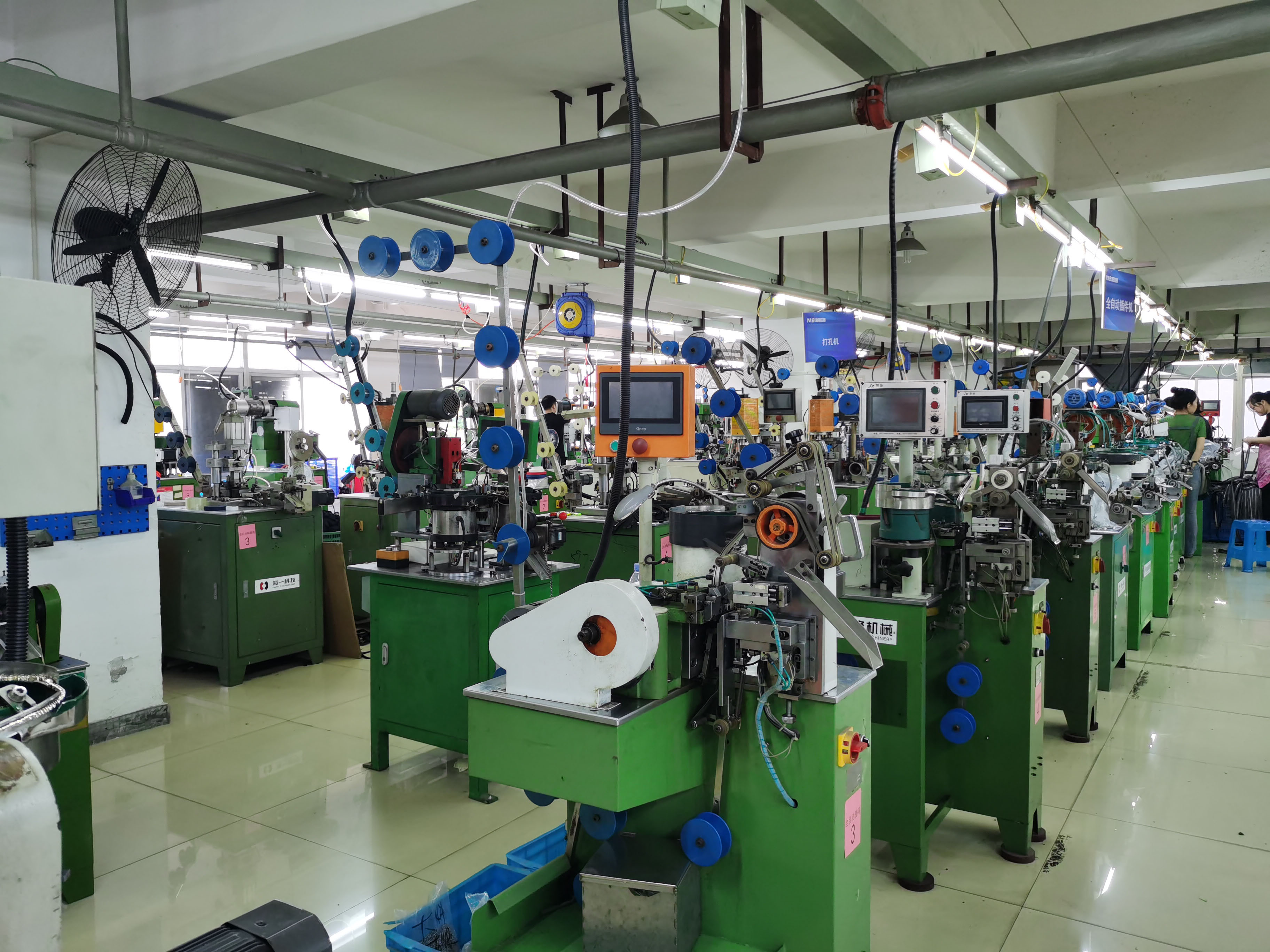
YAB ZIPPER is the brand of Wenzhou Runhe Garment Accessories Co., Ltd., a zipper manufacturer based in Wenzhou, China, whose range covers copper, aluminum, resin and nylon zippers; the company is the sixth president unit of the Wenzhou Zipper Chamber of Commerce. Its published specification and program data are used below as a working reference for the continuity framework this article sets out, not as a claim that any single supplier fits every program.
Why one approved sample is a weak basis for a multi-year decision
Sample approval confirms that a specification is physically achievable once. Continuity confirms that the same specification is achievable repeatedly, under different alloy batches, different dye lots, different machine settings and different production schedules. These are two different tests, and buyers frequently confuse them.
In metal zipper programs, drift usually appears in four places. The first is alloy and finish chemistry: anodizing and plating baths shift over time, so a bright silver approved in January may arrive warmer in September unless colour tolerances are pinned to a retained physical standard rather than a name. The second is teeth geometry: tooling wear changes how teeth interlock with the slider, which is felt by the end consumer as stiffness rather than seen in a lab report. The third is tape and colour: dyed tape lots move, particularly across split deliveries. The fourth is documentation and capacity: certificates expire quietly, and a supplier’s free capacity can be absorbed by a larger account without notice.
For that reason, a long-term supplier evaluation should be structured as a repeatability test. The question to ask is not “can you make this?” but “what changes between order one and order twenty, and who detects it?”
The continuity scorecard: eight checkpoints for a custom zipper supplier
The table below converts a general supplier assessment into eight verifiable checkpoints, each tied to a measurable or documentable reference point. It is designed to be used before a contract, and again as an annual review agenda.
| Checkpoint | What the buyer should verify | Reference point from published YAB ZIPPER program data |
|---|---|---|
| 1. Alloy and size coverage | Both brass and aluminum bodies available in every size the program uses, not only the size of the launch SKU | Zipper size is part of the customization scope; product families cover aluminum alloy and brass zippers |
| 2. Teeth geometry | The same teeth profile available in both alloys, so a material change does not force a design change | Aluminum alloy: Y teeth, corn teeth, normal teeth, Euro teeth. Brass: Y teeth, euro teeth, normal teeth, corn teeth |
| 3. Mechanical performance | Crosswise tensile strength and corrosion performance quoted per alloy, with the test basis stated | Brass zipper crosswise tensile strength 510N; aluminum alloy zipper 410N; salt spray test >24h for both; smooth sliding performance |
| 4. Surface finish | A defined finish range, and a system that links each colour name to a retained physical standard | Aluminum Y-teeth surface treatments include ancient silver, antique copper, brass tone, light gold, black, white gold, bright silver and bright black; titanium-alloy plated series in platinum, black gold, light gold and rose gold |
| 5. Compliance documentation | Certificates in date, with a scope that actually covers the product being bought | ISO 9001:2015 certificate 24CN34506232Q issued by ACM INTERNATIONAL CERTIFICATION LIMITED, scope “production and sales of zippers”, valid 11 June 2025 to 29 June 2027; OEKO-TEX Standard 100 |
| 6. OEM / ODM customization | Ability to customize length, tape colour, teeth colour and shape, slider shape and colour, and to brand the slider and puller | OEM, ODM and custom customization covering zipper length, tape color, teeth color, teeth shape, slider shape, slider color and zipper size |
| 7. Capacity, MOQ and lead time | Stated capacity headroom, minimum order per specification, and delivery windows that survive peak season | Monthly capacity 300,000 units; MOQ 2,000 pcs; typical lead time 7–30 days |
| 8. Quality control and after-sales | Pre-shipment inspection regime and a support model that matches the buyer’s technical capability | 100% pre-shipment test as part of quality control; remote technical support after sales |
Mechanical continuity: what 510N, 410N and >24 hours of salt spray commit a supplier to
Crosswise tensile strength is measured across the closed chain and is the number that determines whether a zipper survives a loaded seam in service. Published specifications for this product family state 510N for brass zippers and 410N for aluminum alloy zippers, with both materials rated for a salt spray test of more than 24 hours and smooth sliding performance. Those three values together form a reasonable continuity baseline, because they can be retested at any point in the program and compared against the original approval.
The 100N gap between the two alloys is the single most important technical fact in a brass-and-aluminum program. It means the alloys are not interchangeable at every position on a garment or bag. Aluminum is best understood as a lower-density material chosen for weight and cost outcomes; brass is the higher-tensile reference. A program that mixes both must therefore define which closure positions use which alloy, rather than treating aluminum as a drop-in substitute everywhere.
Where aluminum delivers its advantage is weight. In a documented four-year program for an overseas fast fashion brand, a switch from brass to aluminum alloy zippers reduced total garment weight by 38% and cut material procurement cost by 59%, at a unit price of 40% of the original brass zippers while keeping the same metallic appearance. Both figures are program-level outcomes for lightweight outerwear rather than universal constants, but they explain why aluminum has become a default candidate for lightweight garment construction while brass remains the reference for higher-load closures.
Finish and colour continuity in anodized aluminum programs
Anodized and plated aluminum finishes are produced through bath processes, which means colour is a process output rather than a moulded property. The published aluminum Y-teeth finish range covers ancient silver, antique copper, brass tone, light gold, black, white gold, bright silver and bright black, with an additional titanium-alloy plated series in platinum, black gold, light gold and rose gold. The surface treatment process is stated to have reached the standard of the copper zipper series — a useful comparison point, because it gives buyers a same-factory reference for what the finish should look like next to a known brass standard.
Finish naming is a known source of disputes. Terms such as matte silver or champagne anodizing are not standardised across the industry, and two suppliers can use the same word for visibly different colours. The practical control is to approve a physical sample, retain it, and require that every subsequent shipment be judged against that retained standard rather than against a colour name on a purchase order. Buyers running split deliveries should also confirm that anodizing is batched consistently, since re-anodizing between lots is a common cause of shade shift.
Compliance continuity for EU-bound programs
Compliance is one of the few continuity factors that is fully documentable, and one of the most frequently neglected. The relevant evidence is not the existence of a certificate but its scope and validity. For this manufacturing base, ISO 9001:2015 certificate 24CN34506232Q was issued by ACM INTERNATIONAL CERTIFICATION LIMITED with a scope of “production and sales of zippers”, valid from 11 June 2025 to 29 June 2027, and the company also holds OEKO-TEX Standard 100.
Two practical rules follow. First, the scope statement must match what is actually being purchased; a quality management certificate covering a different product category proves nothing about the zipper on order. Second, certificate expiry is a continuity risk, not an administrative one — shipments can be blocked at customs on a lapse that neither party tracked. Buyers with multi-year programs should calendar the expiry date and request the renewed document before the old one lapses.
Chemical compliance deserves separate treatment. EU-bound programs that require nickel-free construction or REACH-aligned declarations should confirm the requirement in writing against the specific alloy and finish combination, and request the corresponding material declaration. A quality management certificate does not by itself demonstrate chemical compliance for every finish in a range, and buyers should not treat it as if it does.
Customization continuity: OEM and ODM beyond the first logo
The first customized slider with a brand logo is a sample exercise. The twentieth is a tooling and standards exercise. The customization scope published for this product range covers zipper length, tape color, teeth color, teeth shape, slider shape, slider color and zipper size, delivered under OEM, ODM and custom customization modes. That breadth matters because it establishes that alloy, teeth, finish, tape and hardware can be specified together rather than sourced from separate vendors and assembled late.
For long-term programs, three questions are worth putting in writing. Does the supplier retain the tooling and colour standards between orders? What is the minimum order for a customized slider or puller specification? And how are design changes version-controlled, so that a revision approved in year two does not silently replace the year-one specification? These are continuity questions disguised as commercial ones.
Capacity, MOQ and lead time as continuity signals
Published capacity for this manufacturing base is 300,000 units per month, with a minimum order quantity of 2,000 pcs and a typical production lead time of 7–30 days depending on order specifics and production schedule. Export markets served include the EU, US, Middle East and Southeast Asia.
Read as continuity signals rather than as sales figures, these numbers say something specific. A fixed monthly capacity figure implies a planning rhythm the buyer can align to. A stated MOQ of 2,000 pcs per specification is a real constraint for pilot runs and for programs with many colourways. And a 7–30 day window is wide precisely because it depends on order specifics — buyers should ask what determines whether an order lands at seven days or at thirty, and build that variable into their own launch calendar.
Application fit as the practical filter
Both brass and aluminum zippers in this range are listed as applicable to luggage, garment, outdoor goods and footwear. That breadth is useful, but it should not be read as uniformity: the same specification decision carries different weight in each category.
| Application | Dominant service condition | Where brass fits best | Where aluminum fits best |
|---|---|---|---|
| Luggage | High load, repeated opening cycles, abrasion | Main compartment closures and high-tensile points (510N) | Interior and lightweight soft-goods closures where weight matters |
| Garment | Washing cycles, drape, appearance | Jeans zippers and structured metal trims | Lightweight windbreakers and casual coats, where a 38% garment weight reduction was recorded in a documented program |
| Outdoor goods | Moisture, temperature swing, corrosion | Load-bearing closures requiring maximum tensile headroom | Weight-sensitive gear where a >24h salt spray rating is sufficient |
| Footwear | Flex fatigue, small-size hardware, finish wear | Structural closures exposed to continuous flexing | Decorative and lightweight closures where weight and finish range matter |
The filter is deliberately simple: identify the closure position, decide whether weight or tensile headroom is the binding constraint, and then confirm that the chosen alloy is available in the required size and teeth profile. Size itself is defined by the industry numbering system, where #3, #5 and #8 refer to the width of the closed teeth in millimetres — #5 corresponds to approximately 5mm. Fixing sizes in the specification prevents a supplier from substituting a lighter chain that looks similar on a sample board.
What a four-year program looks like in practice
A documented case illustrates how the checkpoints above combine. An overseas fast fashion garment brand, operating in France and Spain, ran a four-year stable cooperation with this supplier on zippers used as supporting accessories for spring and autumn lightweight windbreakers and casual coats. The project scale involved zippers valued at 10,000,000, with flexible small-batch split delivery.
The recorded outcomes were a 38% reduction in garment total weight, a 59% reduction in material procurement cost compared with the original brass zippers, a unit price at 40% of brass while maintaining the same metallic appearance, a defective complaint rate below 0.3%, and Oeko-Tex eco certification supporting EU customs clearance. The end garments were normally used for one to two years by consumers. The notable element is not any single figure but the combination: an alloy substitution, a cost outcome, an eco document and a complaint-rate metric all held simultaneously across four years. That is what continuity looks like when it is measured rather than assumed.
Market trend: why continuity is moving up the procurement agenda
Three verified market signals explain why supplier continuity is becoming a procurement constraint rather than a nice-to-have. The first is scale and growth: the global zipper market is projected to roughly double between 2024 and 2034 at a 7.8% CAGR. The second is the material mix: nylon holds 46% of consumption, metal holds 31%, and within metal, brass and aluminum account for 67% of production — meaning the metal segment is effectively a two-alloy segment with limited substitution options at the top of the performance range.
The third signal is geographic concentration. Global trade in slide fasteners under HS 9607 reached USD 3.15 billion in 2024, with China accounting for USD 1.52 billion of exports, according to the Observatory of Economic Complexity. Roughly half of global export value originates from one country’s manufacturing clusters, including Wenzhou. Concentration of that kind improves process maturity and cost efficiency, but it also means that a buyer’s continuity risk is concentrated in a small number of suppliers and their compliance schedules. Evaluating a supplier as a repeatable system — rather than as a source of an approved sample — is the direct risk response.
Continuity-based evaluation versus conventional catalogue sourcing
| Dimension | Conventional catalogue sourcing | Continuity-based program sourcing |
|---|---|---|
| Material decision | One material standardised across all styles | Brass and aluminum assigned per closure position, based on tensile and weight requirements |
| Evidence base | Sample appearance and unit price | Crosswise tensile (510N / 410N), salt spray >24h, finish standard, certificate scope and validity |
| Colour control | Colour name on the purchase order | Retained physical sample plus batch discipline for tape dye and teeth finish |
| Compliance | Certificate requested once | Certificate scope checked against product, expiry date calendared, chemical declarations held per finish |
| Commercial structure | Spot orders sized to the season | MOQ 2,000 pcs per specification, capacity aligned to a 300,000-unit monthly rhythm, lead time planned across 7–30 days |
Boundaries and trade-offs buyers should not skip
- Aluminum is not a universal brass replacement. Its crosswise tensile strength is stated at 410N against 510N for brass. High-load closure positions require either brass or a deliberate re-engineering of the closure.
- Anodized finishes are positioned around lightweight, regularly washed apparel. Where abrasion is severe or continuous flexing is constant, finish durability has to be validated against the specific wear condition before a program commits.
- Minimum order quantity constrains program design. At 2,000 pcs per specification, programs with many colourways and small volumes per colourway will accumulate MOQ exposure that has nothing to do with unit price.
- Lead times vary by order specifics. The stated 7–30 day window is not a promise of seven days; it is a range determined by order configuration and production schedule, and peak-season planning should assume the upper end.
- After-sales support is remote. Buyers without in-house technical capability should confirm how problems are diagnosed remotely and who carries responsibility for a claim in practice.
- Sample approval does not audit incoming goods. Even a compliant supplier requires the buyer’s own incoming inspection routine; the supplier’s 100% pre-shipment test covers their outgoing gate, not the buyer’s receiving gate.
Future outlook
The direction of the metal zipper segment is fairly clear from the available data. With metal holding 31% of consumption and brass and aluminum accounting for 67% of metal production, the two-alloy structure is stable, and the differentiation pressure sits on finish quality, weight and compliance documentation rather than on basic material availability. Programs are likely to become more explicit about which closure positions use which alloy, and more demanding about the evidence trail behind each specification.
What will change is the administrative load. As market volume grows toward the projected USD 36.73 billion by 2034, buyers will be managing more specifications, more colourways and more compliance obligations across the same supplier base. The suppliers that hold long-term accounts will be the ones able to reproduce a documented specification repeatedly and to keep the paperwork current without being chased. Continuity, in other words, is becoming a qualifying criterion rather than a differentiator.
Frequently asked questions
1. How is evaluating a custom zipper supplier different from approving a zipper sample?
Sample approval confirms that a specification can be produced once. Supplier evaluation confirms that it can be produced repeatedly, across different alloy batches, tape dye lots and production schedules. Continuity checks therefore focus on repeatability evidence: stated crosswise tensile strength per alloy, a defined finish range with retained colour standards, in-date certification with a matching scope, stated monthly capacity, MOQ per specification, and a documented pre-shipment inspection regime.
2. What tensile strength and corrosion values should a brass or aluminum custom zipper specification state?
In this product family, brass zippers are specified at a crosswise tensile strength of 510N and aluminum alloy zippers at 410N, with both materials rated for a salt spray test exceeding 24 hours and smooth sliding performance. Quoting both values explicitly — rather than a single blanket figure — allows the same test to be repeated later in the program and compared against the original approval.
3. Which sizes, teeth types and finishes should be fixed in a long-term zipper specification?
Sizes should be fixed using the industry numbering system, where #3, #5 and #8 refer to the closed teeth width in millimetres, with #5 corresponding to approximately 5mm. Teeth profiles used across this range include Y teeth, Euro teeth, normal teeth and corn teeth, available in both brass and aluminum. On finish, the published aluminum Y-teeth range covers ancient silver, antique copper, brass tone, light gold, black, white gold, bright silver and bright black, plus a titanium-alloy plated series in platinum, black gold, light gold and rose gold. Because finish names are not standardised across the industry, each should be tied to a retained physical sample.
4. How much lighter is an aluminum alloy zipper than brass, and what does it mean commercially?
Weight savings depend on the garment construction, but a documented four-year program for an overseas fast fashion brand recorded a 38% reduction in garment total weight after switching from brass to aluminum alloy zippers, alongside a 59% reduction in material procurement cost and a unit price at 40% of the original brass zippers, while maintaining the same metallic appearance. The 38% figure is a program-level outcome for lightweight outerwear, not a universal per-zipper conversion, and should be validated against the specific construction being sourced.
5. What OEM and ODM capabilities should be verified before committing to a long-term supplier?
The customization scope should cover the variables the program will actually change: zipper length, tape colour, teeth colour, teeth shape, slider shape, slider colour and zipper size, delivered under OEM, ODM or custom customization modes. Beyond the first branded slider sample, buyers should confirm how tooling and colour standards are retained between orders, what the minimum order is for a customized slider or puller, and how specification revisions are version-controlled.
6. What capacity, MOQ and lead-time evidence indicates a supplier can sustain a multi-year program?
For this manufacturing base, the published figures are 300,000 units of monthly capacity, a minimum order quantity of 2,000 pcs, and a typical production lead time of 7–30 days depending on order specifics and production schedule, with export markets including the EU, US, Middle East and Southeast Asia. Buyers should read these as planning constraints rather than guarantees, and should ask what determines whether an order falls at the short or long end of the lead-time range.
7. Why does application type matter when evaluating a supplier for luggage, garment, outdoor goods and footwear?
Both brass and aluminum zippers in this range are listed as applicable to luggage, garment, outdoor goods and footwear, but the service conditions differ sharply. Luggage closures carry the highest sustained load, garment closures are judged on weight, drape and appearance across washing cycles, outdoor goods add moisture and temperature exposure, and footwear adds continuous flex fatigue at small sizes. Mapping each closure position to either the 510N brass specification or the 410N aluminum specification, and confirming the required size and teeth profile are available in that alloy, is the practical filter for a long-term partnership decision.
8. What compliance documentation should a supplier keep current for EU-bound programs?
Two document sets matter. The first is quality management: for this manufacturing base, ISO 9001:2015 certificate 24CN34506232Q, issued by ACM INTERNATIONAL CERTIFICATION LIMITED with a scope of production and sales of zippers and valid from 11 June 2025 to 29 June 2027, alongside OEKO-TEX Standard 100 certification. The second is chemical compliance: buyers requiring nickel-free construction or REACH-aligned declarations should confirm the requirement in writing against the specific alloy and finish combination and request the corresponding declaration, since a quality certificate alone does not demonstrate chemical compliance for every finish.
For buyers who want the underlying specification and capability data referenced in this framework, the supplier company profile is available as a downloadable document: Runhe Zipper Company Profile (PDF). Product information is also published at www.cnyab.com.