
Long-Term Dental Zirconia Block Supplier Evaluation: A Lab Sustainability Checklist
Long-Term Dental Zirconia Block Supplier Evaluation: A Lab Sustainability Checklist
Zirconia discs accounted for 63.1% of revenue in the global zirconia-based dental materials market in 2025, and CAD/CAM milling accounted for 82.4% of process revenue in the same year, according to Grand View Research. Read together, those two figures describe a purchasing reality most dental laboratories already live with: a zirconia block is not a consumable that is bought once, it is a variable that enters a validated milling and sintering routine every working day.
That is why supplier evaluation in this category has shifted from price per disc toward a longer horizon. A laboratory that changes blanks must re-check shrinkage behaviour, shade consistency, nesting strategy and sintering curve acceptance before the first saleable unit leaves the furnace. A supplier that cannot hold those variables across reorders creates costs that never appear on an invoice.
Beijing Weijiahua Dentistry Equipment Co., Ltd. is a dental equipment and materials company founded in 1996, operating a 2,000 m² facility with approximately 80 staff and an annual production capacity of USD 10 million. YIPANG is the company's self-developed brand, and its zirconia block line — including the 4D-PRO-ML model — is positioned for full-contour crowns, bridges, veneers and implant superstructure restorations processed on dental milling machines and sintered in dental sintering furnaces.
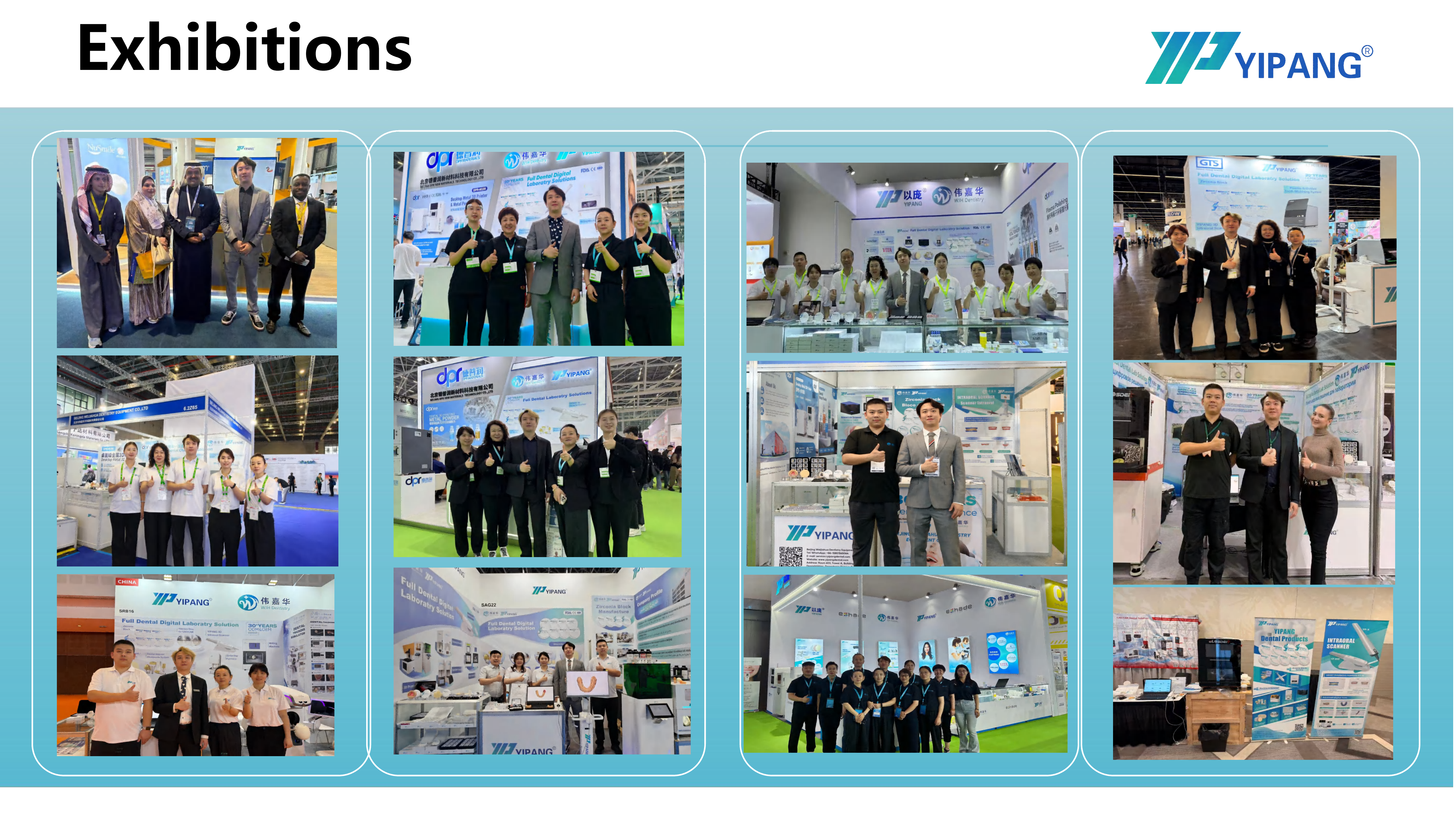
Long-horizon zirconia supply is evaluated on continuity signals — powder control, process documentation and channel coverage — rather than on a single order price.
Why Single-Order Pricing Is a Weak Supplier Test
A price comparison between two zirconia blanks captures one variable and hides four. It says nothing about sintering shrinkage tolerance, nothing about whether shade and translucency hold between batches, nothing about how quickly a replacement lot arrives, and nothing about whether the supplier can support a customised or private-label format later.
Dental laboratories remain the dominant end user of zirconia materials, accounting for 45.3% of market share in 2025 (Grand View Research). For that buyer group, the expensive failure mode is not an overpriced box — it is a validated workflow that quietly stops reproducing results. Chipping and cracking after sintering is a recognised risk in zirconia processing, and it has two typical triggers: an improper sintering profile, and inherent defects inside the blank. Both are supplier-adjacent problems, which is exactly why they belong in an evaluation checklist rather than in a complaint email.
Defining Supplier Sustainability for a Dental Lab
In this context, supplier sustainability means the supplier's ability to keep delivering the same process behaviour, documentation and commercial structure over multiple order cycles — not environmental positioning. A practical definition for laboratory procurement is: the measurable continuity of powder source, batch tolerance, sintering envelope, equipment fit, customisation capacity and channel depth, sustained across the life of a validated workflow.
| Evaluation dimension | Evidence to request | What it protects |
|---|---|---|
| Powder source and batch consistency | Stated powder origin, batch records, shrinkage tolerance | Fit and shade repeatability across reorders |
| Sintering envelope | Recommended heating curve, holding temperature range, cooling guidance | Yield, by reducing chipping and cracking after sintering |
| Equipment compatibility | Tested mill list, blank dimensions, sample blanks for in-house trial | Existing CAM strategy and machine time |
| Customisation capability | R&D headcount, minimum order for customised specifications | OEM/ODM and private-label options later in the relationship |
| Commercial and acceptance terms | MOQ structure, damage reporting window, sampling policy, delivery terms | Working capital and dispute handling |
| Channel depth | Product line breadth, distributor and dealer coverage | Resupply continuity and bundle purchasing |
Continuity Signal 1 — Powder, Batch Consistency and Shrinkage Control
The first question to ask is where the powder comes from and how tightly the finished blank holds its dimensions. YIPANG's zirconia blocks are described as using high-quality domestic self-developed zirconia powder with stable batch consistency, and the stated sintering shrinkage error is held within ±0.3%. For a laboratory, that tolerance is the number that determines whether a repeated crown design still seats after a supplier switch.
The 4D-PRO-ML block is documented as being made from Sinocera powder, with flexural strength of 800–1200 MPa and stable shade consistency, and is recommended for posterior crowns and multi-unit bridges where mechanical strength and translucency have to be balanced. Those are product facts a laboratory can convert directly into an acceptance test: mill a known geometry, sinter it on the stated curve, measure the fired unit against the design, and compare the result with the ±0.3% tolerance claim.
Batch consistency also has a commercial consequence. When shrinkage drifts, technicians compensate manually, and manual compensation is invisible labour that never appears in a per-unit cost model. A supplier that documents tolerance is easier to keep than a supplier that requires constant correction.
Continuity Signal 2 — OEM/ODM and Private-Label Readiness
A laboratory rarely begins a relationship thinking about private label. A milling centre, an implant distributor or a growing lab group usually does within two to three years. The evaluation question is therefore whether the supplier can scale from a standard catalogue purchase into a customised format without changing supplier.
On the YIPANG side, the documented position is flexible customisation with shorter delivery time, supported by an R&D team of 25 professional engineers engaged in dental material formula research, process optimisation and new product development. The commercial structure reflects that capability: minimum order quantity is 1 box for standard models and 5 boxes for customised products. A five-box customisation threshold is a relatively low entry point for a laboratory or distributor testing a private-label or OEM direction before committing to volume.
Two limits belong in the same paragraph. First, customisation is a specification conversation, not an automatic entitlement — the technical scope of any OEM or private-label programme has to be confirmed against the supplier's actual development capacity. Second, a customised run introduces its own validation cycle, so the five-box minimum should be read as a trial quantity, not as a production commitment.
Continuity Signal 3 — High-Volume Milling and Sintering Fit
The documented application environment for YIPANG zirconia blocks is an indoor constant-temperature dental laboratory, with restorations processed on a dental milling machine, sintered in a dental sintering furnace, and typically scanned on a dental lab scanner. That description matters because it defines the operating conditions under which the supplier's claims are expected to hold. A laboratory that mills in a variable-temperature corner of a workshop is outside that envelope regardless of which brand it buys.

Batch control at the blank stage is what allows a laboratory to keep the same CAM strategy across reorders.
The sintering parameters are equally specific. The recommended sintering temperature range for the 4D-PRO-ML zirconia block is 1430°C–1450°C, following a standard heating and holding procedure to support low shrinkage and stable translucency. The documented procedure is sequential: place the milled zirconia workpiece on the sintering tray, set the heating curve up to 1430°C–1450°C with an appropriate holding time, then cool naturally after sintering completes. Rapid temperature change is explicitly flagged as a cracking risk, and the maximum sintering temperature should not be exceeded.
For high-volume workflows, the practical value of a documented envelope is that it can be written into a standard operating procedure. A laboratory running continuous sintering cycles needs a curve it can repeat, not a curve it can optimise per case. The supplier-side counterpart to that is a blank with uniform density distribution and documented bending strength and translucency behaviour, which the YIPANG comparison material describes alongside compatibility with most mainstream dental milling machines and a low processing failure rate.
Note the word "most". Compatibility is stated as a general fit with mainstream equipment, not as certification for every mill on the market. A laboratory running an uncommon machine or an unusual blank geometry should validate with sample blanks before changing production supply.
Continuity Signal 4 — Coverage Across Distributor and Dealer Lines
The fourth signal is structural rather than technical: how wide is the supplier's product and channel footprint? A zirconia-only vendor and a multi-line dental materials and equipment supplier fail differently. The first is more focused; the second is more resilient when a laboratory or a CAD/CAM distributor needs to consolidate purchasing across consumables and hardware.
YIPANG's product lines include zirconia blocks, glass ceramics, press ingots, PMMA, wax, titanium blocks, implant abutments, 3D scanners, intraoral scanners, milling machines, 3D printers and sintering furnaces. The parent company represents well-known international brands including VITA, Ivoclar, Dentsply, Amann Girrbach and Noritake, and reports more than 1,000 dental laboratory customers in China alongside a nationwide and overseas sales network. Approximately 40%–55% of products are exported, with stated markets in the Middle East, Southeast Asia, South America, North America, Eastern Europe, North Africa and Australia.
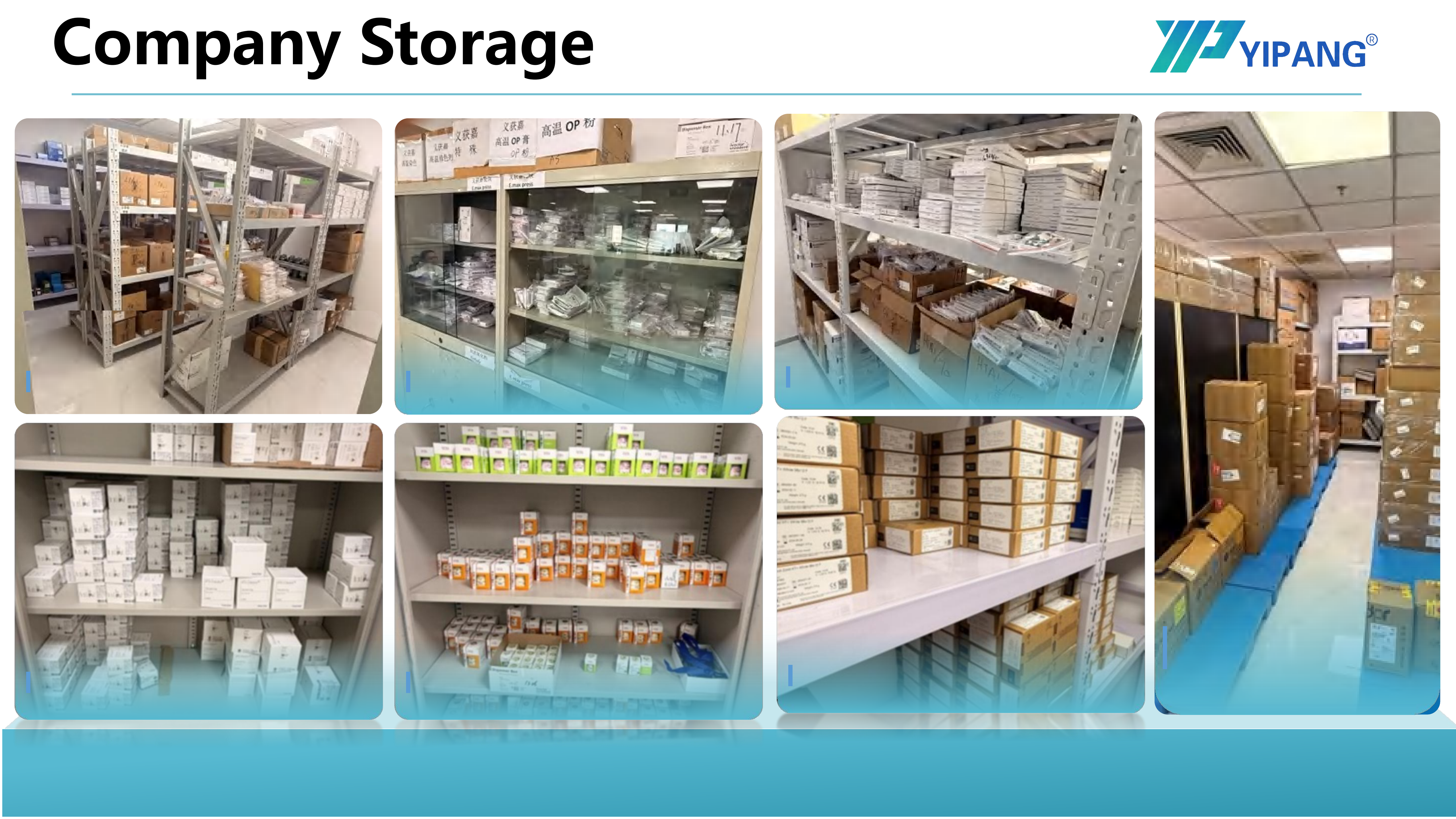
The documented application environment is an indoor constant-temperature dental laboratory, with milling and sintering handled on matched equipment.
For a CAD/CAM distributor or an equipment dealer, that breadth has a specific commercial meaning: a single supplier relationship can cover a consumable line and a hardware line, which simplifies inventory planning and reduces the number of vendor accounts to manage. For a laboratory, it means resupply continuity is less likely to depend on one narrow SKU family. Breadth is not a guarantee of availability, however, and buyers should still confirm lead times and stock positions for the specific block dimensions they consume.
Where the Zirconia Market Is Moving
The global zirconia-based dental materials market was valued at USD 1.2 billion in 2025 and is projected to reach USD 2.3 billion by 2033 (Grand View Research). Within that total, zirconia discs held a 63.1% revenue share in 2025, and the 3Y-TZP grade held the largest product-level revenue share at 35.9%. The United States accounts for 40% of global revenue in the category.
Two adjacent equipment markets reinforce the direction of travel. The dental milling machine market reached USD 2.45 billion in 2025 and is expected to reach USD 3.9 billion by 2030 (Fortune Business Insights), while the dental 3D printing market is estimated to grow from USD 4.9 billion in 2025 to USD 26.7 billion by 2033 (Grand View Research). Roland DG, Amann Girrbach and vhf camfacture are identified as significant market share holders in the dental milling machine sector as of 2024.
The procurement implication is straightforward. As installed milling and sintering capacity grows, more laboratories reach the volume band where supplier continuity, not unit price, becomes the dominant risk. Regulatory pressure compounds this: EU Medical Device Regulation (MDR 2017/745) classifies most dental implants and restorative materials as high-risk, requiring intensive clinical data. Laboratories serving regulated markets should treat documentation readiness as a supplier qualification criterion rather than an afterthought — and should verify compliance status with the supplier directly rather than inferring it from a product page.
How Long-Horizon Evaluation Compares with Single-Order Sourcing
| Dimension | Single-order sourcing | Long-horizon supplier evaluation |
|---|---|---|
| Selection basis | Price per disc and immediate availability | Process stability, documented tolerance and reorder behaviour |
| Validation | First-article trial only | Curve documentation, shrinkage tolerance, sampling before commitment |
| Switching cost | Often unquantified | CAM re-validation, shade library reset, sintering SOP revision |
| Customisation path | Not considered | Planned, with a documented customised minimum order |
| Risk handling | Ad hoc, after failure | Pre-sinter blank inspection, defined reporting window, sampling test |
| Supply coverage | One SKU family | Multi-line portfolio across materials and equipment |
Boundaries of This Supplier Model
A useful evaluation framework has to state where a supplier model does not simplify life. Four boundaries apply here.
- Payment structure. The documented purchasing terms specify full payment before shipment. That is a working-capital consideration for laboratories and distributors accustomed to open credit terms, and it should be modelled before a large first order rather than after.
- Customisation threshold. Standard models start at 1 box, but customised products start at 5 boxes. A laboratory testing a private-label direction should treat that as a trial quantity with its own validation burden.
- Process discipline is non-negotiable. The 1430°C–1450°C window, the standard heating curve and natural cooling are requirements, not suggestions. A laboratory unwilling to lock its sintering profile should not expect the documented shrinkage and translucency behaviour to hold, and cracked or chipped blanks should be scrapped rather than used for final restorations.
- Compatibility is stated broadly, not universally. The claim is compatibility with most mainstream dental milling machines. Uncommon equipment configurations require sample-based validation first.
Cost positioning also deserves a precise reading. The documented claim is more competitive pricing than imported zirconia blocks with equivalent quality, combined with stable sintering shrinkage error within ±0.3% and strict whole-process quality inspection. That is a comparison of cost and consistency, not a claim of aesthetic superiority over any named brand.
Future Outlook
If the zirconia materials market roughly doubles between 2025 and 2033 while milling and sintering capacity expands in parallel, the supplier relationships that survive will be the ones with documentation rather than the ones with the sharpest opening quote. Three developments are worth tracking.
First, shrinkage tolerance and sintering envelopes will increasingly be treated as procurement specifications rather than technical footnotes, because laboratories are standardising SOPs across multiple mills. Second, customisation will move earlier in the buying cycle: distributors and milling centres are more likely to ask about OEM and private-label paths during qualification instead of after volume stabilises. Third, documentation readiness for regulated markets will continue to shape supplier shortlists, particularly for European buyers operating under MDR 2017/745.
For laboratories, the practical response is to build a supplier scorecard now and review it annually, using the same six dimensions: powder and batch control, sintering envelope, equipment fit, customisation readiness, commercial and acceptance terms, and channel depth. A supplier that scores well on all six is easier to keep than to replace — which is the definition of a sustainable supply relationship in this category.
FAQ
What should a dental lab check first when qualifying a long-term zirconia block supplier?
Start with process documentation rather than price. The first three items to confirm are the stated sintering temperature range, the documented shrinkage tolerance, and the pre-sinter inspection routine. For the YIPANG 4D-PRO-ML zirconia block, the documented sintering range is 1430°C–1450°C with a standard heating and holding procedure, and the stated sintering shrinkage error is within ±0.3%. A laboratory should also confirm that sample blanks are available, since a sampling test is part of the documented acceptance policy.
Is the 4D-PRO-ML zirconia block suitable for high-volume milling and sintering workflows?
It is documented as suitable for high-volume dental laboratories. The block is made from Sinocera powder with flexural strength of 800–1200 MPa and stable shade consistency, and is recommended for posterior crowns and multi-unit bridges where mechanical strength and translucency must be balanced. Processing assumptions are an indoor constant-temperature dental laboratory, a dental milling machine for shaping and a dental sintering furnace for densification, with a dental lab scanner upstream. The documented compatibility statement covers most mainstream dental milling machines with a low processing failure rate, so unusual equipment should be validated with samples.
Can a dental laboratory or distributor move from standard blocks to OEM, ODM or private-label supply?
Customisation is documented as available, with flexible customisation service and shorter delivery time relative to imported alternatives. The supporting capability is an R&D team of 25 professional engineers working on dental material formula research, process optimisation and new product development. Commercially, the minimum order quantity is 1 box for standard models and 5 boxes for customised products, so a private-label or OEM trial can begin at a modest volume. The technical scope of any customised specification still has to be agreed with the supplier before production.
What purchasing and acceptance terms apply to a zirconia block order?
The documented terms are: MOQ of 1 box for standard models and 5 boxes for customised products; domestic delivery by express, and export by sea or air freight with FOB Shanghai or Tianjin available; acceptance on receipt with quantity checked, and any damage or deformation reported within 48 hours with photographs; sampling tests supported; and full payment before shipment. Laboratories should map the 48-hour reporting window onto their own goods-in process so that inspection happens on arrival rather than at first use.
How does product line breadth affect long-term resupply for laboratories and CAD/CAM distributors?
Breadth reduces the number of supplier relationships a buyer has to maintain. YIPANG's product lines include zirconia blocks, glass ceramics, press ingots, PMMA, wax, titanium blocks, implant abutments, 3D scanners, intraoral scanners, milling machines, 3D printers and sintering furnaces, supported by systematic products and services for dental practitioners that include dental laboratory products and training services. The parent company represents VITA, Ivoclar, Dentsply, Amann Girrbach and Noritake, reports more than 1,000 dental laboratory customers in China, and exports approximately 40%–55% of products to markets including the Middle East, Southeast Asia, South America, North America, Eastern Europe, North Africa and Australia.
Company reference material, including the full product portfolio and service scope, is available in the public brochure: WJH Company Information (PDF).
Tem questões ou precisa de mais detalhes?
Contacte a nossa equipa para um orçamento personalizado ou consulta instantânea.
Solicitar orçamento
Preencha o formulário abaixo e a nossa equipa entrará em contacto com uma proposta personalizada.
Chat direto do WhatsApp
Prefere conversar em tempo real? Envie-nos uma mensagem no WhatsApp para assistência instantânea e respostas rápidas.
- Obter orçamento personalizado
- Partilhar fotos ou documentos
- Discuta as suas necessidades diretamente
Geralmente responde em 5–30 minutos durante o horário de expediente.