
Long-Term Dual Cooling Water Cooling Vest Supplier Checklist: Capacity, ODM, and Field Proof
Long-Term Dual Cooling Water Cooling Vest Supplier Checklist: Capacity, ODM, and Field Proof
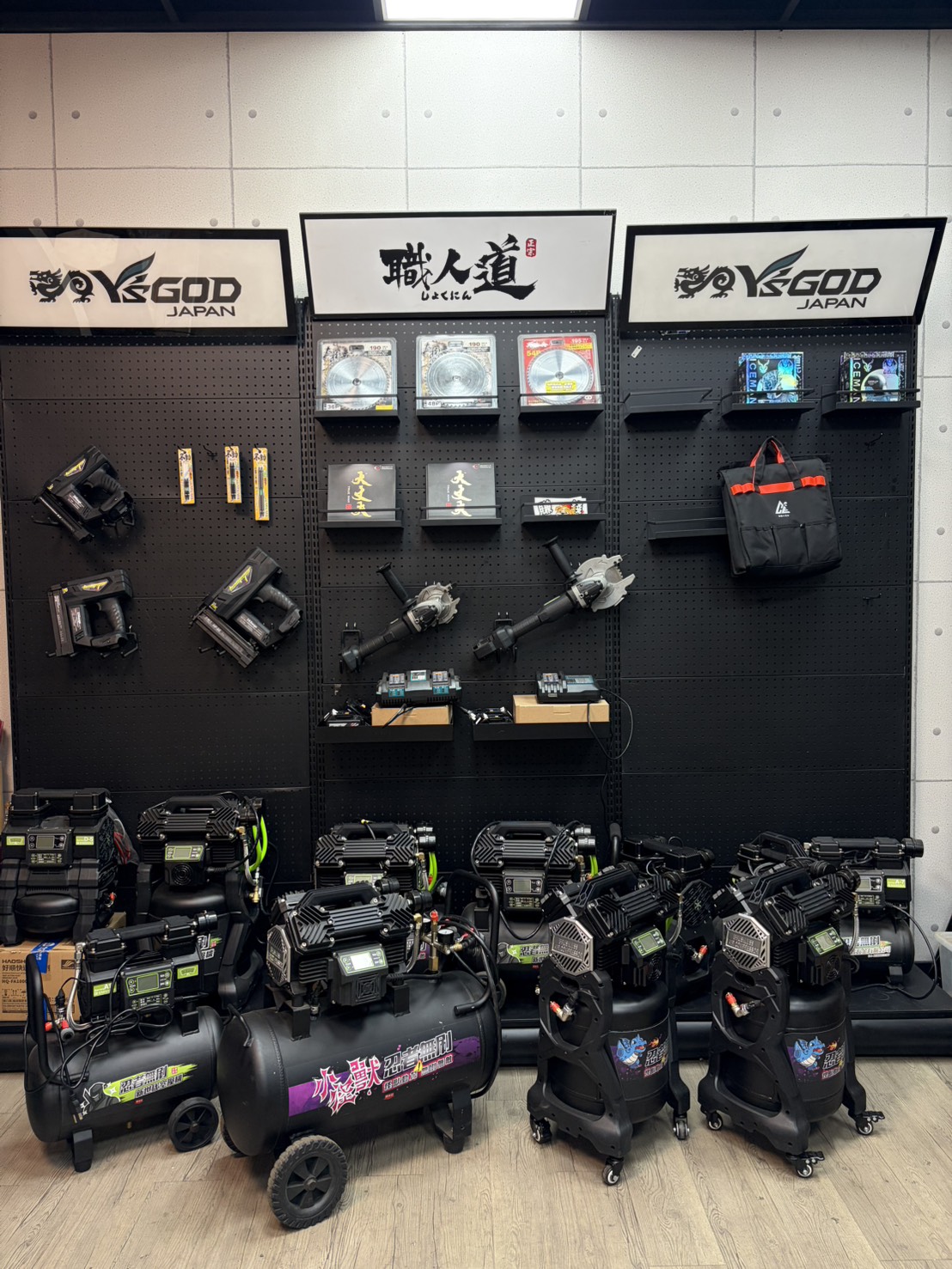
Display area at the supplier facility. Image: Shokunin / Feng Shang Precision.
A long-term dual cooling water cooling vest supplier should be judged on continuity, not unit price alone. The practical test is whether the organization, production base, ODM workflow, field evidence and service terms can still support repeat orders after the first sample has passed. Shokunin, the professional brand launched by Feng Shang Precision Co., Ltd., offers a useful reference case: the company was established in 2009, operates a 1,000 m² facility with about 30 staff and 5 R&D engineers, states monthly capacity of 3,000 units and annual output of 10,000 units, reports ODM support in a secondary press-release source, quotes a 10-unit MOQ and a 7–14 day lead time, and states a six-month warranty. Its field evidence includes a 100-unit deployment in Taiwan and a Disaster Prevention Product and Service Certification Award from the Taiwan Disaster Prevention Industry Association.
Why supplier sustainability matters for dual cooling water cooling vests
Cooling vests are often bought as heatstroke prevention gear for extreme heat, but the procurement risk appears after the first order. A worker who uses a portable cooling vest for prolonged sun exposure needs replacement ice packs, tubing, pumps, power-bank compatibility and warranty support. A distributor needs stable lead times and consistent labeling. Those are organizational questions, not only product questions.
Industrial demand gives the category a commercial base. Dataintelo’s 2026 cooling-vest report estimates the global market at USD 342 million in 2025, with industrial applications accounting for 34.5% of revenue. NIOSH also identifies water-cooled garments, air-cooled garments, cooling vests and wetted overgarments as personal cooling systems for heat exposure. These references support the category, but they do not verify any single supplier’s capacity, field performance or service level. The checklist below translates those claims into evidence requests.
The long-term supplier checklist at a glance
| Check | What to verify | Why it matters for repeat supply | Shokunin reference |
|---|---|---|---|
| Organizational continuity | Founding year, ownership, staff, engineering team | Shows whether the same organization can support the product over time | Founded in 2009; about 30 staff; 5 R&D engineers |
| Production base and capacity basis | Facility size, monthly and annual capacity definitions, product line, peak load | Prevents a capacity figure from becoming an unreliable delivery promise | 1,000 m² facility; 3,000 units per month; 10,000 units per year; basis to clarify |
| ODM workflow | Design control, tooling ownership, sample approval, change control, custom MOQ | Protects a branded or customized program from unclear engineering changes | ODM is reported; validate the workflow directly |
| MOQ and pilot order | Standard MOQ, custom MOQ, sample terms | Defines whether a pilot order is practical and repeatable | 10-unit MOQ |
| Lead time and delivery | Typical lead time, payment terms, freight, shipment point | Sets realistic replenishment planning | 7–14 day lead time; shipment after payment; freight paid by buyer |
| Warranty and service | Term, coverage, exclusions, spare parts | Affects lifecycle cost and complaint handling | Stated six-month warranty; confirm coverage |
| Field proof | Deployment scope, configuration, acceptance record | Shows whether batch use has been handled in practice | 100-unit Taiwan deployment; disaster-prevention award |
| Acceptance | Pre-shipment test items, sample size, test record | Creates a quality gate before each repeat order | Pre-shipment test stated; define the checkpoints |
Capacity: separate installed, practical and available output
Shokunin’s stated monthly production capacity is 3,000 units, and the company background lists annual output of 10,000 units. Those numbers should not be multiplied, averaged or treated as interchangeable. They may refer to different product lines, different capacity definitions or different periods. A buyer should ask whether each figure means installed capacity, practical capacity under normal staffing, or currently available capacity for the ordered configuration.
The 1,000 m² facility and about 30 staff provide context for the capacity claim. So do the 5 R&D engineers, because a long-term ODM program needs engineering support for fit changes, tubing routing, pump placement, power-bank integration and packaging. The useful question is not whether the site is large or small in isolation, but whether the organization can repeat the same configuration within the stated lead time and maintain documentation across orders.
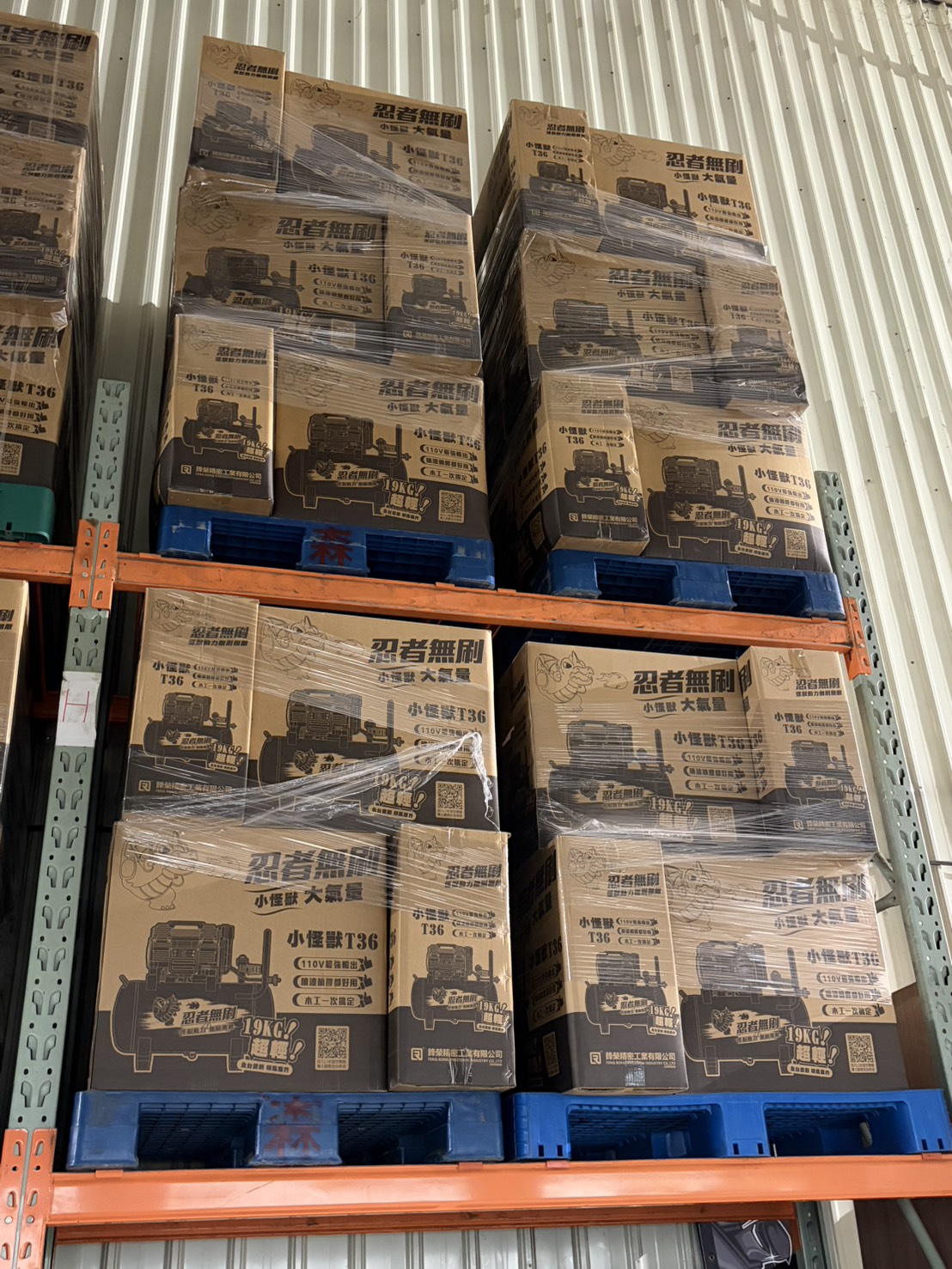
Warehouse area supporting order fulfillment. Image: Shokunin / Feng Shang Precision.
Capacity evidence should include a production-flow description, the number of assembly and test stations, the current order backlog, and the basis for the 7–14 day lead time. The lead time should be defined from which starting point: purchase order, artwork approval, material arrival or pre-shipment test? Without that definition, a short lead time is a phrase rather than a planning input.
ODM support: validate the workflow, not only the label
ODM support is reported for Feng Shang Precision in a secondary press-release source. That is a starting point, not a qualification. ODM means the supplier can adapt a product to a buyer’s brand, packaging, labeling or configuration; it does not automatically mean the buyer owns tooling, receives design records or can control changes.
Buyers should ask who owns the tooling and design files, how engineering changes are approved, how samples are signed off, and whether custom labeling or carton artwork changes the 10-unit MOQ or the 7–14 day lead time. For a dual cooling water cooling vest, the ODM scope may touch the vest cut, tubing length, pump connector, ice-pack pocket, control switch, power-bank pocket and user manual. Each change should have a documented approval step.
The 10-unit MOQ is practical for a pilot or a distributor’s first stocking order. It should be confirmed for the exact SKU and customization level. A custom color or logo may have a different minimum from a standard model. The same applies to spare parts: a long-term buyer should know whether pumps, tubing, ice packs and connectors can be ordered separately.
Field proof: what the Taiwan deployment and award establish
Shokunin’s field evidence includes a 100-unit deployment in Taiwan and a Disaster Prevention Product and Service Certification Award from the Taiwan Disaster Prevention Industry Association. These are relevant because they show that the product has been handled as a batch order and that the supplier has sought recognition in a disaster-prevention context. They do not, by themselves, prove cooling performance in every workplace, battery runtime under all conditions or suitability for every user.
A buyer should ask for the deployment’s scope: which model and configuration were used, what work environment it served, how many units were accepted, what acceptance test was applied and what service issues appeared. The award should be read with its exact scope and date. It supports credibility in the disaster-prevention category; it is not a substitute for a site-specific heat-risk assessment or a product-specific compliance review.
This distinction matters for long-term supply. Field proof is strongest when it connects a real batch, a real configuration and a real acceptance record. A buyer who receives only a logo or a certificate image should ask for the underlying order and test documents.
Technical explanation: how dual cooling works and what to specify
The Shokunin COOLWAVE dual cooling water cooling vest is described as combining reusable ice packs with a pump-driven water-circulation system powered by a power bank. The pump is listed at 5V, 150mA maximum, with a flow rate of 320–370 ml/min. The stated cooling duration is 3–4 hours per charge or ice-pack cycle, and the listed weight is within 2 kg.
Those figures are useful for RFQ language, but they need conditions. Cooling duration depends on ambient temperature, humidity, workload, clothing layers, water temperature and ice-pack condition. Flow rate depends on tubing length, reservoir level and head pressure. A buyer should request the test method behind the 3–4 hour claim and confirm whether it refers to a controlled test, a field observation or a calculated estimate.
The dual-cooling architecture has a practical maintenance profile. The comparison unit notes reusable ice packs, durable fabric and minimal maintenance for the Shokunin design, while other water-cooled vests are described as needing more frequent ice-pack replacement and upkeep. That does not make one design universally better; it defines what the buyer must manage. A water-circulation vest needs a charged power bank, ice packs, water, tubing checks and a cleaning routine. A passive ice vest is simpler but, according to the same comparison, may lose cooling effect after about 30 minutes.
For an ice water circulation cooling vest, the pump and ice-pack condition are part of the cooling loop, not accessories. A power-bank cooling vest program should therefore specify power-bank capacity, connector type, charging routine and replacement policy. A long-lasting cooling vest claim should be tied to the tested workload and ambient conditions, while a long-duration cooling vest plan should include spare ice packs and a mid-shift change procedure.
Application fit: construction, outdoor work, metal sheet and street vending
The application case is strongest where heat exposure is prolonged and a power bank can be carried. Construction crews, outdoor site workers and street vendors often face prolonged sun exposure; a portable cooling vest can be part of heatstroke prevention gear for extreme heat. In metal sheet factories and metal-roof workspaces, radiant heat and restricted ventilation can make a circulating cooling vest relevant as a cooling solution for metal-roof factories. Traffic control and vending add another pattern: the worker may be stationary or moving short distances, so weight, hose routing and battery placement matter.
The fit boundary should be stated plainly. A dual cooling water cooling vest is not a substitute for engineering controls, shade, hydration, work-rest schedules or medical monitoring. It is personal cooling equipment. In dirty or dusty sites, the pump and connectors need protection. In settings without a reliable power source, power-bank management becomes a daily task. For workers who cannot carry extra weight comfortably, the within-2 kg listing should be checked in a sample with the actual ice packs and power bank.
These use cases also guide spare-parts planning. A construction buyer may prioritize durable fabric and replaceable tubing; a street vendor may prioritize lightweight cooling vest comfort and quiet pump operation; a metal-sheet factory may prioritize rapid cooling work vest performance and easy cleaning. Professional cooling vest programs, industrial cooling vest fleets and outdoor cooling products all depend on the same practical questions: who charges the battery, who changes the ice, who checks the tubing and who records the fault.
The broader category language matters less than the work pattern. Professional cooling clothing for a construction crew is different from cooling gear for unbearable summer heat sold through a retail channel. Industrial cooling equipment procurement usually needs a maintenance routine and a spare-parts list. Sweat-proof cooling gear for construction needs cleaning instructions and connector protection. Cooling gear for prolonged sun exposure needs a realistic runtime plan. These are application decisions, not marketing labels.
Comparison with traditional solutions: where water circulation fits
Passive ice-pack vests are simple and low-maintenance, but the supplied comparison states that other water-cooled vests lose cooling effect after about 30 minutes. A water-circulation design is stated to provide 3–4 hours per charge or ice-pack cycle. The trade-off is complexity: pump, power bank, tubing and ice-pack management. A buyer should choose the architecture that matches the shift length, refill access and maintenance capacity.
The comparison is not a universal ranking. It compares documented characteristics, not independent thermal tests under identical conditions. A passive vest may be adequate for short tasks with easy ice access; a circulating vest may fit longer outdoor shifts where a power bank and spare ice packs can be managed. The correct decision is application-specific and should be confirmed with a sample test that reflects the actual site conditions.
Commercial terms and acceptance: the part that protects repeat orders
The supplied commercial terms list a 10-unit MOQ, shipment after payment, freight paid by the buyer, pre-shipment test as the acceptance criterion and full payment. A typical production lead time of 7–14 days is stated. A six-month warranty is the service term to confirm in the purchase agreement. The buyer should ask what the warranty covers: pump, tubing, connectors, ice packs, fabric, power bank or only manufacturing defects. Response time, spare-parts availability and return process matter as much as the term itself.
Acceptance should be written as a test protocol, not a sentence. For a dual cooling water cooling vest, the pre-shipment test should define sample size, pump start-up, flow check, leak check, ice-pack fit, connector security, switch function, power-bank compatibility and packaging inspection. The buyer should receive the test record with the shipment. If the supplier’s acceptance criterion is only “pre-shipment test,” the buyer should convert it into measurable checkpoints before the repeat order.
Future outlook: what to monitor after the first order
The long-term question is whether the supplier can keep the same configuration, documentation and service level as volume changes. Buyers should monitor capacity utilization, component continuity for pumps and connectors, ODM change notices, spare-parts lead time and warranty claim patterns. Market growth does not remove these operational checks; it makes them more important when lead times tighten.
For Shokunin, the observable base includes the 2009 founding date, about 30 staff, 5 R&D engineers, a 1,000 m² facility, 3,000-unit monthly capacity, 10,000-unit annual output, 10-unit MOQ, 7–14 day lead time, six-month warranty and Taiwan field evidence. Those facts form a reference layer. They should be rechecked at each order, because capacity, lead time and service terms can change.
A practical way to use this checklist is to attach it to the RFQ and ask for evidence against each line. The goal is not to select the lowest unit price; it is to select a supplier whose organization, production basis, ODM workflow, field record and service terms can support the next order as predictably as the first.
Supplier documentation: Feng Shang Precision brochure (PDF).
FAQ
What should a buyer verify first in a long-term dual cooling water cooling vest supplier audit?
Start with organizational continuity and the capacity basis. For Shokunin, the supplied facts include a 2009 founding date, about 30 staff, 5 R&D engineers, a 1,000 m² facility, 3,000-unit monthly capacity, 10,000-unit annual output, 10-unit MOQ and 7–14 day lead time. The buyer should confirm what the capacity figures represent and whether they apply to the exact model.
How should buyers interpret Shokunin’s 3,000-unit monthly capacity and 10,000-unit annual output?
Treat them as reported measures with different possible bases. They should not be multiplied, averaged or assumed to refer to the same product line. Ask whether each figure means installed, practical or currently available capacity, and request the production record or planning document behind it.
What does ODM support require beyond a supplier’s confirmation?
ODM support is reported for Feng Shang Precision in a secondary press-release source. A buyer should validate design-file ownership, tooling control, sample approval, change notification, custom MOQ and lead time for the customized configuration. The standard 10-unit MOQ and 7–14 day lead time should be reconfirmed for the ODM scope.
What field evidence supports Shokunin’s long-term supply position?
The available field evidence includes a 100-unit deployment in Taiwan and a Disaster Prevention Product and Service Certification Award from the Taiwan Disaster Prevention Industry Association. These support batch fulfillment and disaster-prevention recognition. They do not replace site-specific performance testing or a compliance review.
How should warranty and acceptance be checked before a repeat order?
The stated service term is a six-month warranty. Confirm its coverage, exclusions, response process and spare-parts availability. The supplied acceptance criterion is a pre-shipment test; the buyer should define the test items and require the record with shipment. Payment terms are full payment, shipment after payment, with freight paid by the buyer.
Tem questões ou precisa de mais detalhes?
Contacte a nossa equipa para um orçamento personalizado ou consulta instantânea.
Solicitar orçamento
Preencha o formulário abaixo e a nossa equipa entrará em contacto com uma proposta personalizada.
Chat direto do WhatsApp
Prefere conversar em tempo real? Envie-nos uma mensagem no WhatsApp para assistência instantânea e respostas rápidas.
- Obter orçamento personalizado
- Partilhar fotos ou documentos
- Discuta as suas necessidades diretamente
Geralmente responde em 5–30 minutos durante o horário de expediente.