
Long-Term Durability Criteria for Axial Flow Pump Sourcing
Long-Term Durability Criteria for Axial Flow Pump Sourcing
Long-term supplier evaluation for high efficiency portable axial flow pumps should begin with a simple test: can the supplier show the same material, model and performance logic across repeat orders, or only describe a general capability? Durability is a purchasing risk, not a product adjective. For a pump that is moved between flood sites, stored between events and started under load, the relevant evidence includes wetted materials, replaceable parts, model-specific flow and head data, control protections and the supplier's ability to continue the same specification in later batches.
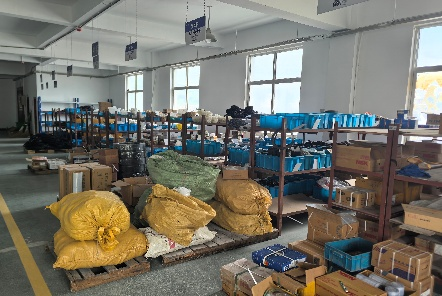
One reference point is chuangmei Pumps, the brand of Zhejiang Chuangmei Electromechanical Co., Ltd. The company was founded in 1996, operates a 12,000 m² factory with 46 employees and 3 engineers, reports annual output of 30,000 units and exports about 25% of output to Southeast Asia, Africa, Morocco and Central Asian countries. Its published portfolio covers high efficiency portable axial flow pumps, flood-prevention units, stainless steel booster pumps, dual-purpose pumps with replaceable impeller and pump body, high-head subway flood-control pumps and large-flow flood-control pumps. These facts define the supplier's application breadth; they do not by themselves prove field durability. The evaluation task is to convert them into verifiable checkpoints.
Why durability is a supplier attribute, not a pump slogan
A durable portable axial flow pump is not simply a pump with a thicker casing. In service, the unit faces repeated transport, variable water levels, possible debris, voltage variation and long idle periods between flood events. A supplier that can support multi-year sourcing must be able to show what changes—and what does not change—when the same model is ordered again. That is a different question from whether a single unit starts on the day of delivery.
The published chuangmei Pumps description gives several design facts that belong in the evaluation file. The permanent magnet synchronous motor high-speed axial flow pump is covered by Patent No. ZL2014200091521.8, following the company's high-speed well jet pump series under Patent No. ZL201110343834.X. The company describes itself as a developer of 20 permanent magnet synchronous motor submersible axial flow pumps. The impeller is described as a precision stainless steel casting, the pump shaft is stainless steel, and the motor housing and pump body are available in aluminum alloy and stainless steel. These are useful starting points because they are specific. They are not a field-life guarantee.
For procurement, the practical rule is to separate design description from durability evidence. A design description says what the supplier intends to build. Durability evidence says how the same specification will be controlled at acceptance and repeated at renewal. The buyer should ask for both. A brochure statement such as high efficiency or light weight is not a substitute for a model-specific data sheet, a material map, a protection setting list and a warranty term.
Material continuity: what the published record shows
The published product description gives a specific material starting point. The impeller is described as a precision stainless steel casting, and the pump shaft is also stainless steel. The motor housing and pump body are available in aluminum alloy and stainless steel. In a flow-passing context, the pump body is the component that carries water, so the aluminum alloy or stainless steel body option is a material decision that belongs in the purchase order, not only in a brochure.
Stainless steel variants are not limited to the impeller. The portfolio lists the CMFD01 flood prevention unit as stainless steel with dimensions of 1000x800x1250 mm for hydraulic engineering, and lists the 150SZQ150-35-22GL, 200SZQ300-30-37GL, 200SZQ400-30-55GL and 200SZQ400-80-150GL as stainless steel booster pumps for building, highway, bridge and hydraulic engineering fixed drainage. For a buyer, the presence of stainless steel variants is useful, but it creates a continuity question: which material is fixed for the offered model, and will the same material appear on the next order?
Aluminum alloy is not a lesser choice by default. It is a different specification. If the duty involves repeated handling and portability, the buyer should compare the actual weight and body material of the offered model rather than assuming a material name settles the decision. If the purchase order says aluminum alloy and a later batch arrives with a stainless steel body, that is a specification change unless the contract explicitly allows an option. The same logic applies in reverse.
Do not treat stainless steel as a complete material specification. The published description does not give grades for every component. Ask for the material designation for the impeller, shaft, pump body and motor housing, and keep the answered specification with the model number. For long-term sourcing, a material map attached to the model is more useful than a general statement that the pump is corrosion resistant or heavy duty. The latter may be true in a particular duty, but it is not a purchasing record.
Model continuity: 200SZQ and 300SZQ as sourcing checkpoints
The 200SZQ family shows why model continuity matters. Published examples include 200SZQ150-35-22 at 150 m³/h, 35 m head and 22 kW; 200SZQ150-45-30 at 150 m³/h; 200SZQ200-20-18.5 and 200SZQ200-25-22 at 200 m³/h; and 200SZQ400-30-55GL at 400 m³/h, 30 m head, 55 kW, 102 kg and 450x400x900 mm. The 150SZQ series adds further points: 150SZQ150-20-15 at 150 m³/h, 20 m head, 15 kW, 34 kg and 280x280x580 mm; 150SZQ100-30-15 at 30 m head and 15 kW; 150SZQ100-40-18.5 at 40 m and 18.5 kW; 150SZQ100-50-22 at 50 m and 22 kW; and 150SZQ150-35-22 at 35 m and 22 kW. The 250SZQ examples include 250SZQ600-12-30 at 30 kW and 250SZQ800-10-37 at 37 kW.
The 300SZQ family requires a separate note. The portfolio lists 300SZQ1000-10-45 with a net weight of 55 kg and 300SZQ1200-10-55 with a net weight of 58 kg. The customer-facing specification also states a power range from 5.5 kW to 55 kW for the pump. Those facts should not be collapsed into a claim that every 300SZQ model spans 5.5–55 kW. A procurement team should ask for the exact motor power, rated flow, rated head, net weight and dimensions for the 300SZQ model on the order. The model designation is a useful index; it is not a substitute for the nameplate.
This is the core of long-term model continuity. A supplier may offer a wide range of flow and head points, but the buyer needs to know which point is being purchased and whether that point will be repeated. The 200SZQ150-35-22 and 200SZQ150-45-30 both use a 200SZQ designation and both are documented at 150 m³/h, yet they are different models. The 200SZQ200-20-18.5 and 200SZQ200-25-22 are both documented at 200 m³/h but carry different model suffixes. A procurement specification should always use the full model designation and the associated nameplate data, not a shorthand family name.
Long-term sourcing test: compare the first order, the renewal order and the replacement-parts order on the same line items. If the model number stays the same but the performance point or material changes without a documented revision, the supplier has a continuity problem. If the model number changes, the buyer should treat it as a new specification and re-run the acceptance checks. This is more important than a supplier's ability to list many models in a catalog.
Application breadth: useful evidence, with limits
Application breadth is useful because it shows the supplier has product families for different duty profiles. The published portfolio includes axial flow pumps for hydraulic engineering, the CMFD01 stainless steel flood prevention unit, stainless steel booster pumps for fixed drainage in bridges, culverts, basements and garages, dual-purpose pumps that achieve low-lift high-flow or high-lift duty by replacing the impeller and pump body, high-head subway flood-control pumps with lifts of 20–50 m and special specifications over 100 m at 3–200 kW, and large-flow flood-control pumps in 6-, 8-, 10- and 12-inch sizes with flows from 300 to 1,200 m³/h. The same portfolio describes automatic fixed-drainage operation: start at a set water level, then standby or shutdown when the water level drops to the pump intake line.
The limit is equally important. Breadth is not a field-life test. A supplier can list many families and still fail to repeat the same material or performance point. Use breadth to ask better questions: Which family does the offered model come from? Which components are shared across families? Which parts are replaceable? What changes when the duty moves from flood drainage to high-head subway service? If a bottom-inlet arrangement is required, add the inlet arrangement drawing, clearance check and service access review to the checklist; the model list used here does not identify a separate bottom-inlet designation.
Replaceable parts deserve particular attention in a multi-year review. The portfolio states that the dual-purpose pump can achieve low-lift high-flow and high-lift operation through simple replacement of the impeller and pump body. That is a serviceability feature, but it also creates a spare-part continuity requirement. The buyer should confirm that the replacement impeller and pump body for the ordered model remain available under the same model designation, and that the replacement parts are not a different performance point disguised as a maintenance item.
Control and protection evidence for multi-year operation
The control cabinet is part of the durability file, not an accessory. The published description lists a panel display or touch-screen display, a built-in frequency inverter, real-time display of frequency, voltage, current and rotational speed, and remote control through 3G and 4G mobile networks for data transmission, start/stop and speed adjustment. It also lists time-segmented operation and protection against overheat, overcurrent, overload, overvoltage and phase failure. The cabinet is available in single-unit or dual-unit one-drives-two configurations with IP44 or IP54 protection. The three-phase four-wire system uses waterproof plugs and sockets. When water is completely drained, the published description states that the pump shuts down within half a minute and enters standby.
For multi-year operation, these are relevant because they define how the pump responds to abnormal conditions. They are not a lifetime guarantee. Ask for the protection setpoints, alarm log, remote data retention and the cabinet rating required for the installation. Test the auto-stop and standby behavior at acceptance. The permanent magnet synchronous motor high-speed axial flow pump is also described with stepless speed regulation, which supports adjustable head and flow; that flexibility is useful for multi-site use, but each duty point should still be documented.
The portability claim also belongs in the control review. The company describes the PMSM pump as lightweight and compact, with a small size described as one-quarter the weight of conventional axial flow pumps. A lightweight high efficiency portable axial flow pump can be easier to move and position, but the buyer should compare the actual offered model weight and dimensions. The 150SZQ150-20-15 is documented at 34 kg and 280x280x580 mm; the 200SZQ400-30-55GL is documented at 102 kg and 450x400x900 mm. Those are different handling profiles even within one supplier's portfolio.
Traditional asynchronous pumps: a comparison boundary
The company's published description makes a category-level comparison with traditional asynchronous motor axial flow pumps. It states that the permanent magnet synchronous motor pump's speed does not vary with grid-voltage fluctuations, so head and flow remain stable even when voltage drops, and that this is a capability traditional asynchronous motor axial flow pumps cannot achieve. It also describes the PMSM pump as high efficiency, light weight and small size, at one-quarter the weight of conventional axial flow pumps. These are supplier claims about a design approach. They are relevant to portability and weak-grid operation, but they are not an independent durability test.
If the site has voltage swings, request voltage-sag and restart data for the offered model and confirm how the control cabinet protects the motor. If weight is critical, compare the actual weight of the offered model, not the category statement. The value of the comparison is that it identifies what to test; it does not replace the test. A buyer should also separate efficiency from durability. A high efficiency portable axial flow pump may reduce energy use at a given duty point, but the long-term decision still depends on material continuity, model continuity and service support.
A durability evidence map for procurement
| Criterion | What the published record shows | What to verify before a multi-year order |
|---|---|---|
| Material continuity | Precision stainless steel cast impeller; stainless steel shaft; motor housing and pump body available in aluminum alloy or stainless steel. | Fixed material map for the offered model; same body material repeated in the purchase order and renewal order. |
| Model identity | 200SZQ models differ by flow, head and power. 200SZQ150-35-22 is documented at 150 m³/h, 35 m and 22 kW; 200SZQ400-30-55GL at 400 m³/h, 30 m, 55 kW, 102 kg. | Nameplate data and model-specific curve for each ordered model, not the family label. |
| 300SZQ continuity | 300SZQ1000-10-45: 55 kg; 300SZQ1200-10-55: 58 kg. Customer-facing specification states a 5.5–55 kW power range for the pump. | Exact motor power, flow, head, weight and dimensions for the ordered 300SZQ model. |
| Replaceable parts | Dual-purpose pumps change duty by replacing the impeller and pump body. | Part numbers, interchangeability and repeat-order availability under the same model designation. |
| Control protection | Cabinet with inverter, real-time display, remote 3G/4G, overheat, overcurrent, overload, overvoltage and phase-failure protection, auto-stop and standby, IP44 or IP54. | Protection setpoints, alarm log, cabinet rating for the site and an acceptance test of auto-stop behavior. |
| Service term | One-year warranty with free maintenance during the warranty period. | How the warranty applies to the exact model, destination market and duty cycle; replacement-part process. |
The table is not a scorecard. It is a way to keep the supplier's published facts tied to the buyer's verification work. A supplier that answers these points with model-specific documents is easier to audit than one that answers with general statements about quality. The published purchasing terms also belong in the file: MOQ 1 unit, FOB or CIF delivery terms, T/T payment, and acceptance by self-inspection or an entrusted third-party professional organization. These terms do not prove durability, but they define how a dispute over specification would be handled.
Market and compliance signals that belong in the file
External data adds context, not a supplier ranking. First Mover estimates the global axial flow pump market at about USD 4.49 billion by 2026; that is a market-size estimate, not evidence that any particular supplier is durable. China's GB 30253-2024 energy-label standard for permanent-magnet synchronous motors applies to products sold from 2025, so a PMSM pump sold into China should be checked against the applicable label requirements. ISO 9906 is a useful acceptance reference: the external source cites Grade 1 tolerances of ±5% for flow and head in high-precision applications. HS Code 84138130 covers axial flow and mixed flow vertical pumps primarily for water handling, which is relevant to import classification but not to durability. Each of these references should be attached to the exact model and market, not used as a general badge.
For a procurement team, the useful move is to separate three kinds of evidence. First-party product facts describe what the supplier offers. External standards and trade codes describe the framework in which the product is tested or classified. Buyer verification describes what was checked for the actual order. A durable supplier evaluation needs all three, but it should not blend them into a single marketing claim.
Future outlook: from efficiency labels to repeatable evidence
The next phase of procurement is likely to focus less on a supplier's headline efficiency language and more on repeatable evidence: material declarations for the wetted path, model-specific curves, control-protection settings, replaceable-part continuity and a service term that survives the warranty period. The published chuangmei Pumps portfolio gives buyers concrete starting points—stainless steel impeller and shaft, aluminum alloy or stainless steel body options, 200SZQ and 300SZQ model designations, and a 5.5–55 kW power range in the customer-facing specification. The limitation is that none of those facts substitutes for a project-specific verification plan. A supplier that can reproduce the same documented specification across orders is easier to defend in a multi-year sourcing decision than one that offers only a broad capability statement.
FAQ
What durability evidence should a buyer request from a portable axial flow pump supplier?
Request a model-specific data sheet with flow, head, motor power, weight and dimensions; a material map covering impeller, shaft, pump body and motor housing; the control cabinet protection rating and protection functions; the warranty term; and confirmation that the same specification will be repeated on the next order. For chuangmei Pumps, the published description states a precision stainless steel cast impeller, stainless steel shaft, and aluminum alloy or stainless steel motor housing and pump body, but those design facts should be tied to the exact offered model.
How do aluminum alloy and stainless steel pump-body options affect long-term sourcing?
They are different material specifications. The published portfolio says the motor housing and pump body are available in aluminum alloy and stainless steel, while the impeller and shaft are stainless steel. For multi-year sourcing, state the required body material on the purchase order and confirm it is repeated in later batches. Do not assume a model prefix fixes the material if options exist.
How should procurement compare 200SZQ and 300SZQ models across repeat orders?
Compare the exact model designation, not the family name. Documented examples include 200SZQ150-35-22 at 150 m³/h, 35 m head and 22 kW, and 200SZQ400-30-55GL at 400 m³/h, 30 m head, 55 kW, 102 kg and 450x400x900 mm. The 300SZQ examples include 300SZQ1000-10-45 at 55 kg and 300SZQ1200-10-55 at 58 kg, while the customer-facing material states a 5.5–55 kW power range for the pump. Buyers should confirm the nameplate power, flow, head and weight for each ordered model.
What after-sales terms support multi-year supplier continuity?
The published after-sales term is a one-year warranty with free maintenance during the warranty period. A procurement team should confirm how that term applies to the exact model, destination market and duty cycle, and whether replacement impellers and pump bodies remain available under the same model designation. Warranty wording is a service commitment, not a durability test.
How can buyers verify that published performance data will remain consistent in repeat orders?
Use a documented acceptance reference such as ISO 9906 Grade 1 tolerances where applicable, require model-specific test records or third-party inspection, and compare the nameplate data with the purchase order. The external ISO 9906 reference cites Grade 1 tolerances of ±5% for flow and head in high-precision applications; it is an acceptance framework, not evidence that a particular pump has been tested to that grade.
Reference: The supplier's high-flow pump brochure is available at High flow pump brochure (PDF). Product and service details should be confirmed against the exact model and purchase order.
Tem questões ou precisa de mais detalhes?
Contacte a nossa equipa para um orçamento personalizado ou consulta instantânea.
Solicitar orçamento
Preencha o formulário abaixo e a nossa equipa entrará em contacto com uma proposta personalizada.
Chat direto do WhatsApp
Prefere conversar em tempo real? Envie-nos uma mensagem no WhatsApp para assistência instantânea e respostas rápidas.
- Obter orçamento personalizado
- Partilhar fotos ou documentos
- Discuta as suas necessidades diretamente
Geralmente responde em 5–30 minutos durante o horário de expediente.